← All Of It with Alison Stewart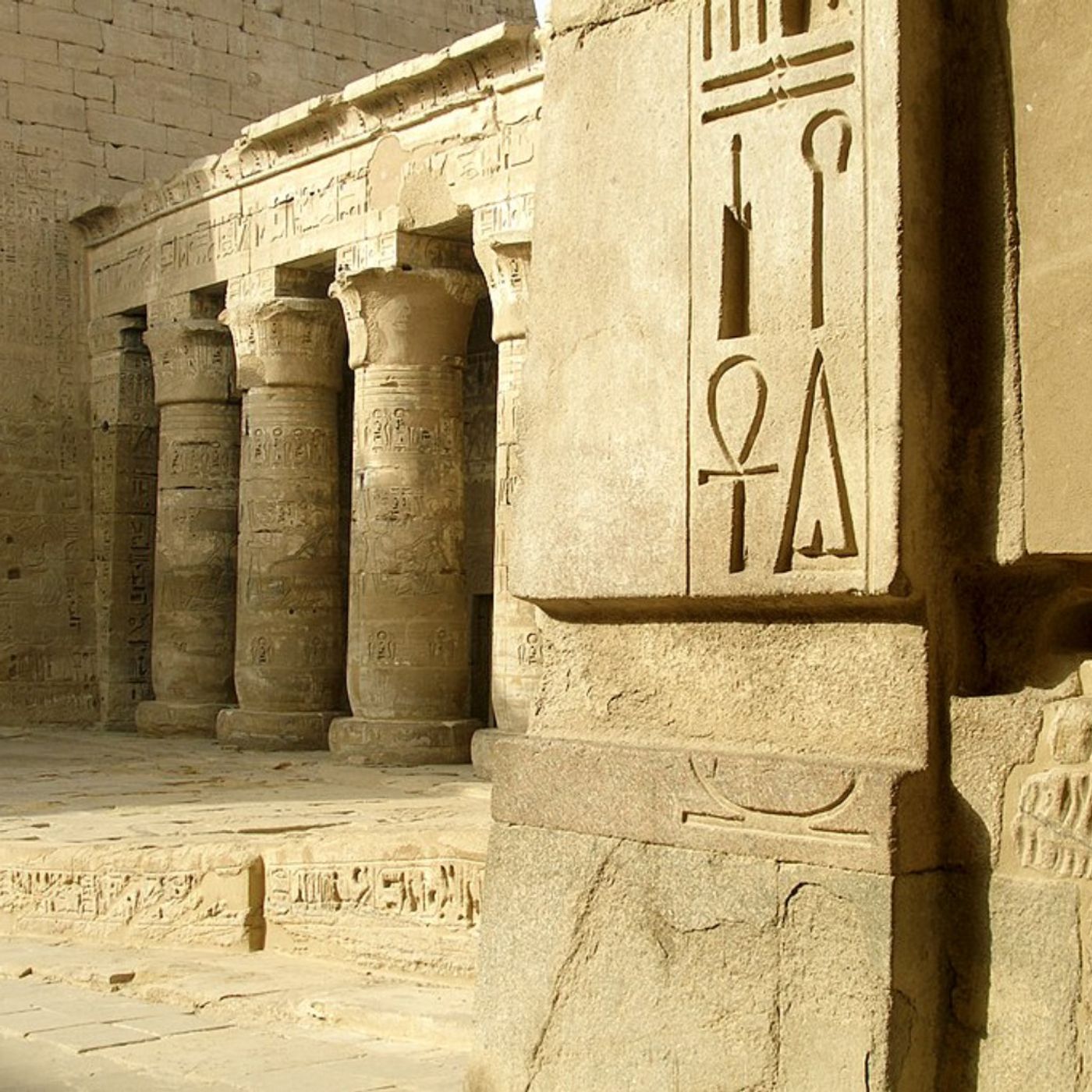
Loading summary
Transcript53 lines
- [00:08]
A
This is all of it. I'm Alison Stewart live from the WNYC studios in soho. Thank you for spending part of your day with us. I'm grateful that you're here. On today's show, we'll speak with curator Samantha Friedman about a new exhibit at the Museum of Modern Art dedicated to the late New York artist Helen Frankenthaler. Also, chef and author Piet Despain joins us to talk about her debut cookbook, rooted in a celebration of Native American and Mexican cooking. And we'll continue our full bio conversation with Jeff Chang, the author of Water Mirror Echo, Bruce Lee and the Making of Asian America. That is our plan. So let's get this started in Ancient Greece, Egypt Ancient Egypt. The New York Times calls Divine Egypt a once in a decade exhibition. It's on view at the Metropolitan Museum of Art. The show brings together ancient Egyptian objects on loan from all over the world that depict gods and goddesses. The exhibit introduces you to figures one by one like Isis and Horus and Hathor. Sculptures, paintings, coffins, game boards and jewelry show how central religion was to everyday life in Egypt, especially for the wealth and for the pharaohs. Divine Egypt is on view at The Met through January 19th. And joining me now is curator Diana Craig Patch. It is nice to meet you, Diana.
- [01:47]
B
Thank you for having me.
- [01:48]
A
So what time period is encompassed in this exhibit?
- [01:52]
B
Oh, quite a bit of time. We're looking at about 3500 BCE all the way down to the Roman period, somewhere in the first century cell.
- [02:03]
A
How do we see the depictions of gods and goddesses shift from the beginning time period you mentioned to the end?
- [02:10]
B
Well, that's an interesting question. The first representations that we can associate with a later named deity in the pre dynastic period are often symbols that are associated later with a deity. Also, there are animals that we're Fairly certain by 3000 BCE represent a particular deity. And it is not really until the old kingdom, about 2600 BCE where you really begin to get recognizable images of deities on a more consistent basis. It's still not very common. Part of that may be preservation. Part of that may be it just wasn't the way it develops later in Egyptian history.
- [03:02]
A
What questions did you have? What questions the historians you worked with have about how ancient Egyptian religion worked?
- [03:11]
B
So because it's the Metropolitan and an art museum and I am not a religion specialist, we're gonna stay away from theory. I wanted to look at the way people depicted a statue so that they could recognize who it was being represented in that statue. And Perhaps even what role that deity was going to carry out. So the way the Egyptians thought about this as best we can understand it, because ancient Egypt doesn't exist anymore, we aren't ancient Egyptians. We're looking at it as biological best we can, from what we understand. I have to make that clear. So a statue would house the deity's essence. The deity would come down into the statue and function as we understand it, the way the statue said it was going to function, by his epithets, his name, his epithets, where it was located, his dress and iconography. And so I was interested in understanding whether you could identify the iconography with a specific deity and with a specific manifestation. And did that change over time? Did it stay consistent? All right. And this is. I chose to do this because it was an area I hadn't done a lot of work in, and it's outside of my specialty, which is pre dynastic and early dynastic Egypt. And I have to be clear, I didn't do this on my own. I had a great research associate in Brendan Heinlein, and all of the curators in my department supported me. And then there was a whole staff in the museum and colleagues outside. So it's my show, but it's a village. Absolutely. I have to be. I'm very grateful to everybody who participated.
- [05:06]
A
You and your team decided to structure this so that we got to know each God and goddess individually. Why did you want to structure the show this way?
- [05:16]
B
The ancient Egyptian divine landscape is incredibly complicated. And by the end of Egyptian history, There are some 1500 gods.
- [05:26]
A
Oh, wow.
- [05:27]
B
The Egyptians were additive. They didn't throw things out. When they encountered something new, they brought it in. They merged to deities. Quite often, the underworld was full of minor deities. In other words, deities that don't exist anywhere else have very small roles. When they met a deity, encountered a deity from another culture, they often pulled that in and merged it with something they had. So it just. It grows over time. They don't throw anything out. They also seem to be extremely flexible. It doesn't seem to bother them that an element from one deity gets borrowed by other deities, and then they all use it, even though they do different things. Or you can have a falcon when it's Horus wearing a double crown or with a king's name. That's who it is. It's Horus. But there are lots of falcons in the divine landscape that aren't Horus. You really need to look at the context and the iconography. And so that's what I was interested in exploring. I dealt with only 25 major deities because it's so big and so complicated, I stuck to the ones that people probably had heard of or could fit into what they might already know something about.
- [06:51]
A
Since you mentioned flexible, one thing I wanted to talk about was that the gods and goddesses could shape shift.
- [06:59]
B
Yeah, I don't think of it that way.
- [07:02]
A
Okay, how would you describe it?
- [07:03]
B
Yeah, people. I think it's because that's a way of thinking it. They have different forms for different things. And so since their essence is up there, it's not like they're shifting forms. They're coming down into a form and functioning in that manifestation. So it's not like they're a cow and then all of a sudden, they just transform into a woman. Their image of a woman is doing one thing. When they're in their image of a cow, they're doing something else. But they're all elements of Hator. It's all things she does.
- [07:42]
A
We are talking about the new exhibit, Divine Egypt, with curator Diana Craig Patch. It's on view at the Metropolitan Museum of Art through January 19th. Egyptians believe the essence of deities live within the statues. How did that belief influence the way the statues were crafted and created and treated?
- [08:05]
B
That's a very interesting question. Again, as best we understand, there are two groups of deities. There are the deities that function for the state, and these are the ones you find in the temples. And the temples are built by the king and the statues. Representations on the temple walls are commissioned by the king. Over time, new kings come, they commission new statues, but all of those are sacred. The deity. Then the king has to, on a daily basis, honor that statue through going into the inner chamber, opening the door of the shrine, taking the statue out, washing it, dressing it, anointing it, putting on jewelry and feeding it. It's like a human being, the actions that take place. The temple is its house, and all of these steps in the ritual are what humans would expect on a daily basis. If the king does this correctly, the world is in what's called maat, which is a kind of. It's not a word that really translates into our language. The closest, the linguists tell me, is like, rightness. So by doing that, he makes sure that the world stays in rightness and you have a priesthood, because he can't be everywhere all at once. So, on the other hand, people who can't go into the temple develop other ways of relating to deities in order to get help with the problems they have on a daily basis.
- [09:47]
A
I was going to ask.
- [09:47]
C
This can't be for kings only.
- [09:49]
B
Well, in the temple it is, but not outside of the temple. In festival, the God statue can come out of the temple on a sacred bark, which we reconstructed in the exhibition, and you can talk to your deity that way. There are certain deities that develop cult areas outside of the temple, and you can go and speak to them there. You can offer a small thing to the God which could get placed in the temple and perhaps the God would feel like they would listen because. Because they liked what you did.
- [10:19]
C
Something like what?
- [10:20]
B
Like a piece of stuff? No, generally it's a representation of the deity or something sacred to the deity, like an animal mummy. In the very end of Egyptian history was one way you could put a stela with ears to get the God to listen. You could make a little statuette of the God and offer that. That's basically how it worked. And then there are two groups of deities which I actually love, called the Bess images and the hippo goddesses that developed in settlements. They were personal. They did not develop in the state system. Over time, they moved into the state system, but initially they were developed to protect. And they are a mixture of people and animals. The hippo goddesses are a pregnant woman with a hippo head and lion paws and a crocodile tail and her hair. And the Bess image started out as an upright lion with some male characteristics, and then evolved more into more human characteristics, but kept some of the leonin aspects.
- [11:25]
C
All of the objects in this exhibition are from around the world. You've gotten them from the Louvre, from the British Museum, from Copenhagen, from Berlin. What was the process like to obtain all these? I wish you could see your face.
- [11:43]
B
I have to say, I'm very lucky. The Met has really good relationships with all of these places. And I've worked to develop relationships with my colleagues who head these departments. And they were very generous and did the very best they could to help us with the pieces that we wanted to tell the story. We didn't get everything. Some things were too fragile to lend, or there were other rules that prevented it from leaving. But in general, I got an amazing array of big pieces which the Met doesn't really have very many of that deal with religious statuary. And that makes a spectacular show because it gives you large things that come from temples and small things that people give to the deities. And so you get this balance in the show of really large and really small, which is people seem to really.
- [12:38]
C
Like what was a piece that you knew you wanted to have for the show?
- [12:43]
B
Oh, well, there were quite a few. The Colossus of Min was one of the major. That was an important piece that Shmolean finally agreed to loan. And the Triad from the Museum of Fine Arts in Boston. The Horace and Haramheb from Vienna. The Anubis from Copenhagen. The scarab, the 4,000 pound scarab from the British Museum.
- [13:11]
A
I was gonna say I was waiting for that one.
- [13:13]
B
Yeah, that was another one. And then there are some smaller ones from my colleagues in other museums that help tell the stories more thoroughly than they would have if we didn't have it.
- [13:25]
C
This is a question, and it's not a gotcha question, but it is one.
- [13:29]
A
That I'm curious about is what is.
- [13:31]
C
The relationship with museums in Egypt?
- [13:35]
B
I think museums have a good relationship with Egypt. There's always politics going on. But lots of people work in Egypt. There are a lot of digs, there's a lot of people leading tours. We have a lot of contact with our colleagues. We share our research, we share our archives with our colleagues in Egypt all the time.
- [14:01]
A
We got a call and someone asked if the exhibit incorporates the Temple of Dendur.
- [14:08]
B
No, because I couldn't move it upstairs to the second floor.
- [14:12]
A
Bottom line.
- [14:15]
B
The Temple of Dender is a wonderful place and it certainly would have had. It could very well have had a God statue in it. We don't have it, but it is very late and you know, it's Roman and I was. Roman is another time period with very complicated relationships in terms of merging deities. So I stayed away from late Ptolemaic and Roman. It's another whole exhibition.
- [14:47]
A
My guest is Diana Craig, Craig Patch. She is talking about Divine Egypt at the Met. It's up through January 19th. Can we go through a couple of the different gods and goddesses? Sure, sure. Hathor, you spent a lot of time with her. She's the goddess of love and fertility and beauty. What is notable about how she is portrayed in art?
- [15:09]
B
Well, what's interesting about Hator is, is she has a whole series of forms because she has so many different roles. So she first appears as a woman with cow's horns and a sun disc, which remains her identity throughout Egyptian history. But she evolves. Her face becomes an emblem that you see on musical instruments and decorating temple capitals associated with festivals and music and the temple. She can be a cow and in that form she nurses the king. Her milk is, of course, very powerful. And is that divinity the king relates to that divinity. She can also be a lion headed woman where she is the eye of Re. She's a protector of the sun God. The same thing with being a cobra. Another form of protection. So she is one goddess with all these different forms. Because she has so many roles, we.
- [16:11]
A
See a lot of snakes.
- [16:12]
B
I like the snakes. I actually found the snakes very interesting. So yes, there are probably more snakes than you might have expected. Cobras are a major component of the divine landscape. They protect the sun God, so they ultimately protect the king as well in the form of a uraeus, which is a cobra that is arous and its heads pull back to strike. There are a number of deities who are cobras, such as Renanutet or Merceger. But there are others who take that form when they need to defend the sun God. So most snakes are female. There are a few male snakes. The most interesting to me are the pythons, one of which attacks the boat of the sun God at night and another one protects the sun God in his shrine on that boat at night, which I find fascinating. Both of those are male gods.
- [17:17]
A
One of the oldest Egyptian deities is the goddess Neith. Yes, she was first identified, I believe it was in 3400 BC. What is special about her powers?
- [17:31]
B
Neith functions differently. She's not as clearly associated with a power. She appears first as one of those symbols I was telling you about, and repeatedly in the pre dynastic. So she was clearly a deity that was very important in that period. And there aren't very many that we know of. And her symbols continue all the way through. She's mentioned in the Pyramid texts and she shows up with the body of gods. Her most best known role is as one of the four goddesses in funerary religion that protect the deceased and the canopic chests and the sarcophagi. So Isis, Nephthys, Neith and Selkhet have that role. And that's where you see neath the most often in Egyptian representations. But the fact. And she also has a town in the delta that she's closely associated with. But she's not as clear cut outside of her funerary role as others. She's just around for a very long time.
- [18:51]
C
This is a good exhibit for people who like cats.
- [18:54]
B
Yes, well, yes, yes. Felines are another. Again, a lioness is a very powerful defender of its young. And that's probably the reason that most of the deities represented as lion headed are goddesses. And again, they take on that role of protecting the sun God, protecting the king. And what's interesting is some of the move between snakes and felines between women and felines, depending on what they're doing, they're represented in different ways.
- [19:33]
C
The last time I remember this sort of excitement around Egypt was 1978 and it was King Tut. And my parents took me to the museum and I still have my ankh from the gift shop, but it still remains. We asked our staff, we have a very intergenerational staff that people, everybody is interested in Egypt. Why do you think people are still interested in Egypt?
- [19:57]
B
Just I have to say, Egypt's number one at the Met with everybody, because I think there's a number of reasons and I'll speak from why I ended up from a very early age. First of all, I think it's one of the earliest civilizations you're taught in school because it's so distinctive that it's easier for teachers to talk about this dead civilization because they have pyramids. And again, this is another reason I think Egypt has all these things that we don't have in the west that are easy to recognize. Pyramids, massive pyramids, tombs, taught on commons, treasure. I think everybody always thinks of treasure. And mummies. Again, another thing we don't do, but is an interesting concept, something that will keep your body whole for eternity. And then you have gods who are animal headed, which I think people just find very different from Western religions and modern religions where you don't see that as often, especially in the west, you don't have animal headed individuals associated with Western religion.
- [21:19]
C
Is there one part of the exhibition you'd like people to spend an extra few minutes in?
- [21:26]
B
I think the room that has to do with how people solve their personal problems as opposed to state religion, I think is very important. And I also would like people to reflect as they finish the show that all of these amazing things they've been looking at are actually the way the ancient Egyptians related to getting answers for life, death and meaning in their world. These are statues that were functional for them, they were active for them. They aren't just works of art. And that I'd like people to remember as they finish the show.
- [22:08]
C
We've been talking about the new exhibit Divine Egypt with curator Diana Craig Patch. It's on view at the Metropolitan Museum of art through January 19th. Thank you so much for joining us.
- [22:20]
B
You're quite welcome and thank you for having me. I really appreciate it.
- [22:24]
D
Did you know you can opt out of winter with VRBO? Save up to $1,500 for booking a month long stay with thousands of sunny home homes. Why subject yourself to the cold? Just filter your search by monthly stays and save up to fifteen hundred dollars. Book now at vrbo.com every holiday shopper's got a list.
- [22:41]
E
But Ross shoppers? You've got a mission, like a gift run that turns into a disco snow globe, throw pillows and PJs for the whole family, dog included. At Ross, Holiday magic isn't about spending more. It's about giving more for less. Ross, work your magic.