Loading summary
Transcript43 lines
- [00:10]
A
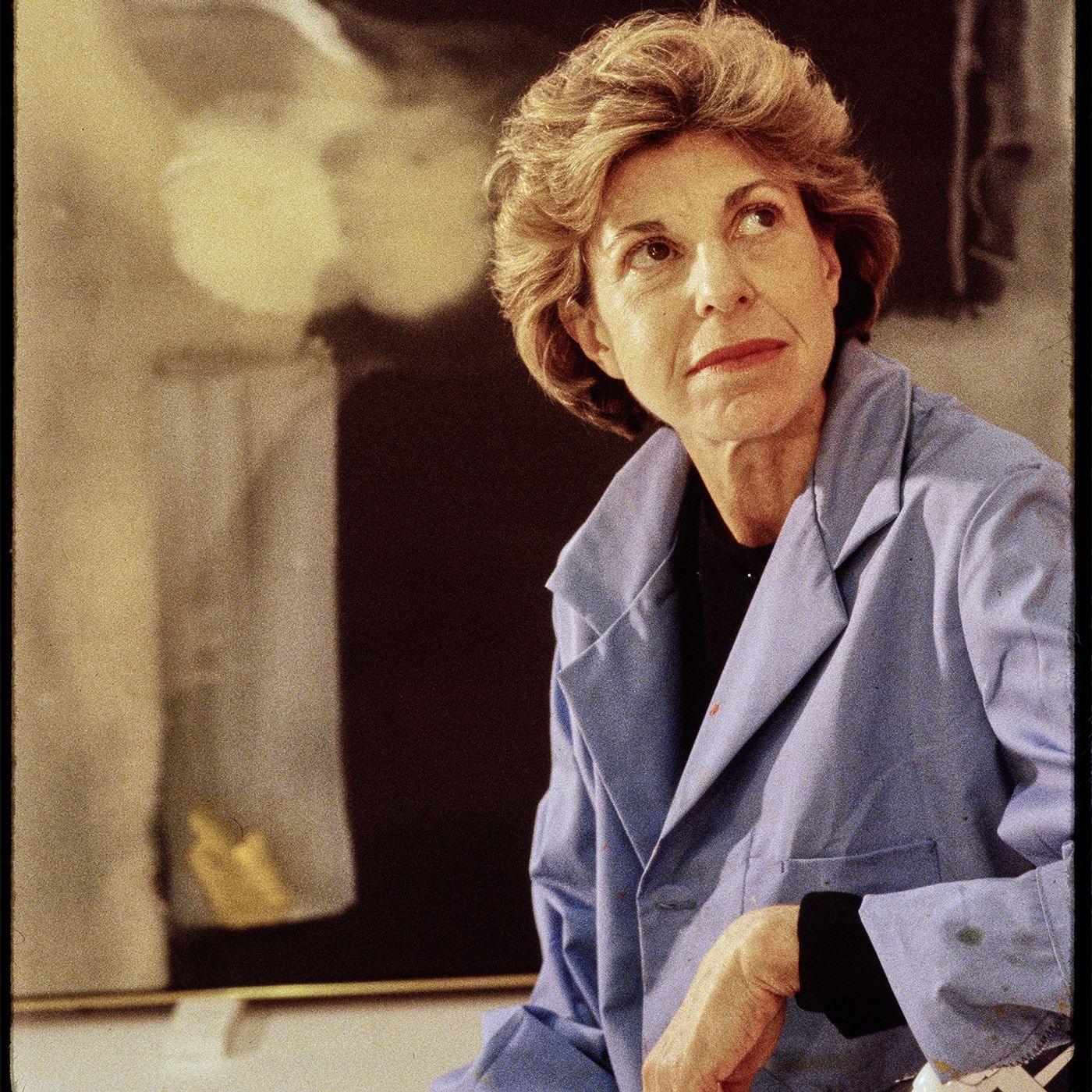
This is all of it on wnyc. I'm Alison Stewart. This hour we're spotlighting art you can see during the long holiday weekend. Maybe you plan to see the huge Wifredo Lamb exhibit at moma. That's great. But you can also see a new installation of paintings made by the late New York artist Helen Frankenthaler. Frankenthaler was a prominent abstract expressionist painter in the New York post war art world. You may remember her from the book 9th Street Five Painters and the Movement that Changed Modern Art. This show is called Helen A Grand Sweep. And Frankenthaler's work hasn't been displayed on this scale since the late 80s. Not only are the paintings massive, they also represent different decades throughout Frankenthaler's career as she continued to innovate with paint and canvas. It's on view now through February 8th. Some of the paintings in the show are on our Instagram story now. If you'd like to look as you listen, it's lovenyc. Samantha Friedman is a MoMA curator in the Department of Drawings and Prints. She organized the show and she's with me now in studio. Hi, Samantha.
- [01:18]
B
Hi, Alison.
- [01:19]
A
So Frankenthaler was a born and raised New Yorker. She was raised in some privilege. What about her childhood informed her interest in art and painting?
- [01:30]
B
Yeah, she was a consummate New Yorker. Park in 74th, as you said, a very privileged background. She was the third youngest daughter of a prominent judge. She lived not far from the Met Museum. And she tells this amazing story actually of being. She tells two amazing stories that kind of set an origin story for her in art at a young age. She talks about playing behind the met at 82nd and 5th and taking a piece of chalk as children do and drawing a continuous line on the sidewalk from 82nd and 5th, behind the Met all the way home to park in 74th, not stopping, making everybody get out of her way. So it's a kind of an origin story about line on the one hand. On the other, she tells an origin story about color, another really important aspect of her art, where she talks about on rainy days, pouring her mother's nail polish into the bathroom sink and watching as the enamel makes all of these amazing diaphanous shapes in the sink, which of course harken forward very self consciously, I think in her telling to the paintings she would become known for.
- [02:38]
A
Oh, her mother. Oh, her mother. The art Post World War II, it was art in New York. It was a really thriving scene. I mentioned that ninth Street Woman book. I Should definitely read it. It's such a good book. How would you describe her place in post war New York in the art scene?
- [02:57]
B
Yeah, Frankenthaler was part of the second generation of Abstract Expressionists. Often a kind of older group of artists are referred to as the first generation and the younger set, which include many of the women, as the second generation. And she was among the youngest in the 1951 Ninth Street show, which gives that wonderful book its name. She was the youngest of, I think, some 70 artists. So that just tells you, you know, she's fresh out of Bennington College. She studied there with the painter Rufino Tamayo. She shows up in New York again, a familiar place to this. To this New Yorker. And she. It's. She's in the midst of everything. She's, you know, she starts dating the critic Clement Greenberg, the prominent Abstract Expressionist critic, which of course, gives her kind of entree to this world. Meets Jackson Pollock and Lee Krasner, meets Willem and Elaine de Kooning. So she's in their studio, she's seeing everything happen. She's part of all of these debates. And she says, you know, the most exciting thing was to be a young person, she was in her twenties, and really arguing about pictures with all of these people who really care about these debates about whether it's, you know, line or color, about the scale of canvas, about abstraction versus representation. So she's really in the thick of it.
- [04:14]
A
It always blows my mind when you think about people just their days of, like, going over to De Kooni's house or going to Jackson Pollan's house, Aunt Pollock's house, and. And arguing about art.
- [04:24]
B
Exactly. And not, you know, not sending an email or three emails to set it up in advance, but hollering up to the window and a key being thrown down.
- [04:32]
A
I to put on your hat for us, your art history hat for us. What does Abstract Expressionism mean?
- [04:40]
B
Right. So this is kind of a movement, one of the movements that we talk about when we talk about modern art. And it refers to an impulse in the United States, specifically in New York, often right after the Second World War, when artists are really trying to contend with the kind of cataclysm of the Second World War and formally do that through abstraction. So on the one hand, the abstract of Abstract Expressionism means that for the most part, the colors and forms in their work are not necessarily referencing anything in the observable world. The Expressionism part of Abstract Expressionism is the idea that there's something deep within that individual humanity at large that's being conveyed through those forms and colors.
- [05:33]
A
And it's interesting because she grew up in the shadow of the Met, but she went towards a more modern way of painting. First of all, why did she go towards a more modern way of painting? And what would you consider her sort of breakthrough?
- [05:47]
B
Yeah, well, when she studies at Bennington College, she studies with an artist named Paul Feeley, and she gains a kind of basic Cubist vocabulary of structuring pictures, a kind of a set of lines and forms that she'll carry with her. So she's already thinking towards. Toward the modern. But it really does take a kind of a bravery and a sense that she wants to be on the cutting edge, that she wants to be part of the avant garde. Even as I should say, she's someone who thinks a lot about art history, whether it's her immediate predecessors she loves. Well, not immediate, but she loves Matisse and Kandinsky or artists who are really important to her. But, you know, she loves going to Europe and seeing the caves at Altamira and seeing the works in the Prado. And so art history remains really important to her, even as she's pushing the boundaries of modernism and looking toward the avant garde. And I should say, even though she grew up in the shadow of the Met, she did love visiting the Museum of Modern Art, too.
- [06:46]
A
My guest is Samantha Friedman, MoMA curator in the Department of Drawings and Prints. We're discussing a new installation she organized, Helen A Grand Sweep. It's on view at the museum through February 8th. Why is now the right time to bring out Frankenthaler's work?
- [07:05]
B
It's a good question. She is one of these artists who, in a way, seems timeless. For me, she was someone who has always sort of been around. You've heard her name, you've seen her works, but maybe you haven't taken the time to kind of dig in and think about it and really understand what they're all about. And I think, certainly, as we've all enjoyed learning more about the artists of this moment in Mary Gabriel's book that you mentioned, and beyond, and kind of taken the time to think about each of them individually as well as in a community, it was really exciting to think about what Frankenthaler herself contributed to this movement and this language.
- [07:49]
A
May I ask this question? How many pieces of Frankenthalers do you have in your collection?
- [07:56]
B
Well, it's a great question. We have over 60 works by the artist in different mediums. So even though this installation is quite concise, five major Monumental paintings. She was experimental in many mediums, so we have. I'm a Works on Paper curator. We have amazing watercolors by her in the collection, which relate very closely to her paintings. And she was also an amazing printmaker, a really experimental printmaker who pushed the boundaries of that medium, too. So we have six paintings in the collection, five of which are on view in a grand sweep, but we have over 60 works by the artist in total.
- [08:36]
A
What made you want to do the piece? What made you want to organize this?
- [08:40]
B
Well, you know, the atrium at moma, if you've been to that space, you know, it's a kind of a grand space, a daunting and imposing space. And there are not many artists whose work can really charge it, can really fill it, not only with their size, but with their color, their intensity, their ambition. And we were so lucky to receive a generous gift of the Helen Frankenthaler foundation recently of a late painting by Frankenthaler.
- [09:09]
A
Ooh.
- [09:10]
B
Exactly. Exactly. So this is a painting called Tor dark. It's from 1988, and it was the latest painting we had by the artist in the collection. And what we realized is that with this kind of bookend, you could now kind of see an ARC from the 50s through the 80s of this artist's whole career. She came out in this moment, this exciting moment of Abstract Expressionism. And often we focus on and fetishize this moment that an artist first breaks out with their signature language. But so many of our artists continue to work over decades and decades, continue to innovate. And so it was an opportunity to look at her work as a whole, to kind of see it in context, from the alpha to the omega, and to really see how that breakthrough language of that signature soak stain technique she pioneered in the Abstract Expressionist moment carries through and changes all the way through the late 80s when we get a picture like toward dark.
- [10:13]
A
So the idea is that you took a different painting from each decade of her career.
- [10:17]
B
Exactly. There are five pictures. You go from 1957 to 1988, and it's almost like the tiniest retrospective where you get a story about an innovation or a change, often based in a material experimentation in a single picture. So we're really encouraging visitors, especially in that space, to spend some time with these pictures, interact with them, soak them in, immerse in them. They're full of color, and they're subtle, and they change. And so you can really kind of understand that story in microcosm.
- [10:49]
A
The name of it is Helen A Grand Sweep. Why is it called the Grand Sweep?
- [10:55]
B
So this was something she said about one of the paintings in the exhibition. Chairman of the Board. And I just love that title. That kind of bravado of the time and the scale of the painting really fits that sense of bravado. And when she was talking about the making of this picture, she said it was about a grand sweep. I had the basic idea in my head. I knew how the lines would dance in. I felt sure of myself. And I loved that sense of confidence. And I loved the idea that this is a grand space. Her career is a grand sweep. This picture is a grand sweep. Even in five paintings, you have that sense of scale.
- [11:38]
A
And the pictures are grand. They go. They get as wide as 16ft. What did she like about working on such a large scale?
- [11:45]
B
Well, I should say when she's making her paintings, one of her innovations that she learned from Jackson Pollock actually was to move her canvases onto the floor and to really be in and on them when she was making them. And so I think to be fully immersed in the worlds of her pictures, the scale was a big part of that. And I think she felt that her most successful pictures were her biggest.
- [12:09]
A
When you think about her work over the course of the decades, how does she evolve?
- [12:15]
B
It's a great question. So I mentioned her soak stain technique, which is what she innovates in the 50s. And this is the idea that rather than the paint sitting on top of the canvas, when you think of those thick strokes of paint, she's thinning her paint with turpentine, her oil paint in the 50s, and it's really, really soaking into the very fibers of the canvas. So it's actually staining the fabric of the canvas. We often forget that a painting is made on fabric. Right. So this is her, her initial kind of signature contribution. She leaves a lot of raw canvas exposed through that process. And they almost feel like giant watercolors in that way. As she moves to the 60s, a few things happen. She transitions from using oil painting to acrylic paint, which is a water based paint and behaves differently. And then she starts to emphasize shape and edges and corners more in her work as she's thinking more geometrically. She's certainly not a minimalist, as other artists in the 60s are, but there's something about her work that is responding to that sense of change. Formally in the air, more and more raw canvas is exposed. She gets braver about her compositional choices. Her scale grows. You mentioned Chairman of the board being over 16ft. There's a new emphasis on line in the 70s. Often, because color is so key to her language, we forget the key role that line plays. We see that in Chairman of the Board. And then when we get toward the 80s, we see a certain kind of mood shift. The raw canvas is no longer extreme, exposed. It's not aerating the composition in the same way as it is in the earlier pictures. And there's a kind of a sense of mystery, this painting, so much like a nocturne. And so you see all of these different changes happening. And it's something that Frankenthaler herself reflected on, that through her life, there was change in her paintings, but there was also continuity. It was, she liked to say, the work of one wrist.
- [14:24]
A
Of all these paintings, what ties them together as Helen Frankenthaler paintings? Because we've just talked about all the evolution. But what remains Frankenthaler about them?
- [14:36]
B
I think her incredible sense of color is something that is omnipresent. Often color combinations that you wouldn't think would work are these really subtle harmonies and dissonances that characterize her pictures throughout. It was interesting when we were installing them, seeing how sometimes paintings that were made at different moments had a stronger relationship to each other than ones that were made at others.
- [15:07]
A
Oh, that's interesting. My guest is Samantha Friedman, Momenter Curator in the Department of Drawing and Prints. We're discussing a new installation she organized, Helen A Grand Sweep. It's on view at the museum through February 8th. There's an audio guide involved in this installation, and it even includes her own voice. Helen Frankenthaler's voice. What can viewers learn by listening to her when they're looking at the paintings?
- [15:36]
B
I'm so glad you mentioned that, Alison, because it was such a joy to be able to incorporate the artist's voice. It's not always a luxury that we have if that material doesn't exist. And in her case, there's a wealth of really rich audio. And, you know, I think even just hearing the sound of her voice, hearing her kind of her chutzpah, for lack of a better word, you really get such an immediate sense of her, of her. Her ambition, her commitment to making pictures that take risks, that wrestle with different things. And I just think hearing even just the sound of her voice and the way she expresses herself in words as she does in paint, adds so much to the texture of the presentation.
- [16:25]
A
Can you tell she's a New Yorker?
- [16:27]
B
You can. You can tell she's a New Yorker, for sure.
- [16:30]
A
The installation will be part of what mom is calling a drop in drawing program. When do these take place? What happens at a Drop in Drawing?
- [16:40]
B
My amazing colleagues in our learning and engagement department plan all sorts of opportunities to not only visit our exhibitions, but to go a little deeper. And sometimes we know that the best way to engage with art is not only looking, but also making. And so there were our sessions. You can visit moma.org for the details of the when and the how, but where you're not only looking but but drawing and inspired by the works on view. Soaking up these pictures. That's one of the luxuries of the space of the atrium. And to be making your own reflections in light of hers.
- [17:18]
A
And I heard a rumor in our last minute that she was quite a partier.
- [17:24]
B
She was definitely a hostess and entertainer and could knock them back with the best of them.
- [17:31]
A
Yes, the name of the show is Helen A Grand Sweep. It's on view at the Museum of Modern Art through February 8th. My guest has been Samantha Friedman. Samantha, thanks for coming to the studio.
- [17:45]
B
Thanks so much for having me, Allison.
- [17:47]
A
Coming up, we'll continue our full bio conversation with Jeff Chang, the author of Water Mirror, Bruce Lee and the Making of Asian America. That's coming up after the news.
- [18:27]
B
Wnyc is supported by the jewish museum. Now on view, a display of 130 hanukkah lamps and the new exhibitions identity, culture and community. Anish kapoor, early works and more. Tickets and holiday hours@thejewishmuseum.org this is wnyc fm hd and am new york. Every holiday shopper's got a list. But Ross shoppers, you've got a mission like a gift run that turns into a disco. Snow globe, throw pillows and PJs for the whole family, dog included. At Ross, holiday magic isn't about spending more, it's about giving more for less. Ross, work your magic.
- [19:10]
C
This is Ira Flaydo, host of Science Friday. For over 30 years, the science Friday team has been reporting high quality science and technology news, making science fun for curious people by covering everything from the outer reaches of space to the rapidly changing world of AI to the tiniest microbes in our bodies. Audiences trust our show because they know we're driven by a mission to inform and serve listeners first and foremost with important news they won't get anywhere else. And our sponsors benefit from that halo effect. For more information on becoming a sponsor, visit sponsorship.wnyc.org.