← All Of It with Alison Stewart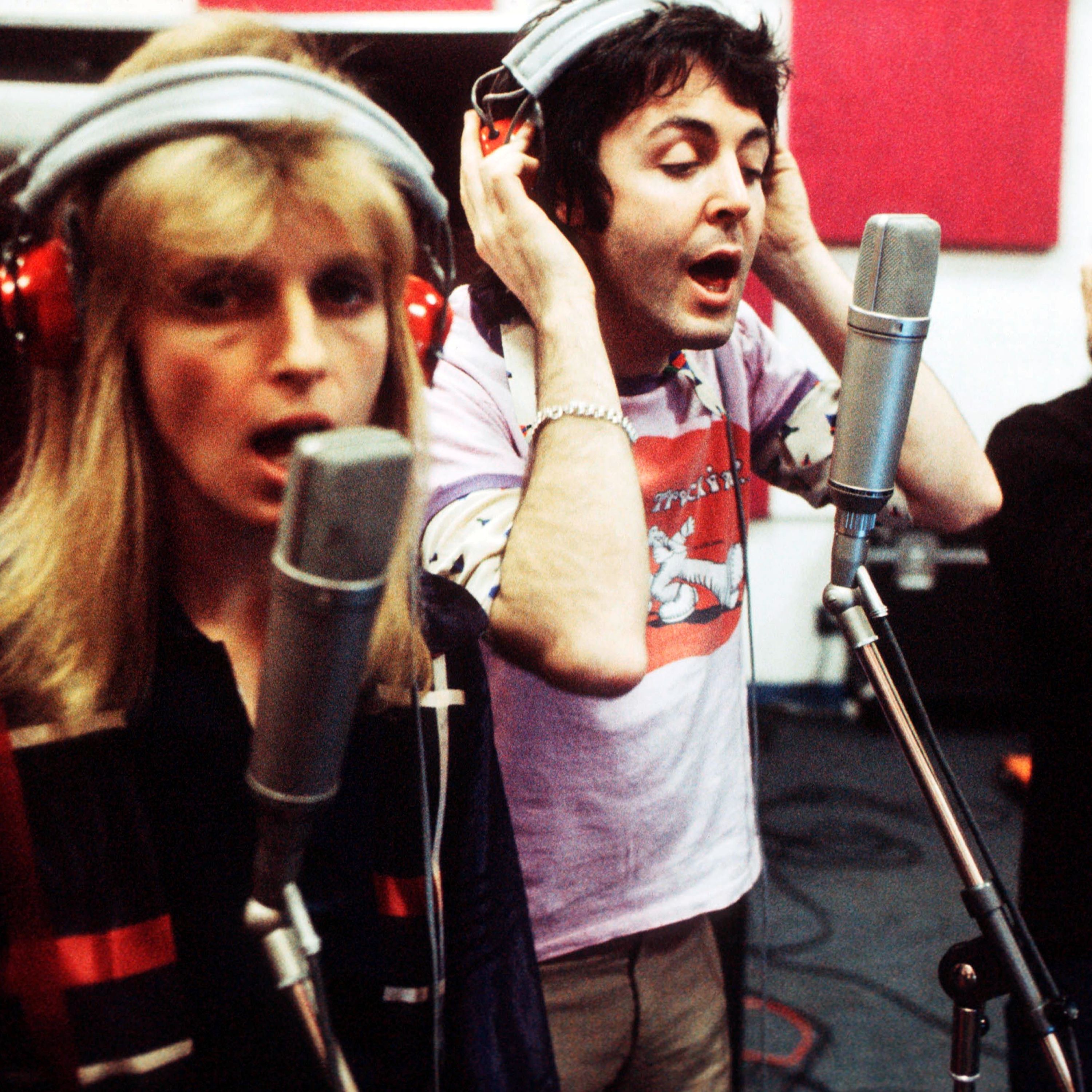
Loading summary
Transcript49 lines
- [00:08]
A
This is all of it on wnyc. I'm Alison Stewart. Now we'll turn to a particular moment in the career of the musician Paul McCartney. A new documentary called man on the Run explores McCartney's career after the Beatles disbanded in 1970. Over the course of the 70s, Paul would retreat from city life to the Scottish countryside. And after a few attempts to find his footing, he started the band Wings with his wife Linda and guitarist Denny Lane of the Moody Blues. Man on the Run draws on interviews with McCartney, his bandmates and Wings and other Beatles adjacent voices, including John Lennon's son Sean. And through those perspectives, we get a deep dive into an important decade in the development of Paul McCartney. Let's listen to a little bit from the documentary. First we'll hear the voice of Chris Thomas, a music producer who worked with the Beatles, talking about visiting Paul as he was working on his first solo record. And then we'll hear Paul himself reflecting on his songwriting around that time.
- [01:13]
B
I remember I was in Abbey Road one day, Paul was in number two listening to the records. So I popped my head in there and he sort of gestured, you know, come in. And I stood there and I listened to this song. I said, who have you got playing on that? And he said, oh, I did it all myself. And it's like, what,
- [01:34]
C
baby, I'm amazed the way you love me all the time. Maybe I'm afraid of the way I love you.
- [01:46]
B
It's not that I have any doubts about loving you, but conversation in my head, it's more intense. I'm mixing in fear of being a grown up.
- [02:01]
A
Joining me now to talk about man on the Run is filmmaker Morgan Neville. He is the director of the great documentary 20ft From Stardom, for which he won the Academy Award for best Documentary feature. Morgan, welcome.
- [02:14]
D
Hi. Good talking to you.
- [02:16]
E
So, Morgan, you've said that you were excited with this film to get a look at this sort of underexplored decade in Paul McCartney's career. What were some of the thread from this era that you were most excited to explore?
- [02:29]
D
I mean, you think of Paul McCartney as somebody who's just kind of gone from success to success, but I knew that this period of time was really probably the biggest struggle he ever had in his career. And, you know, really after watching Get Back and having read, you know, way too many Beatles books that I knew there was a moment after the Beatles broke up where Paul was really adrift. You know, he had to ask all of these kind of existential questions about who am I? Who am I? As an artist, you know, he in one year gets married, has a child, adopts a child, and the Beatles break up. And so he really has to figure out a lot of things. And this story kind of begins at the moment the Beatles break up. And then you see him basically spend a decade trying to figure out who is Paul McCartney.
- [03:26]
E
Paul is an executive producer on this film. He's obviously been asked every question imaginable. First of all, what kind of access did you have to him?
- [03:36]
D
I had great access. You know, I have to say that, you know, I've been making documentaries for a long time, and it was important to me to not just ask the usual questions or get the usual answers. I mean, I think Paul, like all of us, has kind of a. A jukebox of anecdotes in his head. And if you ask him about a song or an album, you know, there's a familiar story. But I just thought, let's not do that. You know, in a way, the film is really kind of about the emotional story he went through in the decade. And, you know, I sat down with him, you know, numerous times over numerous months. So I would go and interview him a couple of times and I'd edit. Then I'd go back a couple months later. And this went on for, you know, a year maybe. And so really trying to get Paul to have conversations that were going kind of deeper into his emotional state. And he was game. You know, I think it was really him trying to make sense of what he went through in this time. And he also, I will say, left me completely alone creatively. So he didn't have any input on the film ever, really. He saw the film when it was done and didn't, you know, had no comment on it other than I just felt like I watched my life flash before my eyes.
- [05:06]
E
We're talking about the new Paul McCartney documentary, Man on the Run, about the songwriter's career in the decade after the Beatles disbanded. My guest is documentary filmmaker Morgan Neville. What do you think Paul says people, most people get wrong about the Beatles?
- [05:24]
A
And what do you think that most
- [05:25]
E
people get wrong about the Beatles?
- [05:27]
D
Oh, I mean, the thing that I think really came out here, which is something that I. Again, I think it kind of started with the Get Back project, which is in the popular telling of the demise of the Beatles and the breakup. It was that they all hated each other and that Paul was overbearing and would tell George what guitar solos to play. And the film of the Let It Be sessions, the original film, Let It Be, is Really a divorce film that concentrates on all the dark stuff. But then get back, you know, eight hours or whatever it was, really shows the humor and the fraternity and. And the friction and all of it like that. It was just. It was like a bunch of brothers who were kind of sick of each other and all wanted to go know who they were as individuals. Though Paul was probably the one that wanted that the least. I mean, John says Paul's the one that wanted the Beatles to stay together more than anybody. And Paul was the one, ironically, who first let it leak that the Beatles were no more. So newspaper headlines became, Paul Quits the Beatles. But, you know, and that was kind of how many people came to think of it. But Paul really was the one who didn't ever want the Beatles to end. But I think what you see is, even in their estrangement, particularly in the early 70s, when Paul was suing the other three Beatles to get out of the Apple legal arrangements and basically to free himself from a manager he didn't want, it was the only thing he could do that even then, you see them talk about each other with love, you know, even when they're feuding, you see John Lennon referring to Paul as his best friend or his brother. So there is really this sense that they had experienced something together again from the time they were, you know, 15, that only the four of them ever knew what that was like. And they shared that bond, you know, through the rest of their lives.
- [07:40]
A
Yeah.
- [07:41]
E
Another voice we hear in the documentary
- [07:43]
F
is that of Sean Lennon, John Lennon's son.
- [07:46]
E
What parts of this time period did you feel that Sean's voice needed to be included?
- [07:55]
D
I felt like I wanted somebody to talk about kind of John's again, to kind of understand how John felt about that time. And Sean mentioned a lot of things I've never really heard. I mean, talking about all of Paul's records in his dad's record collection or talking about just how much John was really clocking everything that Paul was doing. In fact, the last album John did, Double Fantasy, came out of John hearing Paul on McCartney 2 and hearing the song coming up and thinking, okay, I've gotta get back to this.
- [08:37]
E
Yeah, it was kind of interesting, him describing how well played the Wings records
- [08:41]
F
were in the house.
- [08:43]
D
Yeah. I mean, it's. I don't know. It just made me feel something emotionally. And then also, you know, Sean, in talking about his dad's and how, you know, Paul reacted to it, you know, Paul, there's this famous clip where the night of John's Death. Paul's confronted by journalists on the street and they say, what do you think? And he has a long answer, but at the end he just says, it's a drag. And of course, that became the headline, which sounds callous, but Sean kind of unpacks it. And you understand that Paul was just in shock. I mean, as the world was in shock. But I think he couldn't process what had happened, you know, And I think, frankly, it took him years and years to process.
- [09:34]
F
We're talking about the new Paul McCartney documentary, Man on the Run, about the songwriter's career in the decade after the Beatles disbanded. My guest is documentary filmmaker Morgan Neville. So early on, we see Paul in the Scottish countryside living a very simple family life. What was he doing when he was up there? What was he thinking about?
- [09:58]
D
I think he was thinking about feeding the kids and shearing the sheep and mending fences. I mean, so he wasn't thinking about
- [10:06]
F
being a musician at the time, or was that in the back of his mind?
- [10:09]
D
I mean, I think he was trying to figure out, if I'm not a Beatle, who am I and what kind of a musician am I? I mean, he even says there was a moment where he wasn't even sure he was gonna make music anymore. I mean, it was so disruptive. And really what happens is, two weeks after John Lennon says in a band meeting, I want a divorce. Linda and Paul and their new child Mary go to Scotland. And Paul had bought this tiny farmhouse in the middle of nowhere on the Kintyre peninsula. And Paul never liked it. He had barely spent a night there. But Linda said, well, let's just go up there and just get lost. And they go up there and it's really, I've been up to the house. It's a tiny, dingy, two room stone farmer's house, and they make their home there and they grow their own food and they raise their children there. And it really, as crazy as that maybe seemed at the time, it actually is the best way to stay grounded when you're coming out of something like being a Beatle.
- [11:23]
E
Yeah, it's interesting because you say, you know, Paul is really good at making you feel very comfortable when you're talking to him. He puts you at ease. Did that happen with him with most musicians, once he decided to go other avenues with music, did most people think, oh, my God, I'm talking to a Beatle, or were they able to take Paul as who he was at that moment?
- [11:46]
D
I mean, they were not in the beginning able to take Paul just As he was. I mean, I called the film man on the Run because what you see again and again is Paul trying to run away from the shadow of the Beatles. And you realize it's an impossible. You know, every interview he gives, every record review he receives, all compare everything to the Beatles. Talk about the Beatles. When are the Beatles gonna get back together? And particularly in the first half of the 70s, there's a real kind of sense of. Kind of anger, actually, you know, to maybe to all the Beatles, but particularly to Paul. Just a sense of heartbreak that I think fans and critics had about the Beatles breakup. And there's just this attitude of, why can't you guys just get back together, stop making this silly solo music and can we have the Beatles again? And so everything is really judged through this, you know, kind of harsh, inescapable, you know, prism. And Paul starts making music that he intentionally tries to make not sound like Beatles music. He doesn't do Beatles songs in concert for years. You know, he's really trying to separate himself from that. And slowly, over the course of that decade, you know, he starts to become a little more comfortable with it. But really, it's not until John's passing that he can stop running from it all.
- [13:23]
E
What was interesting to you musically about his first stabs at writing and recording after the Beatles as Paul McCartney?
- [13:33]
D
Yeah, I mean, if you listen to his first two albums he did, which is McCartney1 and ram. And, you know, a lot of them were written or some recorded in this farmhouse in Scotland. And so you have songs like Long Haired lady and Lovely Linda and Heart of the country and Ram, Ram on. You know, they're pastoral, they're sweet, they're handmade and they're not cool. You know, I mean, if you. I mean, cool meaning in 1972, singing about, you know, life in the farm, you know, is not where the attitude of rock criticism or rock music was, which was, you know, very kind of angry and politically involved. And, you know, in the film, I quote one of the reviews. But of the many bad reviews that Ram got, you know, calling it the nadir of 60s music at that point. And that was from Rolling stone magazine. Now, Ram is one of the 500 greatest albums of all time in Rolling Stone magazine. So in a way, I think Paul's music was out of sync with the time, but it was timeless. And I love those albums. I think a lot of people love those albums. But it just, at the time, was not cool.
- [15:02]
E
We get a lot of Linda in this documentary as well. Why was it Important for you to spotlight her role not just as Paul's wife, but also as his bandmate.
- [15:15]
D
I mean, Linda's always been kind of a two dimensional character. And again, you know, the kind of frustration people had with the Beatles breaking up, there was a lot of anger directed against Linda and a lot of anger directed against Yoko. And, you know, it's interesting that both Paul and John married women who were older than them, who had already been married and divorced, who already had kids, who they made new families with and made music with. You know, they were both looking for some balance, I would imagine, to equal something they had had with each other. And Linda, who had no musical training beyond choir in high school, is drafted into the band because they love each other and they don't want to be apart. And Paul kind of wants everything he's doing to come from, from the family. I mean, the family is the center of what Paul kind of creates in the 70s. And, you know, every tour they have, the whole family is there. When they're in the studio, there's a crib in the middle of the studio. I mean, the family is always together. And Linda, it was really important for me to understand who she was as a person. And that of course, you know, she. It was no accident that Paul fell in love with her is that Linda was smart. She had been a very accomplished rock photographer, so she had traveled in that world, but she was worldly. You know, her father was a lawyer. She's not part of the Eastman Kodak family, though many people still think that. But her father was a successful lawyer for the music industry and for the fine art world. So she kind of grew up knowing those worlds too. And you start to understand that, you know, she really kind of created a buffer for Paul. And, you know, Paul in the Beatles often would run into, you know, people rolling their eyes and saying, no, you know, I don't want to do that. But, you know, with Linda, Paul said the refrain she would always say when he'd ask her about a new idea, she would say, it's allowed, that she gave him permission.
- [17:38]
E
We're talking about the new Paul McCartney
- [17:40]
F
documentary, Man on the Run, about the songwriter's career in the decade after the Beatles disbanded. My guest is documentary filmmaker Morgan Neville. Let's hear a clip from the earliest days of Wings. Just after Paul invited guitarist Denny Lane and drummer Denny Seawell to make music with him,
- [18:00]
B
he had a little studio. Well, not a studio, it was like a barn, which he called Rude Studios.
- [18:14]
G
He said, we're all going to be A part of this. What I make, you're going to make. He wanted this to be like. He wanted us to be known, just like the Beatles were known.
- [18:27]
D
I went, okay.
- [18:31]
F
When did Wings really find its groove?
- [18:34]
D
Well, the first couple of Wings albums, Wildlife and Red Rose Speedway, again, are not particularly well received. As Paul says in the film, wings were a dud when they started. And, you know, it's also interesting to remember that Wings was actually a kind of revolving door of a band. It wasn't supposed to be. He wanted it to be a band. And this is part of what Paul had to wrestle with, which is Paul in the beginning said, we are starting a new band, Wings, and I'm just gonna be the bass player, and we can start at square one and we can tour in a van. And it was romantic and it's what he had known in the Beatles, and it was kind of the path he knew how to follow. But it was an impossibility. I mean, there's no way to not be Paul McCartney and some other guys, which is something that all the other members of Wings through the years had to. Had to wrestle with. But it's really when the kind of first lineup of the band disintegrates in 1973, and Paul and Linda and Denny Lane, who is the one consistent member of Wings all the way through, go off to Lagos in Africa to record what becomes Band on the Run. And that album, I think, is the album where Paul really figures out who he wants to be as an artist. It's also the time when the Beatles business is getting settled. You know, that all of the kind of the acrimony and the legality of everything they're going through all kind of wraps up. And I think at that moment, Wings really takes flight, I guess. Sorry for the pun.
- [20:19]
F
Do you have a favorite Wings song?
- [20:22]
D
Oh, I love so many of their songs. You know, Uncle Albert, Admiral Halsey. I'm a big fan of Let Him In. I'm a big fan of. I mean, so many great ones, you know, and that was part of it, is that he made so much music in this decade. He put out 10 records, and every record has great music on it. And I think it's interesting because he's trying on different hats of who am I as an artist? But in a way, that's kind of what the Beatles were doing. If you look at the range of the music, particularly that Paul wrote, look at the White album to Abbey Road. I mean, the diversity of music that Paul was doing, I think he liked to be Able to wear all these different hats and not just be one thing.
- [21:13]
F
I like let him in as well. You know, so much of your work deals with celebrating and exploring the lives of famous creatives, including Steve Martin, Lisa Fisher, Keith Richards, Mr. Rogers. What made Paul McCartney stand out to you when so much has been written about him? Every. You would think people know everything they need to know about Paul McCartney. What stood out to you?
- [21:42]
D
I mean, I think I really tried to show a side of Paul that he doesn't show, which is that Paul, you know who. I think at one point when John and Paul were feuding, John referred to Paul as rock music's best PR man. In a way, that's a little bit of a dig that Paul was just good at kind of glad handing people. And Paul could be incredibly charming and funny, but the thing that gets lost is Paul was tough and that you don't have a career like that if you're a pushover, if you don't know what you want. And you realize that both John and Paul both had a really steely interior that really allowed them to do what they did. So, you know, I think exploring that side of it and the other thing I thought going into the film was, you know, Talking about Paul McCartney as musical genius is in a way the least interesting thing about Paul. Because we know that, we've heard that, we hear the music, we know he's a genius when it comes to music. So going into it, I kind of said, well, let me just take that idea and put it on the shelf and, and think about the film about a guy named Paul who's dealing with a divorce from his band and suddenly has to put his life back together. And in that way, I think the thing that surprised me is how relatable Paul was, you know, and the kind of questions he was asking of how to balance your family and your art or how do you deal with your own legacy? You know, do you lean into it or run away from it and the expectations that are put on you and a lot of things that, you know, I guess I could relate to.
- [23:35]
F
The name of the documentary is man on the Run. My guest has been filmmaker Morgan Neville. Hey, Morgan, thanks for joining us. We really appreciate it.
- [23:45]
D
Great talking to you.
- [23:46]
H
It's tax season and at Lifelock, we know you're tired of numbers, but here's a big one you need to hear.
- [23:52]
D
Billions.
- [23:53]
H
That's the amount of money in refunds the IRS has flagged for possible identity fraud. Now here's another big number. 100 million. That's how many data points LifeLock monitors every second. If your identity is stolen, we'll fix it. Guaranteed. One last big number. Save up to 40% your first year. Visit lifelock.com specialoffer for the threats you can't control. Terms apply.
- [24:16]
I
Since WNYC's first broadcast in 1924, we've been dedicated to creating the kind of content we know the world needs. In addition to this award winning reporting, your sponsorship also supports inspiring storytelling and extraordinary music that is free and accessible to all. To get in touch and find out more, visit sponsorship.wnyc.org.