Loading summary
Transcript68 lines
- [00:00]
A
WNYC Studios is supported by Odoo. When you buy business software from lots of vendors, the costs add up and it gets complicated and confusing. Odoo solves this. It's a single company that sells a suite of enterprise apps that handles everything from accounting to inventory to sales. Odoo is all connected on a single platform in a simple and affordable way. You can save money without missing out on the features you need. Check out Odoo at O d O o dot com. That's O d O o dot com.
- [00:39]
B
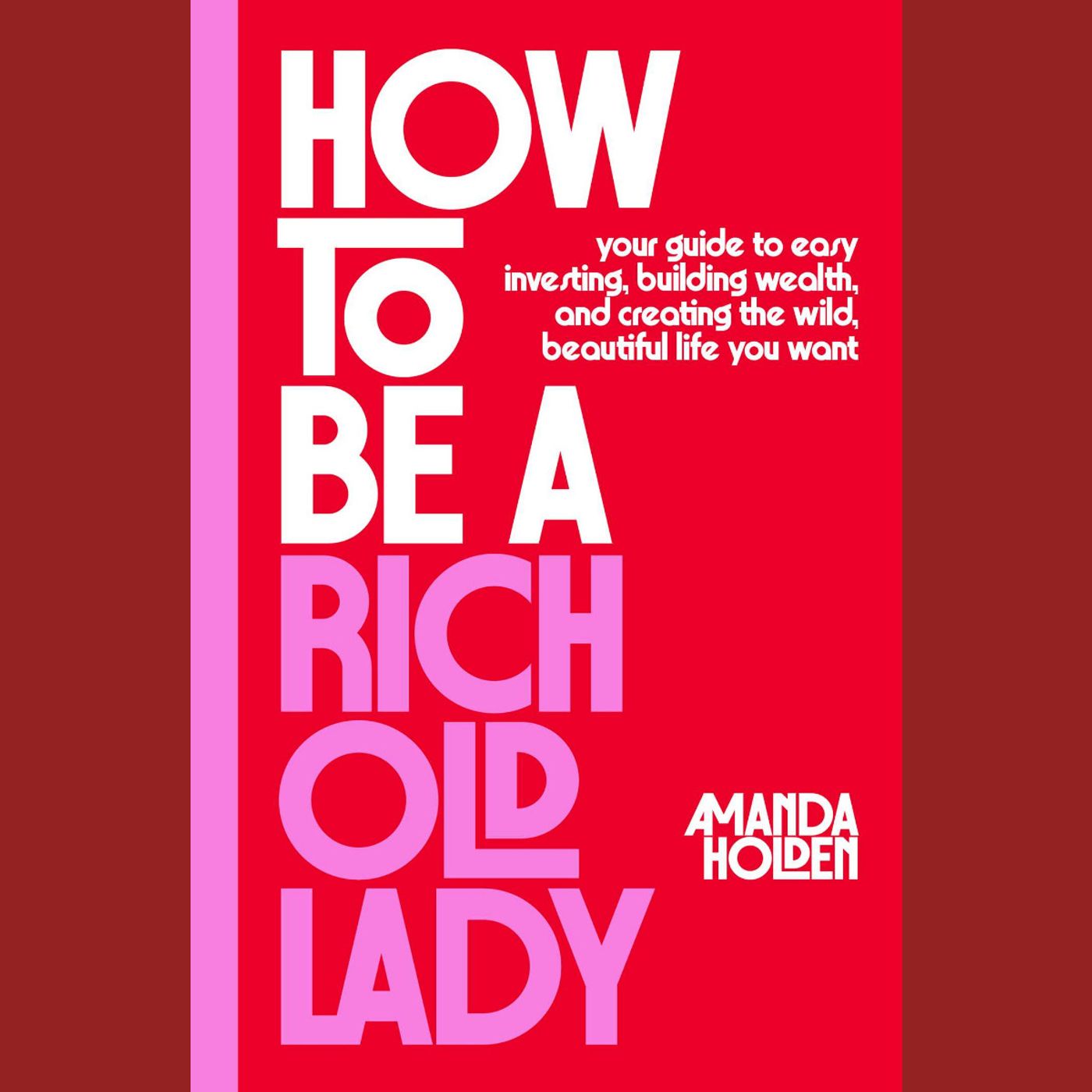
This is all of it. I'm Alison Stewart live from the WNYC Studios down in soho. We're happy to spend our day with you. I'm grateful that you're here. On today's show, director Kautha Ben Hanya joins us to discuss her new film, the Voice of Hinra Job, which blends documentary and narrative filmmaking to tell the story of one Palestinian girl trapped in gaz. Actor Carolina Weiger will be here as well. She stars as Zsa in the Apple TV series Pluribus. It's an all of it watch party. And we'll speak with two reporters about why breaks between shows Seasons have gotten so very long. That's the plan. So let's get this started with how to Be a Rich Old Lady. Financial expert Amanda Holden is a former Wall street banker who realized after several years that she was one of the few women in her workplace and she was making rich men richer. So she decided to start a business to focus on helping people, women especially, learn how to invest and be financially independent. In her new book. In her new book, how to Be a Rich Old lady, she writes, money is harder for women to accumulate. And this is the fact that is deliberate outcome of centuries of economic design. As recently as the late 1980s, women were denied to business loans and credit without a male signature. In the decades before that, women were frequently refused property ownership, work in certain professions, credit cards and banking privileges. Some states even had a head and master laws which gave husbands total control over the finances. So yeah, the next time someone waxes a tad too nostalgic about the good old days or about how marriages used to last, feel free to remind them that grandma didn't have a bank account. Amanda is with us today. Hi Amanda.
- [02:35]
A
Hi Alison. It's so great to be here.
- [02:37]
B
We're so glad to have you. Hey listeners, are you trying to save for retirement or do you have questions about the best way to do it? Do you need an explainer about your 401k? If you have one, a Roth IRA. Do you need the best way to figure out how to pay down debt? Or maybe you have some dreams and you need to know how to go about achieving them. Give us a call. 212-433-WNYC 221-2433-9692. Remember, Amanda's here to offer advice and what might work for you might not work for others. So we want to say that out loud. So, Amanda, in your book you said a trip to Reno was how this started. What happened on Reno when you went to Reno?
- [03:16]
A
Sure. So it was a birthday party. I was going with a friend, so I did not know the birthday girl or any of the folks in attendance. And this is while I was working in finance. And so my friend that I was with worked with me in finance. And so we went to Reno with no intention of talking about the type of work that we did. But what we found ourselves doing one morning, you know, totally hungover and over some, some, you know, burnt coffee and hash browns was trotting out these explanations of what is a 401k, answering questions about what is a Roth IRA? How do you invest the money inside of these accounts to all of these women that were in attendance?
- [04:00]
B
And so interesting that they felt comfortable asking you.
- [04:03]
A
Well, I think that that was it is that they didn't know where else to go. And when they heard that we had worked in finance, they were like, hey, we got some questions for you. And that was, that was the first time I realized, oh, just by nature of doing this work that I'm doing working in finance, I am learning this skill that everybody needs to know, including my girlfriends.
- [04:23]
B
When did you begin to work in finance? Why did you begin to work in finance?
- [04:26]
A
I began to work in finance because I was just doing what I thought you were supposed to do after you graduated with a degree in economics. But, you know, it didn't take very long for me to realize that it was a bit of a spiritual mismatch and I wasn't in the right place. And like you said in the introduction, helping rich men get richer was never going to be my life's calling. And so it was about six years. And those years, I should say began in 2008 during the financial crash of 2008. So it was a very wild time to be working in investment management. And my job specifically was to be on the phones with our high net worth clients, basically letting, you know, letting old rich men yell at me about their money. And that is, that is the job that I did. And it was, it was really great in that I learned so much. There was an incredible learning curve, but it just also wasn't for me. And so I ended up leaving with the intention of walking away from finance altogether. But when I did, this idea just kept gnawing away at the back of my brain which is, you know, all of this incredibly valuable information and why don't you turn around and get it to the folks that you want to have have this knowledge which is, you know, folks that have been left out of these conversations forever.
- [05:49]
B
When I look at you, I would think, oh, she's an artist from Bushwick by what you're wearing.
- [05:54]
A
I give artists from Bushwick for sure.
- [05:57]
B
So what was it like when you were working in finance? Did you have to sort of bring it in? Did you have to put on a face, a mask?
- [06:06]
A
Yes. And I think that, you know, a lot of what I did was to really lean into maybe my more masculine tendencies in order to like be like play with the boys and so I and here and I can fit into that world too. Like I can party with the best of them. And so it was a very work hard, party hard atmosphere and I liked being with the guys. But I did naively take it as a sign of maybe like my exceptionalism. And now I know that it is a sign that something is very, very wrong. I have been in the rooms where wealth is being discussed and those people don't look like us. And these are tools of power. And so what I wanted to do was democratize this information and get these tools of to folks like our friends.
- [06:59]
B
I'm speaking with author and financial expert Amanda Holden about her debut book how to be a rich old lady. Your guide to easy investing, building wealth and creating the wild beautiful life that you want. Are you trying to save for retirement? Do you have questions about what to do about your 401k? The best way to pay down debt or maybe you have a dream that you'd like to figure out how you can save for. Our Phone number is 2124-3396-9221-2433 W NYC. Here's a text for you. It says what's the best way to pass my assets money in the bank IRA a co op on to my only child.
- [07:37]
A
So your first step is going to to be to set your beneficiaries so your beneficiaries can be set on any retirement account. And so you'll want to make sure that you put their name and their Social Security in there so it that the money will be passed directly to, to them. And that's something that I tell all of my parents who are saving and investing for themselves and for retirement is that you are investing for your own retirement. You're building a legacy for your kids as well.
- [08:04]
B
Let's talk to Sana in Clinton Hill. Hi, Sana, thanks for calling all of it.
- [08:10]
C
Hi, Allison, this is Sana. I was curious what the guests would have to say to me. I'm 26, I'm very much a Gen Z woman existing in this world, and I see things crumbling around me. Right. And so saving for retirement can feel very, like, pointless as we see the cost of living and affordability like across the country just become very intimidating. And I think that's definitely stopped me from being very future or forward thinking. So I'm curious what your guest would kind of have to say about that.
- [08:50]
B
That's a great call.
- [08:51]
A
It is a great call. And I even have a chapter in my book that is titled Apocalypse and it is inspired by a conversation I overheard down at B and H Dairy at the count where a young woman said, the Apocalypse is my retirement plan. And financial nihilism is understandably growing amongst young people. We are not giving young people a lot to be excited about. And I am a teacher who is willing to say that, you know, whole scale systems collapse is not outside the realm of possibility, but I do not necessarily think that it is likely. And so this is a matter of hedging our bets. If that happens, if the whole thing comes down, then we're kind of screwed either way. And so taking some action now is a way to hedge your bets. It is a way to say, okay, well, maybe, maybe this whole thing doesn't come down. We know that they're probably going to save the financial system at all costs, even at the cost of the environment or a functioning society itself. And so do we want to bet on riding the coattails of this system of which we know we are going to work overtime to protect? And not we, but the, the government and, and the corporate money that, that owns a lot of, of, of our government structure? Yes, go ahead. No, so it's, I, it's just a matter of, I think, you know, doing, you know, doing retirement investing. It is good because this money is earmarked for the long term, but it also gives you a psychological benefit of just knowing you're doing something for yourself right now.
- [10:25]
B
Yeah. You know, your book is interesting because it's written from the viewpoint that a capitalist system, it's fundamentally broken in many ways. But it's also about learning the system and learning the system so that it benefits you. How do you reconcile these two different ideologies?
- [10:40]
A
Sure. So I, if you follow along with the work that I do, I spend about 90% of my time railing on the system and fighting for collective solutions for all. Even something like learning to invest as an individual, even from an efficiency standpoint, having every single person have to be their own master of portfolio management theory, it just does not make sense. And also having a retirement system that requires every individual buy in, only people who buy in or able to retire is not to me a sign of a functioning society. And so we need collective solutions for all. But I also want us to have some agency within this system before the revolution comes.
- [11:26]
B
Here's a text for you. It says, I have thousands from a settlement just sitting in a savings account. I don't know where to begin. I'm always afraid that bankers are taking advantage of me. Can you help? Someone comes to you and says I got a pile of money, what should I do?
- [11:42]
A
So the first step is always to, to just take a look at our financial foundation because investing for retirement is great, but really the first step, and this is for, for anybody, all of our callers, the first step is to make sure that we've got some cash and savings. We would call this an emergency fund which especially for women is incredibly valuable. Don't let the finance bros tell you that there is not power in having cash available to leave a bad situation. And so we want some cash in an emergency fund which you can keep in for example a high yield savings account or in a savings account at your bank or at your credit union. And so start there, build up some emergency money, keep it there in case of emergencies. Next what I would do is I would look to see if you have any high interest like credit card debt or even just emotionally distressing debt. And I might throw some of that money at paying that debt down. Because ideally what we want to do is get high, high interest debt paid off because we are paying an exorbitant rate of interest on that debt. We cannot invest our way out of credit card debt. And so you are earning a rate of return when you pay off your credit card debt. The thing I would consider after that, that is maybe learning a little bit about retirement investing and getting started with something like a Roth ira.
- [13:07]
B
So you just believe in being debt free, if you can.
- [13:14]
A
Being debt free, it is going to be very difficult to be totally debt free before you get started on your other Financial goals. That's just not the nature of the world that we live in. And so, no, you don't have to have all of your student loan debt paid off or your mortgage paid off before you begin investing. In fact, please don't. But I do know that. That especially something like credit card debt, which can just spiral out of control, can be really spiritually difficult to manage. And so it's just a great place to put some of that initial energy. But no, it's. Debt is a fact of life in America. And so please don't, don't wait to build your own financial fortress until you have all your debt paid off.
- [13:59]
B
Let's talk to Joseph, who's calling in from Queens. Hi, Joseph. Thanks for calling, all of it.
- [14:05]
C
Hey, how you doing? I know this is for books for women, but the reason I called is me and my fiance, she's. We both are city workers. Okay. And we're in our 50s. And I got another 10 more years to go before I can retire. I mean, I have a pension on current rate of my pension will be about, I don't know, maybe 80, 90 grand a year, which is pretty good. But I'm looking the next 15, 20, 30 years, what that can buy me. And I have very. Almost Nothing in a 401k or a Roth IRA. And I was doing exactly what you said, since I'm starting a ironic getting a promotion pretty soon, and I'll be making almost 50 more than I'm making now. And so I can. I want to pay off my debt within this year. That was my goal, to pay off my credit cards and other stuff. My question is, what do I need to do in my 50s to start so I can safely retire, even with my pension, so I can have a comfortable retirement, you know, because I've heard horror stories about, like, people like the teachers union in Detroit when they went bankrupt, they were home for 10 years, retired, and they get a notice say, hey, you got to go back to work. I do not want that to happen.
- [15:15]
B
That's why I have.
- [15:16]
C
I really want multiple streams. You know, we have. I do have two homes.
- [15:21]
B
You know what I'm gonna ask. I'm gonna let her answer your question real quick. Go for it, Amanda.
- [15:26]
A
And first, let me say that this book is for everybody. Anybody can be a rich old lady. And so thank you so much for calling in. And I'm so glad that you're thinking about this now. I'm happy that you have a pension, but you're thinking about it exactly correctly. That what we probably want to do is just very simply diversify. I believe that you will also get Social Security. And so that is great. What do we do on our own? So on our own, it's a matter of opening up a retirement account and then investing the money inside of that retirement account. And the reason I make that differentiation is because often what we think, what we are taught is that all you got to do is put money into your Roth IRA or your 401k and that it's going to grow and compound at a rate of 10% per year. But the Roth IRA itself, the 401k itself, does not generate a rate of rate of investment return. The investments inside do. And so all retirement accounts are good. So. So whatever you have access to is great. If that's a 401k through work or if you need to open up an account on your own, that's great. But the much more important piece is investing a little bit of time into your education, into understanding how the investments work inside of that account. And that goes for you, whether you're 50 or you're 40 or you're 30 or you're 20. Because here's the thing. We hear retirement plan like a 401k is a retirement plan. And it leads us to believe that somebody's got a plan for us, when in reality it is simply a vessel for investing in the stock and bond markets. And that means we have to understand what that means.
- [17:03]
B
I wanted to ask you a question because he said he was up for a raise, a big raise. And there's a section in your book called Negotiating While Female, because women make mistakes when they negotiate. What are the most common mistakes? What is the most common mistake that women make when they are negotiating with their boss for a bigger salary? What mistake do they make?
- [17:26]
A
Sure. So the. The biggest mistake, I would say, is probably appealing to somebody's sense of fairness, because you may be speaking with somebody who has a bias that they are not even aware of. And, you know, instead, what I recommend is coming in with the facts and figures about the value that you provide to your employer. We have to remember the system for what it is. Right? Your value to your employer can be measured by a dollar amount. And so what can we do to show your employer that you are a valuable member of the team? That's going to be the most important thing.
- [18:10]
B
We're talking to Amanda Holden about her debut book, how to Be a Rich Old Lady. Our phone lines are lit up. We'll get to your calls after a quick break.
- [18:24]
C
This Week on the New Yorker Radio Hour, the American invasion of Venezuela. I'll talk with the author of how.
- [18:30]
B
To Hide an Empire, about the seizure.
- [18:32]
C
Of Nicolas Maduro, American imperialism, oil and.
- [18:35]
A
Donald Trump's view of power. Historian Daniel Limavar joins me next time.
- [18:40]
C
On the New Yorker Radio Hour. Wherever you listen to podcasts.
- [19:00]
B
You're listening to all of it on wnyc. I'm Alison Stewart. My guest in studio is author and financial expert. She wrote a book, it's called how to be a Rich Old lady, your guide to easy investing, building wealth and creating the wild beautiful life you want. Her name is Amanda Holden. I think the second part of your book is really interesting, second part of your title about creating the life you want. That's important when you consider what you're investing in, how much you're investing. Can you explain that a little bit?
- [19:32]
A
Sure. So to me, the rich old lady is really an avatar for financial independence. It is the face that we are putting on the process of learning to become financially secure and then ultimately financially independent. And so I'm pretty upfront that my goal for the book is to teach people how to be financially independent, which is really just another way to say retire. But we do exist in this system where the folks that get to retire, you get to walk away from work when you have enough money to walk away from work. Most of us will, will not have pensions for younger folks. It is true that attacks on Social Security continue and the program is, is under duress because of it. And so it all falls on us to figure this out. And being financially independent, unfortunately, in this country is just not something that is going to happen spontaneously. And so we gotta have a plan, right? Bring on the revolution. But until the revolution comes, we're gonna have to have a plan and figure out how to this system to create the wild, beautiful life we want.
- [20:46]
B
Laura is calling in from Queens. Hi Laura, thanks for calling, all of it. You're on the air with Amanda Holden.
- [20:53]
C
Hi, my name is Laura. I live in Queensland, 28. I have a question. I was out of a job last year for about six months. I was unemployed. So I racked up a lot of credit card debt during this time. Because I'm financially independent. I didn't have any family I could reach out to for money. And now that I have a job, I have no idea how to tackle the credit card debt. Like it's the first time I've had this much in my life. I don't know if it's smart to do like a credit transfer Or I don't, I'm not sure. I'm like kind of just able to pay off the interest right now. Do you have any tips or advice.
- [21:35]
A
You can consider doing a balance transfer? And so that will put you onto a card that has a zero percent rate. And that is something that may allow you to get ahead of this thing. But anytime you do a balance transfer, just be sure to read the fine print. For example, if you end up charging more money to that card, it the all new purchases will have an exorbitant rate of interest or it may trigger a rate of interest. It also probably that that 0% introductory rate probably has end date. And so if you do it, use it as a tool to get ahead of this thing. But do be aware of any of the fine print. Another thing that you can consider doing is calling the credit card company and trying to negotiate your interest rate. Just say, hey, you know, I had a really rough year last year. And I also, I'm so sorry that your year was difficult. I think a lot of people are dealing with this and so thank you so much for sharing. And tell them that, Tell them, hey, it was a really difficult year. But now I'm on top of it and I want to it off and I could really use some help because right now I'm only able to make the interest payments and oftentimes you call once or twice, you're going to get somebody who is willing to help. And so I would start there, but you're absolutely right that right now, now that you've got an income coming in, that this can be your place of focus. This is, this can be what you focus on this year.
- [22:58]
B
Ed is calling from Hackensack, New Jersey. Hi Ed, thanks for calling all of it.
- [23:04]
C
Hi, long time listener and I'm actually really excited for this segment. Unfortunately, I am not a lady, nor am I rich yet, but I'm actually working on that. So back in 2023, I remember hearing that, you know, by the time my generation gets to the retirement age, Social Security might run out. And that kind of like put the fear of God in me. So I ran to the Internet, I started learning what I could. I opened the Roth IRA with Robinhood and I was able to scrounge up like $2,400 to throw into it. But for the worst part of a year, it mostly sat there. I looked into it, I learned what I could. I invested in a bunch of ETFs and like index funds and I was able to grow. I was able to grow approximately 2,180 bucks. And right before 2026 I pulled out. Not pulled out, but I sold what I had in those certain stocks so I could start fresh in 2026 with proper event advice and guidance. And then you guys came on and I was like, oh, this is exactly what I've been waiting for.
- [24:12]
B
So if you have a little bit of money and you want to invest it, where would you suggest?
- [24:17]
A
So Robinhood is a fine place to start. I don't love of the that Robinhood is what we would call a gamified trading app where by design it is encouraged, it encourages you to trade perhaps more net more than is necessary for your average investor. For most investors doing something like you did Ed, where you buy a couple of index funds or ETFs that basically just invest you across some entire market like the whole US stock market or the whole international stock market or the entire bond market and then just letting it sit and grow over time is a really great strategy. That way you're not trying to pick the best stocks, which I would actually, I would consider that to be a little bit even closer to gambling than investing.
- [25:08]
B
This text says hello. For people like artists, I self employed with uneven income periods. What is or are the best places to invest? Small or large quantities. It's a strange world for those of us who make money one year, but then not for a couple. But obviously we need to plan as well.
- [25:25]
A
That's right. It's maybe even more important for us because we don't have help from an employer, we don't have a company match. And so creating our own system of benefits, it's all on us as self employed people and freelancers and contractors and, and artists. Artists. And so what you want to do is you. You probably want to start with some sort of retirement account because you are getting a tax benefit when you invest for your own retirement, specifically when you invest for the long term. And so a great place to start is a Roth ira. If you're making more money and you want to do even more, that's amazing. You can look to incorporate something like a SEP IRA or a Solo 401K. But remember, those are just the bank accounts. They're bank accounts that get special tax treatment that also hold investments. The next and most important piece is that we actually invest that money and you can do something like we just described to Ed, where you're investing in low cost index funds that invest you across these markets.
- [26:24]
B
I want to ask you a really basic question that's in your book. You Talk about at the very beginning, before investment, before 401ks, before Roth IRAs, you talk about tracking your spend spending and how important that is. Tell us first of all why it's important and the way you should do it.
- [26:44]
A
So saving and investing are functions of our income, right? How much money we have coming in and we are able to allocate to our goals. And it's really going to be hard to know how much money we have available of our income that comes in available to save if we don't know how much money is also going out. And so one of the greatest things that we can do do here at the beginning of the year, I know a lot of us have financial resolutions, is to print out all those credit card statements, light a candle, put on the musical stylings of your favorite diva and just spend a little bit of time getting to know your spending. It is this is a know thyself situation. You want to know about what you need to get by every month and then how much is is fun or bonus spending because really what we're trying to do is get you to a place where we can find ways to sa in order to build our financial foundations.
- [27:43]
B
Let's take a couple more calls. Lisa is calling from Linden, New Jersey. Hi Lisa, thanks for calling all of it. You're on the air with Amanda Holden.
- [27:51]
A
Hi, thanks for taking my call.
- [27:53]
C
I'm a avid listener of your show. My question to Amanda is this. I'll be 63 this July teaching for 36 years and I think I've just about had enough of that career and wanted to move on. But my question is if I pick up a part time job, I know there's a limit of around $24,000 and if you make over that, you get your Social Security recalculated, is it worth putting that off collecting Social Security if I'm in that situation or should I just look to work part time and leave Social Security alone for now?
- [28:37]
A
In general, it's a great idea if you can take your Social Security at what is like the reg regular retirement age or you know, even pushing it off to the late withdraw, which is what nobody wants to hear. But you do get more money if you are able to put it off until later. When we're talking about retirement, we are talking about an issue of money coming in, right? Could you walk away from work right now? Do we have enough resources to walk away from work right now? Most people probably couldn't. And what we are talking about with retirement is doing that for maybe 20 or 30 years now. Hopefully our caller has some sort of, I believe that they said they'd, they were a teacher and so perhaps they have some sort of, of, of pension and so they will have an income. But do we need more? Right. If the question is we are definitely going to need more money to come in to be able to live off of then transitioning over to part time employment might be a great idea, but that is getting a little bit personal. I don't know your total financial situation and it's, it's a little bit hard to say.
- [29:39]
B
And one final call. Let's talk to Tina in Manhattan. Hi Tina, you're our last call.
- [29:46]
C
Hey, thanks Allison. I wanted to ask also about the ira. When you get required minimum withdrawals from your ira, how are you supposed to know how much to take? That would help cover the taxes because this is all pre tax dollars. So how do you calculate how much to take and how do you choose which investments you're liquidating?
- [30:10]
A
Dating? Sure. And so these are questions that are going to largely depend on your own personal financial situation. But I will say about the, the tax piece specifically. So your RMD is if it's coming from a what we call tax deferred account like a 401k or a traditional IRA. So any of the retirement accounts that don't say Roth in the name, then any withdraws are going to be treated as income. And so let's say you're taking $10,000 and use an RMD calculator to figure out how much you to take out from your account. But let's say it's $10,000. Imagine plopping that $10,000 right on the top of your income for the year. And so whatever is your highest marginal income tax rate is the rate at which you will be paying a tax. And so like let's say between state and federal taxes that that comes out to a rate of about 20% or 25% then that is going to, to, to be what you need to account for in taxes now to be clear you out of the RMD itself. So you can even have a tax withholding from your RMD and so have that money sent straight to the feds.
- [31:22]
B
Our phone lines have been full for this entire segment. So we're going to ask you to come back sometime in the next week or so. Would that be okay?
- [31:29]
A
I would love to, we would love.
- [31:31]
B
To have you back. Our guest has been Amanda Holdman. Holden. Holden, excuse me. Her book is called how to be a Rich Old Lady. Your guide to easy investing, building wealth, and creating the wise, beautiful life you want. We'll see you in a week or so.
- [31:46]
A
Sounds good.
- [31:47]
B
I'm Ira Plato, host of Science Friday. For over 30 years, our team has.
- [31:53]
A
Been reporting high quality news about science, technology and medicine. News you won't get anywhere else.
- [32:00]
B
And now that political news is 24 7, our audience is turning to us.
- [32:06]
A
To know about the really important stuff in their lives. Cancer, climate change, genetic engineering, childhood diseases. Our sponsors know the value of science and health news.
- [32:19]
B
For more sponsorship information, visit sponsorship.wnyc.org.