Loading summary
Transcript107 lines
- [00:00]
A
Foreign.
- [00:09]
B
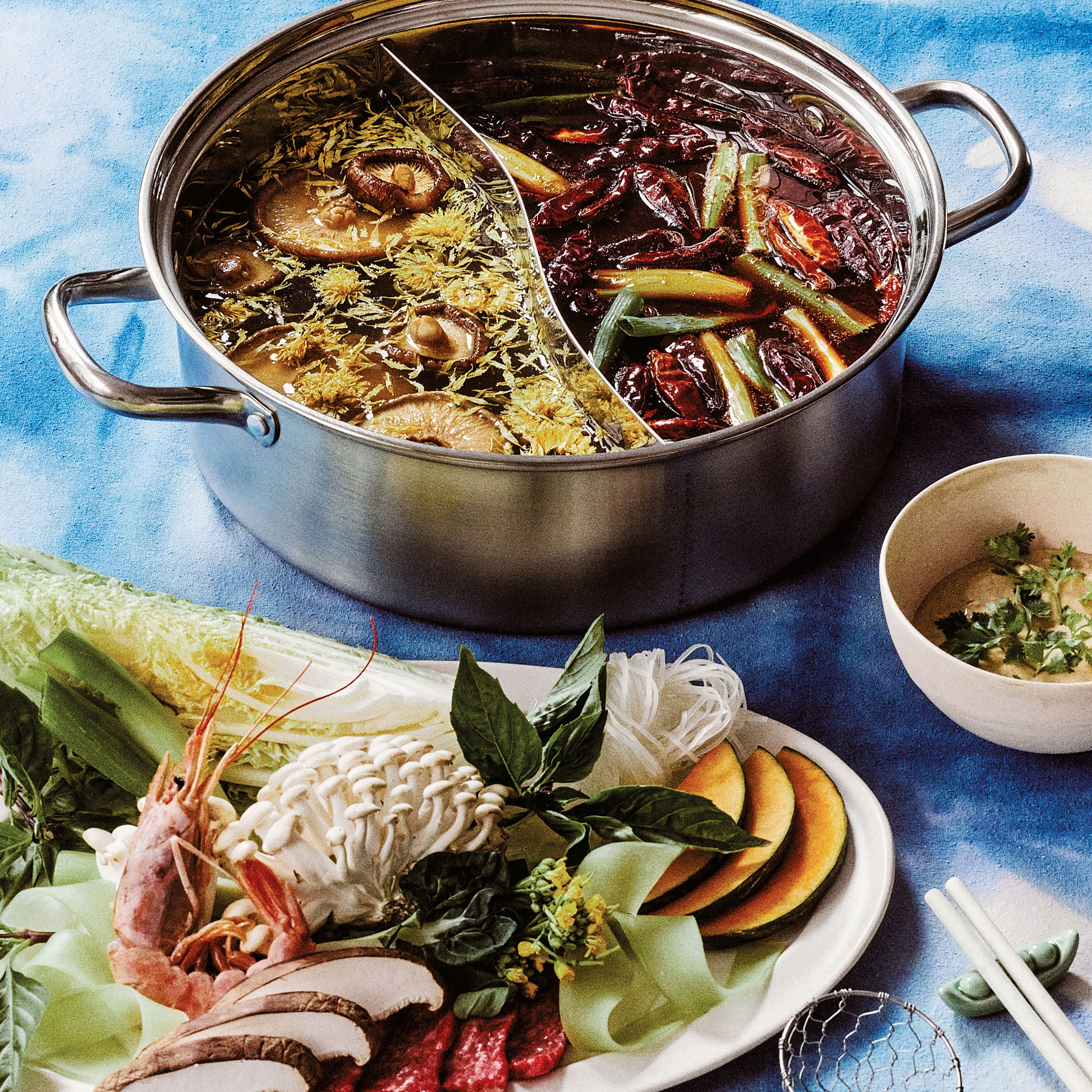
This is all of it on wnyc. I'm Tiffany Hansen in for Alison Stewart. Our next guest is a chef who says that hot pot by its nature is the ultimate customizable and modular experience. I'm assuming food experience, right? In fact, Natasha Pikowitz has written a new book based on that assertion. It's called Everyone Hot Pot Creating the Ultimate Meal for Gathering and Feasting. In it, she invites readers to create a communal dining experience around a pot of simmering, deeply flavorful broth. And of course, there are recipes. She's with us now to talk about the book, some of those recipes and to give us some hot pot tips and tricks. All of this ahead of her book release party, which I'm going to ask you about here in a second. Natasha, welcome.
- [00:54]
A
Thank you. I'm so happy to be here.
- [00:55]
B
And listeners, of course we want you in this conversation. Have you ever had hot pot, spicy, mild, make it at home, go out for hot pot. So many options. Beef, shrimp, tofu. I'm sure there are opinions here, Natasha, about hot pot. You can call us, you can text us at 212-433-9692. You can also reach us on all of the social medias at all of it wnyc. First of all, your book event, tell us where it's this coming Thursday, right?
- [01:26]
A
That's right. It's at Arches Books and Foods which is in Greenpoint. It's on the street where I live, so I spend a lot of time there.
- [01:33]
B
Well, you don't have to go far for the ye. Okay, so for the novice, a hot pot is an, it's a concept, it's a meal, it's all of those things. So if I've never heard, seen, thought of hot pot before. Tell me about it.
- [01:48]
A
Yeah, basically hot pot is a meal and activity where you are cooking bite sized morsels of food a la minute in front of like a communal bubbling broth right at the dining room table. So the cooking actually happens while you are eating.
- [02:06]
B
All right, There are different traditions. I read about this. There are different traditions, Natasha, when it comes to hot pot, there's Chinese hot pot, there's Korean hot pot, there's Japanese hot pot. So how do you define all of these different, how are they different from one another, these traditions?
- [02:26]
A
Yeah, I mean, and even if you're looking at just one country, like China for example, you're gonna find.
- [02:31]
B
Right, there's north and yeah.
- [02:33]
A
Infinite variation. And it's so determined by the. By what's available there by what's Culturally appropriate. And you know, when I was doing research for the book, I wanted to acknowledge all of the ways that this meal appears in different regions of the world. But I also wanted to bring it back to who I am as like a chef in New York City, which kind of means it becomes this amalgam of all of these different traditions and ingredients through my own like NYC lens. So it becomes a bit of like a mashup. Well, right.
- [03:04]
B
I mean, that's the beauty of the city we live in, where we all sort of become mashups of all the people and the traditions around us.
- [03:12]
A
Right, exactly.
- [03:13]
B
But there are pretty specific things for each of these cultural traditions around hot pot. Korean hot pot has kimchi, right? A lot of times.
- [03:26]
A
Yeah. Yeah, exactly. You're going to see like, you know, within different countries, like ingredients or dishes that are integral to their cuisine popping up, up in this kind of. Whether it's a donabe and Korean food or shabu shabu in a Japanese setting. Yeah. You're going to see like condiments and, and garnishes. Specific too.
- [03:46]
B
And then I think I read that in your book that the Japanese tradition has a, like a real meat focus. There's like a. It's like kind of.
- [03:58]
A
Yeah. I mean, I think it depends. Like I, I really wanted to resist like over generalizing about this is how it's done in one place. There are a lot of great Wagyu beef from Japan, for example, is outstanding in that shabu shabu context. But you'll also see it pop up at Chinese hot pot places as well.
- [04:16]
B
Okay, listeners, we'd love for you to join this conversation. We're talking with Natasha Pikowitz about her new book, Everyone Hot Pot Creating the Ultimate Meal for Gathering and Feasting. How do you like your hot pot? Beef, shrimp, tofu, cabbage, bok choy, dumplings. Give us a call. You can also text us 212-433-9692. Again, that's 212-433-9692 on the social medias at all of it WNYC. We have a text here that says, decades ago, before we became vegetarians, I often served shabu shabu, a tasty broth in a chafing dish with assorted thinly sliced beef, chicken, vegetables. Is this related to hot pot?
- [05:00]
A
Absolutely. I mean, I think that if you're holding the liquid, the broth at a temperature that's hot enough to cook those slices of meat or vegetables, then absolutely. Like, I would define that as hot pot. It Is it is just as much a physical act of dipping and eating and going back for more as it is like the equipment on the table.
- [05:21]
B
Another texter tells us here, hot pot is pure heaven, especially in the winter. One time in Beijing, shrimp came to the table live. Oh, man. Okay. And this texture says, wonderful.
- [05:36]
A
That's great.
- [05:37]
B
I will say in your book, as well, you say you enjoy it not just when it's cold, but. And I kind of like. At first, I was like, what? But your point being, especially in the summer, August, all these. Especially the herbs and all of that is just. And the way you described the eggplant and all of that is just so ready to be, you know, thrown into a hot pot.
- [06:04]
A
Absolutely. Yeah. I mean, you know, I'm a professional chef. I'm at the green. I want to enjoy luscious tomatoes and leafy greens and, you know, ripe eggplant. And, you know, summer is. Hot pot in the summer is really the way to do it.
- [06:19]
B
So we're talking about these variations, like, in China, even between, like, all, you know, many, many, many, many variations. One that you talk about in the book is the northern classic. You write about your mother. So tell us about that.
- [06:33]
A
Yeah. So my mom is from Beijing, and she grew up with hot pot as, you know, kind of this solution to these brutally cold winters. And, you know, when she was growing up, it was a very simple, almost austere thing. You'd start with water. You might accent it with mutton, not even lamb. You would add napa cabbage to kind of brighten things up. And it's all kind of flavored with this intense white sesame dipping sauce. That's how I learned how to do it, was through. Was through my mom's experience of it. And to this day, it's still, like, the most comforting format that I know it to be.
- [07:10]
B
Okay, I'm gonna get a little in the weeds here, because when we're talking about this broth, we're talking about something that has its own flavor. Then you have all of these things that you put in there that are on skewers, right. And you cook them in there, but they are dipped in things as well. So, like, the flavor profile of everything coming together.
- [07:33]
A
Yeah.
- [07:34]
B
My first question was to myself. All of these flavors are all being put into the same pot. What does that do to it by the end of the night?
- [07:44]
A
Oh, my gosh. I mean, it's alchemy. It's absolutely magic. You are cooking. You are making a group soup together, so you're throwing in aromatics Fresh herbs, carrots, meat, all of these things are contributing to this incredibly nuanced and nourishing soup. So it's traditional to finish, you know, kind of wrap up hot pot with a small ladle of that incredible broth, and you can kind of like, you've. That you've made in the moment, and it's. It's great.
- [08:15]
B
We are talking hot pot with Natasha Pikowitz, and of course, we want you in this conversation. And I think we're gonna go to Florette in Flatbush. Hello. Welcome.
- [08:26]
C
Oh, hi. Good. Good afternoon. Usually I call into Brian Lehrer, but.
- [08:30]
B
Well, we're glad to have you.
- [08:32]
C
Thank you. Thank you. And unfortunately, I'm in the hospital right now, but I'm being discharged in a couple of days, so I'm fine. But the thing is that I love this hot pot. First of all, I like to cook, but I was invited to two different. Well, I had experience with several different occasions in Europe. One was when I was in Berlin. We were invited to dinner with a family from Singapore. And it was going to be a traditional dinner like they have there. And so, you know, we put the different ingredients into the big wok that they had in the middle of the table. And in the end, like the lady just said, your guest just said, the soup became the main course at the end. And then also in Switzerland, we had what they called a fondue, where they have a pot in the middle of the table and cheese is cooking. Whatever special cheese it was was cooking in the middle. And with forks, we dip our different ingredients into the different vegetables and meats and things into the pot with the cheese. And of course, the crust at the bottom is the best, the most tasty part. And so I wanted to know if she knew about the fondue.
- [09:39]
B
Yeah.
- [09:39]
C
And about the traditional one from Singapore.
- [09:44]
B
Florette, first of all, before we answer that question, best of luck with your health. We're glad you're on the mend. And second, Natasha, let's talk about fondue. These are communal experiences, Right?
- [09:56]
A
You nailed it. That's what I was gonna say is, I mean, we're talking about Singapore and Switzerland. They couldn't be further away from. And yet they kind of touch upon this incredible human need to come together in sharing food in this interactive and joyful way. So, you know, maybe perhaps the ingredients on the table are different, but the ritual and the action of it is remarkably similar. And I'm a big fan of fondue, and I also love Singapore. I'm a big fan of fondue.
- [10:24]
B
I mean, come on. You had me at cheese. Okay, so we're going to talk about. We have a text here that says favorite NYC spot for hot pot. We're going to get to that. We have to take a quick break. However, we're talking with Natasha Pikowitz about her book, Everyone Hot Pot Creating the Ultimate Meal for Gathering and Feasting. On the way, we'll talk about favorite NYC spots for hot pot. Stay with us. This is all of it. I'm Tiffany Hansen in for Alison Stewart. Don't go anywhere. This is all of it. I'm Tiffany Hansen in for Alice in Stewart, and we are talking hot pot with Natasha Pikowitz, who has a new book out called Everyone Hot Pot Creating the Ultimate Meal for Gathering and Feasting Listeners. We want to hear from you. 212-433-9692. You can call us. You can text us at that number. How do you like your hot pot? What do you like to dip in it? What sauces do you like? We're here for you. 212-433-9692. Okay, Natasha, I said we'd get to this text here. Favorite New York City spot for hot pot.
- [11:33]
A
I mean, it truly depends on the mood that I'm in for.
- [11:36]
B
What?
- [11:37]
A
But my current favorite is probably Xiang Hot Pot in Sunset Park. So that's kind of South Brooklyn. They have a phenomenal seafood selection. They have private rooms where you can do karaoke and have hot pot at the same time. And it's just the most incredible environment and just such a beautiful dining room. So.
- [11:56]
B
Okay, we're just going to start plowing through some of these texts here. Natasha, I always have difficulty selecting my dipping sauces. Any guidance?
- [12:05]
A
Well, that sounds like you need a dipping sauce DIY bar. So typically, you might just put out all of your condiments. Soy sauce, sesame oil, a little vinegar, and then you kind of mix as you go. But for my go to, dipping sauce is kind of like a nutty white sesame dipping sauce, which just adds richness and flavor to every bite.
- [12:26]
B
It looks to me like it's kind of like a hummus.
- [12:29]
A
Yeah. In the book, I describe the consistency as whipped milkshake. So you're kind of looking for almost like this creamy, frothy texture. Yeah.
- [12:39]
B
And you should probably align the people at your hot pot gathering with your kind of tastes. Right. In other words, I'm vegetarian. Our producer Kate is vegetarian. She and I could hot pot together.
- [12:53]
A
Yeah.
- [12:55]
B
Maybe not so much with the person who has live shrimp at theirs.
- [12:58]
A
Exactly.
- [13:00]
B
Is there a Way to like, do you just do, if you have a gathering, do you just do separate pots for separate, like meat eaters? Non meat eaters?
- [13:07]
A
Yeah, I, I and that comes up a lot in my friend group as well. Typically you might see a hot pot topper almost have different divided chambers. So if you had a vegan person or a vegetarian person at your table, you could devote that to, you know, a mushroom broth or like a simple veg stock. And then that can be like their special little area. But it's also just great to just focus on the veggies, even for, you know, meat eating folks.
- [13:32]
B
Is the hot pot really about the broth though, in the way that a lot of people will say soup is about the broth. Is that true?
- [13:41]
A
I mean, I think that the soup is the core. It's sort of the beating heart of hot pot. That's where like all the flavor kind of begins. But really I see it as the interaction of everything all together creating this like kind of unique meal.
- [13:56]
B
Well, and like whatever broth you start out with is not gonna be the broth you end up with at the end of the night.
- [14:01]
A
So true, so true.
- [14:04]
B
What are your favorite meat? Meat? You talked about mushroom, but like, what other kind of meat based broths do you like?
- [14:10]
A
Yeah, I mean, I love, you know, a really kind of nourishing, rich bone broth is gonna be great in this context.
- [14:17]
B
And we're not talking the stuff that you get out of the cardboard box.
- [14:20]
A
No, I'm going to the Chinese supermarket and buying bones for a few dollars. I mean, you're gonna extract so much incredible nutrition and FL that. And then I'll accent it with, you know, lots of traditional Chinese herbs and, and seasonings.
- [14:34]
B
Speaking of traditional Chinese herbs, we have a text here from someone that says, I'm a white lady who lives in Queens. My Taiwanese friends introduced me to shabu shabu at a place with a huge, with a huge all you can eat vegetable buffet. I realized that my gut had not felt as good as it did after that meal in years. And discover the discovery led me to dietary changes. I put my IBS in remission. Woohoo. Wow. I absolutely credit hot pot for discovery and getting a big part of my life back. So see, you're healing.
- [15:04]
A
Oh my gosh. Well, there's so much commonality with hot pot ingredients and traditional Chinese medicine. You know, dried mushrooms, jujubes, hawthorn, like all of these things. Yeah, the same.
- [15:15]
B
Okay, let's talk about jujubes. Because my midwestern self that grew up in Iowa thought you meant those little chocolate things that you get at the movie theater. Not the case.
- [15:24]
A
Yeah, they're like tiny little. They're called Chinese dates, but they're actually not dates. They kind of are more like an apple, a small, crunchy apple. But they're so good for you. They have tons of anti inflammatory properties, they're full of antioxidants, they're good for sleep. I mean, it's like kind of a miracle fruit, honestly.
- [15:43]
B
One of the broths that you have in the book is charred again, because I'm vegetarian and this is like where I focused in on. But the charred tomato and lemongrass, what's the inspiration for that one summer?
- [15:57]
A
The b. My garden in my backyard.
- [15:59]
B
You know, wanting lemongrass tastes like summer. Right.
- [16:01]
A
Oh, I grow big bush and add so much acidity and brightness and just that incredible sort of lush liveliness to soup.
- [16:11]
B
If you were at. We have another text here saying recommendations for places for vegetarian hot pot. But my question is really to answer that is do most hot pot places that you can go to and sit down have options for everybody?
- [16:27]
A
Absolutely. Like you're often, you might be choosing between.
- [16:30]
B
So it's not just like, here's the vegetarian place, here's it. No, it's like you can go and pretty much everybody could be happy. Happy.
- [16:36]
A
Totally.
- [16:36]
B
Yeah. Okay. Generally speaking, and I thought this was the case, but it's not. It's not always spicy.
- [16:45]
A
No.
- [16:46]
B
I mean, but you did say in your book that like in China it's kind of face melting. There are parts of China where you can kind of melt your face.
- [16:52]
A
Exactly. Like if you're in, you know, the Sichuan province, you know, you might be seeing these more kind of fiery incendery like Mala broths with the Sichuan peppercorns and the Sichuan chilies. But in other parts, you might see a more cooling broth or, or a richer broth exc. Scented with coconut milk. And. And so it really runs the gamut.
- [17:11]
B
Texture says, how do I mix the dipping sauces in the restaurant? There are so many options. I always go overboard and add them all.
- [17:20]
A
I really empathize with this and, and that actually is a great strategy. Just, you know, like throw it all in there. But my recommendation is, you know, start with something rich like a sesame paste or a peanut butter. Add a little bit of acid, like a black vinegar, rice wine vinegar, and then some aromatics, a little garlic, a little ginger, you're good to go.
- [17:40]
B
You know, we. I have. If you looked at all of the pages that I have marked Here on your book, most of them are in the dumpling section. Talk about how dumplings play into this.
- [17:49]
A
Well, I love dumplings in the hot pot context because you can also go to the freezer aisle, buy a bag of dumplings, put them out on the table, and just drop them right in. So you're gonna get this, like, explosive kind of bite of flavor. But my mom grew up making dumplings from scratch, and there's something about that craft that I really admire and that I really like, that it really connects with me. So I wanted to give people a way to make dumplings with, you know, have a little more agency over the fillings. And, you know, I like dumplings that are heavy on vegetables and herbs and not so much on meat. So I wanted my recipes to kind of reflect that lightness of approach.
- [18:26]
B
And dumplings as appetizers also.
- [18:29]
A
Abs. Yeah, you might go to a hot pot restaurant and they have fried food that you can get on the table as well. So, you know, pan sear some pot stickers, and put them out on the table. Like, no one will say no to that, right?
- [18:40]
B
I sure won't. What about those? This is a recipe. I should have looked at it. But it's this. First of all, these not just scallion pancakes are great. I think if I had to live on one thing, scallion pancakes would probably be just fine. But it's a bread, and it's got white sesame on it. Tell us about that.
- [18:58]
A
Yeah, I mean, we call them xiaobing, so bing is just the word for bread. But you might see these kind of flaky breads that to me remind me of like a pita pocket. You know, you can open them up and sort of stuff them with filling. So my dad would do this. He would cook a few pieces of meat, open up the pocket, the sesame, you know, bing. And then he would fill it with that, a little dipping sauce. And it's kind of like a little instant sandwich at the table. And it's so delicious.
- [19:26]
B
You know, the. These are dishes that you say are pretty easy. Easy in what way? Because some of it sounds kind of complicated.
- [19:37]
A
I think it's easy in that if you were someone that wanted to entertain, that wanted to have a low stakes dinner party, but maybe didn't feel like a confident cook, this would. Would be a great way to opt in because it's more about purchasing the ingredients and arranging them in an attractive way. And you don't have to do as much cooking if you don't want to, because after all, we're going to cook together. So I think it's easy in that, like, if you wanted to create that group moment, it's kind of a nice way as a host to kind of not have to do as much prep in advance.
- [20:09]
B
How do you think about that when you're developing these recipes?
- [20:12]
A
Well, I, I develop often I'm developing recipes, I'm thinking of myself, like, what do I want?
- [20:16]
B
Sure.
- [20:17]
A
And you know, I projects, I like making things from scratch. So I wanted to give people alternatives to, you know, rather than purchasing something pre made, if they wanted to make it themselves, they could.
- [20:31]
B
This experience of hot pot, it is. And you, you laid out really nicely in the book like that. From the appetizers. You have desserts in here, you have, you know how to do broths, you have different experiences that people can, you know, put together and you have a whole like kind of checklist for folks and I just lost my page. Oh, here it is. There are eight hot pot personalities in our last minute here. First of all, what hot pot personality are you and then what are they?
- [21:02]
A
I'm kind of like a bunch of them, I think, you know, and, and I think it's, it's. The hot pot is fascinating because it's almost like this anthropological study where you see these distinct personality types emerge. So my mom is a bit of a germaphobe. You know, she doesn't want to cross contaminate food on. My dad is sort of like this, you know, grand host, the toaster. I'm a toaster. I'm always like making everybody, you know, take another shot of baijiu. And like, I'm always kind of wanting to.
- [21:29]
B
Which you have to do as a group.
- [21:30]
A
Right. Otherwise it's bad luck, you know, we don't need that.
- [21:36]
B
Okay. Again, for folks, you have a book release and a soup party. Love that. Coming up, tell us where, when, how, what, all of that business.
- [21:44]
A
It's at Archa Stratus Books and Food on Huron street in Greenpoint in Brooklyn. And I'm going to be joined with Christina Che, another fabulous chef. And we're going to have soup. We're going to talk about hot pot. We're going to be, you know, looking at and smelling different spices. I like to keep book events really fun and interactive, so I can't wait.
- [22:06]
B
It's not just you reading a recipe.
- [22:08]
A
Yeah. Don't make me read from anything.
- [22:10]
B
Yeah. Okay. If I'm thinking about doing this tonight, encourage me.
- [22:18]
A
Okay. You will feel the best you've ever felt. It will cure everything. That ails you. Yes.
- [22:25]
B
Right.
- [22:26]
A
You won't regret. You'll sleep the best you've ever slept.
- [22:29]
B
Plus, it's cold out.
- [22:30]
A
And it's cold.
- [22:31]
B
And it's cold out. All right, the book is everyone, hot pot Creating the ultimate meal for gathering and feasting. That book release and soon soup party coming up in Brooklyn this Thursday. We've been talking with the author, Natasha Pikowitz. Natasha, this has been a lot of fun. Thank you so much for coming in.
- [22:52]
A
Thank you.
- [22:54]
B
And next hour here on ALL of it, well, it's Prince, Prince and more Prince. The Schomburg center is lighting up in purple tonight for a screening of Prince and the Revolution Live will follow that. They will will follow that with a conversation about his life and music. Coming up, we're going to preview the event and talk with a scholar about Prince. All on the way. Don't go anywhere.
- [23:22]
D
I'm Ira Flato, host of Science Friday. For over 30 years, our team has been reporting high quality news about science, technology and medicine, news you won't get anywhere else. And now that political news is 24 7, our audience is turning to us to know about the really important stuff in their lives. Cancer, climate change, genetic engineering, childhood diseases. Our sponsors know the value of science and health news. For more sponsorship information, visit sponsorship.wnyc.org.