← All Of It with Alison Stewart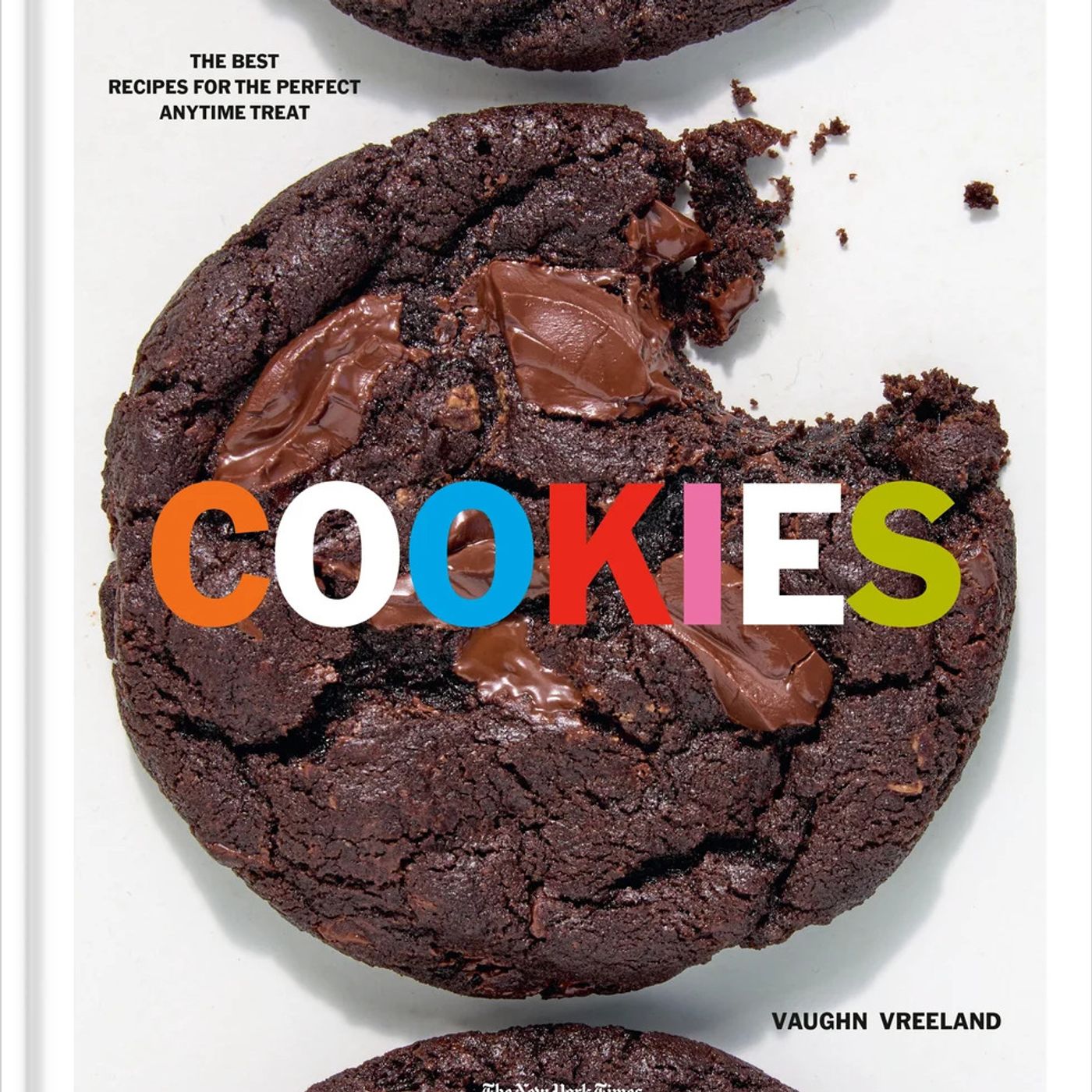
Loading summary
Transcript66 lines
- [00:00]
A
Foreign.
- [00:08]
B
This is all of it on wnyc. I'm Alison Stewart. It's Giving Tuesday, everybody, which means today is a great time to support the non profit organizations in your life that are important to you. We hope WNYC is one of them. Your support is critical to our mission of independent journalism and the conversations you hear right here on all of it. Please call 8883-696928-88376 wnyc or donate online@wnyc.org and get a little holiday shopping done as well. Again, that is 888-376-9692 and thank you very much for considering it. Now, let's get this hour started with some little sweet treats. It's New York Times Cookie Week, and for the next several days it will release a new video demonstration each day. This is just in time for the holidays and WNYC's annual staff bake off, which is two weeks away. For all of our colleagues who are listening, this year's recipes include Popcorn Bucket Cookies, Mortadella Cookies, Coconut Cake Snowballs, Mint Chocolate Chip, Vietnamese Coffee Swirl Brownies, and Dark and Stormy Cookies. But there's more. There's an entire cookbook with about a hundred recipes. It's titled the Best Recipes for the Perfect Anytime Treat. It's out now. Joining us to discuss it is its author, Vaughn Vreeland, recipe creator and the New York Times Cooking supervising video producer. It is nice to meet you.
- [01:47]
A
Nice to meet you too, Alison. Happy Cookie Week.
- [01:49]
B
Thank you. Hey, are you trying out a new cookie recipe for the holidays or is there a recipe that has become a tradition and in the family? Tell us what it is. 2124-3396-9221-2433-WNYC. You can call in, join us on the air or you can text that number or tell us if you have a question or if you're in need of inspiration. We've got the New York Times Vaughn Vreeland here for some advice. Our phone is 2124-3396-9221-2433 wnyc or you can reach out on social at at all of it. Wnyc. In your book you say this is a book for anyone who has ever had a strong emotional response to a cookie.
- [02:33]
A
Oh yeah.
- [02:34]
B
What is a recipe for you or your family that you have that strong emotional response to?
- [02:40]
A
You know what's really funny is the more I think about this question, cause I've gotten it before, the more my answer leans toward Oreos, which is not obviously a proprietary Vreeland family recipe by any means. But, you know, I just. I think that that was like, the first thing that I bonded with my grandma over. We would eat Oreos. I would dunk them. Dunk them. I would have a glass of milk, she would have a glass of chardonnay. We would watch General Hospital. I was far too young to know what Sonny was doing on General Hospital, but I did. And, you know, I think that that was kind of my. It opened my eyes to how food can connect us. And generationally, I think that that was something that was. And it also just got me curious about, you know, the power of baked goods. I always loved watching, you know, food media television, like Food Network and things like that. But really when I started going was what. I would just make the Nestle Toll House recipe. Honestly, I think that that is like the gateway cookie for a lot of people. And then once I got curious, I started, you know, tinkering with the. The ratios of ingredients and trying different mix ins. And that was something that really kind of stuck out to me when I was in, you know, middle school about, like, trying this, you know, almost science experiment in the kitchen. And at the end of it, you have cookies.
- [04:08]
B
General Hospital and Oreos. A perfect match.
- [04:11]
A
No, totally.
- [04:12]
B
When you. When you think about this time of year, cookies take on another meaning. They seem really special this time of the year. Why do you think that is?
- [04:20]
A
You know, I think that it's not only a bonding experience, making them with people. I. I personally have gotten my niece and nephews, like, really involved in baking because of the holidays. I think it's a time for us to really stop and pause and kind of reconnect to the things that we enjoy doing rather than the things we have to do. And for a lot of people, that's baking. And also just the cookies, I think specifically are something that you share with people. I mean, I could eat a whole tray of cookies by myself, for sure. And I have before, not ashamed to admit that, but more often than not, you're baking, you know, at least a dozen, and you give those out to people, you share those with people. And those are the kind of, like, taste memories that I'm talking about that you start creating with people. And I think, well, I mean, I obviously love eating cookies. I love going to cookie exchanges. But my favorite thing about the holidays is giving cookies to people in my neighborhood. You know, I love going to my laundry people, I love going to my barber and, you know, just dropping off cookies because it's something that helps make their day.
- [05:31]
B
All right, if someone picks up this book and looks at this page, which I'm going to show you, there are so many different types of cookie. Rye, cranberry, chocolate chip, date bars, pistachio, pinwheels. Now some people may be thinking it's a bar, it's a pinwheel. Is that really a cookie? How do you define cookie for this cookbook?
- [05:50]
A
Such a good question. We had a lot of back and forth, honestly, about the bar conversation. Actually at one point. Fisticuffs. Yeah. No, like truly, at one point we were team no bars and I was like, okay, well what if we created this pamphlet or this zine that would go along with some of the in person activations for the book that was called Barred from the Book and it was all the bars that didn't make it in the book. But as we kind of, as I was working on the table of contents and kind of parsing the database of New York Times cooking, it became clear to me that we really did need to include some bar cookies because a, they're delicious. The pumpkin blondies are like one of my favorite recipes in that whole entire book. But also a lot of the categories in the table of contents, a lot of the chapters needed bars, like the fun, fruity and tart chapter, for example, like we had to have lemon bars, we had to have the salted margarita bars. Like, those are some of our non negotiables at New York Times cooking. So I think that that was a good way for us to kind of justify putting bars in the book.
- [07:02]
B
We are talking about cookies with recipe creator and New York Times Cooking supervising video producer Von Vreeland, who is the author of a new book titled the Best Recipes for the Perfect Anytime Treat. We are going to take your calls. Let's talk to Heid. Hi Heidi, thanks for calling, all of it. You have a question about oatmeal raisin cookies?
- [07:23]
C
Yes, hi. Thanks for taking my call. I love making cookies and I love making oatmeal raisin cookies. And I haven't quite found the recipe yet that gives me that kind of texture and chewiness that I get if I buy an oatmeal raisin cookie from a cafe or something, a professional one. And I'm wondering if you have any tips or tricks for this.
- [07:43]
A
Yes, that is such a good question. I think one thing that people underestimate is how much moisture oats soak up. So a lot of times when we make them homemade, they can, they can dry out really easily, especially when they're left on the counter for a little bit. I like having a higher ratio of your kind of quote unquote wet ingredients in there, specifically brown sugar. Because brown sugar is something that really, it's molasses and sugar basically. So it's something that keeps cookies very moist and chewy for a long time. Also sometimes people add an extra egg yolk. That extra fat in there is something that really helps it. It doesn't create as much of a spread as butter might, but it also creates this like very pillowy, chewy interior that's almost custardy, which I love about those, about those store bought oatmeal raisin cookies specifically. So I think having that kind of higher ratio. We do have a recipe in the book that is really, really good. It's one of our tried and true. You can also find it on nytcooking.com, but that one is one that defin stay soft and chewy for a really long time. Also another tip, raisins do soak up moisture because they're dried fruit and when they come in contact with things that are wet, they will soak that up. So those things also soak up the moisture in your cookies. So what you can do is you can plump them up with a little hot water for about five minutes before you mix them in.
- [09:09]
B
Good luck to you. This says peanut butter cookies with chocolate stars on top. My favorite cookie my mom and dad made every Christmas. Let's talk to Erica who's calling in from Brooklyn. Hey Erica, thanks for calling all of it.
- [09:24]
C
Hi, can you hear me?
- [09:25]
B
Yeah, you're on the air.
- [09:27]
D
Hi.
- [09:28]
C
So I'm actually as I'm talking to you, I am making a giant gingerbread carousel for the Mohonk Mountain House gingerbread contest. So I'm covered in royal icing. But I wanted to share my favorite cookie that I love to make every Christmas and is kind of a demand is Akuchen. That's basically just excuse to eat an enormous amount of almond paste. And I also like to make another cookie called Stollen Contact which is from. Both of them are from the classic German baking book by Louisa Weiss. And it's a well loved cookbook. Like yeah, I mean it's like pages are stuck together with sugar and you know, it's greasy from butter. So when I'm done with this mammoth project, I will next week I will start in on my Christmas cookies. So just wanted to share that for all those sort of European Christmas cookies that basically it's just an excuse to buy 7 pound canister of almond paste.
- [10:29]
B
Thank you so much for calling. And by the way, when you finish making that giant gingerbread carousel, please take a picture and post it on Instagram at all.
- [10:38]
A
So cute.
- [10:38]
B
I can't wait to see.
- [10:39]
A
I can't wait to see that either.
- [10:41]
B
I to want. I want you to give me a pep talk if I'm someone who doesn't go in the kitchen. I haven't even thought about cookies. Give me a pep talk for making Christmas cookies or making any kind of cookies this time of year.
- [10:54]
A
Yeah, well, one of my core tenets of this book is that baking is fun. I say repeat after me. Baking is fun.
- [11:01]
B
Baking is fun.
- [11:02]
A
It should be fun. You should set yourself up for success so you're not stressed out. I think a lot of people get stressed out, which causes them to rush. And a rushed cookie is often not a great cookie cookie. But if you leave yourself enough time and kind of surround yourself with things that make you happy. Right. Pick a good playlist. I love a good kitchen mat that is comfortable for me to stand on with bare feet. I love having like little cute, silly tchotchkes around me that just like, remind me of travels. I have like a little voodoo doll that like kind of lords over my kitchen as I'm baking. And things like that I think are just are important. I love I to. When I first moved to New York, I was like, I got to wear all black. I have to. I'm only we shopping at the restaurant supply store because I'm going to be a professional. And the more I bake, the more I love incorporating color into my kitchen. I love like, that's just something that makes me happy and it in it entices me to go into the kitchen. So I think doing that reading the recipe through before you start is something that's very important. And honestly, for cookies, a good cookie sheet does not have to be expensive, but something that is aluminum, a little heavier. Not your mom's like 1984 cookie sheet. My mom still has one too. And I'm like, what are you doing with it? But just something that is a little sturdier. I liked one with a rimmed edge and an oven thermometer. Everyone's oven's every. Everyone's oven's different.
- [12:37]
B
Ovens lie.
- [12:38]
A
Ovens lie all the time. Mine is 25 degrees warmer than it should be, which also, you know, that's stuff that people don't necessarily think about, but it stresses you out so much.
- [12:49]
B
It's also chemistry.
- [12:50]
A
Yeah, totally.
- [12:50]
B
Which is a big part of this, which is I'm why I'm going to read this question which came into us from a colleague who shall remain nameless. Is there a difference between baking soda and baking powder?
- [13:01]
A
Yes, there is a difference between baking soda and baking powder. So baking soda is an ingredient that requires an acid in order to react. It is, it is a base and it is something that you need either like, like I said, brown sugar, molasses, cocoa powder is acidic, any type of acidic ingredient that will help it activate and give it that lift. Baking powder is the neutralized version of that. So it is often baking soda with an additive that is acidic like a, I don't know if they necessarily add cream of tartar but something like that to kind of neutralize it. But they both do. They both have their own importance. You know, you can't just always use baking powder because it's baking soda with something else added to it.
- [13:48]
B
I had a question in terms of all the accoutrements that come along like you said you would go to like sur la table and want to buy everything. Does a rolling pin really matter?
- [13:58]
A
Yes, it does. It does. Well, you know, I, I think that it matters for depending on the type of cookie. If you're making a sugar cookie, obviously you could use a bottle of wine.
- [14:11]
B
Okay.
- [14:11]
A
You know, you could, you things work. And I think that's one of the fun things about a lot of us at New York Times cooking is we, we live in tiny kitchens, we are scrappy. I don't have a bunch of crazy equipment in my, in my kitchen when I'm developing recipes. I do use those things sometimes in order to, to get my desired result. But I think a good rolling pin, if you are planning on making sugar cookies a lot, it'll just make your life a little bit easier. I also love those ones that have the barriers that kind of adjust on either side for different thicknesses. So you know, if you're rolling, if a recipe indicates a quarter inch, you can put your quarter inch bands on either side and it will roll it completely even.
- [14:57]
B
That is a gift for Kate who is sitting in her control room. Let's talk to Rob from West Orange, New Jersey. Hi Rob, thanks for calling all of it. What's your question?
- [15:09]
C
Hi there. I'm a big fan of the New York Times cooking. So thanks very much for all you do.
- [15:14]
A
No, thank you.
- [15:15]
C
People in my family, some of them very lactose intolerant. I love to bake. What is your favorite lactose free butter substitute to bake? With hopefully sweet butter, not salted.
- [15:28]
A
Yes, that's a good question. I mean, I've used, you know, like the Daiya brand and things like that. I honestly, in terms of a, a butter substitute, I really, I mean, I don't know if this is kind of a cop out, but coconut oil or olive oil is something that I really enjoy baking with because it's a fat that is a natural thing that often imparts a lot of great texture and flavor in a recipe. It is obviously not going to be your, like vegan butter. I don't know if that's necessarily the question you're asking, but I think recipes that call for coconut oil or olive oil are. They're so intentional and it really lets those recipes shine. In Cookie Week, we actually have a recipe for the coconut snowballs that calls for unrefined coconut oil, which imparts that really nice coconutty flavor and it just adds this like gorgeous texture, which I really, really love. So that's a good dairy free option. But yeah, I mean, I think that a lot of those vegan butters now especially have been like engineered to be close to, to perfect as you can, as you can try to get.
- [16:40]
B
We're talking to Vaughn Vreeland from the New York Times. He's the author of the book Cookies the Best Recipes for the Perfect Anytime Treat. Are you trying out a new cookie recipe for the holidays or is there a recipe that's become a tradition in your family? Give us a call. 2124-3396-9221-2433. WNYC. We'll be right back. You're listening to all of it on wnyc. I'm Alison Stewart. My guest in studio is Vaughn Vreeland from the New York Times Cooking. He wrote the book Cookies the Best Recipes for the Perfect Anytime Treat. All right, let's get into some recipes. You have salted margarita bars, you call it Key limes pies, boozier, saltier cousin. How did you get the idea to turn a cocktail into a cookie?
- [17:39]
A
Well, if you know, anybody's kind of been following my recipe progress out there at the New York Times, I am kind of known for taking drinks and turning them into cookies, not always alcoholic beverages. But, you know, Cookie week actually started around the idea of kind of the eggnog snickerdoodle. And then we ran with it with a virt exchange in 2020. So that was kind of the start of Cookie Week. And I think I was just trying to pay homage to some of my favorite things. One of those being margaritas. And I was working on a summer baking. A summer baking package where, you know, I was looking for something that was really refreshing, and I was like, oh, well, I love a frozen margarita. What if I kind of turned that into a bar? It's a kind of a mix between an Atlantic beach pie, if you've ever had that, which has a salt crust.
- [18:35]
B
Oh, you need 40 saltine crackers.
- [18:37]
A
Yeah, you do? Oh, yeah, yeah, yeah. I mean, but the crust is. The crust is wonderful. It is nice and salty. It's not too salty. And then it actually, when you're done baking it, it gets frozen. So I like to store them in the freezer. And they don't. They don't have a frozen texture because of all the egg yolk and the. The alcohol that's in there. It keeps it. It keeps it nice and custardy when it's in the freezer.
- [18:59]
B
So there's real tequila in it.
- [19:00]
A
Oh, there's tequila and there's Cointreau, there's Grand Marnier, whatever kind of orange liqueur you want to put in there. Yeah.
- [19:06]
B
Let's talk to Sarah from Brooklyn. Hi, Sarah. Thank you so much for calling, all of it.
- [19:12]
C
Hi, thanks for taking my call. I just wanted to say that I had to make the desserts for Thanksgiving, and among the desserts I made were the gingersnap number one from Maida Heater's Great Book of Cookies, or Book of Great Cookies. Excuse me. And her book always delivers all the recipes in there, but that gingersnap in particular, it's a molasses gingersnap cookie, and it is so rich and just perfect. I think it's my favorite. Or tied with chocolate chip. And that's all I wanted to say. Thank you.
- [19:44]
B
Well, thank you so much. You have an entire chapter about chocolate chip cookies in this book, and one of them, the Adobo chocolate chip, it's an interesting recipe because it calls for fresh bay leaves, soy sauce, and vinegar. What do these ingredients do to a chocolate chip cookie?
- [20:02]
A
Well, a lot of those are going to be flavoring. The vinegar and the soy sauce, you know, are those kind of more acidic characteristics which will also interact with the other kind of a, wet ingredients, and B, any kind of leavener that's in there. There's baking. I think there's baking soda and baking powder in that cookie. So they create almost a nice tenderness in the cookie itself. Anything that's acidic when it's kind of reacting with your flour will almost like denature. The, the proteins a little bit. And that cookie is really, really interesting. I love it. I love that we have so many different types of chocolate chip cookies. We have, I think probably over 50 on in our database. And it was really hard to choose just 10 for this. But I think what's great about a chocolate chip cookie is that everybody has opinions about it, a lot of opinions about it, and it was fun kind of putting recipes together that would satisfy a wide swath of chocolate chip cookie lovers.
- [21:08]
B
Let's talk to Hope from Melville. She has a hope that you'll be able to help her. Hi, Hope, ask your question.
- [21:15]
D
Hi. I actually don't have a question. I just wanted to share a story. So I grew up in the Midwest and my grandmothers were on either coast. One in New York, one in California. And I developed a relationship with my neighbor. She was my surrogate grandmother. And I would go to Lillian Olsen's house after school every day and she would share with me these very simple Norwegian sugar cookies. And eventually I moved to New York and I was really sad. I was in fifth grade and I said, please give me the recipe. And she said, oh, it's an old family secret. I'm so sorry. I'll send them to you every year, I promise. And she did. And she sent them to me every year until she didn't. And I was crushed. And I ended up getting a letter in the mail from her son. And he said, I just need to let you know that my mother has passed away. And I was cleaning out her bedside drawer and there was a note that said, please send this to my girl in New York. And I'm gonna cry even now. And it was the recipe. And I make them now every year with my children, and it is like a full body memory with that first bite every year.
- [22:30]
B
That's such a sweet story.
- [22:31]
A
That is so sweet. I'm verklempt.
- [22:32]
B
Verklempt. I got one for you. I love cookies and I love cookie dough just as much, maybe more. What's your take on eating the dough?
- [22:41]
A
Oh, I always eat the dough. I'm sure that that is not an FDA approved answer, an NYT approved answer, But I love it. You know, I'm less concerned about raw eggs as I am raw flour. Actually, a lot of times when people make edible cookie dough, they bake the flour at a low temperature, and that kind of kills any bacteria that might be in the flour. That's what they say is kind of the real danger of raw cookie dough.
- [23:12]
B
It's 20, 25 cookie week at the New York Times. And your contribution to the list is the popcorn bucket Cookies. This is a lot of candy in it. Describe it for me.
- [23:25]
A
Okay, so basically this year our, our kind of unofficial theme to cookie week was. But make it a cookie. And I was thinking about my favorite thing about the holidays, which is watching holiday movies with my parents, with my boyfriend. And I, I kind of just wanted to recall those, those great memories of being at the movie theater and like, having a big bucket of salty popcorn and like, all the candy that my heart could desire. I still do that to this day. And I just really wanted to have fun with it. I also was kind of thinking, like, what if there was a cookie that was as much fun to shop for as there was to bake and eat? And I think that this cookie does that. It's so fun going through the candy aisle at your, like, bodega, at your grocery store and just picking out all your favorite things. And yeah, there's, there's lots of whatever, whatever candy your heart desires, Allison, you can put in this cookie and then you brush it in butter, you roll it in crushed popcorn, it bakes, and you top it with little flaky sea salt, and you just get that kind of perfect, sweet, salty chock full of candy. Just, you know, it's, it's. It reignites that childlike wonder in you.
- [24:34]
B
I've been speaking with New York Times cooking supervising producer Vaughn Vreeland. He is the author of the new cookbook, the Best Recipes for the Perfect Anytime Treat. Thank you for joining us.
- [24:45]
A
Thank you. I had so much fun. Happy cookie week and happy baking.
- [24:49]
B
To everyone out there, another negative pregnancy test, but this Black Friday, you can feel in control of your conception journey again and get pregnant 10 times faster. It's Mira's biggest sale and it could help you to stop feeling lost. Even if your cycles are long and ovulation has felt impossible to find. Mira measures four key hormones with clinical accuracy so you can finally see what your body is doing and time things right to get pregnant. Get 30% off Mira for Black Friday. Check out MiraCare.com Hey, Fidelity, what's it cost to invest with the Fidelity app? Start with as little as $1 with no account fees or trade commissions on US stocks and ETFs. Hmm, that's music to my ears. I can only talk.
- [25:38]
A
Investing involved risk, including risk of loss. 0. Account fees apply to retail brokerage accounts only sell order assessment fee not included. A limited number of ETFs are subject to a transaction based service fee. Of $100. See full list of Fidelity.com commissions Fidelity Brokerage LLC Member NYSE SIPC.