Loading summary
Transcript70 lines
- [00:00]
A
All of it is supported by Progressive Insurance. Do you ever find yourself playing the budgeting game?
- [00:06]
B
Well, with the Name youe Price Tool.
- [00:08]
A
From Progressive, you can find options that fit your budget and potentially lower your bills. Try it@progressive.com progressive casualty insurance company and affiliates price and coverage match limited by state law.
- [00:19]
B
Not available in all states.
- [00:31]
A
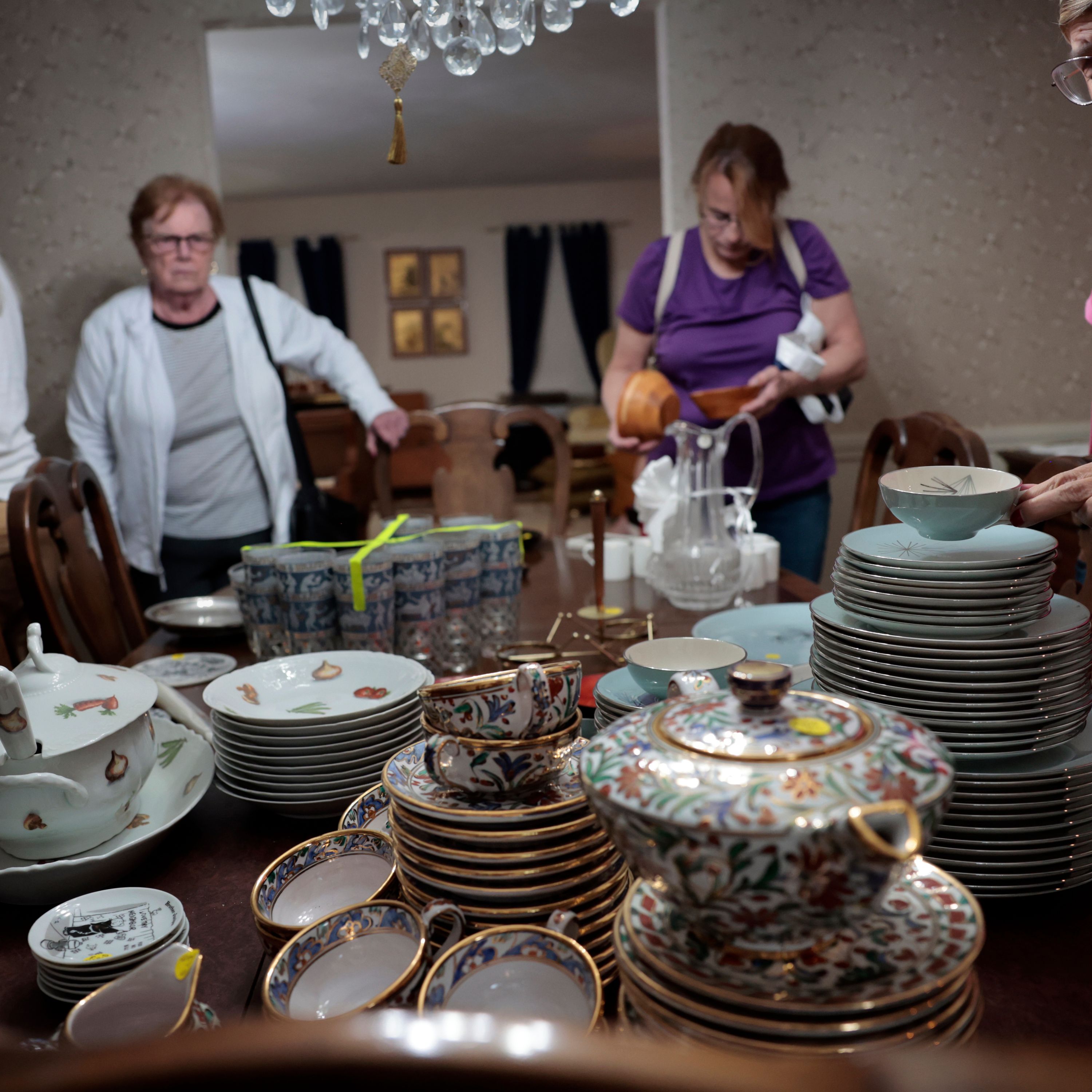
This is all of it. I'm Alison Stewart. When a parent dies, there's a funeral to arrange, a will to execute, perhaps an estate to manage, all while in the grieving process. But another daunting task we have to face and maybe aren't necessarily prepared for, is what to do with all of mom and Dad's stuff. You need to decide what to keep, what to donate, what to throw away. Becky Robinson is the author of a new book, My Parents Are Dead what Now? A Panic Free Guide to the Practicalities of Death. And she's here now to help us out. It is nice to meet you, Becky. Well, welcome back to the show, I should say, actually.
- [01:08]
B
Hi, Becky. Hi, Alison. Thanks for having me back. Yeah, it's been about a year, but I'm excited to be back on to talk to you about this. It's important stuff.
- [01:14]
A
It's very important. You wrote this book based on personal experience. A parent passed away in 2020, another in 2023. How did you find the process of going through their stuff after they passed? What did you experience?
- [01:32]
B
Well, it was really hard emotionally and also physically. There's kind of this dual toll to it. They were snowboarding. They had a condo in Wisconsin and a condo in Florida. So there were two places to clean out. And you feel this duality of guilt. There's part of you that wants to get attached to the smallest things. My dad was an architect. I kept a lot of his architectural tools. But what do I do with that? I'm not an architect. I'm never going to use a compass, but it felt horrendous to throw it away. And then on the other, there's this part of you that's like, oh, God, just get rid of it all. I can't deal with all of this stuff. And then you feel guilty about that. So it's kind of a whirlwind of emotions and frustration and also just trying to figure out how to get rid of more complex things. Like my dad had a bunch of guns and I was stymied. That was not a habit that we. Or a hobby, rather, that we shared. So I had to figure out how that worked, too.
- [02:16]
A
How long did it take you to finally close the door and be finished with the project of cleaning out the houses?
- [02:23]
B
Well, that depends on the house. The one in Florida went a lot faster because neither my sister nor I live anywhere near Florida. So I was down there and I ended up cleaning out that place in close to a week because that's what we had. We were selling the place. You know, I didn't have a lot of time to spend down there. Luckily I had an uncle down there who was able to help me. Thanks, Uncle Bill, but, but you know, I spent about a week cleaning out the place and that was just probably not enough time to make decisions. But we were just trying to things figure things out as quickly as we could. The condo in Wisconsin, my sister ended up moving into it. So we've been able to go through that one much more slowly.
- [02:59]
A
When did you just start writing the book? When did that come to you?
- [03:02]
B
Well, I first I created a website after my parents died. I couldn't find a lot of resources about what to do logistically. I found a lot of grief resources, but I just couldn't find much in terms of like what is a will, where do I take this? How do I get rid of guns, how do I get rid of all this stuff? Or it was all over the place. So I created dead parents what now.com because I have a dark sense of humor and it was meant to be a living document where I could put what I found as I went through it. And then the website got a lot of attention, Editors started getting in touch and the rest is history. I started writing the book in late, very late 2023, I believe.
- [03:36]
A
Listeners, we'd like to get you in on this conversation. Have you gone through the experience of sorting through your parents stuff after they passed away? How was it? Was it challenging? Was it overwhelming? Our Phone number is 2124-3396-9221-2433. How did you decide what to keep and what to get rid of? Did you donate? Did you use a yard sale? What do you wish you had known about managing your parents stuff before they passed? Our number is 2124-3396-9221-2433 wnyc. So Becky, what do you wish you had known about what to do with your parents stuff before you went through all of it?
- [04:16]
B
I wish I had talked to them about it before so they could have gotten rid of some of it themselves. That's one thing for sure. I, you know, I didn't really anticipate having to how much it would be to go through, even on a small scale, if the objects they don't have are large, it still takes a ton of time and a ton of effort. And you get kind of lost in memories while you're going through these things. So it can take a tremendous amount of time. Gosh. I also wish, you know, I had just had a plan, I think in advance. It was. It was very difficult to know because obviously I know how to throw a yard sale, but I'm like, do we need to do an estate sale? How does that work? What. How do I get rid of medicines? So I was kind of researching all of these things and in the time period, and I wish I had prepared for it in advance, but I do think especially getting rid of a lot of this stuff beforehand is the way to go if you can talk to your parents about it. And I know it's a difficult subject because no one wants to contemplate their own mortality and no one wants to reject mom and dad's heirloom dining table or whatever, but you can't put it in your studio apartment. So it's a difficult conversation, but a really important one to have, I think.
- [05:16]
A
When you're going through things and you stumble upon something, what questions should we be asking ourselves when deciding whether to keep it, whether to get rid of it, whether to put it on hold? How do we make that choice?
- [05:32]
B
I think it's a matter of both your emotions and logic. Are you going to use this thing? Can you reasonably keep this thing? But then also, how important is this thing to you? And there might be some things where it does take a while to decide how important is this thing to you? But quite frankly, if you are attached to mom's $5 soap dispenser and you don't really need another so dispenser, but in your grieving process, it's really important for you to keep the soap dispenser. I think that's fine. But, yeah, ultimately I think it's a matter of, you know, going through. And you can also sometimes use objects and legacy projects, you know, making art out of these things or what have you, or you can, you know, find. Maybe find another good home for them. And that's another way to honor your parents is, oh, I don't need this, but I know someone who, who will. And that can be a great thing to do with it as well. So maybe think outside yourself as well.
- [06:21]
A
I know you like to use the phrase accident heirlooms.
- [06:24]
B
Yeah.
- [06:25]
A
What's an accidental heirloom?
- [06:27]
B
Well, it's for me, it's the type of thing where you're not intending to take this. It's like, oh, I've always wanted my mom's ring or whatever. It's more like, oh, well, for me, I ended up with my mom's fly swatter, mostly because I needed a fly swatter. And it's funny because it's not like I'm thinking of my mom every time I swat a fly. That would be ridiculous and kind of creepy, honestly. But. But also, it's a very artistic flyswatter. It's exactly. It's not your usual flyswatter. It's very. It almost looks like a modern art object. And I'm like, of course. Only my mother would have spent the time to find this bizarre fly swatter. So every time, you know, occasionally I'll just see it sitting around the house. And it does make me think of mom. So it ends up being this kind of important heirloom, although not all the time. And it's something you took purely for utility.
- [07:10]
A
I have a bath mat from my grandmother's apartment up in Washington Heights that says Stewart's, and it's an old Fashioned, and it's chenille, and I had it mounted, and it's a piece of art that I keep in the bathroom, and it reminds me of them all the time and the weekends I spent in Washington Heights with my grandma.
- [07:30]
B
Yeah, that's wonderful. That's a perfect thing to do with it so you don't have to keep it as the object it once was. Anything can become art if you really want it to.
- [07:36]
A
Let's take a couple of calls. Let's talk to Kyle in Manhattan. Hi, Kyle. Thanks for calling, all of it. You're on the air. Hey, there.
- [07:47]
C
Thank you so much for having me.
- [07:49]
A
Yeah.
- [07:52]
C
I just wanted to say, like, I'm totally vibing with your guest right now. And also the. It's really funny because when my father passed, he also left behind a lot of guns, too, which, like, at that time, I remember having to ask his friends, like, I was like, I can't touch these. I can't deal with these. Like, can you please help? But one of the things I really wanted to emphasize and sort of, again, as I'm vibing with the guests, like, I was 25 when my dad died and I was next of kin. And, like, the truth of the matter is that dealing with the passing of a parent requires a lot of resources. I sort of had to hastily make decisions without, like, the money necessary to, like, put things in storage. You Know, I live in New York City, so I couldn't bring really much of anything with me back to the city. I also had the unfortunate circumstance of like, my mother is a big believer in like minimalism and like, not like brooding. So she was sort of whispering into my ear that like, a lot of things that I kind of found sentimental could otherwise be trashed. So I would just say to anybody, like, if you lose a parent when you're relatively young or when you feel like unmoored, like, don't hesitate to like advocate for yourself. Like, make it known that like, you know, you don't have access to like cars or like the necessary funds to like get storage and just like fight for your time, fight for the space to like work through everything because people won't give it to you automatically.
- [09:21]
A
We appreciate the call. Yeah, you know, it's. Everybody has a different time frame for grief. Becky, when you think about it, how soon after your parents death did you recommend going through their house and to begin processing and sorting? I have to imagine it depends upon the person though.
- [09:42]
B
Yeah, I think it does depend upon a person. And like the caller just said, it kind of depends on your resources that you have available to you. Are you going to be able to kind of keep paying the mortgage on that house or keep it up while you're trying to clean it out? So not everybody gets the time that they really deserve to be able to go through a property. But I think you need to take as much time as is available to you. The whole process is really difficult. Bereavement leave is not mandated in this country, which is extremely frustrating. So if you're lucky, you get three to five days. That is not enough time, especially if you're next of kin and you have to do a lot of estate work. If it were up to me, we'd all get a year off to be able to figure this stuff out, but we don't. So do what you can. If you can be honest with your workplace and explain to them what's going on, that can be very helpful and take the time that you can. But I know that not everybody gets the time they need. For me, it was, you know, within a few, about a month of their deaths. I was starting to go through stuff. Starting.
- [10:37]
A
I'm speaking with Becky Robinson, author of the book My Parents Are Dead what Now? A Panic Free Guide to the the Practicalities of Death. We're discussing how to handle. How to handle deciding what you want to do with your parents stuff after they pass away. And we're also hearing from you, have you had to go through your sort of your parents stuff and what they've passed away and what they've passed on. How, what emotions did you experience? How did you decide what to keep? What did you decide to get rid of our numbers 2 and 243-396-922-12433. WNYC. Let's talk to Bob in Brooklyn. Hey Bob, thanks all of it.
- [11:17]
C
Well, you're very welcome. Thank you for being on the air. And this is an important topic for most people, I would think, and you know, having lost both my parents and being now almost 77 years old, my wife is a year younger than me. We've had the experience of cleaning out several households. And one thing I think is important to mention, and I don't know if it's covered in the book, but not creating schisms in the family when you're distributing things that are sentimental that people want to keep, finding ways to talk about being generous and giving up and getting, you know, in a cordial manner, I think that's very, very important. And because a lot of we fight over things, we didn't, but we had to work out a system. And then further what this has taught us as we're not young, you know, and have three kids, we are working very hard now to leave this as simple as possible for our kids. And this is, this is certainly what we learned from cleaning out, you know, parents homes.
- [12:47]
A
Bob, thank you so much for calling in. Let's talk to Lucy from Park Slope. Hey, Lucy, thank you so much for calling, all of it.
- [12:55]
D
Thank you. So I wanted to say my mom is 82 years old. She's in amazing health. She's a very generous person. And she's always asking my sister and I, what can she do for us? What can she do for our kids. And finally about three years ago, we said, mom, what you can do for us is let us help you with your stuff. And she did. And it's really been a three years and ongoing process, but it's been amazing. We've put no pressure on her to get rid of things. She's gotten rid of a ton of things and everything that's left. We know the story behind it. And it's also been a way for us really to get much closer. She's in Boston, I'm in New York. I've been able to take many trips there and really just spend time with her.
- [13:50]
A
Thank you so much for sharing that with us, Lucy. We, we really appreciate it. Becky, you've probably heard about this idea of Swedish death cleaning, the act of decluttering your, your own life to make it easier for your, your loved ones. That can be a tough conversation to have. How would you approach having that conversation?
- [14:11]
B
I think exactly like our last caller just said, honestly is the best way to do it. Let me help you. Make it less about. You're going to die and we don't want this to be a burden. Make it more about. Let's help you. Let's go through this together. Let's spend time together. I think that's a wonderful way to do it. Also that Swedish death cleaning book itself. I know I'm here to promote my book, but that book is great. So charming. It's like written by this sweet old Swedish lady. And that might honestly be a great way to break into the conversation too is just read this adorable book with us. But yeah, I think making it more about you wanting to spend time with them, you wanting to learn about their past and their history. I wish I'd had the time to do that with my parents. That would have been so lovely.
- [14:48]
A
This is important. Digital cleaning. People forget about this, that this is a really serious subject. What about cleaning out? A parent's digital life is different from cleaning out their physical possessions. And what's good to know now?
- [15:07]
B
Well, it's pretty easy to just clear out things that are in a house because you can physically touch them. Digital things are harder because you need the passwords. Make your parents write down all their passwords. Make them do it now. Hopefully they do this anyway. It's not great infosec if you can get them to use a password manager, wonderful. But my parents would not do that. So please make them write down their passwords. It's going to be so helpful to you if you can help. If you can keep paying their phone bills for a few months after they die, that can be really helpful because you can do two factor authentication to get into their accounts. But digital assets are a huge thing. People are including them more often in wills and estates documents now because it is really important to figure out what you're going to do with all of those emails. How do you access, you know, the bills online to pay them, that sort of thing. So huge deal.
- [15:51]
A
It's interesting. It's, it's generational too because if you look around someone Gen Z, gen Alpha, they don't have photo albums, they don't have that many. Some of them have records but not that many record albums. And you think about our parents generation and what it was like for them. They had physical analog things and they want to give them to you, but maybe you don't want to take them. That's a hard conversation.
- [16:16]
B
It is a hard conversation. Maybe you can't take them. I know in my experience, most of the people who are my parents age lived in much physically larger spaces than most people my age. So I physically can't take all of the stuff. That's part of the problem, too. So I think just being honest in that situation, it's not that I don't love you, mom and dad, it's just that that I don't have a place to put this. And it would be better served with somebody who has a place to put this.
- [16:40]
A
Becky, how do you feel about hiring professionals in this situation?
- [16:44]
B
I think if you have the money to do it and it's something that you're feeling really overwhelmed about, yeah, go for it. I mean, there are state companies that can come in and do an estate sale, you know, that usually they take a percentage of what the stuff sells for. So, you know, they usually want to do it if the stuff is worth more, typically. But estate sale companies can be very helpful. Or there are companies that'll just come in, take all the stuff and throw it away. That's not great. You know, you're going to want to go through things to make sure you're keeping what you want to keep. But if you can afford it, that can take a huge burden off of you. If you have, you know, if you're able to get those companies in to clean for you or even just to clean, like to physically clean the space, you know, wipe it down, everything. That can be helpful because it's hard enough, you know, when you're grieving, to go and then do difficult chores.
- [17:26]
A
I'm speaking with Becky Robinson, author of the book My Parents Are Dead. What Now? A Panic Free Guide to the Practicalities of Death. Let's take a few more calls. Kate is calling us from the Upper west side. Hi, Kate, thank you so much for calling all of it.
- [17:43]
D
Hi, thank you for taking my call. This really resonates with me. My dad died 15 years ago, and he was a pack rat. And even though I urged him to go through piles of things, I would do it with him. He just didn't want to do it. And unfortunately, this caused a lot of tension between my older brother and myself. He wanted tried to delegate cleaning out the house to me and said, get it done in a week, which was crazy. This is a big house with a Lot of stuff. It ended up taking us five months. I think I told the screener a year. And I realized five months together with my brother, with his partner, that's another complication. Is the spouse or partner of a sibling who has their eye on things and suddenly you're dealing with someone who's not even a blood relative about over the vase, you know, or whatever. And I also found myself feeling very. I have to take that because I don't want him to take that, you know. So now I have a lot of things I probably wouldn't have wanted and they're in storage. So it was just complicated and emotional and really tough time for us. I wish I had your book. It would have helped.
- [18:54]
A
Hannah, thank you so much for calling in. Let's talk to, I mean, Kate. Thanks for calling in. Let's go to Hannah now in the Bronx.
- [19:03]
D
Hi.
- [19:04]
A
Hi, Hannah, how are you?
- [19:05]
D
Hi. I am fine, thank you. Excited to be on. This is a sibling related question as well. I'm the executor for my dad's estate and I haven't. I don't think my siblings know that. As an executor, I'm entitled to compensation from the estate and I don't know how to address it with them. And I don't know what's a realistic number to take without looking greedy, but I don't want to be an idiot and play it down.
- [19:33]
A
So.
- [19:33]
D
So how do I. How do I navigate that with them and what's the right amount to take?
- [19:40]
A
Becky, do you have any, any advice?
- [19:43]
B
Well, you might want to look into your local estate laws in New York because sometimes how the executor is compensated depends on the state and sometimes even the county where you're in the court might, you know, be able, the probate court in your area might be able to dictate, like, exactly how much you get compensated. But if it's just that you do get compensation and it doesn't say how much, maybe that it's going to be an awkward conversation. But I think if you can explain to your siblings, hopefully, like, this is the amount of work I've been doing, this is how much lost time I have. Because it is a lot of work. You are spending hours on the phone, you're spending hours going through things. It is a tremendous amount of work. So perhaps if you can, you know, kind of broach that and just have your siblings over for dinner, if they're close or, you know, over the phone, just talk to them and explain that. This is why I want the compensation, you know, if you're just honest about it, I think that's probably the best way to go. If you don't get along with your siblings, if there is a family member that kind or a friend that kind of does get along with all of you, maybe that having them there is sort of like a mediator. Can be helpful just to sit in the conversation and not let tensions get too high. It's a tough one. It's everybody. You know, a lot of people have exactly this. This problem. And so it depends a lot on your local estate law. You know, check that to make sure you are compensating yourself in the right way. But, yeah, I think maybe talking to your siblings and helping together decide what seems like a fair amount would be the best way to go.
- [20:57]
A
And also go to the law, if there is a law about it.
- [21:01]
B
Yes.
- [21:01]
A
Right.
- [21:02]
B
That's the thing that was hard writing the book is that every state has different estate laws.
- [21:06]
A
So this is interesting. Somebody wants to know, what do you do with a stamp collection?
- [21:10]
B
Oh, what do you do? I bet there's a stamp museum that might like it or another collector. I bet if you go to Reddit, you find those forums, see if there's someone out there who really wants that stamp collection.
- [21:19]
A
Here's something that's a little bit hard because a lot of folks have a lot of stuff and they just like to collect it, and it's great. And every once in a while, you run into someone who's a hoarder and hoarding is a mental illness. What would you say to those people who want to be respectful of their parents, but they suspect that they're hoarders.
- [21:41]
B
Yeah. If you feel like you can have that conversation with your parents, obviously, like, whenever. If you can have the conversation with your parents and you feel like you can broach a difficult topic, that's obviously the best way to go. But it might not be something, you know, I think maybe if you can frame it as, like, spending time with them and helping them out, rather than, oh, you are ill, and I want to fix that, I think that's maybe the best way to go. But this might be another situation where professional cleaners are really helpful, because hoarding situations can become, you know, there can be actual, like, health and safety hazards in that situation. So maybe framing it that way as well and offering to help get some professionals in there to help clean it out.
- [22:17]
A
Yeah. I wrote a similar book about this many years ago, and someone described hoarding versus people who just like to collect a lot if you brought in somebody and they clean it up, someone who likes to collect a lot would say, oh, thank you for cleaning up a hoarding person. It would be back to the way it was three or four days later.
- [22:36]
B
Right, that's.
- [22:37]
A
And that's the way to tell a difference.
- [22:39]
B
Yeah, they, like, can't, it's, it is an illness. They can't physically stop doing it.
- [22:44]
A
Let's talk to Barbara from Newtown, Connecticut. Hey, Barbara, thanks for calling, all of it.
- [22:50]
D
Thank you so much for having me on. As I told you, Screener, I'm kind of going through this process myself right now for myself, and it's been a pretty cathartic process to go through. I am moving out of state and I had to go through all the things that are in my house where I've lived for almost 40 years. And it includes all the things my kids, my three children left behind, things that I brought back from my mother's estate when she died. And going through it has been an amazing roller coaster of emotions. There have been a lot of highs, a lot of lows. I've texted pictures to my siblings and said, oh, my gosh, do you remember this? I've sent pictures to my kids and said, look at this family treasure. I'm passing this on to you. So it's been really an amazing process. I've sat in one room going through boxes and just crying my eyes out, and then the next minute picking up something and going, I remember this. And it gives me chills. Things like, you know, gifts that my brother, my father, brought home to my mother from China when he was there in World War II with her handwritten note saying that this was my father's gift of silk that he brought back for her. The abacus that he brought us back from China. I mean, just some, some real treasures. I even came across the box that had his army hat in it.
- [24:25]
A
Thank you so much for sharing your story, Barbara. Is there anything you want to leave our listeners with as we, as we finish the segment up?
- [24:33]
B
Probably just that it's never too early to think about it. We all think death is going to come for us later than it does. It can come at any time. So really start having these conversations. I think, like a lot of the callers said, it can be really cathartic and it can be a great way to get to know your parents better. So start thinking about this stuff now, having these conversations now. It's going to be a lot easier on you when the worst does happen. If you start doing stuff now, the.
- [24:56]
A
Name of the book is My Parents Are Dead what Now? A Panic Free Guide to the Practicalities of Death. It's by Becky Robison. Thank you so much for joining us. We really appreciate it.
- [25:06]
B
Yeah, thanks for having me. Make their hearts skip a beat this Valentine's Day with Edible with same day delivery or local pickup, effortless gifting is just a click away.
- [25:15]
A
Choose from Icon Iconic Chocolate Dipped Strawberries.
- [25:17]
B
Fresh Arrangements or Decadent Baked treats for your someone Special Order@Edible.com or your local store. Momento seno frecido porriquea encuentre en su pas interior ordenando sur ropa interior que organizarca da cajon se a como una meditacion organiz en su castillario.