Loading summary
Transcript64 lines
- [00:01]
A
Support is available 24. 7 with VRBoCare. We're here day or night, ready whenever you need help. Because a great trip starts with the right support.
- [00:37]
B
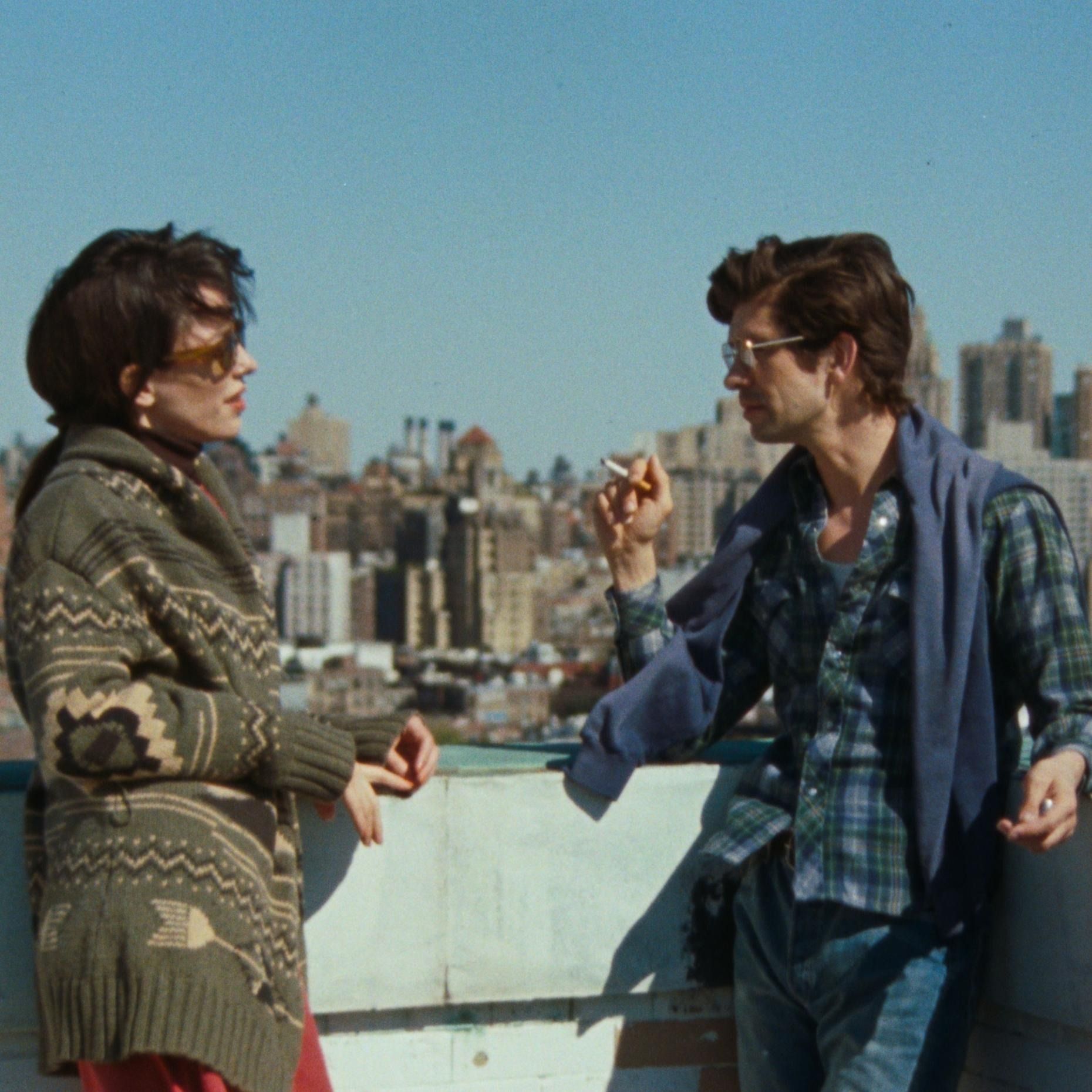
This is all of it on wnyc. I'm Alison Stewart. In honor of the Independent Spirit Awards which were held yesterday, we're sharing my conversations with some of the nominees. Now we'll turn to Peter Hujar's Day, which depicts a slice of life in New York City. From a transcribed interview. In December of 1974, photographer Peter Hujar sat down for a conversation with the writer Linda Rosenkrantz at Hermenez Manhattan apartment. The point was for Hujar to recount what he did for an entire 24 hour period. There are stories of sleeping through his alarm photo shoots with Allen Ginsberg, dinner at a Chinese restaurant, name drops from this and that influential New Yorker and a lot of cigarettes. The recording of these conversations was lost, but a few years ago a transcript of the conversation was discovered at the Morgan Library, turned into a book and now has been adapted into a movie. The film is called Peter Hujar's Day, featuring actor Ben Wisham as Hoojar and Rebecca hall as Rosenkrantz. It's directed by Ira Sachs and is a faithful word for word adaptation of the conversation that day in 1974. It was up for best Feature, Best Director, best Cinematography, and best lead and supporting performances respectively for Wisham and Hall. When Ira Sachs joined me in studio to talk about the film, I started by asking him to explain after he found the interview transcript at a bookstore in Paris, what made him want to turn it into a movie.
- [02:14]
A
Well, I was working at the time with Ben Whishall on a film called Passages and I was really enjoying the collaboration. So I have to say that I was like thinking and hoping that I could find something for the two of us to continue making art together. And when I read this work, which was this transcript of a conversation that took place 50 years before, I found it had all the things that I love and look for when I make a movie, which is intimacy and detail and also a story of friendship and love. And I found it very emotional and very exact in its precision and its understanding of the city at the certain time. And also I was very interested in Peter Hujar, the photographer whose work I'd been following since the early 90s, and his place within a canon of queer artists in New York City in the East Village, specifically, many of whom we lost to aids. So I was interested in kind of trying to know him through this work.
- [03:13]
B
Were you Aware the recordings were lost.
- [03:17]
A
Not until I got in touch with Linda Rosenkrantz, who is alive and well, lives in Santa Monica, and who I approached. I messaged her on Instagram and we started a conversation. And I learned that there were no tapes, but the transcript existed. And it was from the transcript that I created screenplay for the film.
- [03:39]
B
Is the screenplay a word for word adaptation of these transcripts?
- [03:44]
A
No words were added?
- [03:46]
B
No words were added?
- [03:47]
A
No words were added. I ended up, once I started working on the film, going back to the Morgan Library and pulling the transcript out of the archive and adding a few things that had been edited out in the process of publishing the book.
- [04:00]
B
Oh, interesting.
- [04:02]
A
There's certain things that I feel certain a few more moments that were saved from the dustbin of history.
- [04:09]
B
Oh, give me an example.
- [04:10]
A
Well, there's the whole section where they talk about Bette Davis and Joan Crawford in the film. And it's a very intimate scene where they talk about whether or not they would walk across the street to see Joan Crawford. And Linda says, I don't really like. I don't like stars at all. I have no interest in stars, she says. And so there's a great kind of back and forth between these two friends about who they like better, Joan Crawford or Bette Davis. And they both seem to like Bette Davis.
- [04:36]
B
So there were little pieces of the conversation that were edited out and you kind of.
- [04:40]
A
Yeah, I put a few things back in. But in general, it is a verbatim use of this text. And that's part of what was really interesting, I think, for Ben Whishaw, who has an enormous amount of text. He's really the storyteller in the film in a certain way, because for him it was almost like memorizing a jazz piece, because it's really the improvisation of how people speak that he had to. To get into his head and to internalize in a way that's very intimate.
- [05:13]
B
I wondered if you saw the plays. Dana H. Is this the room?
- [05:18]
A
Yeah, I didn't see either of those plays, but I certainly know of them and of this idea of kind of documentary theater. I think I thought that that was what I was gonna do, to be honest. And I thought I would direct the film as a kind of real time version of these two friends talking. Once started working on the production, I realized that wasn't going to work and that I needed to do something that turned something that was very realistic into something that was more cinematic. So I broke down what was probably two people across a table talking for an hour and a half into 25 scenes that took place from the morning till the middle of the night. And I transformed one day that Peter describes into a. A day between these two friends. And it became really a film about the intimacy of friendship.
- [06:12]
B
My guest is Ira Sachs. We're discussing the film Peter Hujar's Day, which recreates conversations from a 1974 conversation with him and Linda Rosenkratz and Peter Hujar. It's what he did over a 24 hour period. It took place in her apartment, the original conversation?
- [06:30]
A
Yep.
- [06:31]
B
First of all, the apartment is very 70s. How much research did you do into what her apartment actually looked like and did you recreate it?
- [06:40]
A
We were luckily and wonderfully donated a space in Westbeth, which is the artist housing building for Bethune, right? Yeah, on Bethune, exactly. And they felt that we were mission aligned because we are a film that's sort of bringing back certain interest in New York City artists. And they're a nonprofit that is made to preserve space for New York City artists. So they gave us this location, which was empty. So everything you see we brought in. Linda shared with me photographs of her apartment, which was on East 94th Street. And those photographs I shared with my production designer, even Phelps. And there's certain elements like spider, plants and a little bit of macrame with 70s, after all, a table. Yes, exactly. Tablecloth on the table with a candelabra, which is directly from Linda's photographs that we use in the film. But there was also a lot of freedom. We were not making a documentary. We were making a new film in 20.
- [07:42]
B
What piece did you see that? You thought, I need to have that for this film?
- [07:46]
A
Well, the rug is mine, I have to say, and some of the art is also mine or mine and my husband's. And there's a wonderful couch, which is our cinematographer Alex Ash's couch, which is mid century. And it's quite elegant. It's quite lovely.
- [08:05]
B
The New York Times wrote about Linda Rosenkrantz. They called her a writer who, quote, turned gossip on into art. What has Linda told you about her recollections of that day that proved to be useful for you as a director?
- [08:20]
A
Well, I think the thing that I felt talking to Linda, and also Rebecca hall, who plays Linda in the film. And she spent a lot of time with Linda, and the three of us are constantly emailing and texting and talking. And I'll see Linda on Sunday in LA with this film.
- [08:36]
B
Oh, I'd like to be on that text chain.
- [08:37]
A
Oh, yeah, it's fun. Linda's wonderful, and I think Rebecca and I both understood that she's a really warm. I think that the depth of her warmth and love for Peter was something we both understood also. She's like you. She's really curious. Like, her curiosity is authentic, and you feel it. And so I think that openness is something that's very important. The film also does sort of convey a sense of loss that I think Linda still feels, and I certainly do. Peter died in 87, in his early 50s, of AIDS. And I think there is a sense of, like, something is with us, but it will not be permanent. And I think that was an element that really Rebecca conveys so beautifully in the film.
- [09:33]
B
Did she express to you why she was interested in why people would do in a day, why they would write down what they would do in 24 hours?
- [09:43]
A
Well, she had published a book called Talk, which has been recently republished by the New York Review of Books and is a great novel based on transcripts of conversations that she had with friends on Fire island in the late 60s. And so she. In a way, she developed a kind of art form of these overheard and recorded voices that are also bringing in the language of the time. But the amount of specificity that she gets by sharing this particular story of Peter's. And I have to say, one thing about Peter is it seems like, oh, he's been asked, and so he's giving us this detail. But he's an extraordinary storyteller. He is not an ordinary storyteller. His ability to convey image and feeling and a vivid sense of exactly what it was like, you know, the details down to, like, how many, you know, pennies he gave to someone when he was getting change for buying Chinese food or how much cigarettes cost. I mean, he was really like. He was like a photographer of the moment in his mind. And his language is wonderful to listen to.
- [10:56]
B
What was interesting to you about how Peter Hujar spent the day that he recounted to Linda?
- [11:03]
A
Well, for me, the part as an artist that has been most meaningful, and I actually didn't notice this until the film was done, is that it's a story and an insight into what it is to create art and how hard it is. He vacillates between confidence and doubt with regularity in a way that I find really familiar as someone who has made a life also trying to make art that I believe in. And I think to think of Peter Hujar, who I think of as this master photographer, and to realize, ah, Peter Hujar questioned himself. Peter Hujar wasn't sure if he'd done the right thing. Peter Hujar doubted whether his work was good or bad. All of that seems really embracing to me as an artist of what it is to make things you go through.
- [11:55]
B
The hero zero, as I call it. I'm the best. I can do this. I can't do this.
- [12:01]
A
Yeah. And I think that to reveal the wizard of Oz, to pull the curtain back and say, even Peter Hujar doubted himself. And of course, every artist, it's part of the creative process. But I think that this is a unique window into what that feels like. I don't know that many works of art or stories or films that give us that insight.
- [12:28]
B
You mentioned earlier that you admired his work. What did you admire about his work?
- [12:34]
A
He has a kind of rigor with his eye that also maintains a kind of love and interest. He's unsentimental, but he's very human. He also has an incredible sense of black, white, and everything in between. In terms of the scale. His photographs are square images, black and white, and that he took interest in a demimonde world that other people were not paying attention to. He says, sorry about that cough. There's a cough button here. You might not know that, but there is a button you can push. And I missed it. But Peter is, you know, he's like a photographer of a world that nobody was paying attention to. But he does it with such honor and beauty and psychological precision. There's nothing sentimental about his work. And for me, the artists of the east village in the 1970s, 80s, pre AIDS and then those who survived, were risk takers in a way that I go back to all the time to remind myself that risk is a good thing to take.
- [13:51]
B
I'm talking to Ira Sachs. We're discussing his new film, Peter Hujar's Day. I can understand Linda listening to Peter Hujar in all of his detail, what she was getting out of it. What do you think he got out of it, Day?
- [14:06]
A
Hmm. Well, I think he did what he was asked to do. You know, he was asked to do it, and he was gonna do it. Well, I think ultimately both of them realized that if you pay attention to what you do, then in a way, you honor the variety of things and the seriousness of things and the challenges of just living through a day. I mean, there's a certain kind of quality that's like Ulysses in this work. Meaning? Like, that's meaning, you know, which is the story of a day. And I'm not saying. I'm not trying to compare Peter Hujar to James Joyce. But there is a way in which you make the everyday into something that's monumental. And I think that probably is a way of understanding that your days have meaning and also that they are things that you have to live through. And sometimes recognizing that can be very embracing of oneself. And. Yeah, I don't know. Days are hard.
- [15:07]
B
As a film director, you had to make something that people would watch, would want to watch. How did you do that out of a transcript? Literally, how did you. Did you take it apart line by line? Did you think about. You said there's 25 locations. Did you parse them out? I'm curious how you had to figure out how to make something that would be somewhat entertaining, the good side of entertaining.
- [15:32]
A
Oh, yeah, of course. I'm curious how your day has been, Alison.
- [15:37]
B
My day's been. It's been hard.
- [15:39]
A
Yeah, but it's.
- [15:40]
B
But it's been okay. I Woke up at 5:30 in a little bit of a panic, but I. I had 10 guests today.
- [15:46]
A
Oh, wow.
- [15:46]
B
And all with difficult names. And I had to figure, how am I gonna do this with a brain injury? Like, how do I do this?
- [15:52]
A
Yeah, yeah, I think that. Yeah, I mean, I sense. I think one of the things that's interesting is you look at someone across a room and you actually notice, you know, with this film you're thinking, like, what? It's a very. It encourages empathy in a certain way because you're like, we're all. My father used to quote Philo of Alexandria, who said, be kind for everyone you meet is fighting a great battle. And somehow this film encourages me to remember that battle instead of that I'm the one who's always battling, which sometimes is what one feels. I had the. Because of Westbeth giving us this space for an extended period of time, I was able to take two stand ins, two actors who were working standing in for Ben and Rebecca, into the space with Alex Ash, the wonderful cinematographer of the film, and photograph them at different times of day in different parts of the location. And ultimately I realized that was. The movie was like Linda and Peter on a couch at 4 in the afternoon. Linda and Peter in a bedroom at 6pm as the sun goes down. Linda and Peter on a terrace. I noticed that in the middle of the day. And so that sequence was how I broke the film up and turned what could have been a stagnant story into something that is for me an action and an active piece of cinema. I mean, it was really important for me for the film to be A moving picture. And so that was how I approached it.
- [17:23]
B
And you shot on 16 millimeter?
- [17:25]
A
Yes.
- [17:26]
B
Tell me why.
- [17:28]
A
Well, whenever I can shoot on film, I would prefer to. So thank you, Kodak, for helping that happen. Because I love, like you see in Hujar's photographs, I love how the negative is reflected and how the human quality of film is something that can't be replicated in digital work. It's just. It's porous and it's vulnerable somehow. And it also seemed to mirror the kinds of movies that I was looking at, which were films like Warhol's Poor Little Rich Girl, a film he made with Edie Sedgwick, or Shirley Clark's Portrait of Jason, which is a wonderful film that was shot in the Chelsea Hotel in the late 60s.
- [18:15]
B
Portrait of Jason.
- [18:16]
A
Portrait of Jason.
- [18:17]
B
Write it down.
- [18:20]
A
That's a canonical and incredible work. And, boy, and another film that was really important to me was Jim McBride made a film called My Girlfriend's Wedding. All of these films were very intimate portrait films made with a person with a camera and a subject in front of them. And I felt like I was making that kind of experimental work, and those films gave me the license to do so in whatever way I wanted. So the film is not a realistic film. It has an essential base which is exact, in terms of this transcript, that seems very authentic and real. But the film itself is much more playful than that. And there are certain asides and certain uses of music, and much of it is invented, even though hopefully all of it is from something that is very authentic.
- [19:17]
B
What's something about 70s New York that we pick up from their conversation or we see around them? That you think 2025 is just lost, we won't see it again?
- [19:27]
A
Well, I hope not lost, because that would imply a kind of nostalgia that I'm resisting. I will say that in one day, Peter had three or four friends drop over. So he saw three or four people in person, and he was on the phone with maybe five or six other friends. And. And I think that that nature of community and accessibility and regularity is something that we need. I won't say we lost.
- [19:57]
B
We're texting people that now we're texting.
- [19:59]
A
People instead of calling. And I think, you know, I think of places like the Cedar Tavern, which was a famous bar on University Place in Ninth street that was a kind of hangout for the abstract expressionists and poets of that period in the 50s. And I miss the idea of the Cedar Tavern, a place where, at the end of the day, when you doubt yourself, you could go and share that doubt and also a drink. And, you know, I'm sure it wasn't utopia, but I do think the regularity of conversations that people had with each other is really essential to sustaining one's life as an artist. Like, how do we keep talking and how do we share things that are harder good or bad? And that part is something we need to.
- [20:45]
B
What was the rehearsal process like for Rebecca hall and Ben Whishaw?
- [20:51]
A
Yeah, I don't rehearse in a traditional way, so I've never, for 30 years that I've been making films. I find rehearsing for film is kind of a theatrical process that I'm trying to resist. And so I'm interested in what happens in the moment in which the camera is turned on. And I don't want to the actors to kind of come up with their own sense of what they're going to do before we start shooting. That being said, I certainly block the film and construct it visually, and I try to give the actors everything they need. So which part of it is to have, you know, for Ben to have Rebecca and Rebecca to have Ben. I mean, that kind of quality was certainly central. I did give Ben a kind of glossary of all the names and people in his text. So I tried to help him think about who all these people were. His ability to actually make that alive is something that's about his talent. He took sort of Wikipedia level descriptions of a certain number of people and he makes them seem like they're next door and around the block. And that is something that I didn't know would be so powerful in the film, is that you actually believe the world he's building for you through his words.
- [22:20]
B
Have you changed how you think about Peter Hujar now the film is out and you've seen people respond to it.
- [22:28]
A
You know, I think I know more than a lot of people about Peter, but I never knew Peter. And I think part of the film is. Is a recognition for myself and also for the audience that there is loss. That someone with so much was so vibrant and so passionate. And then at a certain point, 12 years after this conversation was taped, was gone. And I think that is really a quality that was important to me in the making of the film. It was something I both tried to think about and not think about. But I think it's really in the DNA of the film, which is this sense of the fragility of and the ephemeral nature of our relationships and our own lives.
- [23:19]
B
That was my conversation with director Ira Sachs. The film is called Peter Hujar's Day, and it was nominated in five categories at this year's Independent Spirit Awards. After the news, we'll talk about some more nominated films, including the fan obsession thriller Lurker, a buddy drama called Twinless, and the small Town Baseball Movie. To find out who won the Independent Spirit Awards, head to our Instagram at.
- [23:46]
C
All of it WNYC it's tax season and at Lifelock. We know you're tired of numbers, but here's a big one you need to hear. Billions. That's the amount of money in refunds the IRS has flagged for possible identity fraud. Now here's another big number. 100 million. That's how many data points LifeLock monitors every second. If your identity is stolen, we'll fix it. Guaranteed. One last big number. Save up to 40% your first year. Visit lifelock.com specialoffer for the threats you can't control. Terms apply.
- [24:19]
B
Since WNYC's first broadcast in 1924, we've been dedicated to creating the kind of content we know the world needs. In addition to this award winning reporting, your sponsorship also supports inspiring storytelling and extraordinary music that is free and accessible to all. To get in touch and find out more, visit sponsorship.wnyc.org.