Loading summary
Transcript61 lines
- [00:09]
A
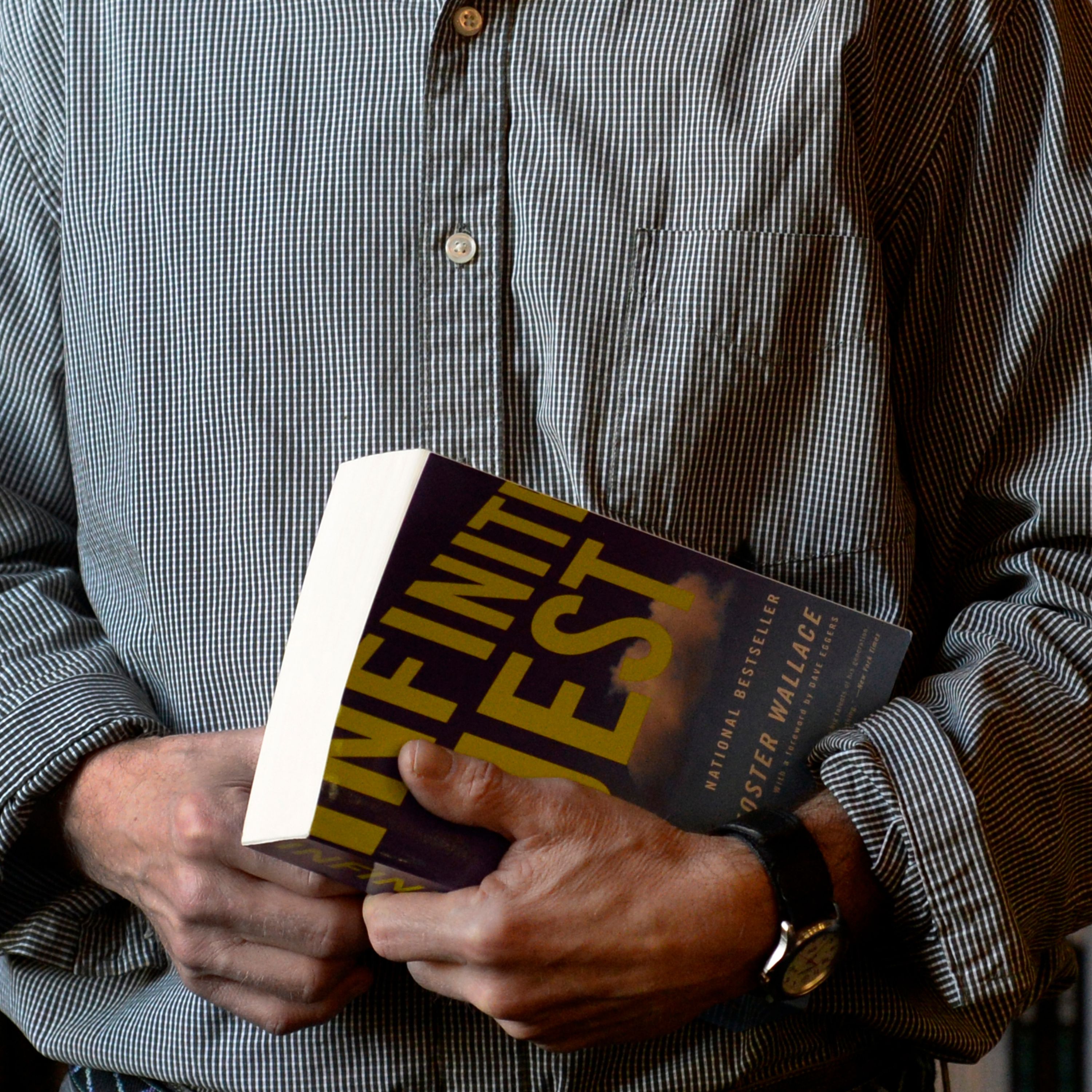
This is all of it on wnyc. I'm Alison Stewart. Hey, we want to remind you about our Get Lit Book Club pick for this month. We are reading the Wilderness by Angela Flournoy. The story follows a group of women and their friendship through good times and bad in New York City and la. It's about chosen family, social justice and navigating the challenging wilderness of young adulthood. Angela Flournoy will join us at the Stavros Niarchos Foundation Library for a Get lit event on Monday, February 23rd. Tickets are free, but seats are first come, first serve. We'll also be joined by a special a special musical guest handpicked by Angela herself, jazz musician and 20 Twix, sorry, 2026 Grammy nominee Emmanuel Wilkinson. So join us at the library on February 23rd for our event with Angela Flournoy and live music from Emmanuel Wilkins. Head to wnyc.org getlit to get your tickets now or to find out how to borrow your copy of the book from from the New York Public Library. That's in the future. Now let's get this hour started with Infinite Jest. 30 years ago this month, the David Foster Wallace novel Infinite Jest was published. A sensation in 1996, this challenging story of ambition and addiction made Wallace a star in the literary world. But in the decades since, Infinite Jest has become kind of a warning to a certain generation. Some see it as pret. Pretentious, the kind of thing you don't want to get stuck talking about to that guy at a party. But reflecting on the novel 30 years later, author Hermione Hoby argues that it's not the case. Her recent piece in the New Yorker is titled Infinite jest has turned 30. Have we forgotten how to read it? In it, she writes, quote, david Foster Wallace's novel, in all its immensity, became the subject of sanctification and then scorn. But the work rewards the attention it demands. Hermione Hoby joins me now to discuss. Hermione, it's nice to meet you.
- [02:31]
B
Hi, Alison, thank you so much for having me on.
- [02:34]
A
And listeners, we'd love to hear from you. Have you read Infinite Jest or tried to? What do you admire about it? What makes it challenging? We're taking your calls on Infinite Jest as we discuss its 30th anniversary of the novel. Our phone number is 2124-3396-9221-2433-WNYC. You can call in and join Hermione on the air or you can text us at that number as well. 2124-3396-9221-2433. WNYC. When was the first time that you encountered Infinite Jest?
- [03:11]
B
You know, I think it's a mark of how powerful a book is when you can remember precisely in, in vivid detail where you were. And that's certainly the case for me in Infinite Jest. Truly, it was one of the great reading experiences of my life and it probably will be again. I've read it twice now, definitely not ruling out a third, fourth, fifth time. But I first read it, I was in my early 20s and I actually read it in the wake of Wallace's death. So Wallace died, as your listeners probably know, by suicide in 2008. And I was shortly out of university and I was interning at the Guardian at the time on their arts desk. And I had this, this pretty heavy task when he died of contacting various prominent writers and other figures to seek their, their remembrances. And in those phone calls or in those emails, I just became so aware of the, the real magnitude of the grief that people were feeling, just how loved and revered this writer was. And I think it was that sense of this huge loss that took me to the novel. But I remember I was reading it, it seemed like all my friends were reading it. And the novel famously is extremely long. You know, I sometimes think of it now as infamous jest rather than Infinite Jazz. It's a real dad joke for you. So it's, you know, when I finally finished, I had to. I'd been with these characters, I'd been in this world for so long and had become so emotionally involved and had felt so accompanied by this book that when I finished I did feel a real grief, which no doubt was compounded by, you know, knowing that Wallace was gone. But I just, I had this very clear memory of, you know, I was in my little flat in East London and, and I was in tears. And I don't think that's ever happened to me upon finishing a novel, even as I've been very moved by other novels. But this was, this was really something else.
- [05:24]
C
You write that Wallace, who died at 46, would have been, quote, horrified by the idea that some consider him a modern day saint of literature. Why would he be so horrified?
- [05:37]
B
Yeah, I mean, maybe that's presumptuous of me, but I think not. I think he would be horrified because he was, you know, really allergic to the idea of, well, his own perfection, but maybe anyone else's perfection. He was really aware of his shortcomings And I think what's one of the things that's so beautiful about the book is that Wallace is doing on the page what he couldn't do in real life. And that's. That's to. I mean, the sort of hero of the novel, he emerges as such is this character called Don Gately, an amazing character who really struggles with sobriety but stays sober. And he really. He sort of submits to the, you know, to the platitudes of aa. But I think Wallace was just. He was a very complicated, difficult person, very morally attuned, and I think his work has huge moral force. But I think he would just be really repulsed by the idea that he himself was the moral force rather than the work that, you know, he poured his whole being into.
- [06:57]
C
We're discussing a recent piece in the New Yorker, Infinite jest has turned 30. Have we forgotten how to read it? My guest is author Hermione Hoby, who wrote about it for the New Yorker and listeners. We want to hear from you. Have you read Infinite Jests? What did you appreciate about the novel? What did you find challenging? Give us a call at 212-433-969-22122433, WNYC. Let's talk a little bit about what the book's about. There are two very different settings. They're same. They're sort of similar, but they're. But they're different. The first is the Enfield Tennis Academy. Tell us what goes on at this academy.
- [07:34]
B
That's right. So this is a tennis academy for boys and girls. And we do certainly get more airtime, as it were, from the boys and from the girls. But this is where these kids are really drilled relentlessly, physically and mentally, in preparation for possibly a career in professional tennis. So we get to know. I mean, I haven't counted, but it feels like something like 30 or 40 of these students, you know, who are all vivid with life and peculiarity. And there's often this quality in Wallace's work, a sort of exaggerated quality, a real kind of comic. It's like the dials have been turned up. And that's certainly true in the Enfield Tennis Academy, which is, you know, in some ways a preposterous place. And it's. It's kind of touching and painful to see these. These very young kids become, you know, monomaniacal about getting better at tennis. They're always acutely conscious of their rankings within the school, you know, whether or not they're going to make it. There's one character who Frets a lot about his desire to be famous and whether this is, you know, a sort of failing and whether he ever will be famous.
- [08:56]
A
As I remember, Wallace was an avid tennis player.
- [08:59]
B
Yes, that's right. That's right. He was a junior tennis player, I think, state ranked in his home state of Illinois. So this was a familiar world to him. I mean, as I said, this is a, you know, a heightened world. But he certainly had a deep sense of the game and it's, you know, the psychology surrounding this competitiveness, this drive to achieve.
- [09:25]
C
Is there a character in the book that.
- [09:27]
A
That reminds you of him or is something or he uses to. To work out his own issues?
- [09:33]
B
Absolutely, there really is. And I think, you know, this would be pretty indisputed among readers and Wallace scholars. That character is Hal in Cadenza, who actually opens the novel. And Hal is a bit of an academic star. Well, more than a bit. He's. He seems to be a genius with extraordinary memory. And he's also a very good tennis player. He also. And this is a real sort of telltale peculiarity when it comes to the autobiographical nature of this character. He's very anxious and sweats a lot. And perhaps the most famous images we have of Wallace are him wearing that bandana which he wore to keep the sweat out of his eyes because he was, you know, such an anxious being that he would. He would sweat a great deal. And one thing, and I mentioned this in the piece, but one thing that I find really remarkable about the character of Howell is that Wallace, in the end, doesn't make him the main character, doesn't make him the hero. And that's really beautiful to me. And I think it speaks to Wallace's lifelong project, which was sort of the opposite of solipsism. He's sort of the anti auto fictional writer in that. What he's doing in Infinite Jest is trying to bring to life as many different beings, as many different consciousnesses as possible. And so my feeling is that he chose not to stay with Hal. I mean, Hal remains a character throughout the book, but that Don Gately inst. Emerges as the main character because Wallace wasn't so interested in himself. I think he was always trying to really heed and inhabit the reality and the humanity of other people, including people who weren't like him at all.
- [11:28]
C
We got a text that said, I read infinite jest in 2015, in my early 30s. It is unforgettable for its imagery, its humor, and its foretelling of our society today. All of us glued to our screens 24 7. And you mentioned that in Appease, how Wallace was particularly fixated on television and its detrimental effect on society. How did he explore that in the novel?
- [11:54]
B
That's right. That's right. So the sort of famous thread in the novel is this conceit of a movie that is so addictively entertaining that it's lethal. In other words, if you start watching it, you can't move, and so you die of dehydration or starvation. And there's really blackly comic episodes in which, you know, someone goes in to rescue the person watching it, but they of course, themselves become stupefied and catatonic and so on. It's a sort of, you know, endless or potentially endless chain of fatal watching. And I think what's really poignant about experiencing this in the novel and sensing Wallace's anxiety about TV addiction is that of course, now that seems pretty benign. You know, we have this. This almost mass addiction to our smartphones, to doom scrolling to social media. And I'm. Yeah, I think he would be pretty horrified by that. And I would also say not to kind of, you know, toot the infinite chest horn too hard or be too evangelical about it, but the. The corrective to that, to our shattered attention spans, our anxious, mindless scrolling, is indeed to read a novel like Infinite Jest. You know, that's my prescription, if I can make it.
- [13:17]
A
Well, it's sort of. Yeah, you're bringing to an interesting point. The length of the novel is over a thousand pages. Do you think a novel like this would be successful now?
- [13:30]
B
Oh, I wonder. I really hope it would. I hope that the. The genius of this novel would, you know, capture readers at any time. But I do think it probably is the case, you know, loath as I am to admit it, that our attention spans are. Are shorter. So I don't know. I also think about the.
- [13:52]
A
The sort of the gamification of reading. Like people on Instagram and TikToks have stacks of books they've read instead of just staying with one for a long period of time.
- [14:02]
B
Yes, yes. I mean, to me, if a novel is wonderful, I just want to stay in it for a long time. You know, it's like, it's like watching the movie, the Fatal Movie in Infinite Jest. It's like, well, why would I want to stop? So my sense is that, you know, the more you read this novel, the more you want to be reading this novel, that you want to stay in it. And I think one of the things I found quite painful in terms of the book's reputation over the last 20 or so years is this idea. And I think you, you mentioned this in your introduction, that it's sort of, you know, it's a kind of pretentious totem and that no one could actually enjoy reading this, this massive book. And, you know, in my experience and in the experience of, you know, people I've talked to about this, nothing is farther from the truth. Like, it's just a riot. It's just so fun and truly addictive, you know, and in this way enacts its own theme. My experience was I can't stop reading this and I don't want this to be over.
- [15:03]
C
This text says Infinite Jests was like spending time in another unimaginable country. It feels like a real experience, not just a story. We are talking about infinite jest turning 30 years old. My guest is Hermione Hoby, who wrote about it for the New Yorker. Listeners, we want to hear from you. Have you read Infinite Jest or have you tried to? What did you appreciate about the novel? What did you find challenging? Our phone number is 2124-396922-12433, WNYC. We'll be right back.
- [15:43]
A
You're listening to all of it on wnyc. I'm Alison Stewart. We're discussing the recent piece in the New Yorker, Infinite jest has turned 30. Have we forgotten how to read it? My guest is its author, Hermione Hoby, who wrote it. About 30, wrote about it for the New Yorker. And listeners, we'd like to hear from you. Have you read Infinite Jess or tried to. What did you appreciate about the novel? What did you find challenging? Our Phone number is 2124-3396-9221-2433, WNYC. I remember this from reading the book that you needed a dictionary occasionally.
- [16:17]
B
Absolutely.
- [16:18]
A
You know, you.
- [16:19]
B
You began by asking me whether I. Or what. I remember reading it for the first time. And one thing I didn't mention is that I have this very clear image of the scrap of paper I kept in the book on which I would dutifully write down all the words I was learning. And I remember nacreous was one of those words meaning a sort of pearly sheen. And I sometimes wonder, where is that scrap of paper now? I kind of wish I'd kept it.
- [16:45]
A
Well, does it serve a literary purpose for the novel? When you think about all of the different words he used, it does.
- [16:52]
B
You know, I think we, we can have this reaction to A, you know, a $5 word, a sort of eye rolling reaction, like, you know, oh, my God, this guy is just showing off his ridiculous vocabulary. But to me, there is such brio and pleasure in these words. And I was about to say they're never used incorrectly, but they are used incorrectly in a very clever, funny way, which is when malapropisms are put in the mouth of one of the novel's actually least savory characters, a guy called Randy Lentz, who has a habit of murdering cats. Definitely the least sympathetic character in the book. And I think it's quite funny that, you know, the least sympathetic character in the book is also the guy that gets words wrong. It's almost as if Wallace is saying, you know, language is sacred and wonderful and we need to honor it and take pleasure in it and try our best to use it correctly.
- [17:51]
C
There are two female characters in the book. How would you describe the roles they play in the novel? Avril and Joelle?
- [17:58]
B
Well, I mean, not to fact check you, but there are more than two. It's just that there are two main characters. Yes, main female characters. So one of these is Avril Incandenza. This is Hal's mother, known as the Moms. That's what Hal and his brothers call her. And then the other is a character called Joelle Van Dyne, who is also known as the Pea Goat, which stands for prettiest girl of all time. And as I mentioned in the piece, it's, you know, it's just slightly dubious that these two main female characters both happen to be beautiful. Strikingly so. You know, there's a bit of a. There's a sense of, you know, something a little puerile. Like, what's most awesome about girls and women is that they're beautiful, you know, rather than their inner lives. But that said, they. They remain, you know, really fully fleshed, intriguing characters. So I don't want to throw Wallis under the bus too much when it comes to his women characters, but as I said earlier, it's certainly true that, you know, the guys kind of get more. More attention than the women in the novel.
- [19:13]
A
Yeah. On a more serious note, the writer Mary Carr has been open with allegations against Wallace, abuse from Wallace during their time together. Do those allegations complicate the story of David Foster Wallace? And does it change with the way you interact with the book?
- [19:30]
B
Yeah, that's a really good point. I'm glad you've brought that up. I mean, my first reading in 2008, this was before Mary Carr made those allegations. Which of Course, you know, we have no reason not to believe, and they're pretty distressing. I think what is always. Not always. What is so often wonderful about fiction is this sense that. I mean, I use this phrase in the piece that it's so often the gold extracted from the dross of a life. And I really feel Wallace's feminism throughout his work. And I think it may be that, you know, this is. The ideals that we experience through the work and in the work were not met off the page. And those ideals include, you know, sobriety and calm and forbearance. So there's something poignant about that. I mean, I think, as I said earlier, you know, the moral force comes through the work, not through the life, not through the worst things that anyone did off the page. So I hope that there can be something of a separation, and perhaps that's not a particularly fashionable opinion right now, that we can take the work on its own terms and try not to have the work too clouded by the bad or even terrible or possibly abusive behavior that happened off the page.
- [21:07]
A
Do you think that also applies to addiction because David Foster Wallace struggled with it throughout his life? That's a big part of the book.
- [21:15]
B
That's right. That's right. I mean, my understanding. I would sort of have to check the biographies, but my understanding is that Wallis got sober and stayed sober, which perhaps, you know, is what lends the character of Don Gately that real force. Wallace knew how hard it was to get sober and stay sober.
- [21:35]
C
You mention in your piece the novel's treatment of race. There are black characters, and they speak in a. Well, in a not so great way.
- [21:46]
B
That's right. That's right.
- [21:48]
C
Yeah. How would you describe the role of race in this novel?
- [21:53]
B
I mean, well, to put it kindly, underdeveloped. There are very few characters of color. Most of the characters are white. And, you know, that can feel pretty awkward and painful to read now, particularly for a novel that in other ways is so expansive and so ambitious in its rendering of different types of people. To state the obvious, Wallace was a white guy. And I think the fact that he wrote mainly about white people probably speaks to that. You know, that adage we have about writing fiction, which is write what you know. So I don't think it's the case that he thought that black characters were any less interesting or deserving, but rather that he was writing, you know, about these worlds of tennis and addiction and writing as a white person, mainly about white people.
- [22:50]
C
Let's talk to David from Long Island City. Hi, David. Thanks for calling all of it.
- [22:55]
D
Hi and thank you for talking about Infinite Jest. You know, it's one of my favorite books of all time.
- [22:59]
C
We like it.
- [23:02]
D
I was telling, telling your interviewer that I lived at the location of the book for a long time around the corner from the fictitious tennis academy. So I was spending a lot of time on Google Maps when I was reading it. Going down memory lane and as a recovered alcoholic, I consider that book part of canon. I have been to rehab and I remember I ordered from Amazon and left a copy of Infinite Jest hoping that somebody would read it. Not too sure that anybody would bother tackle because the insights were so profound.
- [23:37]
A
Thank you.
- [23:40]
C
Did you want to add one more thing, David? Yeah, yeah.
- [23:43]
D
I'm always a little uncomfortable when, you know, proper vocabulary is kind of put. When you can't use the appropriate word for fear of offending somebody. It's, I don't know, I feel like the English language, it could be condemning the English language to irrelevancy if we don't use its beauty and its complexity.
- [24:08]
C
Thank you for your call. This text said, I read Infinite Jest in high school in 96. I've been a voracious reader for years, but this was the first really challenging book that I read. I reread this book every two years for the next 10 years and I got better and made more sense with every read. It was prescient and funny and sad and talked about things I was just beginning to discover in life. I can't read the first page without getting sucked back in. So for someone who is hearing us have this conversation about Infinite Jest, Hermione, what advice would you give them if they picked it up for the first time?
- [24:46]
B
Turn off your phone. Yeah, just turn off your phone and have a blast. Yeah. And I would also say it gets better and better. You know, I live in Colorado. We have a lot of giant mountains here. And after the piece in the New Yorker came out, my neighbor, who's a bit of a mountaineer, said to me that he, I think he phrased it like, oh, I've never had the courage to climb the mountain that is Infinite Jest. And I said to him, you know, unlike real mountains, it gets easier and easier and more rewarding as you climb. So I just hope a lot of people think of it not in a sort of eat your vegetables way, but just in a. You can have this extraordinary, possibly life changing experience with this book.
- [25:34]
A
I want to follow up on one thing that we talked a little bit about. We didn't talk about it, but I want to bring it up, is loneliness. It's a really a big part of this novel.
- [25:43]
B
Absolutely.
- [25:44]
A
What does this novel investigate about loneliness?
- [25:48]
B
Yeah. I would say that every single character in this book is dealing with loneliness. And this was really a lifelong preoccupation for Wallace, who I think was always insisting, but, you know, never wanting to be cheesy about it, that we really have this obligation to connect with each other, to be heeding the reality of other people. And that's. That's very much present in Infinite Jess. And it's a book that makes you feel less lonely. I've been very touched by people saying, you know, on social media in response to this piece, that the book has made them feel less lonely. But what I'm thinking of, and perhaps we'd be remiss not to mention this when talking about Wallace, is his commencement speech he gave called this is Water, which I think has a lot to tell us about loneliness, too. And so in this speech, he tells a little parable, which is, two fish are swimming along in the water. They pass an older fish who says something like, how's the water? And then the young fish turn to each other and say, what is water? So the point of all this is to remind us how important it is to be aware of our own lives and to be aware of each other, to be aware of the water we're swimming in.
- [27:14]
C
We got a text that says, for unsure readers, I suggest reading his essays in a supposedly fun thing I'll never do again. A good reader, a good starting place.
- [27:24]
A
My final question for you. What do you think this novel.
- [27:28]
C
What do you think this novel means for our current culture? If someone's picking it up for the first time, how will it relate to what's going on right now in 2026?
- [27:39]
B
A great question. I think, in a way, dismayingly, it speaks more forcefully to 2026 than it even did to 1996. And what I mean by that is that, you know, our. Our sense of atomization, our sense of loneliness, no doubt exacerbated by political division, by the evils of the algorithm, keeping us all in our little silos of information or misinformation. All that means that. That we need a book like this and it's expansive humanity more than ever. So I really hope your listeners pick it up.
- [28:22]
C
I don't think I've picked it up since it first came out, but I might just. Again, it kept me company for six months, easily on the road. I just took the book everywhere and read it when I could have because.
- [28:30]
A
It was so long.
- [28:32]
C
But I'm curious what it would feel like to read it now.
- [28:35]
B
Yeah, I hope you have a blast. If you do, I'll let you know.
- [28:39]
C
My guest is Hermione Hoby. She wrote a piece for the New Yorker. Infinite Jess has just turned 30. Have we forgotten I how to read it? Thanks for joining us.
- [28:48]
B
My great pleasure. Thank you so much.
- [28:51]
E
It's tax season, and at Lifelock, we know you're tired of numbers, but here's a big one you need to hear. Billions. That's the amount of money and refunds the IRS has flagged for possible identity fraud. Now here's another big number. 100 million. That's how many data points Lifelock monitors every second. If your identity is stolen, we'll fix it. Guaranteed. One last big number. Save up to 40% your first year. Visit lifelock.com specialoffer for the threats you can't control, terms apply.
- [29:21]
F
This is Ira Flato, host of Science Friday. For over 30 years, the science Friday team has been reporting high quality science and technology news, making science fun for curious people by covering everything from the outer reaches of space to the rapidly changing world of AI to the tiniest microbes in our bodies. Audiences trust our show because they know we're driven by a mission to inform and serve listeners first and foremost with important news they won't get anywhere else. And our sponsors benefit from that halo effect. For more information on becoming a sponsor, visit sponsorship.wnyc.org.