Loading summary
Transcript104 lines
- [00:08]
A
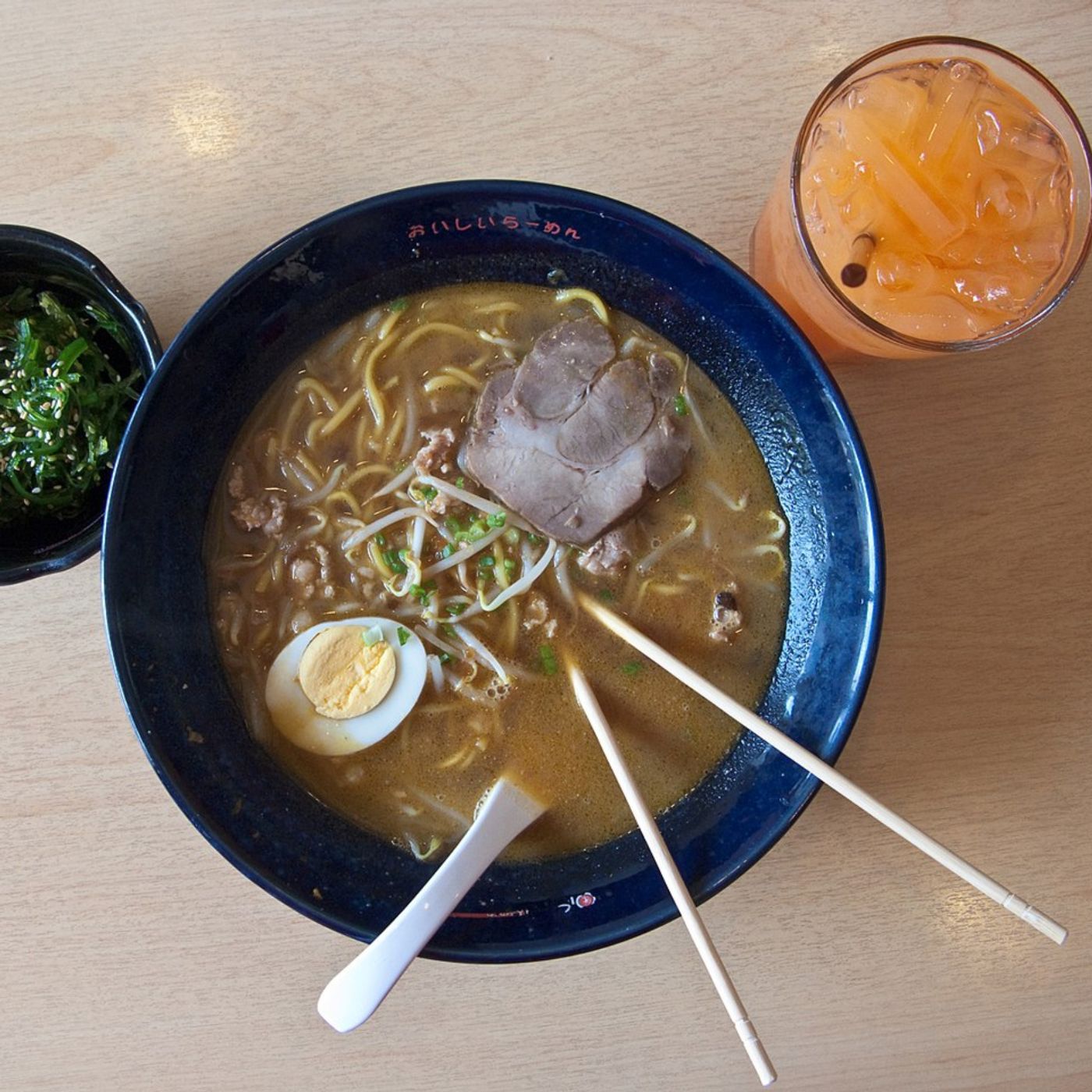
This is all of it. I'm David Fuerst in for Alison Stewart. Coming up on today's show, we continue our go local conversation with Caroline Weaver, who joins us to talk about where to get great holiday gifts in the Bronx. National Book Award winning poet Patricia Smith is here to talk about her book the Intentions of New and Selected Poems. And three members of the Americana band Old Crow Medicine show are going to join us for a listening party for their new holiday album. That's the plan. So let's get started with a nice hot bowl of ramen. Well, between last night's freezing temperatures and yesterday's snowstorm, winter is in full swing. And what better way to warm up than with a steaming bowl of ramen? Well, that's what team all of it was thinking last week when we reached out to Sho Spaeth, a chef, writer and author of the book Homemade Ramen. He wrote a piece for Conde Nast Traveler about the best places in New York City for ramen. And he should know. He is a self proclaimed ramen geek who has been making ramen since he was a kid when he spent summers with his family in Japan. And and in this piece he lists nine spots, most in Manhattan and Brooklyn that he recommends and he is here now to break them down for us. Sho, welcome.
- [01:36]
B
Well, thank you for having me.
- [01:38]
A
It's great to have you here and listeners. Let us know what's your favorite ramen place in the city or perhaps in the region. We want to hear your suggestions. So give us a call, the number 212433 WNYC. That's 212-4433, 9692. You can text us as well. Shout out your favorite spot and what makes it your favorite spot, what makes it your go to and we'll try to get you on the air. So Sho Spaith, can you start us off with the basics? What makes a good bowl of ramen?
- [02:14]
B
Well, there's a lot that goes into making a bowl of ramen, right. Every bowl of ramen consists of five different elements. So it's seasoning, which is tare. It's basically the flavor. Like there's miso ramen, shio ramen, which is salt ramen, and shoyi ramen, which is soy sauce flavored ramen. Those are the basic flavors. Then that seasoning is used to season the soup, which can be made out of anything. Usually it's pork and chicken, but it can be fresh fish, it can be dried fish. You can have a beef ramen. There's also very vegetarian and vegan broth as well. Then there's the noodles, which are the most important part, which is the definitional element of ramen, the most important part. It is just because. Definitionally, because ramen literally refers like pho to both the noodles and the dish. Right. And ramen and the noodles are alkaline wheat noodles. So it's just like a wheat dough that has alkaline salts incorporated into it. And those alkaline salts give the noodles their specific texture, like that slippery, bouncy texture. So that's three. Number four is fat. Fat is very important for all noodle soups. It's important for most dishes that you eat. It's delicious in the context of ramen. It adds aroma, but it also, when you lift the noodles out of the bowl, it actually coats the noodles. So it gives them an element of richness, and it also has an insulating effect. So when it's cold out, hot fat on top of a hot bowl of noodle of soup keeps it hot.
- [03:46]
A
It coats the noodles. Does it help the flavor adhere to the noodles?
- [03:50]
B
Yes. So as the noodles are lifted up out of the soup, they just get sheathed in the fat. And then the final element is toppings, which can be all sorts of stuff. So what makes a good bowl of ramen? All those elements need to be good. Some can be better than others. The best places, everything is incredibly prepared.
- [04:10]
A
Obsessed over.
- [04:11]
B
Yes, yes.
- [04:12]
A
Is that a good way to describe.
- [04:13]
B
That's a very good way to describe it for the best ramen places. And I think, you know, generally speaking, you know, when I'm looking for a bowl of ramen, it obviously should taste good, should be very salty. All ramen's very salty. Most good noodle soups are very salty. But then everything should sort of work together. You know, it's like there's some places that have amazing toppings, but then the soup kind of just fades into the background because the toppings are so good. You know, if it all kind of works complementarily and it's like a harmonious whole, that's sort of the best ramen. Right.
- [04:48]
A
I realize this is a dangerous conversation for us to be having. It's right around noon. So are you, like, heading out for ramen right after this?
- [04:58]
B
No. I mean, I have to get back to work, but if I was, I would definitely hit up someplace in the city.
- [05:05]
A
Well, we're gonna get to some of these places now. I wanna talk about the article that you wrote for Conde Nast Traveler. If you wanna look it up. It is called the best ramen in New York City. Carefully selected by a ramen connoisseur. Is that how you describe yourself?
- [05:21]
B
I feel like that was added in the edit. I think I'm more comfortable with ramen geek or ramen nerd, because that's basically what I am. I'm an enthusiast. You know, a correction to the intro. I'm not a chef, you know, I just cook a lot and I work for a recipe website, chefsteps.com.
- [05:39]
A
You wouldn't go as far as to call yourself a chef.
- [05:40]
B
No, because chefs are people who run restaurants and work in restaurants. It's a very different skill set.
- [05:46]
A
You mentioned in this piece that when Japanese chains first started opening in the city, there was a certain kind of broth that became king. Can you tell us what that is and what makes it special and why that happened?
- [05:59]
B
So. So the most popular broth in America, really, because the way that ramen evolved in the country, the most popular broth is tonkotsu. And tonkotsu literally means pork bone broth. So it's a little bit. In America, the one that's popular is an emulsified pork bone broth, which means that it's creamy, it's milky, it's opaque. In Japan, actually, there's two different kinds of tonkotsu because it just means a broth made with pork. There's a chintan, which is a clear pork broth, and then there's the paitan, which is the milky emulsified one. That's so popular here because Ipudo, which is the chain you're referring to, basically sort of blew off the lid on ramen after it came to New York City, and a lot of copycats came up after it. For a lot of people, restaurant ramen in the United States is tonkotsu. It's this creamy. It's gut busting. It's just got a ton of pork fat emulsified into the broth. And emulsion is basically, you know, like two unlike things like bonded, like forced together. So it's water and fat. Right. So when it. When that fat is like incorporated into the broth, it makes it so opaque, that light basically reflects off of it. So it looks white or off white. And that's, you know, it's delicious. It's indisputably delicious. It's porky, it's fatty. But, you know, can't go wrong. You can't go wrong, but you can prefer something else. Like my preference is for the thinner, lighter, clearer broths and a Lot of the places that I mentioned in the article actually focus on that.
- [07:39]
A
Yeah, you can find those now.
- [07:41]
B
Yeah. And that used to be sort of rare to find, but now there's many examples of it in New York City. Less so in other places. Yeah.
- [07:50]
A
And I want to get to some of those spots very quickly if you want to join this conversation. We're getting some calls already and we're going to get to one of them just now. The number 212-433-9692. That's 212-433-WNYC. Jesse, welcome to all of it. Jesse calling in from Manhattan. We were talking about the cold weather and ramen being ideal during this time. Is that your experience, Jesse?
- [08:15]
C
Yeah, last night I didn't want to go out, so I had some pork belly in the fridge, pan fried that up, made some bok choy, had some sun noodle tonkotsu in my freezer. So I just, you know, made that and had a good. Had a good night.
- [08:31]
B
Sounds great.
- [08:32]
C
My favorite place used to be Minka on 5th and off of B in the East Village, but they'd recently closed and I'm looking for a new place. I like Koo Ramen near my job on John street, but I usually get their curry there instead of the ramen. So right now I'm in between favorite ramen places.
- [08:50]
A
Okay, well maybe we could find one today. Let's get. This is a perfect transition. Let's get right to the list. The first place on the list is Ramen Ishida. There are two locations. The original on the Lower east side, the newer one in Chelsea. Why does this location top your list?
- [09:10]
B
Well, because I think that he makes the best. Yohei Ishida is the chef. He makes the best Shoyu ramen in the city, to my taste and specifically. So there's two locations. There's one where he's always there cooking and that's the Lower east side one. It's like a shoebox of a shop. He's always there. He's always there. You see him folding the noodles. He has the most beautiful noodle fold out of any ramen bowl in the city. And when he's there, there's an off menu item called the 80 Shoyu Ramen and it tastes like Japan to me. It's like the kind of ramen I grew up eating. And it's fantastic. The thing about that though is that the Chelsea location, I don't know how they're doing this, but they offer the rest of his menu and it's pitch perfect. So I think it's a great place to go. It's like if somebody asks me for a recommendation, I'm always for ramen. I say go there because they also, they not only do the clear shoyu ramen, but their tonkotsu is very nice. It's like, very well done. Everything there is very well done.
- [10:13]
A
I have a text here. Someone says, ichiran in Bushwick. Am I saying that Ichiran? Ichiran in Bushwick offers amazing tonkatsu ramen and the authentic Tokyo booth experience. Like going to confession, but with ramen instead of guilt.
- [10:28]
B
Yeah, well, ichiran is famous for this. Ichiran's a famous chain. It's a, you know, it's.
- [10:35]
A
Like a.
- [10:35]
B
Hakata tonkotsu, which is like the style of ramen. That's the thick pork broth and then like these very thin noodles, thin, straight noodles. And they're famous also because their thing is that they have these boots, and there's single person boots. You have like a divider between you and the person taking your order so you can't see their face. So you just like, you know, fill out your order. They just shunt this bowl of ramen into the booth with you. And then, you know, you focus on it and eat it, like, no talking. But yeah, ichiran's great. I mean, it's a popular chain for a reason. And there's locations. There's two locations in Manhattan, and I go there every once in a while. It's a little pricey, but for what it is, it's very good. I do want to say for the caller who talked about minka, I used to love minka. Minka is a huge nostalgic pick for me. They're around. Before ramen really took off here, it was an amazing little, cool shop. The ramen itself was not the best, but it hit the spot. And there was a lot of different options that you could have. They always had an experimental ramen on the menu. They had great shrimp gyoza, and I actually put it on this list because of its nostalgic value. But then they closed literally the week that we were publishing those, so we had to take it off.
- [11:59]
A
Oh, boy.
- [11:59]
B
But, yeah, that was a great pick.
- [12:01]
A
I want to get to some questions here we have. I got to read this text, too. This is from Natalie. Says, I live in New York City, and my friends and I have a ramen club in which we try new ramen spots. Each winter. We're getting back to the cold weather again. So this is a theme today. We've gone to 20 plus in the city. Favorites are Mr. Taka Ramen, lower east side, and their brother restaurant Karakata in Greenwich Village. Kudos also to Tabetomo. Am I saying that right in the East Village?
- [12:33]
B
Tabetomo, yeah.
- [12:34]
A
Okay, so that's a nice list right there to get us started. A caller wants to know how much protein should be in ramen per serving. I don't know if you can break it down to that specifically. And can I leave aside the spice packet and flavor of her own seasoning?
- [12:55]
B
So there's two different questions there. And I don't really. I don't know how you would quantify should for how much protein should be in ramen, but, you know, depending on the style, if it's a very thick. So koteri is the word to use to describe thick broth. I couldn't even quantify it for you, but a lot. There would be a lot of protein in ramen. Right. Especially if you. In the toppings. Like, there's a style of ramen that's not well represented in the United States at all, which is Jiro Kei ramen, and that comes with just a mountain of pork on top. So I don't know about that. In terms of making ramen out of a packet, yes, you can use the seasoning packet. Use as much as you want or use as little as you want and doctor it up however you want. Generally speaking, when I make instant ramen, I will use the entire season packet and then add other seasonings because it hits a base level of salinity that you need for stuff to taste good.
- [13:49]
A
Okay, so start there. All right, let's take another call here. Laura in Manhattan. Welcome to all of it. Do you have a recommendation? Laura, are you there? Laura, can you hear us? Oh, I think we might have lost Laura. Let's see. Let's see if we can come back to Laura, but go right now to Jack. Welcome to all of it.
- [14:14]
B
Hi there.
- [14:16]
D
My favorite place is Goku on Park and 30th. It's a tiny little place, but I'm liking it.
- [14:28]
B
I've never been there. I haven't heard of it. Where is it? On park and what?
- [14:35]
D
It's on Park. Park between 30th. I'm sorry, 30th and 29th. It's not exclusively ramen. There's other stuff on the menu, but it's great. I've been there twice. I'm going back.
- [14:49]
B
Well, I'll have to look it up and Give it a try.
- [14:53]
A
We're going to start getting through a lot of recommendations in just a moment here on WNYC and get to many more of your calls and texts. This is all of it on wnyc. We are speaking with Sho Spaeth, writer, author of the book Homemade Ramen. And we continue this discussion in just a moment. It's all of it on wnyc. I'm David Fuerst in for Alison Stewart, and we are here with the writer and author of the book Homemade Ramen Show Spaeth. He also has a new piece for Conde Nast Traveler about the best places for ramen in New York City. And we're also taking your call so you can join this conversation with your recommendations. 212-433-9692. And we were trying to get in through to Laura just before. Are you there?
- [15:52]
B
Yes, I'm here.
- [15:53]
A
Hey, do you have a recommendation?
- [15:55]
E
I do. So we even refer to it as my cafeteria. My design firm is just down the block. So this place is called no, no, no. And it is a charming, long, thin, like a diner restaurant. And the ramen is fantastic. And they offer all the varieties you're describing.
- [16:18]
A
Well, that's great, Laura. So no, no, no is a yes, yes, yes for you. And it's nice to have your personal cafeteria on the block there. No, no, no. That is a place show that is on your list.
- [16:29]
B
It is. And unfortunately, it's lower down the list than I would like. But, but I do agree it's a great place to eat. They have. It's essentially an Izakaya concept. Izakaya is like a drinking food establishment. And the ramen there used to be just superlative around the pandemic. Right before the pandemic hit, it was amazing. And then it sort of suffered a little bit in quality, and yet it is still very good. You know, just to say that it used to be so amazing. And that's because the ramen program there was established by this chef from Japan who had a restaurant here. It was called Mew Ramen. And so the whole program was designed around the fact that they offer yakitori. So all the they pull in chickens to cut up for yakitori. And then everything that's all the trim is used to make their ramen.
- [17:21]
A
Oh, interesting.
- [17:21]
B
So it's like, in many ways it's interesting in terms of, like the restaurant operation. But then the flavor of the ramen itself is very good. But again, it used to be so good. And I'm trying to get this out there so that whoever's running that restaurant go back to the way it was before. It was so amazing. But I still go there quite frequently and I recommend people to go there all the time. Especially if you're going with somebody who doesn't want to eat ramen because they have, you know, you know, like sashimi. They also have like yakitori secures.
- [17:48]
A
They have some more options.
- [17:49]
B
Yeah.
- [17:50]
A
Well. And it's still on your best of list here.
- [17:52]
B
Yes.
- [17:52]
A
And let's get through a few more places on this list before. Okay, that's. We mentioned two so far. Next, Tonchin.
- [17:59]
B
Tonchin. Tonchin is like a mini chain. It's based out of Tokyo. There's two locations here, one in Brooklyn, one in Manhattan, and then there's a LA location as well. Their focus is tonkotsu ramen, which again is not my favorite, but they do it very well. And they have a smoked dashi tonkotsu, which is very good. It has clams in it too.
- [18:24]
A
And.
- [18:25]
B
And then they do a tskemon, which is a kind of ramen that a lot of people might not be familiar with. It's dipping ramen. It's sort of like soba, where you get a hot bowl of soup and you get cold shocked noodles and you dip the noodles into the soup. I think that their skemin is probably my favorite in the city right now. And it also has. It comes with an extra. It says not just these thick noodles that are great for slurping the soup, but they also give you an extra wide noodle along with it, which is super fun. So it's just like two different noodle textures in the bowl.
- [18:53]
A
It sounds like a bonus as far as I'm concerned.
- [18:56]
B
Yeah. And they also have really good kakigori, which is the shaved ice, which you can get for dessert.
- [19:01]
A
I am sold. Okay, let's get to another call if you want to join this conversation. The number is 212-433-9692. And April in Harlem. Welcome to all of it.
- [19:15]
F
Hi. Thank you so much for taking my call. I wanted some recommendations on ramen spots in upper Manhattan or Harlem. I used to go to ROKC here in West Harlem. It was on West 141st street and Broadway and it just recently closed, which is devastating. So didn't know if you had any recommendations.
- [19:36]
B
Oh, did it close? I didn't know that that was going to be one of my picks. I think gin ramen is still up there. Gin is on the upper west side, not Harlem. And they make their own Noodles. It's pretty good. I don't, you know, I don't really have other recommendations. Like, most of my recommendations are from midtown and below. I would have to, you know, make that a part of my personal project to try and find more places north of there.
- [20:08]
A
I mean, that sounds like a great personal project to have, though.
- [20:11]
B
I mean, you know, this used to be what I would do all the time, but now I have a child who's very demanding on the weekends, who blame the child.
- [20:17]
A
Here we go.
- [20:18]
B
Who really loves Dambo. So every time I have to go get ramen, I have to go get Dambo with her. If she's.
- [20:24]
A
That's also.
- [20:26]
B
So I'll try to put that on my list.
- [20:30]
A
That's a great suggestion. Thank you. And a great question. And we had another question, too, about. Is there any ramen that you can recommend? What about good ramen for vegetarians? Is there such a thing? That's the question.
- [20:44]
B
Oh, so there is. And one of the places on the list, Nakamura. It's run by Hidetoshi Jack Nakamura, who's something of a ramen celebrity in Japan. He also should be a ramen celebrity here because he was a development chef for Sun Noodle, which is the noodle manufacturer that is basically been responsible for the renaissance and ramen in the city. Nakamura has a vegan exo miso ramen that is, I don't know, mysteriously good. It's. It doesn't. I'm a dedicated meat eater. It doesn't even seem to me to be vegan, but it's incredibly good. And I think that's the best representation of a vegetarian ramen that I've had in the city. But Nakamura also has pitch perfect Shoyu ramen. Tonkotsu ramen has everything you could want. Their gyoza is really good as well. But anytime somebody asks me where to go, if they have a vegetarian along with them, I would say Nakamura.
- [21:48]
A
And let's get to another call right now. 212-433-9692. Lisanne in Croton on Hudson. Am I saying your name right? Welcome to all of it.
- [21:58]
B
Yes.
- [21:59]
G
Yes. You're saying my name right.
- [22:00]
A
Excellent. Do you have a recommendation?
- [22:04]
G
Well, I used to live in Manhattan, and I moved up to northern Westchester county, and my favorite place is Tampopo Ramen in Washington Heights. So for the person who wanted to know about something on the Upper west side, sorta, that's a good place to go. They have great gyoza, and they make their own ginger ale with fresh ginger. And I Still drive into the city to go there, because it is so good. And we don't really have great ramen up here in Croton on Hudson. So that's my recommendation.
- [22:36]
A
Well, thank you so much for calling in to all of it. And I'm just going to move right down your list here. A place called Nakamura. This is the place you just mentioned. Okay, I'm getting the names. They're floating now. Can we just go back to that one for just a moment and tell us about where it's located? This is a small place, right? And it's located near the entrance to the Williamsburg Bridge.
- [23:02]
B
Yeah, it's like, just almost. It could be under it, you know, it's like to the left of it. And it's a very tiny place. It's, you know, I don't know, maybe six tables. He used to have a skimming concept right next to it as well. Or, no, a mazemen concept. Mazaman is mixed noodles. It's sort of like pasta. Like ramen version of pasta. And he's a legend. Like, he's. You should go there if you've never been, because he's one of the foundational blocks to ramen in the city.
- [23:34]
A
That's. That's very cool. Again, that one is called Nakamura. And we will have a transcript up, by the way. If you're trying to scribble all of this information down, we will have a transcript up tomorrow. So if you don't have the ability to take all the notes right now, you can go back and listen and read and catch all of this information. Moving down your list, Ivan Raman.
- [23:56]
B
Yes, Ivan Raman. Ivan Orkin is maybe the most famous ramen chef in America because he has this amazing story. He's a Jewish guy from Long island, moved to Japan, opened up a ramen restaurant in Tokyo, was with rave reviews, comes back to New York, opens up his shop. And it's great. It's. It's. It's unique. You know, that's a lot of these different ramen. A different ramen is. It follows, you know, archetypes or, you know, colors within the lines a lot. Right. Ivan, his shio ramen is probably the best in the city. Definitely the most interesting. He has rye noodles. He uses a sofrito in the base, which is very atypical. But what I really like about his shio is it has very strong katsuobushi notes. Katsuobushi is this dried skipjack tuna simplification, but it's this foundational ingredient in Japanese cuisine. And he uses a lot of it as a powder in the broth. And it's smoky. It's just a really interesting bowl. And then he also has this innovation of this roasted tomato topping, which it actually sounds amazing to me just now, but I remember first hearing about it being like, how could that work? And it's tart in the salty broth. It's amazing. It's very good. And also the other stuff there he has is great. It's just a great restaurant to go to.
- [25:22]
A
Okay, we're going to put you to work here. Sho with a question. Edith calling in from Manhattan. You have a question?
- [25:32]
F
I'm wondering. I happen to be gluten free. I have that affliction and I have a very hard time finding any ramen that's gluten free in a restaurant. I can get the instant ramen, but I understand it probably would be anathema to have that kind of noodle. But I'm wondering if you know of anything.
- [25:53]
A
That's a great question.
- [25:54]
B
That is a great question. And you know, it is technically anathema because the gluten in ramen is what makes ramen ramen. And as we talked about before, ramen has to have ramen to be ramen. If that sounds confusing, I know, but there have been innovations. And there's this place in Boston called Tsuramen, which also the person who runs that place has a place in Seattle called Kayava and they have a very nice gluten free noodle. I'm not really sure what it is. I think it's a tapioca starch based noodle. So there are options out there. And increasingly I think people are going to try to find ways to cater to gluten free audiences. I mean, my wife is gluten free. My solution typically is to use rice noodles. You can get tubular. If you're making at home, you can get these tubular rice noodles that are called mishian or the bun bohui noodles, basically, so they look like spaghetti. The only problem with them is they take around 20 minutes to cook. But they're very good in a ramen broth I don't know about in New York City. I can't, off the top of my head think of any gluten free places that I would recommend because I haven't tried them, but I know that there are some places that offer them.
- [27:10]
A
Okay, great question and thank you for that answer. And just to finish up your list, I believe I'm trying to keep track here. I think there's just two More places on your list that we haven't already mentioned. I believe they're both chains as well. Yuji Ramen and Okiburo. Can you mention these locations?
- [27:26]
B
Neither are chains. Yuji is actually a homegrown New York phenomenon now.
- [27:30]
A
Say that again.
- [27:30]
B
It's Yuji Yujiraman.
- [27:32]
A
Y U J A Yuji Ramen.
- [27:35]
B
Yuji Haraguchi started Yuji Ramen as a whole foods counter on Houston, using the bones from the meat counter that then he would, you know, make soups out of. But when he opened up his own shops and there's two of them now, what really distinguishes him is that he uses fresh fish for his broth, which is fairly atypical even in Japan. And it's part of his whole motai night like philosophy, which means to waste nothing. So he's using tuna bones to make his tuna kotsu. So it's like instead of tonkotsu, it's tuna kotsu. And, you know, everything tastes amazing, but then you have these strange toppings. Like, you know, like he'll have slices of tuna, you know, like seared tuna on top of the ramen instead of pork. Right. And I think he gets his noodles from sun too. It's just. It's just a very interesting place, only in New York kind of thing.
- [28:32]
A
That's Yuji Ramen.
- [28:33]
B
Yuji Ramen.
- [28:34]
A
And very quickly, the other one, Okiburo.
- [28:36]
B
Okiboro House of Tsukemen is actually an import from California and they focus on dipping ramen. So like the. Just the dipping ramen. And it's really good. It's. Instead of the tonkotsu at Tonchin, they use a chicken paitan, which is like an emulsified broth made from chicken. There's lots of dried fish in the broth. It's just a very well done version of tsukemen. It's worth the lines. There's often lines because it's very small. They also do soup ramen, which is fairly unremarkable in my opinion. So if you're going to go get the tskemon. And they also have a vegan version of the tskemon.
- [29:14]
A
Okay, yeah.
- [29:15]
B
Which is quite good.
- [29:16]
A
Very cool. And let's try to get to one more phone call. Andrew in Astoria. Welcome to all of it.
- [29:23]
H
Hey, thanks for having me.
- [29:24]
A
Do you have a recommendation?
- [29:25]
H
Yeah, my recommendation. Yeah, I do. Well, whenever we want ramen and when family and friends come from out of town, they want to try ramen, we take them to a pudo. They have. There's three that I know of. In Manhattan. My favorite one is by Union Square on Fourth Avenue. They also have one on West 51st that is really quite good. Anything with like miso ramen, they're really good. And their pork, their buns, like the pork buns or shrimp, chicken, they're just so delicious. So, yeah, that's, that's my recommendation.
- [29:59]
B
I mean, ippudo is a behemoth. You know, it's the first chain that broke everything open here. I do think it used to be better. And one thing I've noticed at some of the chains of ippudo is that sometimes the ramen isn't as hot as it could be. But it is, you know, the standard of quality is generally extremely high. You can't go wrong. It's beloved in Japan as well, you know.
- [30:25]
A
So that's great. And thank you so much for all of your recommendations today and Sho for working through your list. Your nine Best in New York City Sho Spaeth is a writer, author of the book Homemade Ramen. You can also check out his article where he runs down these nine best places in Conde Nast Traveler, the Best Ramen in New York City Carefully selected by a Ramen connoisseur. Thanks for joining us on all of it.
- [30:49]
B
Thank you for having me.
- [30:50]
I
Since WNYC's first broadcast in 1924, we've been dedicated to creating the kind of content we know the world needs. In addition to this award winning reporting, your sponsorship also supports inspiring storytelling and extraordinary music that is free and accessible to all. To get in touch and find out more, visit sponsorship.wnyc.org.