Loading summary
Transcript125 lines
- [00:00]
A
All of it is supported by Progressive Insurance. You chose to hit play on this podcast today. Smart Choice. Make another smart choice with Auto Quote Explorer to compare rates from multiple car insurance companies all at once. Try it@progressive.com Progressive Casualty Insurance Company and affiliates. Not available in all states or situations. Prices vary based on how you buy.
- [00:32]
B
This is all of it on WNYC. I'm Alison Stewart. You know the Met, MoMA, and the Guggenheim, but you may not be familiar with some of the city's more esoteric offerings, like Red Hook's Pinball Museum, a collection housed in a Chinatown freight elevator, or the Van Der Ende Underdonk House in Queens. Jane August knows all of them. She has spent the past five years trying to visit every museum in New York City, and she's chronicling her journeys on TikTok, Instagram, YouTube, and Gothamist. She's here to share some of the hidden gems you may not know about. And we want to know yours as well. Jane, welcome back to wnyc.
- [01:14]
C
Thank you for having me. I'm so excited to be here.
- [01:16]
B
Like, before we get into specifics, let's talk about your project. What. What was the catalyst for you wanting to visit all of these museums?
- [01:25]
C
So I work in live music and venues. So during the pandemic, I did not have work. I was furloughed for quite some bit. And about a year into being locked in my house, I said I need to leave my house and experience some sort of art and culture. We live in the greatest city in the world. There has to be something that's open and museums are starting to reopen. And so I was like, okay, let's go visit these. There can't be that much. What if I visit all of them? That could be possible. And then it's gone on for quite some bit. So basically, I want to see what the city has to offer.
- [01:57]
B
Okay, for you, what counts as a museum? What's your criteria?
- [02:03]
C
I think the root of museums is community. I think if a museum is serving their community of their neighborhood or an intended audience bringing some sort of artistic or educational enrichment to. To that community, that's kind of what I qualify as a museum. Usually they have like a mission on their website, some purpose of why they exist. It's usually a museum. But sometimes I have to show up to really just like, figure it out.
- [02:29]
D
Now, does an experience count as a museum?
- [02:33]
C
I don't think so. I think a lot of the experiences are for some people would say like tourist traps or like things to do for fun. I'LL go. Sometimes I'm like, oh, I had a great time. Can't tell you a single thing I learned.
- [02:45]
B
Right?
- [02:46]
C
So it's a. It's a mix. Sometimes I have to go there to find out.
- [02:50]
D
Listeners, we want to get you in on this conversation.
- [02:53]
B
What museum do you think New Yorkers.
- [02:55]
D
Should know more about?
- [02:56]
B
Now, I'm not talking about the Frick or the Whitney or the Brooklyn Museum. We know they're great. We want you to tell us about.
- [03:03]
D
Your hidden gems, the out of the.
- [03:05]
B
Way places, the ones that maybe keep.
- [03:07]
D
Weird hours or hard to get in to see. We want to know about your favorite museum in the New York City area. Our number is 2124-3396-9212-4433. WNYC. You can call in and you can tell us about it or you can.
- [03:25]
B
Text to us at those numbers.
- [03:27]
D
Our numbers again.
- [03:28]
B
2124-3396-9221-2433.
- [03:32]
D
WNYC. Tell us about your hidden gems that museums you think more people should know about. All right, Jane, how do you keep track of your visits?
- [03:43]
C
So when I came up with the idea for this project, I made a big spreadsheet. I studied theater production at college and stage management. So really, spreadsheets were like my bread and butter. And that's how I visualize information. And I kind of just put everything I could find. When I started the series, I said, where should I go? And I'd find more that way. So as I hear of a new museum or I pass a place on the street, it goes on the spreadsheet and be like, find out if exists. If so go.
- [04:10]
D
So a lot of this involves research on your part.
- [04:13]
B
Yes.
- [04:13]
D
So much research that's so interesting. How do you plot it out? Do you decide to go to one museum a day? Do you take a certain neighborhood and go, how do you decide what your day is going to be?
- [04:24]
C
I look at my schedule, see, do I have a free gap and haven't gone to a museum in a hot sec. And then I kind of look at my spreadsheet, see what's open those days, and then I go. But I also reach out to the museums now as the project has gotten bigger, and to make sure, like, it's fine for us to come and record art. And sometimes I'll email them, like, great, come this day, I'm like, okay, or coming that day. So it's really sporadic. There isn't a strategy for it.
- [04:51]
D
How many entries do you have on this spreadsheet of yours?
- [04:55]
C
Right now there's about 200 lines. I've been to exactly 150. That was. The goal was for the end of 2025 to reach 150. But some of them on there, I have to find out, do they still exist? Have they closed forever? Like, is the phone line ever going to pick up? So we're at that point.
- [05:16]
D
I'm very curious about the way you go to the museums because quite often I get to go to the museums early, which is awesome. The big ones, sometimes they want to have a press person follow me, and I prefer not to. I like to just experience it on my own. I put my headphones in, I listen to music or just listen to white noise. I just want to have my own experience. How do you experience museums?
- [05:38]
C
It depends when I go and for what. So sometimes I've gone to press previews like that. If they offer me a tour, I will always take the tour because I feel like that's how I get learn the information. That's really important. Because when I go to the museums, I don't do much research before I go. I kind of say, okay, it's open this day. They're saying, you can come, I'm there. And then I kind of go in blind. So I go that way. And then I just kind of wander around and see what there is, take clips of things I find interesting to include in the video. And then I do a lot of my research on the back end as I'm editing my videos.
- [06:12]
D
That's so funny, because I do all.
- [06:13]
B
My research before I go, and then I go and just sort of bathe in it. And then anything that interests me, I go up and I look it up later. That's interesting.
- [06:22]
C
Yeah. Sometimes I think maybe I should research before I go in. But I think it's fun to go in blind because you get to truly experience what they have to offer you with no preconceived notions.
- [06:32]
B
It's true. This says visit the Louis Armstrong Museum in Queens. It's amazing. Let's talk to Emily in Brooklyn. Hi, Emily. Tell us about the museum that you like.
- [06:45]
D
Hi there.
- [06:46]
E
I'm so glad to hear from you. So I'd like to share with everyone a recent discovery of mine. Even though it's. I would say it's not. It's just under the radar is the Poster house Museum on 23rd between 6th and 7th on the north side of the street. I actually learned about it because they were advertising an exhibit last summer on wnyc and they're absolutely incredible. Their current exhibit is the as depicted in posters, the rise of fascism and the building of a nation. So specifically talking about Italy and how Mussolini and his counterparts used poster art and advertising to build fascism. It might be a little too close to home for some people, but a fantastic exhibit, a smaller one downstairs on national parks and the building of the marketing first marketing campaign for the national parks in the 1930s and last plug. The museum is free every Friday, and the museum is free on the third Sunday of every of every month. It's open basically Thursday, Friday, Saturday, Sunday of every week.
- [08:06]
B
And I'm going to tell you that we had the curator of the exhibit about fascism on the show Monday. So go back and check that out. You might find that to be interesting. Sherry is calling from Westchester. Hi, Sherry. Thanks for calling all of it. Sherry's not there. Hi, Sherry.
- [08:26]
D
You're there. Yes.
- [08:28]
B
Go for it. What do you want to see? Where should we go?
- [08:31]
C
The Hudson River Museum.
- [08:35]
D
Why do you say that?
- [08:40]
F
Well, it does have astronomy shows, but.
- [08:46]
C
And I'm forgetting now what I wanted to say, but it's a really terrific exhibit.
- [08:52]
F
It has one little house inside the museum and it has a few different.
- [09:01]
E
Parts to the museum.
- [09:04]
D
Appreciate your call.
- [09:05]
B
Thank you so much for calling in. My guest is Jane August. She's the creator of the TikTok series. Jane visits every museum in New York City. She's here to share some of her favorites. And we want to know what's a museum you think more New Yorkers should know about? We're not talking about the Frick. It's beautiful. The Whitney. It's gorgeous. The Brooklyn Museum. It's fabulous. Those are great places. We know about them. We want to know about your hidden gems. Our number is 2124-3396-9221-2433. WNYC. Okay, let's get to your list. What's the Museum of Reclaimed Urban Space?
- [09:41]
C
I love the Museum of Reclaimed Urban Space. It's, I think, one of my favorites. I've gone to. It's on Avenue C. It's in an old squat, and it's essentially an activism museum. So it's ran by volunteers. They kind of figure out what their exhibit is. They type it up, print it out, and paste it to the wall. It's really exciting and inspiring if you're interested in activism and how you can be a part of your community and make a difference.
- [10:06]
D
We got a couple of different texts about this museum. The Nicholas Roerich.
- [10:12]
C
Yeah, the Nicholas Roerich Museum.
- [10:14]
D
Yes. This text says Nicholas Roerich Museum on the Upper west side. Fascinating Russian born artist who eventually lived in and painted gorgeous pictures of the Himalayas. Tell us a little bit more about it.
- [10:24]
C
Oh, I love that one. It's some of the most beautiful art I think I've seen in a museum in the city. It's like these vibrant, colorful paintings in this townhouse that's on like the Upper west side, like in the Heights. Ish. And it was really surprising. I'm just like, okay, I'm going to this museum. And it's these, you wouldn't expect these beautiful, vibrant paintings. And I was really impressed. And they had postcards of almost every single one.
- [10:46]
D
Ah, beautiful. Let's talk to Robert in Middlesex. Hey, Robert, thanks for calling all of it.
- [10:53]
G
Hey, how you doing? How you doing, Jane? Thanks for taking my call. There's a museum that I've never. And I don't know if it's a museum or an experience, but there's a museum down on Christopher street called the Dream House, and it's by Lamont Young, an avant garde musician. And it's an exhibition of sound and light. And it's been there for 30 years. And I've always been intrigued, never went. I was wondering if you have heard of it or been.
- [11:19]
C
I have. I really like Dreamhouse. I considered it more of an exhibition instead of a museum. But it's a really fabulous and interesting piece of art.
- [11:28]
D
Let's talk to Chris from the Upper west side. Hi, Chris, thanks for calling all of it.
- [11:34]
G
Hey, how are you? The museum that I've been to, I think that the weirdest, most obscure is the John M. Mossman Locke Collection at 20 W. 44th St, which is in the mechanics and. What's it called? The Society of Mechanics and Tradesmen of the City of New York. And it's somebody collected locks and safes and padlocks from, you know, 1500 and modern mechanisms. And it was fascinating to my two little kids too, because they're the type who are into the trains and the subway and all that stuff. But what was really cool was the building, the library of the Society of Mechanics and Tradesmen. It's like a center atrium building library many stories tall, like you could kill yourself by falling over into the courtyard. And the museum is so obscure. Like you go in there and it's all dark and she turns the light on for you so you can look at all the locks and safe mechanisms and stuff. And then you can buy their book. They have a book which she gave us a copy of, or she gave us two Copies because nobody ever buys the book.
- [12:49]
D
That's very sweet. I'm gonna stop. I'm stopping right there. Thank you so much for calling in, because we got a lot of calls already. But I do want to get back to Jane's list as well. You. The Museum of Nostalgia. Where's this and what is inside?
- [13:02]
C
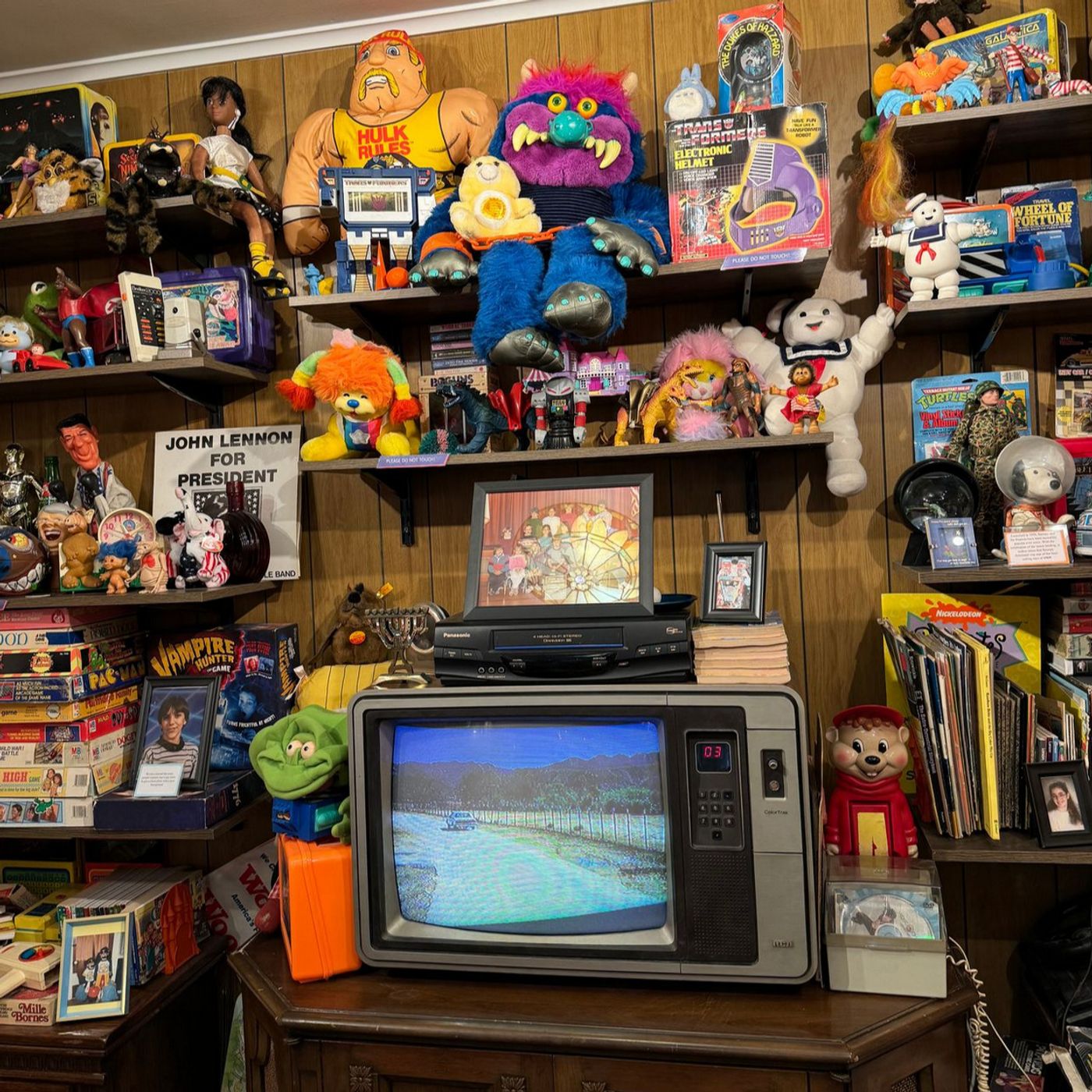
Museum of Nostalgias in Astoria. I found out about just dragging around Google Maps one day, and I said, okay, what's this? Why is it on my list? And it's part toy store, part museum. This couple that owns it, they're toy collectors. Their apartment would be full of these toys. People would say, you should start a museum. And so there's an exhibit of all their collectibles, like vintage toys from, like, the 80s and 90s. And then you can also purchase some toys. So then your kids aren't trying to take stuff from the museum.
- [13:31]
D
You also have on here the Red Hook Pinball Museum. It recently opened. Yeah.
- [13:37]
C
Yes. The Red Hook Pinball Museum I found out about because one of my followers messaged me saying that they found a poster on the street sign saying, oh, come to this museum. And it was at first in the back of this bar, and now they have their own permanent space. And it's these two guys who love restoring vintage pinball machines, mostly machines from, like the 1850s to the 1950s. And so you can play everything there. And then they also have the history of each machine and how it evolved, pinball history and gambling history in New York City.
- [14:08]
D
Let's talk to Ron. Hi, Ron. Thanks for calling all of it.
- [14:13]
H
Hi, how are you doing?
- [14:15]
D
Great.
- [14:18]
H
So I'm calling about the Hamilton Grange, which is Alexander Hamilton's country home built in 1804 at 141st now in Edgecombe. It's actually been moved twice, but still in same neighborhood. It was moved to preserve it and to completely decorate it as it was with furniture that had been found, as well as reproductions of furniture and other places. It's a real early federal experience to see this house, which is quite grand for its time and is as impressive in some ways as Mount Vernon. But I don't think people know about it as much to come up on to 141st street in Edgecombe to see this fabulous representation of the late 18th century, early 19th century.
- [15:14]
D
I agree with Ron. Hamilton Grange is very cool.
- [15:16]
C
Yeah. The National Park Service has a lot of remarkable historic sites in the city. I think about a dozen, and I count them all as museums.
- [15:24]
B
Let's talk to Amy, who's calling in from Ossining. Hi, Amy, thanks for calling all of it.
- [15:30]
F
Happy to be on the show. And hi, Jane.
- [15:33]
E
Thanks for elevating museums.
- [15:35]
B
Thank you.
- [15:36]
E
I'm calling to recommend you to consider.
- [15:40]
F
The Sing Sing Prison Museum, which is.
- [15:43]
E
A new museum in Ossining Tal the history of crime and punishment and incarceration and reform in New York State as this first gigantic penitentiary came to the.
- [15:55]
C
Edge of the Hudson.
- [15:56]
B
Oh, thank you so much for the tip. We appreciate it. Several of the museums you have document maritime history.
- [16:03]
D
Yes.
- [16:04]
B
In New York City. Where can we go if you want to learn more?
- [16:07]
C
Oh, there's so many. I was really surprised by the Maritime Industry Museum, which is in Fort Schuyler at suny Maritime website had very little photos. I took, I think two. I took a bus and then two trains and then two buses to get there and was like, I really hope there's something great in here. And it's huge because it's in an old fort. It's so many artifacts, like non stop. We got lost in there. That was really remarkable. There's the Waterfront Barge Museum in Red Hook which is on an old railroad barge.
- [16:37]
B
Oh, really?
- [16:38]
C
Yeah. So they have artifacts and they also do performances on there. And then also South Street Seaport Museum downtown has a whole campus and they have boats you can go on and they have like a print shop. So that's just a few of the many boat and nautical museums we have in the city.
- [16:53]
B
There's also the City Island.
- [16:54]
C
Yes, the City Island Nautical Museum.
- [16:56]
D
What can we find there?
- [16:57]
C
So City island, if you don't know, is up in the Bronx. It's like a 1 1/2 mile by 1 mile or half a mile island. And it's all about the shipbuilding history in City island because that was their main industry for quite some bit. So that was a trek. But very exciting. My dad lived in City island for a while, so it was nice to be back.
- [17:15]
D
We are talking to Jane Austin. She's the creator of the TikTok series.
- [17:18]
B
Jane visits every museum in New York City. She's here to share some of her favorites. And we want to know what museum you think more New Yorkers should know about.
- [17:27]
D
Our Phone number is 2124-3396-9221-2433.
- [17:33]
B
WNYC. Not the big ones.
- [17:36]
D
We want to know about your hidden gems. Let's talk to Madeline on the Upper west side.
- [17:41]
B
Thank you so much for calling.
- [17:43]
E
Oh, you're very welcome.
- [17:45]
I
Thank you for taking my call. I'm calling about the Reni and Hyam GROSS foundation at 526 LaGuardia Place, between Bleecker and Third. It's the preserved home and studio of the sculptor Hyam Gross, and I am privileged to be a volunteer educator there. It's three floors filled with the beautiful wood and wood and metal and stone sculptor Hyam Gross. But it's also filled with paintings made by many wonderful artists, including Stuart Davis, Willem de Kooning, Chagall, Picasso. I could go on. Plus a large collection of African art. Chaim Gross calls himself an alcoholic collector, and he was, and he was. And the home and studio are preserved as it was when he and his wife Renee lived there. I get a lot of wows. I told the director she should put a little doorbell camera on the door so that when people walk in and say wow, she can capture their reactions. So Reni and Chaim Gross Foundation, 526 LaGuardia Place, and it offers regular tours Wednesday through Saturday.
- [18:57]
D
Thank you so much. Are you familiar with this?
- [18:58]
C
I am. I went there, I think, a year or two ago. It's a really cool place.
- [19:03]
D
This one is. Ann from the Upper west side also wants to give a shout out. Hi, Ann. Hi.
- [19:09]
F
I'm calling about the American Folk Art Museum, opposite Lincoln Center. I think it may still be under. You know, there's scaffolding, so it's not always easy to see where to enter. But it's really a remarkable museum. And I saw a show of Shaker drawings and Prayers, I guess they were called Gifts, that really deepened my understanding of the movie, the Testament of Ann Lee. So having seen that show was so helpful when I saw the movie, and it kind of added a whole dimension to the movie. And I feel that museum does that with so many things. They had a show about game boards, for instance, the history of game boards that really spoke about American culture and, you know, much more than actually just the game boards, but what society was like when they first started developing them. So I feel it just. It's just an amazing museum.
- [20:02]
D
Thank you so much for letting us know. This says the Explorers Club has a great museum housed in an old brownstone on the Upper east side. It has artifacts from Mount Everest, the lunar landings, and Antarctica.
- [20:15]
C
So I don't consider the Explorers Club a museum.
- [20:17]
D
Okay.
- [20:18]
C
It's a private member's club, and it's rare that you're able to go in and visit. I fortunately, have gone in quite some bit, but it's not something that the public can easily access, with the exception of, like, an exhibition they'll have once or twice on their first and second floor.
- [20:32]
D
You have to be invited in. I was invited in. It looks pretty cool.
- [20:35]
C
It's wild up there.
- [20:36]
D
Just a ferry ride from Chelsea to get to this very sweet, very informative Hoboken Historical Museum. Don't skip out on New Jersey.
- [20:45]
C
Let me finish New York City first.
- [20:48]
D
Did anyone mention the dog Museum?
- [20:50]
C
The Dog museum was in our first five that we went to, I think. But, yeah, that's.
- [20:54]
D
I go by the Dog museum all the time. I'm dying to go in. Tell me why I should go in.
- [20:58]
C
It was like, dog art. Like, a lot of dog art. I don't remember what the exhibit was when we went, but then you can also bring your dog, like, twice a month.
- [21:07]
D
It just looks fun.
- [21:08]
C
Yeah, it's really fun. I think it's a very, like, niche specific thing of. You just want to see pictures of dogs. Bet. Like, that's it.
- [21:15]
D
There you go. What museums do you still want to visit that's on your list?
- [21:21]
C
Oh, boy. I think there's about, like, 50 or so. And what do I have coming up right now? I need to find if someone's a teacher and wants to take a field trip to the Federal Reserve bank of New York and wants to let me be a chaperone, please, because they said only school groups can go to that museum right now.
- [21:39]
D
Okay.
- [21:40]
C
And so that's really my call to action on that. What else do I have coming up? There's so many. I haven't been to the Louis Armstrong house yet, and I know they recently did, like, a renovation, so I want to check that out.
- [21:53]
D
And somebody mentioned the bone museum in Brooklyn.
- [21:55]
C
The bone museum I have been to. It's in Bushwick, which is where you'd expect a bone museum to be, of course. Largest collection of human spines there. For me, I was there, and I had, like, the heebie jeebies because I'm like, oh, my God, I have these inside of me.
- [22:10]
D
As we wrap up in our last moments, what do you want people to think about museums?
- [22:15]
C
I think New York City is full of so much to do and so much to see. And there's a reason people come here, and there's a reason that people visit our museums, like, the big ones. Like, I went to the Statue of Liberty for the first time for this and was like, wow, it's so cool. There's a reason people take their time and money to visit these places, and there's a reason that people put all of their life into creating these museums and these spaces for us to learn and experience and I think it's also a great opportunity to go out there of your comfort zone and go to different boroughs and different neighborhoods and I recommend you do that. Just choose a museum and go. You'll probably not be disappointed at all.
- [22:51]
D
My guest has been Jane August. She's the creator of the TikTok series. Jane visits every museum in New York City. Thanks for being with us.
- [22:59]
C
Thank you for having me.
- [23:00]
D
There's more. All of it on the way.
- [23:04]
J
The New year brings new health goals and wealth goals. Protecting your identity is an important step. Your info is in endless places that could expose you to identity theft leading to lost funds. LifeLock monitors millions of data points per second. If your identity is stolen, our restoration specialists will fix it, guaranteed or your money back. Resolve to make identity, health and wealth part of your New year's goals. With LifeLock, save up to 40% your first year. Visit LifeLock.com SpecialOffer Terms Apply Since WNYC's.
- [23:36]
A
First broadcast in 1924, we've been dedicated to creating the kind of content we know the world needs. In addition to this award winning reporting, your sponsorship also supports inspiring storytelling and extraordinary music that is free and accessible to all. To get in touch and find out more, visit sponsorship.wnyc.org.