Loading summary
Transcript64 lines
- [00:09]
Alison Stewart
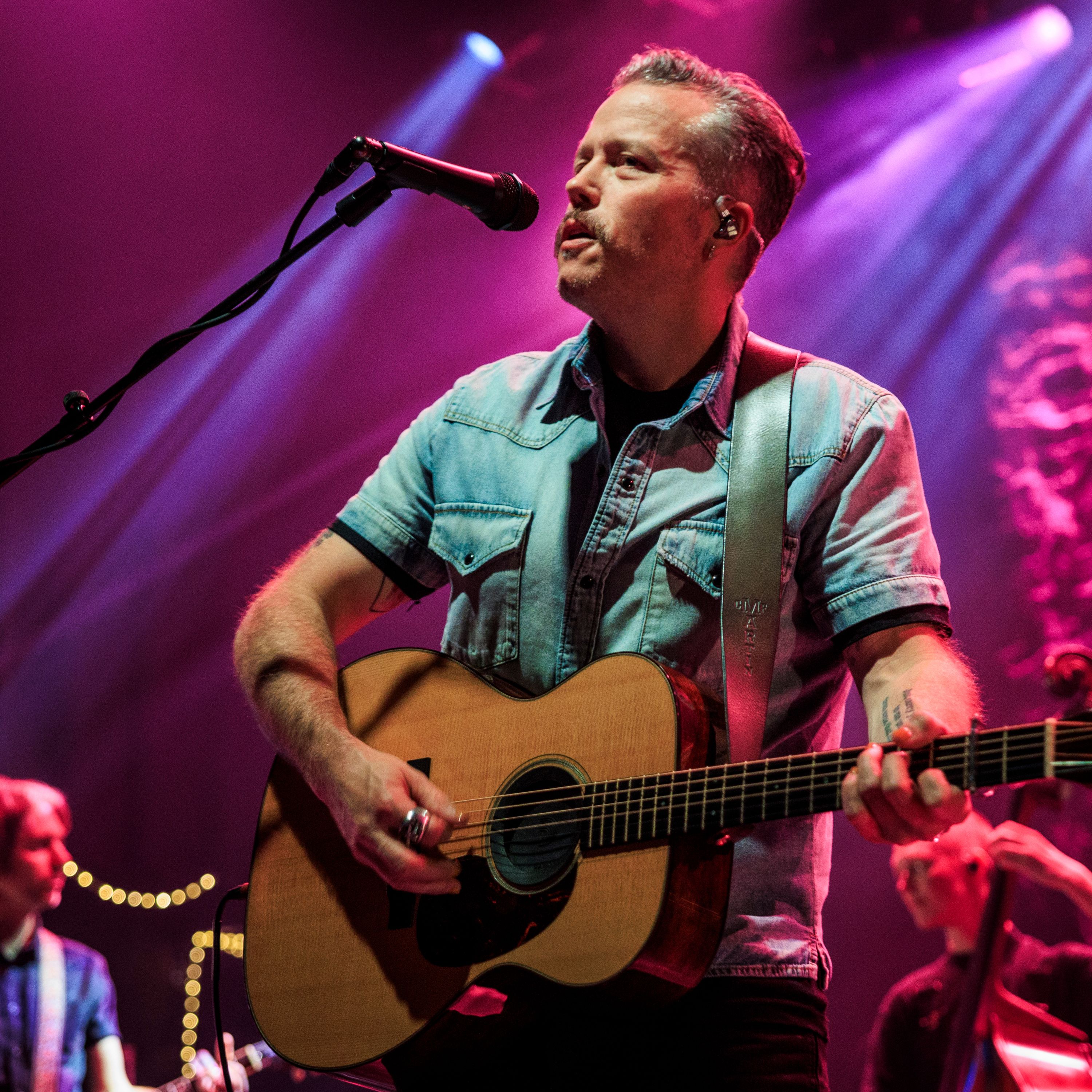
This is all of it. From wnyc, I'm Alison Stewart. Few songwriters working today can stop you cold with a single line and keep you thinking about it for days. Jason Isbell is one of them. Starting tonight, six time Granny winner Jason Isbell is performing at Radio City Music hall for two shows. This evening he has a solo set and tomorrow he'll be joined by his band, the 400 Unit. The tour is in support of his latest album, Foxes in the Snow, which is also the first solo project without the band in 10 years. The album reflects on heartbreak and loneliness and love. Here's the title track, foxes in the Snow. Take a listen.
- [00:54]
Jason Isbell (singing)
I love my love. I love her mouth. I love the way she turns the lights off in her house. And I love my love and her velvet bed where she's heard me sing the words that can't be said
- [01:20]
Jason Isbell (speaking)
and
- [01:20]
Jason Isbell (singing)
all the dreams that I unseen all the dive and hide rain it took to put my soul to sleep now it's easy.
- [01:35]
Alison Stewart
A Vault review says that the spare arrangements of the album leave Isbel's lyrics no room to hide. Foxes in the Snow is out now. Joining me now in studio is Jason Isbell. It is nice to see you.
- [01:46]
Jason Isbell (speaking)
It's so good to see you, Alison. Thank you for having me.
- [01:49]
Alison Stewart
You recorded this album at Electric Lady Studios in Greenwich Village. Right down the street.
- [01:53]
Jason Isbell (speaking)
Right down the street.
- [01:54]
Alison Stewart
What do you like about that space?
- [01:56]
Jason Isbell (speaking)
You know, they have everything you need. They're very nice folks over there. It's a great studio. And there aren't. I mean, I love that it's so easy for people to make music in their basement or their garage or their bedroom now. But there's something about going into a real studio that's been there for a long time where you feel like, I better do something that's. That's worth doing in this room, you know, and. And they just. They have great gear and, you know, it's easily accessible. And I spend a lot of time in this city now, so it was convenient. More than that, I guess conceptually. I just wanted to walk into a studio in the Village with a guitar and a. And make a record.
- [02:36]
Alison Stewart
Did you get a feeling being in the building, in the walls?
- [02:42]
Jason Isbell (speaking)
I don't know. I mean, I guess so. I guess there's probably. There's probably some ghosts in there. I was thinking. I mean, Nashville studios have really intense ghosts if you're a ghost in a studio kind of person. So, yeah, I think you do. More than anything, though, it, to me is about sort of living up to the room that you're in. And I try to do that at Radio City, too. I mean that you don't want to go in there and not be any good.
- [03:13]
Alison Stewart
Going to stink up the place.
- [03:14]
Jason Isbell (speaking)
Oh, there's a lot of places out there to go play bad music in, and Radio City's not one of them.
- [03:20]
Alison Stewart
What was the first song you actually
- [03:22]
Jason Isbell (speaking)
recorded ever, or for this album?
- [03:25]
Alison Stewart
This album?
- [03:26]
Jason Isbell (speaking)
For this album. Oh, that's a very good question. What did I start with? You know, who would know is Will Welch. He was in there with me that first day, and he would know, but he is not here today, probably. Let me look at the track list. Maybe the title track. Actually, I think I may have started with that one, because sometimes that one's very hard to play and sing at the same time, or at least it was the first 50 times I did it. So I may have started with that because I like to. When I was. When I was eight, my dad took me to a theme park in Atlanta, and he made me ride the Scariest Ride first. And, you know, it was terrifying. It's kind of torture. And I don't. I don't know that I would do that to my kid. But after that, the rest of the day was easy. So I kind of do that in the studio.
- [04:14]
Alison Stewart
I think you do the hard stuff first.
- [04:15]
Jason Isbell (speaking)
Yeah. The hardest thing first and then get it over with. And usually I come back and redo it all, but not. Not on this project. This one, I just sat in a chair and played the guitar and sang, and we moved on.
- [04:26]
Alison Stewart
Did you know how many songs, how long you wanted the album to be?
- [04:30]
Jason Isbell (speaking)
I knew how many I had, you know, and I had 10 or 11, I think, total. And usually I. I don't write, you know, more than I need. I'll have a couple of songs that don't make the cut, and then I. I may write one or two while I'm in the studio, but not a lot. Not. Not a lot of songs happen that way.
- [04:48]
Alison Stewart
What didn't make the cut for this record?
- [04:52]
Jason Isbell (speaking)
There were a couple songs that didn't make the cut, you know, and were they.
- [04:56]
Alison Stewart
Was it them, the vibe of the song? Was it.
- [04:59]
Jason Isbell (speaking)
Sometimes. Subject matter? Sometimes, you know, sometimes I think, well, I've got enough songs about that, you know, I don't need another song about that. And then sometimes it's just a matter of where my tastes are, right? Then it can come back, you know, we all, I think, have a box set in mind for one day, maybe after I'm dead. You know, the estate can release all the songs of mine that I didn't like. You know, that seems to be what people do these days. But don't die. Yeah, yeah. And good for them, you know, good for my kids. She can do that. But. But yeah, sometimes also those songs come back around later, and I don't use them for other albums. I'll use them for different projects, but I won't use them. Like, if I'm gonna make an album, I'll usually write all those songs in the year or so leading up to the recording of that album.
- [05:50]
Alison Stewart
What kind of acoustic guitar did you use?
- [05:53]
Jason Isbell (speaking)
That is a Martin. It's a 017, I think it is 1940, I believe it's pre war. Not a very expensive guitar. Certainly when it was made, it wasn't. It was. It was budget guitar for Martin then, but made with all the same care and the same quality materials as the finest guitars they were making then. And I got that in Brooklyn at a music store that I love over there. Retro fret. I called Shira. I was. I was staying in town. My girlfriend lives in the city. And so I kind of go back and forth between here in Nashville and I was here and needed a guitar. And, you know, I didn't want a big, loud, expensive guitar to travel around with and keep in the New York apartment. And so I bought that Martin and. And wound up writing and recording this record with that guitar. Martin's actually now made a run of. Of sort of clones of that guitar that they're sell. Like a signature edition of that. It's a really great instrument. It's. It's small mahogany, kind of quiet, but louder than it should be for that size. Yeah.
- [07:08]
Alison Stewart
That's sort of interesting. The guitar helped you write the songs? In a way.
- [07:12]
Jason Isbell (speaking)
Yes. Well, I have a lot of different guitars, and the type of guitar that I'm playing when I'm writing a song will sometimes dictate the type of song that I'm writing, you know, because I write maybe half of my songs on electric guitar, half on acoustic guitar. And this one, I did all on that. All on that guitar, just because I wanted it to. I think the. What was really important for me was to make an album that was designed to be performed solo acoustic from the beginning. So what I didn't want to do was write a bunch of songs where I had a band in my mind, I had a production in my mind, and then I took all that away and just sang and played the songs. I wanted to start with this concept and continue it throughout. And it's. You know, you're always trying to do something a little different. I don't want to fall into these patterns of making the same albums over and over and over, but also don't want to do something that's just weird for the sake of being weird, you know, because people can hear that and I can hear that, and that bores me. I think there should be a reason for something to change. And it just occurred to me that, you know, I had been through a lot of changes in my life. I'd had a time that was very intense for me, and I never made a record that was just me and a guitar and a microphone. So that's what I set out to do.
- [08:29]
Alison Stewart
You didn't want to do an unplugged situation. You just wanted to write, perform?
- [08:35]
Jason Isbell (speaking)
Yes, yes. And, you know, I didn't want there to be anything missing. I didn't want this to be a version of that performance. I wanted this to be the whole piece. Yeah. Yeah. I think we forget sometimes that, you know, music doesn't have to be so big. It can be a tiny, tiny little thing and still have the same kind of emotional impact.
- [08:57]
Alison Stewart
My guest is Jason Isbell. He's stopping by Radio City Music hall tonight and tomorrow in support of his latest acoustic album, Foxes in the Snow. Let's listen to the first track from the album. It's titled Bury Me, and it starts off acapella.
- [09:11]
Jason Isbell (speaking)
Yep. Yep.
- [09:12]
Alison Stewart
Whose idea was that?
- [09:13]
Jason Isbell (speaking)
That was my idea.
- [09:15]
Alison Stewart
My idea.
- [09:17]
Jason Isbell (speaking)
I don't know if it's a good idea or not, but it was mine.
- [09:19]
Alison Stewart
What effect were you hoping to have with it?
- [09:22]
Jason Isbell (speaking)
You know, I grew up playing, learning to play on a lot of, like, hillbilly songs, mountain music, and gospel songs. I learned from my grandfather. And the melodies in those songs work whether you're accompanying them with an instrument or not, you know, and. And some of the people in my family were just singers. They didn't play the guitar, they didn't play else. They just sang. Sometimes they clapped, you know, and if you think about something like people grinning in their face. Don't mind people grinning in your face. Oh, what was his name? Now it's. It's escaping me. He did John the Revelator, blues singer. Anyway, some of those songs should work that way without any accompaniment whatsoever. And I felt like this was the kind of song where the melody was familiar enough that it should work that way, so I wanted to lead into it that way.
- [10:16]
Alison Stewart
Let's listen to Bury Me.
- [10:18]
Jason Isbell (singing)
Bury Me where the Wind don't blow where the dust won't cover me where the tall grass grows or bury me right where I fall Tokyo to Tennessee I love them all See the windmills turn up 55 still got so much to learn still feel alive
- [10:51]
Jason Isbell (speaking)
and one
- [10:51]
Jason Isbell (singing)
lonely girl is all I need to tie me to this world make me believe well, I ain't no cowboy But I can ride and I ain't no outlaw But I've been inside and there were bars of steel boys and there were bars of saint Swinging their bars we're swinging doors for all the time between.
- [11:26]
Alison Stewart
That's from the album Foxes in the Snow. My guest is Jason Isbell. How do you think about sequencing, sequencing on a. On your records? Do you think about it when you're writing the songs?
- [11:38]
Jason Isbell (speaking)
Yes. Well, maybe not when I'm writing them, when I'm recording them. But it's different for this record because typically. And it was also. It was Sunhouse that I was trying to remember three minutes ago. That was. But anyway, I can't forget that. But normally for sequencing, I learned this from Matt Ross Spang, a producer engineer from Memphis, years ago. But, you know, you work for vinyl, so basically in the 60s and the 70s, you would have a certain amount of information that you could put on a vinyl album. And. And the grooves are different width as you get farther away from the center of the record. So the things that have more instrumentation, more production, need to get more space on an album. So they would. They would seque the tracks for logistical reasons, so the record would sound right when you played it on a record player. I stick with that. I think that there's something about us that's conditioned to hear an album that way. And I think it still works. But for this album, that wasn't a question because it's just me and an acoustic guitar, the whole record. So you didn't really have that to worry about. And I think more than anything else, I went with tempos and key, like the primary key of the song and then subject matter, because you don't want to hit people over the head with three or four sad songs in a row, you know, so you just have to mix it up a little. This one was probably track listed a little bit more like a set list for a live show. Typically, I would say, well, we got a ton of drums here, so we need to put this one in this spot, or, you know, this one's quiet and acoustic, so when we can. We can use this in these groups. But this record didn't work that Way.
- [13:18]
Alison Stewart
Oh, it sounded like you had a little more creative control that way.
- [13:20]
Jason Isbell (speaking)
I think so, yeah. Yeah, I think so. Which is sometimes a good thing, you know, Sometimes it's not. Sometimes I would rather have logistical control instead of being in control of it myself. I like those restrictions you mentioned.
- [13:35]
Alison Stewart
Starting when you were really young, when you started writing songs. What kind of things would you write about when you were a 12 or 13 year old?
- [13:43]
Jason Isbell (speaking)
Just very horny stuff. It was terrible. It was embarrassing. It was, it was very. Yeah, it's like a 13 year old boy writing. So you can imagine what I was writing about. But it was, it was also. I just, I listened to blues music all the time when I was that age because I was learning to play the guitar and you know, I had found this sort of treasure trove of old southern blues music and that was it. I mean, I just obsessed on this stuff. So I would rewrite blues songs and put my own lyrics in it. And there's nothing more embarrassing than, you know, 13 year old, 12 year old white kid in Alabama rewriting blues songs. But it wasn't for anybody else, it was just for me because I, I enjoyed it. And then I also, I read a lot, you know. And so within a couple of years I started sort of combining the two things that I loved the most, which was, was reading fiction and playing the guitar. And that's when something really clicked for me. That narrative kind of came into play rather than just saying, you know, I like this, I like that dance now. You know, when I started thinking, oh, maybe I can tell a story with this, then it all sort of locked in for me.
- [14:56]
Alison Stewart
Oh, what were you reading? Who were your storytellers that you liked?
- [14:58]
Jason Isbell (speaking)
When I was, when I was that age, you know, I remember like the first book that really hit me was where the Red Fern Grows, Wilson Rawls. That was a huge one. When I was little, you know, I was probably 7 or 8 years old then. And then after that I started doing like a little bit of the Faulkner and I remember reading some Hemingway. My mom's brother had some Hemingway books in his room at my grandparents house that he'd left to go to college. And I remember reading those. And I would also steal my mom's books my mom was reading. This was like the 80s and my mom was reading like Dean Koontz and Stephen King and stuff. And I would steal those and read them when nobody knew. And yeah, I would get in trouble. Dad would have to take those away from me because I wouldn't be able to Sleep at night. I was terrified. I was so scared. I was so scared.
- [15:51]
Alison Stewart
Jason Isbell is stopping by before he performs at Radio City Music hall tonight. And tomorrow, let's listen to another track from the album, Foxes in the Snow. This track is titled Good While It Lasted. What's the back song on this?
- [16:05]
Jason Isbell (speaking)
This one doesn't mean what you think it means. You know, this one, this is one of those that sometimes you try to trick them a little bit. And this is. This is about a relationship, but it's. It's not at the end of a relationship. It's at the beginning of a relationship.
- [16:22]
Alison Stewart
Let's listen.
- [16:41]
Jason Isbell (singing)
You're like, sleep, take what I can get. But I've gotta make some sense of this. So here I said at 3am trying way too hard to find the words to slow My sweet addicted heart. You're like, sleep, can't get near enough And I pretend that I don't need you And I'm out doing stuff went so deep A lucky young man's dream. And last time I tried to sober I was 17 and all that I needed was all that I had and it was good while it lasted. You let me kiss you on Broadway in a black Cadillac and it was good while it lasted.
- [17:38]
Alison Stewart
Jason, you're playing an acoustic set by yourself tonight at Radio City Music hall, and tomorrow you're with your band. What do you like about each setup?
- [17:47]
Jason Isbell (speaking)
The overhead is pretty great for the acoustic solo show. That's the best part of that. No, truthfully, there's one thing that I've noticed that really is interesting to me. With the band, you can sort of. You can control the volume dynamic, but there's not much you can do about the speed the tempo is. You know, you're at the mercy of the rhythm section. So if I want everything to get quiet, the band, they're all great players and great listeners, and they'll get quiet pretty quickly. But speeding up and slowing down is not really a possibility on stage. Even though we don't use a click track, it's still. You're kind of hanging on, and you're going at the tempo that the rhythm section's at. But if it's me solo acoustic, I can speed up and slow down intentionally, and that add something really interesting for me to the solo show. Also, there's a freedom to playing solo where I don't feel like I have to orchestrate the. The. The set list the same way. Like, if I play two quiet songs in a row or three quiet songs in a row, it doesn't seem to be that big a deal because, you know, the expectation is not of rock and roll. That being said, playing with the band is probably more fun. You know, I get to play lead guitar, which is really nice, and I like everybody in the band, and it's, it's really communicating with them musically is very rewarding for me. But, yeah, I think, I think I would miss either one of these things if I, if I just did one of them.
- [19:29]
Alison Stewart
Well, you get to do both.
- [19:30]
Jason Isbell (speaking)
Yes, exactly. Yeah, yeah. Very lucky to do both.
- [19:33]
Alison Stewart
Jason Isbill is playing Radio City Music hall tonight and tomorrow in support of his latest acoustic album, Foxes in the Snow. Thanks for being here.
- [19:41]
Jason Isbell (speaking)
Thank you very much, Alison. I'm always glad to be here and talk to you.
- [19:45]
LifeLock Advertiser
It's tax season, and at Lifelock, we know you're tired of numbers, but here's a big one you need to hear. Billions. That's the amount of money and refunds the IRS has flagged for possible identity fraud. Now here's another big number. 100 million. That's how many data points LifeLock monitors every second. If your identity is stolen, we'll fix it, Guaranteed. One last big number. Save up to 40% your first year. Visit lifelock.comspecialoffer for the threats you can't control. Terms apply.
- [20:15]
Ira Flato
I'm Ira Flato, host of Science Friday. For over 30 years, our team has been reporting high quality news about science, technology and medicine. News you won't get anywhere else. And now that political news is 24 7, our audience is turning to us to know about the really important stuff in their livescancer Climate change, genetic engineering, childhood diseases. Our sponsors know the value of science and health news. For more sponsorship information, visit sponsorship.wnyc.org.