← All Of It with Alison Stewart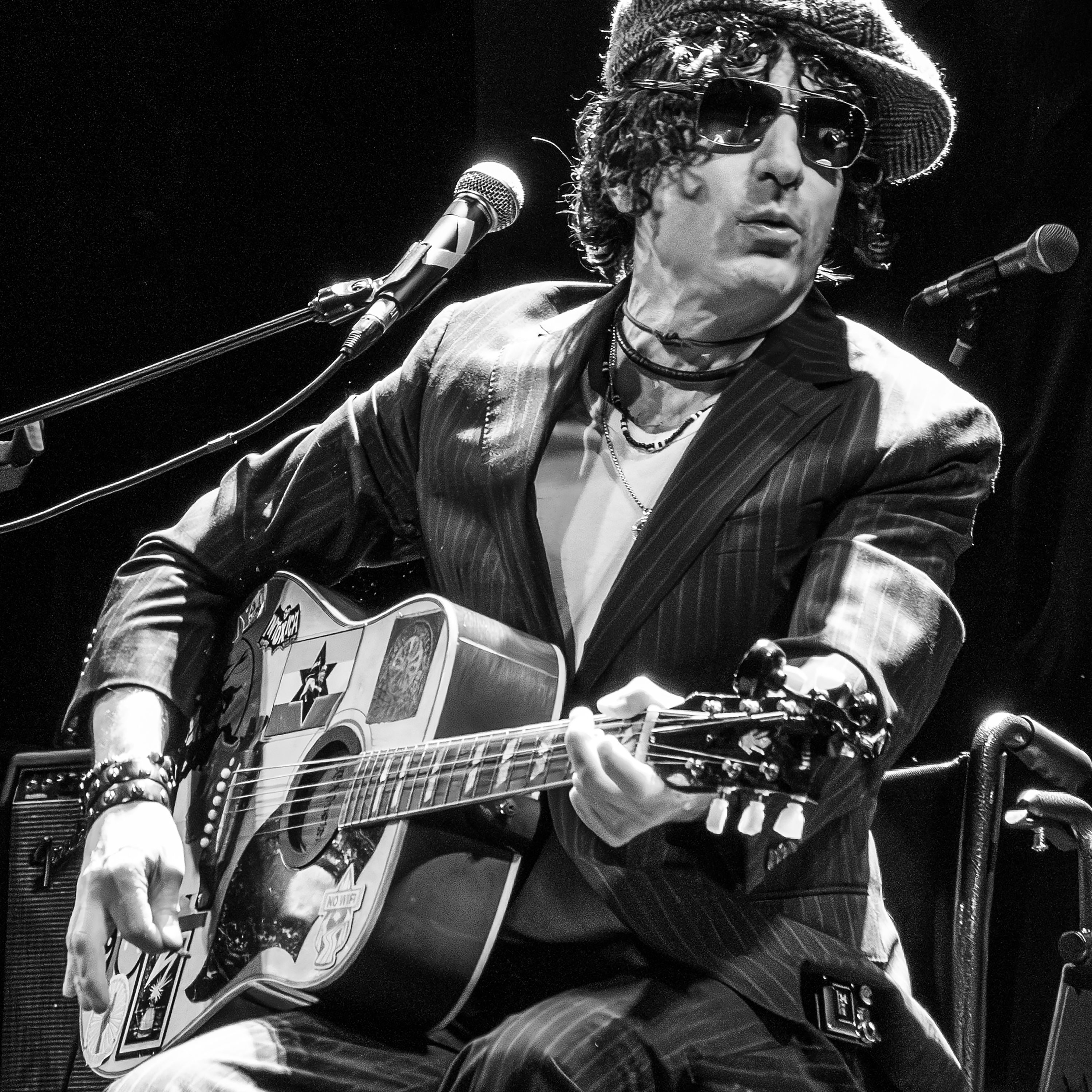
Loading summary
Transcript70 lines
- [00:10]
Alison Stewart
This is all of it on WNYC. I'm Alison Stewart. In 2023, New York musician and venue owner Jesse Mallon suffered a spinal stroke that paralyzed him below the waist. In 2024, he joined us remotely to preview his return to the stage, which was a benefit concert featuring friends like Lucinda Williams, Ricky Lee Jones, and Jacob Dylan. Through physical therapy, Jesse can now cover short distances with the help of a walker. And we're glad to say that we have him here in studio with us today because later this month, starting on February 18, he'll embark on an off Broadway show called Silver Manhattan, in which he shares his story of recovery through music and his life in rock and roll. Jesse Mallon joins us now. Hey, Jesse.
- [00:55]
Jesse Mallon
Hey, Alison.
- [00:57]
Alison Stewart
Good to see you as well. You're gonna start us off with a song.
- [01:00]
Jesse Mallon
Yeah. This one's called O Sheena. 1, 2, 3, 4.
- [01:10]
Rob Cloris
I'm a broken artist and it really didn't go as planned. She's an apparition and she dreams of a foreign land There's a world outside if you want it There's a world outside you can know there's a world.
- [01:32]
Alison Stewart
Outside.
- [01:35]
Rob Cloris
When I'm up the junction and I'm running at a PMA.
- [01:42]
Jesse Mallon
She can.
- [01:42]
Rob Cloris
Keep a secret even better than the CIA There's a world outside if you want it there's a place in the stars in the soul There's a world outside oh, Sheena, we can make it.
- [02:04]
Jesse Mallon
Together.
- [02:07]
Rob Cloris
Oh, Sheena, we can't make it along well, she paints a picture that nobody understands she's infatuated with the songs of the dead and damned when it all goes down on a corner in a sad and beautiful world it's a place in time oh, Sheena, we can make it together oh, Sheena, we can't make it alone. I went to see her and I didn't know what to say. On a silver. Laughing Coming over the Jamaica bay.
- [03:23]
Jesse Mallon
When.
- [03:24]
Rob Cloris
It all goes down on a corner in a sad and beautiful world it's a place in time oh, Sheena, we can make it together oh, Sheena we can't make it alone oh, Sheena we can make it together oh, Sheena we can make it alone.
- [04:10]
Alison Stewart
That was Jesse Mallon. He's in studio with us and starting on February 18, he'll be performing an off Broadway show, an autobiographical show called Silver Manhattan. Would you introduce Rob?
- [04:23]
Jesse Mallon
Cloris is on the piano and he's also in Silver Manhattan in the play with us.
- [04:28]
Alison Stewart
Love it. Tell us what the play is about.
- [04:31]
Jesse Mallon
I'll ask you a Simple question. Yeah, the play, I guess it's about finding ways to survive when you're hit with hardships. And that would happen to me as a young kid, you know, going through stuff that you get hit with growing up. And I guess in some ways, it's a love letter to New York. This was the place that took me out of Queens to come down to lower Manhattan to explore my dreams. And, you know, as much as New York changes all the time, I still feel like it's a great city for dreamers and to make stuff happen. And all the cultures and you walk down the street and life just unfolds. And in 2023, after years of touring and making records and using my body on stage and walking around New York, I had this spinal stroke and I found myself in a restaurant on the floor and haven't been able to walk for two and a half years. And so the play is a lot about wanting to get back into my city and be on the sidewalk and be around the people, but also to get back on stage and be with my band. And I still can't tour and do what I did to make a living, but I was able to get the guitar into my hands and get the ban back together on some level. And music being the medicine and people and just the inspiration that comes from the energy of music, this city, and just believing that you can push forward.
- [05:49]
Alison Stewart
How does it feel to be back on the stage, though?
- [05:52]
Jesse Mallon
I was very emotional the first time at the Beacon. I wore shades because I was crying.
- [05:58]
Alison Stewart
You were crying? What made you cry?
- [06:01]
Jesse Mallon
The fact of being back there after it being gone for so long and that maybe it would never happen again. The love and support that I got from the music community and my fans and. And just, yeah, that helped me through such a crazy time and of uncertainty, you know.
- [06:17]
Alison Stewart
When did you start to think about telling your story on stage?
- [06:22]
Jesse Mallon
I had written a book during the time I was laid up. I was in the hospital at NYU for three months and down, and then after that in Argentina getting stem cell treatments in Buenos Aires and in a clinic. And I was working on a book. So that was there. But the book was just going to be the early part of my life, like, you know, coming of age and carving my name into some kind of musical place. But then the idea that maybe this could. This story of what I went through and what I'm still going through could be inspiring to other people and that there might be a more interesting way to tell it with songs. And I always believed in pma. It was something I learned from these Rastafarians when I was 14 or 15. Positive mental attitude. This reggae punk rock band, the Bad Brains, would sing about pma and it just stuck with me. It's something that I put forward in everything I do. But some days you get hit, you know, you gotta get out of the nma. Negative mallon attitude. No, but there's something there.
- [07:22]
Alison Stewart
Did it always make sense to have a one man show?
- [07:26]
Jesse Mallon
Well, it's funny. It's a one man show because it's a true story and it's my story. But I wanted to do it differently. Where there'd be a band, there's actually. We have an actor there, Brie Sharp, and the group is involved. They have lines. And not only do we play my songs, but it's something I've never done before. So it's challenging, it's inspiring and traumatic at times.
- [07:48]
Alison Stewart
Did you write the script first and then write the music after, or did you have songs you figure, like, oh, this would be really great here?
- [07:55]
Jesse Mallon
Yeah. I mean, the great thing about doing this play was the collaboration. The director, Ellie Heyman and Lauren Ludwig, who I wrote the play with, you know, we. To have a team look at your catalog of music and be able to cherry pick through it and be like, this song might work really good here. I'm like, really?
- [08:12]
Rob Cloris
That song?
- [08:13]
Jesse Mallon
And then you put it in the context of the play and it has a new life. But we did go with the script mostly first sticking songs in here and there and seeing how they fit.
- [08:24]
Alison Stewart
What were you looking for with collaborators? What were you looking for in collaborators? People that you could bring into your orbit and you could trust.
- [08:33]
Jesse Mallon
To trust them is a big word. Yeah. To be honest and be open. And it's parts of this story that are, you know, pretty exposed and raw and, you know, like I was saying, it's traumatic when I do it in front of an audience. It's cathartic. It's something that's transcendent. But when we're going through the writing process and rehearsals and I'm talking about being in the hospital, or I'm talking about catheters, or I'm talking, you know, like, it's definitely. Can be kind of a beat down, but when we take it in front of people, just like anything in this world world, you know, you get in a room full of other human beings and there's some connection that's made on. On most good nights and. And yeah, so working with them, I was just happy that, you know, I found Intelligent people to look at my story from outside of me objectively, because, you know, we're all wrapped up in our own ideas. It's nice to have a sounding board. But people that. That have done this before, because I've done shows, thousands of shows, playing rock music, but never a play to go from here to there, to have the arc, to know how to land the.
- [09:33]
Ira Flato
Yeah.
- [09:34]
Alison Stewart
I'm in the studio with Jesse Mallon. Starting February 18th, he'll be performing an Off Broadway show, an autobiographical show called Silver Manhattan. The music director on this show was with Stereophonic.
- [09:47]
Jesse Mallon
Yes, Justin Craig. And he's great.
- [09:50]
Alison Stewart
What did he bring out in you again?
- [09:53]
Jesse Mallon
I think he's been going through the script and feeling the rhythm and the peaks and valleys of it and was able to kind of get a sense of where things needed to be toughened up and have more angst, or where things need to have just a certain sound or feeling and to work the band into that place where the soundtrack also is telling a story, you know, in the music. Derek Cruz, who's in our band, also helped a lot in that way. And I think everybody involved seems to love music and have a sense. They've either seen a lot of shows or they play an instrument. So we have that. That kind of dialogue. Justin does a lot.
- [10:30]
Alison Stewart
Can we hear some more music, Jesse?
- [10:32]
Jesse Mallon
Yeah. This is a song off a record called Outsiders, and it's in the play with the full band and horns. It has kind of a New Orleans vibe, but it's a song about immigration and I think about my great grandfather, and that's how the song starts. He came over from Kiev from over there and the other side. And it's an important thing to remember these days, that we all come from somewhere. And New York in America is really about that. We gotta be kind to each other, you know? It's dark when atheists start to pray.
- [11:05]
Rob Cloris
Joey was a man from the other side Came across the sea for the better that when he got close they made him change his name.
- [11:16]
Jesse Mallon
Push along.
- [11:16]
Rob Cloris
A car through the marketplace Keep it in your heart when you're getting spades that was so many years ago. I've lived in many places I've fallen out of graces I tried to feed the fire for so long oh, amen where you going? Up down the river's rolling the sun comes I'll be on my way Come on, Rob.
- [11:49]
Alison Stewart
Oh.
- [12:01]
Rob Cloris
Well, the Playman churches and the premium bars A young kid with a sad guitar to get close I had to go far away well, I became a Drifter sent post scouts to my sister and I could hear her smile even when I'm far away oh, hey man, where you going? Up down the river's road when the sun comes I'll be on my way well, I drank with kings and I danced with horse Mountaintops and distant shawls which you made me feel like someone I wish to be well, I tried to wear my father's clothes I planted seeds that didn't grow With a handful of thorns and I thought that I was free well, I worked in a bank, drove a diesel van and Sonny Watsik had a plan do your time and get out of society oh, hey man, where you going? Up down the river slowing the sun comes I'll be on my way let's go. Yeah. Now you sitting in an office never seen the world Gonna blame it on the government or a girl but there's somewhere else you know you'd rather be Scratching up the numbers in a liquor store Dreaming of picking up a 44 tell me more about your fantasy.
- [13:56]
Jesse Mallon
Oh.
- [13:57]
Rob Cloris
Hey man, where you going? Up down the river's rollin the sun comes I'll be on my boxes in the corner Neatly stacked parts of me Paper and wax for a headlight day to riding that Cadillac. And when it's over and I had my fill Gonna put my body up on Cypress Hill near Houdini for the final disappearing act we're outta here, man. All hey man, you're going up down the river swollen the sun comes, I'll be on my way oh, hey man, what you doing? All along the road to ruin? You know it stops when atheists start to pray oh yeah from the foxholes to the corner Got your mojo working Whatever you believe in all y' all voodoo and the river runs deep and the river runs wide.
- [15:30]
Alison Stewart
That was Jesse Mallon. Starting February 18th, he'll be performing in an off Broadway show called Silver Manhattan. In Silver Manhattan. You said you're inviting people to come into my neighborhood, to my New York. What do you want people to know about your New York?
- [15:47]
Jesse Mallon
Like I said earlier, I think it's a place where anything could happen. I think that has a lot to do with the people, the history, the energy and that. We're all in this small place together and, you know, you just learn how to operate, how to communicate. It's not as isolating, it's not as lonely. I think there's a. You know, people think of it as a tough town, but there's so much. And that's the mixed bag of all the Cultures. You know, I was saying about immigration, you know, you go down to Chinatown or you go into Little Italy or you go up to the Bronx or go to Coney island or, you know, anywhere. I mean, I live down in East Village, and there's a freedom there. There's something about coming to a certain place and where you can just be yourself and create and figure that out. Screw up and find out who you are and. And make a new family sometimes with community and friends.
- [16:35]
Alison Stewart
Do you think that's still possible?
- [16:36]
Jesse Mallon
Absolutely. Even with the high rents and even with all the corporate chain stores and all the cleanup, there's still a lot of art and a lot of soul.
- [16:47]
Alison Stewart
You have a new memoir coming out in April, Almost Grown, a New York memoir. When did you start writing it?
- [16:53]
Jesse Mallon
Six months before this crazy spinal stroke happened. I started working on it, yeah. And it was supposed to end about 20 years ago. The book from coming of age and it's in New York, some of it that doesn't exist anymore. And characters I met along the way that influenced me or inspired me. Colorful people and music stuff and. Yeah, just. And then suddenly, I guess this happened. So it was written a lot in the hospital. So the prologue and the epilogue deal with whatever my situation is now of being paralyzed. But the book is. It's just a New York story, you know, in a lot of ways. And I did it then and I continued to work on it. It comes out April 7, I believe.
- [17:34]
Alison Stewart
And is the memoir tied into the show?
- [17:37]
Jesse Mallon
There's parts of it that are influencing the show, but the show, Silver Manhattan is definitely its own story, but there's a connection there. It's me, the guy. Jesse Mallon.
- [17:48]
Rob Cloris
Who the hell is that?
- [17:50]
Jesse Mallon
Me, myself and I. Irene, I want.
- [17:52]
Alison Stewart
To make sure we have enough time for one more song. What are we going to hear?
- [17:56]
Jesse Mallon
This song is called Revelations. It's a short one. And I just want to say thanks to Rob Cloris for joining me this afternoon here.
- [18:03]
Alison Stewart
Thank you.
- [18:03]
Jesse Mallon
Rob on down here in the studio.
- [18:16]
Rob Cloris
Meet me at Angelica for the final scene in black and white. Helvetica. You found the village scream Dr. Or Dr. Mirror O Mirage Stockholm syndrome metaphor Blame it all on mine I thought about our conversation as it played back in my head I think I had a revelation Sick of calling on the dead Purple hearts and question mark.
- [19:16]
Ira Flato
She'S.
- [19:17]
Rob Cloris
Still dressed to kill Coffee shops and confidants Is she a friend of Bill? The promise of another year A birthday in the fall For a month Dear we almost had it all. I thought about our conversation as it played back in my head.
- [19:57]
Alison Stewart
I think.
- [19:58]
Rob Cloris
I had a revelation Sick of calling on the death Everything's gonna be okay Gonna be all right Gonna be okay Everything's gonna be okay Gonna be all right Gonna be okay. Meet me at Angelica.
- [20:44]
Alison Stewart
That was Jesse Mallon singing. You know it's dark when the atheists start to pray. His show starts on February 18th. It's an off Broadway show, an autobiographical show called Silver Manhattan. When can people see it? Where?
- [20:58]
Jesse Mallon
At the Bowery palace down here in the city. Manhattan.
- [21:02]
Alison Stewart
Jesse, thank you so much for coming in.
- [21:04]
Jesse Mallon
Thanks for having me back. Alison, Good to see you.
- [21:06]
Odoo Sponsor Announcer
WNYC Studios is supported by Odoo. When you buy business software from lots of vendors, the costs add up and it gets complicated and confusing. Odoo solves this. It's a single company that sells a suite of enterprise apps that handles everything from accounting to inventory to sales. Odoo is all connected on a single platform. In a simple and affordable way. You can save money without missing out on the features you need. Check out Odoo at O D o o dot com. That's o d o o dot com.
- [21:36]
Ira Flato
This is Ira Flato, host of Science Friday. For over 30 years, the science Friday team has been reporting high quality science and technology news, making science fun for curious people by covering everything from the outer reaches of space to the rapidly changing world of AI to the tiniest microbes in our bodies. Audiences trust our show because they know we're driven by a mission to inform and serve listeners first and foremost with important news they won't get anywhere else. And our sponsors benefit from that halo effect. For more information on becoming a sponsor, visit sponsorship.wnyc.org.