← All Of It with Alison Stewart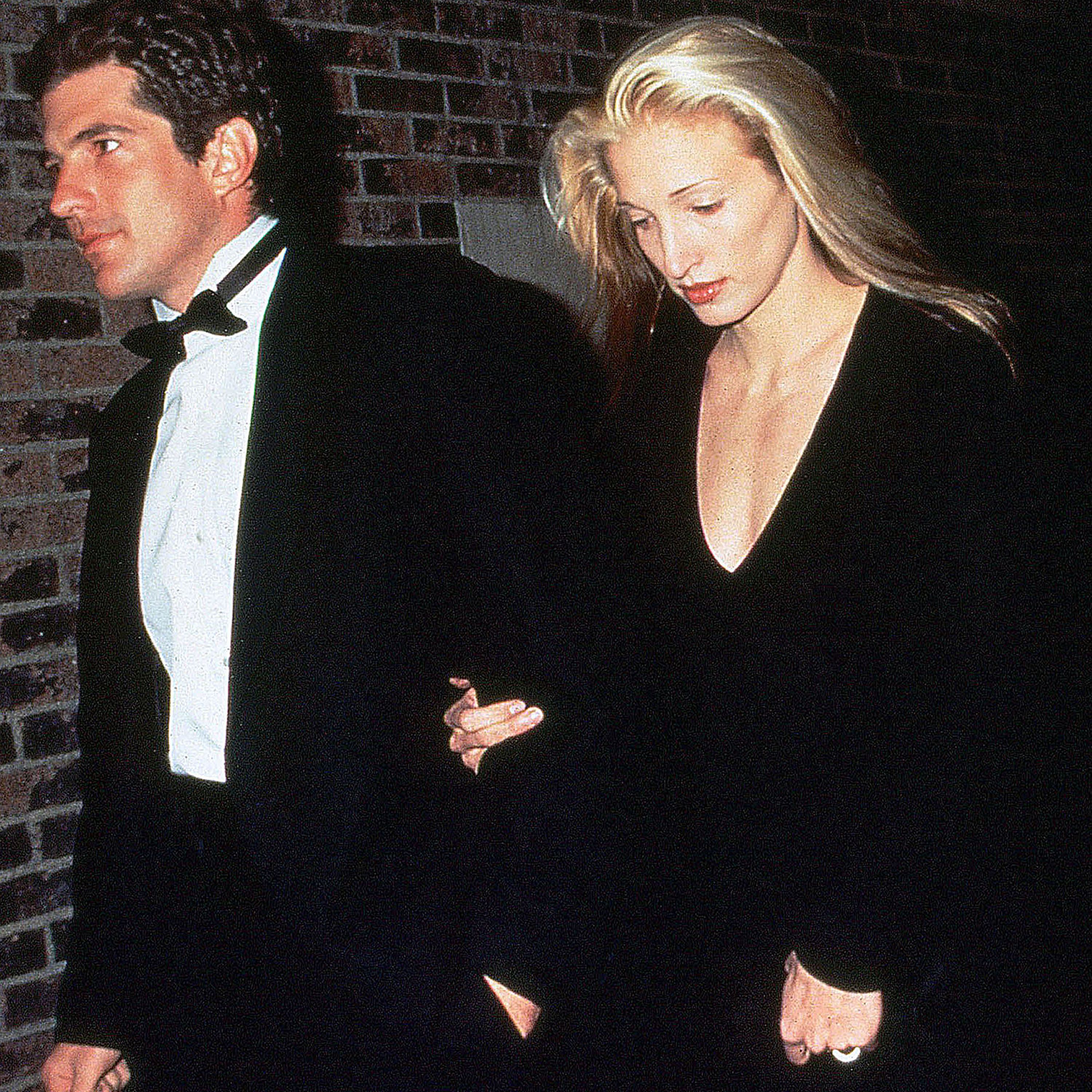
Loading summary
Transcript64 lines
- [00:00]
Commercial Narrator
The UPS Store is making packing and shipping Easter gifts quicker than ever this year with UPS Air.
- [00:05]
Caller/Listener
How quick?
- [00:06]
Commercial Narrator
Quicker than a walk around the park. Quicker than eating all the Easter candies? Quicker than finding a golden egg that you know is stuffed with cash. When you ship UPS Air at the UPS Store, your items arrive on time or your money back, guaranteed at no extra cost. Exclusively at the UPS Store. US retail locations. Send Easter Joy on time at the UPS Store. Visit theupsstore.com airguaranty for full details. Terms and conditions apply.
- [00:39]
Alison Stewart
This is all of it. I'm Alison Stewart, live from the WNYC studios in soho. Thank you for sharing part of your day with us. I'm really grateful you're here. Happy Eid, Happy Nowruz. Happy first day of spring. Be sure to check into our show on Monday. We'll be talking about how to spring clean your home and your life with feng shui expert Angie Cho. Coming up on today's show, singer and rapper Dessa performs live in Studio. Anita Spring Council joins us to talk about her new cookbook memoir, Southern Recipes and Stories from Momma Dip's Daughter. And we'll preview the reopening of the new museum with its director and artistic director. That's the plan. So let's get this started with the series Love Story. A new series revisits one of the most mythologized couples of the 1990s, John F. Kennedy Jr. And Carolyn Bessette Kennedy. I say mythologize because very few of us knew them. We knew of them from tabloid pictures or from an occasional press conference for his magazine. George. Mostly, we we knew them as New Yorkers walking their dog, John riding his bike around the two of them trying to have some semblance of regular life in New York city in the 1990s. The series love Story traces their whirlwind romance, marriage and intense media scrutiny that followed JFK Jr. And Carolyn right up to their tragic deaths in a 1999 plane crash alongside Bessette's sister. At the center of the series is a reframing of Carolyn herself. She was often portrayed as sort of a proverbial cool girl, aloof, but in the series, she's imagined here as an ambitious, charismatic and increasingly overwhelmed by the paparazzi frenzy that came with marrying into a dynasty. The series also takes major liberties in filling in the gaps. While it's based on true events, it relies a lot on imagining private moments that we'll never know. And those creative choices have sparked some protests by family members and others who are close to the couple. The show Love Story is trying to walk that really fine line, tackling one of the most well known families but fictionalizing parts of their life but staying true to the basic facts. It's been a really big hit among fans. The show is steeped in late 90s nostalgia. It shows an analog New York couple full of newsstands and chance encounters and of course, some amazing clothes. It's striking a chord with people worn down by the hyper online present. Ashley Wong is a culture reporter at the Wall Street Journal and she wrote a piece called the Latest Kennedy Controversy is a show about JFK Jr. And Carolyn Bessette. She joins us now. Hey, Ashley.
- [03:31]
Ashley Wong
Hi, Alison. Thanks for having me.
- [03:33]
Alison Stewart
Listeners, we want to call out to you. What do you remember about JFK Jr. And Carolyn Bessette's relationship? Were you around in the late 90s and do you remember the press frenzy around the couple? Maybe you watched the show and you want to share some thoughts about it, what it got right, what it didn't. You can call or send a text to 212-433-9621-2433 wnyc. I want to talk to you, Ashley, about a couple of interesting things about the show, about the way the characters are treated and then its reception among viewers. So first of all, it takes place in the 90s. And what we know about JFK and Carolyn Bassette is that it comes with all this paparazzi around them. Ryan Murphy and the showrunners of the show said they decided not to consult Kennedy's during when writing the script. A lot of people say how can they do that? The question is, how can they do that?
- [04:26]
Ashley Wong
Well, I think first of all, the show is largely based on a particular book, the 2024 biography of Carolyn Bessette. It was written by Elizabeth Beller. And so they used that book a lot. And it was based on interviews that Elizabeth did with the Bessette family. Second of all, they told me when I spoke to them that the reason why they specifically didn't reach out to the Kennedys or the Bessettes is that they wanted to avoid getting caught in a tangle of he said, she said, which has come up a lot with this couple over the years.
- [04:58]
Alison Stewart
It's been kind of interesting. At the beginning of every episode there's this odd disclaimer.
- [05:03]
Ashley Wong
Yes. Reminding you that it is not a true to life total historical retelling. I mean, there's so much of their private life that we don't know, as you mentioned.
- [05:12]
Alison Stewart
So how do they go about creating these. These moments, these private moments. What sources, what kind of assumptions do they take?
- [05:20]
Ashley Wong
Right. So I spoke to Connor Hines, the show's creator, and he said that basically for every major private moment that they wanted to envision, such as the big fight they had in public in a park, they would take both the. They would take the book, first of all, and also the articles around that time of what had happened. And then they would fill in the context with other things, such as other biographies that were written that described that same time period, and also contextual things that were happening in history around them at the same time. And they would just lay all of that out and use all of that to sort of envision what were they thinking, what were they feeling, what would they maybe have said in this moment, informed by all of this contextual research that they did?
- [06:06]
Alison Stewart
Darryl Hannah, who was JFK's girlfriend before he met Carolyn, recently wrote an op ed in the New York Times for portraying her in a way that she says just wasn't true. When you think about the ethical stakes when scripting a show and using real names with real people who are. Who are still alive, how do you think about those ethical stakes?
- [06:28]
Ashley Wong
Yeah, I think it's a complicated question. I mean, speaking to John and Carolyn's former friends, they definitely had some mixed feelings about it. But I think there is a sense, at least among the people who are involved in the show and also some of John and Carolyn's friends, that they were public figures. And even if people didn't know them personally, some people are of the opinion that you are allowed to have the opinions that you have about public figures and talk about them because they've offered themselves to the public and they belong to more than one person. So that's been the prevailing opinion in your piece.
- [07:09]
Alison Stewart
The producer of the show told you, quote, we know that we're making something for television and it is entertainment, but we hope that we're bringing their legacy and who they are to a generation of people who don't know them. I thought that was very interesting because the crew, sort of. The crew, Ryan Murphy and company, they sort of course corrected last summer because some images came through and the fans and people who knew them said, wait a minute, this is not who we expect. Will you explain that?
- [07:41]
Ashley Wong
Right. So last summer, I believe it was summer or maybe possibly late spring, when Ryan Murphy released some now deleted early test images of Sarah Pidgeon, who plays Carolyn Bissett, and Paul Anthony Kelly, who plays JFK Jr. And it was images of them in costume, Sarah Pidgeon had a blonde wig. Cause she's naturally brunette. And the people, the Internet just tore those images up. They called those images looking cheap. They said the clothes looked bad, that the hair was very obviously a wig, that everything just didn't look accurate to real life. And so because of the intensity of that criticism, the show actually got rid of their costume designer at the time and replaced that designer with a man named Rudy Mance, who came in and he went to great pains to find period accurate clothing and things like that. And then they dyed Sarah Pigeon's hair. But that intensity really, I think it really did force the show's hand into becoming or making a bigger commitment to authenticity.
- [08:46]
Alison Stewart
Someone texted us, Daryl Hannah being portrayed unfairly here. Could you explain how she's being portrayed in the film?
- [08:54]
Ashley Wong
So in the show, she is depicted honestly as a ditz. And she is depicted as someone who is highly dependent on JFK Jr. It suggests that perhaps she had a substance abuse problem. And Daryl Hannah has pretty strongly objected to her portrayal. And, oh, and also the show depicts her as being very much at odds with the Kennedy family. And so it's a pretty negative portrayal. And the showrunners have said specifically that they wanted to create a sort of opposing force for Carolyn and John's relationship to bump up against. And so that's where she ends up being.
- [09:34]
Alison Stewart
We're speaking with Ashley Wong, a culture reporter at the Wall Street Journal, about Love Story, a series revisiting the relationship between John F. Kennedy Jr. And Carolyn Bessette Kennedy. The couples whose romance, fame and tragic deaths continue to really involve and captivate the public. Listeners, we want to hear from you. What do you remember about JFK Jr. And Carolyn's relationship? Were you around in the late 90s? Do you remember the press frenzy? Maybe you watched the show and you want to share your thoughts on it? Our Phone number is 212-432-12433. WNYC. This one says New York City sites are perfect. My favorite Jackie O in a long time. I love it. Is any bio style film ever completely real?
- [10:22]
Ashley Wong
That's a good point. I think every. Every biopic is gonna have to take some creative liberties. I mean, if you think about the reality of a lot of moments that might have appeared dramatic on the outside may not actually be that dramatic to watch or to listen to. And so I think. And also there has to be a lot of timeline compression sometimes when it comes to these biopics, you know, you can't depict, you can't take 10 years to depict 10 years. And so inevitably there is going to be a degree of creative license.
- [10:55]
Alison Stewart
This text says no. The show took liberties. But shout out to the props team for staying as close to period Persona accurate on everything from the sunglasses to the nail polish. The new costume designer. This said, I lived near the offices of George magazine the day after the plane crash. The entrances to the building on Broadway were packed with flowers and signs. It looked like a cult figure had died. Wow. Let's talk to Swati in New Jersey. She has a question. Hi, Swati, thanks for taking the time to call, all of it.
- [11:29]
Caller/Listener
Hi. So I'm so excited to talk about this show and ask you my question. First of all, kudos. It's a wonderful show and it's going really well. And my question was Caroline did work with Calvin Klein and she did make an impact to his business. That's what I truly believe. But how much of that, whatever you have shown about her life, her professional life, is true and what is fictionized? And could you care to comment on it?
- [11:59]
Ashley Wong
Well, so the show does depict a couple of aspects of her work at Calvin Klein that were true, which is apparently she was one of the people who discovered Kate Moss. She pulled Kate Moss photo out of a reject pile and suggested that they go with her. She also was the one who got Michael Burgin, who was actually an ex partner of hers, to star in Calvin Klein's underwear campaigns. So that much is definitely true. She definitely did have a big hand in shaping that era of Calvin Klein.
- [12:33]
Alison Stewart
I want to play a bit of the show, a scene of Ethel Kennedy, who is Robert Kennedy's senior's wife, who became the fam matriarch of the family, especially after Jacqueline Kennedy onassis's death in 1994. Here's Ethel talking to Carolyn about joining the Kennedy clan.
- [12:51]
Caller/Listener
Like Jackie, you have been spared the indignity of the world's indifference.
- [12:57]
Ashley Wong
You are noticed.
- [12:59]
Caller/Listener
And now it's entirely up to you whether to receive this gift, as burdensome
- [13:04]
Ashley Wong
as it may be, with grace.
- [13:08]
Alison Stewart
Jackie certainly did. So what were the expectations, the grace that Carolyn was supposed to receive the world with?
- [13:21]
Ashley Wong
That's an interesting question. I think it was at the height of the media scrutiny on John and Carolyn's relationship. I think the show sort of points to some comparisons between the press attention that was on Jackie with her husband. And I think Jackie was seen as someone who handled that attention with a lot of dignity. And Carolyn, her response was to just push it all away. And as a result, I think that Ended up with her being in the tabloids in ways that a lot of times were out of her control, with narratives that she couldn't set. They were saying that she was icy, that she was cold, that maybe sometimes that she was a fame seeker. And I think the perception on the show is that it wasn't quite. Maybe perhaps not quite as savvy as the Kennedys might have handled it.
- [14:24]
Alison Stewart
We have Claudia online, too, calling in from soho, who does not like the show. Let's listen to Claudia. Hi, Claudia. Thank you so much for taking the time to call us.
- [14:35]
Caller/Listener
Hello. I really disliked this show. I felt that it was unethical in the way in which they portrayed people. I actually had met Jackie Kennedy Onassis, and it's long ago. And also she introduced me to Maurice Templesman, and he is completely excluded from the show. And this travesty of her on her deathbed was really just, to me, a betrayal of her end of her relationship with someone with whom she was very close. And I also met Caroline, and she. At the time that I met her, she was quite young, and she was a lovely young woman. I met her subsequently, just very briefly. But it has nothing to do with the woman that they portray in this. And I think it's a travesty. And if I were a member of the family, I really feel that I would be appalled.
- [15:44]
Alison Stewart
I'm gonna. I'm gonna ask you to. Thank you so much for calling in. Cause I wanted to follow up, Claudia, your. Your comment with Jack Slosberg, Carolyn's son, who is JFK's nephew, and he spoke out against the show, and he called it grotesque in a way. I'm curious what you think, almost as. As a journalist about criticisms like Claudia's. Like Jack's. When you give. When you consider the role of the Kennedys in our culture.
- [16:14]
Caller/Listener
Hmm.
- [16:16]
Ashley Wong
Well, I think, first of all, the Kennedys obviously, have been, obviously, a big source of fascination in American culture. I mean, I think it's the closest that we have to a royal family. And I think, you know, one thing that came up when I was working on this story is that there is, like, a whole cottage industry of people who write books and do interviews and documentaries about the Kennedys. And these are all powered by the people who claim to know them or be close to them. And I think it. It's inevitable, I think, for a family that large and with such a complicated legacy and with such a relationship to tragedy. And I think that's a big part of the fascination. You could call it morbid whatever you want to call it. But I think people are always going to be fascinated by their story and will want to try to tell or say that they can tell the most accurate version of it. I just think that's part of being as public as the Kennedys are.
- [17:18]
Alison Stewart
Listeners, we want to hear from you. Have you been watching Love Story? What do you remember about JFK Jr. And Carolyn Bessette's relationship? Were you around the late 90s? Do you remember the press frenzy around the couple? Do you remember New york in the 90s? Maybe you watched the show and you want to share your thoughts on it, give us a call. 2124-3396-9221-2433. WNYC. We'll more with Ashley Wong from the Wall Street Journal after the break. You're listening to all of it on wnyc. I'm Alison Stewart. We're speaking with Ashley Wong, a culture reporter from the Wall Street Journal. She's been reporting about the series Love Story, which is revisiting the relationship between John F. Kennedy Jr. And Carolyn Bessette Kennedy. It has earned quite a few head. You know, one of the things I was really struck with in the show, Ashley, was the depiction of the paparazzi and how they descended on Carolyn Bessette. I can remember coming out of a train station in the 90s, and I walked into it like Carolyn Bessette was coming towards me. And the paparazzi, they were everywhere. She had to keep her head down. It was something that, it frightened me. And I could imagine that being her life every day. I'm wondering how you thought the paparazzi was depicted in this series and if it has, if it tells us something about how women next to powerful men were treated at the time.
- [18:58]
Ashley Wong
Yeah, well, the way that the paparazzi are depicted on the show is just suffocating. They're there every time they leave the apartment. They're there jumping on top of her car. They're at every place that she works and every place that she goes to for fun. And it's really, it really comes in is like an unstoppable, unceasing fire hose of attention. And I think it is an interesting look at how Carolyn in the beginning of the show is depicted as this very independent and free and playful spirit. And by the end or towards the end of the show, you see that her spirit has really been crushed by this unrelenting attention. And it's sort of reduced her in a way to it limits her character in a lot of Ways. I mean, in the most recent episode, we see that she basically doesn't leave the apartment. Cause she's so afraid of who's waiting for her outside. It's very different from this lioness that she was in the beginning.
- [19:55]
Alison Stewart
Yeah. Let's play a bit from that show. This scene is not off long after Carolyn and John get married. And she's constantly being followed by the paparazzi. Let's listen to this from Love Story. I knew this transition was never going to be easy. Any woman who married you would have
- [20:13]
Caller/Listener
faced an uphill battle in the court of public opinion.
- [20:15]
Alison Stewart
But in my
- [20:20]
Ashley Wong
worst fears, I never could have imagined being called a drug
- [20:23]
Caller/Listener
addict, a cocore a every time I
- [20:29]
Alison Stewart
leave my door by men who live outside my house. You know what? We're actually gonna take a call from someone who was part of the paparazzi at that time. They're choosing to remain anonymous. Hi, can you hear me?
- [20:43]
Caller/Listener
Hi.
- [20:43]
Alison Stewart
Hi. Thanks for calling.
- [20:45]
Caller/Listener
Hi. Oh, no problem. So I watched the show with a tremendous amount of guilt because I was a part of the tabloid press during that time. And I was one of the people who would just sit in front of their house, wait for them to come out, see where they were going. And in hindsight, now I look back and I just feel very guilty about being a part of that. I mean, I remember one point following her to her therapist office on 72nd street, getting the name of her therapist and calling her therapist and trying to get information. And I'm just. I watch it with a lot of guilt. And in hindsight, I'm really sorry I took part in that. But I was, you know, I was very young. I was in the city and the money was really good. And I just didn't really look at them as actual people. They were just sort of like my bread and butter.
- [21:51]
Alison Stewart
That was the bottom line, is you needed to make a living.
- [21:55]
Caller/Listener
Yes.
- [21:57]
Alison Stewart
Thank you for calling and for being so honest. I really do appreciate that.
- [22:02]
Ashley Wong
You know, Ashley.
- [22:02]
Alison Stewart
The critics had been pretty lukewarm on the show. Got got some not so great reviews in the New York Magazine and Indiewire. Time magazine review said Love Story shows no interest in understanding what the Kennedys meant and still mean to a nation that pride itself on having no kings, but elevated this particular dynasty as a surrogate family. But the audiences love it. What do you think explains the disconnect?
- [22:30]
Ashley Wong
I think that audiences. First of all, I'm sure that a lot of the audiences are totally new to John and Carolyn or if they knew who any of them were. It was only Carolyn in terms of her fashion. And so I think a lot of viewers, I'm sure, are going into it without that context. Secondly, I think the show. What the show does very well is depict a 90s version of New York. And I mean, it looks amazing. The music is incredible. There's no cell phones recording everything. And, you know, people aren't texting all the time. And I think it taps into this larger nostalgia that people have for the 90s. U. And it taps into this sense that, you know, it was a simpler time, the clothing was better, maybe the city even was better. Like, it was grittier, maybe in some neighborhoods. And so I think, really, people are responding to that depiction of the city and also the central romance between John and Carolyn as the show depicts it.
- [23:32]
Alison Stewart
Yeah, this text says, I have been watching Love Story. Absolutely love it. I'm only 40, so I was just a child in the 90s. But their story, Carolyn's especially, is just so captivating. She's such a strong woman. And to see her struggle with who she is and what it means to give that up is fascinating. I also love, love, love, love, love to see the 90s fashion, home decor. My husband and I watch the show together and really enjoy it all. Another text says, I was born in the late 1990s, so I was too young to know who they really were alive. I knew he was the son of jfk, but I have vivid memories of where I was. When they learned that they died, it was all over the news. Even as a kid, I knew it was heartbreaking and a big deal. Let's talk to Susan, who's calling from Greenwich, Connecticut. Hi, Susan. Thanks for calling, all of it.
- [24:20]
Caller/Listener
Hi, good afternoon. So, yeah, I kind of crossed paths with some of the Kennedys in my life. I grew up in Greenwich, and I live there now. But I did like the show. But one of the things that you do portray that is kind of a negative thing, but you're really good about. The Kennedys portray themselves as a brand. Like they are kind of out there. You know, the way they converse with people and their lifestyle, and they're kind of. You know, you see them and it's. It's a brand, and that's. You do that really well.
- [25:04]
Alison Stewart
Yeah, that's. That's. And thank you so much for calling in. The show does that really well, Ashley, especially the ted.
- [25:10]
Ashley Wong
It's like.
- [25:10]
Alison Stewart
It's almost like they're joining the firm.
- [25:13]
Ashley Wong
And you also see that JFK Jr is far more comfortable, you know, dealing with paparazzi. And the press than Carolyn is. I mean, at one point he even invites a paparazzi paparazzo to join his touch football game in Central Park.
- [25:26]
Alison Stewart
Do you think the show is saying something deeper about fame and cultural and political legacy of the Kennedy family, or is it about the fantasy of it?
- [25:36]
Ashley Wong
That's. I think the show is. I think it is trying to say something about the nature of fame and the oppressive impact and the loss of autonomy that can come with being pushed into a narrative and having paparazzi hound you all the time. But at the same time, I do think the show is very interested in, much like the Crown, digging into this idea of the Kennedys as a fantasy and of this political dynasty as some kind of fantasy world. I mean, the book that the show is based upon is called Once Upon a Time.
- [26:17]
Alison Stewart
Is there anything from your article, anyone else you talk to that you think is important for people to understand this show a little bit better?
- [26:24]
Ashley Wong
I think the main thing is that both the book and the showrunners have said that they what they wanted to do was make something that showed Carolyn's perspective. There's been a ton of coverage and a lot is known about JFK Jr. But actually very, very little is known about Carolyn and her life and who she was. And I think that throughout all of this, I mean, we only. There exist only like two very partial recordings of what her voice sounds like. We don't even know what she sounded like. And I think that even with, with all of the shows and the books and everything, there's still honestly a great deal of mystery about who she really was.
- [27:06]
Alison Stewart
Ashley Wong is a culture reporter at the Wall Street Journal. Thank you so much for joining us.
- [27:11]
Ashley Wong
Thanks so much for having me.
- [27:14]
Commercial Narrator
Finding ways to be financially savvy is a smart move. And knowing you could be saving money for the things you really want, like that dream home or new ride, is a great feeling. That's why the State Farm Personal Price Plan can help you save when you choose to bundle home and auto bundling. Just another way to save with the personal price plan. Prices are based on rating plans that vary by state. Coverage options are selected by the customer. Availability, amount of discounts and savings and eligibility vary by state. WNYC's journalism and storytelling is heard by millions of passionate listeners. Sponsors of our programming gain our listeners attention and their respect. Learn about how your organization can support WNYC and wnyc studios@sporship.wnyc.org.