Loading summary
Transcript90 lines
- [00:00]
A
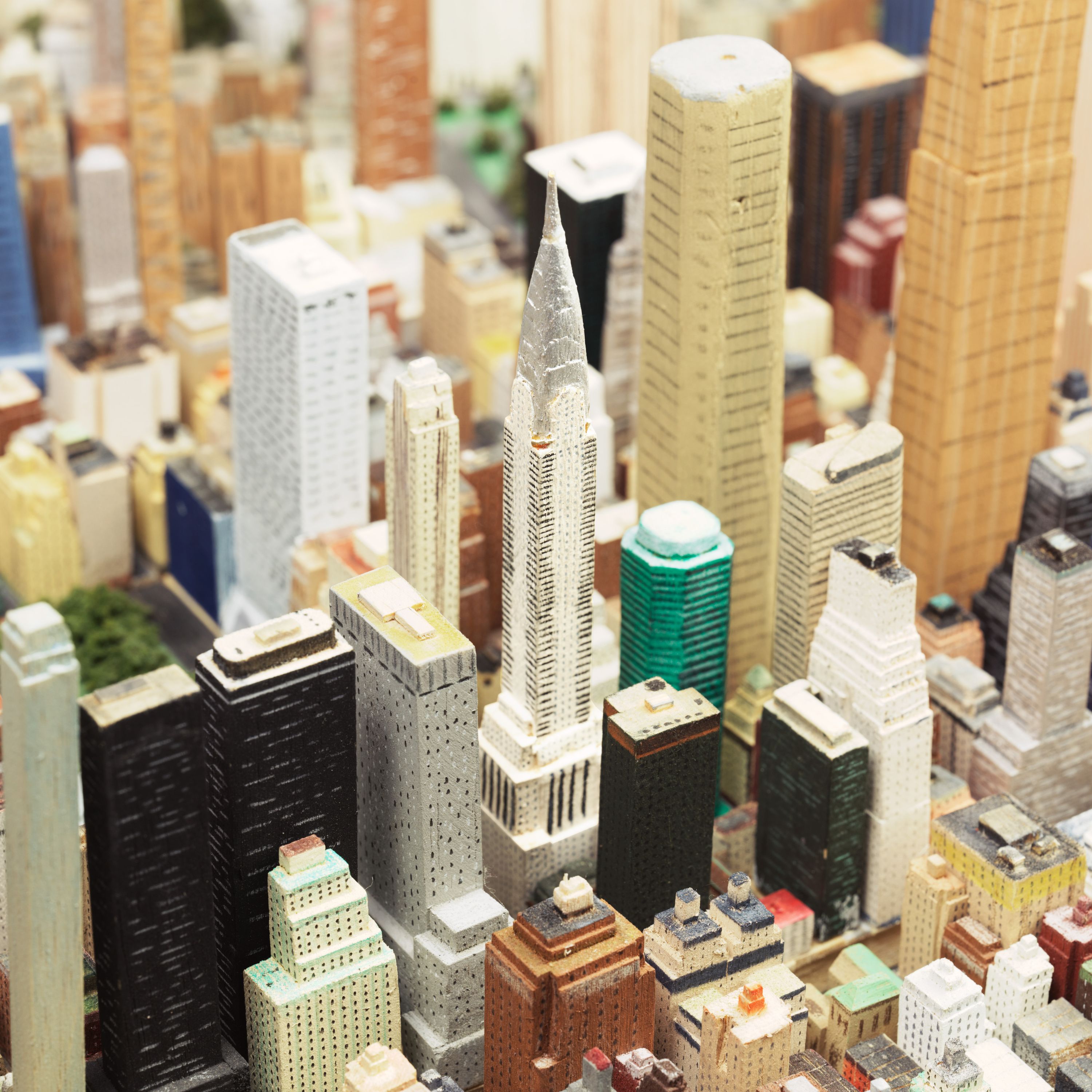
Foreign. This is all of it on WNYC. I'm Alison Stewart. A lot of people in 2026 have a side hustle, but not all of our side hustles end up in an exhibit at a major New York museum. Such is the case for Joe Macken. Joe grew up in Middle Village, Queens and has since made a career as a truck driver. But for over 20 years, Joe spent his off time in his basement making a of New York City and parts of Jersey too. He simply used balsa wood glue and Styrofoam and finally completed the model last year. And after his daughter encouraged him to share his work online, his model went viral, garnering millions of views. Now he's brought the model from his home upstate to the Museum of the City of New York. You can see Joe Macken's model in the exhibit He Built this City. Joe Macken's model, open to the public on Thursday, February 12th. You can also check out some photos on display on our Instagram now at Olivet wnyc. Jo Macken is here. Hi, Joe.
- [01:07]
B
Hi.
- [01:07]
A
As well as McNy Museum curator Elizabeth Sherman. Hi, Elizabeth. Hello. So, Joe, you started working on this project in 2004. Why did you start?
- [01:18]
B
It was just a hobby. I just went into my basement, I saw a documentary on TV about New York City. And I went down to my basement. I had some balsa wood down there, and I just started to carve the RCA building in Rockefeller Center. Just. I just did it for. Just to do it. And I finished carving it, and the next night I built another one. I built all of Rockefeller center. And then I just kept going. I never stopped for 22 years. And it just grew to 50ft long and 30ft wide.
- [01:47]
A
Was this a hobby of yours? Just to go in the basement and mess around with balsa wood?
- [01:53]
B
That was the first time I ever did it.
- [01:54]
A
Really?
- [01:55]
B
That first day. I never. Yeah, I never did it before that. It was the first time.
- [02:00]
A
What inspired you?
- [02:02]
B
It was just the TV show, you know, I built a bridge before that out of tongue depressors because my wife, her sister was a nurse and she had all these tongue depressors and she said she was going to throw them out. So I told them, I'll take them. I'll build something with it. And I built a bridge with it. It was like a hybrid of the Brooklyn Bridge, the Williamsburg Bridge and the George and the. The Brooklyn Williamsburg and the Manhattan Bridge. And I used my own imagination, too. So it was like a hybrid of it. And then when I moved Upstate I put it on the moving truck, and it got destroyed. On the moving truck? Oh, no. And I was all upset, so I figured, you know what? I won't get upset. I'll just make something better. So I built New York City.
- [02:43]
A
So what did your wife think when you showed up with all those tongue depressors?
- [02:47]
B
She loved it. Oh. She thought it was okay.
- [02:50]
A
Hey, Joe put them in the basement.
- [02:51]
B
Yeah. You can hardly even notice them because they were just in these little boxes, but there was maybe like 15 of them. Little, you know, 6 inch by 3 inch boxes. Yeah.
- [02:59]
A
So, Elizabeth, how did you first hear about Joe and his art?
- [03:03]
C
I am woefully not on TikTok. So it was one of my colleagues at the Museum of the City of New York who saw Jo's viral TikTok video. And in talking about what we could do this year, things that would be responsive, things that would be exciting, this colleague brought it up in a meeting, and it. It evolved from there.
- [03:25]
A
What. What did you just like about it?
- [03:30]
C
I. I love passion. I love persistence. I love individual expression. I like that. Whether it's from an artist who has all the degrees and accolades in the world, I like it. If it's from a child, I like it. If it's from someone who has been doing this for 21, 22 years in their basement, It's. It's the labor, the love, the investment of time, the individual expression that really draws me to something.
- [04:02]
A
We're discussing a new exhibit, He Built this City, Joe Macken's Model, which opens Thursday at the Museum of the City of New York. My guests are artist Joe Macken. I'll call you, Joe. And curator Elizabeth Sherman. So after you finished the project, your daughter encouraged you to tell people about it, and it went viral. We said it's got about 10 million views so far. First of all, what was your reaction to all the attention that you received?
- [04:26]
B
It was surreal. I really didn't. I really didn't expect all that to happen. I mean, when I. When my daughter told me to put it on TikTok, I knew what TikTok was, but I didn't. It took me longer to download the app than it did to build the whole city. You know, I didn't even. I didn't know what I was doing. So I finally did, and the next day, I did it on a Sunday night. The next day, I didn't even think of it. I was sitting in my chair like I always do on a Monday morning. My daughter comes running downstairs telling me, your video. You did last night is going viral. And I'm like, oh my God. You know, she's like, you have to make another one now. And I'm like, oh, no, that's it. But I did. I kept going. If it wasn't for her, I probably would have. You know, she helped me a lot. She inspired me to do it.
- [05:07]
A
Why do you think, Elizabeth, the video went viral?
- [05:11]
C
I think Joe is so, I mean, as you can see here, talking to him right now, he's so personable, he's so easy to talk to. And there's such accessibility and humility in the way he talks about what he's done. I think many people who've invested this kind of time in a project would be boastful about it, would be hubristic. He's just, this is what I did. I did this. And as he says to many people, you can do this too. And I think it's that being transported into somebody's home and seeing that taking one step a day, every day for a long time can result in something amazing is really captivating to people in the TikTok videos and is part of what's really captivating about the model in person.
- [05:54]
A
When you were working on it, Joe, did you find it relaxing?
- [05:57]
B
Very relaxing. That's one of the reasons why I did it. I would spend all day working, come home, help fix dinner, hang out with my kids, watch a little tv, and before I went to bed, I would just sneak down into the basement. And I know I was tired. I had to get up at 4 the next morning and I said, ah, go down there for 20 minutes, fiddle around, work on it. I'd be down there for four hours falling asleep at the table. You know, I just, it happened almost every night. I had to push myself to not do it.
- [06:25]
A
Oh, interesting.
- [06:26]
B
So, I mean, that was the opposite.
- [06:29]
A
Yeah, it sounds like it wasn't hard to make the models. It was easy to make the models. The hard part was leaving it.
- [06:35]
B
Right. The hard part was not making it. That's how much I love doing it.
- [06:40]
A
Let's walk through the construction process. How long would it take you to make a typical building?
- [06:45]
B
It all depended on the building because a lot of the older buildings in Manhattan have a lot of different shapes and a lot of tiers. So I would say, like the Empire State Building would take me about two hours to carve and then another half hour to paint and another probably half hour to detail. But luckily most of the buildings that I did after Manhattan were the outer boroughs. And it was much Easier because I gained the skill and I was able to, you know, just from doing it so much, it just became more natural to me.
- [07:17]
A
Oh, that's so interesting. So early on when you were doing Manhattan, you were just sort of learning how to do it. And then as time went on, you're like, oh, I got this, Queens. Let's go.
- [07:26]
B
Well, it took me 10 years to build Manhattan and 10 years to build the other four boroughs. So that's how much better I got at it.
- [07:33]
A
Wow, that's amazing. Do you consider yourself an artist?
- [07:38]
B
That's. I hear that a lot, and I never considered it, but now I guess I am considering, you know, kind of, because I did. When I think of artists, I think of people who paint. That's how I thought of it. But artists can be photographers. They could be builders. They could be any kind of sculptures. So I. I would think, yes, I think I am kind of an artist.
- [07:59]
A
What makes Joe an artist? Elizabeth?
- [08:02]
C
I take a incredibly expansive definition of what it is to be an artist building on. On Jo talking about all different media concept. For me, it's the creative expression in a physical form that he wants to share with other people, that he did with his hands, with materials, that makes him an artist. And I think when you see the model in person, it becomes really not a debate. This is his vision, and he's sharing his physical vision with the world, and that's a work of art.
- [08:35]
A
Joe, we got a couple questions here for you. Can I ask them?
- [08:37]
B
Absolutely.
- [08:38]
A
All right. This text says, has Jo gone back and made new, improved sections of previously built blocks of this model?
- [08:45]
B
That's a big question. I get a lot. I kind of got. Sometimes when I'm working on it, I get so involved in what I'm doing, and I want to get to the next, to the next, to the next. Sometimes I kind of lose a little focus on going back and doing over what I need to do over. And another thing is, in my storage unit, it's very hard to get to the boards that I needed to work on. But I do. I did go back and do. Before I put it in the museum, I did go back and I updated a lot of it.
- [09:17]
A
Yeah, let's go.
- [09:18]
B
When I was taking the boards out of the storage.
- [09:20]
A
Let's talk about the size of it, because you said storage unit boards. Okay. You said it's 50ft by 30, and it's made up of how many boards do you remember?
- [09:28]
B
343.
- [09:30]
A
Wow. So when you realize this was a project that was. You were going to take all your time to do. And it was gonna take up all of this space. First of all, what did your wife think? I wish I know what the wife thinks.
- [09:40]
B
She's very supportive. She loves it. Yeah, she doesn't mind.
- [09:44]
A
When did you realize what size it was gonna be?
- [09:47]
B
It just kept growing and growing. I mean, I had everything stacked when I built it. I built it in pieces, like a puzzle. I didn't build it and put it together. I built it and put it on top of each other. So I didn't know. I mean, I knew the math because I knew how big the boards were, but I never really can picture how big it actually was when you lay it out. So it was when I. When I put it together back in September. It was pretty awesome. I mean, it was bigger than I thought. 50ft by 30ft is a lot bigger than you think.
- [10:12]
A
That's pretty big. This question says, what was Joe's source for the shapes and scale of the buildings?
- [10:20]
B
I just went off a computer, just. I look at the. I looked at the shapes and I just tried to replicate it as good as I can. And that's. I mean, I tried to make a perfect replica of it. I mean, that's what I wanted to do. And I did put my own little personal touches in there. Like I kept the World Trade Center. I wanted to do that for me because they're one of my favorite buildings. I used to look at them every day in the morning when I used to get up in the morning.
- [10:41]
A
One Freedom Plaza and the Twin Towers.
- [10:44]
B
I do. And they're right next to each other. So I also have my own little, you know, take on it myself.
- [10:51]
A
So I'm talking to Joe Macken. He's an artist. He's created a new exhibit. It's called He Built the Joe Macken's Model. It's at the Museum of the City of New York. It'll be available this Thursday for people to come see. I'm also talking to the curator of this exhibit, Elizabeth Sherman. What did you think, Elizabeth, when you saw it all laid out?
- [11:11]
C
I got the chills. You know, we had seen a few of the sections in advance. I unfortunately didn't have the pleasure of going up to visit Joe's storage unit, which I would have loved to do. And so when we saw some of the sections in advance, especially when you see those Manhattan neighborhoods, those buildings that you're so familiar with, miniatures just always, I think, do something to you. That kind of bird's eye view of these landmarks, you're so familiar with. So I think I. I thought I had in my head some idea of how incredible it was going to be. I was there for the first day of installation, but then when I came in at the end, when it was all complete, it's an incredibly magical, emotional feeling for somebody who knows this city, for someone who loves this city. Whether you live here or not, we all have a mental image of New York City in our heads. I think we're all captivated when we get that perfect flight path on a gorgeous, clear day over the city and press our noses against the airplane window trying to find the places we know. This is what you get to do. Standing in front of Jo's model is take in your city, take in New York City in all its vastness, in all its complexity. And again, through the magic of one person's artistic efforts, it's an incredible effective emotional impact on me.
- [12:32]
A
What was it like for you, Elizabeth, seeing the Twin Towers?
- [12:35]
C
You know, I think this is part of it that Jo and I have talked a lot about. And so I had seen. We had made some close up still photography of them in advance, but it is pretty emotional to see them standing next to each other. It is, yes. And I think it's really indicative of what the model does to me personally. And I think what we. What so many of us who spend a lot of our lives here in this city feel is this layered history. A store might change, a restaurant might go out of business. We move, but we still layer our memories of this city on top of one another. And so what Jo has really done in Lower Manhattan is visualize this layering of memory that so many of us walk around with every day.
- [13:23]
A
A lot of people have seen the panorama at the Queen's Museum. What did the panorama mean to you, Joe?
- [13:28]
B
Growing up, I've been there many times. The first time I went was when I was in first grade. I took a field trip. I went to school in Queens. And back then they had this virtual helicopter ride that you go around like you're sitting in a little tram, I guess, and you go around the perimeter of it. And I remember sitting there going around it, and I was just amazed. And I remember turning to my classmate who was sitting next to me, and I said, I'm gonna build one of these myself one day.
- [13:55]
A
No way.
- [13:56]
B
And it wasn't until I was in my 40s that I started, but I kept my word.
- [14:01]
A
That's so amazing.
- [14:03]
B
And I'm friends with her on Facebook and I'm gonna see if I'm gonna try to, like, see if she remembers me saying that to her. I'm gonna try.
- [14:12]
C
I hope she's listening.
- [14:13]
B
Yeah.
- [14:14]
A
Yeah, maybe she's listening.
- [14:15]
B
Yeah.
- [14:16]
A
I did read that there was one structure that you didn't make yourself the Statue of Liberty.
- [14:20]
B
Right.
- [14:21]
A
Okay. Was it too difficult, or did you decide, I'm not gonna touch that? What's the story there?
- [14:27]
B
I tried to do it maybe, like, four times, and the arm kept falling off, the one that sticks straight up. And it's fine. I mean, I was just. A lot of the buildings that I made took me a few times. But when I went to Hobby Lobby and I saw a Statue of Liberty, that was the perfect scale for my model. It was, like, two and a half inches tall. So I said, you know what? I'm just gonna buy it. It was in a package, and because there was a bunch of other things in there too, like boats and ships, I could use those, too, for the New York harbor and the Atlantic Ocean. So I bought it, and I used a bunch of them, and I just kept. You know, it's a perfect replica of it. So I figured. Yeah. So that's the only thing that I didn't. And a couple of boats. Other than that, everything else was carved.
- [15:08]
A
All right. Outside of the Statue of Liberty, what was the most difficult or challenging building to build?
- [15:14]
B
Wow. Believe it or not, probably the Empire State Building because of all the different shapes and tiers, especially going up all the way to the top with a point. In fact, I had to. That was the only building out of the whole model that I had to fix when I. After I put it together.
- [15:30]
A
Oh, you looked anywhere like.
- [15:31]
B
That's because the point. The point fell off. So I was fixing that this morning. I fixed it this morning. And the other reason is because it's such an iconic building, everyone's gonna be looking for it. I wanted it to look good, so.
- [15:42]
A
That'S another reason this text says it's making me tear up, that Joe included the Trade Center. Thank you so much for that.
- [15:48]
B
Thank you.
- [15:50]
A
You're a trucker?
- [15:51]
B
Mm. Yeah.
- [15:51]
A
When did you start driving trucks?
- [15:53]
B
18 years ago. I've been doing it for 18 years. Yep. I work for a company upstate. It's, you know, I deliver local beverages, and I just did my model, you know, just part time, just like, after work. And, you know, I just. I work outside, and I love it because, you know, I'm kind of an outdoors kind of guy, and it's. I'm getting up there. It's almost retirement age, but we'll see.
- [16:22]
A
There's other cities you can do.
- [16:23]
B
Yeah. Oh, yeah. I'll build any city now. Oh, it's awesome.
- [16:28]
A
Elizabeth, when you think about the model, when you're looking at it as a whole, what are you thinking about when you see this whole creation that Jo has made?
- [16:37]
C
I mean, one of the things I'm thinking about, especially given that we're presenting it at the Museum of the City of New York, is how vast our city is, how complex, how beautiful, how under explored. You stand there in front of the model and you're really presented with the fact that Manhattan, where we put all of our energy, where Joe put 10 years of his energy, where so much media and storytelling is focused, is geographically. And we know this in our heads. But standing there, it's geographically a tiny part of this vast, complex city. And I think it's a reminder to each of us. It's a reminder to me to get out of my pathways. I ride the same train every day. I do similar things on the weekend. There's so much to explore. There's so many histories to uncover, people to meet, food to taste. So standing there in front of the model, I think about the lifetime of exploration and storytelling I have to look forward to.
- [17:38]
A
As you said, you finished the model in 2025. Joe, what was the final block that you completed to finish it?
- [17:45]
B
Well, the last section that I built was Staten Island. It was the southern part of Staten island and which was Staten island is a pretty easy borrowed bill because there's a lot of green, a lot of, you know, it's built up a little bit as far as, like, neighborhoods and stuff, but there was a lot of green involved. So that one took me the quickest to finish. So, yeah, it was Staten island, the southern part of Staten Island.
- [18:08]
A
Where do you want to visit New York now that you've built the whole darn thing?
- [18:10]
B
Oh, yeah. I love all of New York City. I'll go anywhere. I love every borough.
- [18:15]
A
Well said. The show is called He Built this, Joe Macken's Model. It opens on Thursday at the Museum of the City of New York. My guests have been artist Joel Macken and curator Elizabeth Sherman. Thanks for coming in and congratulations.
- [18:30]
B
Thank you very much. Thanks for having me. I really appreciate it. I'm Ira Flato, host of Science Friday. For over 30 years, our team has been reporting high quality news about science, technology and medicine. News you won't get anywhere else. And now that political news is 24 7, our audience is turning to us to know about the really important stuff in their lives. Cancer, climate change, Genetic engineering, Childhood diseases. Our sponsors know the value of science and health news. For more sponsorship information, visit sponsorship.wnyc.org.