Loading summary
Transcript228 lines
- [00:00]
Progressive Insurance Announcer
All of it is supported by Progressive Insurance. Do you ever find yourself playing the budgeting game? Well, with the Name youe Price Tool from Progressive, you can find options that fit your budget and potentially lower your bills. Try it@progressive.com Progressive Casualty Insurance Company and affiliates Price and coverage match Limited by state law not available in all states.
- [00:30]
Alison Stewart
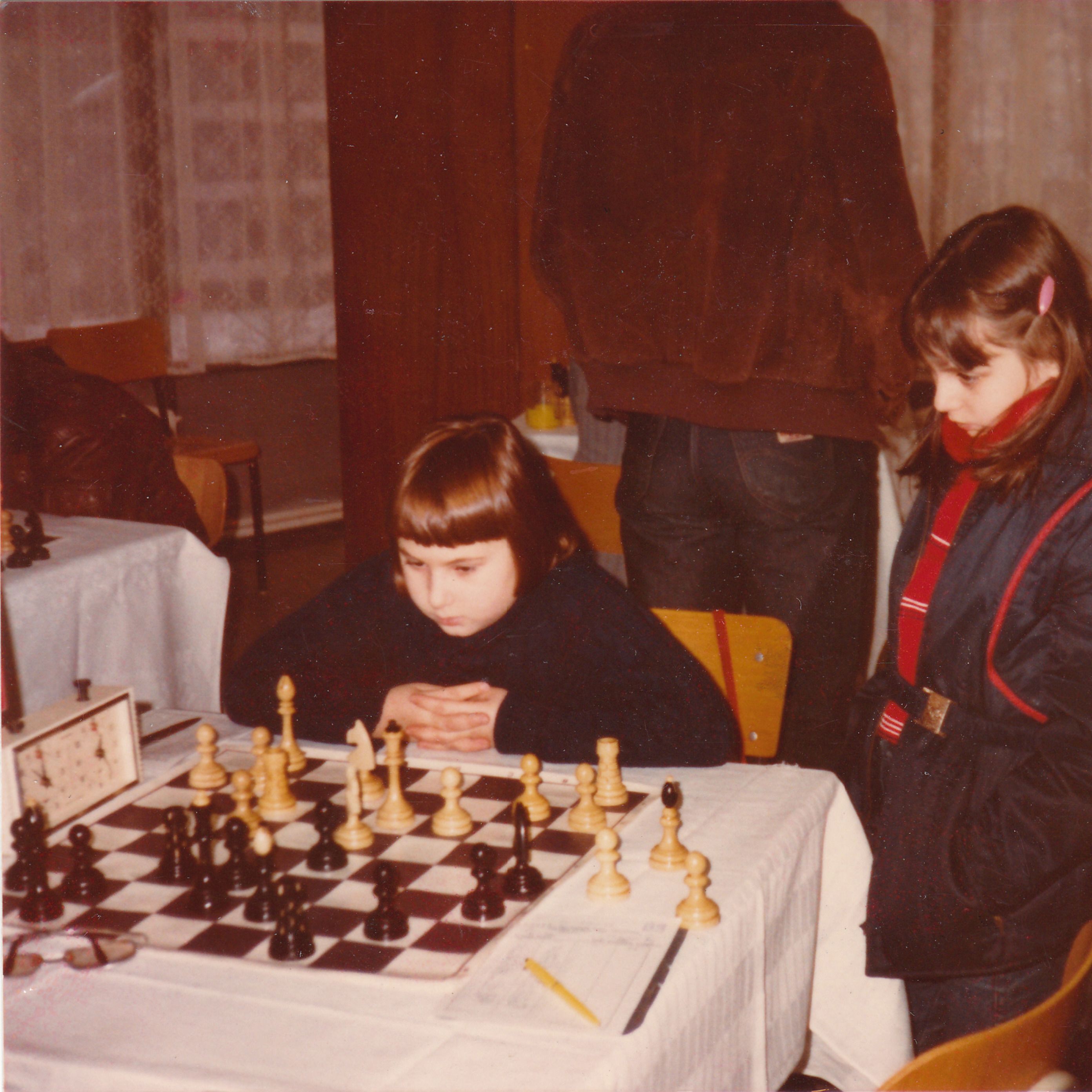
You're listening to all of it on wnyc. I'm Alison Stewart. If you love the show the Queen's Gambit or Chess on Broadway, you will be riveted by the new documentary Queen of Chess, about the real woman at the top of the chess world. Judith Polger beat Bobby Fischer's record to become the youngest ever Grandmaster when she was 15 years old. She remains the only woman to ever be ranked in the top 10 chess players in the world. She is considered to be one of the best chess players of all time. Judith's early success was thanks in part to the determination of her father. Along with her two older sisters, Judith's childhood in Hungary was consumed with daily intensive chess training. Judith's father was determined to mold his three daughters into prodigies. But despite her success, Judith could not seem to beat one player, the Russian grandmaster Garry Gasparov. Their first meeting ended in an international controversy, and Judith spent years trying to beat the man many considered to be the best chess player in the world. Judith's life and career are chronicled in the documentary Queen of Chess, which was directed by Rory Kennedy. The film is premiering at the Sundance Film Festival next week and it'll be streaming on Netflix on February 6th. And joining me now is Judith Polgar. It is so nice to meet you.
- [01:47]
Judith Polgar
Nice to meet you.
- [01:47]
Hi.
- [01:48]
Alison Stewart
When, when did you decide that you wanted to sign on to the documentary and what questions did you have?
- [01:55]
Judith Polgar
It was about two years ago that Rory reached out to me. While I had many inquiries for documentaries after Queen's Gambit, there were a lot.
- [02:04]
Of themes coming up. And then my decision was let's go.
- [02:09]
With Rory on the documentary.
- [02:11]
And the reason was because I was.
- [02:13]
Kind of happy that a woman, a female filmmaker, is going to be working on my story.
- [02:19]
And also I can say not everybody.
- [02:22]
Is sharing my view that it's a benefit. But for me, it was a pro. It was a plus that she does not play chess.
- [02:31]
So for me, it was a huge challenge. And I was so curious how is she going to be as she's so.
- [02:37]
Interested about my story that she wanted to show it to a wider audience.
- [02:42]
That how to show something that she.
- [02:44]
Has nothing to do with the sport.
- [02:46]
She didn't hear about my story myself, but the sport was not close to her heart at all. And it is very interesting for me.
- [02:55]
How someone like that, that personality can show the insides, the. The drama, the tension, all these interesting.
- [03:05]
Things in this sport.
- [03:07]
WNYC Host/Interviewer
That's why it was so interesting, because you had to explain it to her and she had.
- [03:11]
Alison Stewart
So you explained it to the audience as well?
- [03:14]
Judith Polgar
Absolutely. It was very funny. When we were making the film itself, and Rory was asking so many questions, very basic questions.
- [03:22]
WNYC Host/Interviewer
What's a pond do?
- [03:23]
Judith Polgar
Well, you know, what is a checkmate? And all these things. And it's kind of funny. But I understood that she has to.
- [03:34]
Understand all these things in order to be able to present it to the big public who are not chess players, but they might be interested. And it's curious how this sport is about. Why is it interesting? Is there any tension? How can we show it the way.
- [03:51]
That we express what it is?
- [03:55]
WNYC Host/Interviewer
Explain to me why chess is interesting.
- [03:58]
Judith Polgar
Chess, for me, it was extremely interesting from the beginning.
- [04:01]
It was a game that is interesting. There are six different characters of the game, and you have to make it a teamwork.
- [04:07]
Of course, in the beginning it was a game.
- [04:09]
Later on, it became a sport very fast, as I won my first international event when I was nine here exactly, in New York.
- [04:18]
And later on, I had to be focusing more. So I was scientists as well, because.
- [04:24]
You have to make a lot of analytical work in order to be improving your play a lot.
- [04:29]
So. And later on, it became also I.
- [04:31]
Understood that the chess is very much an educational tool as well, which I'm very much involved these days. So chess is a game where you find everything. You find the life, the connections, the rules. You have to respect the rules. You have to know thousands and thousands of patterns to be able to manage yourself and play a good game and be successful.
- [04:54]
And I play life also as a chess player.
- [04:57]
WNYC Host/Interviewer
In some ways, I understand that. What was it like for you to see all of that footage of you.
- [05:05]
Judith Polgar
As a little girl, to relive those moments and those times?
- [05:10]
It was very special, especially when I.
- [05:13]
Saw the movie for the first time. Of course, when I was a kid, I never dreamed of the fact that.
- [05:19]
It'S going to be a documentary about me and my family.
- [05:23]
And now looking back, it's very special to. To see yourself as a child and developing as a teenager and later on a woman, and also seeing yourself talking, giving interviews, and of course, all the. The memories come back as well.
- [05:43]
WNYC Host/Interviewer
My guest is chess grandmaster Judith Polgar. We are Talking about the new documentary about her life and career as a chess prodigy and player and the most accomplished female chess player in the world. I'm gonna say you're an accomplished chess player, not female. Queen of Chess premieres next week and the Sundance Film Festival and will stream on Netflix on February 6th. This all started with your dad, actually. Did he explain to you why he wanted you at such a young age to be devoted to chess?
- [06:16]
Judith Polgar
Actually, he had this idea that he wanted his children to be homeschooled. Focusing on one spec area, I think.
- [06:24]
It became because the way he didn't.
- [06:26]
Have an easy childhood and he said he wants to show it. If he couldn't make it be genius in something, he wants to show it with his own children.
- [06:34]
And I was number three in the line. I have two older sisters and Susan was already playing chess from age 4. And he said that he believes that you can have a successful and happy.
- [06:48]
Person if you're focusing on one specific area and you gain self confidence you have and you build your character and personality that way.
- [06:58]
And he really believed in that from the very beginning. He said it to my mom before they had the children, that this is his dream.
- [07:07]
So my mother was very skeptical. I mean, is this guy okay?
- [07:10]
What kind of strange things he has in mind? And then later on when Susan was there, she was supportive and she was.
- [07:17]
Very much partner in that.
- [07:19]
And well, I could become the person.
- [07:23]
And the player who I am because of both of my parents, because they gave very different skills and mindset and that's it.
- [07:30]
Alison Stewart
Well, what did your mom.
- [07:32]
Judith Polgar
Well, she's also a teacher. Actually both of them are teachers by profession. And well, my mother was definitely the person who was the behind the person.
- [07:42]
Who gives the warm of a family.
- [07:45]
She was doing everything being in household.
- [07:49]
She was traveling, she was making visas, she was arranging everything around the trainers.
- [07:56]
As we were homeschooled, we were always home and playing chess daily many hours. So she had to do lots of, lots of things and she made all this background work.
- [08:06]
Alison Stewart
Did you ever not want to be homeschooled? Did you ever want to go to an a normal school when you were a kid?
- [08:13]
Judith Polgar
No.
- [08:15]
Alison Stewart
You, you like, you like that, you like the layout? You like the way your parents presented it.
- [08:19]
Judith Polgar
Well, in those times, you know, when I, in the early 80s, I started.
- [08:24]
To travel when I was seven or eight. In those times it was very especially being in Hungary, living in a socialist country.
- [08:32]
And in those times it was miracle.
- [08:35]
Wow, I can travel. I was 9 when I was traveling.
- [08:38]
To New York for the first time, even though I was playing all day, because I played two games and had no time really for anything special.
- [08:46]
But when you're walking, you have the feeling of the atmosphere of something really special. And this is incredible to see and visit so many different cultures when we were traveling and going for events. So that was. This was too special.
- [09:01]
Alison Stewart
What was your homeschooling like and how many hours did you spend playing chess?
- [09:08]
Judith Polgar
Well, basically, I was making.
- [09:09]
Giving exams annually.
- [09:12]
And in the very beginning, it was like five minutes when I started to get familiar with the moves. But later on, by the time I was seven, I was playing maybe four, five hours, six hours a day. And when I was nine, I was already seven, eight hours. So most of the day filled up with training sessions, sessions with one or different coaches. I was also training with my sisters later on when I was already good enough to be a good match to them.
- [09:41]
Alison Stewart
You know, sometimes when you point a.
- [09:44]
WNYC Host/Interviewer
Child towards something and you say you do it, they say no, they rebel against it. No matter how good they are, they could be great at it, but they tend to rebel against it. Why do you think you didn't, why didn't you have a rebellion against playing chess?
- [10:04]
Judith Polgar
I was just very successful from a very young age.
- [10:07]
And you get addicted when you're successful. I mean, you win a game and then you win another game, and then you win another game and people appreciate it. Not the opponents, of course, but the fans. And also I was very much supported.
- [10:24]
Not only by my parents, but my sisters. We were so much together and we were so happy each other's result that when you're. You're winning and.
- [10:33]
And you get this incredible feeling, you.
- [10:35]
Don'T even think about it. Why should I rebel? Why should I have a different life? And it fits to me very well.
- [10:42]
WNYC Host/Interviewer
The media sometimes referred to what your dad did, his as an experiment with you. And it's presented to you in, in the documentary. And you sort of, you know, bristle, but you sort of have a look on your face like, oh, this again. Why did it make you sort of uncomfortable to hear it referred to as an experiment?
- [11:02]
Judith Polgar
Well, basically, when I was.
- [11:04]
I was a kid, this is the only thing I heard about that. You're strange, you're not normal, you're not a regular kid. Your parents are making an experiment with you, while at the same time I was sitting at home playing chess. And I felt kind of comfortable in that seat.
- [11:21]
And so the outside world wanted to.
- [11:26]
Put a lot of pressure on me. And I remember very well I was about age 12 or 13 when we had visiting every month, Germany. We had a meetup every month, and each time we had a press conference. And there also the press was pressing me that, why don't you go to school, how you do it, your parents are strange, etc. So actually, I was really pushed very badly. And at some point I cracked, and I was like, crying, and I said, okay, why do they attack me that way? You know?
- [11:59]
And then I. I became strong, and.
- [12:01]
I said, okay, now I'm going to deal with that, that I don't. Don't pay attention. But sometimes it was difficult that the outside world was putting so much pressure on you and your parents that. But this could be handled because we were so close to each other, and we sisters, we were traveling together, chatting.
- [12:22]
All the time together. Everything which we didn't agree on, we supporting each other.
- [12:27]
And that. That was something extremely strong. And this way I was defended.
- [12:33]
WNYC Host/Interviewer
How much do you think being good at chess is about natural talent?
- [12:40]
Judith Polgar
Well, this is the big debate of my father also, that he believes that the geniuses are not born but.
- [12:47]
But made, that there is no talent. Such as, just that. Okay, the big question is, what is talent?
- [12:54]
Right. So I think you might say there.
- [12:57]
Is talent, but without work, without hard work and support, it can be even against you. But for me, my talent was that I'm ready to work hard. I was ready and without pain. Working and playing chess all day and recover and have the resilience and having the fighting spirit and having that character trades what the competitor needs.
- [13:26]
WNYC Host/Interviewer
I'm speaking with Grandmaster Judith Polgar. We're talking about a new documentary called the Queen of Chess. It premieres next week at the Sundance Film Festival. How would you describe your style of chess?
- [13:41]
Judith Polgar
Well, I was scary for my opponents.
- [13:44]
WNYC Host/Interviewer
You were scary?
- [13:46]
Judith Polgar
Yeah, because, you know, when I was little, I didn't speak English, and I was. I was very much at home. And I had this special look, which some players described it as a killer look. And my style was very much straightforward. It's like, you know, there are some.
- [14:04]
People who say whatever they think immediately. This is exactly the style I had in chess that I'm not hiding away what my intentions are. I want to win. I'm ready to sacrifice half of the.
- [14:15]
Board in order to give checkmate, because.
- [14:17]
That'S what we are playing the game for.
- [14:20]
And so it was very clear from.
- [14:22]
Childhood that I'm playing spectacular chess, always sacrificing something. And the only thing in my mind.
- [14:28]
Is to give checkmate to the Opponent.
- [14:30]
So I was very aggressive and attacker.
- [14:33]
Alison Stewart
What do you think some of the key skills are needed to be good at chess or to be great at chess?
- [14:41]
Judith Polgar
Well, you have to be a great. You have to be a creative person, you have to be self critical a lot. You have to be a great analyst. You have to be able to stand the monotony, to work hard on continuously. Resilience is something that essential. Definitely. Well, logical thinking is not bad to.
- [15:10]
Have, obviously, and more or less these are the basics of it.
- [15:15]
And you have to love the game.
- [15:17]
Alison Stewart
How about memory? Is memory important?
- [15:21]
Judith Polgar
Memory is important quite a bit as well. But now the sport changed a lot in the last decade or two. Since we have the engines, the computer, the AI also got involved in the sport of chess. It pretty much transformed the game.
- [15:36]
Alison Stewart
Oh, how?
- [15:36]
WNYC Host/Interviewer
How so?
- [15:38]
Judith Polgar
Well, basically when I was a kid.
- [15:40]
I was playing sitting opposite with someone having the chessboard in between us. We were analyzing, writing down on a paper, right?
- [15:47]
I mean, people cannot even imagine that later on it was when engines appeared.
- [15:54]
It means that they give suggestions, but not only move suggestions, that let's say Instead of Knight F3, Bishop B2 is a better move, but also it gives evaluation. And by now it is a lot of people get involved in. In the analysis that you trust the engine too much and you don't understand. Exactly.
- [16:17]
And it's very funny for me and.
- [16:19]
Interesting to see how AI like ChatGPT.
- [16:22]
Or any AI tool, what kind of ideas it gives to the people, how people re.
- [16:28]
Because it is very similar the way we were reacting as chess players 20 years ago.
- [16:34]
And that was really interesting for me. Okay, People trust the engine very much. And then you give the same advice, right? You use ChatGPT, okay?
- [16:43]
You can use it if you're a critical thinker, you're just using it as an advisor, as a friend, but you're analyzing, you're trying to understand everything. In that sense it can help you a lot, right? It can shorter the time management for you, how much you're spending on whatever task.
- [17:00]
The same with chess that if you.
- [17:01]
Try to understand that you're managing it.
- [17:04]
Then you can use it very well.
- [17:06]
But of course, in the beginning it was a huge challenge how to use the engine. It was lying to me that I.
- [17:12]
Had a winning position and actually I was losing.
- [17:15]
Alison Stewart
I was going to say you can.
- [17:16]
Judith Polgar
Outsmart it, it's not so easy. But you. I had a lot of struggles to.
- [17:21]
Understand the chess engines. But later on, of course, these days everybody's using engines, using the moves, the Suggestions, they work on it to understand and then go in the game and then play on their own. Own way.
- [17:36]
Alison Stewart
The name of the documentary is Queen of Chest. My guest is its star chess grandmaster Judith Poehler. We'll have more after a quick break.
- [17:45]
WNYC Host/Interviewer
This is all of it.
- [17:55]
Alison Stewart
And we're back with all of it on wnyc. I'm Alison Stewart. My guest in studio is chess grandmaster Judith Polg. We're talking about the new documentary about her life and her career as a chess prodigy and the most accomplished female chess player in the world. Queen of Chess will premiere on Netflix on February 6th. Okay, I remember the 80s and 90s. How would you describe the attitudes towards women in chess in the 80s and 90s?
- [18:26]
Judith Polgar
That was rude.
- [18:27]
Alison Stewart
Rude.
- [18:31]
Judith Polgar
And I think in the documentary, if you see it, you understand what I mean.
- [18:35]
Alison Stewart
It is rude. That's the perfect word.
- [18:40]
Judith Polgar
Well, men did not really respect it, to say the least. Women chess players, because even today they.
- [18:50]
May say sometimes that, ah, that's women chess. Like saying it's bad chess, it's low level chess. And this, this was very much what was in the air in times. And when I started to win some games, my first game, which I won against the Grandmaster, I was 11 years old, obviously everyone thought it's a mistake, it's a misunderstanding. It was by chance something happened to my opponent during that day. Even though it was a very fighting game, it was very interesting game with of course, some mistakes, but it was very clearly that I won a good game. And it was for a long time that with me also they thought, okay, again, she was lucky again. A few days later, she was lucky again and again.
- [19:35]
And then, you know, eventually it was changing with time.
- [19:40]
But in the 80s 90s, it was very much, very clear that actually even chess is not a physical sport. They could say that it had the biggest difference between the world number one male number and the world number one female. There was bigger difference in chess than, let's say in tennis or in physical sports. And it was not understandable at all. I mean, it's not a physical sport, it's a mental sport.
- [20:06]
And this is what was great from.
- [20:08]
My parents, that they were so open about it and clear about it that you're girls, but what's the problem? You have a brain and they give all the support so you can be.
- [20:17]
As good as all the guys. And I grew up that way.
- [20:20]
And this is very important.
- [20:22]
Alison Stewart
Did you ever feel bad when you were treated that way?
- [20:30]
Judith Polgar
Not really, because I had the support system around me and we talked around and said, okay, what is this garbage? It doesn't make any sense. Of course you're gonna beat them.
- [20:39]
WNYC Host/Interviewer
Yeah.
- [20:40]
Alison Stewart
And you knew you were good, right?
- [20:42]
Judith Polgar
And for my age, I was really good.
- [20:44]
People were not really able to follow the speed I was improving.
- [20:47]
Alison Stewart
In terms of chess, the film is structured, and it's. You know, it's a film, so it's structured a little bit around your rivalry with. With Garry Kasparov, considered one of the best chess players ever. When you were a kid, what did Garry mean to you?
- [21:04]
Judith Polgar
Well, Gary was a big idol for.
- [21:06]
Me when I was. I was a kid. And the reason is because he had.
- [21:11]
That kind of playing style, which was very spectacular and very appealing to me.
- [21:17]
He was also.
- [21:17]
He's very much a personality of what he thinks. He's very much straightforward. He won many games in a beautiful, tactical, stylish, energetic style.
- [21:30]
And I was following together with my.
- [21:32]
Sister Sophia, who is a year and a half older only. So we were having training sessions together. We were following him.
- [21:39]
And he was just a very young Kasparov.
- [21:42]
When he became world champion, he was only 22 years old. He was the youngest world champion at.
- [21:47]
The time, and this was amazing. I remember following his world championship match.
- [21:52]
Matches, how it unfolded from week to week.
- [21:55]
Those times, it was really long matches.
- [21:57]
They were competing, fighting it out for.
- [21:59]
A few months, and it was something.
- [22:02]
Really special to follow how such a youngster with so much energy and playing style could win. And then I met him for the first time when I was 12 years old in the Thessaloniki Chess Olympiad, which is also covered in the documentary.
- [22:18]
And that that was the event where.
- [22:20]
I won together with my sisters, the Gold med Hungary. And there I could see him in person. And I got to know that he was watching my game and that it gave so much inspiration.
- [22:32]
And that was the first time when I met him.
- [22:35]
WNYC Host/Interviewer
It's interesting. I don't want to give away too much of the documentary, but you do get to know him. You went, I think, to Croatia with him. And seeing him as a person, how did that change your view of him as a chess player? Seeing him as a person, going to the beach, having a good time with.
- [22:55]
Judith Polgar
Him, it was very interesting experience for.
- [22:59]
Me because, of course, the chess players may be having a good relationship and kind of even friends, and we meet each other a lot of events. And I was playing with Kasparov for so many years, competing year after year, even few times within the year, but it happens with not so many people that they. They kind of have the respect for you not only as a chess player, or once they have respect as a chess player, they also invite to your base and they want to know you better and maybe work together even. And this is what happened with Gary, that this was a very big thing for me when he invited.
- [23:36]
And the reason is because this was.
- [23:38]
The biggest sign that he acknowledged my.
- [23:40]
Chess knowledge, that he was curious about.
- [23:43]
My thinking as well.
- [23:46]
And this was very special.
- [23:47]
And of course, when you work with someone several hours a day for a week or even longer time, you get to know the person better in very regular circumstances in everyday life.
- [24:00]
And that is something great thing when.
- [24:02]
You can meet a huge champion, big champion, especially if it's your idol.
- [24:07]
WNYC Host/Interviewer
It's interesting. I'm wondering if there's a mindset when you're playing chess and a mindset when you're not, because there was a controversy and you cover it in the film involving Garrett. And we won't say what happened, but did he cheat? Did he not cheat? Maybe. I don't know. Could you separate those two mindsets? The person who is your player, your opponent, versus this person who you will go to Croatia with.
- [24:38]
Judith Polgar
Of course.
- [24:38]
I mean, when you go for the.
- [24:41]
Chessboard, then you want to kill your opponent and not in a sense that you want to hurt him, but you want the good for yourself. So this is something very special, that it's a fight, it's a one on one fight.
- [24:56]
I mean, when you see boxing, you see that physically they want to punch you.
- [25:01]
But exactly the same happens in chess. You want to punch your opponent, you want to have a ko, you want to win the game, even if before the game, your friends and after the game, even after the game finishes, you start talking about the fact, I should have played this, you should have played that. So we're discussing after that. But when we are playing, we obviously want to beat each other.
- [25:24]
WNYC Host/Interviewer
In the film, you are taught that.
- [25:28]
Alison Stewart
You don't always have to win, that it might be to your benefit when you draw. What kept you from deciding to be a person? I'm gonna take the draw rather than the win up until that point.
- [25:45]
Judith Polgar
Well, it, it basically was my style that I always gave all in. And it happened that sometimes you have to make a decision whether, you know, it's. It's slippery on the road outside. You make your decision, I go out and I take my risk. I was always taking my risk.
- [26:04]
And at some point you say, you know, you. When you fell a lot, you decide, well, maybe, you know, I wait a little when it's melting and then I sit at home. So this is what I did in my chest. Also that after some while I. I.
- [26:17]
Realized that maybe it's not necessarily always to go to a sharper direction to, to fighting it out to make a risky move, that maybe it wins, maybe it loses, but definitely, I don't know, I cannot control it completely. And then I decided that, you know what?
- [26:34]
Alison Stewart
What?
- [26:34]
Judith Polgar
Maybe it's just better to, to be solid and to make a draw today and let's keep my energy for tomorrow.
- [26:40]
Because a chest ornament can last 13, 14 days round.
- [26:45]
So you do need your energy.
- [26:47]
You have to have your strategy not only in each game, but also it's better to have a strategy for a whole tournament where you keep your energy where you want to play longer game, what kind of openings you're choosing. Sharper or more solid lid. So this, this became part of my strategy that I don't have to sharpen out everything all the time.
- [27:08]
Alison Stewart
Judy became a grandmaster at 15 years, 4 months and 28 days. Just a month younger than the previous record held by Bobby Fischer. What does it take to be considered a grandmaster in chess?
- [27:22]
Judith Polgar
Basically you have different titles and this is the biggest title you can get before becoming a world champion.
- [27:29]
Alison Stewart
And it's the biggest thing. It was a big deal when you beat him.
- [27:32]
Judith Polgar
It was a huge thing.
- [27:33]
And becoming a Grandmaster, it means that you have to make a performance several times and It's a rating 2500 that you have to reach. And you have to perform it in a certain number of games. It's 24 games you have to show, you have to give the exam so called.
- [27:50]
So you're showing that you have that.
- [27:51]
Level and then you get the title. But after that you have to keep this level. So you have to test yourself again and again.
- [27:58]
You can never lose the title, but.
- [28:00]
Once you win, you can, you still have to stay there by rating points.
- [28:05]
WNYC Host/Interviewer
I have to ask, have you seen Chess on Broadway since you've been in New York?
- [28:09]
Judith Polgar
Actually I did yesterday.
- [28:11]
Last night.
- [28:12]
Alison Stewart
You saw it last night?
- [28:13]
Judith Polgar
Yeah, I did. It was amazing.
- [28:16]
Alison Stewart
Give us your review, we've got about a minute left.
- [28:20]
Judith Polgar
Well, it was amazing. It was very funny because I saw it first in London, 1988, quite some years ago and yesterday I saw it and it was a fantastic performance by everyone actually. And I've met also some of the performance after were performers. Nicholas I met and Leah.
- [28:43]
Alison Stewart
Leah based a little bit on you maybe.
- [28:45]
Judith Polgar
No, no, no, no. This is war and politics.
- [28:50]
Alison Stewart
Like chess isn't. I want to get this One more question in what do you think it.
- [28:56]
WNYC Host/Interviewer
Will take to get more women, more girls involved in chess?
- [29:00]
Judith Polgar
I think open mindset by parents and trainers and.
- [29:06]
I do hope that there is going to be new Judith Polgar in the future.
- [29:11]
Alison Stewart
The name of the documentary is Queen of Chess.
- [29:13]
WNYC Host/Interviewer
It'll premiere on Netflix on February 6th before going actually after the Sundance Film Festival. That's where it will premiere. My guest has been Judith Poland, the grand chess Master.
- [29:24]
Alison Stewart
It is nice to meet you. Thank you for coming to the studio.
- [29:27]
Judith Polgar
Thank you very much.
- [29:28]
WNYC Host/Interviewer
There's more, all of it on the way. We have an hour of art you can just walk in and see.
- [29:33]
Alison Stewart
No museums required.
- [29:35]
WNYC Host/Interviewer
I'll speak with three artists who have local gallery shows. That's coming up after the news.
- [29:41]
Progressive Insurance Announcer
NYC now delivers the most up to date local news from WNYC and Gothamist every morning, midday and evening with three updates a day. Listeners get breaking news, top headlines and in depth coverage from across New York City. By sponsoring programming like NYC now, you'll reach our community of dedicated listeners with premium messaging and an uncluttered audio experience. Visit sponsorship.wnyc.org to get in touch and find out more.