Loading summary
Transcript103 lines
- [00:01]
A
This year, perfect your morning routine with.
- [00:03]
B
Nespresso Vertuo up with a three second start, easy open lever and dedicated Coffee Creations mode button.
- [00:10]
A
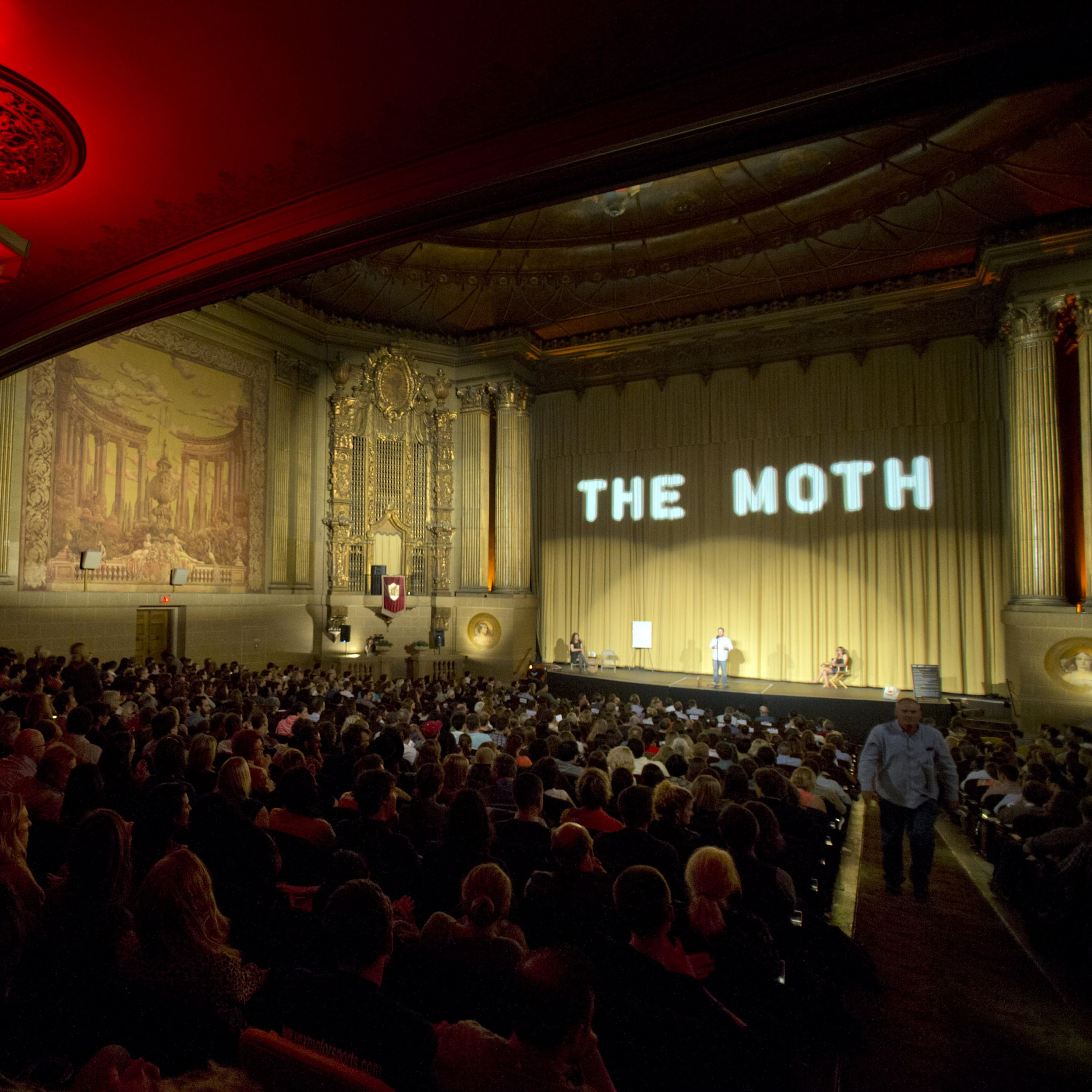
It's easier than ever to brew coffee with smooth flavor and rich crema over ice or milk. It's your coffee your way. At the click of a button. Sip for yourself and shop vertuo up@nespresso.com. This is all of it. I'm Alison Stewart live from the WNYC studios in soho. Thank you for spending part of your day with us. I'm grateful you're here. Happy Lunar New Year, by the way. On today's show, we'll speak to Oscar nominated costume designer Kate Hawley. We'll hear live music in WNYC Studio 5 from Joyce DiDonato and the 3 Time for 3 String Orchestra. And we'll also learn how to deal with seasonal Affective disorder with Yale psychiatrist Dr. Paul Dasan. That's the plan. So let's get this started with the new book My Life and A Guided Journal from the Moth. If you are someone who has thought about journaling and wants to take time to write down your thoughts, passions and ideas but can't seem to get started, our next segment may be for you. The fine folks at the Moth are in the business of telling stories. You hear their work on the Moth Radio Hour and at Moth events. Their team works with people to find moments in life that tell a story and create a meaningful tale from them. The Moth has put out a book, kind of a workbook, if you will. It's called My Life and Stories, A Guided Journal from the Moth. It's broken into three parts, each with its own special way of finding out what's going on inside of you and getting it on paper. Joining us now is the Moss Chief creative Officer Christina Norman and my old friend. Hi Christina.
- [02:02]
B
Hi Allison.
- [02:03]
A
And Senior Director Jennifer Hickson. Hi Jennifer.
- [02:05]
C
Hello Al.
- [02:06]
A
Listeners. This book is full of prompts, so we decided we put three of them out to you. Let's get you into this conversation. Pick one, call in and tell us your response. Here are the three prompts. Think of a sound that evokes a memory. What is that sound? And the memory? The second one is describe an outfit that makes you feel powerful, invincible or secure. Where did you get that outfit? And three, what's the story of your name? Pick one and call him. Our phone lines are open at 212-433-WNYC 212-433-9692. Jennifer, what is the power of journaling?
- [02:44]
C
Well, it's sorting out all this mess of life that's happening every day, generating new things and organizing some bits, meaningful things into a story. It helps you know yourself better, helps you understand what happened. Life's coming at you all the time. Pull it in. Find a beginning and an ending. And in between is a story that will help you know who you are.
- [03:11]
A
Why did you want to work on a book like this, Christina?
- [03:13]
B
So the Moth has done a ton of books and as you said, the moth is done. We do mainstage events in New York City and all over the country. We have story slams. Our story slams actually started here and people get up on stage and they tell us these incredible stories. But so many times people come up to us and they say, oh, I don't have a story, I don't have anything to tell. So this book helps them find their story.
- [03:36]
A
What was the process of writing a book like this?
- [03:39]
C
Well, a group of directors who are people who we meet with people and try to get them ready to go up on stage. So we have a lot of tricks and tips for how to get people to dig in and discover the details. First what happened and then later figuring out what did it all mean, Adding the details and the emotions to bring it to life.
- [04:01]
B
It's really a great group collaborative process, as Jennifer said. I mean, the team is amazing. They spend hours and hours just going through what are all the prompts, what is the through line. One of my favorite things about the book is that it's got this fold out timeline so you can sort of visualize your life in a linear fashion. And what are all these little moments and what do they mean and which one's connected to each other? And that's another way people can sort of find the heart of their stories.
- [04:26]
A
Christino, what scares people about journaling?
- [04:31]
B
I'll tell you what scares me about journaling. Consistency. You know, I feel like I get started and then I fall away. And I think that this book really just has got so many places for you to just drop in and out of. You don't have to complete it all at one time, but you can find a prompt and go deep and you can go away for a while and come back.
- [04:53]
A
What do you think people, why do you think people get afraid of journaling?
- [04:57]
C
I guess it would. Maybe they're secrets. They kind of don't want to see them written out on the page for others to see. But hey, you can lock this up. Or maybe when you explore the thing you are afraid to share, you're going to have new compassion for yourself. And it won't be a secret anymore. And sometimes your secrets are things that you might ultimately be proud of, or at least that you process through writing in a different way so you see yourself in a new light.
- [05:22]
A
We've got a call. This is Jane Ann from Roselle, New Jersey. Hey, Jane Ann, thanks for taking the time to call, all of it.
- [05:30]
D
Yeah, thanks for taking my call. I love the topic here today, and I just wanted to say that I love my name Jane Ann, because I'm named after my two grandmothers. And my mother was pregnant when was, you know, pregnant with me when her mother died. So she was going to name me Robin, but when her mother died, she decided to name me Jane after her mother. And my father's mother's name was Anne, so she named me Jane Ann, but my father's mother's name was Ann Kelly. So my daughter's name is Kelly Jane. So we keep the family name going.
- [06:08]
A
That's a great story. Thank you so much for sharing it. Let's talk to dawn from Washington Crossing, Pennsylvania. Hi, Dawn. Thank you for taking the time to call, all of it.
- [06:19]
D
Hi, Alison. Thank you for taking my call. Just really quickly, my name is back in the 60s, there was a very famous song, Marie, the Dawn is breaking. So my name is Dawn Marie, but I was adopted when I was two weeks old. And so I went from baby girl blank, you know, whatever my biological name was, to now Dawn. And actually in the hospital, the nurses had named me Becky. So I kind of had three names before I finally landed on the person I am today. So that, that was just the history of my name.
- [06:51]
A
And let's talk to Antoinette from Sayville, Long Island. Hi, Antoinette, you're on the air.
- [06:57]
D
Hi. I'm doing the sound prompt.
- [07:01]
A
Yeah.
- [07:02]
D
And yeah, I first like to say I love the Moth. I. I am aspired to be on one of those stages one of these years.
- [07:13]
B
But thank you, Antoinette.
- [07:14]
D
My response, my response to the sound one is the slap of this back door screen door.
- [07:26]
A
Is it any door. Oh, is it any door special that slaps? Is it a summer house or something?
- [07:32]
D
It's a summer house. Yeah. On the beach.
- [07:35]
C
Who's coming in?
- [07:40]
A
You're going out.
- [07:40]
D
You got to go. Got to go to the beach.
- [07:44]
A
Thanks for calling in. Spoken like a true professional. You wanted to get more out of her. We are discussing the book My Life and Stories, A Guided Journal from the Moth. It's a book with 150 prompts to help you find your stories. My guests are Moth's chief creative officer Christina Norman and senior director Jennifer Hickson. When people come to you with the Moth with an idea for a story, how do you help them draw it out? I saw you do that a little bit with our last caller.
- [08:14]
C
Yes. Well, there are many, many questions and also a sense of comfort. Try to and careful questions back that help dig in. And those questions are in this journal. Things we might ask somebody. Walk into your childhood bedroom. What do you see? What's on the walls? Kind of to put you in the mood if you're telling a story at that period from that period of your life. And there's trust built between the storyteller and the coach. But in this case with this journal, you're coaching yourself through the prompts in the book.
- [08:50]
A
What have you learned, Christina, about from watching people at the Moth as they develop their storytelling? What have you learned from them?
- [09:01]
B
Oh, God, so many things, but that people are so brave and so willing to be vulnerable. And as Jennifer was saying, when you peel away some of the things that scare you, what you can really find that's inside. And I am always impressed and amazed that people are willing to stand up on a stage in front of strangers and share intimate moments, to process things themselves, to make people laugh, to be part of humanity. And you always see that there is so much more that connects us than separates us. There's nothing better than seeing that look of recognition in the face of someone who's listening to a story or leaning forward for a beautiful moment from a storyteller.
- [09:42]
A
Listeners, let's get you into this conversation. We have three prompts from the book My Life and Stories. Pick one and call in and tell us your response. The three prompts are think of a sound that evokes a memory. What is that sound? What's the memory? Describe an outfit that makes you feel powerful, invincible and secure. Where did you get that outfit? And then the store. The third one is what's the story of Your name? Pick one and give us a call. 2124-3396-9221-2433. WNYC. Christina, where did these prompts come from? There's 150 of them in the book.
- [10:18]
B
Oh, my God, these people are amazing. As Jennifer said, the director team that worked on this. And I gotta just, you know, shout, Jennifer Hickson, who's sitting here with me today? Larry Rosen, Michelle Jelowski, you know, they came together and just dug through all of them. There are so many things that we've seen in the past, so many different ideas that people have. So many places you've seen stories spark from. So those details that Jennifer's talking about, you know, all the things that you know inspire a story yourself. The simplest things. What's in your name? What's a place that you love?
- [10:52]
A
Jennifer, let's talk about sound. Number one, think of a sound that evokes a memory. What's the sound and the memory? How does a sound affect the way we write?
- [11:02]
C
Hmm. Well, sounds would typically put you in the space, right in the space where something happened. When I heard that back door slam, I heard seagulls. And it brings a great sense of place and setting is one part of a story. Where were you?
- [11:23]
A
Let's take number two. Describe an outfit that makes you feel powerful, invincible, or secure. Where did you get that outfit? What does an outfit tell you about A moment.
- [11:32]
C
Hmm. An outfit. Well, in this case, we're asking you what made you feel like a million bucks?
- [11:38]
A
Yeah.
- [11:38]
C
So I think there's definitely a story after that, because if you wore the outfit and nothing good happened, then probably you're not gonna remember that outfit in a positive way. So where were you going? Who were you going to meet? What happened as a result, perhaps, of this outfit? Did you get the job? Did you have a wonderful date?
- [11:56]
A
Christina? The third one we have is what's the story of your name? This seems to immediately have a story attached to it. But how do you take it past? My name is David, and So I'm David Jr. Because my dad was David.
- [12:08]
B
Well, I love what the caller said, too. She talked about her grandmothers that inspired her name, and they're not here anymore. Her grandmother died when she was being born. So there's a story that, you know, how did you process that grief and turn it into. Into something beautiful and wonderful? So I think that that's a great way in, and I think it's also very disarming for people to talk. It's an easy way for people to talk about themselves. Who am I? You know, understanding that piece of identity, that basic piece of identity is a great way to get into more story.
- [12:35]
A
Let's take a few more calls. Ahmed is calling in from Suffolk County. Hi, Ahmed, thank you for taking the time to call, all of it.
- [12:43]
D
Hi, good afternoon. I was just talking to the guys over there when my daughter. When our daughter was born, right. And she was the first one. So me and my wife was thinking, what kind of name we're gonna give her, and she's like, oh, why can't you name her? With my Grandma name. And I'm like, I should all about my mom. So who's fighting? Like, okay, we're not gonna do this one. So we sit down and then we try to put these two names together. So my mom name is K. And then my wife mom name is Sa. So what we do, we put South K. So now on our name, my name is Sam. And then my wife name is Saeedatu. So we put the two names back again and my daughter name is Sam Datu, which means my wife name. And the grandma, the two grandma's names. So our name is Samdatu.
- [13:36]
A
What a beautiful name. Thank you for sharing that. Let's talk to Margo in Manhattan. Hi Margo, you're on the air.
- [13:44]
D
Hi there, how are you doing?
- [13:45]
A
Well.
- [13:48]
D
My name is obviously Margo and it's objectively a good name. But my, I was named after a Max and my mother was named after a Max. Her name was Myrna. And I asked her when I was a kid why she didn't name me Maxine. Because I thought it would be really cool to be, you know, known by Max or Maxi. And she said my mother couldn't do it to me, so I couldn't do it to you. And I thought that was kind of sad because her maiden name was diamond. And I'm a writer and I wanted my, you know, possibly nom de flume to be Maxine Diamond. And my cousin who is also a writer, I mentioned it to her once and she actually did use that name for a while, which I love because I kept it in the family. But I think the biggest problem was that during the 80s, Margot was always the villain on all the soap oper happens. So it kind of took on a negative connotation. And also as a side note, one of my personal goals is to participate in a moth event at some point before I die.
- [14:53]
B
Come on down to a slam.
- [14:55]
C
We got you, Margo. You're on your way.
- [14:57]
A
Let's talk to Rachel in Nyack. Hey Rachel, what sound is on your mind?
- [15:03]
D
Hi. I also hope to be on the march one day. But my sound, I grew up the only house in the middle of the town field. And my sound is the sound of the fire horn in our town. And that fire horn told us three things. It told us whether it was an ambulance by two, two sound, two horns, a fire for three horns, or it was time to be home because it was 6pm and that was three horns only, not three horns repeated. And that as soon as you said sound, that was the first One that I could think of a memory because I was always in the field and we were all in the field playing and if it was an ambulance, we knew whose parents because it was volunteer. I grew up in the 60s and 70s in a kind of small town in New Jersey and we always knew whose parents had to run off to go to be in the ambulance and go chase the ambulance or whose parents had to run to do the fire. And it just instantly evoked these memories for me. Or was my mom going to come out on that back porch where that screen door was and call Rachel, Rachel King for me to get in the house because that 6pm Fire horn ran? So wonderful memory.
- [16:31]
A
Thank you so much for sharing it. This text says sound mah Jong tiles clacking together brings me back to my childhood listening from my parents bedroom. When my mother had her friends over for their weekly game, my brother and I got to stay up late and watch TV in her room and come down to the kitchen for snacks the ladies brought over. There was always so much laughing. We mostly spied through the door and ignored the tv. Wow, that's a good one.
- [16:59]
B
That's a story.
- [16:59]
A
That is a story. The journal also mentions different areas you should count, you should concentrate on when you're journaling. And one of them is the stakes. What do the stakes mean? Jennifer, you want to start with that? Yeah.
- [17:13]
C
The stakes are what did you stand to win or lose? What did you desire? What were you trying to avoid? And that really helps drive a story and gets your listeners involved in it too. So you have to kind of explain why did you want that thing or why were you avoiding it? And that gets buy in from listeners.
- [17:33]
A
There's a section on detail. Tell us why detail is important and what detail did you hear from one of our listeners that you thought thumbs up?
- [17:41]
C
Oh wow. Well, I have to say that sound one, I mean, I loved everybody, brought so many things rushing through our brains. And everybody listening, they're like, oh yes, the sirens. And how wonderful that we heard what all those different sounds meant of the sirens and also how that sound, the whole town, that sound itself told a story that everybody who heard it was clocking as they went along. I really enjoyed that.
- [18:07]
B
And those details help paint the picture. I can see those kids downstairs peeking through the crack in the door to see all the ladies playing mahjong. It puts you right in the room.
- [18:19]
A
You also write about writing down a memorable moment. Now, aside from the fact that it happened, this moment happened, what can we learn from that? Do we learn that people repeat certain behaviors. Do you learn that certain moments are more important than others? Why is it important to write down a memorable moment and then stand back and look at it?
- [18:41]
C
Well, there's a reason that comes to mind first of all. So it must have made a stamp on you for some reason, good or bad. And. And it's always interesting to explore why. Why did this moment stick with you?
- [18:58]
A
It's interesting cause I thought about memorable moments, details, all of this. But one thing in the book, it says, don't overthink. What happens to us, Christina, when we overthink?
- [19:09]
B
You know, I think it's about being in the moment and really experiencing what that moment is for you. Overthinking just makes us. Takes us outside of that moment and, you know, it's so important. The one thing I've learned being at the Moth is that, you know, you're the star of your own story. Make sure that you're present and center in the story. When you're overthinking things, you're stepping outside of the story a little bit and looking in. And I think it's really beautiful to hear the experience that you have when you're in it.
- [19:37]
A
We are discussing the book My Life in a Guided Journal from the Moth. It's a book with 150 prompts to help you find your stories. My guests are the Moth's chief creative officer Christina Norman, and Senior Director Jennifer Hickson. We're getting you in on the conversation. We have three prompts from the book. What is a sound and a memory that comes to you? Can you describe an outfit that makes you feel powerful, invincible, or secure? Or what is the name of your. What's the story of your name? These are the three prompts. Prompts. Pick one and call in. Our phone numbers are 212-433-WNYC. Let's talk to Bill from Watchung. Hi, Bill, you're on the air.
- [20:16]
D
Hi. My name is technically William Thomas, and I am named after my mother's two fathers. She was the 12th of 12 children born in 1917, and both of her parents died in the flu epidemic of 1918. She was raised by an aunt and uncle who she thought were her parents until she was about 10 years old. And so I am named after her birth father and her raised her father. And I'd like to mention that today is the anniversary of her having passed away at age 97 in 2015.
- [20:55]
A
Thank you so much for calling in. Let's talk to Charlotte in Jersey City. Hi, Charlotte. Thanks for calling all of it. What do you want to share?
- [21:03]
D
Hi. It just made me think. That beach prompt made me think also of I had a Norma Kamali sort of heavy cotton bathing suit in the mid-80s that I thought made me look incredibly sexy. And I wore it all the time. But when I went swimming, it weighted me down because it was made of this thick cotton. It was completely impractical, but I wore it all summer long at Fire island because I thought it made me look so good.
- [21:33]
A
That's a good memory. Let's talk to Natalie in Brooklyn. Natalie, thanks for calling, all of it.
- [21:40]
D
Thank you for having me. So my memory is about a sound that brings or evokes an emotion in me. So I think back to when I was a child. I'm Mexican, and eating beans is something that we did all the time, and we purchased them really frequently at the local market, and we would buy them in these huge, huge bags. And so when we would get home, we would lay them all out on the counter, and then the kids would get to pick out all the rocks from them. And so it's the sound of these hard beans kind of cascading onto the counter, and I would forget about it. And then every time I make beans, I put them on the counter and immediately have this feeling and this flashback.
- [22:16]
A
That is a good story. Thanks for calling in. In the book, you have a section that calls for free writes everybody in the pool. Why did you want to put a section aside for the book? For people just to write.
- [22:33]
C
Well, we're hoping that you will keep this journal and have it as a keepsake. So we put a lot of extra pages in there for you to jot things down. Free write, just loosen you up and whatever comes to mind. And yeah, sometimes your subconscious will emerge and pop something out that you're like, yes, I want to look deeper into this.
- [22:52]
A
Do you have a favorite prompt in the book, Christina?
- [22:54]
B
I have so many favorite prompts. I love the name prompt. I also love anything about music. So I think there's sort of like, what's your first concert? Or one of those. Those are great for me.
- [23:05]
A
Do you have a favorite prompt?
- [23:07]
C
Well, I want you to ask Christina about her first concert.
- [23:10]
A
Ooh, what's your first concert?
- [23:11]
B
So my first concert, my par took us to see Stevie Wonder at Madison square Garden. I'm a lady of a certain age. So this was the songs in the Key of life tour. And I remember I was saying to Jennifer before, my mom didn't know from concerts, so we got dressed up in Sunday clothes to Go to Madison Square Garden. My brother wore a suit jacket to see Stevie Wonder, and I wore patent leather shoes.
- [23:33]
A
That's excellent. Do you have a favorite prompt?
- [23:35]
C
Do I have a favorite prompt? Mm. I like. Well, it sounds a little negative, but discomfort a little ouch in your life that usually something happened there where you're like, oh, I didn't like that. Well, that's because things were going along. Then something got in your way, some detour or some. Some moment of discomfort. And usually you can find a story in that because you want to get out of that moment and you're. That's the stakes of the story I want to.
- [23:59]
A
The one I like. It's under Guilty Pleasures, a Lie I Told. That's a really interesting prompt to me because you also have the outcome. You ask people, what is the outcome? Why did you tell that lie? And it's really interesting. It makes you like, well, why did I say I was 5, 6 on my driver's license when I'm 5 4? Like, why?
- [24:18]
B
I also like the stroke of luck. Something that happened to you that really wasn't even yours. You just sort of stepped in it in a good way.
- [24:26]
A
I got a text here that says, this is not an answer to the prompt, but I want to give the moth major kudos. I have a storytelling event that I co founded and produced in Harlem called Can We Kick It? Where we use songtime titles as story prompts. We like to think of the month as a Big Brother or Big Sister. Thank you for all the great work you do in the world. Y' all continue to inspire storytellers. Aww.
- [24:48]
B
Thank you.
- [24:48]
C
I love the name. Can We Kick It?
- [24:50]
A
Can We Kick It Right? Think about it this way. What is the practical application of storytelling?
- [24:57]
B
When you.
- [24:57]
A
At the end of the day, what do you think is the practical application for journaling and for storytelling a practical application?
- [25:05]
C
Well, there's all these studies that show that when you tell a story, other people's brains light up in the same place. Where your brain is little stuff showing, the same parts of their brains light up. So it really is a way of sharing yourself. So it's a great way of getting information across to people. If you needed to say you had something practical. I need to get across safety measures in case of a fire. Somebody can tell a personal story about a fire they escaped, and that will stick in people's brains a lot. It's much more sticky when there's a story attached.
- [25:40]
A
The book is out today. Anything else I should know that's happening over at the Moth.
- [25:44]
B
Oh, funny you should ask. On Friday night, we have our New York premiere of our main stage spring season. It's up at Aaron Davis Hall. I think there may be still a couple of tickets. Our theme this season is American Dream. So we are looking at all of the dream and the nightmare, the Dream Deferred. We've got five amazing storytellers taking the stage, including Yusef Salaam, the city councilman. And it's gonna be a great night, so come on up and pick up the book.
- [26:12]
A
It's called My Life and A Guided Journal from the Moth. Thanks so much to Chief Creative Officer Christina Norman and Senior Director Jennifer Hickson. It's really nice to see you.
- [26:22]
B
Thank you.
- [26:22]
C
Thank you so much, Alison.
- [26:25]
B
With VRBoCare, help is always ready before.
- [26:29]
A
During, and after your stay.
- [26:31]
B
We've planned for the plot twists, so.
- [26:33]
D
Support is always available because a great.
- [26:36]
B
Trip starts with peace of mind.
- [26:40]
D
We heard you. Nine years of bring back the snack wrap and you've won. But maybe you should have asked for more. Say hello to the hot honey snack wrap. Now you've really won. Go to McDonald's and get it while you can.