← All Of It with Alison Stewart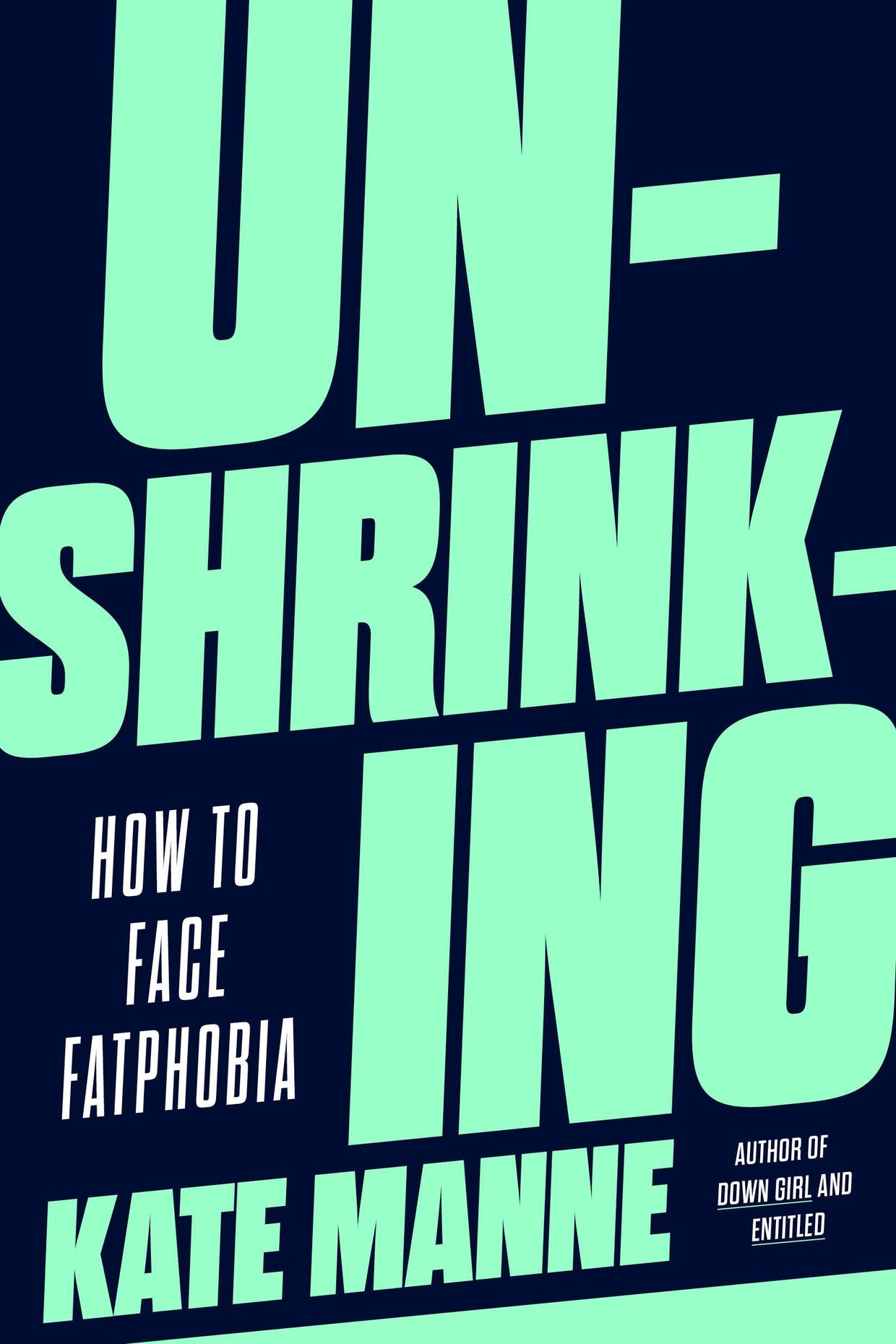
All Of It with Alison Stewart
Living in a Fatphobic World
00:25:17
A new book is about how to face and reckon with fatphobia in our world today.
Loading summary
Transcript65 lines
- [00:00]
Kate Mann
Wix. It's where website creation meets AI and where your boldest ideas become real. It just takes one platform to build a site that looks great and does everything you need it to. And it just takes one person you to start taking care of business like a 10 person team with AI tools for creating an entire website from scratch or testing new ways to make money. WIX is there with you from day one. Try it out now@wix.com I' ma put you on nephew.
- [00:27]
Alison Stewart
All right Unc, welcome to McDonald's. Can I take your order miss?
- [00:31]
Caller/Listener
I've been hitting up McDonald's for years now it's back.
- [00:34]
We need snack wraps. What's a snack wrap?
- [00:36]
It's the return of something great.
- [00:38]
Snack wrap is back. They say if you want to go fast, go alone.
- [00:46]
Kate Mann
But if you want to go far, go together. At Ameca Insurance we know what matters most to you and we work even harder to protect it together. As a mutual insurance company, we're built.
- [01:01]
Caller/Listener
For our customers and prioritize your needs.
- [01:04]
Kate Mann
Amica Empathy is our best policy.
- [01:07]
Caller/Listener
Call 877-41-America and get a quote today.
- [01:11]
Alison Stewart
At RXBar they believe in simple nutrition without the BS. That's why they said NO to artificial ingredients and yes to deliver intentional transparent nutrition. Try their original 12 gram protein bar, the Nut Butter and Oat bar or Minis RXBar, the proud sponsor of no BS. Use code RXBar on RXBar.com for 25% off, subject to full terms and conditions and to change. Valid until September 30, 2025 and may not be combined with other offers. See rxbar.com for full details and limitations.
- [01:46]
Caller/Listener
Listener Supported WNYC Studio.
- [02:00]
Alison Stewart
This is all of it on wnyc. I'm Alison Stewart and we continue our conversations around weight with Professor Kate Manne. When her book titled Entitled About Misogyny started selling better than she expected it would, her publisher suggested that she might want to go on a book tour. Kate declined. She said that as a fat woman, she was worried about the logistics of flying, how she would be perceived by readers, and what photos might be taken. She realized that fatphobia was limiting her life. Luckily, as a professor of philosophy at Cornell, Kate is uniquely situated to question her own actions and our cultures. When did we as a society decide that fatness was something that must be fixed? Why is it that activities like ordering at a restaurant or dating can be so thorny for someone who is fat? As Kate writes in her new book, how to Face Fatphobia, I became convinced that my own internalized fatphobia was but a hazy reflection of the fatphobia rampant in soc. And I came to understand that what I hated was less my body than the way it made me vulnerable to being put down and ridiculed and belittled. But I of all people, recognize that the answer to bullying and abuse is not to alter the victims, but instead to address the culprits and ultimately change the system. Kate Mann joins us now to discuss her book and to take some calls. Kate, welcome to all of it.
- [03:20]
Kate Mann
Thanks so much for having me on.
- [03:21]
Alison Stewart
Alison listeners, we want to hear from you. What's a time that maybe you experienced fatphobia, whether it was at school or at work, from a partner or your parents, what did you do about it? What's something that fatphobia has prevented you from doing or trying? What's something you wish more people understood about fatphobia? And what's a way that you've been able to combat it in your own thinking? Give us a call, 2124-3396-9221-2433. WNYC. You can join us on the air. You can text to us at that number or you can reach out on our social media at at all of it. Wnyc. So, Kate, we're going to use the word fat throughout this conversation. Why is that important in your mind to use the word fat, not to shy away from it?
- [04:05]
Kate Mann
So like many people in this space, I see the word fat now as a merely neutral description of some bodies, much like short or tall or for that matter, thin. So I am really about taking the negative judgment out of the word fat. And I also think we don't need euphemisms like fluffy or husky or curvy or so on. I want to be really matter of fact about fatness. I also don't love terms like quote unquote, overweight or obese, which tend to be a bit stigmatizing and medicalizing and really assume without argument that there's something defective about fat bodies. So, yeah, like many people who are in the body liberation movement, I think the word fat should be reclaimed.
- [04:53]
Alison Stewart
Let's talk a little bit about history. You go into this in your book. What do we know about when Western society started to view fatness as a problem?
- [05:01]
Kate Mann
Yeah. So fatphobia is actually a pretty recent form of systemic oppression. Now, this isn't to say there weren't dribs and drabs of fatphobia before this, but what the sociologist Sabrina Strings has shown is that systemic fatphobia really didn't get going until the mid 18th century. And the reason that it began was that the transatlantic slave trade was burgeoning. And in Anglo American culture, they needed a way to differentiate white bodies from the black bodies who were being enslaved so brutally and in ever increasing numbers. So that was when there began to be an association between fatness and blackness. And that was used then to be a pretext for derogating the fat body, derogating the black body, and holding that the white thin body was superior. This is all really rooted, as Sabrina String shows, in racism, in colonialism, and in arbitrary standards for our bodies which we can resist.
- [06:06]
Alison Stewart
You note that you began to notice, thinking about the body in your field of study, philosophy, and that certain philosophers hold certain thoughts about the body versus the mind. What did rethinking about Plato and his protege Aristotle reveal to you?
- [06:21]
Kate Mann
So it's interesting. Plato and Aristotle, the ancient Greek philosophers, are very judgmental about gluttony. So they were very concerned that people might consume too much food. And they thought that this would detract from thinking seriously and thinking philosophically in ways that they railed against. And they were really both emphasizing the virtue of temperance or moderation. But they actually weren't particularly worried about the fat or large or mega body as such. But there is this real philosophical element of being suspicious of the body and its appetites, which is associated with femininity and being unruly and being out of control, that I think, again, we have reasons today to be resistant to. So there are all sorts of studies that we now have that show that when people do try to restrain or restrict what they eat by dieting or even trying to be very careful about what they eat, it's really, for many people, the beginning of feeling out of control around food and feeling like their relationship with their food and what they eat and their body deteriorates. Modern studies show that people who are given a large milkshake and who have been dieting for a long time will actually tend to overeat after consuming the milkshake because they have a kind of screw it mindset after being given more sweet, rich, fatty foods, rather than they're being more full and thus consuming less ice cream afterwards. So that shows that when people are really being restrained or practicing moderation, that can make people actually a little anxious around food and more likely to have fluctuations in what they consume and more likely also to be vulnerable to things like eating disorders. So, yeah, I found that the philosophical thought about the body was largely a priori. And now we have research that shows that actually, for most people, being really restrained about what we eat is quite tough on our minds and also our bodies.
- [08:33]
Alison Stewart
My guest is Kate Mann, philosophy professor at Cornell. The name of her book is how to Face fatphobia. Let's take a call. Janet is calling in from South Orange. Hi, Janet. Thank you so much for calling in.
- [08:47]
Caller/Listener
My pleasure. Thank you for taking on this topic. I am a woman of a certain age, now retired, and my challenge, growing up with a mother who was quite petite and a grandmother, also quite petite.
- [09:05]
Alison Stewart
Oh, did we lose?
- [09:06]
Caller/Listener
Did she.
- [09:07]
Alison Stewart
Oh, maybe she dropped her own. Janet, are you there?
- [09:10]
Caller/Listener
Yes, I am.
- [09:11]
Alison Stewart
Okay, come on back. You're just describing your mom for us.
- [09:16]
Caller/Listener
Oh, she was quite petite. Her mother, quite petite. But I took after my father, very tall and his mother, also tall for a woman. And my mother just was not happy with my body and pretty much was very successful in shaming me about it most of my life. I was probably 20 when she. I went to the house, and he said, oh, can you help me? I have encyclopedias that I want to put away. And they were in the bathroom. And I'm thinking, what is she doing with encyclopedias in the bathroom? But I picked them up and I put them away. And as I stand up from putting them in the bottom of the bookshelf, she goes, now that's 30 pounds. That's how much you need to lose weight. And I'm like, oh, my God. Well, I moved to New York City, and I started working in an office that had a wonderful receptionist. And she said to me, you are so beautiful. You need to be a mod. And I went and auditioned for the Ford Modeling Company and was hired. And I was paid to be who I was and the size I was. And you know what? That finally got me over it. So I was very lucky to not have to endure it my entire life. But that is my story, Janet.
- [10:39]
Alison Stewart
That was a journey. Kate, do you have any. Any response? I can see your face listening.
- [10:45]
Kate Mann
It was really. That is an amazing arc, Janet. And I also. I just partly wanted to say I'm sending all my sympathy and solidarity for being fat shamed in that way in your family. I think it's so difficult when people who we're close to, who we're intimate with, or family members who we trust, really betray our trust by making our bodies out to be a problem and judging us, shaming us, and being so incredibly literal about the number of pounds you needed to lose based on encyclopedias. I mean, that is wild. But I'm also glad that you were able to find confidence and that you were paid and compensated for being who you were as a model. I think that's wonderful. So yeah, sending my sympathy and solidarity. And also I think all of us should be able to be unshrinking in who we are and unapologetic listeners.
- [11:43]
Alison Stewart
We want to hear from you. Would you share a time when you experience fatphobia in your life? 2124-3396-9221-2433-WNYC. What's something that you wish more people understood about fatphobia? What's a way that you've been able to combat it in your own thinking? 2124-3396-9221-2433-WNYC. You can call in and join us on air or, or you can reach out on social media. Lovenyc. You can also text to us as well. Kate, you cite a 2019 Harvard study about implicit bias and you found that race, skin this study found that race, skin tone, sexual orientation, age, disability and body weight discrimination on weight was the only category that had gotten worse since 2007. Do you have any as you're researching and running with this, do you have any thoughts of why that would be? Why would that would have happened in the past 15 years?
- [12:41]
Kate Mann
Yeah, it's a really striking study and I want to be clear that it doesn't show that there's a last acceptable form of prejudice, and that's fatphobia. There unfortunately is never a last acceptable form of prejudice. But this is a category where implicit bias seems to be on the rise. And it was also the category of explicit bias that was decreasing the most slowly. And my hunch about this is that we think, often falsely, that weight is under people's direct deliberate control. That's by and large not the case. Study after study, these huge meta analyses have shown definitively that most people can lose a moderate amount of weight through diet and exercise. But the weight comes back really inexorably for the vast majority of people with between one third and two thirds ending up heavier than they started. So that leads to huge problems like weight cycling, which has independent health harms. And that I also have worries will be what may go on if people go on and off drugs like Ozempic and Wegovy. But as well as the fact that we view weight as something people can control, another reason why discrimination towards people who are larger I think is increasing is that a lot of us who are fat feel like there's a thin person just waiting to be revealed, triumphantly we feel like the thin person within is just going to be exposed by the next diet around the corner. And we don't really identify as fat. And we often thus don't stand in solidarity with other fat people. So there can be a lack of solidarity, political momentum, and identification with this property that is perceived as changeable when in the long term, for most people, it's really not. Most of us who are genetically predisposed to be fat will end up being fat.
- [14:33]
Alison Stewart
Let's take a call. Anthony is calling in from Stanford, Connecticut. Anthony, thank you so much for calling in.
- [14:40]
Caller/Listener
Hi.
- [14:40]
Yeah, I just wanted to share. I just started listening to the program, caught it halfway through. But I realized, I think it might be important to share from a male perspective, especially on the weight side, both on gaining the weight and losing the weight. Where I have worked in New York City for several years, many years, and I could literally track my advancement in my career in the corporate world, literally depending on the size that I reflect. So as I would lose weight, I would be more receptive. They would be more receptive to me towards projects and promotions and advancements. And then as I would gain the weight, and the weights can be extreme in terms of weight loss and weight gain, we're talking plus or minus £100. And so it was visible in terms of what I would wear and how I appear at the office, always get the work done. But you could literally see the values ascribed to my appearance and how that was reflected in terms of who, you know, what board meeting I'd be able to present myself against versus, you know, a project I would lead or whatever. And so this creates. This reinforces a psychological aversion towards the weight gain or the weight loss. And it just meddles with history and childhood and all the other issues that we all deal with when it comes to fatphobia. To become a very tangled mess that folks, and I'm sure I'm not the only one that deals with this, has to deal with not only in the personal and physical and health worlds, but also in their professional and how they put bread on the table world.
- [16:05]
Alison Stewart
Anthony, thank you so much for calling in. Kate, did you want to respond?
- [16:09]
Kate Mann
Yeah. Anthony, I'm so sorry that you had to deal with that. The idea that we're judging people's competence and acumen at work based on their weight is shocking, but it's not surprising. It's study after study shows that people face the kind of discrimination that you face, and it's a real scourge in the workplace. So one point to make about this is that in most places, workplace discrimination on the basis of size is perfectly legal and it shouldn't be. So New York City recently passed a law against it and Michigan and Washington have passed laws against it. But in most places, in most jurisdictions, there is still perfectly legal workplace discrimination based on people gaining weight or being larger people. And that just shouldn't be. Another thing worth noting about this is that just as Anthony's comment brought out, this can have enormous economic effects on people. So we see this for men, particularly at the upper weight ranges, and we see it even more so as it happens for women who face enormous wage gaps based on their body size. So between a very fat woman and a very thin woman amongst millennials, there will be a $40,000 annual average wage gap. So basically a salary's worth of difference between these two women on average, just based on their body weight. And that's holding fixed things like qualifications and competence and acumen and so on. So, yeah, this is a huge problem and it desperately needs to end. And Anthony, I'm so sorry that your workplace promotions and how you were judged was based on something as arbitrary and something as unimportant as the amount of flesh on your body. It just shouldn't be.
- [18:01]
Alison Stewart
You tell two very harrowing stories about health care discrimination. Two women who were dismissed or diagnosed wrongly in very serious cases due to the their weight. Would you share one of them with us and how these the story is representative of the way fatphobia plays out in healthcare.
- [18:23]
Kate Mann
Yes, absolutely. So I will tell you the most harrowing story that I recount in this chapter of the book, which is that of Jan Fraser, who was in tremendous pain. She was over 60 and she had post menopausal vaginal bleeding. She went to see various doctors, she was in huge amounts of pain and they just told her to lose weight. And so she tried that, she tried diet and exercise, she tried a gluten free diet, a dairy free diet, everything she could think of. And eventually she went to see yet another physician who thought she was just trying to get opiates for the pain. But at least he took some blood work. And then she received a phone call early the next morning from the physician saying you need to go to an er. Your blood work shows that there is something really terrible going on, which turned out to be the largest endometrial tumor the operating surgeon had ever seen. She had then cancer which had invaded her pelvis, her bladder, even her lungs. And she lived just six months longer. So she tragically died largely because doctors couldn't see past her weight to see the true cause of her symptoms. And this isn't just mere anecdote. We see this borne out in harrowing statistics. Like larger patients upon autopsy are 1.65 times more likely to have serious undiagnosed medical conditions like endocarditis, a heart condition or lung carcinoma, which could have killed them. So we are seeing these tragic outcomes because the bias within the medical system means that fat patients just aren't getting the care that every human being deserves.
- [20:06]
Alison Stewart
Let's talk to Josie, who's calling in from Suffolk County. Hi, Josie, thanks for calling. You're on the air.
- [20:13]
Caller/Listener
Hi. Thank you for taking my call. I've never called in before.
- [20:17]
Kate Mann
So glad you did.
- [20:19]
Caller/Listener
Yeah. So I love this topic. It just rang so true to me. I've never really thought about it as fat phobia, but it's been present in my life forever. I resemble my mom incredibly, and she is beautiful. But she has been fat her whole life, as far as I know, or since having kids. And so growing up, I would see her getting ready for events, you know, stressing about what she looked like and what she was wearing and how it was honestly a stressor from her. And I could see that as a kid. Right. Her, her siblings and her mother all talked about it. And since I looked so much like her, I took that to heart, like, oh, I really want to avoid this fate. Right. So I've yo yoed through my high school and college years and I'm happy with my body. Right. But I really think that that was a big, big factor. Is literally fat phobia made me diet and exercise my whole life.
- [21:07]
Alison Stewart
Josie, thank you for calling in. Let's talk to George from Ridgewood. Hi, George, thank you for calling in.
- [21:14]
Caller/Listener
Hi there. So I'm approaching this, I guess, from a similar perspective. I have a dad who struggled with weight his entire life. He's pre diabetic and obese. He's been on Ozempic for a small period of time now, but basically this kind of consistent dialogue in our family that's mostly receded now. It's kind of surrounded his weight, but not at all from a stigmatizing perspective, even though I think it was conflated as such in the past, but really just because we love him dearly and it's our understanding that. But he's had like about four or five different orthopedic surgeries. He's been kind of told consistently for a long time that he needs to lose weight to prolong his life and stay healthy. And so I'm kind of just curious to ask how you would recommend loved ones approach that when it is something that's being advised pretty vehemently by mental. I'm sorry, by. By physicians. And, you know, whether there's bias or not, I can't really say. But, yeah.
- [22:21]
Alison Stewart
Any guidance you can give George, who clearly cares about his father and it sounds like his father is in ill health.
- [22:28]
Kate Mann
Yeah, no, this is a tough one. And I certainly can sympathize with loved ones who are coming at this from a place of genuine care and concern. One thing that many fat patients say is that we're really fully aware of what we weigh and we're fully aware of methods that are touted as promoting weight loss like diet and exercise. I mean, you'd have to be a rock sheltered fat martian not to be aware of the messages about our bodies that we receive. And so oftentimes I do think there's a case for loved ones not necessarily expressing their concern, but regarding a person's weight as just between them and their doctor and not discussing it further. I'd also say that there are many physicians who, because George did raise the possibility of bias here. There are physicians who do think that there's bias within our medical paradigms currently when it comes to weight and that weight inclusive physicians like Dr. Mara Gordon, who I know has covered this issue for npr, has an approach that is more about stressing certain behaviors that people can do, like exercise, for example, or gentle movement, which is terrific for most people if they find a form that suits their bodies and getting adequate nutrition, adequate sleep, reducing stress. These are all things that people can actually do directly, whereas reducing our weight in the long term, there's no really reliable, safe, humane intervention that had been shown to reliably produce that weight loss. So perhaps a weight inclusive physician could be an option for someone interested in. In pursuing the behavioral interventions without being somewhat stigmatized for their weight. That really is, I would suggest, often beyond their control.
- [24:19]
Alison Stewart
Let's talk to Caitlin calling in from Harlem. Hi, Caitlin, thank you for calling, all of it.
- [24:24]
Caller/Listener
Hi, thanks for having me. And thanks so much for this topic. I'm sort of realizing as I listen how deeply I have internalized fatphobia and that because of it, I almost. It may have like. So basically I started doing CrossFit like two years ago, and if you had told me what my body would have looked like after two years of CrossFit, I would have been like, no, I don't want to look fat. But as I did it and I gained, I was literally getting stronger, and I was building muscle, and I was like, my trunk kind of got stronger and therefore, like, didn't look like the hourglass. That was whatever sold to me as the ideal. And it. I didn't. I don't care now, like, I feel so much better in my body that, like, I actually like how it looks. But if I didn't know because of my own fat phobia, I would have thought that I would have, quote, unquote, turned fat if I continued to get stronger. And I was at the MoMA last year and there was a Wonder Woman exhibit, and I was just looking at the movement she was doing, and I was like, there's no way she'd have the strength for that. Was the body like that? So it was like. So it's just been so helpful for me to hear you talking about this. And thanks so much, Caitlin.
- [25:37]
Alison Stewart
I'm just glad this is helpful.
- [25:38]
Kate Mann
In our last minute, Dr.
- [25:40]
Alison Stewart
Professor Mann, you suggest instead of practicing body positivity, we try body reflexivity.
- [25:46]
Kate Mann
What is that? Yeah. So I think body positivity has good roots and it can be a helpful entry point for people, but it feels a bit toxic sometimes. It can feel like toxic positivity, like I can't be positive about my body all the time, and it can feel like. Like another standard against which I'm failing. But another option of body neutrality, of being merely neutral about our bodies, can feel a bit lackluster, a bit one, a bit depressing. And I began to wonder when I was researching this book, why do we need one monolithic attitude towards our bodies whatsoever? Why are we giving it a positive rating or a neutral rating or a negative rating? We should be throwing out the scale altogether. We should be thinking that for me, the helpful thought is, my body is for me, your body is for you. And our own perspective on our body is the only one that matters. And so that idea of body reflexivity seemed to me to be the most liberating one that I ended up running with.
- [26:46]
Alison Stewart
The name of the book is how to Face fatphobia. It's out now. My guest has been Kate Mann, professor of philosophy at Cornell. Thanks to everyone who called in and text. We really appreciate your contributions and thank you, Professor.
- [27:00]
Kate Mann
Thanks so much for having me, Allison.
- [27:02]
Alison Stewart
And that's all of it for today. I'm Alison Stewart. I'll meet you back here next time. I appreciate you.
- [27:08]
Kate Mann
No one knows your business better than you, so who better to create your website than, well, you wix's website builder puts it all in your hands. Create a beautiful website just by talking with AI or choosing from thousands of templates. Customize every detail with simple drag and drop tools. And get everything you need to start running business your way. Build more, think bigger, and do it all yourself on wix.
- [27:35]
Alison Stewart
I'm gonna put you on nephew.
- [27:37]
Caller/Listener
All right, unc.
- [27:37]
Alison Stewart
Welcome to McDonald's.
- [27:38]
Caller/Listener
Can I take your order, miss?
- [27:40]
I've been hitting up McDonald's for years.
- [27:42]
Now it's back. We need snack wraps. What's a snack wrap?
- [27:45]
It's the return of something great.
- [27:47]
Snack wrap is back.