← All Of It with Alison Stewart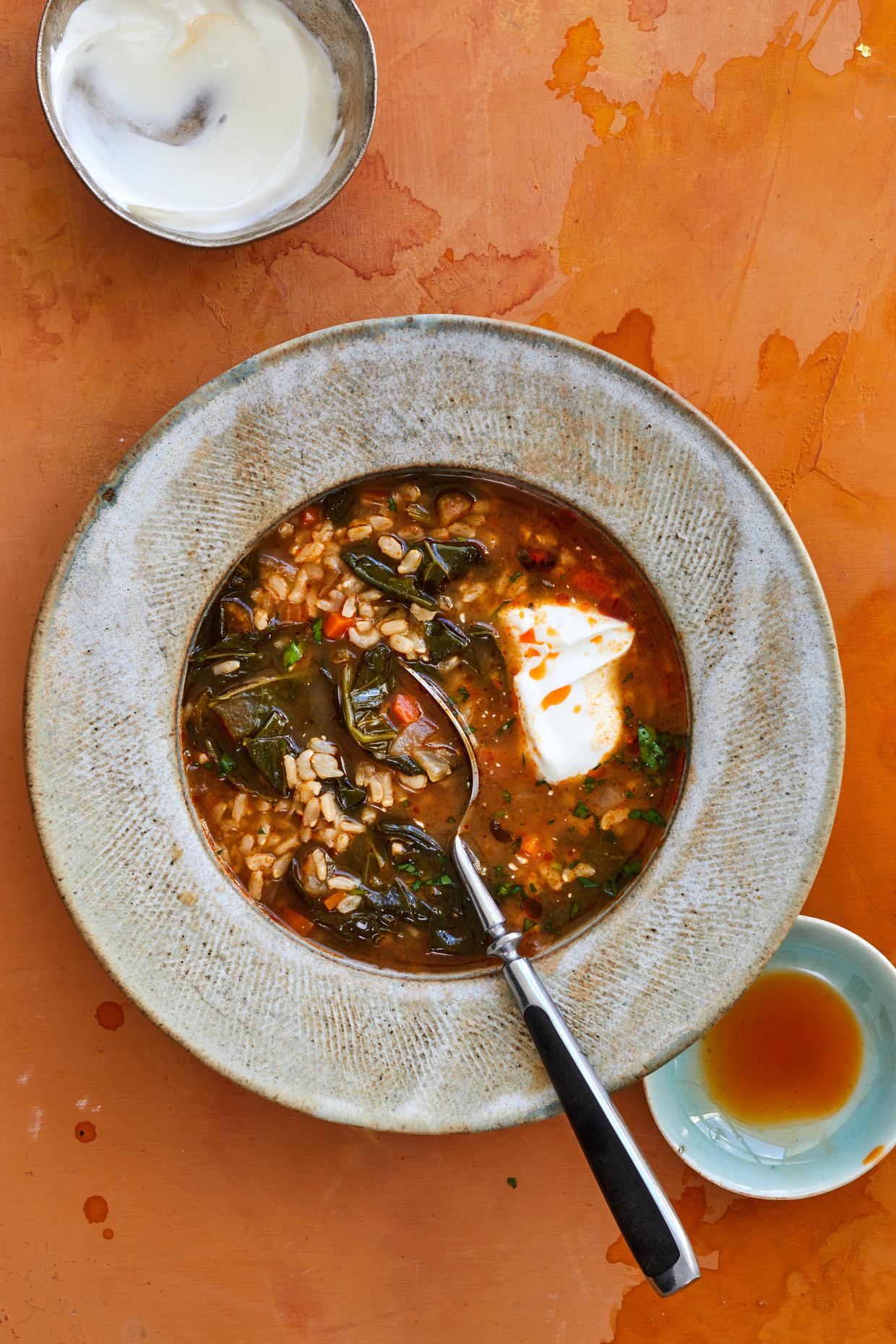
All Of It with Alison Stewart
Local Chef JJ Johnson on 'The Simple Art of Rice'
00:22:32
Chef JJ Johnson, owner of the local FieldTrip restaurants, is obsessed with rice, and writes about the grain in his new cookbook.
Loading summary
Transcript73 lines
- [00:00]
Texas Tourism Announcer
Calling all sightseers and selfie takers. Welcome to Texas, where a day on our hiking trails will lead to a lifetime of memories. And family road trips become family legends where thrill seekers make a splash into spring fed pools and picky eaters will clean their plates. This is your invitation to visit Texas and see it for yourself. Visit traveltexas.com and plan your family's trip today. Let's Texas.
- [00:31]
McDonald's Customer
I'mma put you on, nephew.
- [00:32]
Chef J.J. Johnson
All right, unc. Welcome to McDonald's.
- [00:34]
Radio Host
Can I take your order, miss?
- [00:36]
McDonald's Customer
I've been hitting up McDonald's for years. Now it's back. We need snack wraps. What's a snack wrap? It's the return of something great. Snack wrap is back.
- [00:48]
Chef J.J. Johnson
If your small business has a problem.
- [00:50]
Alison Stewart
You could say, ugh, just my luck.
- [00:53]
Chef J.J. Johnson
But you should say, like a good.
- [00:54]
Radio Host
Neighbor, State Farm is there and we'll.
- [00:57]
Chef J.J. Johnson
Help get you back business. Like a good neighbor, State Farm is there.
- [01:06]
McDonald's Customer
Listener Supported WNYC Studios.
- [01:21]
Alison Stewart
This is all of it from wnyc. I'm Alison Stewart. It is likely many folks will enjoy a rice dish of some sort today. It wasn't Thanksgiving in our household if rice wasn't on the table. That was according to my grandma Edna, who lived in Inwood but was from, wait for it, North Carolina. Rice is a staple, a food many depend upon for affordable meals and also for dishes that mark important events, whether it's a holiday or family gathering. Chef JJ Johnson, who owns the local restaurant chain Field Trip, has written a new book, all about Rice. The cookbook is called the Simple Art of Rice Recipes from Around the World for the Heart of youf Table. It includes recipes from different cultures, stories about his family's rice centric recipes, as well as more about the grain's extensive history in human civilization. JJ Writes in the book, quote, rice is a simple grain with a complex history. A staple that not only nourishes but also connects people to community, cultural tradition and the land, in a sense, home. A reminder. You will hear callers throughout this conversation, but this is an encore presentation so we won't be taking calls today. I started by asking JJ about his grandma Bibi and what were some of her favorite rice centric dishes.
- [02:38]
Chef J.J. Johnson
So I grew up with my grandmother making a dish called aso pao which was is a soupy Puerto Rican rice dish. You can get aso PA the pollo. You can get aso pado, camarones. She would make a big pot on the stove. It's very like aluminum silver pot that she would make and that also Pow. Would last a week and they would reheat it and they would drink it out of a coffee cup and they would walk around the house and they would just drink it out of a cup that was like pre meal, like amuse bouche on Sunday dinner. And then she would do a roscoe gandules. She would do. She would have con con or Paige, which is a crispy bottom part of the rice in the middle of the table. She would do sancocho. She would do tons of these rice dishes at the table. And it was a celebration. It was like everybody was always looking forward to this grandioso, amazing rice dish. And it was like a debate between the week. I could hear my great great aunts arguing about it. My mom, my aunt, my dad, my uncle. Everybody was trying to put in their two cents of what it should be at the table, but it connected us all, it kept us all going.
- [03:46]
Caller Matthew
And.
- [03:46]
Chef J.J. Johnson
It made us feel very comforting at the table, even for myself as a little kid.
- [03:50]
Radio Host
And when you became a professional, a food professional, how did those images and those feelings and those moments of being around your family in rice translate into your profession for you?
- [04:03]
Chef J.J. Johnson
You know, early on in my profession, I didn't really cook any food for my family. I was cooking very like Eurocentric food. Probably the only rice dish I was cooking was risotto, which I talk about in the book, but not until I traveled to Ghana. That's when I found myself through food. And then I started to fall back in love with rice because I started to hate rice early on in my professional life because it wasn't something that was at the table. It wasn't something that anybody you would see in a fine dining restaurant. So why should I know how to make my grandma's pot of rice? I was starting to look down on my own culture. And then when I went to Ghana, I was like, hold on, this food is delicious. And it's reminding me of somewhere. Oh, it's my. My BB Iris kitchen. And then that's when I started to explore a lot of rice and cooking the food of myself.
- [04:58]
Radio Host
When you began to research the history of rice, what do you think's important for people to know about the early history of rice and how it. How it became, pardon the pun, ingrained in civilizations, different civilizations.
- [05:11]
Chef J.J. Johnson
I think that the most important part is that there's two. I called the two yellow brick roads of rice. There was only one yellow brick road at a time, and that rice was cultivated and grown in West Africa. West Africa was shipping rice all around the world. And then for some reason, it got blacklisted. And they then sold the seeds to the Chinese and then they started to grow rice. And then they realized they didn't need their seeds anymore from West Africa. And. And that's why you see two grains of rice, you see glamorima, which is a West African grain, and then you see Glamorima oriza. And the sad part about it is that when we think about rice, the first place that comes to mind is Asia. But it's really your mind should be going to West Africa, should be going to the Caribbean, should be going to South America. Those are places that also celebrate rice or also are ingrained in the grain and have very deep history. And we really touch on that in the Simple Art of Rice. We talk about the history of the grain, we talk about how the grain has morphed and you see it become Carolina Gold rice in the American south or Red Hill rice in Trinidad. We start to talk about where you start to see the shifts of the grain.
- [06:25]
Radio Host
My guest, J.J. johnson. The name of the cookbook is the.
- [06:28]
Alison Stewart
Simple Art of Rice Recipes from Around.
- [06:31]
Radio Host
The World for the heart of your table. We have got some calls already. Let's talk to Jana, calling in from Westchester. Esther.
- [06:37]
Alison Stewart
Hi, Jonna, Hi, you're on the air.
- [06:43]
Caller Jana
Yes. I just wanted to say that the subject of rice is one that's very near and dear to many Indian and Indian American hearts. I am Indian, but never really loved rice, so that's something that right away is unusual. I always was more into all the Indian breads, but there's one particular South Indian dish that I do love and you find it in many restaurants. It's called Poliogrey and it's a tamarind peanut rice. And it's absolutely delicious. It's usually quite spicy. And it's something that also you can find in temples because the priests will make it. And then it's considered actually, you know, kind of almost holy rice. It's very special and because the priests have made it. And the other thing that I just wanted to mention is that South Indians don't tend to use that basmati rice, which is very separate. And, you know, it's. I love it. It's lovely and it's kind of light. But South Indian people use long grain rice, which has more starch in it and is more sticky.
- [07:55]
Radio Host
Jana, thank you for calling. And it's interesting just hearing Jona talk about it and talk about what it meant for her family, but also then getting into the history and getting into understanding that individual cultures handle rice, and it's individual ways, and it means different things in different cultures. Before we leave the West African discussion, I do have to ask about the jollof rice. This can be. This can be a friendly debate. We'll say it's friendly about where it originated. When you think about jollof rice, tell us your position or how you think about it and how it originated.
- [08:35]
Chef J.J. Johnson
I'm gonna take a deep breath. So the type of jollof rice that I cook every day in my restaurant field trip in New York City is Ghanaian jolaf. And that's because I cooked in Ghana, and that was the jollof I was taught to cook. My Nigerian friends tell me it's good.
- [08:55]
Caller Jana
Mm.
- [08:57]
Chef J.J. Johnson
But I don't really try. Try to stay out the Nigerian, Ghanaian jollof wars. And that's why in the Simple Art of Rice, I wanted to highlight another culture around jollof, which is Liberian jollof rice. Which reminded me, when I started to learn about it over the last two years of research, it started to remind me of jambalaya and the rice a little bit more stickier together. You have all these. You have chicken, you have seafood, you have beef. You have all these things in it. And if I'm a person that likes to celebrate or set the table or trying to change up my Christmas or Thanksgiving or any holiday, I can put this beautiful big pot of the Liberian jollof in the middle of the table. But the all but the real reason is when we think of West Africa, we are thinking of jollof the same way when we think of India. We're thinking about biryani now. Right. And it's cooked. There's so many different ways of biryani. I think jollof rice is the key to exploring West Africa more. And hopefully people will turn the key to explore Liberian jo. Using Liberian jollof to explore another part of Africa.
- [10:00]
Radio Host
What's unique about Liberian jollof?
- [10:03]
Chef J.J. Johnson
It has. It has these. It has. It has chunks of beef, it has chicken wings, it has shrimp. Typically jollof you eat. You just make your jollof in the pot, and then you have your meat and everything on the side. This is kind of all cooked together in a stage, the way that I've envisioned it, the way that I've seen it. And that's what makes it different and how I want people to celebrate it.
- [10:28]
Radio Host
What are grandma grains?
- [10:30]
Chef J.J. Johnson
Ooh, the grandma grains of the world.
- [10:33]
Radio Host
Yes.
- [10:34]
Chef J.J. Johnson
Those are the original origin grains. So Carolina gold rice. Midlands Italian pilgrim rice. Black Tribune Emperor's rice. Jefferson Red. Well, really red rice, AKA Jefferson red rice. Those are the grandma grains. When we are. When we are buying rice in the store, we're just like, oh, we're getting long grain, we're getting short grain, we're getting, you know, instant rice. Nobody knows what that rice actually is. I think when I want people to think about rice. If you're a coffee drinker, I want you to think about, like, when you're like, I want the Ethiopian on the left side of the hip mountain or the right side of the mountain of coffee. Right? That's the same thing of the grandma grains of the world. Carolina gold rice is the grandma grain of America. That is America's rice. Carolina Gold, not Carolina rice. Carolina gold rice. Right? That is a grain of America. Basmati rice is the mother grain of India. Italian pilgrim's rice is the. It is a. Is the mother grain of Italy. So though that's what the mother grains are, and we really dive deep into that. We break it down and talk about heirloom grains the same way. But, yeah, if you. If you really are a rice connoisseur or you want to up your pantry, you know, you can go get some beautiful grandma greens right in your backyard. Especially if you live in New Jersey. There's a great farm in New Jersey called Blue Moon Farm. That's great that people were like, oh, my God, just five miles from my house. I never knew that even existed. Or right in upstate New York and Hudson Valley, there's a West African rice farmer. So anywhere there's irrigation, somebody's growing rice. You just don't realize it. And that rice should be on your table. Even if you don't get the simple art of rice, that rice should just be on your table.
- [12:19]
Radio Host
Anyway, two things. One, up your pantry needs to be the name of your next cookbook. And what is the best climate for rice to grow rice?
- [12:27]
Chef J.J. Johnson
I don't think there is. I think people have figured out how to grow rice in many different ways. Remember, you can grow rice in rivers, lakes, any way water flows. I think the best way for me to describe it is if you know a crawfish farmer, they grow rice. If you know a person that lived in Martha's Vineyard for a really long time, they were growing rice. The Dutch in Hudson Valley, they were growing rice. So anywhere where water's flowing, people have figured out how to grow rice. The perfect irrigation. There's a debate on that. I think what we're all learning is, and not for me to start geeking out with you, is that we're all learning that the rice, that the way the most rice is produced in America right now is giving off the same carbon neutral that cows are giving off. And when I talk about the grandma grains of the world, we're going to start seeing more grandma grains because that's the way we should be producing rice. And it should have never stopped.
- [13:31]
Radio Host
Going back to the original way, to.
- [13:33]
Chef J.J. Johnson
The original way of milling and growing rice, it should have never stopped. But that's a whole nother conversation that we can get into on the reason why, why that stopped.
- [13:43]
Radio Host
Tell me real quick.
- [13:45]
Chef J.J. Johnson
I mean, agriculture is the foundation of America. Enslaved people were the ones growing rice when enslaved people were free. They just wanted the land, and nobody wanted to give them the land. And they stopped growing rice. Rice was a cash crop. It stopped being a cash crop. It was a cash cop, like gold and cotton. So. And that's when the art of rice was lost. And you go back in history, that's when parboiled rice came into effect. That's when the government was injecting rice like B5 into rice to make it gold, because nobody knew what it looked like. That's why in certain labels, you just see Carolina, because it was a marketing tool. So there was a lot going into. There's a lot into the whole reason of why rice is the perception, the way it is right now. And with the book the Simple Art of Rice, it will change that for you. It will change your kitchen table, because you'll be realizing, rice is my Swiss army knife. I can cook many dishes. Or you'll start to learn the history of saying, oh, wow, I didn't know this. And that's the greatest thing about rice. The individual grain of rice will teach you history about folks and places just here in our country or around the world.
- [15:01]
Alison Stewart
Let's take a couple of calls.
- [15:02]
Radio Host
Matthew is calling from Montclair, New Jersey.
- [15:04]
Alison Stewart
Hi, Matthew.
- [15:05]
Caller Matthew
Hi. How you doing? First, I would say, hi. Nice to hear you're back, Allison, and doing well. So first, that's that. But second, I just wanted to call this conversation about rice. Just my father immediately sprung to mind is that he was from Iran, from Tehran. And so growing up, he, you know, in our house, he refused to really eat pasta ever. I never saw him eat pasta once. Everything was rice. It had to be basmati rice. And my mother, who was a really, like, splendid home cook, would make chicken cacciatore or bolognese or beef bourguignon. And nothing. It was never pasta. It was always over basmati rice. So no egg noodles, no pasta. Basmati rice and chicken cacciatore is a pretty solid memory for me growing up.
- [15:53]
Alison Stewart
I love that you described your mother's.
- [15:54]
Radio Host
Cooking as splendid as well. Let's talk to Ann from Brooklyn, who wants to go down the road of history a little bit.
- [16:02]
Alison Stewart
Hi, Anne. Thank you for calling in.
- [16:05]
Caller Ann
Thank you. It's kind of boring, but I'll tell you that I'm 75 years old, so I remember things a little longer. My mom explained to me that the enslaved women, African women, would carry seeds in their hair as they traveled. That's what they commonly would go from place to place. They had the watermelon seeds, and they had the rice grain seeds. It wasn't like it was traded off a ship or something like that. And they went to South Carolina is where they started to cultivate rice. The Gizzee and the Gullah. And for a very long time, when we were young, we ate some rice, and people would say, oh, your family must be from South Carolina or Louisiana, because those were only states where people ate rice. The people who cultivated America, the British, the French, the Irish, and the German were all potato cultures. Potato soup, potato salad. They did not eat rice. So those seeds and the growing of seeds, that was because of enslaved people who brought the women, brought the seeds in their hair, and they taught America how to grow and cultivate rice. I just wanted to say that. And I love your show, and I've been to the gentleman's restaurant, and his rice dishes are fabulous. Thank you.
- [17:12]
Chef J.J. Johnson
Thank you.
- [17:13]
Radio Host
And was. That was a full plate for me. We got some history. We got a restaurant review, and you were nodding your head in agreement about the women.
- [17:21]
Chef J.J. Johnson
Oh, yeah, yeah. I think the biggest thing when we're writing this book is, like, you talk about. And I was talking about the women braiding their hair with rice seeds. People are like, well, jj, you sure? Like, you want to write about that? Like, there's nothing in the history books. And I'm like, well, black culture. Black culture is hymns and whispers, right? So you just heard it. You just heard it, right? So that's in the book. We talk about it, and we. And I think that's the greatest thing. When you look about the culture and with the rice, where the people went, the rice followed. We know they didn't go there because they wanted to, but the rice grains came with them. And a fun fact is, red rice was banned from the table in America because they knew that it pointed back to West Africa. Thomas Jefferson put Jefferson in front of the name and called it Jefferson Red Rice. And then it was allowed on the table. So he saw it as a cash crop, and he was figuring out, you know, so rice was very. In his American history. Rice is a part of a lot of it. And it just makes me excited that it's exciting people, exciting your listeners when they're calling in.
- [18:32]
Radio Host
All right, before we get into a couple of recipes and a couple of.
- [18:35]
Alison Stewart
Tips, we've been getting a lot of questions about arsenic and rice. And you said this is a conversation that's come up and some of it is misinformation.
- [18:45]
Chef J.J. Johnson
Yeah, yeah, yeah. Arsenic is. Arsenic is coming up around rice really heavily. But listen, arsenic's in the soil. It doesn't matter if you eat a carrot. You could potentially have arsenic on it. Right. It's a real reason why I tell people, you know, wash your rice, wash your vegetables. So there's arsenic in the soil. It just depends on how much arsenic is there. And yes, it's something we should pay attention to. It's something we should challenge, and it's something that we should push the industry forward, the rice industry forward. And if you're getting that many people dialing in or calling or want to talk about it, it means that we need to change our rice consumption. We need to go to those grandma grains. We need to go to the farmer's market. We need to look at who getting shipped, potentially Anson Mills rice to your house because those people are taking care of the rice. It's the same way, like if you read labels in the grocery store. Push the rice industry forward to get better rice for all. Because, yes, there's arsenic all around. We touch on it in Simple Art of Rice. It's something that made me worry opening a rice restaurant. Like, oh, my goodness, am I feeding people arsenic? But, you know, I'm buying from, you know, sustainable rice farmers and doing my homework as well.
- [20:03]
Radio Host
All right, here's a couple of. We have to give people a little something to try. You talk about the finger trick in terms of getting the right amount of water. Could you explain the finger trick?
- [20:13]
Chef J.J. Johnson
All right, so for everybody out there that doesn't cook a good pot of rice, remember that rice doubles in size. So you need to have a pot where it can expand. I don't want anybody to follow, like, a two to one ratio anymore with rice. I want you to take your put. Put the 2 cups of rice in the pot, flatten it out. Put your third finger on top of the rice, pour the liquid to the first knuckle.
- [20:43]
Radio Host
Not on, not all the way to the bottom of the pot. On top of the top of the rice, the flattened rice, okay?
- [20:47]
Chef J.J. Johnson
Pour it all the way to the top knuckle to your first knuckle, and then put it on the stove at medium heat, put a top on it and cook it for about 25 minutes. You'll get perfect rice. Don't put salt in the pot. Wait for the rice to be done, then add your salt. Fluff, fluff, fluff. Put the pop top back on, let it rest. And what the resting does is it carries that grain over to explode. It also allows for everybody out there that hates cooking rice because they don't want to scrub the grains off the bottom. All that. All that. All those grains that stick to the bottom will then come off naturally. And a good pot of rice has rice that sticks to the bottom and is crispy. If you're not having rice stick to the bottom of your pot and crispy, that means you were stirring the rice, shaking the pot, and those are big no's.
- [21:35]
Radio Host
So leave your rice alone.
- [21:36]
Chef J.J. Johnson
Leave it alone. Let it cook. Go cook something else while that rice is cooking.
- [21:39]
Alison Stewart
Step back from the rice, everybody. You mentioned you putting the salt on after, and I thought, like, well, let me go see what other kind of.
- [21:46]
Radio Host
Spices that JJ uses in his cooking. And I thought this was really interesting.
- [21:51]
Alison Stewart
Cinnamon spiced lamb rice.
- [21:52]
Chef J.J. Johnson
Ooh, so good.
- [21:53]
Alison Stewart
So there's cinnamon there. There's nutmeg, there's cumin. There's pistachios as well. What is the cinnamon and that cinnamon nutmeg profile? How is it, Mary, with rice?
- [22:04]
Radio Host
Why is rice a good delivery system?
- [22:05]
Chef J.J. Johnson
So first, cinnamon is one of my most favorite ingredients to use in savory cooking. I love making, like, cinnamon chicken, one of my favorite things. But the great thing about rice, it's a foundational ingredient. So whatever, whatever flavor bomb you give it, it will absorb it, right? So people are like, oh, my God, rice is so boring, jj. It's like, well, are you boring? You got to give it some flavor. So when you add the cinnamon sticks, you add the nutmeg, you have the lamb fat in there. The rice is absorbing all that. Then you finish it with the pistachios and the dates. I mean, it is. It is one of those dishes that you reveal at your table or when you go to taste it before everybody else tastes it, you're not. You're not going to want to give it to anybody. You're gonna like. I spent all the time, the effort. This smells really good and it also tastes so good. And then that the grain of rice is going to like pearls that have a little bite to it. And all that nutmeg, cinnamon, lamb fat will be absorbed in each individual grain that you'll be really proud of yourself. But it just goes, I mean, you could do that with any. You could put cumin, cayenne, turmeric, curry. You can put fennel seeds, you can put fresh herbs. I mean, that's what's so great about rice. It just absorbs the natural flavor. I cook black rice with a little bit of apple juice, a little bit of orange juice. You know, that's interesting. Once you get comfortable cooking rice, then you realize you could just do whatever you want.
- [23:34]
Alison Stewart
That was my conversation with J.J. johnson, local restaurant owner and author of the Simple Art of Recipes from around the World. For the heart of your table.
- [23:44]
Texas Tourism Announcer
Calling all sightseers and selfie takers, welcome to Texas, where a day on our hiking trails will lead to a lifetime of memories. And family road trips become family legends. Where thrill seekers make a splash into spring fed pools and picky eaters will clean their plates. This is your invitation to visit Texas and see it for yourself. Visit traveltexas.com and plan your family's trip today. Let's Texas.
- [24:15]
McDonald's Customer
I'mma put you on, nephew.
- [24:16]
Chef J.J. Johnson
All right, unc. Welcome to McDonald's.
- [24:18]
Radio Host
Can I take your order, miss?
- [24:19]
McDonald's Customer
I've been hitting up McDonald's for years. Now it's back. We need snack wraps. What's a snack wrap? It's the return of something great. Snack wrap is back.