Loading summary
Transcript62 lines
- [00:10]
A
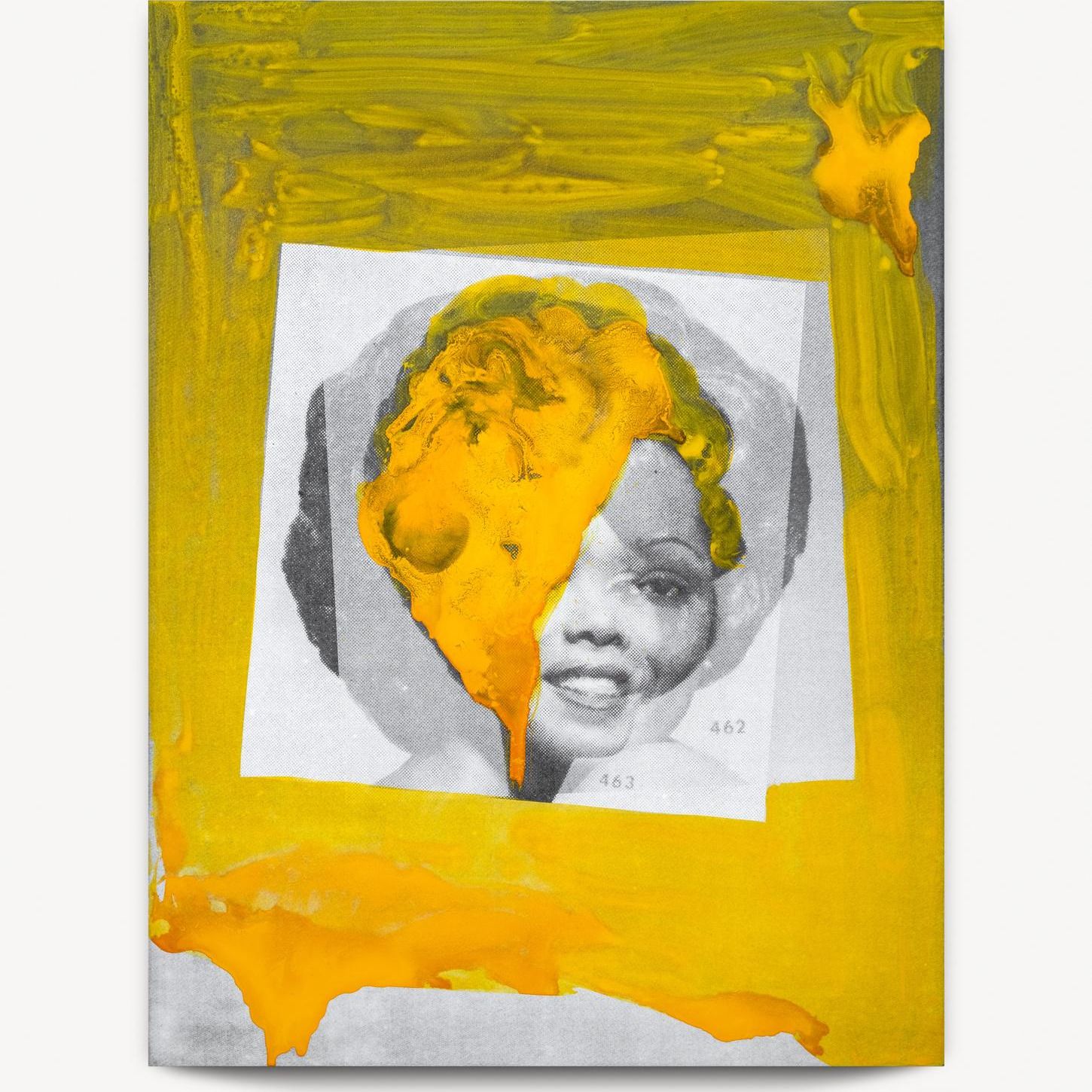
This is all of it on wnyc. I'm Alison Stewart. If you have visitors in New York this Thanksgiving and need somewhere to take them or just some time to kill over the holiday, consider going to the Metropolitan Museum of Art. Yesterday on the show, we talked about their Divine Egypt exhibit, which shows how ancient Egyptians worshiped their deities. That's on display for a few more months, but this is your last chance to see Lorna Simpson. Source Notes the excellent exhibition from the celebrated multimedia artist. The New York born and raised artist is best known for her camera work. But about 10 years ago, she began using her creative mind towards something new. Well, old, but painting. The Met exhibit displays more than 30 works from 2014 to 2024, including a pie that the Met acquired this year. It's big and bold and looks like Lorna Simpson's work, regardless of the medium. Lorna Simpson's studio is in the Brooklyn Navy Yard, and she hopped across the east river to our studio to talk about the show. Here's our conversation. It is really nice to meet you.
- [01:27]
B
Really nice to be here. Thank you.
- [01:29]
A
Originally, when you were studying back in the old days and you went to sva, you had to take a course in painting, isn't that right?
- [01:36]
B
I did. As a foundation art student, you had to take foundation courses in painting and photography and sculpture. And so, yes, I did.
- [01:44]
A
Why didn't you stick with painting? Why did you veer towards painting?
- [01:47]
B
Because I had so many friends who were so much better at it than I was. Seriously, Seriously. Much faster, much more interesting. And I found myself spending a lot of time in the darkroom and learning photography. So I kind of went by how much time I was staying with a particular activity and that was photography.
- [02:07]
A
When you decided to return to painting, what changed for you? What changed in the way you saw the world that you thought, you know, what? Painting seemed like the right idea?
- [02:18]
B
It started incrementally, I think. I started making small drawings and collages and completely the opposite in terms of scale of what I normally do, but enjoyed in terms of my process as an artist. The intimacy of making something small, making something with your hands that kind of just happens immediately as opposed to video. And then I thought about, well, what would it look like? Kind of a large scale version, and tried scaling it up. Not with the idea that, oh, now I'm a painter and I'm making paintings for a show, but just as an experiment.
- [02:53]
A
How did it feel to paint?
- [02:55]
B
Strange.
- [02:56]
C
Strange how?
- [02:59]
B
It's a muscle in a way, and kind of executing. I had to Think about releasing my control of how I thought it was gonna come out or what it was going to look like. So it's this kind of dance in a way between just making something and letting the process take over rather than trying to control it.
- [03:19]
C
That must have been so different from your photography.
- [03:22]
B
Absolutely complete opposite.
- [03:24]
C
Because you staged. Staged.
- [03:25]
B
No. Yes, that's the correct term. Stage.
- [03:27]
C
Yeah. You can stage your photography, but you can't necessarily stage how a painting's gonna come out.
- [03:32]
B
You could try and. Yeah, and it may or may not come out, but that is very true. So there's this kind of intuitive way of working that I really enjoyed and just continued making it.
- [03:48]
C
What surprised you about painting?
- [03:51]
B
How physical it is?
- [03:52]
C
Oh, interesting.
- [03:53]
B
So I'd forgotten that. But I do work large in terms of scale. So for different works, the amount of time and some of them are so large that they get painted on the floor. But yeah, the physicality of it, I did not realize. And it's a very physical activity, which is quite wonderful.
- [04:15]
C
Well, I was going to say the paintings are substantial. They're really rather large. How was it spending so much time on a painting when with a photograph, it can be. It's not instant, but it's.
- [04:30]
B
No. There's an instantaneous. And you already have an expectation conceptually of what you're making. So therefore you are. It falls within the realm of forecast of what's going to happen, particularly the way I worked. This, on the other hand, presented so many accidents or trying to retrieve it or pulling back from adding too much so much, as I said before, kind of a dance between my hand, what I kind of my intention in terms of the image and how the inks and the paint might apply or work on it. But it was a thing of discovery and still is 10 years later.
- [05:10]
A
My guest is Lorna Simpson. We're talking about an exhibition of paintings by Lorna Simpson. It's open at the Met. It's called Lorna Simpson. Source notes. It's running through November 2nd. Many artists have rituals in their studios about when they paint. Do you have any rituals?
- [05:28]
B
Music.
- [05:29]
A
What kind of music do you like to listen to?
- [05:30]
B
Well, it's funny. When I first started painting, my studio assistant, James Wang, and I would just play. Now I'm forgetting Frank Ocean. Over and over to the point other people working in my studio, like, could we change it? And we were like, no. So there is this thing. It is nice to have music and to kind of have that be kind of filling the space while I work.
- [05:58]
A
How do you know when you're done for the day.
- [06:03]
B
That sense that if I continue, I might mess it up. And so when I get that sense of don't do too much or take some time and look at what you're doing, then that's definitely the time to stop for the day.
- [06:17]
A
Ooh, when have you seen something? A couple days later and thought like, oh, wait, I need to change this now.
- [06:26]
B
Sometimes, you know, I can work on something that has a duration to it, but I realize when I kind of dive in and I'm really working hard on something for days, or how can I just kind of trying to control it, trying to make it different, it usually does not come out very well. It usually ends up being a painting that I kind of discard or just so over. So, yeah, there's some balance between understanding that this doesn't work. That could be the image, that could be the way that I'm painting it. But yeah, there are moments that I've overdone stuff and I was like, okay, that didn't help.
- [07:06]
A
The title of the show is Source Notes. What does that mean?
- [07:09]
B
A lot of the material, kind of visual material and language that is part of the imagery is based on imagery from advertising, from Jet and Ebony magazines, mostly from advertising. So the models, in some ways not celebrities or not well known people that kind of are amplified within the magazine. But what you might overlook, and in that way, I think my interest in archive and photography is part of that idea. And that's the name of one of the paintings is Source Notes.
- [07:51]
C
The first painting you see if you come in one side is called True Value. It's this portrait of a woman holding a leopard on a leash, only the faces have been switched. And it is a takeoff of a photograph you did that was like that. It was called Infers.
- [08:08]
B
Yeah, from a collage. So actually. And now I feel bad because I don't have my material of exactly. But it was a photograph taken by a well known photographer, of course, whose name at this moment, because I'm tired from last night, it was the opening of a woman standing in a driveway with a tailored jacket and matching skirt that had a leopard pattern with a leopard on a leash. And I thought it was the craziest image that I'd ever seen in my life. And so I made a small collage. It's out of JET magazine. It's really, really. And just switch the face of the woman with the face of the. Or cheetah with the face of a cheetah. And then years later, I, in the Process of making paintings. Thought, oh, that would make an amazing painting. Let me try that.
- [09:02]
C
How did it work out? How did it feel to you to be able to see the picture, to the painting?
- [09:08]
B
Again, the thing of scale, blowing it up doesn't necessarily mean that makes it more interesting. So it is always a question. Although I love the collage and its intimacy and the simplicity of its absurdity. But, yeah, it was. I wasn't sure that that would kind of work once at a different scale and kind of painted and made as though the photograph or the image is like, lurking in kind of this darkness of a woman with a cheetah with a woman on the leash.
- [09:42]
C
And if you come into the gallery from the other side, you get to see Nightmare, which is also huge. And it's the image of Carrie.
- [09:52]
B
Yeah. From the film. The 70s film. From a kind of promotional still.
- [09:57]
C
Yeah.
- [09:58]
B
Of Carrie in one of the scenes where she's in a nightgown. And again, I just kind of switch one element of its kind of eeriness of the. That image.
- [10:09]
C
It was sort of interesting to see them as bookends to the show. Did you plan it that way or.
- [10:15]
B
I didn't plan it way. Those two paintings were made around the same time. So I did have. In a lot of these paintings, the figures are ghostly or like this kind of half human, half animal in those early works. So for the exhibition, in terms of walking through it, yes, it becomes this kind of loop through.
- [10:43]
C
The Met has just acquired a piece for its collection. It's titled Did Time Elapse? It's this large portrait of a meteor, a study of kind of black and gray. What was interesting to you about a meteorite?
- [10:58]
B
Well, I did an entire show.
- [11:01]
C
I saw it.
- [11:02]
A
Hauser and Wirth.
- [11:03]
B
Yeah, at Hauser and Wirth, November of last year. And what was fascinating for me is this kind of humans. We have a fascination with things that fall from the sky and their meaning and what they mean. And so the inspiration was from a text from the Smithsonian, clipping from a book that was talking about a particular fall in 1929, I believe, in Mississippi, where a white landowner is reporting that his Negro tenant observation of a meteorite that falls at his feet. And the amazing thing about that text is that you don't learn what the witness saw or what he felt about it. It's kind of mitigated by the landowner. So I take that text and that becomes the kind of the violence for that particular time for black people in Mississippi. And this kind of phenomenon of a meteorite falling at this black man's feet and those two things that have those. That environment and something falling into that environment as at his feet. I found a really interesting starting place to think about meteorites.
- [12:19]
A
And his name was Ed Bush.
- [12:21]
B
Ed Bush. Thank you. Yes.
- [12:24]
A
I read this on the Internet. So you know, it's the Internet. Did you buy a meteorite on ebay?
- [12:30]
B
Yes, I did. Okay, so wait a minute. Can you ask, like, how do you know? How did you know that was. I used to collect rocks as a child and had a fascination with meteorites and with rocks of all sorts. So I took a deep dive. And there are different kinds of markings that look like fingerprints for certain kinds of meteorites. And this particular stone from the photographs that I looked at had these markings, which is when the meteorite can still be intact, but entering into the atmosphere, it kind of has this dappled, as though you made fingerprints or dappling on its surface.
- [13:09]
A
My guest is Lorna Simpson. Her exhibition of paintings at the Metropolitan Museum of Art is called Lorna Simpson. Source notes. There's a painting titled for Beryl Wright. Would you explain who Barrel Wright is?
- [13:20]
B
Yes, my first exhibition and I think I was maybe around 30 years old and I had a quite large survey of my photographic work. And Beryl Wright was a curator at the Museum of Contemporary Art in Chicago, and she invited me to make this exhibition on my work with the catalog with Sarah Dia Hartman. And it was a really amazing experience for me. Much like an artist seeing your work in a kind of context of a survey, it takes a moment to take that in. So through the conversations and the exhibition of the work, it really also changed the way I made work. That exhibition kind of after that point, which was amazing. And Beryl then died, I think maybe about 10 or 15 years after that. And so for me, in terms of curators and particular black women kind of in the art world, the struggles of kind of being chief curator, of having by institutionally supported for the work that they do, but also supported not I mean, my show was successful, but also supported kind of for the course of their careers, that it's not just a one time thing. So I, Beryl Wright is no longer alive in order to see many of the artists that she supported at the MCA and kind of what has happened since, but thought while I was making these paintings, there were these two paintings that I needed to move to another part of the studio on an A frame, which is this kind of rolling cart that you put paintings on and move them around the studio to make room for other paintings. And these two paintings were there for months, just situated next to one another. And I was like, I don't want to break them up. This is a beautiful diptych. And then titled it.
- [15:27]
C
This is interesting because this brings me to a question which I tried to rephrase about four different times. And I'm not sure it makes sense. So if it doesn't make sense, tell me to move on. So I looked at all these paintings and these women are kind of appearing in various of your various paintings. And I wondered, did you envision the woman there or were they a surprise to the viewer, or were you putting them there because they were always supposed to be there?
- [15:53]
B
I think it goes between ghosts and mirage or presence. All of them, in terms of this body of work, do have this presence. And it kind of goes in different forms of transparency and. Or illusion. Why that is they are always present in some form.
- [16:20]
C
My guest is Lorna Simpson. You can see her work at the Museum of Modern Art, the Metropolitan Museum of Art. Excuse me. It is called Lorna Simpson. Source notes. There is a piece of sculpture five properties over to the left hand side. It's made of ebony and jet magazines, bronze, plaster and glass. It's a table stacked with magazines. It's got a little figure head on it, a little woman's figurehead, and underneath it looks like ice, but it's glass. Why did you want to include this in the show? Good question.
- [16:52]
B
I think you know the space, the Kimmelman Gallery at the Met. It's a long space. It doesn't give you a lot of opportunities to place sculpture in it. And it is in some ways slightly difficult space, I think, for the scale and the space that was allotted. It was nice to have because during this period of making painting, I made collages, which are also part of the show and also made sculpture. So it was a way, as a survey to show a selection of maybe all these different bodies of work that happened over this course of time.
- [17:33]
C
When people go see the show, and they should, where would you like them to spend an extra minute or two? What piece would you like people to.
- [17:41]
B
Oh, I can't direct that. I think it's amazing for, you know, people to come and to go see art and to spend any time of just looking, enjoying it with, going with someone and whatever draws them. I think the Met is so huge and encyclopedic and so many things to look at that any kind of. Even if people just walk in for five minutes and walk out, you know, you never know what lingers two hours later in a conversation over coffee and that gets mentioned.
- [18:15]
A
Yeah, that was my conversation with Lorna Simpson. An exhibition of her painting work titled Lorna Source Notes is in its final week at the Met Museum. Sunday is your last chance to see it.