← All Of It with Alison Stewart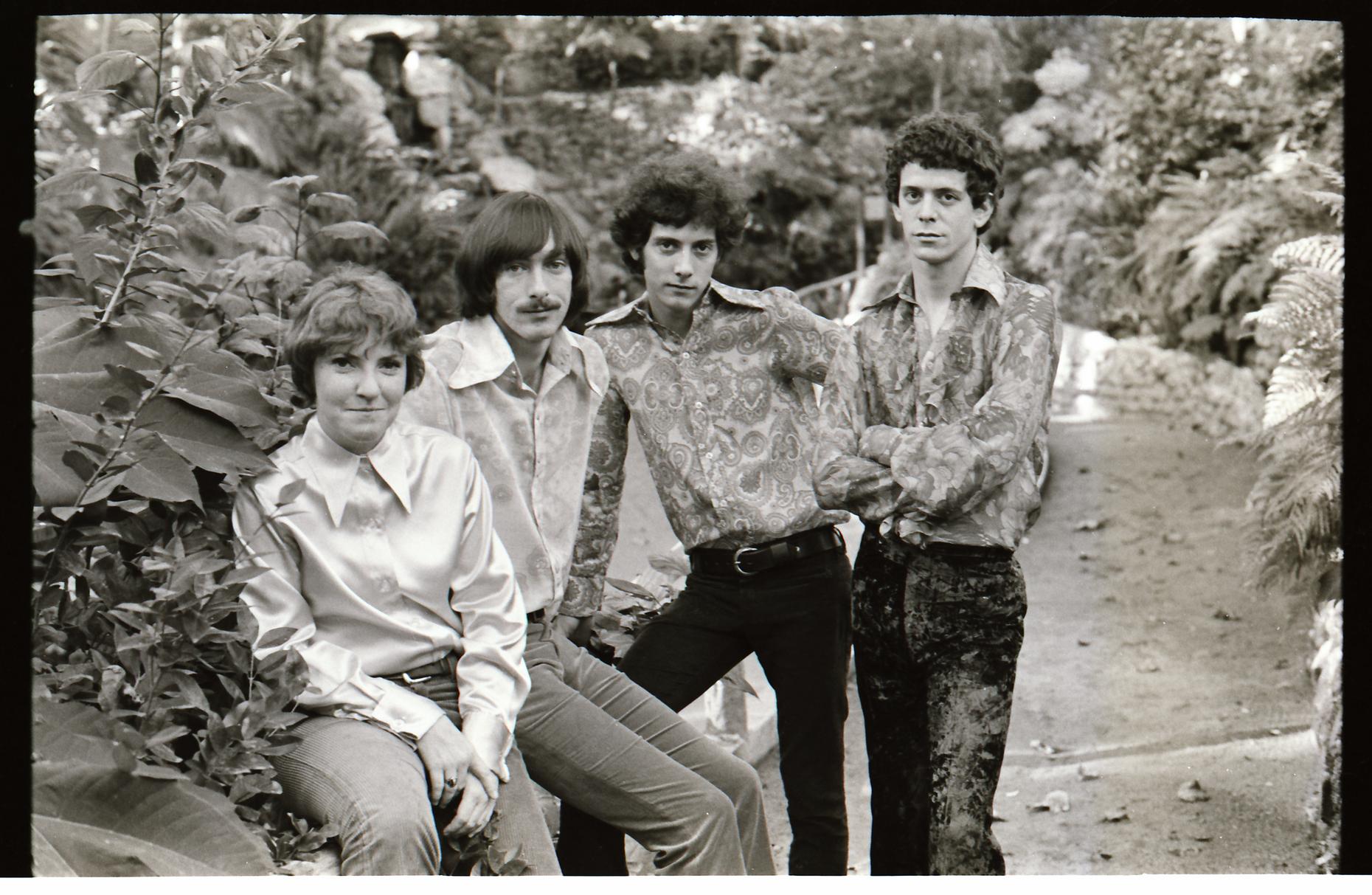
All Of It with Alison Stewart
Lou Reed and The Velvet Underground (Full Bio)
00:33:00
For this month's Full Bio, we discuss the life and career of pioneering musician and poet Lou Reed with Will Hermes, author of the new book, Lou Reed: The King of New York.
Loading summary
Transcript67 lines
- [00:00]
Interviewer
Oh, Gekko. I just love being able to file a claim in under two minutes with the Geico app.
- [00:04]
Michael's Store Announcer
Could you sign a.
- [00:05]
Interviewer
Sign what?
- [00:06]
Alison Stewart
The app.
- [00:07]
Interviewer
Yeah, sure. Oh, it rubbed off the screen when I touched it. Could you sign it again? Anything to help, I suppose.
- [00:13]
Will Hermes
Get more than just savings.
- [00:14]
McDonald's Customer
Get more with Geico.
- [00:15]
Michael's Store Announcer
Attention, party people. You're officially invited to the party shop at Michael's where you'll find hundreds of new Items starting at 99 cents with an expanded selection of party wear, balloons with helium included on select styles, decorations and more. Michaels is your one stop shop for celebrating everything from birthdays to bachelorette parties and baby showers to golden anniversaries. Visit Michaels store or michaels.com today to supply your next party.
- [00:42]
McDonald's Customer
I'mma put you on nephew.
- [00:44]
Will Hermes
All right, unc.
- [00:45]
Interviewer
Welcome to McDonald's. Can I take your order, miss?
- [00:47]
McDonald's Customer
I've been hitting up McDonald's for years. Now it's back. We need snack wraps. What's a snack wrap? It's the return of something great. Snack wrap is back.
- [00:58]
Sara Gibson
I'm Sara Gibson. Tuttle and I started Olive in June because let's be real, we all deserve to have gorgeous nails. But who wants to spend a fortune? That's why I created the gel mani system so you can have that salon quality gel manicure right at home. And guess what? The best part, each mani only costs $2. And here's a little something extra. Head over to oliveandjune.com and get 20% off your first gel mani system with code HELLOGEL20. That's code HELLOGEL20 for 20% off your first mani system@oliveandjune.com Hellogel20.
- [01:32]
Will Hermes
Listener supported WNYC studios.
- [01:44]
Alison Stewart
This is all of it. I'm Alison Stewart live from the WNYC studios in soho. Thank you for sharing part of your day with us. Coming up on the show this week, members of the West Village Choral Group will be in our studios for a little holiday caroling. And on Friday, we'll fl flashback to New Year's Eve 1999 with a documentary called Time Bomb Y2K that is in our future. Right now, in the present, we continue with the life and career of Lou Reed. Full Bio is our book series where we spend a few days with the author of a deeply researched biography to get a fuller understanding of the subject. This week we are discussing the book Lou the King of New York by journalist Will Hermes, a contributing editor at Rolling Stone. A review and the Washington Post described it as, quote, the only Lou Reed bio you need to read. And that it quote, perfectly captures the rock star's balance of person and poser. Will's book goes into great descriptive detail around the life of the Velvet Underground. A quick primer. The Velvet underground formed in 1964 with members Lou Reed, John Cale, Sterling Morrison and Angus McCleese on drums, who would be replaced by Maureen Moe Tucker. Add in singer Nico, who appeared only on the band's debut album. And Cale would leave the band too, in 1968, replaced by Doug Ewell. There is so much detail in this 500 page book about where they played, how they worked together, album covers, what they did on the road. It isn't possible to cover it all in this conversation. So we stuck with the theme of how New York City played an important role in how the band got together and thrived. Most of it happened downtown. With that in mind, here is a clip of Lou Reed from 2009, describing to WNYC's John Schaeffer what downtown New.
- [03:34]
Interviewer
York means to him.
- [03:37]
Will Hermes
I always thought of downtown as places where you could experiment, places where it wasn't necessary to have a hit, whatever. Places where you could try things out and the audience could afford to get in. And that's become pretty problematic in New York these days.
- [04:07]
Alison Stewart
Here's my full bio conversation with Will.
- [04:09]
Interviewer
Hermes, author of Lou Reed the King of New York.
- [04:29]
Lou Reed (song vocals)
I waiting for my man $26 in my hand up to Lexington 1, 2, 5 feel sick and dirty Mo dipping alive I waiting for my man.
- [05:01]
Alison Stewart
So.
- [05:01]
Interviewer
We learn in your book that John Cale was the son of an English coal miner and a Welsh school teacher. And he too suffered a mental health crisis as a teenager, like Lou Reed did. He had some very formal musical training, though. What was young John Cale's music education like?
- [05:20]
Will Hermes
Well, he learned to play organ, he learned to play viola. He came up in deprivation scenario. His mom was real sick. His dad was, you know, working in the coal mines, not always there. And he found an outlet through music and he was quickly acknowledged as a prodigy. He went to Goldsmith's College in London ultimately. And when he finished there, he got a. A scholarship sort of, or an invitation to do a summer at Tanglewood studying with Aaron Copeland. And that was, that was the start of a lot of big things. He got on a plane and never looked back. But when he was, when he was studying at Goldsmiths, he was very interested in the American avant garde and really European avant garde as well. But. But he was very interested in what John Cage was up to and Cornelius Cardew and ultimately a composer named Lamont Young. Who. A New York based composer who's still with us and, you know, very often credited with being one of the fathers, if not the father of minimalist composition, as it's known. Part of his, you know, part of his impulse in jumping on that plane to come to Tanglewood was to stick around. I think he. He got a round trip ticket, but as soon as the summer program was done, he sold his return ticket to London, got himself in an apartment in New York and started looking around for interesting things to do. And he found him.
- [07:03]
Interviewer
Yeah. The next set of questions read like a walking tour of New York City. So I'm gonna say the addresses and then we can talk about what happened there. 56 Ludlow street that's where Reed and Carol met. Carol was living there, Reed with a roommate. The rent was about $25 a month, you write. And Cale described meeting him as. My first impressions of Lou were of a high strung, intelligent, fragile college kid in a polo neck sweater, rumpled jeans and loafers. He added, he had been around and was bruised, trembling, quiet and insecure. Now that's Kael looking back at the time. What did Kale see in Reed? What did Reid see in Kael at that time?
- [07:44]
Will Hermes
Well, it was quite. It was quite a meeting of opposites in a way. But they also had a lot in common. They also. They were both dealing with a lot of emotional trauma growing up. They were both besotted with music, even if different types of music. And Lou crossed paths with John through Pickwick because when Pickwick put together a band to a tour on the Ostrich, they needed, you know, some of the guys who recorded the song with Lou didn't necessarily want to do these. Do these performance dates because they were older, they had families. They didn't, you know, they didn't want to get into it. Somebody who worked at Pickwick found John Kay and a friend of his, Tony Conrad, at a party that thought they looked like very cool beatniks and said, hey, I got a gig for you. So he was. Kale was brought into the fold at Pickwick, and him and Lou were both interested in. Got interested in drugs. So they shared that. And they were just interested in extreme forms of expression. And what John saw in Lou, what he speaks about is he saw someone who. Who was. Had an incredible versatility with words, who was just stunning in how he, you know, how he could put a phrase together. Both improvising. Sometimes they'd just be, you know, playing music together and Reid would just extemporize, you know, lyrics that were just wild. And John was amazed at. And also some of the subject matter that Lou addressed when he. Lou, in addition to being into rock and roll, was also into folk music because it was the moment Dylan was recording and Joan Baez was on the COVID of Time magazine. It was the height of the folk revival, and Lou was interested in everything. Whatever vehicle that he could use to kind of get his ideas out was fair game. And John hated. Hated folk music because he was a. He was a classical, avant garde musician. But when he heard Lou play an early version of the song Heroine and Waiting for the man and maybe Venus and Furs, he was like, whoa, wait a minute. Writing about a drug user from in a first person perspective as they're about to put a needle into their arm, that's something else.
- [10:56]
Interviewer
Yeah. The next stop we're going to go to is the D train stop at 7th Avenue. You note that Reid and Kael, they kind of wanted to crank up the sound and the energy of these folk songs that Lou was writing. And Sterling Morrison was the answer. How did Morrison come into the fold?
- [11:15]
Will Hermes
Well, Morrison was. Morrison was another Long Islander, as it happened. And Morrison's good friend went to Syracuse, and Morrison was kind of bouncing back and forth between colleges. Super smart guy. Another really smart guy who played guitar. But he didn't. You know, he didn't. He ran into trouble at various schools, and he was even at Syracuse for a semester. He took a class with Delmore Schwartz that Lou was in, according to course records. So they knew each other a little bit. They'd met at Syracuse. They'd even played guitar together at Syracuse. But then they lost touch. And at that D train stop, Lou and John ran at Sterling Morrison and he became part of what they were up to. Sterling wanted to finish up his degree at City College, which he still hadn't finished. But it was an amazing meeting. And also doing research, I knew that Dylan was making his first electric album at this time. And it just so happens that the studio he did that in was upstairs and not a very, very short walk from that D train stop. Right around the time that supposedly Sterling Morrison, Lou and John met on that D train platform. So, you know, stars align.
- [12:42]
Interviewer
We're discussing the book Lou the King of New York with Will Hermes. It is our choice for full bio. All right, we're going over to 450 Grand street now. It's here that Reid, Kael and Morrison would play together. You described this scene as they were shirtless, adorned in body paint, and being filmed by a local TV Crew what was going on that day. And Maureen Tucker happened to be there that day.
- [13:09]
Will Hermes
Yes, she was, because the Velvet Underground originally had a drummer, a guy named Angus MacLeese, who was an incredibly talented guy, musician, poet, real multidisciplinary artist, ages before the term was coined. He didn't work out because he just, you know, he wanted to play when he wanted to play. And that wasn't going to work for Lou, certainly, who was ambitious. He wanted a. Put together a rock band, make some money. Ultimately. In the meantime, he was hanging out with all these avant garde art makers, filmmakers. And one of them, Piero Helitzer, was making a film that ultimately became known as Venus and Furs. It was an experimental film, involved a couple of nuns and some other sketchy characters. And they were making that film at this loft that believe was Piero's. And they got a call from CBS News, tipped off Jonas Mikas, the great New York experimental filmmaker and writer and film scholar, that if they wanted some footage of a real underground film being made, and they were in the process of doing a profile of Helitzer and Warhol and a bunch of people who were involved in this underground filmmaking community in New York go over to grand street and check out what Piero's up to. And so the first footage, some of the only footage of the Velvet Underground is from this film shoot, both in the film and from the story that I believe CBS did on if I have the. If I have the Call letters. Right, that ultimately aired New Year's Eve, 1965 was when that story aired, and Lou and John were watching it along with Andy Warhol and bunch of other folks.
- [15:05]
Interviewer
So Moe Tucker comes aboard. Why was she the right fit? I mean, she knew Lou a little bit from pre downtown New York days.
- [15:15]
Will Hermes
Yeah, let me double back, because Maureen Tucker's such an important part of the Velvet Underground. That pulse, her style of drumming so influential and just indelible. And certainly the Velvets did not sound like the Velvets when she was not performing with them, which on occasion they did. But Jim Tucker was Maureen's brother, and she went. And Jim went to school at Syracuse. So that was the connection. But Maureen was also from Long Island. Jim and Sterling were friends. So I mentioned that Angus MacLeist had left the Velvet because he, you know, he was interested in different things. But the Velvet sculpture got themselves. The nascent Velvets got themselves a manager, and the manager booked them a show. And the show was at Summit High School in New Jersey. And it was like a kind of proper show opening for a group called the Middle Class that I mentioned, Carole King before that Carole King and Jerry Goffin were involved in writing songs with. And it was all, you know, it was going to go down. They needed a drummer, and Angus was not going to do it because it was just too straight for Angus. And so Lou was like, well, God, who can I. Oh, Jim Tucker's sister plays drums. And so he got in touch with Maureen. And Maureen had. She played drums in a band on her own. She heard the Stones, she'd heard Chuck Berry, she'd. She'd heard Bo Diddley, and she'd heard a drummer named Babatunji or Baba Olatunji, who had a record called Drums of Passion, which came out in the early 60s and was kind of the introduction of Africa, an undiluted form of African traditional music, into the minds and ears of Americans. It was put out by Columbia Records and was actually a pretty big success. People who had early stereo systems would show off the capabilities of their stereos by playing this record. Anyway, Maureen Taggart fell in love with this. She developed a style of drumming from all those influences. And Lou figured, okay, well, we'll have Maure play this one show with us, and if it works out, whatever, we'll figure it out afterwards. But she did quite well. And. And the sound of the Velvet Underground kind of came together at. At that moment. In that moment at Summit High School.
- [17:54]
Interviewer
106 W. Third St. Is our next stop. And this is where Lou Reed met Andy Warhol. What was the original purpose of the meeting?
- [18:05]
Will Hermes
Well, it was arranged by Barbara Rubin, who came out of the same experimental film scene that I spoke about earlier, involving Jonas Mikas and that whole crew. She was very, very close with Jonas and she was kind of. She was an artist unto herself. She was an amazing filmmaker whose work really has not been given enough attention. I think she didn't do a lot of it, but she was also remarkable in her ability to bring people together. She was good friends with Allen Ginsberg. I think she initially introduced Bob Dylan to Allen Ginsberg. And she caught the Velvet Underground playing at this little cafe where they got a gig, and they were kind of woodshedding there. And she was like, wow, this is something. I got a Andy Warhol and my friend Gerard Malanga need to see this. So it was Barbara Rubin who brought Gerard and Andy and some of the factory crew down to see Lou and Sterling and John play at this little coffee shop. And that was the beginning of Big Things, that was late 65 and suffice to say, very soon they quit their coffee shop gig. The proprietor wasn't very keen on the music they were playing anyway. It was a little intense for the clientele and they started hanging out the factory and became part of the exploding plastic inevitable.
- [19:54]
Interviewer
Warhol had a proposal to manage the Velvet Underground. I thought it was interesting. I went searching the Library of Congress about this and in their description of it they put in quotes or he purchased the Velvet Underground.
- [20:09]
Will Hermes
Wow. Yeah. You know, the specifics of their relationship. I mean Andy Warhol was the Velvet Undergrounds manager, quote unquote. Even though they already had a manager, Alaronowitz. But I think these were all sort of handshake deals. Certainly Alaronowitz regretted that he had a handshake deal with them as manager and. And Warhol was also nominally the producer, quote unquote. For the first Velvet Underground album he's listed as producer and he did produce. Producers can do their job in a lot of different ways and was not very experienced in, you know, recording music or really sound recording at all. Despite being a filmmaker, he, you know, nevertheless oversaw the recording of the first album. And because of his imprimatur, the Velvets were allowed to make song, you know, were allowed to create music that both sonically and lyrically was way beyond the pale of what passed for rock music or even experimental music at the time. And they were able to do it I think in part because Warhol co signed it. He said this is good. And so they figured, well okay, even if we don't sell a lot of records, we'll sell some because of Warhol's name. Well, the alliance with Warhol of course was a double edged sword because people were so interested in Andy Warhol at the time. We're talking lately 65, 66 that really the Velvets were. They didn't even get noticed as a separate entity. In fact, their first album, the iconic banana cover, doesn't even have their name on the album. It has a rubber stamp that says Andy Warhol. And so people literally thought the first Velvet Underground album was an album by Andy Warhol. And it was only later that people figured out who the Velvet Underground were when they, they broke ties with him.
- [22:21]
Interviewer
Warhol brings in Nico, a German born model and a Chantus, whatever that is. Reed would later say, we really didn't feel like we had a choice.
- [22:32]
Alison Stewart
How, how did he deal with it.
- [22:33]
Interviewer
Given he was the, the lead singer? It was sort of his band in.
- [22:36]
Alison Stewart
A way up to that point.
- [22:39]
Will Hermes
Well, he dealt with it because, you know, in one sense, he saw what side of his bread was buttered and he, you know, he said, okay, if Andy really wants us to, you know, have this chanteuse, it's great because Warhol met Nico, who was really an incredible artist unto herself. She was a model who became an actress, appeared in films by Fellini and appeared in other European films. And she'd already recorded her first single overseas and kind of wanted to, you know, get. Get a start as a. As a. As a recording artist. And Warhol wanted her in his experimental films because she was a legitimate film talent. So he thought that would give him a little bit more legitimacy and maybe money to make films which are expensive. And she was also stunningly beautiful by a lot of standards. And so she was very, very striking. So Lou agreed to go along with Warhol. He also promptly, it seems, fell in love with her. The relationship didn't go very far, didn't last very long, but I think they were, you know, for a hot minute, they were an it couple in the Factory circles. And the upshot, of course, was an album with her, the debut Velvet Underground album. The songs that she sings, her voice, which is so unique and remarkable, sang all those songs that she sang in a way that. That no one else could have and made them great in a way that I don't think Reed could have. So it was a good call all around.
- [24:39]
Interviewer
Well, let's listen to I'll Be youe Mirror, written by Lou Reed, performed by Nico and the Velvet Underground.
- [25:06]
Lou Reed (song vocals)
I be your mirror Reflect what you are in case you don't know I Be the Wind.
- [25:15]
Interviewer
Coming up after a quick break, we'll hear more about the book Lou Reed, the King of New York. This is all of it.
- [25:32]
Alison Stewart
This is all of it on wnyc. I'm Alison Stewart. Let's get back into our full bio conversation about the book Lou. The King of New York with Will Hermes.
- [25:52]
Lou Reed (song vocals)
Sunday morning brings the dawning it's just a restless feeling by my side early dawning Sunday morning it's just the wasted years so close behind Watch out, the.
- [26:29]
Interviewer
World'S behind how was the debut initially received?
- [26:34]
Will Hermes
With resounding indifference. It had trouble coming out at all because there was a photo on the back cover that was cause of a lawsuit because there was an image of someone who, without going into the story, who objected, who saw they could make some money. So they sued the record company that the photo be removed. So even though the album was finished by. By late 66, didn't come out, I believe, until. Until 67 I might be miss misquoting my dates here, but. But it came out, it did not get played on the radio. Nico's voice was certainly from what was being played on pop radio at the time. And songs about heroin and s&m, PDS&M relationships were not going to get played on the radio. Even on, even on non commercial radio, even on listener sponsored independent radio. And so, so that was that. The record label didn't drop them though, and they got another chance to make a record. But they figured that they, at this point they needed to do. Reed thought that they needed to do things differently. So they ultimately wound up kicking Niko out of the band and terminating the relationship with Warhol as their nominal producer and manager.
- [28:09]
Interviewer
The next chapters in your book detail the rise and fall, the Velvet Underground, the exits of John Cale and Nico. And there were. There's so many stories. You quote Kael as saying. Lou and I had one of those rapports where you think the other guy is thinking what you're thinking, but he's not. He couldn't figure me out and I couldn't figure him out. The only thing we had in common were drugs and an obsession with risk taking. That was the raison d' etre for the Velvet Underground.
- [28:35]
Will Hermes
Well put, John.
- [28:37]
Interviewer
When did Lou Reed know it was over for the Velvet Underground?
- [28:42]
Will Hermes
They worked it for a long time and, and a lot of this was like so much in pop music, like so much in all the arts. You can make something great and either it's the wrong time for it or it just doesn't slot into any marketplace, established marketplaces that can, you know, monetize it. That's what happened with the first four Velvet Undergrounds. And just some bad luck at various points. Things that didn't happen, didn't line up.
- [29:19]
Interviewer
What's an example of the bad luck you're talking about?
- [29:21]
Will Hermes
Well, I mean, the fact that Lou was not able to, was not able to like land a hit single at the moment, that he was doing some of his best writing. The last album that came out had some fantastic, some fantastic songs that went on to be super famous, went on to define him. Really Sweet Jane and rock and roll. But the making of that album didn't, didn't go as planned. A Because Maureen Tucker got pregnant and was out of play for the recording, so she did not play on the album. And also Lou wound up leaving the band because he just reached the end of his rope. A series of shows that Maxis Kansas City very famously documented on a live album that was released Posthumously. The album came out and the production was just not great. The label wouldn't promote it because the band technically didn't exist anymore because Lou had just left. That was that. The Velvets became the most famous unfamous band in rock and roll history. Arguably.
- [30:43]
Interviewer
When you think about the Velvet Underground, what was the high point and what was the low point?
- [30:49]
Will Hermes
The Velvet Underground are generally considered one of the greatest bands to come out of the 1960s, maybe the greatest American band to come out of the 1960s. But the center of the scene in the 60s was San Francisco. Everybody was looking to the Jefferson Airplane, Grateful Dead. The first time the Velvets played there, it was with Andy Warhol. And as part of the exploding Plastic inevitable entourage, they got into a thing with the famous promoter, Bill Graham, who not only ran the Fillmore west, but also would run the Fillmore East. And so they were pretty much banned going forward from both of those venues, which were really key venues. So that was not good. They were locked out of, you know, the. A lot of the more popular venues. They wound up the weekend of. Of Woodstock. They were playing at a little club in Boston, legendary club called the Tea Party. That, you know, I guess could be considered a low point, even though the people who saw those shows were enjoying them. But the Velvets were not a famous rock band. Lou Reed wanted to be famous. He wanted his art to be heard. The irony is that maybe the greatest moments that the band had at least are recorded live. Many of them happened in San Francisco at a club called the Matrix, which very often was empty when they were playing there in late 69. But at that point, Cale had already left. A guy named Doug Ewell joined, who played bass and keyboards, sang harmonies, sang lead on a lot of songs on the second, on the third and fourth albums. And they played a series of. Of dates that were ultimately bootlegged and later released called the Matrix Tapes. And they just sound and they. They're magnificent. The interplay between the guitarists, the, you know, Moe Tucker's drumming l songwriting, which he. There are versions of many songs that wound up on the records that are even better lyrically on these live recordings. So it was, you know, it was a band reaching its apotheosis and very few people heard it at the time.
- [33:23]
Interviewer
We're gonna go out on today's segment on one of Velvet Underground's biggest songs. Sweet Jane from 1970s unloaded.
- [33:49]
Lou Reed (song vocals)
Standing on the corner Jackson's co said Jane is in a vest and me.
- [34:02]
Will Hermes
I'm in a rock and roll band.
- [34:08]
Lou Reed (song vocals)
Riding the studs back at Jim.
- [34:11]
Interviewer
You know Velvet Underground. We're inducted into the Rock and Roll hall of fame in 1996.
- [34:16]
Alison Stewart
On tomorrow's full bio, we'll talk sex.
- [34:18]
Interviewer
Drugs and rock and roll. And how Lou Reed was a forerunner when it came to gender and sexual fluidity. That's next time.
- [34:36]
Michael's Store Announcer
Attention, party people. You're officially invited to the party Shop at Michael's where you'll find hundreds of new Items starting at 99 cents with an expanded selection of party wear, balloons with helium included on select styles, decorations and more. Michael's is your one stop shop for celebrating everything from birthdays to bachelorette parties and baby showers to golden anniversaries. Visit Michaels store or michaels.com today to supply your next party.
- [35:04]
McDonald's Customer
I'm gonna put you on nephew.
- [35:05]
Will Hermes
All right, unc.
- [35:06]
Interviewer
Welcome to McDonald's. Can I take your order, miss?
- [35:08]
McDonald's Customer
I've been hitting up McDonald's for years. Now it's back. We need snack wraps. What's a snack wrap? It's the return of something great. Snack wrap is back.