← All Of It with Alison Stewart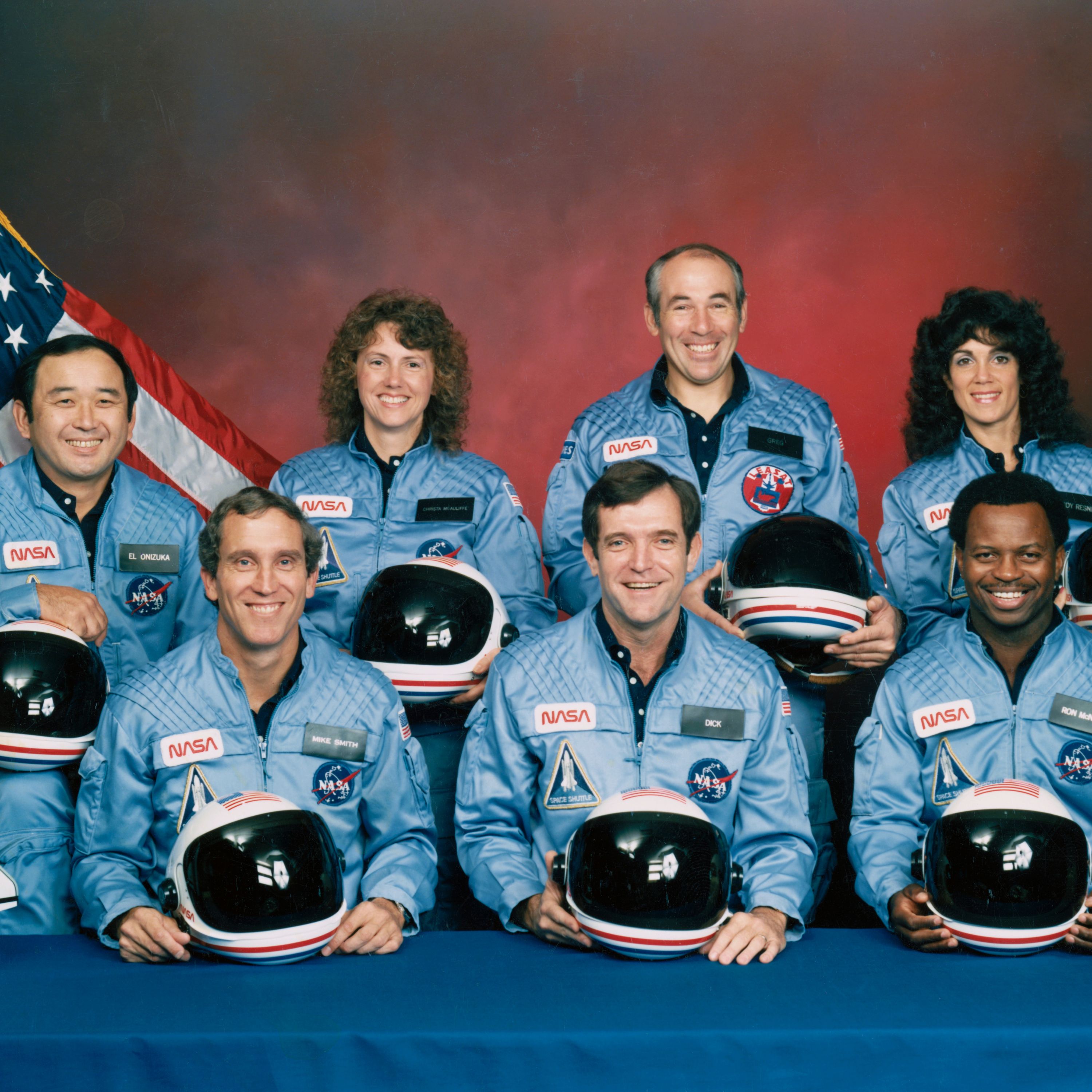
Loading summary
Transcript76 lines
- [00:00]
Alison Stewart
All of it is supported by Progressive Insurance. Do you ever find yourself playing the budgeting game? Well, with the Name youe Price Tool from Progressive, you can find options that fit your budget and potentially lower your bills. Try it@progressive.com Progressive Casualty Insurance Company and affiliates Price and coverage match Limited by state law not available in all states.
- [00:29]
This is all of it. I'm Alison Stewart live from the WNYC studios in soho. Thank you for spending part of your day with us. I'm very grateful that you're here on today's show. We'll kick off this month's full bio conversation about the Schuyler sisters, Angelica, Eliza and Peggy with Amanda Viall, the author of Pride and the Schuyler Sisters in an Age of Revolution. Emmy Award winning actor Katherine Lanassa will be here. She plays nurse Dana on the HBO series the Pit. And author George Saunders joins us in stud to talk about his new novel Vigil. That's the plan. So let's get this started with a somber anniversary. Forty years ago on January 28, 1986, millions of Americans tuned in to watch the Challenger venture into space. 73 seconds after launch, the Challenger exploded. All seven astronauts on board were killed. They were Dick Scobie, Michael Smith, Ellison Onizuka, Judith Resnik, Ron McNair, Gregory Jarvis, and Christa McAuliffe. Here's what you would have heard on CNN as the launch went wrong.
- [01:42]
News Reporter
Looks like a couple of the solid rocket boosters blew away from the side of the shuttle in an explosion.
- [01:57]
Caller or Advertiser
Flight controllers here looking very carefully at the sit, obviously a major malfunction.
- [02:04]
Alison Stewart
A subsequent investigation revealed that there were serious questions about the safety of the launch that were overlooked. Journalist Adam Higginbotham is the author of a book that tells the story of the Challenger and what led up to and followed that fateful day. It is called Challenger A True Story of Heroism and Disaster on the Edge of Space. It is now out in paperback. And Adam is with me now to reflect on the anniversary. Thank you for being here.
- [02:30]
Adam Higginbotham
Thank you for having me.
- [02:31]
Alison Stewart
So there's been a lot of coverage of the Challenger disaster over the last 40 years. What more did you feel was left to the story?
- [02:38]
Adam Higginbotham
Well, I mean, when I started looking into the idea of doing it, I did kind of wonder that myself, but quickly discovered that, you know, by the time I started work on the project, I mean, probably like 35 years had elapsed since the accident actually happened. And what I quickly realized was that the that nobody had really attempted to write a serious narrative nonfiction account of what happened that day since 1987, probably, and also in the years since the accident happened, a huge amount of information had come out, both in archival material and in personal memoirs. And also that the way the accident had been written about and featured in films and documentaries had increasingly come to focus very tightly on the story of Christa McAuliffe, the teacher in space. And so I wanted to return to the story and tell it in a different way so that it brought to life the other six members of the crew who you mentioned who were on board the ship that day. But also the stories of the handful of rocket scientists, rocket engineers, who attempted to stop the launch happening at the last moment, but obviously failed.
- [03:51]
Alison Stewart
Let's put this in contrast. If you compare NASA today to what it was like in the 80s versus what it meant to people in the 60s. Let's start at the beginning. Why did NASA start.
- [04:03]
Adam Higginbotham
You mean, why did it start in the 60s? Yeah, well, in order. I mean, it was a. It was a product of the Cold War, really. So, you know, the. When the Soviet Union successfully launched Sputnik, this. This was received by the American public certainly as a tremendous shock. And the idea that a kind of a nation that had been characterized as a state of backward potato farmers could take this leap forward in technology meant that almost overnight, a huge amount of money had to be put into a US Space program in order to try and catch up. And then that led to, you know, the Moon program and the challenge that President Kennedy put forward to put men on the surface of the moon and safely return them within 10 years.
- [04:56]
Alison Stewart
So by the time we got to the 80s and the late 60s, it was an extraordinary event to be on the Moon. It was exciting. By the time we got to the 80s, what was the context for NASA?
- [05:08]
Adam Higginbotham
Well, I mean, really, before Armstrong and Aldrin even walked on the moon, they had already started. The US government had already started cutting NASA's budget. So they were able to organize the moon program and make this amazing achievement because they were essentially given a blank check and whatever it cost, they were going to put people on the moon before the decade was out. They succeeded in doing that. But. But the truth was that there had always been kind of public disquiet about the amount of money that was being spent on the space program, given the poverty and difficulty that there was within the United States, let alone around the rest of the world. So that combined with the fact that after 1969, the moon missions continued for years and the public kind of got bored with it. I mean, it's hard at this point in time, given the amount of nostalgia there is for the Apollo program, to look back on it and realize that, you know, when the last mission was launched to the moon in 1972, TV viewers called in to television stations to complain that their favorite soaps were being interrupted by live footage of the launch taking place. And it was against this backdrop that the space shuttle program was created. So, you know, when NASA decided that they wanted to take the next step in space travel and create a reusable spacecraft, which at the time was a kind of science fiction idea of having a real spaceship that would just take off, go into space, fly into space like a rocket, go into orbit around the Earth like a spaceship, and then glide back down to Earth, land on a Runway like a plane, and then just be turned around by the engineers who would just kind of wipe down the windshield, change the oil, put it back on the launch pad, all ready to go again the next day. You know, this was the idea. When they came to the White House and to Congress and asked for the money for this, they were like, no, this is way too expensive. You can't do this. But NASA was by that time convinced that in order to continue to survive as an agency, they needed to keep flying people into space. They needed to keep doing more and more audacious things to keep the public engaged with it and to keep congressional funding flowing. So they entered into this sort of devil's bargain where despite being offered a fraction of what they thought it would cost to build this thing, they agreed to go ahead with. With the money that they were given. And so that was the beginning of a sort of long path of compromises and cutbacks and financial squeezes that ultimately led to the space shuttle being. Although it was an amazing achievement to get it launched in the first place, it was always hobbled in achieving what they expected it to do.
- [08:13]
Alison Stewart
You wrote that 1986 was expected to.
- [08:16]
Be a banner year for the space shuttle.
- [08:18]
What did they have planned?
- [08:20]
Adam Higginbotham
It was going to be the busiest year of manned spaceflight launches in NASA history. So the part of the point of the shuttle was that it was going to be this vehicle that made spaceflight routine. So space was just going to be a place where you went to work and traveling on the space shuttle. It was a shirt sleeve environment. It wasn't like traveling to the moon where everybody got into these bulky pressure suits with these kind of fishbowl helmets. You would just get into a sort of blue jumpsuit and then maybe put on a helmet and Then. But you get into space and it'd be just a working environment. And the whole point of this began to kind of approach what they promised in 1985, where they had roughly one launch of the space shuttle every month. And that flight rate essentially almost kind of broke the agency. It was really sort of coming apart at the seams because it wasn't set up to run a trucking business into space.
- [09:21]
Alison Stewart
You had to wait till one shuttle came back to take a part of.
- [09:24]
It, to put it onto the next shuttle for it to take off.
- [09:26]
Adam Higginbotham
Exactly, exactly. Because they just didn't have enough spare parts. And they were used to tailoring spaceships for one mission at a time. And suddenly they had a fleet of four spacecraft that were constantly rotating through Cape Canaveral on the way to space.
- [09:41]
Alison Stewart
Today is the 40th anniversary of the Challenger disaster. My guest to reflect on the anniversary is journalist Adam Higginbotham, the author of the book A True Story of Heroism and a Disaster on the Edge of Space. It is out in paperback. Now let's talk about the astronauts who were on board that day. Why were these, the astronauts chosen for this specific mission?
- [10:06]
Adam Higginbotham
Well, I think that in part they were chosen because they represented a kind of idealized picture of melting pot America. And it's one of the reasons, I think, why the accident, when it happened, made such an impact on the American psyche is because in addition to the Teacher in space, candidate Krista McAuliffe, the crew was. Was made up of this really kind of diverse cross section of the astronaut core that represented America. You know, so you had Ellison Lazuka, who was the first Asian American in space. You had Judy Resnick, who was the second American woman in space. You had Ron McNair, who was the second African American in space. You know, and on top of that, then you had had Christa McAuliffe, who, who was picked because she was this sort of every woman, someone who was not only a great communicator but extremely charming and was just kind of. And seemed totally normal. You know, she seemed to be a placeholder really, for anybody who was an ordinary person who had ever dreamed of going into space as an astronaut.
- [11:18]
Alison Stewart
Yeah. What was the idea behind Teacher in Space?
- [11:21]
Adam Higginbotham
Well, I mean, that goes back to a similar problem that NASA was suffering from, as they did with the Apollo program, which was that they began to realize that their effort to make space flight seem routine with the space shuttle had succeeded all too effectively to the point where the public got bored with it. Ho hum, you know, when they started launching One mission every month or so. Then it reached a point where public attention drifted away to the extent that the three national television networks stopped covering the launches live, just because it seemed to be, as you say, a pretty ho hum exploit to launch this vehicle into space regularly.
- [12:08]
Alison Stewart
And having a teacher in space wasn't just the beginning of it. They were going to have journalists go into space, all kinds of people in the future who lined up to be on that list.
- [12:20]
Adam Higginbotham
It was, it was conceived as what was known as the space flight participant program. And so they, they did a lot of lengthy consideration about what kinds of people from ordinary walks of life they would choose to represent ordinary people. And initially the. The chief of NASA, the administrator of NASA, was very keen on the idea of spend sending a Boy Scout into space. And then they gave extremely serious consideration to sending Carol Spinney, who was the puppeteer who operated Big Bird on Sesame street, into space as the first citizen astronaut because they were interested in engaging children's interest in spaceflight. So, you know, Big Bird seemed like a logical choice. And this went so far that they actually corresponded with Spinney in and he agreed to do it.
- [13:17]
Alison Stewart
Oh my gosh.
- [13:18]
Adam Higginbotham
And the main reason why they didn't is because they eventually figured out that the costume with the feathers and everything was gonna behave awkwardly in orbit and that was gonna cause problems. So at that point they moved on to other kinds of candidate.
- [13:36]
Alison Stewart
I am sensing that this was a PR ruse.
- [13:40]
Adam Higginbotham
Ruse is a strong word.
- [13:42]
Alison Stewart
Ruse is a strong word. A pr.
- [13:45]
Adam Higginbotham
But promotion, I would say that public relations was, was a leading element. Yes, in the spaceflight participant program. And, you know, and so they, they chose a teacher first and then they had. Actually, at the time the accident took place, I think that they had already selected a journalist candidate to be the next person and that that was going to go ahead. But then they had plans for, you know, artists and sculptors and photographs, photographers.
- [14:11]
Alison Stewart
And all the like. We got a text here that says in a small park on Eastern Parkway in Brooklyn, there's a monument to Dr. Ronald McNair.
- [14:22]
Adam Higginbotham
Right.
- [14:23]
Alison Stewart
Which is very interesting.
- [14:24]
Adam Higginbotham
Right.
- [14:24]
Alison Stewart
And this is our time. We're going to invite listeners to either call in or text in. We want to know what you remember about the Challenger disaster. Where were you, what you remember feeling? Our Phone number is 2124-3396-9221-2433. WNYC. How did you and your family talk about it? How did your friends at school talk about it? What do you think changed in American culture that day? Our number is 212-433-969-2212-4433 W NYC. We'll have your calls and we'll have more with Adam Hickinbothan after a break.
- [15:10]
You are listening to all of it on WNYC. I am Alison Stewart. Today is the 40th anniversary of the Challenger disaster. My guest to reflect on the anniversary is journalist Adam Higginbothen, author of the book A True Story of Heroism and Disaster on the Edge of Space. The paperback is out now. It's an excellent book. We want to know from you, do you remember watching the Challenger disaster? Where were you? How did you react? What did you think? It changed about American culture. Our number is 2124-3396-9221-2433. WNYC. Adam, so, so where were you?
- [15:48]
Adam Higginbotham
I was at school. I was at high school in England. And because of the time difference, you know, I was in class when it happened or just coming out of it. And obviously because this was a pre cell phone, Pre Internet, pre 24 hour rolling news time, I didn't hear about it when it happened. And I just went out with my friends after school and it wasn't until I got home quite late that night that my mother had been watching the news and knew all about it, told me what had happened. But I can still really remember how really, you know, totally inconceivable. I found it, it took me a while to kind of wrestle with it and realize that this really had happened because I, like so many other people had had started to believe that NASA was an organization that could achieve the impossible on a regular basis.
- [16:37]
Alison Stewart
I was in college, I was at my college radio station and they said they had, in introducing us to all the equipment, they said when that bell goes off, that means something has happened. I remember that from the first day and then I was in and the bell went off and everybody's head just turned to like, what's happened? Like we didn't know what was happening. It came over like a fax machine. It practically came over and we, you know, broke, broke, broke into air on college radio. But it was a really, really my first experience with breaking news. And what to do with that, what to do with that emotion, what to do with the job of telling people about it. It was an interesting point in my career, my career. Let's talk to a couple of people who have called in. Let's talk to Alexis in Hempstead. Hi, Alexis, thanks for calling all of it.
- [17:32]
Alexis (Caller)
Hi, good morning. I was just telling as you guys are recalling. I was standing in my living room getting ready to go to high school, and I just remember, like, the shock of the moment. I knew exactly where I was standing. But also I'm a schoolteacher and every year I read a book, book to my students called Ron's Big Mission. And it's about Ron McNair and how when he was little, he just went to the library. He wanted a library card. And at that point, African Americans couldn't take books out of the library. And every time I read a book, I choke up. And it's just, it's like a full circle moment for me.
- [18:23]
Alison Stewart
Thank you so much for calling in. Let's talk to Carrie in Croton on Hudson. Hi, Kerry, thank you for making the time to call. All of it.
- [18:32]
Carrie (Caller)
Yes, I, I just remember so clearly exactly where I was standing. I was at work, and I work in a hospital. We had kind of stopped to watch the launch and, and when it was just devastating to see the explosion. And, you know, it was, it was just terrible. And at the time I had a, worked with NASA and she worked with astronaut families. And I just called her immediately because it was just, she was, you know, it was just horrible. And, but, and it was such a hopeful time and so excited about it. And then to have that happen, it was just tragic.
- [19:11]
Alison Stewart
Thank you so much for calling in. Let's talk about the day itself, Adam. It was January 28, 1986, Kennedy Space center in Florida. But it was really cold.
- [19:22]
Adam Higginbotham
It was really cold. It was the coldest day in 100 years.
- [19:26]
Alison Stewart
So why is the temperature such an important detail?
- [19:30]
Adam Higginbotham
Because they, because what actually caused the accident was a failure of the seals in the solid rocket boosters that were the strap on rockets that provided the shuttle with most of its thrust on the way to orbit. And they'd had problems almost since the very beginning of the shuttle program with these rockets and with the seals specifically. But almost exactly a year before, in January 1985, when they recovered the rockets from the shuttle mission that had flown, then they discovered that the kind of damage that they'd seen in these seals in the solid rockets was a lot worse than they'd ever seen before. And the engineers who examined the damage quickly made a connection between the historic cold that had fallen over the launch pad the night before that launch and the damage. And they thought their theory was that these, the seals are made of this sort of synthetic rubber called Viton. And their theory was that the extreme cold had made the seal so inflexible that they couldn't do their job properly. They couldn't flex into the gap in the joint in the rocket at the point of ignition, and therefore made it possible for hot gas from inside the rocket to leak out. And so when the engineers heard the weather forecast in January 1986 of further historic cold sweeping over the launch pad, they immediately thought, well, we've got to stop the launch because it has to be postponed at least until the temperature improves, because otherwise, if the damage under similar circumstances last year was so bad, it could be a lot worse, and we run the risk of catastrophe. And so, late on the night of January 27, the engineers of the contractor that built the rockets over at Morton Thiocol in Utah called this late night teleconference meeting with their bosses at NASA to try and tell them that they recommended against a launch, and they wanted.
- [21:48]
Alison Stewart
Him to sign a piece of paper that says, I'm okay with the launch.
- [21:52]
Adam Higginbotham
Well, what happened is that they were pretty wild. The engineers presented all their data and sent them a piece of paper that said, we do not recommend launch. But the NASA bosses, who at that point were under enormous pressure to get the launch to go ahead, made it very clear to them that they didn't want to hear this. They didn't explicitly say, we want you to change your minds, but they made it clear that they would be quite unhappy if they didn't. And then, as a result, they did indeed get them to send over this fax, and that changed their recommendation from no go for launch to go for launch.
- [22:31]
Alison Stewart
Let's talk to Marisa, who is calling from Pelham. Hi, Marisa, thank you for taking the time to call all of it.
- [22:39]
Hi.
- [22:40]
Marisa (Caller)
I grew up in Florida. And in Florida, when they first started launching, we probably lived about an hour and a half south. But the schools would release and everyone would go out and watch them launch. But so I probably seen, like, at least 5, 6 launches live from where I lived. And then it got boring because they just launched so often. So this particular launch, I just happened to be sent by the teacher down to the, like, principal's office to bring in their attendance or something. So I'm standing outside because it's one.
- [23:12]
Adam Higginbotham
Of those outdoor Florida schools.
- [23:14]
Marisa (Caller)
And I was watching it and said, something's wrong. And there was nobody there. I was, like, alone, just sort of freaking out, like, what? What's happening? Like, and another kid was walking by, and he was like, something's wrong. And we both ran to the principal's office just in an absolute panic because you just expected the boosters to sort of. It was a very predictable thing. There was a little moment in the middle of lunches where the boosters would release, but then it would continue to go up. And this just didn't go up. It just hung there. And like, the whole school went bananas afterwards because we went right to the principal's office and said, something huge has happened.
- [23:51]
Alison Stewart
Thank you so much for sharing your memory. Let's talk to Mendel in West Hartford. Hi, Mendel, thanks for calling, all of it.
- [23:58]
Caller or Advertiser
Hey, Allison, thanks for having me on. I was 12 when it happened, and there was a construction crew at my house and we all stopped to watch the launch and nobody said a word. And my math and science teacher at the school that I went to, he got through the third round of, you know, to get on the flight. And he was a helicopter pilot for the Air National Guard. And this guy was a super confident person who's got a great personality, but he was like, white as a ghost for the next week. I mean, like, it was just. And we were. We sent seeds up when, you know, with the space shuttle and everything, you know, and they were going to come back and then we were going to do science experiments. It was, it was chilling.
- [24:45]
Alison Stewart
Thank you so much for sharing your memory as well. You know, so many people were watching, so many children were watching. They pulled the TVs into the rooms for kids to see. How did NASA and the government handle the immediate aftermath of the disaster?
- [25:04]
Adam Higginbotham
Not well. Yeah, because they didn't. They were kind of paralyzed. They did actually have. They had trained with. With or they had developed procedures for how to deal with an accident like this, but they had never really had time to train on them. And as a result, their response was sort of paralyzed. And they didn't release very much information at all about what had happened. And it led to an assumption on the part of the media at the time that was kind of primed to. Because of their suspicion of the lingering suspicion of. Of government organizations and the White House, especially after Watergate, that was still lingering in the minds of a lot of journalists who were reporting on it at the time. And so it began to look like they were trying to cover up what had happened. And it wasn't until the Reagan administration appointed the Rogers Commission, an independent presidential inquiry into what happened, that that the real truth began to come out.
- [26:08]
Alison Stewart
Let's talk to Matthew from Spring Lake, New Jersey. Hi, Matthew, thank you for calling all of.
- [26:13]
Caller or Advertiser
Hi, Allison. Yeah, thank you very much for taking my call. I was telling your screener that I had just Begun a job in the United States Senate a week before I graduated from college in May of 85. And I just remember how everyone was in shock. It was an entry level position in the Senate chamber itself. And I can remember walking through the press gallery on the third floor behind the chamber, all the journalists just couldn't believe it and were people crying. And then I remember on the floor, senators coming in to speak and John Glenn was then the senator from Ohio. And I remember him giving this terrific. And then the days afterwards with Ronald Reagan giving his speech which brought the nation together in its grief. Unfortunately, current times, we don't have that anymore.
- [27:16]
Alison Stewart
Thank you so much for calling in. Yes, we have a little bit of President Reagan's speech. Let's listen.
- [27:22]
News Reporter
We've grown used to wonders in this century. It's hard to dazzle us. But for 25 years the United States space program has been doing just that. We've grown used to the idea of space. And perhaps we forget that we've only just begun. We're still pioneers. They, the members of the Challenger crew were pioneers. And I want to say something to the school children of America who were watching the live coverage of the shuttle's takeoff. I know it's hard to understand, but sometimes painful things like this happen. It's all part of the process of exploration and discovery. It's all part of taking a chance and expanding man's horizons. The future doesn't belong to the faint hearted. It belongs to the brave. The Challenger crew was pulling us into the future and we'll continue to follow them.
- [28:15]
Alison Stewart
Someone asked this question, they texted it in. Who put the pressure on the engineers to launch? I understand it was President Reagan. Is that true?
- [28:25]
Adam Higginbotham
That is not true. That was a sort of conspiracy theory that was widely aired at the time and continues to kind of re. Emerge even now. But it was also very thoroughly investigated by the Rogers Commission and they established that there was no evidence to that. The idea was that because the State of the Union address had been scheduled for that night, January 28th, that Reagan and his people wanted to have Christopher McAuliffe call in and participate in the State of the Union address. And so if they didn't get the shuttle off the ground that morning, that wouldn't have been possible. But there was no evidence to suggest that that was ever planned or that anyone in the White House put pressure on the engineers to launch.
- [29:17]
Alison Stewart
So, so what did they uncover? What did the commission uncover?
- [29:21]
Adam Higginbotham
They uncovered, you know, the, the report.
- [29:25]
Alison Stewart
You got a big book about it.
- [29:26]
Adam Higginbotham
Actually the, the, the report that they eventually published, which, you know, stretches to five quite hefty volumes. You know, called the Accident. An accident rooted in history. And it explains very clearly how there's this kind of long series of compromises and overconfidence and miscommunication and a whole series of red flags stretching back 10, 20 years before the accident actually took place. And that on the day of the accident there were clear warnings about the problems with the rockets and the cold weather, that had they been heeded, you know, the lives of the astronauts would have been saved.
- [30:12]
Alison Stewart
We covered a documentary about Sally Ride.
- [30:14]
The first American woman in space. And she participated in the commission that investigated the disaster. And she said she lost trust in NASA leadership during the course of that documentary. How long did it take NASA to recover its reputation?
- [30:32]
Adam Higginbotham
I'm not sure it ever recovered its reputation because there's clearly looking back on it, there's clearly a time before the Challenger accident and a time after the Challenger accident. And I think one of the reasons it remains kind of seared into the national consciousness is because it represented a kind of loss of innocence. NASA was one of the last American institutions after Watergate, after the Vietnam War, in which people still had total confidence. You know, it still did exactly what it was supposed to do. It was a source of great pride. The shuttle itself, you know, in the years before 1986 was just, was a great symbol of American technical superiority and kind of cultural primacy in a way. And all of that was just shattered with a Challenger accident. And I think people lost a kind of open minded optimism that they felt about high technology that day. And I don't think that's ever really returned.
- [31:36]
Alison Stewart
The name of the book is a true story of heroism and disaster on the edge of Space. It's by Adam Higginbotham. Thanks to all of our callers who called in. And Adam, thank you so much for spending some time with us.
- [31:47]
Adam Higginbotham
Thank you. I'm Neil, founder of Clay Room. When I found ceramics, I realized my calling was to give others the space to be creative. So I set out to open my own studio. Having a Chase Inc. Card has allowed us to grow and bring people together. Now we're molding a creative community.
- [32:02]
Caller or Advertiser
With the Chase Inc. Business Cash Card. You can earn up to 5% cash back on business essentials so your business can go from here to possible Chase for business.
- [32:11]
Adam Higginbotham
Make more. What's yours?
- [32:12]
Caller or Advertiser
Real business owner compensated for their participation. Cards issued by JPMorgan Chase bank and a member FDIC subject to credit approval terms apply.
- [32:18]
Ira Flato
I'm Ira Flato, host of Science Friday. For over 30 years, our team has been reporting high quality news about science, technology and medicine. News you won't get anywhere else. And now that political news is 24 7, our audience is turning to us to know about the really important stuff in their lives. Cancer, climate change, genetic engineering, childhood diseases. Our sponsors know the value of science and health news. For more sponsorship information, visit sponsorship.wnyc.org.