Loading summary
Transcript95 lines
- [00:08]
A
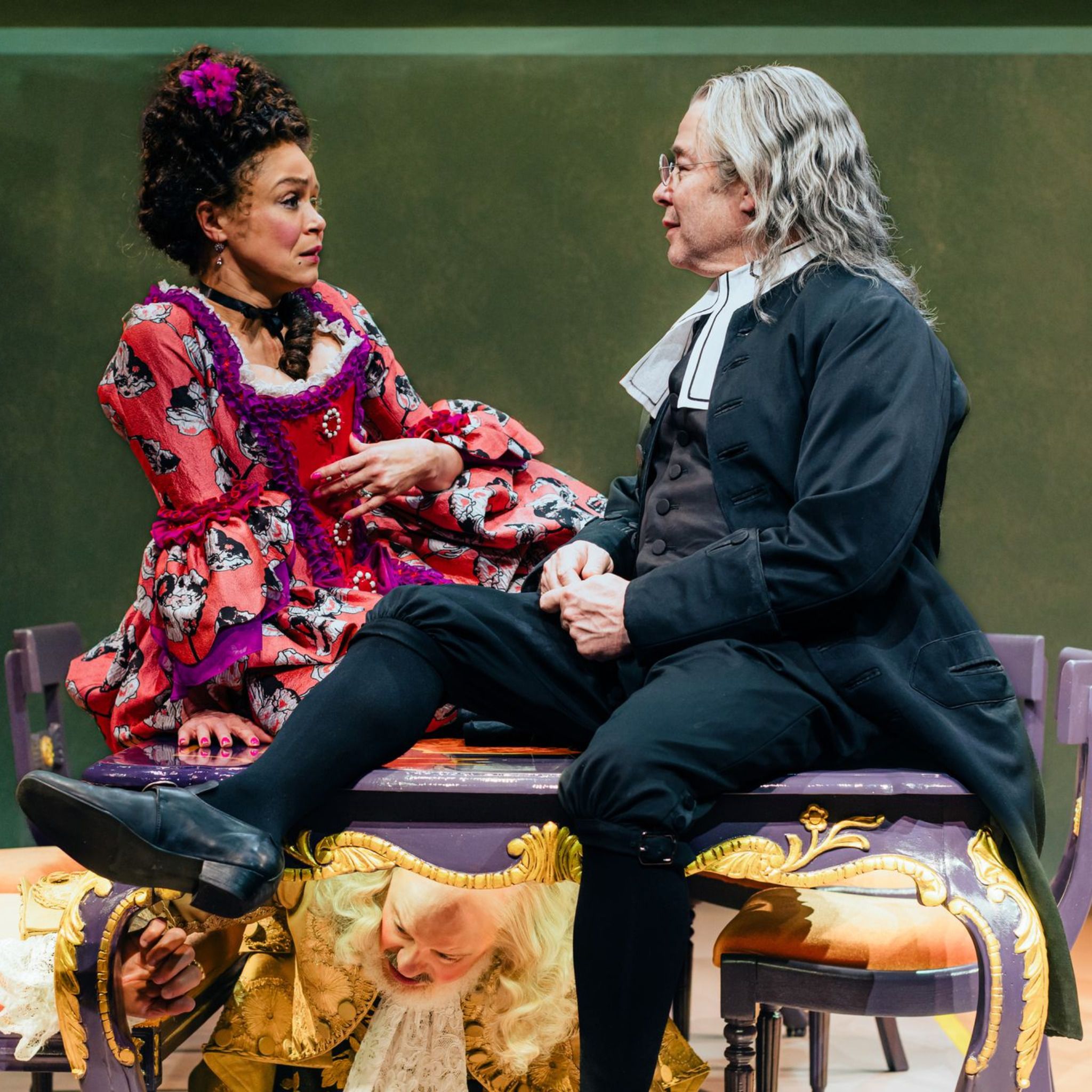
This is all of it. I'm David Fuerst in for Alison Stewart. On today's show, one of the stars of Stranger Things, Gaten Matarazzo, is here to talk about the show. Rosie Grant is the author of To Die For a cookbook of gravestone recipes. She'll join us to discuss how a tombstone in Greenwood Cemetery inspired her. And writer director Cameron Crowe joins us to talk about his new memoir, the Uncool. That's the plan. So let's get started. Tartuffe is finding new life in 2025. The classic satirical comedy was written in the 1600s by French playwright Moliere. It tells the story of Tartuffe, a con artist who portrays himself as a devout religious figure.
- [01:01]
B
He.
- [01:01]
A
He has the character Orgone completely in his sway while every other member of his household and seemingly the world sees right through his act and how he's taking advantage of the family. Tony Award winning Matthew Broderick plays the lead role in a new production of the play, now running off Broadway at New York Theatre Workshop. The cast also includes David Cross, Francis Chu, Bianca Del Rio, and Lisa Crone, who wrote the book and lyrics for the Tony Award winning musical Fun Home Tartuffe, running at the New York Theater Workshop, 79 E. Fourth St. In Manhattan through January 24. Opening night is actually tonight. And with us now in the studio is Matthew Broderick, Lisa Crone and director Sarah Benson. Welcome.
- [01:49]
C
Thank you. Thank you.
- [01:51]
A
So, Matthew, an opportunity to play a real morally reprehensible con artist. How could you say no?
- [02:00]
D
I couldn't. I didn't. Yeah, it's a wonderful part and I have great people with me to con. And David Cross is. I don't con this one.
- [02:15]
A
David Cross is who you're really focusing your con.
- [02:17]
D
Yeah, yeah. And he's a delight to play with and to con. I really enjoy it. And it's a wonderful play. So old and so pertinent. It's. Imagine writing something 300 and whatever years ago and still alive as can be.
- [02:38]
A
Alive as can be. Well, tell us about this production. What was it about Tartuffe that made it seem ripe for revival in 2025?
- [02:49]
D
Well, I don't know that I thought that way. Maybe Sarah did, but the director has to think things like that. I am, but I did too. I mean, I just, I've always liked it. I, I saw the play when I was very young. I saw John Wood play tartuffe in the 70s, and I've seen Henry Goodman, I've seen several people, and I just always enjoyed it and never thought I would do it or, you know. And then, Sarah, I had a meeting with the director and read it. Lucas's adaptation was so good and funny, and I just thought it might be. Was worth a try.
- [03:30]
A
Well, let's talk about that. Sarah Tartuffe, written by Moliere, first performed in 1664, I think it is. What does this play have to tell us in 2025? Last I checked, con artists have not gone out of style.
- [03:47]
C
Yeah, unfortunately not. Yeah. I mean, I think that the play is this sort of fascinating document looking at what makes someone believe what they believe and the kind of slippery nature of belief itself. And this just felt like a very ripe time to be interrogating that and asking those questions. And to be doing it inside such a strong comedic envelope just feels like the sort of Frisian between those questions around morality and who gets to define morality and inside a comedy just felt like the moment to be doing that.
- [04:26]
A
To be doing that. Now, a director has to make a lot of choices. When you're working on a production like this is the one that you made in this play that you think worked really well or maybe surprised you?
- [04:37]
C
So I think when Lucas and I began talking about.
- [04:39]
A
Lucas is the person who wrote this.
- [04:41]
C
Nath is the writer who adapted the Moliere. And we began working on it together very early on. And, yeah, we sort of immediately knew that we wanted to locate the language in a contemporary space. And, yeah, we had a lot of conversations around, do we rhyme? And how do we approach the language? And we landed on this sort of incredible language that Lucas has found, which is rhymed coupler, but has a irregular meter. So the comedy is sort of surprising. And I think that was something that. That really we wanted to find, that you're sort of falling into the comedy, stepping into the comedy, and this incredible company really sort of marry with that way of thinking about comedy. And I think that was a sort of informing principle of how we approached it initially.
- [05:36]
A
Lisa, you portray the maid.
- [05:39]
B
Yes.
- [05:39]
A
Who was the exasperated.
- [05:42]
B
The saucy, exasperated maid.
- [05:44]
C
Yes.
- [05:45]
A
Who is this voice of reason right throughout all of this madness as Tartuffe manipulates this wealthy family? Do you enjoy being the one that gets to sort of put everyone in.
- [05:55]
B
Their place on stage, in life and on stage? I do, yeah. Yeah. We're having a really, really fun time with it. I think the casting of this, I think, is one of Sarah and Lucas's and the workshops, strokes of genius with this. It's a very. The cast, it's got a Real cohesion. But people are quite different. People's performance styles and energies are really quite particular, I guess I would say, in a very vivid way. That is having a very, I think, delightful synergy, I think it seems, for audiences and certainly for us on stage.
- [06:42]
A
Let's talk more about this cast. Sarah, Matthew Broderick, Lisa Crone, David Cross, Bianca Del Rio. Tony award winner Frances Chu, Emily Davis, Amber Gray. Quite a collection of characters packed onto that intimate stage.
- [06:59]
C
Yeah. So, you know, I think we started to think about people who we were just obsessed with in these roles, and it sort of emerged out of, you know, people with. As Lisa referenced a range of performance histories, but that we felt that could really deliver this incredible comedy. And I think one of the great things about being in the room with this group is there's so many generators in the company, people who write their own material, create their own material, and so just the minds around comedy have been a very sort of rich, synergistic place.
- [07:36]
A
There's a lot of people bringing a lot of experience to this stage and a lot of people who, as you say, write their own material. Lisa included.
- [07:44]
C
Yeah, exactly. And I think, you know, it's been an amazing group to interrogate, you know, physical comedy, you know, the style of comedy that we're after, and to sort of really find that fine blend of the physical thrill and the relish. That is certainly a conversation with farce and satire, but. But it's really deeply felt, and I think that that was something that Lucas and I and the whole company have really sort of rallied behind that. These are people we care about. And I think that the sort of. The pain of what everyone's going through is also what makes it so funny.
- [08:19]
A
Well, Matthew, before your character appears on stage, nearly everybody has been talking about you behind your back, you know, detailing what an absolutely horrible person that you are. Except for David Cross. Me? He loves you. Yes. Between Tartuffe and your portrayal of Richard Sackler in the Netflix series Painkiller.
- [08:44]
D
Not as funny.
- [08:45]
A
Not as funny. But you've been taking on some really complicated characters recently. How do you approach a character like Tartuffe? Because on one hand, it might be. You might want to go really big with someone like this.
- [08:59]
D
Yeah, well, I mean, I try to. I approach them the same way, you know, if somebody's, you know, a villain or not. Most villains don't think of themselves as villains, you know, so I don't think tar. Well, Tartuffe probably does know. He's a full of crap. Beans. Is beans okay?
- [09:22]
A
Beans is fine.
- [09:25]
D
And, you know, I think Richard Sackler probably thinks he helped a lot of people. And so I try to approach from their point of view, you know, and. But it's also. It's fun to play people who are sort of awful or duplicitous or, you know, it adds a layer that's a lot of fun for me. Somebody said, wow, it's nice to see you play a villain. I was like, well, that's all anybody ever cast me. I'm usually awful, actually. But, You know, when I was younger, certainly I was always sort of usually very nice. So it's a pleasure to express my less pleasant side.
- [10:13]
A
The inner scoundrel.
- [10:15]
D
The inner scoundrel is becoming more outer, which I'm enjoying.
- [10:21]
A
Some of the most striking mom of this play involve the scenes where everyone around Orgone, portrayed by David Cross, can see that he is being manipulated by Tartuffe. It seems impossible that this family member can't see through this deception how he could be so willing to adjust his reality to justify Tartuffe's increasingly impossible to justify actions. Is there a parallel you're shooting for there?
- [10:52]
C
I mean, I think it's impossible to watch the play today and not relate to the slippery reality that we're all living inside of. And the questions of the play around, wow, does this person really believe that? How does this person really believe that? And how are they getting away with it? Yeah, I think those questions feel very pertinent and. And yeah, I mean, I think the whole sort of textual history of the play, you know, it was initially banned and over the course of five years, you sort of see Moliere, like, wrestling with political authority and the question of, like, who gets to define what morality is, which, you know, he sort of changes the play in order to get it produced. But inside of it, you're sort of hearing those questions around who gets to define the moral landscape. And that really, that's one of the reasons textual history is always so interesting to me. Cause it plays out in the material. And you really see that in the characters in Matthew's character and in David's character particularly.
- [11:54]
A
I mean, I'm making it sound like it's pretty heavy right there, but there's this also this hilarious tug of war going on.
- [12:00]
C
Absolutely. And how absurd that is and how hilarious that is and how wild that is, that, you know, how we construct these realities and how beliefs build literally what we live inside of and how wild and funny that is.
- [12:17]
A
We're speaking with Tony award winning Matthew Broderick and Lisa Crone and also with director Sarah Benson, we're discussing their production of Tartuffe. Opening night is tonight. It's happening at the New York Theater workshop, running through January 24th. And Lisa, this is written. We spoke about this. This is written in these rhyming couplets. Right. Is it a challenge to perform dialogue with other characters when you're speaking in verse?
- [12:49]
B
I mean, it's a, you know, it's a style, it's a. It's a. Yeah, I don't know. I mean, every sort of genre has its own challenges. You know, it's particularly interesting because Lucas has filled this structure with relatively quotidian language, which I think the audience really is interested in. It's unexpected and it is, as Sarah says, irregular. And so it does. It does something sort of classical and timeless and then also kind of engagingly contemporary at the same time. I think there's a little bit of a very productive dissonance to it. I mean, one of our challenges in making it was to talk very fast. And I think it took us, you know, so we had to really learn it. I say, still working to get my lines exactly right every time. Personally, I am doing my best. It doesn't always come out that way, but the speed, how to attack the language as a company, that was a thing that we worked on together. And I think over these weeks of previews, I think we've really hit our stride with it and we can all feel this locomotive that we get on with the language.
- [14:26]
A
Absolutely. And as someone who, you know, wrote the book and lyrics for a Tony Award winning musical, do you sometimes want to break out into song?
- [14:35]
B
Always.
- [14:37]
A
But. But you're right. The rhythm that you get into, I stop thinking, oh, are they gonna get to the rhyme? It really does feel like conversation.
- [14:45]
D
Oh, that's good. Yeah. I think that's what we want it to do. You know, that you're not just reading a nursery rhyme, you know, that you're talking, and suddenly there's another layer of these surprises coming out, you know, so sometimes you can be formal with it or really, you know, accentuate that it's rhyming. And then other times it seems nice to pretend it's not and just do it very in a natural rhythm and then let those things pop out.
- [15:14]
A
Absolutely. It's not like you're going.
- [15:18]
D
No, it's just occasionally, occasionally we'll do that just because it's one that's good and you want it to, you know, or something. But it's fun to hit. Yeah. But mostly We, I think, try to speak as if we're not speaking in verse.
- [15:34]
B
Every once in a while, somebody going really fast, miss, you know, gets the wrong word, which is somebody else needs to rhyme with. And you see this look of panic across the stage where it's like, can I think of another rhyming word? What am I going to do?
- [15:48]
A
All compiling lists of, like, certain words that you have at the ready.
- [15:52]
D
I, two nights ago said, the best thing you can do is throw me out in the street. And I'm supposed to say, throw me out of this house. Otherwise there's a very good chance I'll do something bad to your spouse. But spouse and street did not cry. So I just stood there for a long time while David stared at me, not saying the next thing just to try to make me think of something that rhymed with street. And I, of course, could not until the next day.
- [16:23]
B
In one early preview, one unforgettable moment, you. And then you just said, no, sir. And it was really a. It was really a classic moment.
- [16:33]
C
Yeah.
- [16:33]
A
I gotta say, you know, if you're gonna pick a word to change to, though, street does have a lot of rhyming options.
- [16:38]
D
It does, but it's hard when you're under the gun. And the clock is like being on Jeopardy, you know?
- [16:44]
A
We are speaking with Matthew Broderick and Lisa Crone and director Sarah Benson. We have to take a quick break. We're discussing their production of Tartuffe. It's happening at the New York Theatre Workshop. This is all of it on wnyc. This is all of it on wnyc. Thanks for all joining us today. We're speaking with Matthew Broderick and Lisa Krohn and director Sarah Benson talking about their production of Tartuffe happening at the New York Theater Workshop. Running opening night is tonight. It's running through January 24th. And, Sarah, tell us more about this cast, because it really is an incredible collection of people.
- [17:30]
C
Well, I think one of the amazing things is that we have these incredible comedians in the show. Obviously, David Cross playing Orgone, and also Ike Ufomadu, who plays Valer, and also the officer and the bailiff. And I had seen both of these comedians perform comedy. I'd seen Ike at Jack, which is this amazing performance space in Brooklyn, and I'd always been like, I want to put him in a play. When we began talking about how do we deal with all these characters who show up in Act 5, we had the impulse that Ike, who has the most incredible deadpan delivery, that it would be Phenomenal to see him play all of these roles. So Ike was really a North Star as we started figuring out the comedic style of the show.
- [18:19]
A
And I won't give it away, but that whole. That really leads to a fantastic moment towards the end.
- [18:25]
C
Yeah, exactly. And it really was a way to sort of lean into the thrill of the sort of the physical comedy and the theater of it. So. Yeah, and it's been so fun to see these comedians and this phenomenal company of actors learning from each other in the room. And the synergy that Lisa referenced has just been really, truly incredible.
- [18:48]
A
And David Cross, of course, who. Famous for Mr. Show and lots of movies and standup comedy, all kinds of things. Arrested Development.
- [18:57]
C
Exactly, exactly. And Bianca Del Rio, the most amazing drag performer who. Lucas really wrote it for her, and we were like, well, Bianca Del Rio would be our dream Madame Pernell. Would she ever come do it? And so we asked, and she said yes.
- [19:14]
A
This is Orgone's mother.
- [19:16]
C
This is Orgon's mother who sort of bookends the play, and she was one of the characters that got added to create this strong comedic envelope when Moliere revised the play to get it produced.
- [19:27]
A
Well, let's talk about that opening scene, if we can, with Bianca Del Rio. This is like a celebrity roast, and nobody on stage is spared.
- [19:37]
C
Yeah, that's exactly. That's exactly right. And I think we began to imagine this as her, you know, reading the room, essentially. And, yeah, she's. She's been. Her pride has been injured by what's happening in the house, and she sort of takes that out in the form of these roasts of everyone. And it's also us sort of introducing the cast of characters for the whole sort of dialogue.
- [20:06]
A
It's a great way to introduce everybody, too.
- [20:08]
C
It's incredible. And, yeah, Bianca just. But brings such amazing, you know, comedic instincts. And, yeah, she's a phenomenal grandmother in this, so. And then she shows up again at the end of the play. So she's this sort of touchstone of what's changed, you know, during the course of the show.
- [20:29]
A
And how much fun is it? Is it going back and forth with David Cross as you're just torturing this poor person?
- [20:35]
D
It's great. I love it. Yeah. I mean, you know, Lisa I can't torture. She's always on to me, which is irritating. But that's fun, too. David is great. He's. He's just very, very funny. And it's. It's a subtle kind of humor that you don't see coming but you just find yourself laughing. You know, it's. He's very smart and just always makes it interesting. And to watch Ryan, his son, you know, he catches.
- [21:16]
C
Yeah. Ryan Haddad, who is playing Demise. And.
- [21:21]
D
It'S a horrible scene where I basically confess to everything that I'm doing. You know, I say, exactly. You know, I'm trying to sleep with your wife. I'm a terrible person. And Orgon still is like, well, he's only saying that because he's a good guy. You know, trying.
- [21:39]
A
You're trying to defend.
- [21:40]
D
I'm trying to confess.
- [21:41]
A
You're trying to defend his son, in Orgon's view.
- [21:43]
D
And Orgon takes all of that to mean that the son has done something bad, no matter what happens. And, you know, poor Demis, he ends up collapsing onto the table. His head goes down and, you know, it's fun to torture him every night. I like that.
- [21:59]
A
But you. You know, we're talking about the comedic potential in some of these scenes, but as you mentioned earlier, there's real emotions here. It's a heartbreaking scene, hopefully.
- [22:08]
D
Yeah. I mean, yeah. Sarah, want. We all wanted to. All good comedies are like, you know, you're trying to be funny, but not in a blank way or a cartoon. It's. It's funny because it's serious and upsetting sometimes. You know, I mean, being conned by somebody is a very serious. Can be very serious. I take their house, basically. But it's also funny to watch that happen, so. But it's only funny if you're also believing the serious side of it, I think.
- [22:46]
A
Do you have to play that character in a way that doesn't make the audience fall in love with this character so much that they're on your side? You know what I mean? That he's so hilarious, you know?
- [22:59]
D
Yeah. I don't. I mean, I hope they enjoy his horribleness, you know. But no, somebody said, oh, I like that you do it.
- [23:11]
A
He's.
- [23:11]
D
He's like. He's a good guy. I'm like, what are you talking about? Watch the play with a good guy. So sleazy. What in the hell are you talking about?
- [23:19]
A
But.
- [23:22]
D
No, I. I don't worry about that. I just want. I want them to. The audience to believe me, you know, that it's happening. And I definitely want it to be enjoyable or upsetting or whatever. In a way, that's not my problem. But I just want them to come along and sort of see where it goes.
- [23:46]
A
Well, it's a fascinating production, and I wanted to mention that the set design as well. Could you talk about this, Sarah?
- [23:53]
C
This is.
- [23:54]
A
This has something to do with court tennis, right?
- [23:58]
C
Yeah. So in my research process, I often, when I'm working on something, will do a lot of research, and I came across this sort of scrap somewhere that Moliere's company, the Illustrious Theater, used to perform in tennis courts. And so I got fascinated by, wow, what must that site have done for this idea of the volleys back and forth and knowing what Lucas's text is like and this sort of intense volleying that it demands, I sort of wanted to bring forward that question of, like, how. What was it, to rehearse and perform these plays in that sports context and in this sort of. The idea of the game would be very vivid. So. So the scenic collective Dots designed the set, and so it came out of period research for these tennis courts, and that's what we put on stage.
- [24:54]
A
Well, fascinating. And there's certainly a lot of volleying going on. Opening night is tonight. What are the plans tonight, and what are the plans for the show? I know it's running through at least January 24th.
- [25:07]
C
Yeah, well, we had our party last night, which was fantastic.
- [25:11]
A
So the party's out of the way.
- [25:12]
C
Yeah, yeah. No, we're really excited to, you know, continue to share this with audiences. It's been a phenomenal run already, and, yeah, we're just getting incredible responses from audiences, and I'm really seeing the actors play with the audience, and that sort of feedback loop, which I live for, is. Is happening. And, yeah, it feels very charged and thrilling. So, yeah, we just want to share it with as many people as we can.
- [25:41]
A
Well, I know you've all been involved in so many different productions, but, Lisa, when you get together with a group of actors and directors and producers like this, do you just want it to continue?
- [25:53]
B
Yeah, I mean, I'm certainly excited for the. For the coming weeks. It's funny, you know, you start, you know, like, in the first rehearsal. I remember looking around and thinking, you know, in a. In a matter of weeks, we're gonna know so much about each other. You know, we're gonna be, like, intimate with each other. You know, it is very. It's very intimate being in a show. You know, we. We get dressed together, and we eat together, and we take naps together, and it's. And then we're on stage together, which, of course, is kind of. It's the ultimate trust exercise in a certain way. So, yeah, there's nothing really like it.
- [26:35]
A
Well, our guests have been Tony Award winners. Lisa Krohn and Matthew Broderick, director Sarah Benson. The production of Tartuffe. It's running right now through January 24th at the New York Theater Workshop at 79 East 4th street in Manhattan. Opening night again, it's tonight. Thanks, everybody for joining us.
- [26:53]
C
Thank you. Thank you for having us.
- [26:55]
A
I'm Ira Flato, host of Science Friday. For over 30 years, our team has been reporting high quality news about science, technology and medicine, news you won't get anywhere else. And now that political news is 24 7, our audience is turning to us to know about the really important stuff in their lives. Cancer, climate change, genetic engineering, childhood diseases. Our sponsors know the value of science and health news. For more sponsorship information, visit sponsorship.wnyc.org.