Loading summary
Transcript47 lines
- [00:00]
Progressive Insurance Announcer
All of it is supported by Progressive Insurance. Do you ever think about switching insurance companies to see if you could save some cash? Progressive makes it easy to see if you could save when you bundle your home and auto policies. Try it@progressive.com Progressive Casualty Insurance Company and affiliates. Potential savings will vary. Not available in all states.
- [00:29]
Alison Stewart
This is all of it on wnyc. I'm Alison Stewart. New York City is often called the cultural capital of the world. And as someone who is a big consumer of the city's arts offering. Let's see, in the past seven days, I've been to a Broadway show, an off Broadway show, an indie movie theater, to a gallery, a major art museum, and read two books. I agree we love artists here at Olivet, but actually retaining artists and welcoming new artists the city, well, that's a major challenge. According to a recent report from the nonprofit center for Urban Future, there are fewer dancers, musicians, actors, and visual artists living and working in New York City. Many left the city during the pandemic, and now they can't afford to come back. Mayor Mamdani has made affordability the center of his administration's agenda. And his new pick to head the city's Department of Cultural affairs wants to make the city more affordable for artists. Her name is Diavich, and she joins me now. Dia, welcome to all of it.
- [01:24]
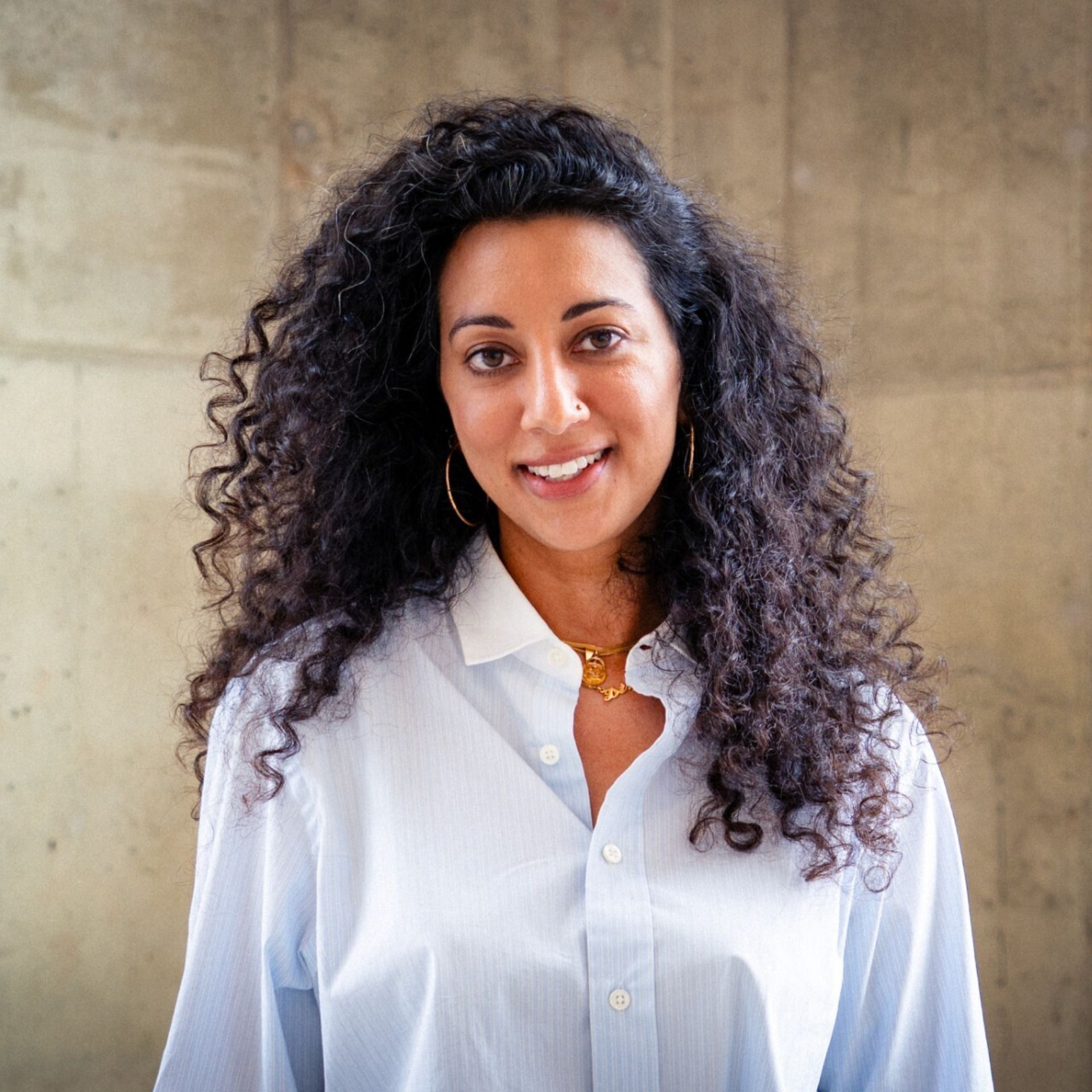
Diavich (City's new commissioner of the Department of Cultural Affairs)
Hi, Alison. Thank you so much for having me.
- [01:26]
Alison Stewart
We're so happy to have you here. You went to college at Bard. You got your master's degree at Hunter, and if you go on your LinkedIn page, it says your first job or one of your first jobs was at the Queen's Museum in 2010. How did you get into the arts?
- [01:39]
Diavich (City's new commissioner of the Department of Cultural Affairs)
Oh, great question. Well, I actually was a, like, suburban kid, competitive dancer in, like, my big tutus and, you know, for years and years. So I. And then I switched into. I found photography in high school, and it became kind of a really important outlet for me. I grew up in Connecticut in a smallish town that I didn't quite fit into for many reasons. And photography became kind of my outlet to understand the world and to look more closely and to find other ways of seeing and being and find my community. And, yeah, from there I went to Bard College, studied photography and politics, and I got a fellowship, a curatorial fellowship at the Queen's Museum in 2010. And that, like, really changed my life. Up until then, I had, like, a very kind of narrow understanding of how art and politics could live together. I was thinking, like, documentary. And when I got to the Queen's Museum I learned about like social practice art, how artists are active in their own communities doing like really hands on work to, you know, mutual aid to support their neighbors. And also the Queen's Museum was just such an example of how a museum itself can be a neighbor and can show up for local community. We also used to say, like, by being very hyper local in Queens, we were being international because Queens has the whole world living there. So it was also just like an incredible education for me and it opened up my eyes to this entire ecosystem. I like grew up in the suburbs, didn't go to many museums, or I went to Broadway from time to time, like special occasions. But really when I started college and when I started working in the arts, I was like exposed to just the density of cultural life here. Like as you said when you started this, just there's so much all the time in New York City to experience.
- [03:30]
Interviewer/Host
Why did you want to make art your career?
- [03:32]
Diavich (City's new commissioner of the Department of Cultural Affairs)
I really feel like I had a kind of spiritual almost gravitation to art as this just powerful tool to understand the world. And what I think of as the possibility of artists to be help us all imagine for me is also like, helps us all imagine other ways that we can live together, other ways that cities can be formed, that the world can be formed. And the kind of political imagining for me feels really strong from the perspective of an artist because it's kind of without bounds. We can think beyond the constraints of the everyday that we live in. So I feel like for me it's almost a faith practice. I believe so strongly that artists and, you know, experiencing arts and culture is like a. A practice of reimagining our lives.
- [04:27]
Interviewer/Host
You worked as a curator at organizations like the High Line and Creative Time. What did you learn from those positions that will help you in your new fancy job?
- [04:36]
Diavich (City's new commissioner of the Department of Cultural Affairs)
Yes. Yeah. I mean, I. I am really grateful that my background is as a public art curator because as all of my mentors have told me, we with public art, although this should be the case for all art, but with public art, the public is as important as the art. So we spend so much time thinking about, like, who is this for? How do we go deeper with some communities while being open to everybody? What is the kind of language that artists use to communicate big, complicated, sticky issues in ways that can be whimsical, joyful difficulties. So it really. But it really is kind of a study in neighborhoods too, and communities and who lives where and what do they want? What are they looking for? What are the artists that are in that community? So I think it's like, very good preparation. You also end up working with so many city agencies to make these projects happen, like the parks department, the Department of Transportation. I did a big project with the mta, a sound work by the artist Chloe Bass. We took over the sound system, the PA system, and the emta. And all of those things are complicated. Once they're in the public realm, they feel like, oh, of course this should be here. But to get there is this kind of long road of understanding government process, understanding community boards, and all the kind of players that go into bringing art to the public realm.
- [05:53]
Interviewer/Host
I'm speaking with Diavidge, the city's new commissioner of the Department of Cultural Affairs. Listeners know a lot of you work in the arts. We want to know what you think the biggest challenges are facing the city's arts community. What are the biggest opportunities that you see out there? What would you like to see happen? Call or text us now at 2124-3396-9221-2433. WNYC. You previously worked for the DCLA and you created the city's public artists in residence program. It was known as pear. Can you explain a bit how that worked?
- [06:26]
Diavich (City's new commissioner of the Department of Cultural Affairs)
Yeah, yeah. That program is inspired by the artist Merle Laderman Euclis, who in the 1970s became the first official unsalaried artists in residence with the department of Sanitation. And she was. Is a feminist performance artist and was doing all of these. You know, she had children and realized that she didn't have the same opportunities to make art as. As male artists and was really kind of grappling with the loss of career because of just the nature of being a woman and being a mother. And so she started doing. She wrote this amazing manifesto called the Maintenance manifesto, where she said that she will continue to do the life sustaining work of caring for people and her home and the environment that she lived in, but she'll call it art. And so maintenance art was born. And she started doing these, like, public washing performances where she'd wash the sidewalk. And one performance after one performance, a Village Voice wrote a review. And it was in the 1970s New York. The city was like, near Fisler in a fiscal crisis, near bankruptcy. And the Village Voice said, well, maybe the department of sanitation should apply for a grant to the nea. And like, the next day, this commissioner of sanitation called Merle and said, how would you like to make art with the biggest maintenance department in the world? And she's like, I'll be right there. And so I was Actually writing my graduate thesis, my master's thesis on her work when I was working at the Department of Cultural affairs the first time under then commissioner Tom Finkelpearl, who had been a curator of her work and with her also. And in 1985, she wrote a memo to the then mayor saying that there should be a public artist in residence or pair at every city agency. And we decided to try to make it happen. So the program still exists Today, it's over 10 years old. And we put artists in residence with different city agencies to kind of think about an entire system and how they might use their collaborative practice or their political practice to address some of the issues or the challenges that communities are facing.
- [08:31]
Alison Stewart
It's interesting because on pear's website it says pear is based on the premise that artists are creative problem solvers. What problems do you think artists can solve? Can you give me an example?
- [08:42]
Diavich (City's new commissioner of the Department of Cultural Affairs)
Maybe, Yeah. I mean, and though that's bold language, and I think in some ways it's a provocation to kind of think about how artists should be at the table. Right. And like, often we think about the arts as decorative, but this provocation asks you to think about art as like an necessary, everyday part of cities and thinking through our big problems. So for one, one example is we. One of our first residencies was the artist Tanya Brugara, an incredible Cuban dissident artist. And she was with the mayor's Office of Immigrant affairs. This was probably 2015. And we were thinking about, alongside that agency, how undocumented residents get trusted information, like how they get access to lawyers that are credible, how they, like, really have resources that are reliable for them. And the agency was having trouble reaching these communities for many reasons. Trust the biggest one. And so Tanya formed with some collaborators of hers, formed like a group of bicycle messengers with these women mother activists from Corona, Queens, called Mujeres and Mundo. And they would bike around Queens and hand out like these really amazing looking graphics that pointed everyone to, like actual credible lawyers and various other services that they would need. And it was just this way to kind of creatively connect the dots. So that's one concrete example I can.
- [10:07]
Interviewer/Host
That's so great. I'm speaking with Diaviz, the city's new commissioner of the Department of Cultural Affairs. We'll have more after a quick break. This is all of It.
- [10:26]
Alison Stewart
You're listening to all of it on wnyc. I'm Alison Stewart. In studio with me is Diaviz, the city's new commissioner of the Department of Cultural Affairs. If you would like to call in art listeners, listeners who make art, listeners who enjoy art. What do you think are the biggest challenges facing the city arts community? What are the biggest opportunities that you see out there? What would you like to see happen? Our number is 2124-3396-9221-2433. WNYC. I'll ask you those questions. What are the biggest opportunities that you see out there? Diya?
- [10:58]
Diavich (City's new commissioner of the Department of Cultural Affairs)
Yeah, I mean, I think that there is. I think both of those questions are actually deeply linked, that we're in this moment of kind of intense crisis in the field, that there's, like, multiple things happening. Philanthropy is contracting. We're in an uneven Covid recovery, which is hitting theater and visual arts differently, but hitting them. And the cost of living is just going up and up and up, and we're in an affordability crisis in the city. It's getting increasingly hard for artists to live here and also for cultural workers to live here. As you said in the beginning of this segment, artists are leaving. Almost 18% of dancers have left already since COVID That's a huge problem. Because the challenges are so big. There is a lot of energy around figuring out how we solve them and how we kind of implement big, bold ideas to do so. So something that I'm particularly excited about with this administration is that arts and culture, the deputy mayor for economic justice. So we will be thinking about policy through the lens of economic justice, which for me means we have the opportunity to kind of orient our policy making and thinking around the worker, the cultural worker, the artist, and the everyday worker in New Yorker that needs the time and the resources to experience this density of cultural life and what might it look like for our agency down the road if that's who we're geared towards? So we have this, like, great opportunity to think about how we really keep artists here, how we keep cultural workers here, and how we keep cultural organizations thriving in a different way. I think in a bold way.
- [12:35]
Interviewer/Host
The city's Department of Cultural affairs is the largest municipal funder of culture in the United States. The budget is about $300 million. Its primary goal is to distribute that money. How do you see your background as. As an artist, as a curator, in choosing the organizations and the programs to support?
- [12:55]
Diavich (City's new commissioner of the Department of Cultural Affairs)
Yeah, well, I wouldn't say I'm an artist, but I appreciate living near and dear to so many of them. But I. So we are largely governed by. By public processes also. So it's less about me picking organizations and more about the agency having a real lens towards equity Actually, the agency this year turns 50 years old. Yeah. And it was kind of born out of this understanding that it's a real economic driver to the city. Back then, when it was created, that was about a $3 billion a year industry. Today that's estimated at $145 billion. And, you know, the sector employs about 350,000 workers. So this is like a really big field. And the breadth is quite, quite big, too. Large institutions, small grassroots organizations, covers like, you know, every discipline you can think of. And within that, you know, and within our portfolio, we fund organizations in several different ways. We fund them through a grant making program called the Cultural Development Fund. Grants are actually open right now, so anybody can apply that. It's a nonprofit organization that qualifies through April 2nd. We fund over a thousand organizations through that process, and it's a peer review process. And then we have a cultural institution groups, 39 organizations that are on city owned land, like the Met Museum, Lincoln Center, Carnegie Hall, Studio Museum, Queens Museum, Staten Island Museum. We have a deeper relationship with them. And then we fund a lot of capital improvements and new construction and renovation. So everything from the new Studio Museum, the gorgeous building in Harlem, to like an H vac system or lighting. So it's quite extensive how we fund and what we really are interested in is what equity looks like through that lens. And also like strengthening this public infrastructure for art and culture. I mean, you mentioned New York City is the cultural capital of the world. That is not possible without this kind of historic investment in that public infrastructure that supports it.
- [14:54]
Interviewer/Host
We've got a question here. It says, I used to work in public art in New Zealand for Auckland Council. And our biggest challenge was communicating to the public what the city was doing in the creative spaces and how the public could engage. There's so much art and culture happening in New York City. How can the public find out about it and navigate it? Accessibility and navigation is difficult in such a big and busy city.
- [15:17]
Diavich (City's new commissioner of the Department of Cultural Affairs)
Yeah, absolutely. I know. I think there is also a myth here too, that arts and culture is inaccessible. But actually, like, it's something like 96% of the organizations that we support offer free and affordable programs for New Yorkers already. That there's already so much to do for free or for low cost. And amplifying it is a challenge. It is a challenge. We on our website have a page that you can go to that lists all the kind of free museum offerings. So that's one place to start, and that's a place that we're kind of really interested in investing in, like, what is it? How can we better amplify what's already happening, how arts and culture are already working for New Yorkers.
- [15:55]
Alison Stewart
You said in one interview a couple of years ago that when building programs, you often ask the question, who is already doing the work? Why is that an important question to ask?
- [16:04]
Diavich (City's new commissioner of the Department of Cultural Affairs)
Yeah. Well, first of all, I think everything happens in coalition, and that's how we get better programs, we get better policy, and we understand how we're kind of working together to achieve a common goal. And also that we're not replicating something that already exists. We're not wasting our time doing something that's already there or that's already been tried and didn't work for whatever reason. But I think that question opens the door to relational research, that we're in research and dialogue with people understanding who's doing it, who did it, what's going on?
- [16:35]
Alison Stewart
Yeah. What do you see as the role of collaboration in your future?
- [16:39]
Diavich (City's new commissioner of the Department of Cultural Affairs)
Yeah, I think, I mean, to this point that I would love for more people to understand not the specifics of the Department of Cultural affairs, but that this infrastructure exists. And to do that, we need to bring more and more people into the process. So I'm really interested in bringing artists more closely into the process and into the, you know, workings of city government. Department of Cultural Affairs. I'm really interested in collaborating with private philanthropy. There are so many things that private philanthropy can do that public systems cannot do. Right. But there's also, like, things that we can do as public funders at private philanthropy could never. And that's build programs at scale and be accountable to delivering them equitably. So how do we work together to kind of better coordinate what we're doing to solve these really big challenges that the field is facing? So for me, it's like increasing those coalitions to increase the advocacy, the knowledge of what we do, and to kind of help us better serve the field.
- [17:36]
Interviewer/Host
You've advocated for centering practices on care and mutual aid within organizations. What does that look like? Can you share an example with us?
- [17:45]
Diavich (City's new commissioner of the Department of Cultural Affairs)
Yeah, I mean, I think that resource sharing is a really important way forward. I think about when I was at Creative Time, we were part of a group of organizations about 14 organizations that the acronym is canny, similar sized between Visual arts, Performing Arts and It was formed during COVID as, and it became this way for all 14 organizations to fundraise together. So it might be like really hard for one individual because of capacity reasons or because their profile isn't as big. But all 14. Together, we were able to raise quite a bit of money through that. And then it's become this kind of peer network. So on a structural level, I think those are. That kind of thinking is really interesting. And then on a. You know, artists are constantly in mutual aid. They just are. They, like, dance in each other's performances, they help each other out with their projects. They're bartering all the time. They're sharing resources that they know how to make a way out of. No way, you know?
- [18:44]
Alison Stewart
Yeah.
- [18:44]
Diavich (City's new commissioner of the Department of Cultural Affairs)
And it's based on that kind of idea of mutual aid, but also really a care for each other's practices and wanting to show up for each other. And I think organizations have an opportunity to kind of replicate that.
- [18:57]
Interviewer/Host
We got a text that says affordable housing is obviously an imminent concern, but it's next to impossible to have affordable studios. We talked about this in the beginning about the center for Urban Future report that said, after a steady growth, the city has seen a decline in dancers, an 8% drop in actors. You know, these problems. What do you see as the problems facing the creative economy in New York City?
- [19:23]
Diavich (City's new commissioner of the Department of Cultural Affairs)
Yeah, I mean, I think affordable workspace is a really important point. And that means studios for artists. It means rehearsal space. It means stages where theater makers and dancers can produce independent plays and productions. It means recording studios means filmmaking space. You know, it's kind of the giving. Giving artists the tools for free or for below market rate to actually be able to make work in the city that they live in is kind of step one to having artists be able to live here. Housing. Absolutely. Increasing an affordable housing stock means more housing for artists. And really thinking about what meaningful support looks like on a financial level, too, to individual artists and workers.
- [20:07]
Alison Stewart
What makes you hopeful when you think about artists are we got a turning point when we have to do something, anything. I'm just curious. What gets you up in the morning, gets you to the office?
- [20:18]
Diavich (City's new commissioner of the Department of Cultural Affairs)
Yeah, I mean, I have all the faith in the world that no matter what the conditions, artists will have the audacity to metabolize the world and make the work that they need to make. It's. The question is, can the industry hold it? And can the industry hold it because of the financial precarity of the industry and also because of, like, rising, you know, rising threats of authoritarianism means a crackdown on the, you know, the limits of public expression. Can the industry hold it? Artistic freedom, even when it gets tricky, and do they have the financial capacity to take those big risks? So the question for me is not, like, about artists at all they will always make art. It's like, does the infrastructure support what they're doing?
- [20:58]
Alison Stewart
Are there ways that the DCLA and cultural organizations in the city can collaborate with other agencies and other organizations to drive the priorities of this administration?
- [21:10]
Diavich (City's new commissioner of the Department of Cultural Affairs)
It's a great question. There are so many amazing advocacy groups that exist within the arts. We I'm like, as I said, like a coalition builder. And I love that this mayor has a politics of listening that I hope to also implement and bring to our agency. So there will be plenty of opportunities for us to be in dialogue and conversation with artists and cultural workers in the field to hear all of these great ideas that people have. I think it's going to take all of us thinking together.
- [21:39]
Alison Stewart
Where were you when you got the call about the job?
- [21:43]
Diavich (City's new commissioner of the Department of Cultural Affairs)
Oh, it's actually such a good question. I had gone back to India to see my family after almost 20 years. Oh my gosh. Was, yeah. And I was like kind of in the interview process during that time. So I was having a very surreal experience reconnecting with family and being in these spaces I hadn't been in in so long and then also having this like life changing interview experience. So it felt also really surreal and yeah, profound.
- [22:12]
Alison Stewart
Why did you want the job?
- [22:14]
Diavich (City's new commissioner of the Department of Cultural Affairs)
I wanted the job because, like so many New Yorkers, I am deeply energized by this administration. I feel like more people than ever are talking about city government, are thinking about how our government can better work for us, and are like interested in these big, bold ideas to solve these problems and aren't afraid, aren't afraid to say them, to try to do them. If it doesn't work, try something else. And that orientation and that like, clear argument that we need to address the affordability crisis in the city really drove me to take this job. I think this administration offers a lot of possibility that I'm excited to dive into.
- [22:52]
Alison Stewart
If someone's listening to this and thinking like this sounds really great, but how are they going to do it? What's your first step?
- [22:58]
Diavich (City's new commissioner of the Department of Cultural Affairs)
Yeah, I mean, you know, the city is filled with experts already, including my team. We have a really incredible team at the Department of Cultural affairs that is so in the weeds of what this has looked like and continues to look like. So number one is tapping into the expertise that already exists within, but also within the field. There are so many amazing solutions. You mentioned center for Urban Futures. There's just a lot of people that have been doing really good data oriented work around how to move the needle on these issues. So it seems impossible, but actually There's a lot of solutions already out there. It's just a matter of having the guts to try them.
- [23:37]
Interviewer/Host
We have been speaking with Diavidge, the
- [23:39]
Alison Stewart
city's new commissioner of the Department of Cultural Affairs.
- [23:42]
Interviewer/Host
Thank you for making the time to be with us.
- [23:44]
Alison Stewart
We really appreciate it. And good luck on your job.
- [23:46]
Diavich (City's new commissioner of the Department of Cultural Affairs)
Thank you so much. And thank you for having me.
- [23:49]
Interviewer/Host
Coming up on tomorrow's show, we'll learn about the rather remarkable origin story of espn. The co directors of the new HBO docu series Sports Heavens joins us to discuss. I'm Alison Stewart. I appreciate you listening and I appreciate you. We we'll meet you back here next time.
- [24:07]
Progressive Insurance Announcer
WNYC's journalism and storytelling is heard by millions of passionate listeners. Sponsors of our programming gain our listeners attention and their respect. Learn about how your organization can support WNYC and wnyc studios@sporship.wnyc.org.