← All Of It with Alison Stewart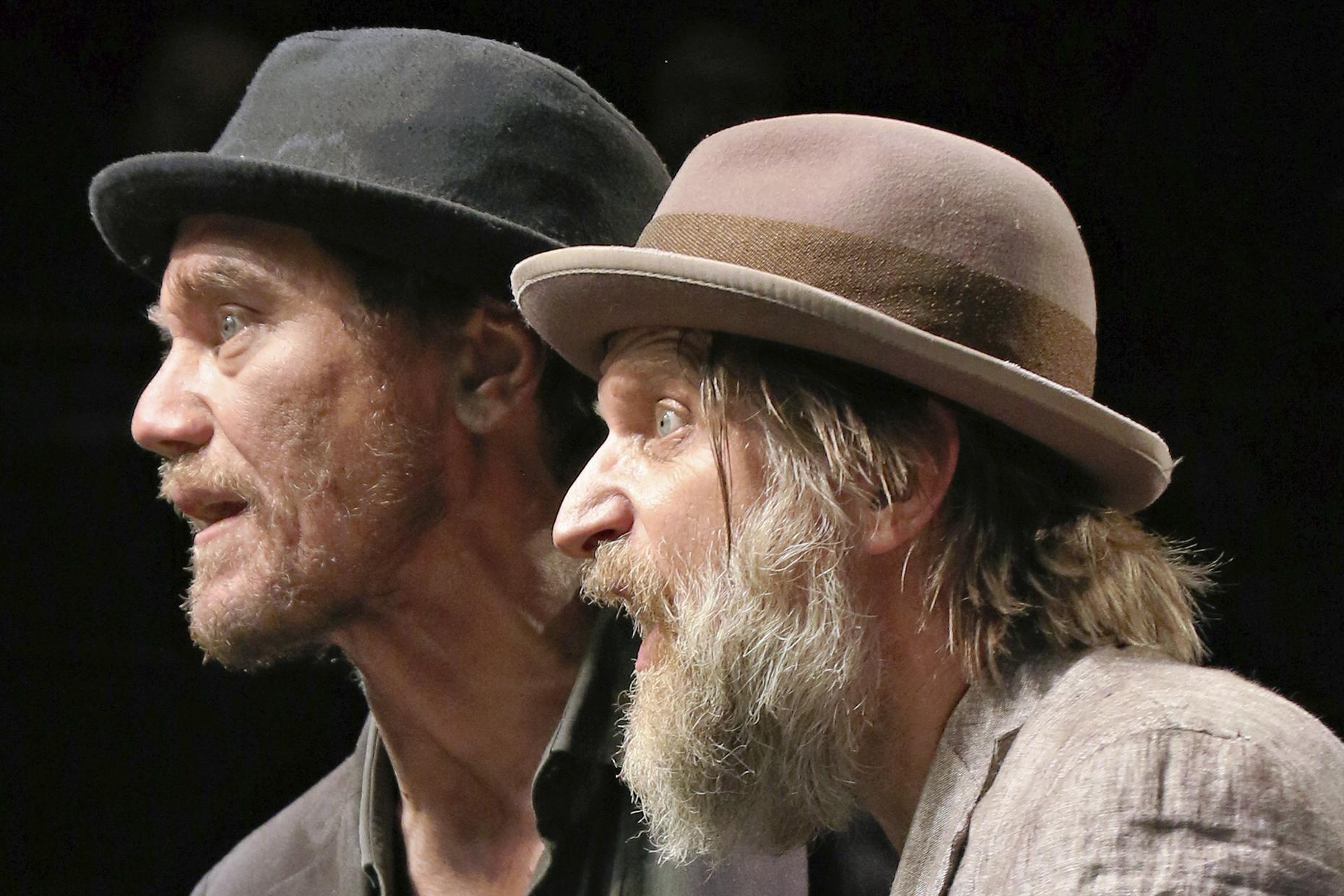
All Of It with Alison Stewart
Michael Shannon and Paul Sparks in 'Waiting for Godot'
00:30:31
Michael Shannon and Paul Sparks star in a new production of "Waiting for Godot," from director Arin Arbus, presented by Theater for a New Audience through December 3.
Loading summary
Transcript68 lines
- [00:00]
Michael Shannon
I' ma put you on, nephew.
- [00:01]
Paul Sparks
All right, unc. Welcome to McDonald's.
- [00:03]
Alison Stewart
Can I take your order, miss?
- [00:04]
Michael Shannon
I've been hitting up McDonald's for years. Now it's back.
- [00:07]
Paul Sparks
We need snack wraps. What's a snack wrap?
- [00:10]
Michael Shannon
It's the return of something great. Snack wrap is back.
- [00:15]
Aaron Arbus
I'm Sarah Gibson Tuttle and I started Olive in June because let's be real, we all deserve to have gorgeous nails. But who wants to spend a fortune? That's why I created the Gel Mani system so you can have that salon quality gel manicure right at home. And guess what? The best part? Each mani only costs $2. And here's a little something extra. Head over to olivenjune.com and get 20% off your first gel mani system with code hellogel20. That's code hellogel20 for 20% off your first mani system at oliveandjeune.com hellogel20@rxbar they.
- [00:46]
Alison Stewart
Believe in simple nutrition without the BS. That's why they said no to artificial ingredients and yes to deliver intentional transparent nutrition. Try their original 12 gram protein bar, the nut butter and oat bar or Minis RXBar, the proud sponsor of no BS. Use code RXBar on RXBar.com for 25% off, subject to full terms and conditions and to change. Valid until September 30, 2025 and may not be combined with other offers. See rxbar.com for full details and limitations. This is all of it. I'm Alison Stewart live from the WNYC studios in soho. Thank you for spending part of your day with us. I'm really grateful you're here. On today's show. We'll talk with Rob Harvilla, host of the podcast 60 songs that explain the 90s. And now he's an author of the book the same Name. And we'll take your calls on your favorite songs from that era. We'll also kick off this month's full bio conversation with biographer Patti Hartigan, the author of August A Life. We'll talk about his life in Pittsburgh and his early years as a poet. And we'll hear a live in studio performance from Armenian born pianist and composer Ashtik Marterozian. That is our plan. So let's get this hour started with a new production of Waiting for Gadot. I think New Yorkers have a unique connection to the play Waiting for Gado. We are used to waiting for things like that subway that you think may never arrive, tickets for Shakespeare in the park. You hope don't run out before it's your turn. Someone to deliver something in that 12 to 4pm window that could come hours late. So it's easy to relate the leads of Beckett's classic absurdist play Go Go and Dede, two old timey tramps bouncing off and bickering with each other as they stay put under a tree. Anticipating a visitor, Mr. Gatto, My next guest, Obie Award winning director Aaron Arbus, approached Waiting for Gadot by thinking of the play being about couples, which applies to my other guests, the leads, who are very dear friends IRL and collaborators Michael Shannon as Gogo and Paul Sparks as Dee Dee. Sparks and SH previously starred in the Killer Together, a play by fellow absurdist playwright Eugene Ionesco. Both productions were produced by the Theater for a New Audience in Brooklyn. Waiting for Gadot runs through December 3rd at the Polonsky Shakespeare center, and I'm joined by team Waiting for Gadot. Thanks for coming to the studio.
- [03:19]
Michael Shannon
Rah rah.
- [03:20]
Alison Stewart
Yay yay. Gatto, right. Michael, you proposed this production for the theater for a new audience. What is something you understand better or differently about the Player script now that you're performing it rather than being in the audience and seeing it?
- [03:37]
Michael Shannon
Yeah, well, I hadn't seen it since I was very young, like preteen. I think I'd never seen it when I was a grown adult. So my recollection of it is kind of spotty. But I remember how much it moved me and it kind of inspired me me to get into the theater and start investigating it. And yeah, I think for a play that's ostensibly about not much of anything happening, it's actually an incredibly precise play and it demands great precision in performing, is not a careless, aimless play in any way, shape or form. I think I've had more difficulty with this than probably any other play I've ever done in terms of even just memorization. Paul was saying the other night, you know, that we've done a lot of shows. When I did the Killer, I had a metric boatload of dialogue in that and I never went up. But this play demands the most concentration and focus of any play I've ever done in my life.
- [05:01]
Alison Stewart
Paul, how about for you, something that became clear to you about the play, about the way it was written, about a message that's really different than when you're performing it versus reading it.
- [05:10]
Paul Sparks
Yeah, you know, it's funny, I think my impression of it before we did it, not having read it in a long time, I think you think sometimes, oh, it's kind of, you know, My Dinner with Andre. It's just two people sitting around talking and it's, it's, it is intellectual, but it's, it's such an emotional, it's such an emotional play. It's very demanding of sort of all aspects of yourself. I mean, physically, I was not prepared for just how physical it was going to be. I think in this version that we've found, because I think the play holds a lot of different versions, but the version we found very physical, very emotional, very precise. It's a huge sort of undertaking. We just did a five show weekend, meaning we did Friday night, then two Saturday, two Sunday, and we were both pretty wrecked. I think maybe still a little bit wrecked on Tuesday morning.
- [06:24]
Alison Stewart
Aaron, of course, plays very famous. Many people have done it, many people have seen it. Although it's kind of interesting to think it debuted in 53, I think so 60 some years ago. It really probably blew people's minds. What is interesting for you creatively as a director directing something that is so well known? What can you do that's interesting?
- [06:46]
Aaron Arbus
You know, I actually try not to think about the history too much. Interesting. I mean, I do my homework and I am familiar with what, you know, sort of the production history, but I'm really interested in discovering it in the room with the actors and with the designers beforehand. And I, you know, this play is extraordinary and unbelievably mysterious. And despite the fact that Beckett is sort of one of the bossiest playwrights that I, I've encountered, you know, with his stage directions, there is a great deal of authorship that goes into this production from everybody who's involved. And I sort of have faith that if we're really looking closely at the play itself, it will continue to surprise and reveal itself to us.
- [07:50]
Alison Stewart
Paul Dede is the extrovert and Go Go is this introvert. And you said in an interview you compared Dee Dee and Gogo to Tigger and Eeyore from Winnie the Pooh.
- [08:00]
Paul Sparks
Yeah.
- [08:00]
Alison Stewart
Why is that an apt analogy?
- [08:02]
Paul Sparks
Well, you know, I believe I heard Erin say that she had. That maybe Beckett had described Gogo as of the earth and Didi of kind of the air. And there is a very manic sort of energy to Dede. One of the things that I've been thinking about lately about him is how interested he is in sort of like prosecuting each moment, his ideas. He's always trying to sort of get to the end of it, trying to find the thing at the end. It's all an investigation for him. What Was it You told me that Ionesco said.
- [08:54]
Michael Shannon
Oh, yeah, Ionesco was so. I mean, don't get me wrong, I love the play I'm doing right now. But one of my, probably my favorite play of all time is a one act play by Ionesco called Victims of Duty. And there's a line in the play, every story is a detective story. And I told that to Paul the other day because we go out and walk around before the show and get deep. And I said, every story is a detective story. And in this story, Vladimir's the detective. And this play is basically a series of mysteries that Vladimir is attempting to solve. And that seemed to.
- [09:35]
Paul Sparks
Yeah. And I think that the relationship between Eeyore and Tigger, you know, they're on sort of opposite sides of the seesaw, you know, that they need each other in order to, to have balance. So much of this play is about the, the way things settle into a balance, like the when, when one is down, the other is trying to pull the other up. And I, I think that's a pretty apt relationship to our analogy for all relationships that, you know, we, we do that in our relationships. You know, we, we're, we're, we're always trying to equalize one another, probably inadvertently, but that's sort of the way it settles. Yeah.
- [10:20]
Michael Shannon
Particularly in this modern society culture. I think it's particularly apt because, I mean, it seems like every other person you meet says, oh, yeah, I'm bipolar. Well, here are the poles. You know, Vladimir's up, I'm down. And so it's kind of fascinating. A lot of people think that if you do this play, something intriguing to do would be to switch roles. Have Vladimir, you know, play Vladimir one night in escrow. And I'm like, that doesn't make any sense to me at all. I think they're two very distinctly different people.
- [11:00]
Alison Stewart
Before I even read that, your description of Tigger, I had written in my notes, bounce. That your run has a bounce to it. There's a certain sort of bounding about. How did you come to that physicality?
- [11:14]
Paul Sparks
Well, I think to sort of echo what Aaron was saying about we just look at the text and we try and hold its feet to the fire and see what we can learn about it. I think that in a way, Beckett is describing, or at least my interpretation of how he describes Dede has so much to do with his. He does bounce. He is moving with. He's always going, he's always moving, his body is jiggling. And I think that just has Made its way into my. It wasn't something conscious. I wasn't like, oh, I've got a great idea for how I'm gonna be. This has all been a surprise. We had no. I don't think either of us had any idea what it was going to look like.
- [12:12]
Alison Stewart
Michael, has your go go always been intro, introverted, or did life send him down that path?
- [12:20]
Michael Shannon
Well, I think he has a certain propensity for. Yeah, like I said, I think he embodies the. You know, these characters are not necessarily singularities of people. They're not like, you know, it was interesting. We were doing an interview with the dramaturg at the theater, and he said, so how do you research the characters, build the history? I'm like, I don't really think that's where it's at. I think what it is is you go out in the world and you walk around and you see how this play is basically everywhere you look. You see this play, it's happening all the time. And you collect. It's like Pac Man. You collect all the little examples that you witness and you process them and you, and you, and you bounce what you're doing off of that kind of cognition or witnessing of the world, you know, that Eshragon, to me, is not a person. He's a state. He's something that resides in, I think, the majority of human beings.
- [13:38]
Alison Stewart
Aaron, I'm going to ask you a very sort of simplistic question only because we gotten two calls and a text about it. What pronunciation are you using for the name of the show?
- [13:51]
Aaron Arbus
We're using gato, which is what Beckett wanted us to use.
- [13:58]
Alison Stewart
Thank you very much for everybody. Goto. Got it. Aaron. Night and day are important elements of the script. And when it's day in the theater, it's really so well lit that the audience I could see across the stage. I'm assuming you all can see people in the audience. What went into that decision to have the house lights so bright? Well.
- [14:25]
Aaron Arbus
I guess I was very interested, along with Ricardo Hernandez, who designed the set, and Chris Ackerlund, who designed the lights, we were interested in creating an intimate relationship between the actors and the audience. And so the audience is on three sides. The audience is below the actors, above the actors, and kind of at eye level with the actors. So everyone is having. Everybody actually has a different vantage point on what is happening on stage. And I think people are seeing different things depending on where they're sitting. And they are all in the same room together. As you pointed out. You know, the Audience can see much of the other people who are sitting there with them. And I guess I was excited by sort of, you know, I think this play is normally done in an end stage configuration, a proscenium configuration, and I was excited by kind of opening it up a little bit. I think when I was younger, I was really interested in moments in theater where audiences were kind of. Their heartbeats synchronized, you know, where everybody was kind of experiencing the same thing at the same time. And I'm still interested in that, and I think that happens in this play. But I'm also really interested in allowing audience members to have their own distinct journey through the play. And I think that's what the design does in this production.
- [16:25]
Michael Shannon
I also think it's. Yeah, I think we really want the audience to be complicit in what's happening, that we don't want them to feel like they're separate from us. I mean, we refer to them often in the play, and we want them to feel like they're creating this with us.
- [16:50]
Alison Stewart
My guests are Michael Shannon, Paul Sparks, and Aaron Arbris. We're talking about Waiting for Gatot at the theater for new audience. It's through December 3rd. Paul, why is your deity. Something I got from your deity is he's just almost psyched to wait for Gato. He's kind of. There's something thrilling about it for him. He's really into this idea of waiting for this person.
- [17:19]
Paul Sparks
Well, he says in his first line, he talks about hope being so important. Actually, Gogo says, you know, nothing to be done. And his response is like, I'm beginning to come around to that. And I think it's a real fear for him that there's nothing to be done, there's no hope, and that he's been trying his whole life to keep that away from him, you know, to resume the struggle of, like, hope and what is hope? And even though he's with someone who is constantly challenging that, like, saying, okay, now we're happy. Now what? Now what? Okay, if Garo comes, then what? And I think for me, personally, like, I think one of the things that's kind of interesting about and has some synchronicity about this show is, you know, that Mike and I have known each other a long time, and our essential selves are very similar to these two guys in some ways. And I think that sort of having a hopeful persuasion is something that I do have as a person, and it is also, like, complicated. And I think that, yes, he is excited about hope, but he is also a little manic about hope. I think even in the second act when he comes out and he's running in circles and saying he's happy, he can almost. I can feel his, like, fingernails dug into the, you know, into the ground. Like, I'm, I'm feeling good now. What is, when is the other shoe going to drop? So it is a, it is a caustic relationship that he has with, with hope, I think, and with the idea of Garo coming.
- [19:25]
Michael Shannon
It's kind of like the hope that I imagine someone like Alex Honnel, mountain climber, has when he's on the, with his fingertips on the side of the mountain. Like, well, I should remain hopeful, otherwise I'm going to fall and die. And go. Go's like, no, I don't, I don't need any more chalk. It's fine if my fingers slip. And I, and it's, you know, it's really about. The play is about survival and death, basically. And it's like, and there's two kind of ways to navigate life where, you know, one is to really struggle and hope and, and, and, and the other is to, you know, succumb and have low expectations and just, you know, that way you aren't as vulnerable perhaps to being disappointed. But I feel like a lot of people are making those kind of decisions on a day to day basis.
- [20:33]
Alison Stewart
Michael, when you're on stage before the show, the play officially starts, or maybe that is your official start of the play. What is your character thinking about and what are you thinking about? Because you're there for a piece of time.
- [20:46]
Michael Shannon
Yeah, well, it would be. I don't, I haven't like scripted it really. I'm still exploring. It kind of is different every time I do it. But I'm looking at all of you as you come in. Like my earlier point, it's like, okay, here they come, here they are. Who's here? Oh, I wonder what that person's gonna think. Like, I like being out there because I think it's. It goes to that point of saying, this is not a contained thing. This is not a thing that starts and ends, and it's not a thing that you're just gonna get to watch. Like, you're here too, and I see you.
- [21:45]
Paul Sparks
So good luck, Mike. Shannon sees you.
- [21:53]
Alison Stewart
You've been warned. Aaron, did you all. And this, Anybody can answer, have conversations about what this meant. This idea of waiting and loss of time. It felt very different to me after the pandemic because there was that sense of, is this going to End. Is this not. Is it Tuesday? Is it Saturday? Is it morning? Is it night? Were there any conversations about the pandemic in your lead up to working on the show, Aaron?
- [22:21]
Aaron Arbus
Well, we were actually supposed to begin rehearsals for this show in 2020, March of 2020. So we had a long experience of waiting to get to our first day of rehearsal. Yeah, I mean, I think these characters, they feel so familiar to me because they are as confused as I am in my life. They are waiting for someone who doesn't show up and uncertain if they're in the right place on the right day, unsure of what happened yesterday and what's going to happen tomorrow. I mean, it really feels like, you know, the condition that we actually are all in, really.
- [23:14]
Alison Stewart
Practical question. Stage directions are very specific. As you pointed out that Beckett's bossy, like, hand raised an admonition in the middle of a sentence. What do you do when you come. Come to that point?
- [23:27]
Aaron Arbus
I mean, I think we kind of started with the recipe, you know, like, we really tried to understand what was there, and occasionally we deviate from that. But we're really doing the play.
- [23:46]
Michael Shannon
Yeah. Yeah. There's certain things that I've. Yeah. I try to do, and then I just. At a certain point, I didn't want it to be so rigid, so I. It's still basically the same. Like when I. When I apologize to Dee Dee in Act one, it's very. You know, he takes one step, silence. He takes one more step silence. And I've started kind of taking, like, one and a half steps or two steps, you know, depending on what feels.
- [24:19]
Paul Sparks
Right, you know, during the rehearsal process, Mike Michael was sort of like the representative from the Beckett estate who was keeping, keeping, keeping us. But I found that there's a lot of. There's a lot of clues about, like, what's actually going on. Sometimes when we're, like, kind of lost in a scene and the scene didn't seem to be working, or we're trying to figure out, like, what's going on. If you kind of refer back to, like, this is what he said happened. What exactly does he say happened? And I've heard a couple of people have said, wow, this is such a modern take on the show. And everything's everything. Like, you guys just kind of did a bunch of different things. But actually, I think you'd be really surprised at, like, how almost exact a lot of the play is to what he wrote, except for Mike's half steps that he's added.
- [25:13]
Alison Stewart
Gotta push boundaries.
- [25:14]
Paul Sparks
Yeah, a little bit. Right Sloppy.
- [25:19]
Alison Stewart
Aaron. What does their friendship, these two gentlemen's friendship, offer you as a director? How did it open up, what you could do?
- [25:31]
Aaron Arbus
Their friendship is quite extraordinary. And I think a lot of the time people do this play, and a director will find two great actors who might not know each other and try and jump into a rehearsal room and make things happen. And I think that would be really challenging. This is about people who have been together for 50 years, and Michael and Paul know each other incredibly deeply. They are totally different from one another, and they have this incredibly rich relationship on stage that also has a lot of love in it. And. And I think it's truly a special thing to witness.
- [26:42]
Alison Stewart
There's a lot of intimacy that's sort of. It's unspoken, and you don't necessarily know where it's coming from, but it's probably from how you feel about one another. Michael, what's something that Paul does really well in this play?
- [26:57]
Michael Shannon
Oh, everything. Everything.
- [26:59]
Alison Stewart
I need one thing.
- [27:01]
Michael Shannon
I mean, you know, I always get a little cagey about letting people know too much, but I think it's hard to overstate the sheer amount of physical and mental endurance that you're going to see from Paul Sparks in this play. And I get very. Yeah, it's funny, sometimes I have to hide the fact that I'm rooting for him because I'm not ever supposed to be on his side so much. But there are parts of the play that I know. I just know how phenomenally challenging they are. And I'm just silently, in my head, there's, like, this huge cheerleading section, like, go, Paul. Go, Paul. You can do it. Come on. Meanwhile, I'm just standing there, like, staring at him, like, disinterested. So it's. But, yeah, his. I really do mean that, like, there's. There's not a. There's not anything on the list where it's like, if the report card is all A's, like, there's not a subject where he's like, he could use a tutor on this or something. It's just.
- [28:35]
Paul Sparks
Nope.
- [28:38]
Michael Shannon
Reading, writing, math, science, gym class. He's killing it.
- [28:44]
Alison Stewart
Can I ask you that question?
- [28:45]
Paul Sparks
Sure.
- [28:46]
Alison Stewart
Okay.
- [28:48]
Paul Sparks
Well, you know, Mike is. Mike is unique, and he is one. Well, he's. He's. First of all, he's probably the most honest person that I know, and he reeks of honesty, like, on stage, which I think is. It's profound to, like, witness. It's profound to, like, work with. I don't have a scene partner that I've ever worked with. That I've enjoyed as much. He's also, you know, he's really funny and warm, and, you know, I think that what he's done with Gogo is. It's. It's. It's. It's not. I had no idea what to sort of expect. And so. And I think that a lot of that. The trust that I have with Mike is just. It's just a. It's just a unique thing. And it has a lot to do with the fact that, you know, we just. We know each other. We know each other's kids, we appreciate each other. We know about our lives and our hardships and our. We know all those things. And this is one of those unique plays where you can really bring all that stuff on stage. I mean, the play so big and strong, you know, it can handle a lot. And one of the things that it can handle and demands is that you bring yourself to it. And so, you know, doing. I wouldn't do this with. With anyone else. Like, I'm not interested in. In doing. I'm interested in exploring, like, this play with. With Michael and. And, you know, that's. That's. That's what it is. And it's been. You know, it's been. It's a delight. And plus, he's. He's fun to kind of try and try and move. You know, he. He appears like a kind of a stone on stage. And so it's. It's. It brings me great joy to, like, sort of try and tickle the stone a little bit and see if I can just. And he breaks. He does break. He's very. His jaw twitches a little.
- [31:12]
Alison Stewart
Waiting for Gadot is at the theater for a new audience through December 3rd out in Brooklyn. My guests have been director Aaron Arbus and actors Michael Shannon and Paul Sparks. Thank you so much for coming into studio.
- [31:24]
Michael Shannon
Thanks for having me.
- [31:25]
Aaron Arbus
Thanks so much.
- [31:31]
Alison Stewart
Up next, music journalist Rob Harvilla turned his popular podcast 60 Songs that Explain the 90s into a Book. He joins us to discuss how some of those songs explain the era.
- [31:46]
Michael Shannon
I'mma put you on, nephew.
- [31:48]
Paul Sparks
All right, unc. Welcome to McDonald's.
- [31:50]
Alison Stewart
Can I take your order, miss?
- [31:51]
Michael Shannon
I've been hitting up McDonald's for years now. It's back.
- [31:54]
Paul Sparks
We need snack wraps. What's a snack wrap?
- [31:56]
Michael Shannon
It's the return of something great. Snack wrap is back.
- [32:02]
Aaron Arbus
Did you know Tide has been upgraded to provide an even better clean in cold water? Tide is specifically designed to fight any stain you throw at it, even in cold butter. Yep. Chocolate ice cream. Sure thing. Barbecue sauce. Tide's got you covered. You don't need to use warm water. Additionally, Tide pods let you confidently fight tough stains with new coldzyme technology. Just remember, if it's gotta be clean, it's gotta be Tide.