← All Of It with Alison Stewart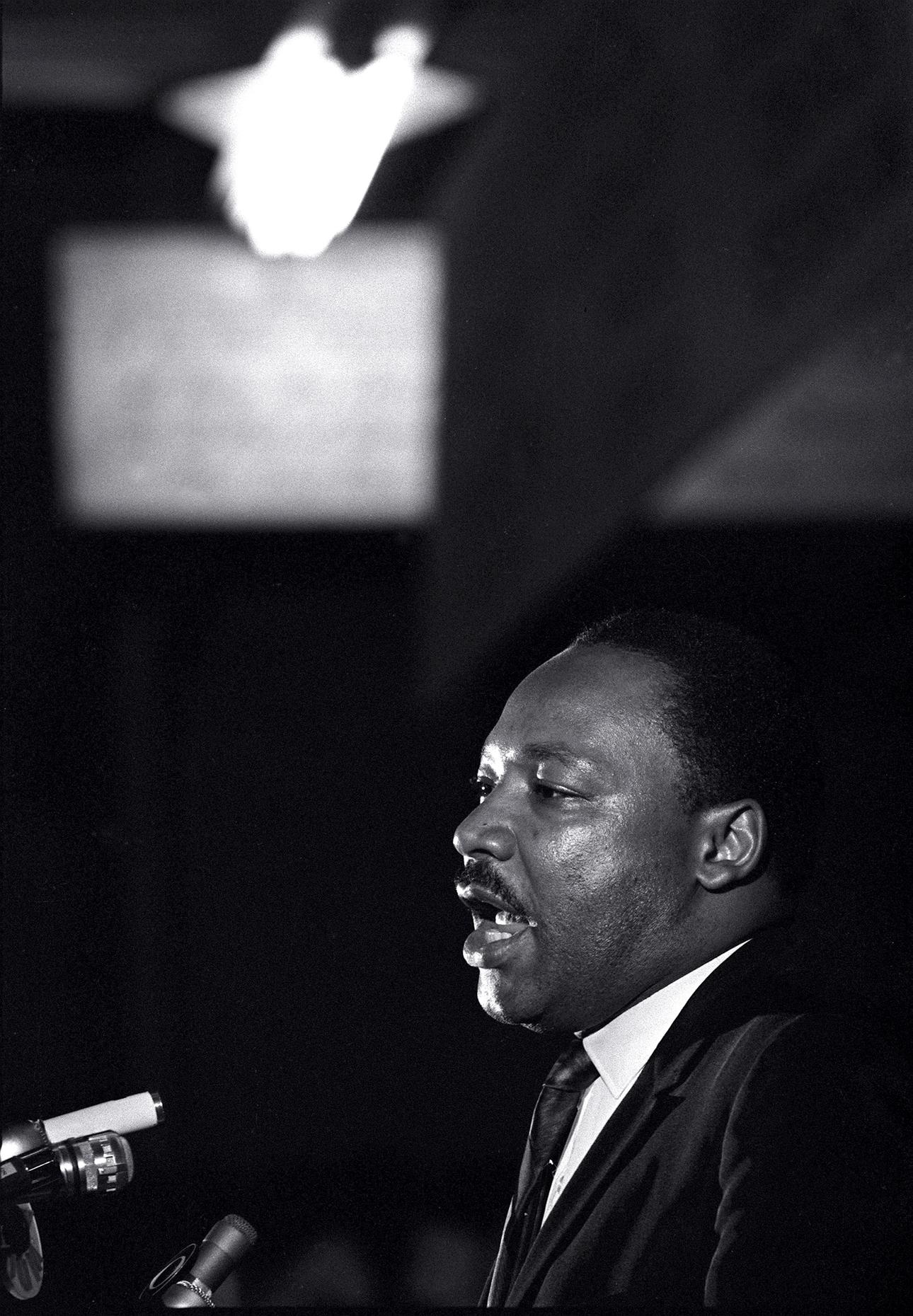
All Of It with Alison Stewart
MLK's Later Fights, And Legacy (Full Bio)
00:13:26
Our June Full Bio selection was King: A Life, the first comprehensive account of Martin Luther King Jr. in three decades, written by Jonathan Eig.
Loading summary
Transcript42 lines
- [00:02]
Bix Soleil Advertiser
Surprise beach day. No excuses.
- [00:05]
Megan Roop
I'm in.
- [00:06]
Bix Soleil Advertiser
Gimme five. With Bix Soleil Glide Razor, you'll have hydrated, smooth skin that's ready to go on the fly. No shave cream needed. You can prep, shave and hydrate all in one step thanks to moisture bars that hydrate your skin during and after shaving. 5 flexible blades hug your skin for a close shave. Glide into smooth. It's your time to shine with bixsolil. Buy now at Amazon and Walmart. Ready? Your skin looks amazing. So smooth and beach ready.
- [00:29]
Radio Host
Let's go.
- [00:32]
Megan Roop
Are you ready to change your mind about your body? We are flipping the script on fitness making movement that feels good and fits your life. I'm Megan Roop, celebrity trainer and founder of the Sculpt Society. I created this online fitness platform to be uplifting and flexible. With sculpt, strength and dance cardio classes. From a 10 minute quickie to a 50 minute sweat, you will find programs for every stage of a woman's life, including prenatal, postpartum, bridal and more. Start your two week free trial at thesculptsociety.com podcast.
- [01:01]
Radio Host
I'm gonna put you on nephew.
- [01:03]
Jonathan Eig
All right, unk.
- [01:04]
Interviewer
Welcome to McDonald's. Can I take your order, miss?
- [01:06]
Radio Host
I've been hitting up McDonald's for years. Now it's back. We need snack wraps. What's a snack wrap? It's the return of something great. Snack wrap is back. Listener supported WNYC Studio.
- [01:43]
Alison Stewart
This is all of it on WNYC. I'm Alison Stewart and we'll close out our MLK Day full bio hour with a look at how Dr. King's career was impacted by an FBI harassment campaign and how his stance on the Vietnam War changed his standing with President Lyndon Baines Johnson. We've spent the hour with Jonathan Eig, author of the first comprehensive biography of Martin Luther King Jr. In three decades. The book is called A Life. And in this portion of the book, IG notes that King's adherence to Gandhi's principles of nonviolent protest did not resonate with some others in the movement. Malcolm X found King to be too accommodating and passive, as did younger black power leaders. The old guard. And the NAACP, an organization founded 20 years before King was born, was concerned about King usurping the spotlight and funding. And as MLK began to expand his mission beyond civil rights and into opposition to the Vietnam War, it created friction with President Lyndon Johnson, which provided an opening for FBI Director J. Edgar Hoover to stir the pot. Hoover bugged King's home and hotel rooms and used what he found to discredit the leader.
- [02:48]
Interviewer
Here's my conversation with Jonathan IGN we should note that. And it's very clear in your book, and it's really interesting that the civil rights movement wasn't a monolith. You had Malcolm X and younger black power activists thinking that MLK was too passive and deferential.
- [03:15]
Alison Stewart
On the other end of the spectrum.
- [03:17]
Interviewer
Even the NAACP wasn't always on board with Martin Luther King Jr. What issues.
- [03:22]
Alison Stewart
Did the NAACP have with King?
- [03:26]
Jonathan Eig
The NAACP was constantly struggling with how to deal with King. They saw him as a threat, in a way, to their power because King was drawing support. King was always thinking about the possibility of creating a membership for his organization, which would have undercut membership in the naacp. And the NAACP always felt like King was getting too much credit, that they were the ones changing the laws and. And that King was just sort of the loudest speaker that he was. He was getting the attention, but the NAACP deserved the credit. So there was this constant struggle. Even in Montgomery, when the bus boycott was successful, Thurgood Marshall pointed out that it was really the courts, the court victory that sealed the desegregation of the buses. It wasn't the marchers who did it. So some of it was ego, for sure.
- [04:17]
Interviewer
You note that MLK grew up with a lot of female attention. His mother, his sister, his grandmother. Yet he did adhere to the patriarchal nature of the civil rights movement. Ella Baker was a really big part of it. Often felt overlooked. Rosa Parks wound up financially unstable. Even though Coretta wrote, women have been the backbone of the whole civil rights movement, it really wasn't apparent in his inner circle. Why was that? Why didn't he champion women's rights as fundamental as black people's rights?
- [04:54]
Jonathan Eig
Sadly, our great hero of equality and justice had a blind spot, and that blind spot was women. He grew up in a very patriarchal society. The church at the time, the Southern Baptist Church, was particularly patriarchal. And they saw women as being, you know, in a role that was. That their role was meant to stay home and raise the kids. And. And Dr. King was really was really hampered by that prejudice. And he was surrounded by brilliant women. He was married to a brilliant woman. They tried to sort of wake him up, shake him out of that attitude, but they failed for the most part. And, you know, Ella Baker complained about it all the time. She said it wasn't just King. It was. It was the fact that the civil rights movement was led predominantly by black southern Baptist preachers, and that they all shared that kind of a bias. And Coretta Scott King talked about it often and even in her own memoir, said that she, you know, appealed directly to her husband and said, you know, I want to be doing more. I want to be out there protesting. And he said, your job is to stay home with the kids.
- [05:59]
Interviewer
My guest, Jonathan I. The name of the biography is King. The stronger and more powerful that Martin Luther King Jr. Got, the more intense the scrutiny was and the more dangerous life became for him. What kind of physical confrontations did he have? When was his life in danger?
- [06:23]
Jonathan Eig
King's life was in danger all the time. You know, early days of the Montgomery bus boycott, his home was bombed. Windows were shot out by a shotgun. Soon after that, he was stabbed in the chest in, in Harlem by a woman who seemed to have no real motive except that she might have been mentally imbalanced. And he was. He got received constant death threats and. And then, you know, he also became under attack by the FBI, which knew that it was creating conditions by questioning King's loyalty to America, by calling him a communist, by calling him untrustworthy, calling him a liar, that they were creating more animosity, that they were creating the kind of conditions that might stoke a madman or an angry man to come after King and then try to kill him.
- [07:14]
Interviewer
Let's listen to Dr. King from a news conference held at the Belmont Plaza Hotel in Manhattan in February of 1968 addressing the war in Vietnam.
- [07:25]
Martin Luther King Jr.
We need to make clear in this political year to congressmen on both sides of the aisle and to the President of the United States that we will no longer tolerate, we will no longer vote for men who continue to see the killing of Vietnamese and Americans as the best way of advancing the goals of freedom and self determination in south of Southeast Asia. It is imperative that church and synagogue leaders, clergy and laymen come to Washington lest persons in the federal government think that men of conscience can be cowed into silence by attack on dissenters or by blunderbuss indictments. It is time for all people of conscience to call upon America to return to her true home of brotherhood and peaceful pursuits. We cannot remain silent as our nation engages in one of history's most cruel and senseless wars.
- [08:35]
Interviewer
Did it matter to MLK that he would lose the ear of the President, the support of LBJ as he came out against the war?
- [08:46]
Jonathan Eig
King's advisors were warning him that this was a big mistake, that he was going to lose support in the North. The war was still fairly popular at this point, remember, and LBJ was deeply enmeshed in the war. It was an obsession. It was causing him nightmares. And King didn't care. He felt like he had to do this because it was the right thing. And you know, something interesting that King's friend Andrew Young said to me was that King genuinely felt like he was a minister to lbj, that he was going to help LBJ understand and his own feelings, his own challenges that he was. He was ministering to lbj. When he talked about the war, that's how King viewed it. And I find that really fascinating that he didn't see it as a confrontation at all. He wasn't worried about losing LBJ's friendship. He was worrying about saving LBJ's soul.
- [09:34]
Interviewer
How did Dr. King feel about JFK's soul before, obviously, he was assassinated?
- [09:43]
Jonathan Eig
King's relationship with JFK was complicated, too. He was disappointed with jfk. He thought JFK had made a promise to the black community that he was going to stand up for civil rights after winning the election, in large part thanks to the. To black voters. And he was frustrated that JFK was being a politician and not a moral leader, that he was counting his votes and holding off on proposing civil rights legislation because he was worried that he might lose support in the south among white voters. And this really frustrated King. He struggled with understanding why politicians could be so obsessed with. With polls and, and public opinion when they really ought to be focused on doing the right thing. And again, this goes back to him not thinking like a politician, but thinking like a. Like a preacher.
- [10:27]
Interviewer
There's a third person we have to mention in this equation. J. Edgar Hoover.
- [10:32]
Jonathan Eig
Yeah. How did we not get around to that sooner?
- [10:35]
Interviewer
Well, we've done an entire bio series on J. Edgar Hoover with Beverly Gage, so our audience is probably caught up. But. So Hoover was obsessed with King to the point where he named him a primary target for intel gathering. And he thought King was a hypocrite because of his dalliances with other women. He was convinced that communists were pulling one over on civil rights leaders and that black power and communism were going to become entwined. When did Hoover's targeting of King change the trajectory of King's career or the civil rights movement? Whether or not King knew about it?
- [11:20]
Jonathan Eig
I think the moment, the key moment is really clear. It's right after the march on Washington. King gives his greatest, most famous speech, I have a dream. And he seems like he is offering America a new way, a path out of its racist history, a path forward into a true united community of brothers and sisters. You literally, you see on tv, black and white people holding hands and singing in harmony. And King is offering us a new image of America. And that becomes an enormous threat to J. Edgar Hoover and others, certainly others within the FBI, but also others in the American power structure who want to preserve the status quo. And right after the march on Washington, the FBI produces a memo saying that King must be perceived now as our greatest threat. Whose greatest threat? Well, the white power structure's greatest threat, because he's clearly not a threat to American democracy as we understand it today. But it's all about who's in charge. And J. Edgar Hoover has built his whole career on making sure that those in charge stay in charge.
- [12:26]
Interviewer
Jonathan, is there anything about the legend of Martin Luther King, Jr. That you hope your book corrects or puts an end to or maybe even just illuminates?
- [12:40]
Jonathan Eig
Most of all, I hope that the book helps people see that King was human, that he was a real person and that he struggled, that he had doubts, that he had thought joy and pain, and he knew he wasn't perfect. And we don't need him to be perfect either. I think too often we. We want our heroes to be saintly. And one of the problems that we have with King in celebrating him is that we tend to sugarcoat his story and we focus only on the simple messages. As a result of that, we talk about I have a dream and content of our character, and we forget that he was really challenging us to be better. He was radical, and he was not afraid to force us to confront our flaws. I think that. I hope that the book will introduce King to somebody, to people in a way that they make them feel that they can get to know him as a real man.
- [13:34]
Interviewer
When is the next time that there'll be a tranche of information or material released about MLK and his life?
- [13:40]
Jonathan Eig
I believe another dump of documents is coming in December from the FBI. And then in 2027, we're expecting a big moment when the. The tapes of King's recordings, the FBI's recordings of King from his hotel rooms and from his phones will be released. That information has been sealed. Nobody has heard those tapes, and that will be an important revelation.
- [14:04]
Interviewer
How are you feeling about that?
- [14:07]
Jonathan Eig
I'm feeling fine about it, to be honest, because I think one of the great reactions to this book is that people have been willing to accept and embrace King's flaws. That in some ways, I think people find him more inspiring when they know he wasn't perfect. And we've been well prepared. We know that he was not a great husband. We know that he had affairs with women other than Coretta, but I think we can handle that and still draw inspiration from his life.
- [14:31]
Alison Stewart
That was my conversation with Jonathan Eig. His book is called King A Life. We'll have more all of it after the news when historian Tamiko Brown Nagin will take us into the career of jurist Constance Baker Motley. It's another full bio encore presentation about Brown Nagin's book, civil Rights, Constance Baker Motley and the struggle for equality.
- [14:51]
Radio Host
Stick around, I'mma put you on, Nephew.
- [14:53]
Interviewer
All right, un welcome to McDonald's. Can I take your order, miss?
- [14:56]
Radio Host
I've been hitting up McDonald's for years. Now it's back. We need snack wraps. What's a snack wrap? It's the return of something great. Snack wrap is back.
- [15:07]
Megan Roop
A bessa help paddle. Lewis Capaldi partnered with BetterHelp to get word out about how important therapy can be.
- [15:15]
Lewis Capaldi
I struggle most weeks to get up, get myself up and ready and go to therapy or whatever. Even open the laptop to talk to my therapist. Sometimes can be really difficult, but I do it because I realize how important it is for me to continue to feel good. I felt the best I've felt in a long time through therapy.
- [15:32]
Megan Roop
Learn more about online therapy@betterhelp.com.