← All Of It with Alison Stewart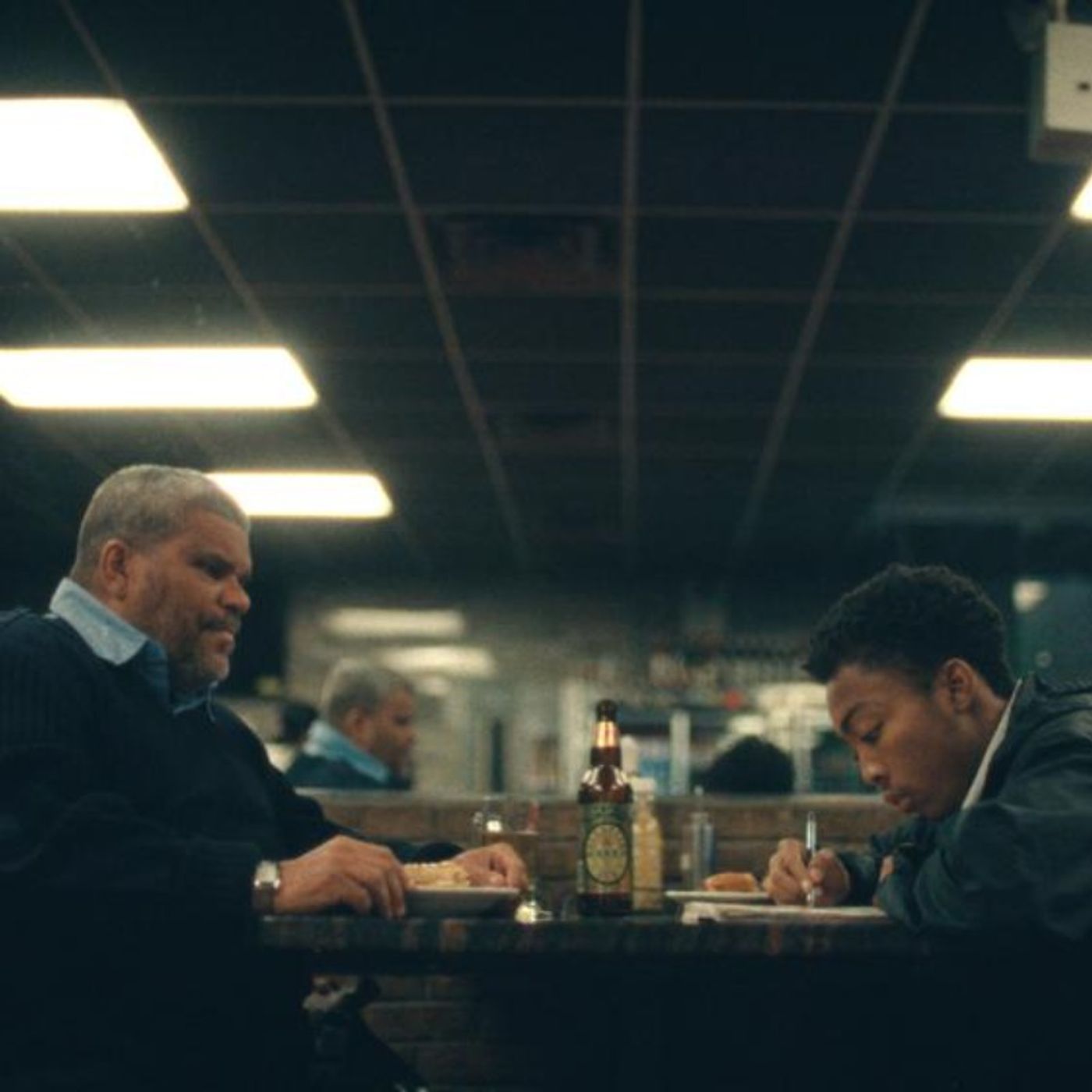
All Of It with Alison Stewart
NAACP Image Award-Nominated 'Story Ave' is an Ode to the Bronx
00:17:34
Story Ave" is a new debut feature independent film from Bronx-born writer and director Aristotle Torres.
Loading summary
Transcript46 lines
- [00:02]
Bix Soleil Advertiser
Surprise beach day. No excuses. I'm in. Gimme five. With Bix Soleil Glide Razor, you'll have hydrated, smooth skin that's ready to go on the fly. No shave cream needed. You can prep, shave and hydrate all in one step thanks to moisture bars that hydrate your skin during and after shaving. 5 flexible blades hug your skin for a close shave. Glide into smooth. It's your time to shine with bixsolil. Buy now at Amazon and Walmart. Ready? Your skin looks amazing. So smooth and beach ready.
- [00:29]
Asante Black
Let's go.
- [00:31]
Uncle
I' ma put you on, nephew.
- [00:33]
Asante Black
All right, unc.
- [00:34]
Alison Stewart
Welcome to McDonald's. Can I take your order, miss?
- [00:36]
Uncle
I've been hitting up McDonald's for years. Now it's back. We need snack wraps. What's a snack wrap? It's the return of something great. Snack wrap is back.
- [00:47]
Multicare/Marshalls Advertiser
Our state has changed a lot in the last 140 years. We know because Multicare has been here guided by a single purpose. Making our communities healthier. That comes from making courageous decisions, partnering with local communities to grow programs and services, and expanding healthcare access to those who need it most. Together, we're building a healthier future. Learn more@mycare.org oh my gosh. Have you been to Marshalls lately? They have all the brand name and designer pieces you love, but without the jaw dropping price tags. Alright, so here's the you should never have to compromise between quality and price. And at Marshall's you don't have to. Marshalls believes everyone deserves access to the good stuff and that's why their buyers hustle around the clock to make it happen for you. Visit a Marshalls store near you or shop online@marshalls.com.
- [01:51]
Host/Announcer
This is all of it. I'm Kusha Navadar in for Alison Stewart. And welcome back to our NAACP Image Award preview show featuring conversations we've had here on all of it with the people behind some of the nominated films. Now we'll turn to Story Ave. Which is up for outstanding independent motion picture. The film follows Kadir, a Bronx teenager played by Asante Black, who's an aspiring artist. But because of some traumatic events in his life, he falls in with the wrong crowd. That is until he meets an MTA worker played by Luis Guzman. This is Alison's conversation with Bronx born director Aristotle Torres and lead actor Asante Black, who you probably know from TV series like this Is Us or When They See Us and most recently, the movie Landscape with Invisible Hand. Let's take a listen.
- [02:43]
Alison Stewart
What is it you wanted to capture at the Bronx. Aristotle?
- [02:46]
Aristotle Torres
Yeah, I think, you know, I'm from there. It raised me. It made me the man and the artist I am. And I wanted to represent, you know, the authentic experience of. Of growing up and coming of age in my formative years. You know, the. The dichotomy there is really interesting. Some of the most talented, influential artists have come from the Bronx, but on the other end, there's a lot of negative stereotypes about the Bronx. So I just wanted to represent a place that I think is beautiful, the people that inhabit it are beautiful, and make that as authentic as possible.
- [03:17]
Alison Stewart
Was there a specific kind of kid or a specific kind of artist that you knew in your life who's in this film?
- [03:27]
Aristotle Torres
You know, I've certainly never robbed anyone at gunpoint and I've never been in a game. But, you know, I think, you know, where I was able to pull inspiration from my own life is I understand what it's like to feel alone. I understand what it's like to feel like you're meant for something greater than what's in front of you, but you don't know where to begin. I know what it's like to be artistic, and maybe those attributes aren't as admired, valued, valued in a neighborhood like that. It's like if you don't play sports or you're not handsome, there's not a lot of groups for you. But anyway.
- [04:07]
Alison Stewart
Yeah, Asante in the film, your character, to me, and maybe this is just because I'm a mom of a teenage boy, seems sad a lot. He seems. I mean, he's mad a lot, but he also has a deep sadness in him. As an actor, where do you go when you have to be sad like this? I have that. That deep sadness.
- [04:29]
Asante Black
Yeah. I mean, you just go to the wealth of your life experience. You know, we're all human beings and at the end of the day, you know, you're not a good artist if you're not able to look yourself in the mirror and everything that you've been through. So, you know, the sadness that Khadir was going through in that movie is something that I very much so related to. You know, I've never lost somebody that close to me in that tragic of a way before. But similarly to what Aristotle said about being able to understand the emotion, I know what it means to lose somebody, you know, I know what it means to feel guilty. I know what it means to, you know, on the basis of where those emotions come from. I can relate. So, you know, pretty much like, I don't think that it has to be anything. All super deep when it comes to, like, how I connected or, like, you know, or how I tried to enact a certain method. It's really just empathizing, you know, and understanding that Kadir's going through a lot right now. And that's something that, you know, as humans, we all have to from time to time.
- [05:36]
Alison Stewart
The empathy is the big part. A consequence of Kadir's brothers is that Kadir and his mom are on good terms. Asante. She's in deep grief, and she's not exactly there. From Kadir, from his point of view, how is his relationship with his mother affecting him?
- [05:58]
Asante Black
It's very painful. I think that he feels abandoned in more than one way. He feels abandoned not only by his mom, but by himself, just because, you know, I think that there's a certain thing that you go through after any traumatic experience where you kind of dissociate from yourself. And so not being able to have that support system around him that he kind of grew up with, you know, really made him start to question who he was, you know, that's why we see Khadir start getting caught up in these graffiti crews and making decisions that aren't necessarily productive towards the artist that he knows that he can be. And, you know, the relationship with his mother is one that it takes a lot of hard work to reconcile. I mean, they both just went through something that is extremely, extremely painful, extremely hurt. They carry a lot of hurt with them. And so it's almost as if they kind of have to separate to go on their own journeys of rediscovering who they are individually so that they can come back together and kind of start fresh in a way, plant a seed for a new relationship, knowing that they are new people. Now, after this tragic event, we're talking.
- [07:14]
Alison Stewart
About the film story Ave, which is now playing in New York theaters. I'm speaking with lead actor Asante Black and writer and director Aristotle Torres. So I'm not giving anything away, because this happens early in the book, and it's in the trailer. You know, Kadir's gotta. Gotta go through a loyalty test to be in this crew, and he's gotta go rob somebody at gunpoint. And he meets Luis, this MTA worker. Khadir is arsal. He's not made for this. He is not. You know, this is not natural for him.
- [07:41]
Asante Black
He realized he wasn't built for it.
- [07:43]
Alison Stewart
He's just not. That's not who he is. It's just not who he is, you know, in this moment. This MTA worker Luis Guzman, plays the character. He shows him kindness, like, from the jump. He's not trying to. He just really shows him almost warmth in this moment. Why does Luis respond this way to Kadir? And why did you want to have me right away? It's not like he's got to earn it either. He's just like, right away, he's like, I'm gonna help you, kid.
- [08:14]
Asante Black
Mm.
- [08:14]
Aristotle Torres
Yeah. I think the character Luis is really interesting. Without giving anything away, I think, you know, the way I perceive Luis is he's a guardian angel with dirty wings. You know, he has his own trauma, and he has, you know, his own relationship and needs and expectations of building his relationship with Kadir. So that's the process of the film is. Is as we question why Kadir and why Luis decided to do this, we're also simultaneously learning more about him and his intentions.
- [08:46]
Alison Stewart
Asante. Luis Guzman is a legendary actor. What is something that you learned from working with him?
- [08:54]
Asante Black
Oh, man. Can we say that one more time? Luis Guzman is a whole. A legendary actor. Thanks very much. Talk about, like, the depth of work that he has been able to provide to just the craft of acting through his immense career. You know, I think that just off of that fact alone, the biggest thing that I learned from him about staying true to the art is humility. He is not the person that you would expect him to be with everything that he has been through, everything that he has overcome, when it's come to his artistic journey. He's the kind of guy who didn't start out as an artist, actually started his professional life and social work and kind of found his way to the theater and into film, and has a true sense of manhood by way of service, by way of knowing that in order to be an upstanding man, you have to understand how to practice compassion and caring for other people. And that's the core of his work. I mean, that's why we click so easily on screen, is because not only did we have compassion and care about each other enough, but it also translated to the characters of Khadir and Luis. Right. Luis is able to extend himself in that way from. From the jump, because Louis knows exactly what that is in real life, you know, because he's always been that guy who is humble, who knows that, you know, he's here serving a greater purpose, who knows that it's not about him. You know, it's about being able to do the best that you could do. In the moment. And, you know, honestly, I think that that's kind of the core of the whole film.
- [10:44]
Alison Stewart
Was Luis always attached to the project? How did he come aboard?
- [10:47]
Aristotle Torres
Yeah, so it was a really interesting. I wrote this role for Luis Guzman. You know, he is. As a Puerto Rican from the Bronx, he is. He is our hero. So to be able to work with him on my first film, definitely a goal. And he was. To give you the short answer, he was the first actor attached. But it was tumultuous to get in touch with him. It was 18 months of my agents and managers trying to contact his people, and his representatives were like, louie's not considering any indies right now. He was on the precipice of doing Wednesday, and he was doing really great work. And it just so happened that a mutual friend of ours by the name of Ruben Rivera posted a photo of him and Guzman at the Knicks game. And I DMed Ruben, like, oh, my God, I have been trying to get in touch with this man for over a year. Can you please tell him that I have the script for him? And 48 hours later, I was FaceTiming with Louis and he was crying, saying, I have to do this script that, you know. So to extend onto Asante's answer about his integrity, that's a testament of his character.
- [11:54]
Alison Stewart
Social media did something good.
- [11:56]
Aristotle Torres
There you go for once.
- [11:59]
Alison Stewart
Mark it, everybody. I'm not gonna give anything away, but I will say that Luis the character helps Kadir understand, or at least come to some terms with his brother's death, that it wasn't Kadir's fault. What changes for your character when this realization happens?
- [12:22]
Asante Black
Oh, man. I think that there's a level of acceptance of the losses of life, you know, because it's really easy to kind of blame everything on yourself when you don't quite have that understanding yet of just the nature of the way that this thing goes. And so the way that I see it, Luis is almost like a transitionary angel, in a way. He's saying, it's okay to cross into this next phase, you know, and you won't be able to cross into this next phase, next chapter of where you're headed, who you're supposed to be. If you don't let this go, let that guilt go, you know, because it's not your fault, and it's not something that you want to forget, but it's not something that you want to hold on to and shape you out to be, become a person that you're not to continue to make stupid Decisions like you've been doing. You've been cutting class, bro. What you doing, bruh? Get. You get, get. Get your portfolio together, bruh. You know what I'm saying? Like, go to school, bruh. But anyways, yeah, it's like, yo, really, really see, see yourself for who you are, you know, don't see yourself for the trauma that you've been through, for the, the bad mistakes that you've, that you've. That you've encountered in your life. Pain is forever, but it's about how you're able to master that pain and how you're able to move forward with it. And, you know, Luis, in his own way, has been able to realize that and help Khadiya realize it too.
- [14:06]
Alison Stewart
All right, we're gonna leave plot there so we don't give anything else away. We'll move a little more into filmmaking. The movie is in narrow aspect ratio. So for our listeners, explain why you chose to do this and what it does to the cinematic quality of the film.
- [14:21]
Aristotle Torres
Sure. You know, I was very. I think sometimes when you have elements of slang and hip hop and graffiti and streetwear, it's very easy to be like, oh, this is a black movie, or this is a hood movie, or this is a hip hop movie. And, you know, that's not the movie that I wanted to make. And I wanted to shoot black and brown faces like old Hollywood. You know, I'm inspired. Obviously, I love the Scorsese's and the Tarantino's and the Finchers and the Nolans, but the people who really taught me how to be filmmakers are. A filmmaker is like Kurosawa and Ozu and Fellini, and they had a more intentional approach to shooting faces. And I felt like we rarely see that with our faces. And similar to the Bronx and similar to the subculture of graffiti. I just wanted to handle this with care. So that was my. My thinking in terms of what my grammar was and then in terms of the aspect ratio, I just. I had a moment of clarity at some point through, through pre production where I realized these characters look up, they don't look side to side. And so I think, you know, from. From a thematical standpoint that tracked, but I also think from an emotional standpoint, Kadir is feeling some sort of claustrophobia with his own emotions and his own internal struggle and arc. So it just all kind of made sense.
- [15:43]
Alison Stewart
Asante, what's something that you got to do with this role that you haven't been able to do before? Something that maybe stretched a muscle for you.
- [15:53]
Asante Black
Smoke, Yo. Smoking on camera is hard. I gotta be real, yo. Everybody in old Hollywood makes it look so sexy. I'm over here, like, coughing my lungs out, you know what I'm saying? Like, I'm supposed to be this young kid who's never. Nah, I'm joking. I'm joking. But, no, but I would say probably the biggest thing, really being able to dive into a whole different world of artistic expression when it comes to graffiti. You know, that was a world that I wasn't really familiar with, and one that had a lot more depth to it than I had realized originally before signing onto the project, before coming to New York and kicking it with these two amazing graffiti artists, too. A se and Dread Life and Aristotle, and our producer Lizzy and Alex, who plays Mo. And we're all just kind of outside walking the streets of New York, looking at different murals, checking out different tags, you know, really getting a sense of the history of graffiti. So, yeah, that was super dope.
- [16:56]
Alison Stewart
What's something that, if you're from the Bronx, if you know. You know, Aristotle when you're watching this that you knew you had to get in the film? A couple of Easter eggs.
- [17:04]
Aristotle Torres
I mean, there's so many. There are so, so many. You know, getting a Cuban sandwich at Caridar is. Is. You know, that's. That's a standard chef's kiss. Yeah. For our experience. So I highly recommend that you go see our movie and then get a Cuban sandwich right after.
- [17:23]
Asante Black
Yo, I had never had a Cuban before this movie, and now I am obsessed. Yo, they are so good. Oh, thank you so much, Eric Scott.
- [17:32]
Aristotle Torres
Got you, brother.
- [17:35]
Alison Stewart
So glad you had that experience. If there's someone listening right now, Aristotle's like, I got a story. I got a film of me. I want to. You know, I. This is what I'm meant to do. What piece of advice would you give them at this point?
- [17:48]
Aristotle Torres
Yeah, I would say movies are miracles. So you need a very high level of confidence in yourself and the ability to bypass rejection. There were one hundred and seven nos before I got one. Yes, one hundred and seven. So it's, you know, I think to make a movie, it's something you need to do, and it can't be something you want to do. So if you're sitting in your bed at night alone with yourself, and you're saying to yourself, like, I have a pain in my stomach. There's something I really need to say, then I think you have enough ammunition to go into it. But if you're like, I want notoriety or I want instant gratification. You won't make it because you will get rejected at every step of the way. So that's like a broad stroke. But I would say more than anything is really studying writing. You know, I think the ability to write a script gets you into rooms that you normally couldn't because it's the hardest part. Actors, directors, producers, we get finished scripts, but writers get blank pages.
- [18:49]
Host/Announcer
That was Alison's conversation with director Aristotle Torres and actor Asante Black about the film story F It's up for an NAACP award. And that is all of it for this hour, but stay tuned because next hour will continue to bring you conversations about some of the works being written recognized at this weekend's NAACP Image Awards. Coming up, we'll talk about the documentary film Invisible Beauty, Kwame Alexander's memoir why Fathers Cry at Night, and musician Brandy Younger's album Brand New Life that's on the way. This is all of it.
- [19:23]
Bix Soleil Advertiser
Surprise. Beach day. No excuses. I'm in. Gimme five. With Bix Soleil Glide Razor, you'll have hydrated, smooth skin that's ready to go on the fly. No shave cream needed. You can prep, shave and hydrate all in one step thanks to moisture bars that hydrate your skin during and after shaving. 5 flexible blades hug your skin for a close shave. Glide into smooth. It's your time to shine with bixsolil. Buy now at Amazon and Walmart. Ready? Your skin looks amazing. So smooth and beach ready.
- [19:50]
Asante Black
Let's go.
- [19:52]
Uncle
I'mma put you on, nephew.
- [19:53]
Asante Black
All right, unc.
- [19:54]
Alison Stewart
Welcome to McDonald's. Can I take your order, miss?
- [19:57]
Uncle
I've been hitting up McDonald's for years. Now it's back. We need snack wraps. What's a snack wrap? It's the return of something great. Snack wrap is back.