← All Of It with Alison Stewart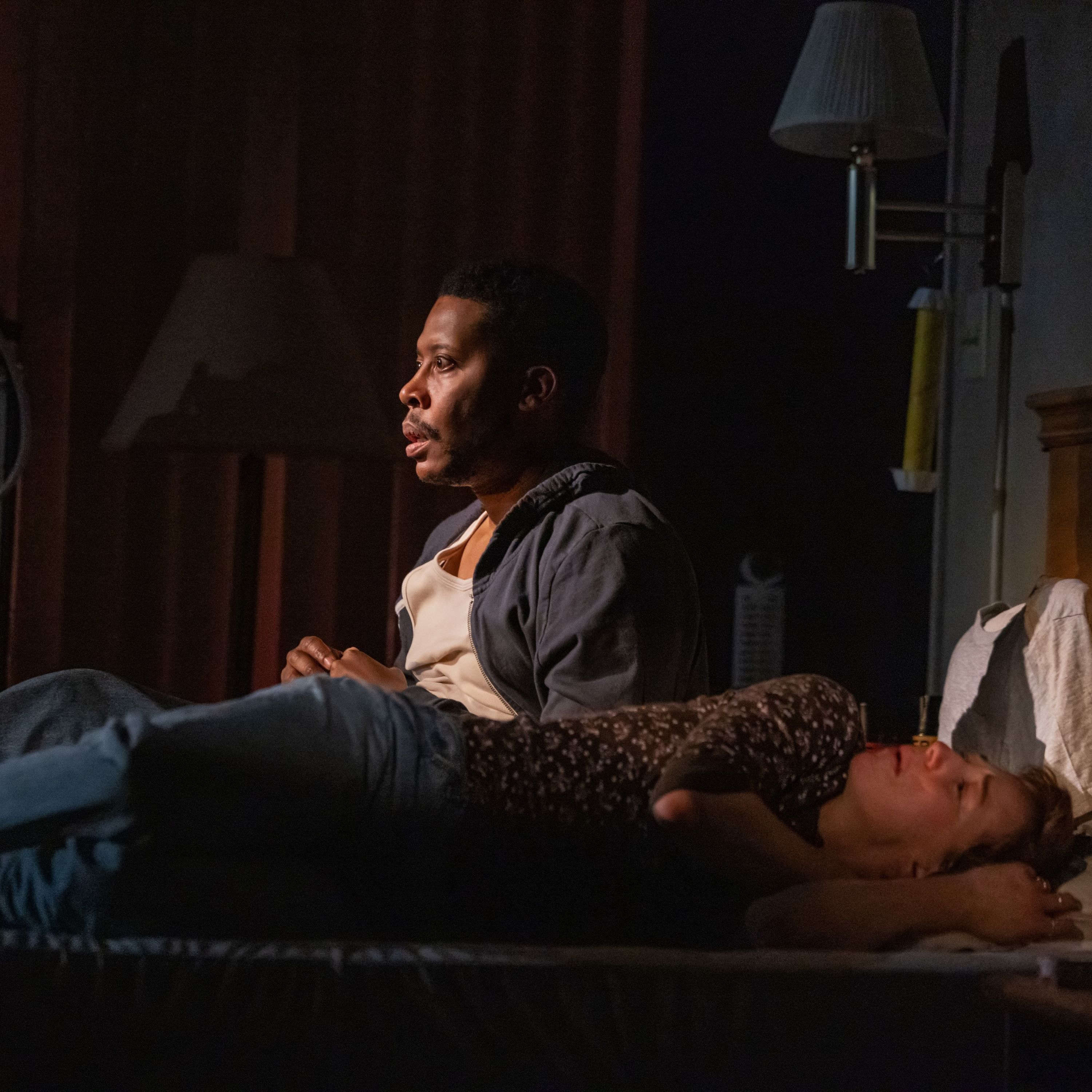
Loading summary
Transcript94 lines
- [00:08]
A
This is all of it on wnyc. I'm Alison Stewart. Coming up on the show tomorrow, we will send you into the very cold and snowy weekend with some great conversations. We're going to talk with the director of a new documentary series titled mel Brooks the 99 year old man. We want you to call in and share your favorite Mel Brooks movie. Plus, we'll preview this weekend's celebration of Philip Glass at Lincoln center where three featured vocalists who will perform live in studio. That's coming up tomorrow. Now let's get this our actor started with actor Namir Smallwood. The play Bug tells the story of two vulnerable people diving into conspiracy, paranoia, isolation and even violence. But it leaves the audience feeling sympathy and maybe even empathy for them. Bug is written by Pulitzer Prize winning playwright Tracy Letts and it was first staged in London in 1996 and now it is making its Broadway debut. The play is set in Oklahoma. It stars Carrie Coon, the playwright's real life, as Agnes. Agnes spends most of her time in her rented motel room. She's friendly even as she abuses drugs and alcohol. And later on we learn that Agnes holds on to a lot of grief. Coon shares most of her stage time with Namir Smallwood, who plays Peter Evans. Peter finds himself in in the hotel room with Agnes. She was brought by one of her friends. He's friendly, if not a little awkward. But as Peter befriends Agnes and ultimately moves into the hotel room, we slowly learn there's something that's a little off about him. It starts with his insistence that the room is infested with bugs and then they are infested with bugs and then the government is somehow involved. And you can see where this is headed. Bugs is a New York Times critic pick. Critics pick. It's running through at the Samuel J. Friedman, now extended through February 22nd. I have with me now here in studio actor Namir Smallwood. It is really nice to meet you.
- [02:10]
B
Nice to meet you as well, Allison.
- [02:12]
A
So I understand that you have played this role in the Chicago production of Bug a couple years ago.
- [02:18]
B
Yes.
- [02:19]
A
What interested you in coming back?
- [02:21]
B
I mean, I think Bug is a really well done play. Tracy is a fantastic writer and Carrie is one of my favorite actresses. So I mean, and being the Steppenwolf, you know, the family, you know, we're all in this together. So we're decided to just come bring it to Broadway and have fun doing it.
- [02:48]
A
Is there anything that is different this time around, different about the play, different about the production?
- [02:54]
B
I think the production is a lot more grounded this time around because there's a lot of stuff, you know, that was happening. I mean, the first time we did it, we actually got shut down by a bug called Covid, and the whole world stopped. And we went back maybe a year and a half later to remount it because we didn't really get to finish. We were three days away from closing.
- [03:27]
C
Wow.
- [03:29]
B
And, you know, that was a kind of a rushed kind of thing. We were just trying to pick up where we left off. Four years later, doing this play now, I think the world has changed dramatically, and I think we've changed dramatically as well. So there's a deepening in the well of, you know, what this story entails and who these people are. That is really fun to explore.
- [03:59]
C
What interests you about Peter?
- [04:03]
B
What interests me about Peter is the fact that he is a war veteran. And there's something about military men. I think that if you're not careful, there's something that the military can do to you, you know, to your psyche. It can break who you are as a person. And I think that's what happened to Peter. And trying to understand where that breakage happened and how he's maneuvering through the world as this broken person and how he's trying to pick up these pieces and put pieces together, pieces of himself back together. Why am I like this? You know, why. Why am I going through this? Why did this thing happen to me and who did it? And I think there's a lot of people on this planet now, especially in this country, who are dealing with that same question.
- [05:10]
C
When we first meet Peter, he comes on stage. He's a friend. He seems nice, a little awkward, almost gentle in a way. As an actor, what are you trying to establish about Peter or with the audience in those first few moments?
- [05:26]
B
That Peter is a regular guy. Yes, he's a little awkward. Yes, he is, you know, trying to be a people person, which is counterintuitive to his nature, you know, and he's just trying to be cool, you know, trying to be. He's a nice guy. So he's just trying to, you know, let that lead forward instead of his everything that's gone on in his brain. And we know people like this. You know, there are a million things going on in his mind, and he's like, no, if I say the wrong thing, then this is not gonna be good. So I'm just gonna be. I'm gonna play it cool until I can't anymore. Because you're a real person. The real person Always shows up.
- [06:17]
C
Always shows up.
- [06:18]
B
Always.
- [06:19]
C
When Peter first meets Agnes, you can tell there's a connection between the two of them. What do you think that they see in each other that allows them to build a more intimate relationship as the show progresses?
- [06:33]
B
I think they see each other's brokenness, the fact that they're both looking for something, that they've lost something, and they're trying to, you know, discover what that thing might be in the other person, you know, to try to help them put the pieces back together, you know, And I think that's what they see in each other, is there's a recognition of, oh, you're lost, just like I'm lost. Well, maybe we can find where we're going together.
- [07:07]
C
My guest is actor Namir Smallwood. He is starring as Peter Evans alongside Carrie Coon in the Broadway production of Bug, running at the Samuel J. Freed Samuel J. Friedman Theater through February 22nd. Most of the stage time is shared between Peter and Agnes. And recently, Carrie Coon went on television, and she talked about almost missing opening night because she had this. This fake reaction to blood, which we see. And she couldn't speak, and she was having trouble breathing. And she said, you are very calm actors. People can tell from your voice. You're a very calm person. But she could see it in your eyes, like, what is going on? What happened in that moment for you as an actor? What happened on stage?
- [07:53]
B
I mean, as. As an actor, I'm, like, trying to figure out, okay, this is. This is different. And as a person, it was like, okay, how can I help? What do you need? Do I need to, you know, get you water or something? Like, what is happening? You know? So what I did was I sped up so, you know, to get her off stage. And when we got off stage, I was like, you okay? She was like, no.
- [08:29]
C
That'S not really the answer you want to hear, but it's the truth.
- [08:33]
B
And the crazy thing is, just a few days ago, similarly, the same thing happened to me. Like, I went to say my first line, and all of a sudden, it was like my voice started going, oh, no. And I was warmed up. I did everything that I'm, you know, that I normally do, whatever. And the rest of the show was like, wow, touch and go.
- [08:59]
A
That's what real theater's about, though.
- [09:01]
B
Yes.
- [09:02]
A
Right. And you have to kind of go with it at the same time.
- [09:07]
B
Exactly.
- [09:08]
A
You know, I'm interested in this because when you go into the theater, you have to put your phone in one of those yonder pouches. Because there's nudity in the film and in the play and understandable. And sometimes people forget to turn off their phone. I'm wondering, like, the show I went to see, the guy behind me fell asleep, and his watch was going off. And it was going off occasionally. And I started thinking, is that part of the play? Am I supposed to be hearing that? Do you hear that? When that happens, do you use it?
- [09:39]
B
Single time, And I use it every single time. When we did it, I think it was the first time we did it at Steppenwolf. There was a spider that was coming down from the rafters onto the stage on this long spider web. And I went and said my lines. I stared at it and I said my lines, you know, just. And it freaked people out. But, you know, phones go off. Somebody's heart monitor went off a few times. And it was just like, what is going on? But you. You gotta use it.
- [10:19]
A
Yeah.
- [10:20]
B
You're hearing all these sounds, all this technology. You have to use it.
- [10:23]
A
Yeah. I decided not to sort of get huffy about it. I'm like, I'm gonna make this part of the play. Right. This is gonna be part of it. There's a sound come over my shoulder. Is it coming from the room? Is it coming from the government?
- [10:33]
B
Exactly.
- [10:35]
A
In the play, Peter moves in with Agnes, and he starts to see the bugs around him. We've established that. He slaps them, he tries to kill them. The play really accelerates, and it really reveals a troubling side to Peter. How do you sort of embody that situation? Your face, your eyes, your mannerisms. Knowing that this is accelerating and accelerating quickly.
- [11:01]
B
I think that when it comes to, like, a mental health crisis, I think that what happens is it can start off very subtle.
- [11:17]
C
Mm.
- [11:19]
B
And with Peter, like, you don't see what's going on with him in the first act, you know, you may find some things, you know. But in the second act, it's accelerated. You know, it's like, okay, I think we've decided that maybe it's been three weeks that he's been there already. And you get comfortable. And when you get comfortable, that's when it's like, okay. Whatever is affecting you is. It's comfortable too. So it just comes out. And I think with Peter, like, whatever he's dealing with is accelerated. Now, you can say is accelerated by the drug use, the isolation. But it's a combination of everything.
- [12:18]
C
That must have really changed between Covid and now.
- [12:23]
B
Yes.
- [12:24]
C
Your interpretation of it.
- [12:25]
B
Yes.
- [12:26]
C
Tell me a little bit about how that plays into it. 2026.
- [12:31]
B
Right. So Covid, you know, the quarantine bit, I was fine. I had a great time during quarantine. But there are a lot of people who did not.
- [12:46]
C
Mm.
- [12:47]
B
And it's something about being with yourself, things that you haven't dealt with, things that you're not dealing with, and there's nowhere to go. And I think this time around, bug in 2026, it's like you have these two people, and you can be in a room with a person, but you're still gonna have yourself there as well, and you have to figure out who you are. And he's figuring out that, okay, I'm dealing with some. Some real mental health issues, and it's progressing in a way that is, like, not very healthy. And it's changing his personality, and it's changing who he is to Agnes, you know, and this. Who he's become to Agnes. And it's. It's very, very real. And my. My objective was to make it as real as possible so people can actually see either themselves or somebody they know.
- [14:02]
C
Now, Michael Shannon originated the role of Peter Evans, and this could be played very differently by a black actor. There's a line in there which they. Which he references about the Tuskegee experiments. Was that in the original play?
- [14:15]
B
Yes.
- [14:17]
C
It reads differently.
- [14:18]
B
Yes.
- [14:19]
C
When you say it, because you're like. That was true.
- [14:21]
B
Mm.
- [14:23]
C
How might Peter's identity change with a black actor playing the role?
- [14:30]
B
Just, frankly, quite frankly, I think that I've never seen Bug the film, or, you know, any of its iterations on stage with Mike. Mike is a very different actor. Yeah. And being a black actor, first of all, is different. Being an actor playing a role that another actor who's become very famous, you know, has created. But being a black actor is very different because I can't be unhinged. I can't be, you know, nasty towards Agnes because she's a white woman. I'm a black man, and it's going to come across as. As something sinister. It's not. Oh, oh, he's just a little, you know, he's a little crazy. He's a little. He's lost. No, no, no. It's going to be menacing, and I can't do that. And I. I know I'm where I'm aware enough to know that I can't do what somebody white has done with any character because I can't turn my blackness off. I can't do it, you know, So I have to be very aware, and it has to Be very, very measured. Whatever my choices are, they're very well thought out, because they have to be. Because I can't be just raw. Here I am, you know, like, I can't do it.
- [16:22]
A
Yeah.
- [16:23]
B
And it also makes it very real to me to be able to do that in that way, because you don't want to come across. Somebody could just write you off immediately. I mean, that happens in life.
- [16:37]
A
Yeah.
- [16:38]
B
You know.
- [16:39]
A
Yeah. It's true about Peter, because at first you're like, you're not sure he's wrong. Maybe there is. Maybe there is a. The government is a bi. You know, like, there's a little bit of that. The Tuskegee experiment that happened, you know, and it's.
- [16:52]
B
Exactly.
- [16:52]
A
And it. For a moment, you're like, no, wait, wait. This poor man's sick.
- [16:56]
B
Is he.
- [16:57]
A
I don't know. It's a really. A beautiful piece of writing and a beautiful piece of acting, by the way.
- [17:03]
B
Thank you.
- [17:04]
A
You know, how much of Peter's backstory are you aware of? Did Tracy fill you in on that? Did you want to know?
- [17:13]
B
I thought so. A lot of it is in the writing, and that's what makes Tracy such a fantastic writer, because he fills in gaps. You know, he fills it in, and you just have to say the words. But being a black actor, I had to fill in some other things. And part of my research was on Timothy McVeigh, because that was the inspiration for Peter. But then I looked at, you know, John Muhammad, Michael Donner, a lot of different Other people, a lot of different experiments that were done on black soldiers In World War II, a lot of stuff that was done on Africans, you know, and when you start coloring these. These. These backstories with this very real knowledge, stuff that happened to people who look like me, then it changes it on a dime, and it really makes it immediate, and it causes people to go, did that really happen? Yes, it did. And here's the evidence.
- [18:38]
A
You know, this is a really intense character for you to take on. How do you mentally and emotionally prepare for your performance each night? And then how do you come out of it after.
- [18:52]
B
Well, I try to get to the theater about an hour ahead of time, do my steaming from my throat and my little exercises, vocal exercises and stretches and all that stuff to get in to, you know, the character. And then at half hour, I just lay backstage. Everybody else is getting ready. I'm already ready by fight call, which is 15 minutes before half hour. So I just lay back there, and I just run through the whole play in my head. And then I'm ready to rock, you know?
- [19:37]
A
The play contains themes of conspiracy and government mistrust and paranoia and isolation. Do you understand how people fall down those rabbit holes these days?
- [19:52]
B
Oh, absolutely, yeah. And I think it's because, see, I'm not on social media at all, and I think that there is an immediacy to knowing what's going on. But then it's like, is that the real information? And people, you know, I feel like a conspiracy theory is a theory until it's not. There are conspiracies for everything, you know, and you just may not know about it, you know, but when you do, when it. Like, when it's let out, per se, it's like, oh, oh, really? That. That happened. And I can see how people can see something and go, well, that's. Oh, that's true, or that's not true, or, oh, well, maybe it is true. And that rabbit hole is very, very deep and is long.
- [20:57]
C
It's interesting. Did you see Begonia? No. The character is similar to your character. He's a conspiracy theorist. And spoiler alert, he's right.
- [21:09]
B
Jesse Plemon.
- [21:10]
C
Yeah, he's fantastic. But he turns out to be right. And he's got a house full of tinfoil, like your character does, and he's, like, experimenting on people, and he does all these wrong things, but he turns out to be right. And it's just this. This moment of, like, what's right?
- [21:32]
B
Right.
- [21:33]
A
What's right? You know?
- [21:34]
B
Yeah. I mean, you think about it, it's like the idea of all these politicians and pedophilia, it's like, oh, oh, that's not right. Then it turns out there's some. There's a little bit of truth to that.
- [21:51]
A
Yeah.
- [21:51]
B
You know.
- [21:53]
C
Can I ask you a question? Are you from Jersey?
- [21:55]
B
Yes, I am.
- [21:55]
C
You're from Newark, New Jersey.
- [21:56]
B
Newark, New Jersey.
- [21:57]
C
You went to Seton Hall Prep.
- [21:58]
B
Seton Hall Prep. You're from Jersey, too?
- [22:01]
C
I am from Jersey, too. I took a ride at Seton Hall Prep many a times when I got to the top of the hill.
- [22:10]
A
What?
- [22:11]
C
How would I know you're from Jersey?
- [22:14]
B
My accent?
- [22:15]
C
Yeah. Was it hard to lose?
- [22:17]
B
No.
- [22:17]
A
No.
- [22:18]
C
You just kept it.
- [22:18]
B
Yeah. Because I tried to be like, okay, well, maybe he's from Oklahoma. And Tracy was like, no, he could be from wherever. I was like, for real? He said, oh, yeah. I said, oh, okay.
- [22:36]
A
That's interesting. That's interesting. The show is called Bug. It is running now at the Samuel J. Friedman Theater through February 22nd. My guest has been actor Namir Smallwood it has been really nice to talk to you.
- [22:49]
B
Likewise.
- [22:51]
C
NYC now delivers breaking news, top headlines, and in depth coverage from WNYC and Gothamist every morning, midday and evening. By sponsoring our programming, you'll reach a community of passionate listeners in an uncluttered audio experience. Visit sponsorship wnyc.org to learn more.