Loading summary
Transcript85 lines
- [00:08]
A
This is all of it on wnyc. I'm Alison Stewart.
- [00:11]
B
Coming up on the show tomorrow, we're gonna send you into Valentine's Day weekend with some reading recommendations and relationship advice. Leah Koch is the owner of the Ripped Bodice Bookstore. She joins us to talk about the.
- [00:25]
A
Impact heated rivalry series is having and.
- [00:27]
B
To recommend some other great romance reads. And comedian Jordan Carlos Jo us to talk about his new book chore play the marriage saving magic of getting your head out of your ass.
- [00:40]
A
And I'll let you infer the message.
- [00:42]
B
From the book's title that's in our future. Let's get this hour started with some basketball history. The three pointer, the dunk contest, high flying superstars all are what make NBA basketball entertaining.
- [00:59]
A
But that was not always the case. In the 50s and 60s, the NBA was kind of boring.
- [01:05]
B
It was a little slow. It was overwhelmingly white.
- [01:08]
A
A new competitor soon challenged the NBA's.
- [01:10]
B
Hold on professional basketball, one that was more athletic, more physical and with significantly more black players.
- [01:17]
A
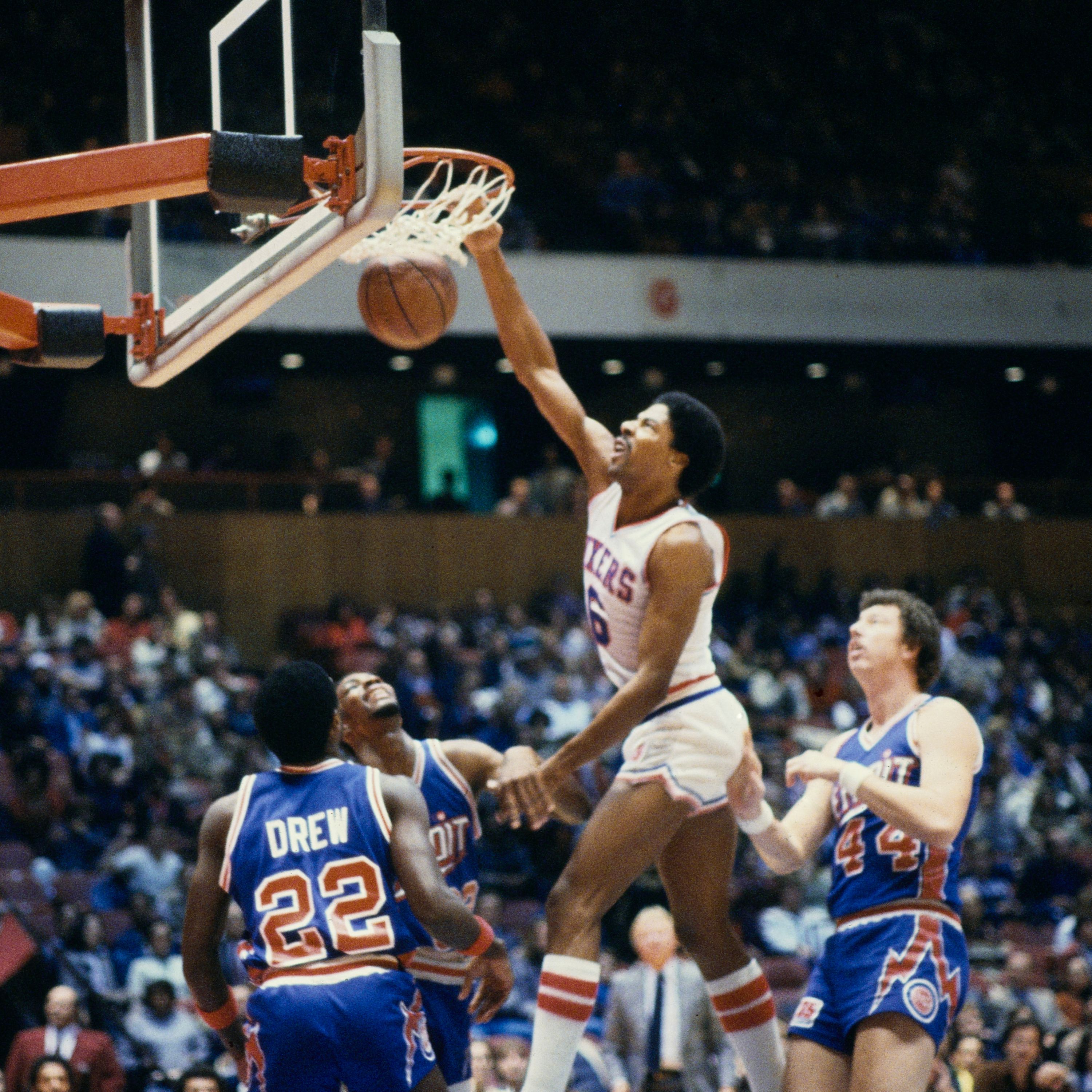
The aba, the American Basketball association was only around for nine seasons, but it birthed a new generation of superstars like Dr. J. The league created a style of play that eventually influenced the culture culture of the NBA and its popularity. A new docu series tells the story of the ABA in full from its founding in 1967 to its merger with the NBA in 1976. It's called Soul Power, the legend of the American Basketball Association. It's out today on Prime Video. And I have with me its director, Kenan Kamwana.
- [01:53]
B
Holly.
- [01:54]
A
Kenan, nice to meet you.
- [01:55]
C
Yes, you too, Alice. I'm a huge NPR fan, so it's a pleasure be here.
- [01:59]
A
Oh, I have to tell you, I was watching this in my office and my producer was just dying watching me watch it.
- [02:05]
B
So I was going swish, go.
- [02:07]
A
Every time you had a piece of archival footage, every time you had one of those great players. It was so exciting to watch this documentary. I just want to say that up front.
- [02:17]
C
Yeah. Thank you. You know, I appreciate that. It's funny because we have a story that is what some would consider an older story in 1975, but the people we had working on it were purposefully young. Oh, he brought in 20something editors to capture their energy and their curiosity. They got so into the topic that they had never heard of.
- [02:36]
A
They had a good, they have a good sense of humor too, your editors, by the way. Yeah, I want to say that let's go all the way back to the beginning. The ABA was founded in 1967. What were the circumstances that led to its founding.
- [02:48]
C
Well, the circumstances were that there was a soft market for basketball. The NBA had not taken the foothold that we experience today. We know the NBA of Michael Jordan, Magic Johnson, Larry Bird. This was way before that, when the NBA was a distant, distant, tiny little cousin compared to baseball and football. And for that reason, the few guys got together who were hopefuls to be sports owners, and they thought, you know what? We could potentially challenge the NBA because they're not that strong and their product is not that good. And their whole intention was, you know what? Let's create a league that is a little bit better than their league and force them to merge. Force them to merge with us. It should only take about a year or two. That's what they thought at the time when they started the league.
- [03:32]
A
It took a little longer than a year or two. I want to. I want to focus on the year 1967 and 68 because the country was in such turmoil those years. How did the circumstances in the country in those early years affect the ABA in its infancy?
- [03:51]
C
Well, one of the most interesting quotes I got that at the beginning when I was first being brought, brought this project, and I was considering whether to say yes to it or not, was from the head coach, George Carl, who's known in basketball circles as the head coach of the Seattle SuperSonics for the series that they played against Michael Jordan, the Bulls. But before that, he was an ABA player. And in talking about the project, he said, kenny, what you don't realize about this project is that the ABA was the first integrated workplace in America. And when he said that, Alison just blew me away. I was like, wait a minute, Whoa, whoa, whoa, whoa. Give me some verification, coach. And he started to explain to me that in 1967 there were places that had integrated in, In. In title or in officially, because they had one or two black people at different news outlets, different companies. But he said, we were 50, 50 in our locker room. There was no. And that's not by design. So they started recruiting the best player. They started taking the best player without any quotas that were previously employed by the NBA. And in doing so, it made our locker room full of guys who had never been around each other before. And it's hilarious to watch these guys talk about, to go back to being 20 years old and talk about how hard a time they had at the beginning, understanding each other's jokes or even the way they spoke to each other. They said it was going to a brand new world. And they talk about the process over those seven years of the NBA, of the ABA's existence, of gradually becoming friends and then gradually becoming family. They became brothers because of what they had to face in terms of the Goliath they were trying to take down in the NBA.
- [05:18]
B
Listeners, for those of you who are around you remember watching or attending ABA games. Do you have a favorite player or memory of the league? Call or text us now at 2124-3396-9221-2433. WNYC did you ever watch Dr. J and the Old New York Nets at the Nassau Coliseum? What was it like to see them play? Give us a call. 2124-3396-9221-2433. WNYC my guest is director Keenan Cumming. Juana Holly. He is he's the new his new docu series is the History of the aba. It's called Soul Power, the Legend of American Basketball Association. Before founding the aba, there was this sort of it was an informal race quota in the NBA. To be honest, only a few black players were allowed on each team. What were the stereotypes that coaches held about black players?
- [06:13]
C
Well, it's interesting. We hear them now and it feels like what? They're also archaic. It's hard to hear them now. It's kind of mind blowing to hear the theory when you know of Steph Curry and LeBron James and all the Michael Jordans of the world, that you can't win with black players. Yes, they look spectacular. Yes, they have incredible ability, but you can't actually win with them. They're not winning players. They are players who play for themselves. They don't play for the greater good of the team. That was the stigma in 1967.
- [06:41]
B
You see my editor, my engineer in my in our box going, what you're saying you can't have them be good players? That's incredible.
- [06:50]
C
Yeah, it really is. It's funny because in exploring this story, we find ourselves face to face. And this is what sports does for us. It puts us face to face with our own American beliefs, prejudices, understandings, things that we assume to be true that aren't necessarily true in sports. I love doing sports stories. One because I was an athlete, a football player, played football in college at Duke. But because sports has a scoreboard, it's unlike anything else in our lives. Everything else is very undefined. As far as who is succeeding, who's not succeeding. Well, if you walk into an accounting firm, it's very difficult to really say for sure who's succeeding, who's not succeeding. If you walk into a general business, a bakery, well, who's the best baker? Very subjective. But the NBA in basketball, ABA and basketball, it's not subjective at all. There's a scoreboard. And so when you say black players, you can't win with them. And then in the first and second year of the aba, you have two black players lead their team to the championship, it starts to throw a monkey wrench in our prejudices.
- [07:45]
B
Let's talk to Adam from River Edge, New Jersey.
- [07:48]
A
Hi, Adam, thanks for taking the time.
- [07:50]
B
To call all of it.
- [07:51]
D
Hi.
- [07:52]
E
This is such a great topic. I love it. So I just want to a couple of things. First is a shout out to the book by Terry Pluto. He's a columnist in Cleveland. He wrote an oral history of the aba which is so amazing and so entertaining that I have it by my bedside. And when I wake up in the middle of the night and I need a chuckle, I get that. I read that book because it's so wonderful. And then like the second thing, really briefly is that it. So the ABA is, it's not just like, oh, changed the NBA and everything. It really made a huge cultural impact. Right. So we could look at Jackie Robinson say, oh, he made a huge impact in terms of integration, just in terms of the cultural, you know, the way that the world has taken over hip hop and that there's a. That has, has gone through that has a lot of its, its place in the, in the ABA as well.
- [08:53]
A
Yeah.
- [08:54]
B
Thank you so much for your call. Yeah.
- [08:55]
A
This is a four series documentary and you get into how it changed the culture.
- [09:01]
C
Yeah, we do. That's such an astute observation. I appreciate that observation. Because when you see not just the way that the players are succeeding, but it's the, it's the manner in which they're carrying themselves on the court. Like a Dr. J with the way he wore his fro and full blown dynamic afro. He didn't have the biggest afro in the aba, by the way. He was second biggest, thanks to Darnell Hillman. But do you see the players being able to express themselves in the way they play on the court and the way they dress off the court? That was the first time that was happening. If you look back in the 60s and I started my career at NF Films, if you watch those players get off the bus in the 60s, they're all same gray suit, black tie, gray suit, black tie, gray suit, black tie. That was the case across all personal sports until the ABA came into existence. So the idea of what we see now with players strolling into the arena and you see them all got their different fits on. It's a competition to see who can be more uniquely provocative in their outfits. That all began with the pioneers of the aba.
- [09:57]
A
I love FIT check when it happens. Let's talk to David from Dobbs Ferry. Hey, David, thanks for calling, all of it.
- [10:04]
D
Oh, good. Thanks for taking my call. No, I just remember going to. When I was probably in junior high school going to New York or New York Nets games when they were playing. And I can't remember the name of it, but it was, I think, near Hofstra. It was like a Quonset hut type building, which was the early days of the ABA. And remember Bill Melchioni, who was a St. John's player, and I think there was a. James Jones was a player. So it was played in this sort of very rough tune, but sort of like arena. And then the other thing I Remember is seeing Dr. J at the Nassau Coliseum in 76 when they won the championship against the Denver Nuggets and David Thompson. And I remember Dr. J running down David Thompson and blocking him on us on a breakaway drive. So it was very exciting to see him. I guess that was the year before the merger, but I remember those early days when the ABA was just getting.
- [10:59]
E
Going back in the early.
- [11:00]
D
The late 60s, I guess.
- [11:02]
A
Yeah, David, thanks for calling in. How did a player end up in the ABA versus the NBA when they were first starting?
- [11:09]
C
That's an interesting question. I think at the beginning it was almost a fallback league for players like Roger Brown and Connie Hawkins who've been banned from the NBA. These are players who were caught up in scandals that they didn't get very much due process. But because there's only one game in town, a monopoly on the business of professional basketball, these people who ran the leagues at the time could say, nah, you know what? We don't. We don't like it. Your name has been sullied. You're not coming in. So there are great players. It's funny because David just said James Jones, and he's interviewed in the documentary series. There's a number of great players like James Jones, Matt Calvin, who. Who people don't know about, who are incredible players. And we were able to interview them. Thank God we were able to catch a number of them before. A number of the folks we interviewed and sat down with have passed away in the times of production in the time since. It's coming to light and being broadcast and premiered today. But the players in The ABA really arrived through. At first they were people who had passed that didn't allow them to get in, or they were a little undersized. But eventually the players wisened up. And you'll see the players started to realize that when I come out of college, I can negotiate now with these two teams against each other and so really change the landscape of professional sports and that the players entered with leverage for the first time ever.
- [12:23]
B
I wanted to ask you, there've been a lot, there's been a lot written about the aba. What were you trying to correct with this documentary?
- [12:31]
C
That's a great question, Allison. Well, first, you know, you got to look at movies like Semi Pro, right, Which is a hilarious movie. Will Ferrell and those guys, but it's aba and it makes them look a lot of times like they are more clownish, more less than second, second class basketball. And what we were able to show and what the players show first they demonstrated to me, like, they told me things like we actually played against the NBA head to head in exhibition games. And I was blown away. And they were like, I was like, us. I never heard that before the ABA teams played NBA teams. Like, yes, but you gotta understand that we won. And I'm like, wait a minute, let me look at the statistics. And their, their statistics are accurate. When the two teams started playing, the NBA had an advantage in the exhibition games. By the last three years, the ABA won the majority of the games over the NBA. So you have teams like the Kentucky Colonels who are beating the New York Knicks, your teams like the Indiana Pacers of the ABA who are beating the Lakers consistently. And so I think there's a validation that I hope the players of the ABA get to experience with this documentary series in that they were much better, much more innovative than they've ever gotten credit for. And I hope that we're able to shine a light on the respect that they deserve.
- [13:44]
B
Let's talk to Judith from Rosslyn Heights. Hi, Judith. Thank you so much for taking the time to call all of it.
- [13:51]
F
Hi, Alison, how are you doing?
- [13:52]
B
Great.
- [13:53]
F
First of all, amen to everything your guest just said. And I was shocked driving in my car to hear the broadcast. First of all, I was at the 1976 game at the Coliseum with my son, who was a huge Julius Irving fan. So that's how we got to know the NBA and the Nets. And Julius Irving was actually scouted by Al Bianchi, who was then the coach of the ABA Virginia Squires, but had played pro ball at the NBA and several years later, 1989 to be exact. I worked for Al Bianchi at the next.
- [14:45]
B
Wow, that's pretty cool.
- [14:49]
F
And I know you from NBC when I worked for Elena Nachmanoff.
- [14:53]
B
Oh, my gosh. Wait, we need to get you this number.
- [14:56]
F
It's such a small world. It's such a small world.
- [14:59]
B
Thank you so much for calling. Wow, that's wild. We're talking about the docu series, the Legend of the American Basketball Association. I'm speaking with its director, Kenan Kwana. Holly. We'll have more after the break. If you want to get on the conversation, you should call us at 212-433-WNYC. Do you remember watching or attending an ABA game?
- [15:23]
A
Did you have a favorite player or.
- [15:24]
B
A memory of the league? 212-433-WNYC. 212-433-9692. When we return on the other side of the break, we're going to talk about the three point. This is all of it on wnyc. I'm Alison Stewart. We're discussing the new docu series about the history of the aba, the American Basketball Association. It's called Soul Power, the Legend of the American Basketball Association. The film is out today on Prime Video. My guest is director Keenan Kamwana. Holly, I want to ask about the three pointer rule. The ABA was the first league to adopt it. It's arguably the most important shot in the NBA today. Why did the ABA add this rule?
- [16:18]
C
Entertainment, entertainment factor. They needed something to make them stand apart from the establishment. So the NBA, who they wanted to challenge, they had a very staged, slow way of playing. Allison, a very considerate way of playing. Think of it like there's a conductor and the head coach who would constantly be orchestrating and controlling the players. The ABA wanted the opposite. They wanted to play more. And if you think of Miles playing along with Miles Davis playing along with John Coltrane, they wanted to let these players flow. And a great way of doing that is to create a three point line. So it was exciting for the crowd, but it also opened up gameplay, as you see in the NBA today. It draws people away from the basket and allows smaller players to succeed, faster players to succeed. And so for the entertainment value, they decided, okay, we'll try something. We'll try this, this notion of a three point line. And as we see today, it really, really worked.
- [17:09]
B
I want to talk a little bit about Kareem Abdul Jabbar. He was Lou Alcindor at the time. Both the NBA wanted him and the ABA were desperate to Sign him. How did the NBA end up with Kareem signing for the Milwaukee Bucks? This is a really interesting story.
- [17:27]
C
Yeah, good. A very interesting story. And the answer is the ABA blew it. The ABA blue if they had him. People don't realize this story in sports, even people. Real basketball story. And so realize the ABA had Lu Alcindor, soon to become Preem Abdul Jabbar. They had him. He was ready to sign. He wanted to play with the aba. The ABA had an advantage that they were willing to allow him to play in New York, where of course, he's from. And he loved that he wanted to play in New York. He was not at all interested in playing in Milwaukee. He said, in New York is my home. I want to play there. I was signed with you guys, but I'm going to take one offer. One offer from the NBA and one offer from the ABA and one offer only. And so the ABA had a plan that we're bolder. What we have on our side. We're more bold than the NBA. We're going to put in this young man's hand a check on the day that we sit down to negotiate for $1 million, a cashier's check for $1 million in his hand. And that was their plot of how they were going to win Lou Alcindor. And I won't tell more. I'll leave it at that for you all to watch the series. But the way that that check gets handled. Oh, my goodness, the handling of this one piece of paper changed the history of basketball and changed the history of the ABA forever.
- [18:38]
A
Let's talk to Jane in Queens. Hi, Jane. Thanks for taking the time to call, all of it.
- [18:43]
F
Hi, thank you. I love the topic. It was something that was very close in my family.
- [18:50]
E
We.
- [18:50]
F
My husband, Herb Turetsky, was the official scorer for the first game that the Nets played as the New Jersey Americans at the Teaneck Armory. And Max Zaslovsky was the coach of the Nets, of the Americans at that time. And he looked around at the table and he saw that he didn't have a scorer. And he looked up in the stands and he saw my husband and he said, hey, kid, do you know how to keep the book? And my husband said, he did. He came down and he did the first game. And he stayed with the Nets for 54 years as they became the Brooklyn Nets.
- [19:30]
A
That is a great story, Jane.
- [19:32]
B
Thank you so much for sharing it with us.
- [19:34]
A
Let's talk to Norm from Brooklyn.
- [19:35]
B
Hey, Norm, what's going on?
- [19:39]
C
Hi.
- [19:39]
G
Thanks for taking my call. So many memories about the ABA to mention. Previous call. I just mentioned Maxlofsky, and my dad went to high school with Max. And so my dad was always interested in the Nets. And the other thing is, my dad had a candy store in Amityville, and he used to listen to the radio all day. He used to be able to get two tickets to the Nets games if he guessed the right song on one of the local radio stations, would go to the. And watch the Nets there. One of the things that hasn't been mentioned yet is the famous red, white and blue basketball that was, you know, the signature of the aba. And, you know, I just remember so many of the players. Laverne Tartt, Bill Melchiori, the Whopper, Billy pal, of course, Dr. J. And the ABA was fantastic and of course created a number of the teams that are, you know, still in the NBA today. So thanks for taking my call.
- [20:37]
A
Yeah, we appreciate it. This text goes along with that. I was a kid, but I remember the vivid colors, star striped basketballs, crazy short shorts, Afros, amazing agility, like literal basketball come in glorious color. Let's talk about those basketballs.
- [20:53]
C
Yeah. Wouldn't it be great if the. If the NBA would have an ABA week where just for a week, they play with that ABA red, white and blue ball? And that ball is so iconic, Allison. It's like everywhere we went, it's funny, we went around to playground basketball courts around the country. The la, the one of LA Beach, Louisville, Denver, Vegas, New York. And we stopped just to ask people, what do you. What do you know about the aba? Including younger people? And they said two things to a T. The first thing out of their mouth was Dr. J.
- [21:22]
A
Of course.
- [21:23]
C
The second kind of mouth was the red, white and blue basketball. Like, we. And we would go to these basketball courts with the ball in our hand, Allison. And we would be talking to these younger people about it, and they. Into every city we went to, they like, can we play with that ball? Can we use that ball? Because they had the regular brown ball and they. Everywhere we went, they wanted to. To take the ball and play with it. And it was just an amazing experience to see the reaction that that ball gets somehow. Just the way that it looks coming out of your hand, the way it looks spiraling through the air, and the spin, it just says fun, it says freedom, and it says creative expression. And it's one of the true, like, living iconic elements that have come from the American Basketball Association.
- [21:59]
A
This says, I lived in Denver during the reign of Alex English, the gentleman of the round ball. Graceful as a cat, this one said. In the early 70s, I was a midshipman plebe freshman at the US Merchant Marine Academy in Kings Point. One weeknight, a bunch of us plebs were ordered by upperclassmen to attend a Nets game at the Comac Arena. They'd gotten free tickets to the game and a bus to transport it, but they need to put fannies in the seats. I had a tough exam schedule the next day, but my pleas to be left back at school fell on deaf ears. Went to the game and then studied all the rest of the night till dawn. I have a question for you. This is coming through. What criteria was used to decide which ABA teams would be allowed to merge with the NBA?
- [22:44]
C
That's a good question. Yeah. So the criteria we really went. We leaned into this. This is the final episode, episode four. You'll see this feature. My filmmaking partners and I. The producer, Todd Lieberman, who's an incredible scripted producer, and Brett Goldberg, an incredible producer I've known for 30 years. We actually made TV shows together in college. We really leaned into this question about how do we handle this final episode in the merger. The merger is so complex in that it's not really a merger. They're really kind of assuming these team. The teams have to pay. You would think it'd be the other way around, where if you acquired all this talent, all this valuable ip, that they would. You shower them with an offer and they decide. But the teams had to pay to get in. So that was the biggest criteria. That's a great question, was who was financially soluble enough to stay, to be able to pay the fee to get into the league. And it turns out the only teams who were were the New York Nets, the Indiana Pacers, the Denver Nuggets and the San Antonio Spurs. And some of the teams who were great, who were lost, particularly the Kentucky Colonels, who have an incredible story, have incredible fan support, but did not have the support of their owner, John Y. Brown, who actually started. Who actually owned Kentucky France, the Kentucky Fried Chicken franchises. He'd started Kentucky Fried Chicken. He did not want to pay the money. And so for that reason, his team didn't make it in. And it was a very sad day that's still felt by the people of Louisville that we recognize. We went to go film there. They still wish their Kentucky Colonels were part of the NBA today.
- [24:14]
B
What happened to the players who didn't make it into the NBA after the 1976 merger?
- [24:19]
C
Yeah, that's one of the toughest stories, Allison, is that a lot of the players, because the league started in 1967, the ones who have been with us from the beginning, including James Jones, who was mentioned earlier, Matt Calvin, they had really run the race by the time that the ABA ended. They were no longer the players they once were. You know how the. How NBA or professional basketball season can take a pounding on your body. And they were really done. And there was no consideration for these people. There was no consideration financially, there's no consideration as far as pensions. And they were kind of left out in the cold. And so a lot of the players, the majority of the players did not make the transition over to the NBA. And many of them have had very difficult lives since they finished their basketball careers.
- [25:00]
B
Let's talk to Phil from Stanford. Hey, Phil, thanks for calling, all of it.
- [25:05]
E
Thanks for taking my call. I had the fortunate ability to opportunity to play with the Los Angeles Stars when I was a mere 10 years old in the fifth grade. Obviously, in Los Angeles, you're in Laker territory, but the Stars were starting up and they're playing out at the sports arena and I guess, and they went to a lot of schools to just do exhibitions to try to generate interest. And so the great Zelmo Beatty and other members of the Stars came out to our school, taught us how to play basketball. And then they just started dunking and we kind of got out of the way. That made me a fan, made me go out and buy a. An ABA basketball. And I was actually kind of upset when they packed up and moved to Utah.
- [25:54]
B
Phil, thank you so much for calling in.
- [25:57]
A
That's about Phil's recollection as a small kid, the way the ABA had an influence on him.
- [26:03]
B
There's a whole series of young Hoopers who don't know that much about the aba. What do you hope they understand about.
- [26:11]
A
It after watching your series?
- [26:13]
C
I hope they understand that a lot of the things they love about basketball right now, from the style to the speed to shooting from deep, which allows, you know, a lot of younger, a lot of younger, smaller kids to participate in the game and be effective. That while you may not recognize the young ones like the forefathers of what you're enjoying on the game right now, are people like Rick Barry, Spencer Haywood, George Girvin, Dr. J, Julius Irvin. They are the forefathers to what you're enjoying now. These men, these men were able to. Were able to revolutionize the game in using nothing but the power of their own individual expression and their willingness to link together and bond together in community. And that's really what took them over the top. And so I want them to realize that two things. One, that the forefathers of what you love about basketball were gentlemen from something called the American Basketball Association. That's the first thing. And the second thing is to realize and recognize what these men were able to accomplish. Most of them only 22, 23 years old, they took on great institutions. Not only professional basketball, Goliath, the NBA, but also professional sports. And the way that it was run, as far as the way power dynamics were set up, with players having very little autonomy, they change that forever. And so I want them to realize how much can be accomplished when you have a willingness to lean into your individual expression and also willingness to do it in the form of community. I think that's something that the younger athletes, I notice a lot of them come to me for mentorship, athletes particularly, who want to be filmmakers, who want to transition into that. And they say we lack community, we lack a togetherness right now. And I think what you'll see from the players of the ABA was that community, that togetherness, that what they call their brotherhood, is what changed the face of basketball and changed sports history forever.
- [27:53]
A
The name of the series is called Soul Power, the Legend of the American Basketball Association. The film is out today on Prime Video. I've been speaking with its director, Keenan Kamwana. Holly, thank you so much for spending time with us.
- [28:08]
C
No, no, it's my. My pleasure. That was so fun.
- [28:11]
A
Since WNYC's first broadcast in 1924, we've been dedicated to creating the kind of content we know. The. In addition to this award winning reporting, your sponsorship also supports inspiring storytelling and extraordinary music that is free and accessible to all. To get in touch and find out more, visit sponsorship.wnyc.org.