← All Of It with Alison Stewart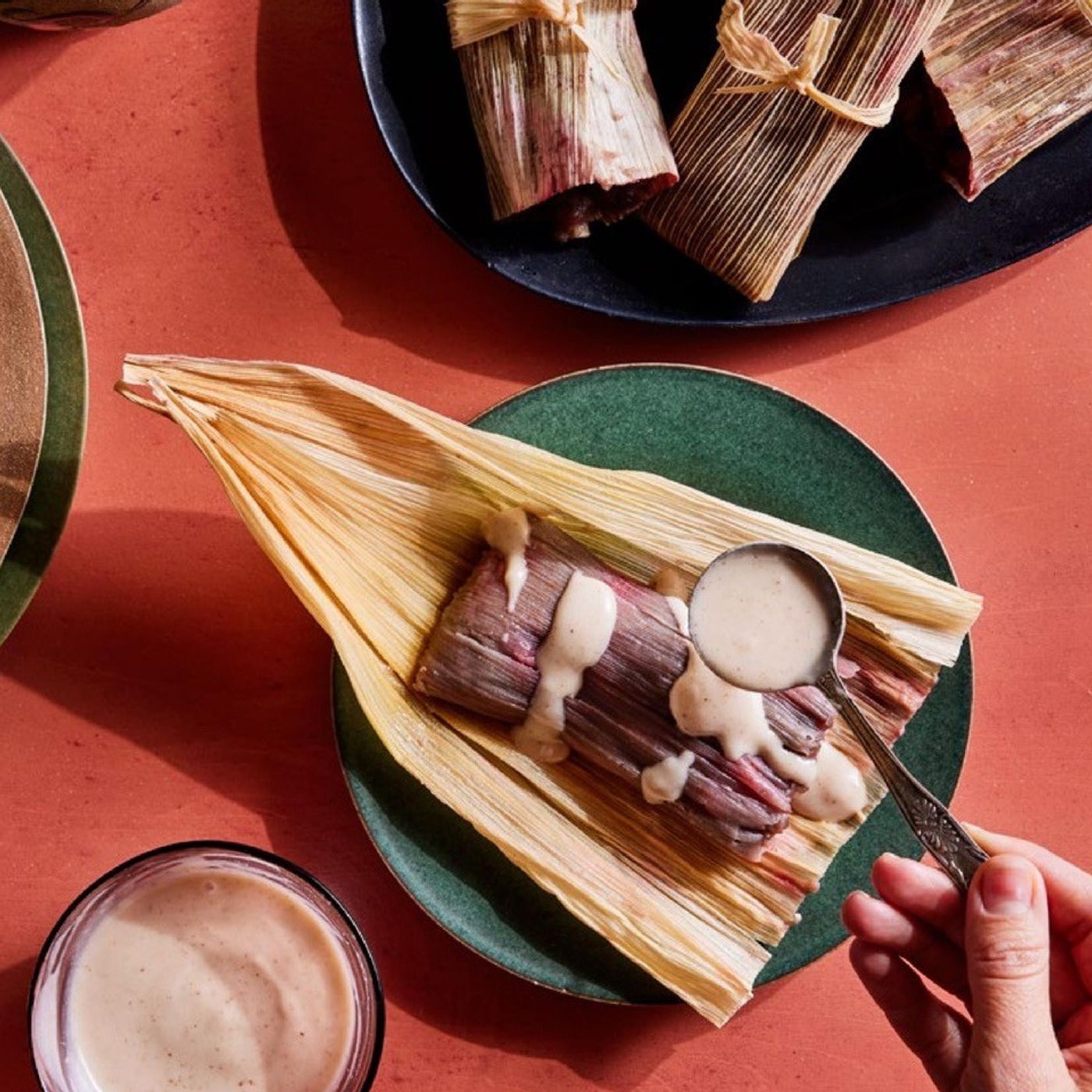
All Of It with Alison Stewart
New Cookbook Celebrates the Interconnectedness of Native American & Mexican Food Culture
00:22:26
Loading summary
Transcript54 lines
- [00:09]
A
This is all of it. I'm Alison Stewart.
- [00:12]
B
Thanksgiving is coming up in just two days.
- [00:14]
A
Yesterday we spoke to Deb Perlman about side dishes, and tomorrow we're going to talk to Aldo Sahm about wine. Today we're going to talk to an acclaimed chef with indigenous roots and a brand new debut cookbook out now. So please welcome Piet to Spain. In 2022, she'd be became the first winner of Gordon Ramsay's Next Level Chef competition. Her new cookbook is called Rooted in A Celebration of Native American and Mexican Cooking. Piet, hey, thanks for joining us.
- [00:46]
C
Hi. Thank you for having me.
- [00:48]
A
By the way, listeners, we have a call out for you. If you have indigenous heritage and want to share some of your family's food stories or cooking traditions, we would love to hear them. Our Phone number is 2124-3396-9221-2433, WNYC. You can call up and join me and Piet on the air, or you can text to us at that number as well. 212-433-9692. When did you first learn about yourself as a chef by putting it all down in the cookbook? You always knew you were a chef, but when you had to sit down.
- [01:21]
C
And write about it, yeah, it was an interesting process for me. Like you mentioned, I've always been revolved around passionate cook cookers, people that love to cook in my family. And during my journey as a chef, I really leaned into representing myself through my cuisine. And when I had the opportunity to write a book, I really wanted to focus on that story of reconnecting, because I know there's a lot of other folks that have similar stories and experiences reconnecting with their heritage. Not just on the indigenous side, but, you know, pretty much everyone is really curious about where they come from. And a lot of the reconnecting happened through food. So it was a beautiful journey for me to be able to experience. Being able to ask family members questions about themselves. Like my grandmothers, I had never really asked them questions about their childhood and their upbringing. And so those were really awesome opportunities for me to really dive into that. But also really connecting through food was a special experience. And these recipes really invite others into that, that experience and that journey with me, and hopefully it awakens something within them to also do the exploring of their own.
- [02:33]
B
Okay, who are the passionate cookers in your life?
- [02:37]
C
It has to be definitely my grandmother on my dad's side and pretty much everyone on my dad's side. My dad was also one in My family to really open the door to curiosity and using spices and really creating elevated flavors. He's really good at that. So I grew up. Everyone on my dad's side was really passionate. My grandmother owned a restaurant at one point in Kansas City, and so did two of my uncles. So, yeah, everyone on that site has made a lasting impact on me.
- [03:05]
B
The title Rooted in Fire is a.
- [03:07]
A
Reference to the fact that your tribal background is Potawatooomi. Hope I said that right.
- [03:12]
C
Oh, yeah. Potawatomi.
- [03:13]
A
Potawatomi. Thank you so much. Which has a particular relationship as, quote, the keepers of the fire. You write about it in your book. Would you tell us a little bit more about that?
- [03:24]
C
Yeah, definitely. Being a member of the Prairie Bend Potawatomi Nation tribe, as you mentioned, we are known as. As Potawatomi people, as the fire keepers. And we were a part of a three confederacy with two other tribes, and it was the Chippewa and the Ojibwe. And we were a part of this alliance. And every tribe, each of these tribes had their responsibility and ours was to keep the fire, which is our traditions, alive. So we really take that into even today. Our cultural upbringings and our traditions are really important to us, and fire is a big part of that. So it not only relates to the fire that we utilize during ceremony, but it's also with, you know, the fire within myself, the fire that I cook with, the fire that I walk through life with. And it's really the fuel to all my passion and all my efforts and all the work that I decide that I, you know, choose to do in my work. And I give a thorough explanation as to what that means and to me specifically. But it's really about the rootedness and my culture and my heritage and my family, my community, my upbringing. These are all the things that really fuel the work that I do. And it's. It's something that I'm really proud of. And this book title, Rooted in Fire, was sounded appropriate because I'm talking about my personal journey. I'm talking about my people as Potawatomi people. There's language throughout the. Throughout the book that's thoughtfully placed just so folks can get really, you know, inspired to learn more about our culture. But also, hopefully, the younger generation of Potawatomis can see that language and think, oh, wow. Like, oh, we have our language around still. Maybe I want to learn it. So our language, unfortunately, is on the brink of extinction. And so we're really trying to do what we can and put our best Foot forward to preserve not just our language, because with language comes culture and a lot of storytelling. So it was really important for me to be able to put that in the book.
- [05:19]
B
Yeah, that's one of the cool things in the book that you have all the different Potawatomi language for, different things that we should learn or think about as we're. As we're going through the cookbook. And there's, like, little QR codes, correct?
- [05:32]
C
Yeah, there's a QR code in the first chapter that leads you to an education page, and there'll be tons of videos where you can hear the pronunciation of these words and just other fun facts about our language and our. And about the book.
- [05:44]
B
Can I ask you to pronounce dandelions?
- [05:48]
C
Oh, my gosh, that's going to be a really hard one.
- [05:52]
B
All right. Pick two on your own.
- [05:55]
C
So we have a kishki, which is a cedar, which is something that we utilize for not just making tea, but we utilize it for smudging and for ceremony purposes. We also have manoomin, which is wild rice. That is a very culturally significant ingredient for us. Then we have mdamen, which is corn. And corn is also very significant to us as Potawatomi people.
- [06:18]
B
My guest is Piet Despain. Her new cookbook is called Rooted in Fire, A Celebration of Native American and Mexican Cooking. There are so many different First Nation communities with very different and cultures and aesthetic influences. When we're talking about indigenous cuisine, and I put that in air quotes, how should people be thinking about individual tribal traditions and. And keeping that in mind?
- [06:45]
C
Yeah, I would definitely keep in mind that across the United States, well, what we call as indigenous people, Turtle island, there are around, you know, 570 federally recognized tribes. And then outside of that, there are even more that are not federally recognized. And each region has their own traditions. They have their own language, and they are very diverse. And because of regions and what they have access to as far as their food resources. And so when we think about Native American cuisine, it's not just a one size fits all. This is what everyone ate. It really depend on their region and what was available and growing in these places. And the same thing that we ate as Plains Natives were not the same thing that, you know, Pacific west coast tribes were eating, because obviously they're near the ocean. And we really need to consider that. And I know a lot of folks like to kind of categorize indigenous people or Native American people and like, oh, what. What was. What is being Native American like? And you can you can have growing up and you can have like a personalized experience that isn't going to be the same as someone else because our communities are so different. So just remembering the variety of, you know, ingredients that are out there, but also the diversity within our tribal nations, that's really beautiful. I have a show that's called Spirit Plate, that's with PBS food, and we do exactly that and explore the different regions and highlight the different foods from tribe to tribe.
- [08:09]
A
You have guides for each season in your book, from the symbolism of the bare moon in February versus the BlackBerry moon in August and what produce is the freshest. And example menus for celebrations mark the yearly cycles of nature. What's added to our sense of food and cooking when we make an effort to keep these seasonal patterns in mind?
- [08:34]
C
Well, first and foremost, I think there's a lot of information about how to eat with the seasons and why it's so important. Obviously, it's really good for the environment, it's good for local growers. And eating in season just means that you're going to get the most nutrition from those particular foods when they are at their best. When we are forced to forcing the land to produce something that isn't typically grown during, you know, specific times of the year, it's really forced. And a lot of times are genetically modified so that way they can have a good harvest and an abundance of things to offer the public. But when you are eating within the seasons, you're not only having respect for the land and relying on what is natural and what is, you know, happens within a system, within, you know, nature itself has its own system. And we're coincide with that. We not only build our relationship with the land, but we're also building relationship with food. And our food is the most intimate relation we have because it quite literally becomes a part of us. So when you're choosing foods that are in season and choosing foods that are at their best, you're going to get the most nutritional value for them and you have a little bit more respect for, you know, the whole process in which happens when you are harvesting food.
- [09:50]
A
We're talking with Chef Piet Despain, author of the new cookbook Rooted in Fire, A Celebration of Native American and Mexican Cooking. Can we get into some recipes?
- [10:00]
C
Oh, absolutely.
- [10:02]
A
I want to talk about three sister salad. Some people may recognize who the three sisters are, but could you tell us who they are and how you use them in the salad?
- [10:12]
C
Absolutely. So the three sisters are beans, corn and squash. They get their name from a ancient Agricultural planting method. And they basically really help each other thrive when, when intercropped together. So the corn is the stalk for the beans to grow. The, the beans put nitrogen into the soil and then you have the squash that have these long, viney arms. We've all been to a pumpkin patch and see what that looks like. And that, that kind of it provides some shade and locks in a lot of moisture. So you have this in a really nutritious soil and nutrient dense soil for these, these things to really, you know, thrive together. And so it makes sense to keep them together even when they're on the plate. The number three is also culturally represents a lot of things, but when you're putting these three things together, they become the perfect protein. So the corn is a little bit more sweet. You don't always have to use golden yellow corn. You can use hominy or different colors of corn if you want to with that. And then you have beans. There's so many different varieties of beans and squash. And together, as I mentioned, they create a really perfect protein. But also like the flavor components really work well together. It's something that's hearty and filling, but it doesn't leave you feeling exhausted and tired. Actually, it gives you energy because of the natural nutrients that come through those things when they're combined together.
- [11:35]
B
And I seen this recipe though, you slide in a little bit of onion.
- [11:39]
C
Yeah, there's a little bit of onion in there. It's. You kind of keep it real simple because I really love to highlight the flavors of the ingredients themselves. There's a little bit of thyme that really brings in some herbaceousness, but it's a really simple and ingredient list and recipe just because I love to keep and highlight the beauty of the ingredients themselves without overcomplicating it. And then, you know, way back when we didn't have spices and we didn't even have time to work with. But luckily we have these things now that we can amplify the flavors of things. But way back when, when those things weren't introduced to the United States or to the US Yet, a lot of foods were very simple and they tasted so much better because they came from these, you know, nutrient dense soil, so they didn't need to like overcomplicate things. So I really wanted to keep that recipe true to its origins and in accompanied by onions, which is something we cook with often now, and also like thyme, just to kind of bring a little bit of herbaceousness to it.
- [12:37]
B
All right, we're going to Go to salsas and salsa on page 151. You introduce us to. I hope I say this correctly. Please correct me if I'm wrong.
- [12:44]
C
Wahape was up there. Yes.
- [12:48]
B
It's a sort of a berry, like, consistency.
- [12:53]
C
It's if you think compote, like a berry compote, in a way. A lot of different tribal nations prepare this differently. The word was Lakota word, and the original berry that was used for this was a chokecherry. And then other berries could be incorporated into it. But chokecherries aren't very. You can't find them very often. They grow in very specific regions. But now we have access to all different types of berries. But most berries are indigenous to the Americas, so you can use pretty much any variation. And you're just doing like, you know, cooking it down and sweeten it up with maple. And you can thicken it with either like an arrowroot or cornstarch or even ground corn flour if you want it to be thicker. And it really adds a lot of flavor to a lot of different things. So back when, you know, dried meats was very popular for indigenous folks, this would be a good way to accompany it and to rehydrate it, bring it some flavor. And you can also add this to so many different things now on the modern day kitchen, like your smoothies, your yogurt, you know, your oats in the morning, ice cream, desserts. It's a really versatile thing because it's berries and it's. It tastes amazing and it's sweetened with maple. So there's a lot of different things that you can apply this to. But it was specifically used with meats. You would eat it with meat.
- [14:13]
A
I notice you have a whole happy barbecue sauce.
- [14:17]
C
Barbecue.
- [14:19]
A
What's in that?
- [14:21]
C
So this one has also the berries. You're adding a little bit of apple cider vinegar for the acidity. And you also have some spices in it, like smoked paprika, garlic powder, rosemary, thyme, oregano. If you think barbecue sauce, these are the things that you're mostly finding in barbecue sauces these days. I grew up in Kansas City, so I'm a barbecue girl. I had to throw a barbecue sauce in there just because it's something that I really love. And this particular sauce won a challenge, a burger challenge on the next level chef competition. And that was really how I got my bearings in that competition and led me to winning. But bringing that heritage and that cultural, you know, it's kind of like bringing in traditions in the modern day kitchen, because barbecue sauce is something that has evolved and something newer to our cuisine here in the Americas. But yeah, it's something that's really yummy and people love it and it pairs really well on burgers.
- [15:16]
A
All right, around fry bread, you wrote, quote, let me start by acknowledging once more that fry bread is not a traditional food. Native people have mixed feelings about this bread because its ingredients represent our colonization. So how does fry bread illustrate some of the tensions when you're discerning what authenticity is?
- [15:42]
C
Yeah, I think it's really. There's a lot of controversy, as you mentioned mentioned, and there's a lot of misconceptions about what Native American food is. And most of the time when I'm meeting people, the first thing they come come to me with is, oh, are you making fry bread? Where's your fry bread? Do you have a fry bread recipe? And I think it's great that at least there's something that folks do know about us, but a lot of folks don't know the history of it. So introducing that into, into this cookbook and allowing people to really educate themselves on where this came from and why it's controversial for us as native people, I think was very important, especially when we talk about our food journey and the modern day kitchen and bringing those traditions in. Fry bread is at everyone's table if you're native. But I think we're trying to break the cycles now of allowing our, our own people to understand that there's more to our food than fry bread. And we can, we can make these other dishes. And some of our people are still finding their, their way back to their traditional kitchens. So this is a good way to really educate not just non natives, but also native communities. We all know that we have the highest rate of diabetes in our community, unfortunately, because of our, our, our food habits. And fry bread contributes to that. So the education around it is very important. It's something that should be eaten in moderation. Just like, you know, every cuisine has their desserts and their kind of guilty pleasures. This happens to be one of those things for us.
- [17:06]
A
We're talking with chef Piet Despain, the author of a new cookbook rooted in.
- [17:11]
B
A celebration of Native American and Mexican cooking. Leaning on the Mexican cooking.
- [17:15]
A
Blue corn strawberry tamales with coconut horacha sauce.
- [17:21]
C
Oh, horchata.
- [17:22]
B
Horchata sauce. Tell me more.
- [17:25]
C
Definitely. This is something that I personally like. One of my favorite recipes, especially during the holiday season. When I think of like holidays, Thanksgiving, Christmas time, I immediately am thinking about who is making the tamales. Who's making them at their house? What do I need to pick them up? Like, who's auntie or grandma's making them so I can buy them? These are some, like, a prized possession in the Latin community, especially during the Christmas and holidays time. And we oftentimes think of the savory, you know, the ones that are filled with pork or beef or chicken. So I decided to put a sweet recipe for sweet tamale in here with the blue corn, maple, and strawberry. And together, those flavors just really, really are just perfect. And people wouldn't think to put blue corn and maple together, but regionally, they belong together because they're from the Americas. And, of course, every tamale is really good with the salsa. So I was like, oh, we need to make a sauce for this. So the horchata sauce really pairs well with these flavors and keeps it true to, like, the Mexican side of my family. So these flavors are just like kind of like a real, like, explosion in your mouth. And it's. It's. It's perfect for the holidays. And that sauce can be paired with a lot of other different desserts as well.
- [18:39]
B
And you also had roasted sage and maple sweet potato. And you tie that history to sort of the great migration of black people flowing north and bringing their food with them. Where else do you see black history playing a role in the development of your cooking?
- [18:56]
C
I think just because America in itself is a melting pot of a lot of different cultures. I grew up in Kansas City, which there is a really big population of bluegrass and jazz music, which maybe a lot of people don't know that history about Kansas City. So there's a lot of influence of the black community and their cuisine in Kansas City. And we have a lot of kind of, like, soul food, fried catfish, places that I grew up eating specifically. So just understanding that knowledge of migration and how there's, you know, folks that came and they brought their food traditions to America, which has made America such a diverse place. It's really important to honor that and understand that history. When we think about America, American cuisine, and when I think about how, you know, Native Americans and slavery was. Was a thing, you know, not only was these people, you know, from Africa brought to our country, and they were still trying to figure out how to reconnect to their culture. When we were removed from our home and from our place of living, we. We're kind of going through that same journey. So I think it's really important to keep those. That history lesson in mind when we think about not just our country and how it's founded, but also our food systems and where a lot of these influences come from. Really honoring all of it is really important.
- [20:14]
A
Yeah, we're coming up on Thanksgiving. I'm curious, what advice would you have for people who are troubled by the history of colonialism, but they want to experience gratefulness and family on Thursday?
- [20:30]
C
You know, I think this is a great holiday to just remember what's important and also keep the conversation revolved around what we're grateful for and also the history of like, why this holiday even exists. Acknowledgement is like the first step in the positive and the right direction is the acknowledgment as to why this holiday exists and understanding the, the troubles that a lot of indigenous folks had to go through, but also where, how far we've come. Yes, we've gone through a lot of really bad things and there's still a lot of negative things happening within our, with our communities, but there's also a lot of beautiful things happening. And, and we are a, as native people and indigenous people and we do deserve to have a seat at the table and be able to tell our own stories. And so I really wanted this book to be a celebration of that so that way other people can feel that invitation in as to, oh, I can have these conversations with my family. I can bring these recipes to my table. And the first way that I have experienced people really leaning into the history and the culture of others is through their food. That curiosity of food and taste and understanding where those flavors come from, that's like a really good introduction to understanding a group of people. So these types of holidays are the perfect, you know, media for that and the perfect avenue for in pathways for folks to have those conversations.
- [21:56]
A
Piet, first of all, thank you for your patience with my pronunciation. I appreciate it. The name of the cookbook is rooted in Fire, A celebration of Native American and Mexican cooking. My guest has been Piet Despain. Nice speaking with you and have a good holiday.
- [22:13]
C
Thank you. Likewise.
- [22:15]
A
I'm Alison Stewart. I appreciate you listening. I appreciate you and I will meet you back here next time.
- [22:27]
D
Every holiday shopper's got a list. But Ross shoppers, you've got a mission like a gift run that turns into a disco, snow globe, throw pillows and PJs for the whole family. Dog included. At Ross, Holiday magic isn't about spending more, it's about giving more for less. Ross, work your magic.
- [22:42]
E
NYC now delivers the most up to date local news from WNYC and Gothamist every morning, midday and evening. With three updates a day. Listeners get breaking news, top headlines and in depth coverage from across New York City by sponsoring programming like NYC Now. You'll reach our community of dedicated listeners with premium messaging and an uncluttered audio experience. Visit sponsorship.wnyc.org to get in touch and find out more.