Loading summary
Transcript48 lines
- [00:00]
Progressive Insurance Announcer
All of it is supported by Progressive Insurance. Do you ever find yourself playing the budgeting game? Well, with the Name youe Price Tool from Progressive, you can find options that fit your budget and potentially lower your bills. Try it@progressive.com Progressive Casualty Insurance Company and affiliates Price and coverage match Limited by state law not available in all states.
- [00:28]
Alison Stewart
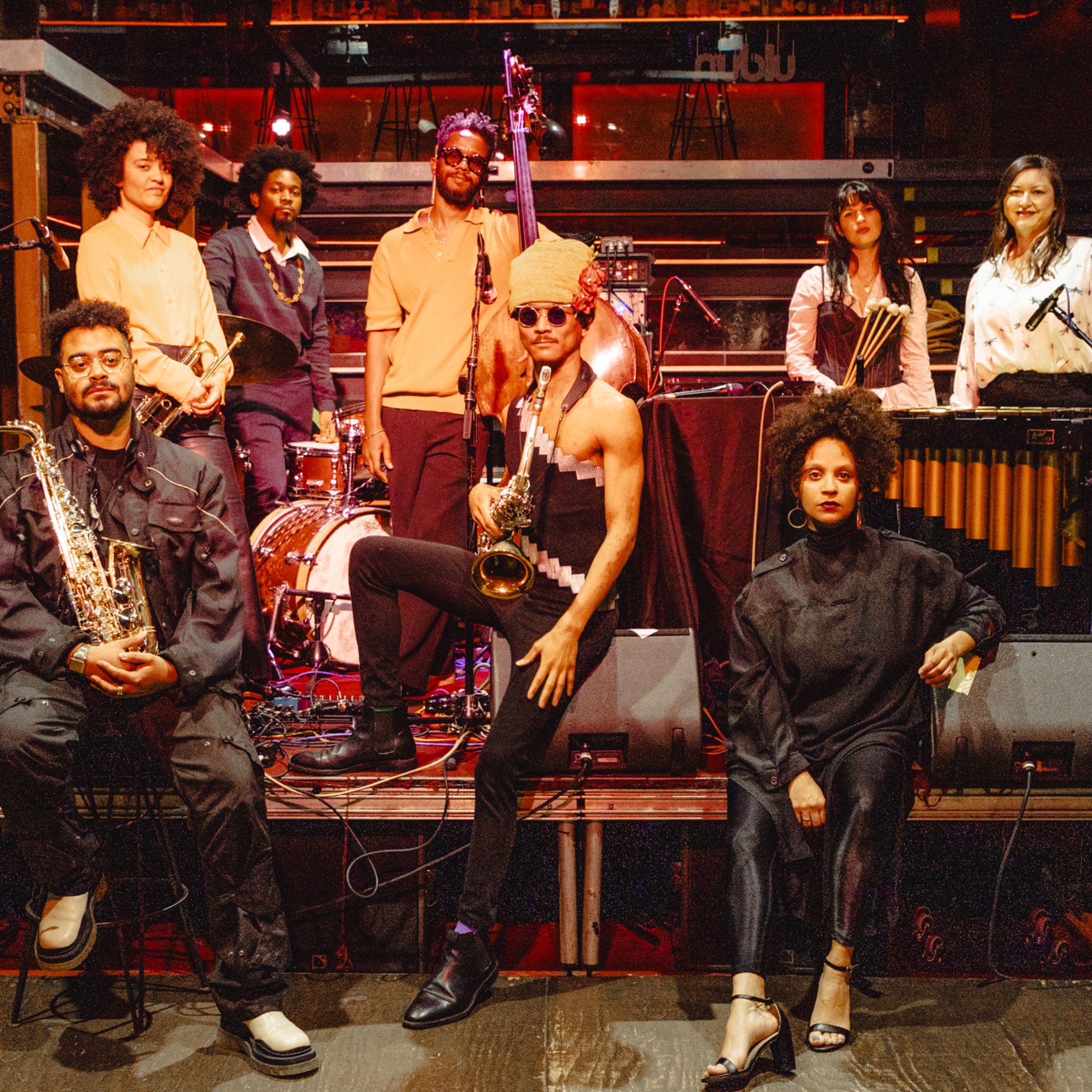
This is all of it on wnyc. I'm Alison Stewart. New York City Winter Jazz Fest kicks off today and for the next hour we'll be previewing two events that are part of the multi venue Crossboro Musical Festival. First up, I'm in WNYC's performance studio right now with the jazz collective Freedom Riders. The group's name is a nod to the Freedom rides of the 1960s. This spring is the 65th anniversary of the first Freedom Ride. The the group's repertoire honors the legacy of civil rights activists and the music that was part of the movement. They'll perform a concert called My Country Tis of Thee at La Poisson rouge on Monday, January 12, featuring guest musicians Arturo O', Farrell, Curt Elling, Samora Pindahuis and many others. Vocalist Sarah Elizabeth Charles is fronting the Freedom Riders. Sarah, welcome to all of it.
- [01:22]
Sarah Elizabeth Charles
Thank you so much for having us.
- [01:23]
Alison Stewart
Could you kick us off with a song? What are we gonna hear?
- [01:26]
Sarah Elizabeth Charles
Yeah, we're gonna hear a piece that was an enormous part of the civil rights movement, an enormous anthem for the civil rights movement. It's called Freedom Day and it's written by Max Roach and Oscar Brown Jr.
- [02:08]
Freedom Riders Vocalist/Chorus
Whisper listen Whisper listen. Whisper lesson Whisper listen. Whisper listen Whisper, listen. Whisper, listen Whisper, Whisper now we are.
- [03:01]
Sarah Elizabeth Charles
Free.
- [03:05]
Freedom Riders Vocalist/Chorus
Rumors flying Must be lying. Don't believe it can't conceive but that's what they say Slave no longer Slave no longer this is Freedom Day. Freedom Day Freedom, Freedom. Freedom day freedom. Ra. Whisper.
- [05:21]
Alison Stewart
That was Freedom Riders, Sarah. That song was written by Max Roach and he once said it ended with a question mark because we still don't really understand what it really means to be free. Do you hear that in that song?
- [05:38]
Sarah Elizabeth Charles
Absolutely. Yeah. The lyrics that Oscar Brown Jr. Wrote to this piece. And I would be remiss to not to also mention Abbey Lincoln.
- [05:48]
Alison Stewart
Yes.
- [05:48]
Sarah Elizabeth Charles
And her embodiment of these lyrics and these words, they're. They're so powerful. The poetry is so powerful. And every single time this band and other bands have played this piece, Terry Lynn Carrington and Christy Daschle just also released a rendition of this song that's absolutely stunning. And it just. It's wild to me when people are able to compose and offer something up creatively that stands the test of time. And a lot of. In a lot of unfortunate ways, this song has stood the test of time and is still so relevant today.
- [06:24]
Alison Stewart
How did you approach the song? Because that's your arrangement of it.
- [06:30]
Sarah Elizabeth Charles
I. I wanted it to be something. I wanted to be able to cultivate a sonic space with this piece that allowed for it to be different every single time for the musicians who were playing it, to feel free to embody and express whatever they needed to. And I say that very intentionally, like, whatever they needed to through the music at any given time. And I only have, like, a couple of songs like that in my repertoire. They're, you know, in propository sections and everything that I write or most things that I write. But it didn't feel right to pin this one down, at least for me and the group of musicians I was playing with. And I love getting to play it in all different contexts and with all different people, too, because every time we come to it, we come to it having experienced something different or moved through something different in the world.
- [07:24]
Alison Stewart
I'm in the studio with the jazz collective Freedom Riders, who will be performing at Le Poisson rouge on Monday, January 12, as part of New York City Winter Jazz Fest. Would you do me a favor and introduce everybody in this room? I want people to know who they're hearing today.
- [07:40]
Sarah Elizabeth Charles
Yeah, absolutely. We have Joe Dyson on drums. We have Alfredo Colon on saxophone. We have Melena Casado on trumpet. We have Carmen Staff on piano, and Noah Garabedian on base.
- [07:57]
Alison Stewart
How did you come together, the Freedom Riders?
- [08:00]
Sarah Elizabeth Charles
You know, I just said all those names, right? But this ensemble is so much bigger than all of us and so much bigger than this group of people. I could go and say, I think maybe 10 to 20 more names of folks who have been a part of this ensemble and who have performed under the umbrella of Freedom Riders. And that was a huge part of, you know, when. When Bryce Rosenblum and Matt Merowitz reached out to all of us to be a part of this ensemble, really, to honor Winter Jazz Fest and to bring together a community of musicians who have been a huge part of the fabric of Winter Jazz Fest over the years, they asked a lot of us to do it. And part of that ask was really embedded in the spirit of the Freedom Riders. There were over 400 Freedom Riders who contributed to the cause and really had to be present in order to see their cause through, because people kept getting arrested, people kept getting injured. People were putting their lives on the line, and different things would come up in their life and they'd have to fall off, and somebody else had to come up, come up and come forward. So what I see is sort of this, like, black feminist collective collaborative idea is really embedded in the fabric of this group as well. And that was something from the very beginning. I remember having conversations, especially with Bryce, about this idea that he wanted it. We wanted it to be a collective of many musicians, not just the people in this room.
- [09:31]
Alison Stewart
Jazz and jazz musicians were such a big part of the civil rights movement, from Billy Taylor to Nina Simone. Why do you think jazz was important at the time?
- [09:44]
Sarah Elizabeth Charles
You know, the word freedom or the idea of freedom is almost. Can almost, like, feel cliche or can almost feel overused. Maybe that's the better word. It's like, you know, I feel free. It's like, you know, like this idea of freedom and being free is something that I don't think we experience as much in our lives as we think we do. At least I'll speak for myself. There are a lot of things coming at me every single day within society and culture. And there are. There are, like, boxes and barriers like, that are attempted to be put up for me constantly. And I think one of the beautiful things about jazz and black American music is that throughout all of time, it has attempted to break down those barriers and not allow us to be put in boxes. But I think that's important because that inclination is still there to name things, to be able to codify them in certain ways and allowing things to exist, like, along a spectrum. Allowing things to exist as multifaceted and duplicitous and, you know, not binary is, I think, really important and something that this music has done sonically, throughout all of time, in my opinion. So I think. I think that it being the.
- [11:12]
Alison Stewart
It felt right for that time.
- [11:14]
Progressive Insurance Announcer
Yeah.
- [11:15]
Sarah Elizabeth Charles
It being the soundtrack to the movement and continuing to hopefully be the soundtrack to the movement that I think maybe we're all moving through right now without even realizing it is essential because it allows for the space. It allows for that freedom.
- [11:31]
Alison Stewart
In terms of the jazz collective's repertoire, you do older songs like we've been talking about, but there's also new material as well.
- [11:40]
Sarah Elizabeth Charles
Yeah, everyone in the collective is and has been invited to offer up pieces, compositions, arrangements, and all of them speak to some issues or issue that feels important to us as individuals and subsequently has, like, felt more important, I think, to us as collective members as well. You know, issues and subjects that I haven't necessarily written songs about other people in the collective have and playing them and embodying them and trying to make them into something as an ensemble that is beautiful. Has really, like, even deepened my care and my wealth of knowledge to the conversations we have when we get together.
- [12:19]
Alison Stewart
Like, what are some of those issues? I'm just curious.
- [12:21]
Sarah Elizabeth Charles
Are heavy. I mean, so later on, we're gonna be playing another piece that I wrote in collaboration with Dr. Maya Angelou, which maybe we'll talk about a little bit more later. But that song is about kind of in line with what we've been talking about, but it's about a vision for this country that. A potential for this country. An idea that hasn't been realized yet. There's another piece, Doom Knocker, that I'm going to reserve. I'll let Alfredo tell you about that. But we have another piece written by Sasha Berliner that is in solidarity with Palestine in Gaza. We have so many different songs that speak to so many different issues. Tomoki Sanders offered up a song that is in solidarity with LGBTQIA rights, that movement. But the idea, too, again, I bring back that idea of, like, black feminism, because it's like this idea of Fannie Lou Hamer like, nobody's free till everybody's free. It's like, no, we've gotta move. This music needs to move together as well. You know, it can be really beneficial to have songs or song cycles or presentations or albums that speak to one issue. But I think the strength of this ensemble, in my opinion, is that we have so many different issues that we all care about and that we're speaking to and we're playing to and in relationship with in every set that we play. And I think that's really rare and powerful and. Yeah. And powerful.
- [13:44]
Alison Stewart
Alfreda Colon, you are up next. We're gonna hear a song called Doom Knocker.
- [13:51]
Alfredo Colon
Yes.
- [13:52]
Alison Stewart
Will you set it up for us?
- [13:53]
Alfredo Colon
Yeah. So my family's from the Dominican Republic, specifically from the Hermana Mirabal region. The Mirabal sisters, three sisters who helped take down the dictator Trujillo. And it's a song I wrote for my father, who he loves to tell the story about growing up on the farm that he grew up on. Part of the responsibility that came with that was killing animals. And so there was a moment that came where, you know, he was, like, 13 or 14, and his father was like, you have to kill a duck that we're gonna eat for dinner tonight. And, you know, he's a really sweet, soft kind of guy, and he just could not bring himself to kill the duck. And every time he tells me the story, he's like, you know, if there's ever a duck in your life, you don't have to kill the duck. And it's one of my favorite experiences I shared with my father. But thinking about that, you know, thing I almost left out was when my grandfather was on his deathbed, when he was gonna pass away, he told my dad, you were a man all along. You stood up to me. You faced me, and you stood up for what you believed in you. Like, I'm sorry. And there was a beautiful moment they shared. And so this is just about, like, not only ending a generational curse, but doing it actively, like, taking it upon your hands. And whether it's something that we're experiencing internally through our families or societally, I think we can all do our part to end whatever curses we're dealing with. And I know that this country is dealing with many, many curses right now. So I felt that it was apt to bring Doomknocker to the Freedom Riders.
- [15:30]
Alison Stewart
Here's the Freedom Riders with Doomknock.
- [15:48]
Freedom Riders Vocalist/Chorus
Sa.
- [20:21]
Alison Stewart
We'll have more with jazz collective Freedom Writers after a break. This is all of it. You're listening to all of it on wnyc. I'm Alison Stewart. I'm in the studio with the jazz collective Freedom Riders, who perform at Le Poisson rouge on Monday, January 12, as part of New York City Winter Jazz Fest. I'm speaking with Sarah Elizabeth Charles. She's one of the many freedom Writers. Okay, you're gonna be at La poisson rouge at 1:58 Bleecker on Monday. What's the plan for the concert?
- [20:59]
Sarah Elizabeth Charles
So it's gonna be the first time that we have many special guests joining us. I guess I can also call them Freedom Riders. I mean, these are people who are. Who are trying to think of a different word, but who are subscribing to this mission that we're really trying to embody, which is to honor the spirit of the Freedom Riders. We are playing music. We are not putting our lives on the line. It is different. What we're doing and what the original Freedom Riders did is different. And with the culture of erasure that is happening as a result of our current government, we feel it's important to honor their story, to honor this name. And so we have a myriad of special guests joining us, some of whom you mentioned earlier. Kurt Elling, Dedee Bridgewater. I feel like I want to mention all of them.
- [21:52]
Alison Stewart
Arturo Farrow.
- [21:53]
Sarah Elizabeth Charles
Arturo Farrow. Samara Penderhughes, Adegoke, Steve Coulson. Made Kuti. They're all going to be joining all of the people you're hearing today. And in addition, some other freedom riders, Ben Williams, Luke Stewart and others to Mochi Sanders, who I mentioned earlier, and others who are going to be on the LPR stage. So we're going to fit, we're all going to be there. All right, it's going to happen.
- [22:16]
Alison Stewart
What's the last song we're going to hear?
- [22:18]
Sarah Elizabeth Charles
We're going to hear a piece called Discover this Country. I wrote this piece in collaboration with Dr. Maya Angelou. The words that you're about to hear are not my words. These are her words, her poetry. And it's said to a poem that she wrote called America and the festival. It's the 22nd annual winter jazz Fest. And this year the festival is really honoring the words of Dr. Maya Angelou. And also it's being propped up on the theme of we still rise, still we rise, which is obviously borrowed from her poem, still I Rise. And I think that in my opinion, sometimes when someone before us has said something better than we ever could, it makes sense to just use their words. And so I have a series of music, a set of music I wrote to Maya angelou's poetry about 10 years ago. And we're going to be playing one of those pieces. And again, it's her poem America. These are the words you're going to hear. And the song is called Discover this Country.
- [23:22]
Alison Stewart
This is the jazz collective Freedom Riders who will be performing at La Poisson rouge on Monday, January 12th as part of NYC Winter Jazz Fest.
- [23:53]
Freedom Riders Vocalist/Chorus
The gold of her promise has never been mined the borders of justice not clearly defined. Who cross of abundance the fruit and the grain. America, America. America. America. Have not fed the hungry nor erased that deep pain. Proud declarations are leaves on the wind. Herself that exposure Black death do be friend. America. America. America alone america america america. Discover this country Dead centuries cry. Erect noble tablets where none can decry. She killed her bright future and brim. Then entraps her children with legends untrue. I beg you. I beg you. And I beg you. I beg.
- [28:45]
Alison Stewart
You.
- [28:51]
Freedom Riders Vocalist/Chorus
I thank you, Ram.
- [29:55]
Sarah Elizabeth Charles
Discover the.
- [29:58]
Freedom Riders Vocalist/Chorus
Country country, country country country, country.
- [30:20]
Sarah Elizabeth Charles
And discover this.
- [30:29]
Freedom Riders Vocalist/Chorus
America. America. America. America.
- [31:21]
Progressive Insurance Announcer
NYC now delivers the most up to date local news from WNYC and Gothamist every morning, midday and evening with three updates a day. Listeners get breaking news, top headlines and in depth coverage from across New York City by sponsoring programming like NYC now. You'll reach our community of dedicated listeners with premium messaging and an uncluttered audio experience. Visit sponsorship wnyc. Org to get in touch and find out more.