← All Of It with Alison Stewart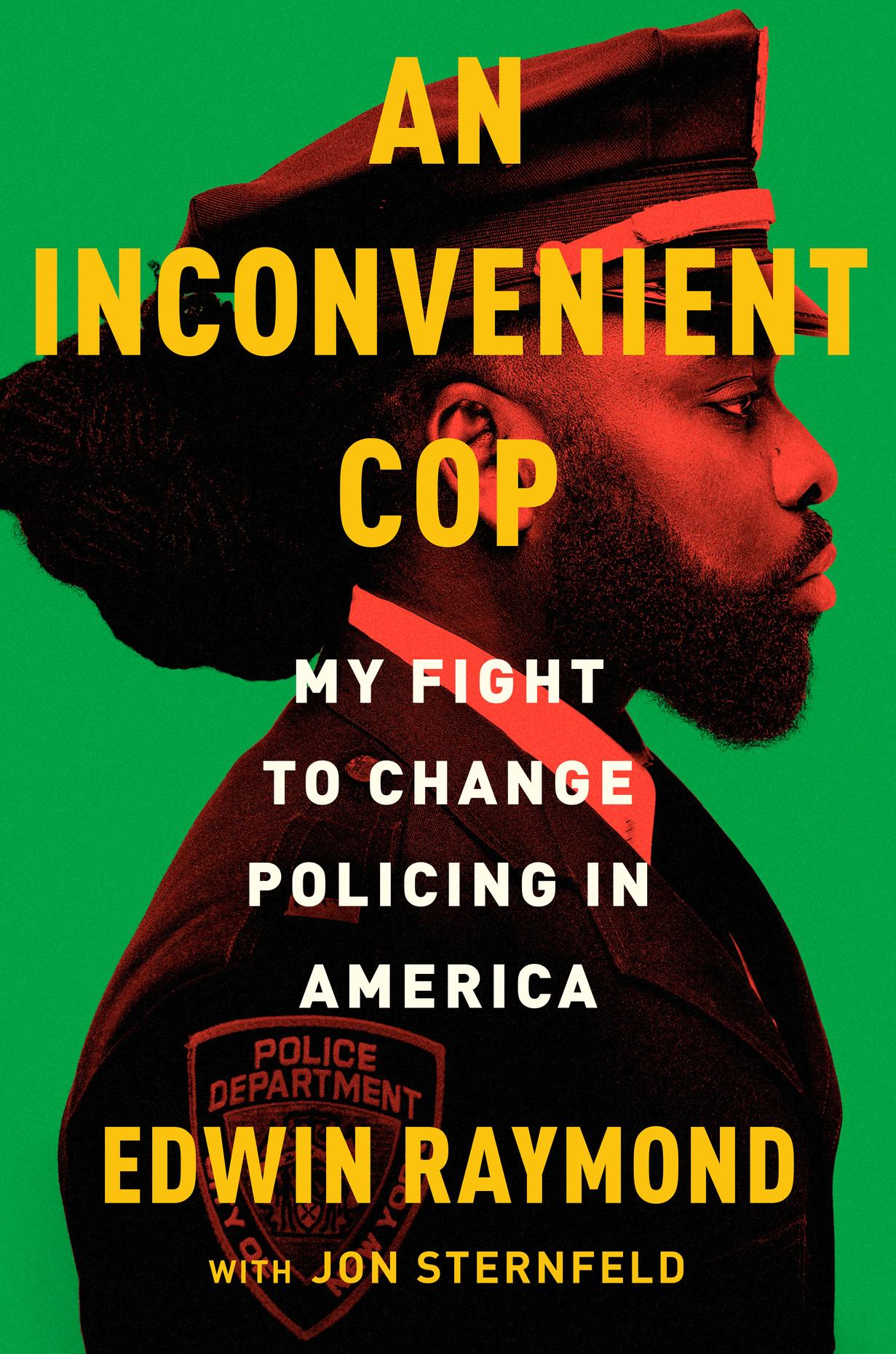
All Of It with Alison Stewart
NYPD Whistleblower Edwin Raymond Tells His Story
00:20:17
A conversation with Edwin Raymond, the highest-ranking whistleblower in NYPD history about his new memoir An Inconvenient Cop: My Fight to Change Policing in America.
Loading summary
Transcript61 lines
- [00:00]
Wix Advertiser
No one knows your business better than you, so who better to create your website than, well, you. Wix's website builder puts it all in your hands. Create a beautiful website just by talking with AI or choosing from thousands of templates. Customize every detail with simple drag and drop tools and get everything you need to start running business your way. Build more, think bigger, and do it all yourself on Wix.
- [00:27]
McDonald's Customer
I'mma put you on, nephew.
- [00:29]
Edwin Raymond
All right.
- [00:30]
Alison Stewart
Welcome to McDonald's. Can I take your order, miss?
- [00:32]
McDonald's Customer
I've been hitting up McDonald's for years now. It's back. We need snack wraps.
- [00:36]
Edwin Raymond
What's a snack wrap?
- [00:37]
McDonald's Customer
It's the return of something great.
- [00:39]
Edwin Raymond
Snack wrap is back.
- [00:43]
McDonald's Customer
Suffering from dry, tired, irritated eyes. Don't let dry eyes win. Use Sustain Pro. It hydrates, restores and protects dry eyes for up to 12 hours. Sustain Pro Triple Action Dry Eye Relief.
- [00:59]
Edwin Raymond
Listener Supported WNYC Studios.
- [01:10]
Alison Stewart
This is all of it from wnyc. I'm Alison Stewart. We continue our hour of conversations about New York City's criminal justice system. In our last segment, we heard about the NYPD's 30th Precinct in Harlem, which at one point was known as the dirty 30 for the abuses of authority and disregard for the law exhibited by some of the officers stationed there. Now we'll look at the story of one officer from another part of the NYPD who tried to blow the whistle on some of the malfeasance he saw among his colleagues. Edwin Raymond joined the force in 2008, full of hope that he could make a real impact in his community in Brooklyn. What he found instead was a police force that he claims prioritized arrest quotas over public safety and was full of implicit bias and calcified leadership. For years, Edwin thought he could change things from within the system. Unlike other officers, he wouldn't go out of his way to arrest people for fair jumping or other minor infractions that could haunt someone for years, especially since he was being encouraged to do so in primarily black neighborhoods. Edwin was passed up for a promotion even after finishing eighth on the qualifying test out of 932 people, ostensibly because he wasn't meeting the arrest quotas expected of him. Edwin Raymond began recording interactions with the superior officers all the way up to some top brass, and those recordings became a key part of a bombshell New York Times piece called A Black Officer's fight against the NYPD. Edwin also became a plaintiff alongside 11 other officers of color in a lawsuit alleging that supervising officers targeted people of color in their communities. Edwin retired from the force ran for City council and has written a memoir, An Inconvenient My Fight to Change Policing in America, co written with John Sternfeld. In the book, Edwin talks about how his upbringing in the East Flatbush neighborhood of Brooklyn helped him decide to become a police officer. I asked him to share with us some of the things he witnessed there as a kid.
- [03:10]
Edwin Raymond
It was gunshots every night, almost every night, you know, and there were. Crack cocaine was still very prevalent in everything that came with it, from the shootouts that would happen for territory to the violent crimes that, you know, those who are addicted would commit in order to support their habits. But simultaneously, being a kid, you don't realize what you're in. So it was also growing up in a community that was still coming together. You know, it's a growing West Indian Caribbean neighborhood. And, you know, I still enjoyed my childhood as much as I could, despite the realities of also growing up very poor. You know, my mother. My mother passed away when I was only three. My dad didn't work since I was six. He didn't speak English, and we didn't have public assistance. It was. It was a rough. It was a rough childhood, but it was a beautiful childhood at the same time.
- [04:06]
Alison Stewart
Yeah, he had some profound mental health issues. You describe it very poignantly in the book. And at one point, you came back to the house and you looked at the wall and you thought maybe it was dark, but it was all covered with roaches. Like, he really wasn't taking care of himself. He really had some profound health issues.
- [04:23]
Edwin Raymond
Yeah. My brother and I, shortly after my mother passed away, he sent us to Florida to live with his brother, my uncle. And in those two years, it was two short years, but it had been a lifetime seeing the contrast to what we came back to. And, you know, this is all part of what was tough about growing up, but simultaneously fortified me to be the man I am today.
- [04:47]
Alison Stewart
What was your view of Cops when you were a kid?
- [04:51]
Edwin Raymond
One of the tasks that I had, being that my dad didn't speak English, is I had to translate the news for him. So we watched everything, including the show Cops, America's Most Wanted, et cetera. And I overall pretty much seen Cops as, you know, the good guys that are here to protect us all. When I was in Florida, that's when the Rodney King situation happened. And I was too young to fully understand what was going on. So it wasn't until I was about 11 when Abner Louima happened, and it happened in Flatbush. Abner was from Flatbush he was also Haitian. That's the first time I questioned and said, whoa, what's going on here? You know? Cause everyone was saying this guy was like a church guy. He wasn't even. You know, it didn't even make sense for him to go through that. But I didn't really question the overall behavior of cops until that. And then two short years later, we had Amadou Diallo shooting. And that's the one that made me really wake up and say, whoa, what is going on? And then a year after that, I started getting stopped by cops and thrown on walls.
- [05:59]
Alison Stewart
Yeah. Who had the talk with my dad.
- [06:02]
Edwin Raymond
Yeah. Immediately after Abdul, he explained being. Because of the body that you're in as a black man, young black boy at the time, that society is not going to give you the benefit of the doubt. You have to work very hard. He didn't use the term success sequence, but you can't afford to make any mistakes, especially because we're so poor. He had his criticisms about the United States, but he did say, this is the land of opportunity. You follow these steps, you will be better than what you are now, you know? And I listened, thankfully.
- [06:37]
Alison Stewart
When did you first get the idea to maybe consider being a police officer?
- [06:42]
Edwin Raymond
It's crazy, because my dad actually suggested it, and I thought he was crazy. I said, what is this guy talking about? But then it was two things that happened simultaneously. It was when I was 18. I was violently thrown on a fence and searched illegally just walking in my neighborhood. And then a family friend who's like an Uncle Nixon. I saw him at the. It's a Haitian Flag Day parade that takes place every. Every May in Flatbush. And I was just like, wow, a cop. I know him. You know, I was. Because prior to meeting Nixon in uniform, cops were just nameless faces driving by, you know, There was no deeper interaction, with the exception of, like, community affairs, et cetera. But overall, everyday police officers, there was nothing more there. And this was at the time when Operation Impact, where cops were put on corners all over. You know, they were there in our neighborhoods, standing there, but they wouldn't even say good morning. And Nixon, just seeing him there, those two things. I said, you know what? This is what I need to do this. One, to see why is it that I experience what I experience and other black men and black and Latino folks experience what we experience. And two, to see what I can do about it.
- [08:06]
Alison Stewart
Could you see yourself in uniform when you saw. You know, I think if I see it, I can be it.
- [08:11]
Edwin Raymond
When you saw Nixon, could You see yourself? Yeah. When I saw Nixon, it became tangible, it became real, you know.
- [08:18]
Alison Stewart
My guest is Edwin Raymond. The name of the book is An Inconvenient Cop. My Fight to Change Policing in America. It becomes clear in the book, even as early as training, people do not, like at police academy, they don't want to really talk about race.
- [08:33]
Edwin Raymond
Yeah.
- [08:35]
Alison Stewart
Why is it such a verboten topic even in the academy?
- [08:38]
Edwin Raymond
Yeah. Well, you know, I take it back to the former Attorney General Eric Holder. He said, when it comes to race, we're a nation of cowards. And we still are, unfortunately. And not discussing race, it robs us of the language and the experience to have our own truth and reconciliation, which we haven't had as a nation. But even the ability to have it as individuals, we don't have it. It's probably the most impolite conversation you can have. It's extremely taboo. And as long as we continue to move forward as a society with that, with that unwritten rule, we're probably never gonna get to where we need to be as a nation. It's crucial that we discuss this no matter where your politics fall. So you can see there might be some blind spots that you just need, you know, enlightening on. And likewise, you'd be able to teach others also. But me, as long as I knew I could empirically support my position, I was never shy to discuss rights.
- [09:40]
Alison Stewart
Yeah, you pipe right up.
- [09:41]
Edwin Raymond
Yeah, exactly, exactly.
- [09:43]
Alison Stewart
And people are sort of shocked that you decide to speak your mind 100%.
- [09:49]
Edwin Raymond
But you see, what would happen is I would always have peers and colleagues pull me aside and say, you know, I was eavesdropping and thank you. I never heard of redlining. I looked it up and wow, I can't believe this existed. And these are, you know, my white counterparts that live where redlining, where they benefited from redlining, but they just wake up into a world where they have white picket fences and American flags and a 40 mile drive to the west. They see the hood and they're like, whoa, what's wrong with these people? And now they have the history to explain what's going on. And some they say, well, that was so long ago. But it's called lasting effects. In the same way an estate can pass on assets and liabilities, you know, weak. There are things in history that happens that we benefit from and things that we have a liability on, and this is one of them.
- [10:40]
Alison Stewart
There was a moment, and I can't remember if this in the academy or.
- [10:42]
Interviewer
When you were officer, so forgive me.
- [10:44]
Alison Stewart
But it really stuck with me.
- [10:45]
Interviewer
What happened.
- [10:47]
Alison Stewart
Somebody talked about, hey, be careful out there, because now you look like the perps.
- [10:55]
Edwin Raymond
Yes, yes. So this was towards the end of the police academy, right?
- [10:58]
Alison Stewart
It wasn't the academy.
- [10:58]
Edwin Raymond
Yeah, it was. One of the instructors that he was essentially. He was trying to say something positive. He basically said, don't become a victim of implicit bias. The problem is that he was using implicit bias, and that shows you how implicit it truly is. He essentially said, if you're out there in certain communities and you see a black or Hispanic person with a gun, don't just pull out your gun and start shooting. Because they could be, you know, could. He said, the department is getting more and more diverse. We're starting to look more and more like perps. So, yeah, it stood out to me. I caught it immediately. And he met. Well, but that's how powerful implicit bias is.
- [11:41]
Alison Stewart
A sergeant once told you your problem was you thought your job was, quote, real. What did she mean by that?
- [11:46]
Edwin Raymond
Yeah, that was. You know, at the time, I didn't get it. It was profound, esoteric. Basically, she realized that. My problem, unfortunately, is that I expected the New York City Police Department to deliver on its mission statement, you know, public safety and everything that you mentioned in the intro. She says, she basically. Cause we laugh about it today, we're still friends. And she said within a few months, she realized that this just isn't what it is. But this is a career choice she's made, and she has bills to pay. She's gonna try her best to not violate people, but she is essentially gonna go with the flow. And that's what thousands of people do, tens of thousands do, because it's. It's kind of insane to go against a machine this. This powerful.
- [12:29]
Alison Stewart
What do black cops talk about when they get together? Off the record?
- [12:33]
Edwin Raymond
Oof. Oof. That's a. You really want that answer? Oh, man, it's. Wow. Yeah. At the time, they're fed up, you know, they feel. They feel like they feel powerless. Many of them ignore. They come up with all sorts of ways to suppress what's really going on, because if they ever had to deal with it head on, they probably wouldn't be able to do their job. Like, they probably quit their jobs, but they're torn because the job allows them to make a comfortable living. And they feel stuck, many of them, where they don't. To go back to school is expensive. To go on another career path. So. So a lot of them are miserable or in order to not deal with the misery of the Reality of, as I say, donning the uniform of the oppressor. They try to not pay attention to the cumulative sum of what's going on out there.
- [13:41]
Alison Stewart
We saw a lot in 2020 where young Black protesters and activists would just yell at black cops like, you're not black, you're blue.
- [13:52]
Edwin Raymond
Yeah.
- [13:53]
Interviewer
And is there something to that, that being part of the system can change fundamentally your ethics?
- [14:03]
Edwin Raymond
Yeah, it happens. It absolutely happens. Because you have to be able to look at yourself in the mirror. So it's because the detriments of the system is something you feel you're powerless to do anything about. It's easier to find excuses for it. It's easier to say, I grew up in Brownsville. I kept my nose clean. If these people want to stay in Brownsville and behave like this, why should I feel sorry for them? It's easier to say that than, you know. Than say, you know what? Maybe it's not right to throw out a fishing net, grabbing everyone for the work of less than 1%, you know? Cause what are you gonna do as rank and file about that fishing net, you know, you understand? So unfortunately, people. But I've seen people's entire politics switch because of this job that they can be fired from one day. They will have to retire from. They can quit from. You know, it's unbelievable. Their politics will go against every other box that they check box that they can't change in name of being part of this brotherhood. It's tribalism in a way that I've never experienced.
- [15:08]
Interviewer
We reached out to the nypd, as we should have, obviously, for comment, and I'm going to read it to you. They said to us, we congratulate Mr. Raymond on his recent retirement from the New York City Police Department and for his efforts, albeit unsuccessful, to win elected office during his time with the NYPD. However, Mr. Raymond never proposed any initiative or program to department leadership that would suggest he was interested in reforming the policing profession, whether parochially, nationally, or globally. Despite that reality, we certainly remain open to hearing or reading about any ideas he might now foster. Is that true that you never proposed any initiative or program?
- [15:46]
Edwin Raymond
That's absolutely untrue. And whoever, you know, I won't take it out on the person with the task to write that lie. They're just doing their jobs. They're just going with the flow. They're just playing the game. It is not true at all. Back in 20, as early as 2014, I was chosen to be part of then Commissioner Bratton's Re Engineering 2014 initiative, where many ideas were proposed and. And weren't implemented as well as I've been very public about not just criticizing what's wrong, I've been ready to say what we should be doing. I've said it, that you're the chief. We have a chain of command. You call me to the office. I can't just walk into your office. Two, three. I sat down with top officials in this current administration in the spring of 2022, proposing plans. I've emailed plans. This is the third time I've seen I've heard this right, because now it's just a template that they sent out to all nypd. I know you're listening. The next time you send that out, I will come with the receipts. If you want to sit down and have this conversation, you know how to find me. You know where to find me. If I have to read that again, if I have to hear that again, people will be embarrassed. All right, reach out. You know how to reach me.
- [17:03]
Alison Stewart
What has this experience been like for your mental health?
- [17:12]
Edwin Raymond
I gotta quote Tupac, the late Tupac Shakur, dying inside, but outside, you're looking fearless. This is not. I hate this. You know, there are people who think, oh, look, he just wants to be in front of another camera. He's just. And now it's, oh, look, he's just trying to sell books, et cetera. No. No, this has not been fun. I survived the impossible, right? Given the hands of cars that I was dealt. For that reason, I'm both the last person that should be doing this and, ironically, the best person to do this. Because I know what it feels like to suffer. And you cannot do this without suffering. But I don't enjoy it, and I don't deserve it. This has not been good. Therapy has been great. The people that love and care about me, their support has been great. The many people on the social media who reach out every single comment, it matters. You know, there are videos that people send me. I replay them. I'm so thankful for the support system, but this has not been easy at all.
- [18:21]
Alison Stewart
What is a small change that could happen, you know, could happen next week? If someone had the political will and wanted to change some small change that can make a really big difference, that really wouldn't be that big a deal to do.
- [18:36]
Edwin Raymond
Honestly. Cops have to be motivated to do their jobs optimally. The simple quotas and pressure without officers understanding what they're contributing to, forced to believe the lie of this is just for public safety. Reach out to cops. The people at the bottom, the Rank and file. Ask them about how things can be improved and we will get a different police department. We need the justice minded officers which exist to be elevated into positions of power, into leadership positions. I think about Captain Derby Saint Fort who is pure talent, a visionary, someone ready to take the policing not just in the NYPD, but to be a national model, but someone who's stymied and his legs are cut off and he can't be promoted simply because he dares to do things differently. If the NYPD was to invest in the many talented individuals that exist, put them in positions of leadership, we will have a different police department in New York City that can be an example for the nation.
- [19:46]
Alison Stewart
Our mayor is a former police officer. What would you like to see him do?
- [19:59]
Edwin Raymond
I don't. I'm confused by the mayor. You know, I looked up to the mayor early in my career. He's been a mentor, he's been supportive. What I've seen in the New York City Police Department is not a reflection of the man that for over a decade, it's not a reflection of the activists that we all fell in love with. It's a reflection of something very different. The mayor has the opportunity to make sure the current leadership does behaves in a way that reflects his those values that we respect about him. And the mayor has an opportunity to empower folks like Captain Derby St. Ford.
- [20:44]
Alison Stewart
That was my conversation with Edwin Raymond, a former NYPD officer turned whistleblower and now co author of the book An Inconvenient My Fight to Change Policing in America. Coming up, we'll hear stories about the people incarcerated on Rikers island and what they illuminate about the city's pre trial detention system. We'll speak with the authors of Rikers An Oral History.
- [21:22]
Wix Advertiser
Your business is one of a kind, so your website should be too. With wix, it's easy, almost too easy to create a website that's perfectly yours. Just tell AI what kind of site you want to build or choose from. Thousands of templates, change whatever you want, whenever you want and get everything you need to start running your business and your way. No matter what you sell or what you aspire to be, you can do it all yourself on Wix.
- [21:48]
McDonald's Customer
I'mma put you on, nephew.
- [21:49]
Edwin Raymond
All right, un.
- [21:50]
Alison Stewart
Welcome to McDonald's. Can I take your order, miss?
- [21:52]
McDonald's Customer
I've been hitting up McDonald's for years. Now it's back. We need snack wraps. What's a snack wrap? It's the return of something great.
- [21:59]
Edwin Raymond
Snack wrap is back.