← All Of It with Alison Stewart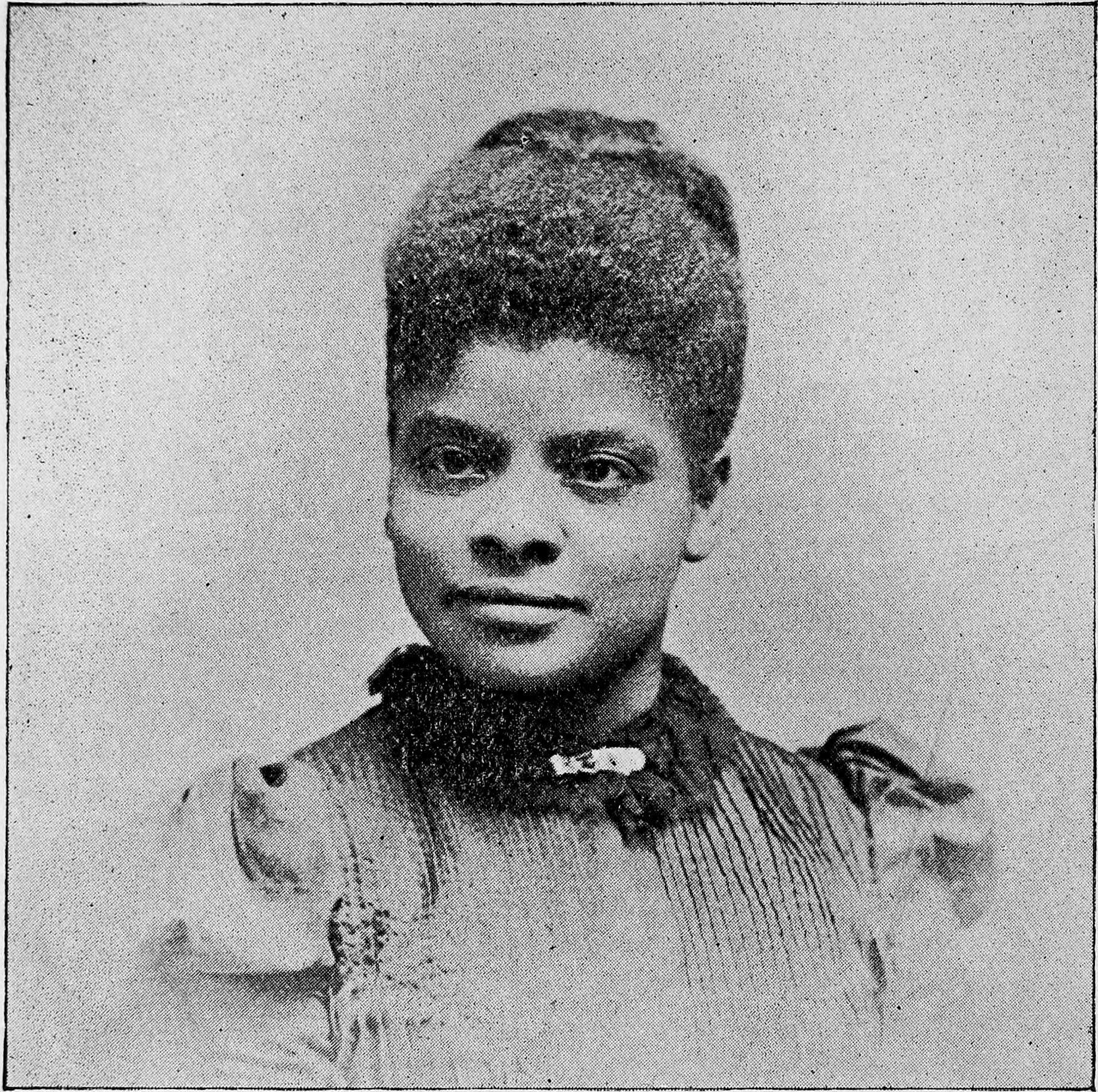
All Of It with Alison Stewart
Obituaries of Overlooked Changemakers
00:20:57
The New York Times has released a new collection of their 'Overlooked' Obituaries.
Loading summary
Transcript85 lines
- [00:02]
Advertiser
Surprise beach day.
- [00:04]
Amy Padnani
No excuses. I'm in.
- [00:06]
Advertiser
Gimme five. With Bix Soleil Glide Razor, you'll have hydrated, smooth skin that's ready to go on the fly. No shave cream needed. You can prep, shave and hydrate all in one step thanks to moisture bars that hydrate your skin during and after shaving. 5 flexible blades hug your skin for a close shave. Glide into smooth. It's your time to shine with bixsolil. Buy now at Amazon and Walmart. Ready? Your skin looks amazing. So smooth and beach ready.
- [00:29]
Amy Padnani
Let's go.
- [00:32]
Dunkin' Influencer
Hey, what's up, subscribers? Welcome back to the channel. So which variety of Dunkin at Home coffee is your fave? Original blend? French vanilla or hazelnut? Drop a comment.
- [00:41]
Amy Padnani
What are you.
- [00:41]
Dunkin' Influencer
Oh, this is what I do when I'm home alone.
- [00:44]
Amy Padnani
Drink Dunkin' Original Blend or pretend you're an influencer?
- [00:48]
Caller Jim
Both.
- [00:48]
Dunkin' Influencer
Want a cup? Hey, let's do a taste test for the audience.
- [00:51]
Amy Padnani
Okay, how's this? The rich, smooth taste of Dunkin at home is unmatched.
- [00:55]
Dunkin' Influencer
Nice. You're a natural.
- [00:57]
Amy Padnani
The home with Dunkin is where you wanna be.
- [01:01]
Caller Nephew
I'm gonna put you on, nephew.
- [01:03]
Amy Padnani
All right, unk.
- [01:04]
Host Alison Stewart
Welcome to McDonald's.
- [01:05]
Amy Padnani
Can I take your order, miss?
- [01:06]
Caller Nephew
I've been hitting up McDonald's for years. Now it's back. We need snack wraps. What's a snack wrap? It's the return of something great. Snack wrap is back.
- [01:18]
Host Alison Stewart
If your small business is booming, you might say cha Ching. But you should say, like a good neighbor, State Farm is there. And we'll help your growing business. Like a good neighbor, State Farm is there.
- [01:37]
Caller Nephew
Listener support. WNYC Studios.
- [01:51]
Host Alison Stewart
This is all of it from WNYC. I'm Alison Stewart. Sylvia Plath died in 1963. Ida B. Wells in 1931. Alan Turing in 1954. These are all names we know today. But when they died, they did not receive an obituary in the paper of record, the New York Times. Since it first began Publishing in 1851, the paper has published thousands of obits. But like American culture as a whole, it tended to prioritize the accomplishments of men. Mostly white men. But now, for the past five years, the modern day staff at the Times has been on a bit of a course correction. The project is called Overlooked, and it was launched in 2018. The paper featured obituaries of those who had gone unheralded for their lives and their works. And now those pieces plus more in a book. Amisha Amy Padnani is the editor of the New York Times. Is an editor of the Times obituaries desk and creator of Overlooked. She's also the co author of the new book A Celebration of Remarkable, underappreciated People who Broke the Rules and Changed the world. It contains 66 obituaries. About two dozen of them have not previously been published. Amy, welcome back to wnyc. You came on the show when Overlooked first launched, so it's nice to see you and nice to see you with this big accomplishment.
- [03:05]
Amy Padnani
Oh, thank you so much. It's so lovely to be back.
- [03:08]
Host Alison Stewart
For those who aren't familiar with the project now book, how do you describe Overlooked to people?
- [03:13]
Amy Padnani
Yeah, well, you gave it a great description. But, you know, for me, it was personal mission. When I started on the obituaries desk, it was early 2017 and I noticed we would get these emails from readers occasionally saying, hey, why don't you have more women and people of color in your obituary pages? And I thought, yeah, why don't we? I was on my own kind of personal mission, thinking about diversity, thinking about my own voice and perspective and why it mattered in the newsroom. And I really wanted to get at an answer of how we could balance our report. And so I started mulling over this question. I talked with some colleagues together. We came up with this great idea to revisit history and write the obituaries of people that this section had left out.
- [04:03]
Host Alison Stewart
Listeners, we'd like to get you in on this conversation. Whose life do you think we need to know more about who's been overlooked? Who do you think merits an obituary in the New York Times that maybe didn't get 1212-433962-12433 WNYC. You can call in and join us on air or you can text to us at that number. We know your history, nerds like us, and you have opinions. 2124-3396-9221-2433, wnyc. Or maybe you have a question for Amy Padnani about the process of revisiting history and how they go about memorializing people. 212-433-9692 we're looking for Overlooked people who you'd like to add to the list. So what was, you know, when it first launched? It focused on remarkable women from history and it now includes men. When and why the change?
- [04:55]
Amy Padnani
I always had in my mind that I think they were worthy of inclusion. I am the daughter of Indian immigrants myself. I see how hard immigrants work when they arrive in this country. I myself was taught to put my head down Blend in, assimilate, and, you know, quite frankly, not really brag about my accomplishments or success. And so I feel like there's so many people out there who are in that same boat. You go about living life, doing remarkable things and not necessarily talking about them. And so I just thought that there were so many important black men, immigrants, men of color in general, who had something to contribute to this overall arc. In this project, we also opened it up to include people from the LGBTQ community as well as people with disabilities.
- [05:47]
Host Alison Stewart
You write and overlook that obituaries are landmines for potentially incorrect facts. So how do you go about corroborating facts for people who've been dead for decades?
- [05:57]
Amy Padnani
Oh, my gosh. It's one of the trickiest parts I've actually heard from journalists, longtime career journalists, who have said that this was one of the most difficult assignments they have ever had, in part because the research and the fact checking is so intensive. Sometimes we're fortunate to have a living descendant that we can talk to. Other times, somebody has neatly packaged a person's life in a biography for us or a documentary. That's been helpful. But other times, there's virtually nothing out there. And so we have to get really creative at times. Looking back at newspapers like the Afro American, who would have valued somebody's life and written about it in their day, while other mainstream media did not, has been extremely useful. There are census records, death records, and so we just sort of piece everything together like a puzzle.
- [06:45]
Caller Lucy
But.
- [06:46]
Amy Padnani
But sure, there are times where someone was the first or the best, the fastest. And hedging, as our friend believed to be the first, widely considered the best. And so we make use of those phrases as often as possible.
- [07:02]
Host Alison Stewart
Let's talk to Lucy, calling in from Hackensack on line one. Hi, Lucy. Thanks for calling, all of it.
- [07:07]
Amy Padnani
Oh, hi.
- [07:08]
Caller Lucy
Thank you so much for taking my call. I knew one of the people that was highlighted in this group of people, and I was reading the New York Times one day, and I'm going through it, and there is O' Nero Caton, who was Mr. First. He lived in Teaneck, New Jersey, and he lived next door to me. I lived next door to him for years and years. And he had a sign saying that he was Mr. First on his door. And I had no idea what this was. I was about five years old when we moved into Teaneck, and I got friendly with his daughter, and she said, oh, he goes across bridges and, you know, all kinds of things, and he's the first one. And being I was A kid, and I thought it was nice. And I got to know him. And he had also worked at some of the baseball or football stadiums. I remember he had all the football, baseball cards. And I met his wife, and again, I knew his daughter for years. And I also believe that he wrote a book. He did shuffleboarding. And my father at the time worked for the New York Times. And he asked my father if he could might get, you know, a plug in for shuffleboarding, because that was his favorite thing. And it just. I mean, I was so shocked. The picture was wonderful of him and it just. It was just a wonderful surprise.
- [08:26]
Host Alison Stewart
Oh, Lucy, you sounded like it was a great thing to see and discover. We've got a text that says, thank you, nyt, for Overlooked no more. As a regular reader of obituaries for historical purposes, I greatly appreciate the educational value. Which brings me to my question of what's important to include? What are some of the details that, you know, you want to include in these obituaries?
- [08:46]
Amy Padnani
You know, when I look back at these stories as a whole, I feel like there's this common theme of struggle. Pretty much everybody in this book has overcome something really major. And what comes away for me is the story not just of overcoming those struggles, but the sort of layers of human complexity that came with them, some of the decisions they made in the process. You know, for instance, some people lied about their background. They lied about who their parents were, they lied about their ethnicity, where they were, for instance, a black person who may not have wanted to be associated with the history of slavery in order to be more accepted in society. And I find that so fascinating because it just shows what we have to do as human beings to feel like we need to be accepted and get by in life.
- [09:39]
Host Alison Stewart
Let's take another call. Let's talk to Mary Dodge. Oh, no, Kate. Oh, Kate, I gave away your. Your person.
- [09:47]
Amy Padnani
Hi, Kate from Scranton.
- [09:50]
Host Alison Stewart
Sorry about that.
- [09:50]
Caller Kate
I looked up my guy or looked up the lady, the Mary Mae Dodge Hand Sprinker or the Silver Skates author. And I just. From just reading the blurbs on the book, she seems like she was an investigative journalist and she was working at Ellis island, and it just seems like she was, you know, during the great Ellis island plethora of people coming through. She was just right there.
- [10:25]
Host Alison Stewart
Kate, thank you so much.
- [10:27]
Amy Padnani
Sorry, I gave it away a little bit.
- [10:29]
Host Alison Stewart
My guest is Amy Padnani. We're talking about Overlooked, A celebration of remarkable underappreciated people who broke the rules and changed the world. It's a new book it's part of the New York Times overlooked obituary series. Let's talk. Well, actually, the overlooked categories are capturing our imagination, paddling their own canoes, envisioning new possibilities, creating art that endures, and facing the fights. That's the way the book is organized. How did you land upon these categories?
- [10:57]
Amy Padnani
Sometimes it was obvious. We had a lot of people who were advocates. They spent their entire lives fighting for the greater good. Suffragists, for instance. Other times people just did things because they wanted to and yet they ended up kind of blazing a tr. And sometimes they just did something incredibly quirky. You have absolutely no idea what compelled them to do this thing. And those are the ones that I love called Capturing the imagination. People like Annie Edson Taylor, who was the first to go over Niagara Falls in a barrel and survive. Others had done it, but they did not survive. And it was her 60th birthday. It was a get rich quick scheme and she for some reason decided that this was the thing she wanted to do to get ahead in life.
- [11:41]
Host Alison Stewart
There's another woman there called Rattlesnake k. Kate, born 1893, died in 1969. On page 37. So what was Rattlesnake Kate's real name and how did she earn that nickname?
- [11:55]
Amy Padnani
Yeah, so Catherine McHale Slaughterback was a farmer, a really tough farmer in the rugged plains of Colorado. One day there was a duck hunt nearby and she and her 3 year old son went out on their horse to see if they could find wounded ducks to cook for dinner. On the way back she went to open this gate and a rattlesnake came out of nowhere, being who Kate is, took out her rifle, which she always carried, and shot the snake. But then another one came and another one came and another. And so she grabbed whatever she could, which happened to be a sign that said no hunting, and proceeded to clobber 140 snakes to death to protect her son. After a couple of days of bed rest, she went back, collected the skins, made a flapper style dress out of them and accessories. She also collected venom to help scientists with research. This older cowboy poet gentleman read about her in the newspaper, saw her photo and said, you're mighty pretty and wrote to her these beautiful poems. They exchanged letters for 40 years, but there is no evidence that they ever actually met in person.
- [13:03]
Host Alison Stewart
Oh, I feel like there's a country song in there. There's gotta be.
- [13:07]
Amy Padnani
Actually, this was pitched to me by I'm gonna botch. Her name, Nayla Pekarek. She was a singer with illumineers and she has an entire solo album about Rattlesnake Kate. She even forms in a copycat dress, flapper style dress of snakeskins.
- [13:24]
Host Alison Stewart
Oh, that is gonna send me down a whole rabbit hole. After the show, listeners, whose life do you think we need to know more about who has been overlooked? Who do you think merits an obituary in the New York Times? Give us a call, 2124-3396-9221-2433. WNYC. You can text to us at that number as well or you can join us on air. We've got a text that says very recently died within the past two weeks, overlooked. Kobe Narita, a Japanese American woman who was the creator of the Universal Jazz Coalition and a tremendous force on the New York jazz scene, a huge and vocal supporter of jazz and jazz musicians. So there you go.
- [14:03]
Amy Padnani
Oh, excellent. Only from a couple of weeks ago, we could actually run a daily obituary. There's no reason for that person to be overlooked.
- [14:09]
Host Alison Stewart
Let's talk to Wendy calling in from Springfield, New Jersey. Hi, Wendy. Thanks for calling, all of it.
- [14:15]
Amy Padnani
Hi.
- [14:15]
Caller Wendy
I hope you get rid of your cold soon. You've been doing very well. Thanks. Yeah, My Josephine E. Jones was a Harlem activist and was covered quite extensively in the Times for her brownstone and was also probably the first black woman in management, a Fortune 500 company. And she has a biography. That's Ethel Schomburg. And she died in 2017 at the age of 97. And full disclosure, I am her daughter.
- [14:40]
Amy Padnani
Aww. Wow.
- [14:41]
Host Alison Stewart
Love hearing about. What would you want people to know most about your mom and her accomplishments?
- [14:47]
Caller Wendy
Well, I lead with the corporate thing only because that attracts people's attention. But to me, what was most important about my mother was that she had a loving heart that didn't just encompass me, her only child, but also her extended family, the community, the world. I call it Circles of Love. All right. And so that I think, is one of the most important things about her. The other things got her in the newspaper, but that was what I think was the most loving thing about her, the wonderful thing about her.
- [15:15]
Host Alison Stewart
I'm so glad you added that, Wendy. Thank you for calling in. Let's talk about someone from the category of Facing the Fight. It's a comedian named Stella Young. We have a clip of Stella, but tell us a little bit about her.
- [15:28]
Amy Padnani
Sure. She was an Australian comedian. She used a wheelchair. She was one day approached by a man in the neighborhood who wanted to give her a community award. And her parents said, for doing what? And she was just a student who hung out in her. I mean, she really didn't do anything, according to her. And this person said, oh, because life is so hard for you and you manage to navigate it remarkably. And they realized they were referring to her disability. And Stella said, what? No, we are just who we are. We are not meant to be your objects of inspiration. And so she coined this term, inspiration porn, which is now taught in media in various organizations, the national center for Disability and Journalism for Inst. As a way to prevent people from writing these sort of charity articles.
- [16:25]
Host Alison Stewart
Let's listen to a little bit of a TED Talk that Stella Young gave in Sydney, Australia.
- [16:32]
Stella Young (TED Talk)
For lots of us, disabled people are not our teachers or our doctors or our manicurists. We're not real people. We are there to inspire. And in fact, you know, I'm sitting on this stage looking like I do in this wheelchair, and you are probably kind of expecting me to inspire you, right? Yeah. Well, ladies and gentlemen, I'm afraid I'm going to disappoint you dramatically. I am not here to inspire you. I am here to tell you that we have been lied to about disability. Yeah, we've been sold the lie that disability is a bad thing. Capital B, capital T. It's a bad thing. And to live with disability makes you exceptional. It's not a bad thing, and it doesn't make you exceptional.
- [17:31]
Host Alison Stewart
That is from Stella Young's TED talk from 2014. What kind of decisions did the editors make in editing these obituaries? We noticed that in Sylvia Plath's it doesn't ment husband until the fifth paragraph.
- [17:45]
Amy Padnani
I find that extremely important. I mean, when we rant stories about her in the New York Times, she was often referred to as the wife of Ted Hughes. And a lot of times I see this even today, as an editor of obituaries, we'll see credit given to a man really high up or description of this woman trying to struggle in a man's world. And I'm thinking, well, what did she do, though? And so it turns out this woman would have done something amazing. And so, in my opinion, the top of the obituary should be talking about her accomplishments, not necessarily being in a man's world. And the struggle. I mean, sure, that's important. But first and foremost, readers want to know, why do I care about this person? What did they do? How did they change the world? And so that's a front of mind for me as an editor.
- [18:35]
Host Alison Stewart
Let's talk to Jim from Teaneck, New Jersey. Hi, Jim. Thanks for calling all of it.
- [18:39]
Caller Jim
Well, thanks for taking my call. I love this show. Thank you. I would like to suggest an overlooked obituary of a woman named Margaret E. Knight who lived from 1838 to 1914. And in 1868, she invented a machine that would cut, fold, and paste the flat bottom paper bag. And she revolutionized retail merchandising by doing that. And no sooner did she invent that machine and start using it, and some guy came along and said, no, I invented it and I deserve the patent. And she couldn't possibly have invented it because she's a woman, and she wouldn't possibly have the intuitive knowledge necessary to invent such a machine. She did prevail in that fight.
- [19:33]
Host Alison Stewart
I love your passion, Jim. Thank you for calling in.
- [19:37]
Amy Padnani
One of the most interesting emails I received after Overlook, launched in 2018 was from somebody in the US patent office who provided me a list of names of women whose patents were provided in their husband's names because at some point, it apparently wasn't allowed for a woman to apply for a patent. So I am familiar with Margaret E. Nai. She is on my list for consideration, and I really appreciate hearing all those details.
- [20:01]
Host Alison Stewart
I have to be honest. I sort of Twitter bullied the New York Times into an obit once.
- [20:08]
Amy Padnani
Did it work?
- [20:09]
Host Alison Stewart
It did. It did. It was for a former Tuskegee Airman, Dr. Roscoe C. Brown, and he was the president of Bronx Community center and Community College. He had a TV show.
- [20:22]
Caller Nephew
He.
- [20:22]
Host Alison Stewart
I believe he got a world medal. I think he saved Norman Lear's life in World War II. He was a pretty amazing person. Yeah, I did the do better thing. I'm a little embarrassed to say it out loud, but I felt strongly about it.
- [20:35]
Amy Padnani
You know, we're a ragtag team.
- [20:38]
Host Alison Stewart
That's the other part. I was like, oh, it's a small team, but still, I was like, oh, this person's amazing. You need to write this.
- [20:43]
Amy Padnani
Well, we need to be made aware of these stories, which is part of the reason that Overlooked was created. You know, every morning I sit with my colleagues in a room, and we look over a list of people who have died. And so many of them are men, and a lot of them are white men. And I want to hear from people more day to day about people in their communities who die. That's really where we need to make change.
- [21:05]
Host Alison Stewart
What is one overlooked obituary? You'd really like people to sit with.
- [21:11]
Amy Padnani
So many. Terry Rogers has become a new favorite for me. Transgender ventriloquist. Her YouTube clips are just hilarious. She was really an expert at what she did. There are people quoted in there who said, these are the top three things a ventriloquist needs to do. But she had this fourth ability, and so she had this great range of voice. Just really excellent at what she did. And she was authentically herself, even as she wasn't fully embraced for being transgender. And so I think that there are a lot of emotions that come up when reading her story.
- [21:48]
Host Alison Stewart
Overlooked a celebration of remarkable, underappreciated people who broke the rules and changed the world. It's a beautiful book. Amy Padnani, thank you so much for the work you do and for the.
- [21:59]
Amy Padnani
Thank you.
- [22:00]
Host Alison Stewart
And we're gonna go out on the song the Attack about Rattle Kate. Snake Kate from Nayla Petorrick.
- [22:11]
Amy Padnani
Rattlesnake Kate, known Kate Slaughterback, got a nickname when she was looking for ducks. And then a rattlesnake attack. She saw just One snake, then 2, then 10. Pulled out a.22 rifle, and the massacre began. Before too long, she had no bullets left, grabbed a sign right out of the ground and clobbered them to death. Hey, hate to do this. Could we reschedule our morning hike? I was just about to ask the same next week. Yes, it's Duncan original blend time. Staying at home with Dunkin. Don't mind if I do. The home with Dunkin is where you wanna be.
- [22:55]
Caller Nephew
I'mma put you on, Nephew.
- [22:56]
Amy Padnani
All right.
- [22:57]
Caller Kate
Un.
- [22:57]
Host Alison Stewart
Welcome to McDonald's.
- [22:58]
Amy Padnani
Can I take your order, miss?
- [22:59]
Caller Nephew
I've been hitting up McDonald's for years. Now it's back. We need snack wraps. What's a snack wrap? It's the return of something great. Snack wrap is back.