← All Of It with Alison Stewart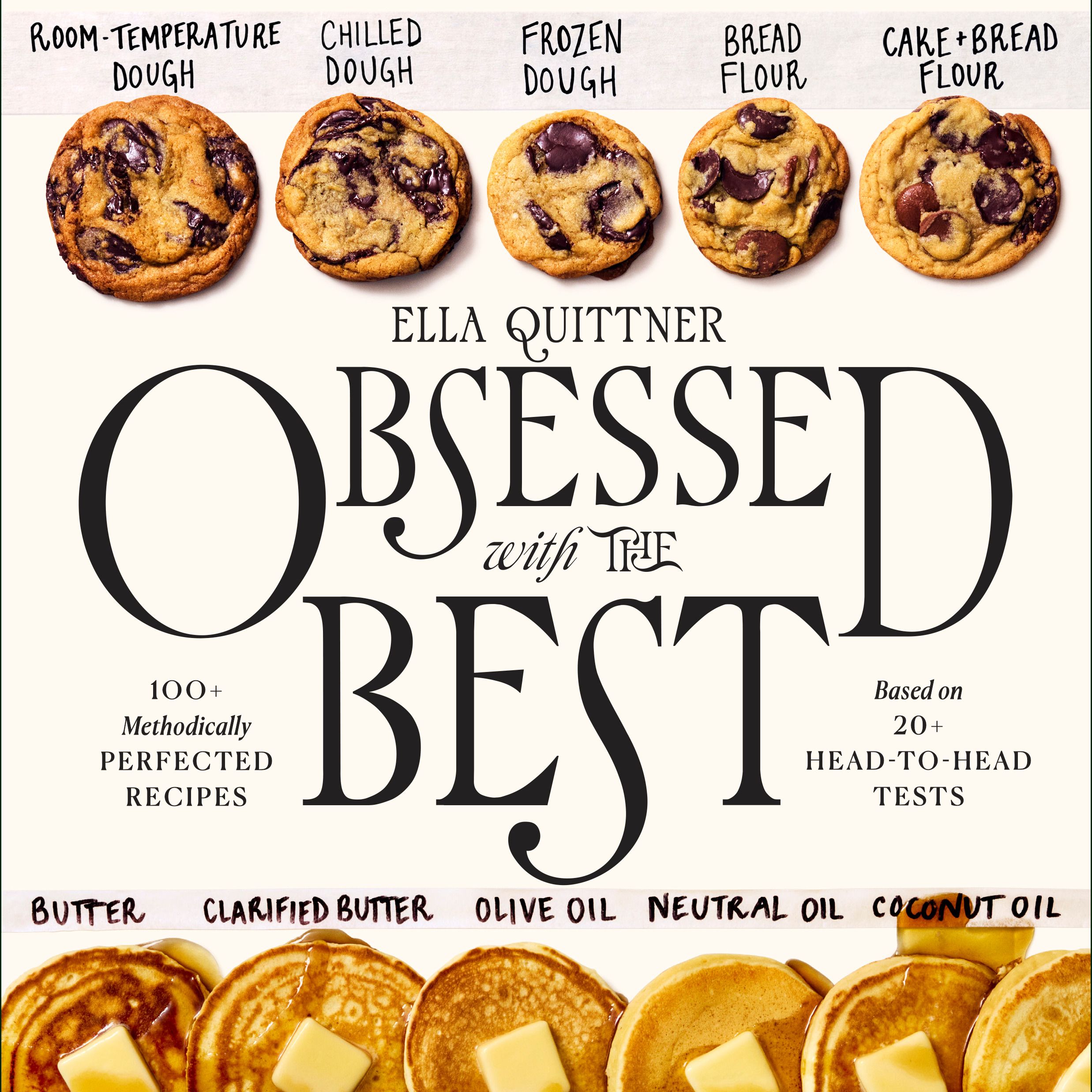
Loading summary
Transcript58 lines
- [00:00]
A
All of it is supported by Progressive Insurance. You chose to hit play on this podcast today. Smart Choice. Make another smart choice with Auto Quote Explorer to compare rates for multiple car insurance companies all at once. Try it@progressive.com Progressive Casualty Insurance Company and affiliates not available in all states or situations. Prices vary based on how you buy.
- [00:30]
B
This is all of it on wnyc, everybody. I'm Alison Stewart. This Thursday we're kicking off this season of our Broadway on the Radio series with the team behind the star studded new Broadway revival about a cold war love triangle, Chess the Musical. The show's three stars, Aaron Tveit, Nicholas Christopher and Lea Michele will be here at the WNYC Green Space performing live. We'll also have the show's director, Michael Mayer and book writer Danny Strong here as well. That's this Thursday, March 19th at noon. The event is almost sold out. There are just a few tickets left, so you can grab yours now by going to wnyc.org chess again, that's wnyc.org chess now let's get this hour started with Ella Quintner and Obsessed with the Best. Every cook has their own way of doing things, their tried and true methods. But not every cook has arrived there by pitting dozens of cooking methods and ingredients against one another to analyze results. But Ella Quintner has. Her goal was to figure out what makes the best chocolate chip cookie or the juiciest roasted chicken or the most perfectly scrambled eggs. Did you know there are 24 ways to make a simple biscuit? You can find the results in her new cookbook titled obsessed with the 100 plus methodically perfected recipes based on 20 plus head to head tests. The cookbook is both a collection of recipes and reported ess that take readers through her controlled food experiments, Heat, mixing, time, cooking. She delves into variables and she analyzes the results with the final goal being, quote, the mother recipe. Ella, welcome to all of it.
- [02:22]
C
Thank you. I'm so excited to be here.
- [02:24]
B
What made you start down this road?
- [02:27]
C
Sure. Well, I think with this project in particular, I was really curious to delve into the subject of the best because at a fundamental level, I do not think the best way to do anything in the kitchen exists. So the title of the book is sort of a bait and switch, right? You open it up and then the first sentence is something like, there's no such thing as the best. But I've always been a very obsessive and neurotic person both in and out of the kitchen. And I'm fascinated By what I think is a very human reflex to want to know the best. Like who among us that loves to cook or bake can scroll past an article promising the best way to do this or the three ingredient way to do this faster and get a better result. Or you know, click past a deal for the best wagyu at Costco. That's 10%. So I wanted to really explore that while also providing something that was useful and serviceable for the home cook and baker, which is the result of these 40 head to head experiments to try to optimize XYZ food items so that you don't have to do these tests at home and you can skip right to the mother recipe.
- [03:25]
B
It's interesting you made a change in your career from Wall Street. Did your background in finance or in Wall street ness affect your recipes at all or affect the way you conducted these experiments?
- [03:40]
C
That's such a funny question. I think it's two answers. One on a very kind of tactical level. Sure, I know my way around a spreadsheet and now when I'm doing these bench tests, I can very easily and efficiently. I have this sort of producerial quality to my brain where I can very easily and efficiently plan. Like I'm going to cook 45 different scrambled eggs in six hours and I know how to do it and I'm going to make all the notes and I'm not going to lose any information or mess up. But I think also on a conceptual level, it probably affected how I think about food and recipes and cooking and baking because for so long, when I was working on Wall street and using food as an outlet for indulgence and relaxation and creativity, it became clear to me that eating was pleasure and cooking and baking and being creative in the kitchen was a source of pleasure for me. And sharing that with other people created communal pleasure. So I think that's where my tendency to maximize for optimal flavor and technique and texture and efficiency and all of that comes from is I want to share that pleasure with other people.
- [04:41]
B
We're talking to Ella Quintner, the author of the new cookbook Obsessed with the Best. Hey listeners, we want to hear from you. Do you have a question for Ella Quintner? Do you want some advice on how to conduct your at home food experiments? Want some tips on how to make the perfect chocolate chip cookies or the secrets to the best bacon? Call us at 2124-3396-9221-2433 wnyc. Or perhaps you want to share your tips with your Fellow listeners, Our number is 2124-3396-9221-2433. WNYC. All right, let's get down to your methodology. Your methodology.
- [05:16]
C
Sure.
- [05:16]
B
How did you decide which foods to text to test?
- [05:19]
C
Well, the basis of this first installation of Obsessed with the Best was meant to be sort of fundamentals. I wanted to offer these recipes, but I also wanted to give cooks and bakers building blocks so that if my best didn't match their best, they could still use my results to improve their techniques in the kitchen or learn something and then get to their best however they see fit. So I tried to go for the sort of building block basics of kind of the stuff we fight about on the Internet and in person around the water cooler, which is things like how to scramble eggs, how to cook bacon, how to make biscuits, how to make a yellow cake. I went for very sort of classic, sometimes Americana foods with a few little niche departures like latkes.
- [05:58]
B
What are some foods that required more testing from you than other foods? And why?
- [06:04]
C
The two sections that took the longest to complete were the actually chewy fresh pasta section and the meatball section, which resulted in my triple secret tender meatballs. And those each took about three weeks of travel and reporting before I even sat down and did the bench test. So for the fresh pasta section, I write about how I'm historically a bit of a fresh pasta hater because I never find that it's chewy enough. And so I traveled all throughout Italy, Tuscany, Emilia, Romana, and then to Japan, to northern Japan to learn how to make buckwheat soba, and then down to Osaka to learn how to knead udon dough with my feet so that I could come back to my kitchen and have as much reported information as possible and test all of these different tweaks and techniques to make my own fresh pasta, chewier and also easy enough for a home cook to kind of do it in their sleep. And meatballs are similar. I went to Rome and I learned how to make Roman style meatballs and Southern Italian style meatballs. And then I actually went all the way to Tokyo, where a chef showed me his special tsukune recipe, because I've always been curious how you get such a lean meat, like a chicken in a tsukune, to be so juicy. And there I learned a number of his secret tricks as well. And I brought all of that home to my kitchen and then tried to adapt those techniques again to be easy for the home cook.
- [07:19]
B
Let's take a call. This is Andrew, who's calling in from Staten Island. Hi, Andrew, thanks for calling all of it.
- [07:27]
D
Hi, have a quick question. Sorry, let me get off speaker. Yeah, I'm about to move out and live on my own for the first time. So I just wanted some tips on, you know, good things to cook to get into a normal routine since I'm not gonna have anyone cooking for me.
- [07:47]
B
Okay.
- [07:49]
C
I think the number one easiest thing you can cook in your first home that will make you totally fall in love with the idea of easy weeknight cooking is pasta with a simple sauce. So there are two in the book I would recommend, although you could. I will also tell you how you can find them not on the book. One is there's a not exactly three ingredient sauce in my book which is based on the prolific Marcella Hazon. Three ingredient sauce. Truly couldn't be easier. You're just simmering a can of tomatoes with butter and an onion that you don't even have to dice and then you're putting that over pasta which takes like eight to 10 minutes to boil, depending how long how al dente you like it. And nothing will be more sort of soul satisfying for you than making a bowl of delic delicious pasta in your own kitchen for the first time. There's another recipe in the book for a 10 minute to NATO sauce, which again, the entire sauce comes together and you don't even need the food processor I call for. You could use forks in the time it takes you to boil a box of pasta. And that is such an elegant dish you could even serve it at your first dinner party. I also think shaving cabbage with a vegetable peeler and turning that into a salad with a rotisserie chicken is a really easy, simple weeknight meal. You can make your own dressing quickly in a blender or buy one at the store, but there are really endless ways you can celebrate having your own kitchen for the first time.
- [09:04]
B
Good luck to you, Andrew listeners, do you want to get in on this conversation? Do you have a question for Ella Quintner? You want some advice on how to conduct your at home food experiments? Want tips on making the perfect chocolate chip cookies or secrets to the best bacon? Or perhaps you have a tip you'd like to share with all of us. Our number is 2124-3396-9221-2433 wnyc all right, let's talk about the top of your the COVID of your book. It's chocolate chip cookies. Let's get down to it. Up top, you'd Write that this is chartered territory, but there are reasons that people want to chart it. They want to know more. How do you make good chocolate chip cookies? Perhaps the best chocolate chip cookies? How did you land on a technique which you can simply say is the best?
- [09:53]
C
So I actually, it's funny, I offer three techniques in the book, and one is the best if you want to put a lot of effort in. And it combines probably more than a dozen tips, tricks and techniques from other beloved chocolate chunk cookie recipes, including maxing out the brown butter bits in your brown butter with milk powder, aging the dough, adding some buckwheat for nuttiness, adding a tangzhong. But of course, I know that not everyone feels the best chocolate chunk cookie should take, you know, two days to age in the fridge to make. So I also have the best one hour recipe in which I use a number of shortcuts to make it taste like you've been perfecting and aging your dough for days. But really, you threw it together 20 minutes ago because you just remembered you had company on the way or cravings struck. And that uses malted milk powder to add savory notes and depth that makes it taste like you've aged the dough and gives it a nice chewy texture and you don't have to do much work at all to achieve it. And it also makes use of cookie dough bars, so you're baking it in an eight by eight or a half a quarter sheet pan so that you don't have to worry about stuff like spreading, which would otherwise be controlled with aging dough and making little tweaks to the recipe.
- [10:59]
B
The first food you put to test in the book are biscuits. As I mentioned, I think there were 24 in there. You went to Alabama to study how to make biscuits. Tell us a little bit about that trip.
- [11:11]
C
Totally. So I went down to spend a day with Scott Peacock, who was a longtime collaborator of Edna Lewis. And of course, when I knew I wanted to tackle biscuits in the book, my mind immediately went to Edna Lewis. I read everything she'd written about biscuits, and I read about Scott Peacock. He co authored a book with her about Southern foods and the way in which they differ region to region across the South. And so I was delighted when he offered to host me in Alabama in a region called the Black Belt. And I drove down there from the capital and we spent the day in a house, basically learning his techniques. And the way he talks about biscuits is so lyrical. He's like an orchestra conductor or a preacher, you know, giving a sermon. He's as they're in the oven, he's narrating the successive sort of blooms of the baking powder and the scents filling the kitchen. And it's so hard not to fall in love with the biscuit when you spend time with this man. And what it did was it gave me the confidence to come home and find a biscuit that made me feel that way. You know, I didn't. I didn't say, okay, I have to make Scott's biscuits exactly. I still fiddled and tweaked, as I always do, and tested these dozens of biscuit techniques. But it ended with a biscuit recipe that makes me feel like I want to give a sermon on that.
- [12:24]
B
What worked well with biscuits and what didn't work so well with biscuits?
- [12:29]
C
So controversially? My biscuits call for vodka in the dough and the way I got there. And they also call for buttermilk, and they call for grated butter, which are tried and true techniques for flaky. I like a sort of faux laminated texture where you're having distinct layers that you can peel apart. And they're very tall and tender. But the reason I call for vodka is because several dozen methods into my tests, I realized, wait a minute, biscuits are just pie dough with a better personality, which is to say they have the same ingredients and you're trying to achieve the same result. Like a flaky, tender carb crust with layers. And bakers have for a long time had the secret trick up their sleeve of adding vodka, which inhibits gluten formation and it creates pockets of steam faster in the oven because of course, it has a lower boiling point, so it helps those layers puff up. So I tested adding some vodka to my biscuit dough along with the buttermilk, and lo and behold, it gave me the best buttermilk biscuits I've tasted my entire life.
- [13:27]
B
I am putting that on my shopping list. This is a text. What tip do you have for the best crispy chocolate chip cookies?
- [13:37]
C
Okay, for the best crispy chocolate chip cookies, you're gonna wanna add an extra egg white and you're gonna wanna reduce some of the flour because you want those to spread. You're not gonna wanna dough that you're aging forever in the refrigerator and then cooking at a high temperature because you're gonna wanna increase spread as much as you can to get that tates like texture. So anything you can do to ensure that that cookie is gonna spread on the sheet is gonna help you get maximal crisp. And you're gonna wanna over index on the white sugar. Instead of the brown, because the white will. It will melt in the oven and spread out and then it will recrystallize when they cool. So that will give you that crispy shell on the outside. And you may also wanna experiment with using melted butter in the recipe instead of solid.
- [14:22]
B
We're talking to Ella Quintner, the author of the new cookbook Obsessed with the Best. We'll be back. You're listening to all of it on wnyc. I'm Alison Stewart. My guest is Ella Quintner. She's the author of the cookbook obsessed with the 100 plus methodically perfected recipes based on 20 plus head to head tests. And then on the bottom it says, plus essays from round the clock, round the world reporting trips, following people who compelled by excellence. Why am I like this? Why did you need to put that little extra in? Why am I like this?
- [15:07]
C
You know, I get asked that a lot. I think that it would have been easier for everyone if I were not like this. Right? If I could just. If I could just compile my 120 favorite recipes and move on with my life. But I am like this. I'm obsessive. I'm neurotic. I'm compelled by people who go to bizarre lengths in pursuit of being or knowing the best. And I just couldn't help myself.
- [15:28]
B
Let's take some more calls. Heidi is calling in from Yonkers. Hi, Heidi. Thanks for taking the time to call. All of it.
- [15:37]
E
Oh, hi, is St. Pat. Can you hear me?
- [15:40]
B
Yeah. There you are. Hi.
- [15:42]
E
Hi. Since tomorrow is St. Patrick's Day, what's the best way to make corned beef and cabbage and side dishes?
- [15:50]
C
Ooh. I would go with a slow roasted method. Side dishes. For corned beef and cabbage, I think you're gonna want to go in the potato direction. I think that's gonna be a very uncontroversial suggestion. You could do a boiled halved potato, which you could toss with butter and chopped fine herbs. Or I in the book have a section on the crispy smashed potato, which I think is a superior side potato, where I have you boil little potatoes in salted water with a bit of baking soda, and then I have you very roughly toss those with a fat of your choice. Olive oil and butter is the standard I call for, but duck fat is also delicious. And then I have you smash them flat on a baking sheet and roast them until they're crispy. And I think it's the ideal potato because it combines all the textures we love in different types of potatoes. You get the crispy kind of french fry texture from the fat at the high heat roast, but you still get the fleecy, well flavored interior from the initial boil.
- [16:48]
B
It's interesting, these smashed potatoes, what were your non negotiables when you were testing these?
- [16:55]
C
My non negotiables were that they combined these textures. Like, I don't enjoy when I get a smashed potato, and it's just a potato chip, because I could have just purchased potato chips, and I don't like when it's all soft and gooey all the way through and there's no crisp around the edges. I think that smashed potatoes unite people who like different types of potatoes because they offer variety in each bite, and that's what makes them pair so well with sauces. So my non negotiables were that and that they be flavored throughout because nothing is more boring than a bland potato.
- [17:23]
B
Let's take some more calls. Emma is calling from Kensington. Hey, Emma, thank you so much for making the time to call all of it today.
- [17:32]
E
Hey, guys, can you hear me?
- [17:33]
B
Yeah, I hear you. Great.
- [17:35]
E
Oh, awesome. Hey, Chef, thanks for doing this show. I had a question on. Obviously, you're a scientist. I respect that you found the exact way to do the exact things, but grocery shopping is obviously, like, getting more expensive in the city. So I was wondering kind of what your. If you have a philosophy on how to both, you know, shop on a budget, but also maintain that, like, health and creativity when you're cooking, you know, maybe compromise on the best ingredient with a good substitute, for example.
- [18:08]
B
That's a really good question.
- [18:11]
C
Yeah, absolutely. And I think about that all the time because I live in New York City, where a carton of eggs can be north of $12 sometimes, which is so shocking and appalling. I think that the best way to grocery shop on a budget, especially if you're talking about occasion cooking, like a special dinner or dinner party or what have you, is to pick a center star ingredient that is not pricey and build the menu around it. So in my book, I dedicate a whole section to cabbage. One of the most historically affordable things you could buy, which is still quite affordable, even if you're buying, you know, ahead of savoy or something nicer at the farmer's market. And I have a number of recipes that are designed to make that the star, so that that could be the entree of the meal. And everything around it is meant to kind of flatter and not steal attention. So I think that's one way to kind of Go budget shopping. I also am all about substitutions and riffs based on what you have, and I try to write about it as much as possible in the book. But what I think cooks should do is learn the basics and the fundamentals so that they know how to swap things and what the effects will be so that they've armed themselves with an arsenal of sort of ideas around. Okay, if I use buttermilk instead of yogurt in this whipped cream, it's going to be a little softer, but I'll still get that tang. And instead of being stabilized, this will happen. I think knowing that stuff is your secret weapon for budget cooking, because you can make use of the last third of a carton of something without having to go out and buy a whole new ingredient just because a recipe calls for it.
- [19:39]
B
Let's talk to Martin, calling in from the Bronx. Hey, Martin, how are you doing today?
- [19:43]
C
Hey.
- [19:43]
D
Oh, good afternoon, Allison. And to your guest, I listen every day. So I'm now, like, 70 years old. My question is, growing up, one of my grandmas used to make matzo balls soft and fluffy as can be. The other grandma I had made them hard, like a hard ball. I love them. I grew up loving them both ways. Is there one way to really make a matzo ball?
- [20:18]
B
That's a great question. What do you say, Ella?
- [20:21]
C
I love this question, and I personally could not relate to it more. It took everything in me to not include a matzo ball section in this book because I didn't think it could qualify as a basic. But if I ever do a book, too, you know that's going in there. So, no, there's no such thing as the best matzo ball. The best is an entirely subjective thing, and it's going to be different for you than for your dinner guests or your family members or your grandparents, because so much of how we feel about food has to do with our emotions and our experiences and our memories eating them and our culture and all these things that inform our enjoyment and pleasure in dining. I do think that it's important to know what makes a matzo ball soft and fluffy and floating and what makes it dense as a rock that sinks to the bottom of a soup. Because you, having grown up with both of these varieties and perhaps loving them both means that you might crave either at any given time or you might want to combine them. So it's good for you to know. Okay. Adding something like seltzer and whipped egg whites folded into the matzo ball mix right before I boil them in the Water before adding them to the soup is going to make them light and fluffy, almost like a gefilte fish or a canal of whipped cream. Whereas if I pack them harder and use more matzo and don't hydrate them as well, that's gonna make them denser because I think that gives you the sort of keys to the city, if you will, to satisfy your own cravings at your whim.
- [21:40]
B
On the COVID book, on the top is chocolate chip cookies. On the bottom is pancakes. And we have a call about pancakes. Jim, what do you wanna know about pancakes?
- [21:52]
D
Oh, well, just basic ingredients, but also, is an electric beater verboten or do you have to let it stand for overnight? And what's the best formula and procedure for making them that morning?
- [22:11]
B
Sure.
- [22:12]
C
So my fluffiest buttermilk pancakes do call for whipped egg whites. But as I write in the book, I don't want to make you pull out an electric mixer or stand mixer that early in the morning. That's a lot of effort. So I give you a technique you can do by hand with a whisky. But no, an electric mixer is so not verboten. And if yours lives on your countertop or it's easy for you to grab at 9am Bleary eyed, go for it and make your life easier. I recommend that you whip the egg whites with a little bit of sugar, kind of emulating what you would do in a meringue, and then folding it into your fluffy buttermilk batter, which you're then gonna see rise almost twice its height when you add it to the pan as a result of the baking powder, the aerated egg whites and the heat all making contact at once. One other trick I offer in the book is using ricotta in the batter, which you know you've probably long heard people say, don't over mix your pancakes. You want some little lumps in there because it gives the batter something to climb. I'm giving you extra insurance there with the ricotta, which is giving you these tiny little tender bumps for the batter to climb. Almost like a trellis, like roses up a trellis as it's heating and inflating on the stovetop.
- [23:19]
E
Out.
- [23:19]
B
We're speaking with Ella Quintner. She's the author of the new cookbook Obsessed with the Best. You're not precious about ingredients, but there are a few things that you want people to know more about, like toasted mushroom powder. First of all, tell us what it is, what it does, and when do you use it.
- [23:38]
C
So toasted mushroom powder, I think is one of these secret weapons we should all know about that is this very cheffy ingredient. It is basically just blended dried mushrooms, any kind of mushrooms. And you can totally make your own. You can buy toasted mushroom powder on the Internet at some specialty shops, but you can also just buy dried shiitakes or whatever mushroom you like, blend them up in a food processor or in a blender, and then toast that kind of mushroom dust on your stove. And it is this major umami flavor bomb. So I make use of it in the book in two recipes, but I really think the uses for it are unlimited. And I'll tell you a secret third in the book. I use it as part of a dry brine and a seasoning on the outside of a roast chicken as a little hack in my one hour roast chicken to make it taste like you've been brining it for days and working on this forever and it's covered in things you grow in your own garden. But really it's just a secret extra, extra flavorful, delicious, earthy dimension that also ensures that your skin crisps up when you roast that chicken. And I also suggest adding it to my meatballs. It's an optional upgrade, but that's something I learned from chef Joe Takasaki in Tokyo from his tsukune. He added ground dried mushrooms to add extra dimension and flavor without having to add a second or third type of meat. And then a third way to use mushroom powder if you have it in your pantry because you purchased it or you made it and you're putting it in a jar or bag and storing it there for many months. It's very shelf stable, is stirring a few teaspoons of it into hot water with a little soy sauce and mirin. Oh, you will not find an easier, more delicious instant broth just to sip or to use as the basis for a quick lunchtime soup. Oh my gosh. I can't recommend that enough.
- [25:22]
B
How has working on this cookbook, doing all of these methodic recipes, all of these head to head tests on basics that we have in our diet all the time, how has this changed the way you cook?
- [25:38]
C
I think the answer is twofold. Practically, it's made me a much better and more confident cook and baker because I understand so much more at the end of one of these bench tests and recipe development sessions, you know, which can be marathon, spanning many weeks, how things work. And that is something I'm trying to drill into home cooks with this book, which is you don't even have to like my best recipe or agree with me on what my best is. But I want you to learn why things are happening the way they're happening so that that will give you the keys to do things however you like. And the second way it's affected my cooking and baking is I always cooked without a recipe when I was cooking for fun, which surprises a lot of people considering what I do for work. Now I'm even more like that. I approach cooking and baking for fun when it's not for recipe development, much like I would approach making a painting. Right. I'm just going into the kitchen and kind of freestyling. But I feel like I have the confidence to do that and have a vague sense of what the outcome might be because I've given myself these building blocks.
- [26:40]
B
The name of the book is called Obsessed with the Ella Quintner is its author. Ella, thanks for joining us.
- [26:47]
C
Thank you for having me.
- [26:50]
F
Having the right people in your corner for life's biggest milestones makes all the difference. Like a friend who's there when you're house hunting or checking out a new ride, State Farm is there too, helping you choose the coverage you need. With a State Farm agent, you know someone is there to help you along the way. And with so many coverage options, it's nice knowing you have help choosing a plan that fits your needs so you can continue celebrating all of life's milestones. Like a good neighbor, State farm is there.
- [27:19]
A
WNYC's journalism and storytelling is heard by millions of passionate listeners. Sponsors of our programming gain our listeners attention and their respect. Learn about how your organization can support WNYC and WNYC Studios at sponsorship wnyc. Org.