Loading summary
Transcript36 lines
- [00:00]
Choice Hotels Advertiser
I wrote a little song to remind you. Choice hotels get you more of the experiences you value. The Cambria Hotel's got it all. A rooftop bar. Have a ball. Cocktails up here feel just right. It's Cambria.
- [00:17]
Dr. Mary Fariba Afzeri
Amazing.
- [00:19]
Choice Hotels Advertiser
All right, bring a date, your teen or even your mom. Book direct@ChoiceHotels.com See you on the roof.
- [00:38]
Alison Stewart
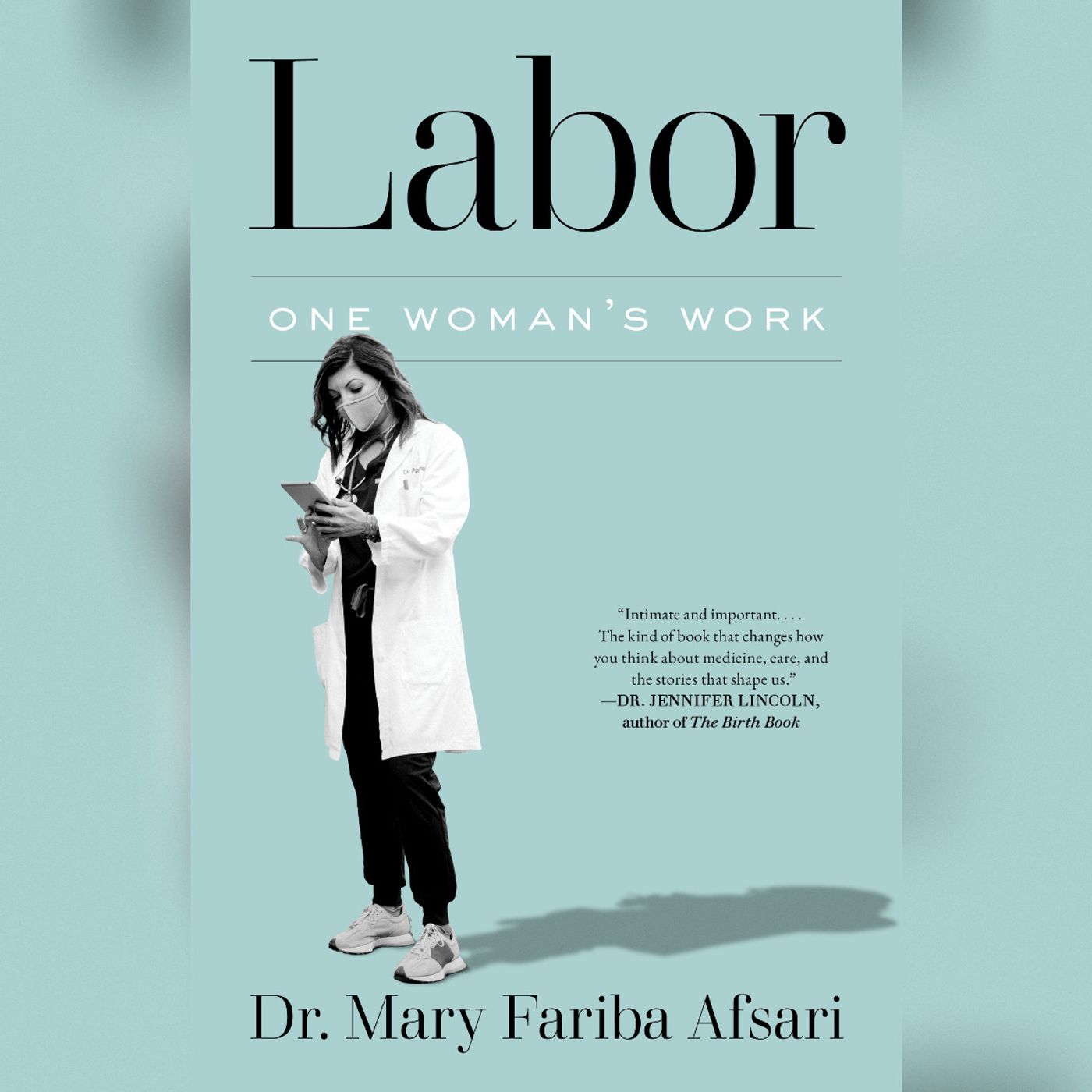
This is all of it. I'm Alison Stewart live from the WNYC studios in soho. Thank you for sharing part of your day with us. I'm really grateful that you're here. Journalist Amy Goodman will be with us. She and her show Democracy now are featured in the documentary Steal this Story. Please. She joins us to discuss along with the film's co director, Carl Diehl. New Yorker cartoonist Julia Wirtz joins us to talk about her new graphic memoir, bury Me Already. It's nice down here, comics on pregnancy and parenthood. Plus, Atlantic writer Katie Weaver joins us to talk about the reporting that went into her article. I found it the best free restaurant bread in America. That's the plan. So let's get this started. A few years ago, Dr. Mary Fariba Afzeri frustrated with the limitations of working within the hospital system as an OB gyn, she felt there were patients that couldn't or wouldn't find the time to come to a clinic to receive necessary health care. So she decided to bring the clinic to them. Dr. Afzeri converted an RV, the ones used for camping, into a mobile OBGYN office. She headed into communities throughout the Pacific Northwest that are harder to reach. The clinic is called Femme Forward Health. She had the idea in 2016, and her work has taken on a new meaning in the wake of the Dobbs decision. Dr. Afsari writes about this journey, her family's story fleeing Iran and her connection to her past. In her new memoir, one woman's work, Dr. Mary Fariba Afzere joins me. Welcome to all of it.
- [02:20]
Dr. Mary Fariba Afzeri
Hi, Alison. It's great to be here.
- [02:22]
Alison Stewart
What inspired you to start writing this memoir?
- [02:26]
Dr. Mary Fariba Afzeri
I started this memoir and I'm a little bit embarrassed to say it was about 10 years ago when I wanted to get back into writing. Ultimately, I wanted to investigate the story of my grandmother, and she does play a role in this book. I had learned that I had a grandmother who I was ultimately named after, which came as a surprise to me and as I realized that we had lost her at a very young age. She was 26 years old and she was pregnant. I wanted to try to create a story for myself and for my family to somehow remember her and understand the legacy that she left behind. So that's the story I started writing. And in some ways, it's an imagined story of her life based on some facts and information that I gleaned, And I started to recreate that. And when I did, as an OB GYN who at that point was about 15 years into my practice, I realized that her story and my work were very intricately woven together. And so then I started writing stories from my own work as well.
- [03:38]
Alison Stewart
How did learning the fact that your grandmother in her mid-20s, while pregnant with her fifth child, help you understand your family and also your career?
- [03:48]
Dr. Mary Fariba Afzeri
At the time when I learned that she had died while she was pregnant, it was all still a mystery. And in a lot of ways, it's still a mystery. Right. We don't really know the exact stories from our grandmothers and other relatives from the past. The information that gets passed down is usually sort of shrouded in secrecy or just language, whatever the barriers might be. But I did learn from an aunt that the thought was that my grandmother had attempted to end her pregnancy, and this was in Iran in the 1950s. And so it was something that was done illegally, undercover. And when I learned that over the course of that pregnancy she tragically died, I wanted to understand that process. What had led her to make that decision potentially, and also what happens when women don't have a choice that leads to making decisions like that. That ultimately is a tragedy for the entire family. And given that I'm an OB gyn, I felt like I was potentially the expert in the family to try to unravel this for us.
- [04:56]
Alison Stewart
Your father, an immigrant from Iran, became a very celebrated and an accomplished doctor, and he definitely wanted you to follow in his footsteps. Did you feel his desire for you to become a doctor as encouragement? Was it pressure? What did it feel like?
- [05:10]
Dr. Mary Fariba Afzeri
I mean, I'm going to say it was definitely both. It's a pretty typical kid of immigrant stories. Your family, they leave everything behind in order to create a better life for their families and their future. That's what my parents did. And I give him so much credit for believing from the time I was very young that I could do and become anything I wanted to be. He was and is an incredible physician and just received so much satisfaction from that work that he really, truly believed that for me, it was the most sort of potential path to bring me satisfaction and security. And so he did very much encourage that from the time I was young.
- [05:57]
Alison Stewart
It's interesting, though, but, because at the beginning of the memoir you describe a point in your career where you were questioning your choice to become a doctor. Why do you think that professions that, that sort of. That started to creep into your mind?
- [06:11]
Dr. Mary Fariba Afzeri
It's a demanding job. I mean, any kind of medical career, everybody will attest to it. It's a demanding career. The training just in and of itself, the number of years of postgraduate education, you know, after college, it's a minimum of seven years and sometimes more. For me, it was eight. So you get through all of that. You're in your mid-30s, you look around. Most of your peers are halfway through their adult decisions. They're having children, they're buying homes, and you're just finishing up being a student. And then you have to actually practice medicine and OB GYNs. You know, we work around the clock, we take overnight shifts. We still do 24 hour calls. It's a very demanding sort of physical and emotional career. It is so rewarding. But it does come with that trade off. I was a mother, I'm a writer. I had other things that I had also imagined for myself. And I would say that, you know, five, seven, ten years into doing this work, which does tend to become all encompassing, you don't want to let your patients down. You want to show up for them. You start to question whether or not this is going to be sustainable.
- [07:30]
Alison Stewart
My guest is Dr. Mary Fariba Afzeri. We're discussing her new memoir, One Woman's Work, about her journey turning an RV into a mobile OBGYN clinic for patients in the Pacific Northwest. It's out now. In the book, though, we get to know about you, about how you grew up. And this is a really interesting part where your mom changes your name. She changes your brother's name from Farshid to Peter and Fariba to Mary, and you write. From then on out, we were no longer Iranian first. We had become Americans. Our new names would be the final piece of the puzzle connecting us to this place Then, rather than Shiraz, the city we moved back to after our births, Peter and Mary would start school anew the next day. No longer foreigners with the names no one could pronounce but kids with the easiest, best, most popular names in the country. Peter and Mary. No need for explanation, no more requirements to feel loyal to the place that kept showing up in the news. Peter and Mary could be as normal as we wanted, to fit in rather than stand out, avoid confrontation, erase judgment. What did it mean to you when your name changed?
- [08:39]
Dr. Mary Fariba Afzeri
In that moment, I remember feeling elated. I mean, Fariba Afseri is a mouthful of a name, and especially in this country, for people to even remember the name, let alone pronounce it. And there is an association with a name like that, especially at that time. It was the early 1980s, and the Iran hostage crisis was in full effect. It was on the news every single night. And so there was just no way for me to avoid what was happening overseas. And I just wanted to be a California kid. I was in kindergarten. I was trying to make friends. And so I think probably like most kids at that stage, you just want to fit in. And my parents wanted to remove any barrier that we might have had to adjust and be successful. And so that's what they did for us.
- [09:34]
Alison Stewart
Obviously, Iran is in the news a lot lately. We're in the midst of a war. How are you and your family holding up?
- [09:42]
Dr. Mary Fariba Afzeri
Every day since, you know, the 1980s, it feels like there is something new that we are confronted with. Our family is spread across the world. So we still have some family members in Iran as well as Europe and the US So we keep in touch the best that we can. There is a great deal of resilience in the people of Iran. We have seen it, fortunately, and I will just say this, I think that over the last five, seven years, we are starting to distinguish the people of Iran from the regime of Iran. And so if anything is coming out of this, I hope it's that the resilience, the strength and the courage of the Iranian people, including my family members that are there. And we are over here, you know, praying for them and in touch with them and maintaining that positive spirit that always shines through my family members, no matter what is happening, they gather, they cook beautiful meals, they host strangers, they dance, they tell jokes, they go to work, they continue their education, and that continues to happen today. I am in touch with my cousins who are in Iran today, and they are sharing with me their resilience, and I am so proud of them.
- [11:02]
Alison Stewart
You write about how protests in Iran gave you new focus on your work here in the United States, especially when it becomes to when it comes to women's rights. What's been on your mind in the context of this new war or how has that been on your mind?
- [11:19]
Dr. Mary Fariba Afzeri
So, you know, back in 2022, most of the world became aware of the Woman Life Freedom movement that erupted. It was a feminist revolution that, you know, occurred after a young woman, Gina Mahsa Amini, was brutally killed. And when it came out that it had to do with showing some tendrils of hair, the People of Iran really rose up and showed up for more than a year, and it is ongoing. I mean, their resistance continues to this day. And for me, as somebody who is taking a stand for bodily autonomy in this country, it really merged my worlds. It is a slippery slope when you start to control the behavior of people's bodies and when there is a, you know, a potential repercussion for people to have just autonomy over how they represent themselves just in their own physical being. And so the work that I do, I hope, embodies that. We are trying to promote the idea that people have bodily autonomy no matter who they are. And my sort of, I guess my commitment to that has just become stronger every year.
- [12:39]
Alison Stewart
My guest is Dr. Mary Fariba Afzeri. We're discussing her new memoir, One Woman's Work. You work with patients at sometimes their most vulnerable moments in their lives. Some of them come to you very afraid. What do you view your role as when it comes to the emotional aspects of healthcare, not just the clinical aspects of healthcare?
- [13:02]
Dr. Mary Fariba Afzeri
I mean, the emotional aspects are just as important, right? I mean, the relationships that physicians create with their patients, the spaces that we are able to provide for them, the emotional components of people who have experienced either medical trauma, sexual trauma, our patients who are neurodivergent, our patients who are not accepted by their families for who they are, when they feel like they have a place where they can go and feel seen and heard and protected, they are most and more likely to seek care. So one of the inspirations for the clinic that we created was to actually have a space where people who might not otherwise seek care. So maybe people who had some sort of an experience in a hospital setting or, or a family setting, and it has caused them to avoid going to the hospital or the doctor to provide them with an alternative space. And when they come into our space, we do abide and follow the tenets of trauma informed care, which has to do with trying to understand from the person sitting across from you what their life experience has been to lead them to that moment and how it might impact the way they receive our career. So there is a lot of understanding, communication and listening that goes into these appointments. It's not easy. I mean, it is an emotional commitment from myself and my staff to meet patients in this way. But I'm just going to tell you the reward that comes on the other side when our patients do feel heard and seen and the way that they come back to us, the stories they share. I mean, just as recently as yesterday, I was in the Clinic. And over and over again, I am hearing from my patients how their healing process is benefiting the people in their lives. And as a result, it feels healing to me.
- [15:03]
Alison Stewart
When you first started working out of the rv, you had to learn to drive it.
- [15:10]
Dr. Mary Fariba Afzeri
I did.
- [15:11]
Alison Stewart
What was that like?
- [15:14]
Dr. Mary Fariba Afzeri
I mean, I had never even been inside of an rv, I have to say. I mean, I'm a tent camper and I had these ideas about what the clinic would be, but it wasn't until I walked into an RV that I realized, oh, this is actually perfect. I didn't really know that RVs had running water and private bathrooms and a sink and all of the things that I would want in a clinic. And so the RV that I ended up with is 31ft. It's not the longest RV you can buy, but it's definitely not short. And I drive in my real life at Mini Cooper, and I would always say that my RV could eat my Mini Cooper for lunch. That's the size discrepancy. So I have lots of bruises on the outside of the RV to basically commemorate the first few weeks of driving it, Turning into parking lots, pulling into the gas stations, getting little crunches along the bumpers along the way. And I have to say, I'm pretty good at it. Now I three point turn into spaces that people say it looks like I was hovercrafted into. So I want to encourage anybody who feels like something feels too scary to do. I got behind the wheel and I figured it out.
- [16:31]
Alison Stewart
What kind of flexibility has a mobile clinic allowed you to have when it comes to who you can treat and how you can treat them?
- [16:40]
Dr. Mary Fariba Afzeri
Well, on one hand, it's given me power over my own schedule. That was something that I wanted. And so that's not a physical thing as far as the RV goes. But by having an independent clinic, I just decide how many people I'm going to see in a day and how much time I'm going to spend, which is a real barrier in healthcare today. But the space itself, people pull up. And this has become easier since COVID because a lot of folks are now used to doing this. They pull up in their car, they don't have to navigate a waiting room. And so imagine somebody coming in for, let's say, a miscarriage or infertility or gender affirming care, and they're seated in an OB waiting room surrounded by pregnant women. That in and of itself can bring up a lot for people. And so having a place where you can sit privately in your car, we call people in one at a time. And once they come into that space, it's just me and my medical assistant and the patient. And everybody says it feels comfortable, it feels homey in some ways, for me, it feels like inviting people into my living room. And so I think the conversations and the trust that we have in there, because I was in a private practice and I had wonderful relationships with my private practice patients, a lot of them have followed us into this clinic. But there's some kind of opening that has happened in the clinic that feels even more safe and secure. The other thing is we can go anywhere. So, for example, we drove two hours to the coast and we popped up and we were on a pier on the Oregon coast with people surrounding us that were on vacation and the man blowing the bubbles. And we were seeing women who, because of their location, hadn't sought care, some of them, for over a decade. They had expired IUDs that needed to come out. They didn't have a thorough understanding of what was happening with their menopause changes. We are able to park on private properties. I can drive onto a private property and go two acres in and park behind a barn and see folks there. So there's a lot of flexibility. And that was the point. I know what kind of care I can provide and my team can provide. And I wanted us to be able to go anywhere and provide folks with the exact same level of care, standard of care and compassion that we could provide in an office building.
- [19:10]
Alison Stewart
My guest is Dr. Mary Fariba Afzeri. We're discussing her new memoir, One Woman's Work, about her journey turning an RV into a mobile obgyn clinic for patients in the Pacific Northwest. Her memoir is out now. When you began the mobile clinic, Roe versus Wade was still the law of the land. It is no longer. How has the Dobbs decision changed your approach to the work you do as a healthcare provider? And what are the rules around mobile clinics?
- [19:39]
Dr. Mary Fariba Afzeri
Well, the rules around mobile clinics are state to state. I'm in a state where mobile clinics are able to practice and perform like regular clinics. The unfortunate sort of fallout from the Dobbs decision is that my neighboring states, some of them, have become very, very restricted in the type of reproductive health care they can provide to patients. And I just want to be very clear that when you lose, you know, a third of your OB GYNs, like we have lost in Idaho next door, we are not talking about just losing access to abortion care. We are talking about losing access to the most standard OB GYN reproductive health care life Saving care that every person should be afforded. So when you don't have access to an ob gyn, you have less access to birth control, to high risk pregnancy care. So the way it's affected me is not so much that we are able to, you know, receive folks from other states. There's a lot of restrictions on that right now and there is a lot of fear, both from a provider perspective as well as a patient perspective. The impact that it is having is recognizing that people outside of my state are really struggling. And we are talking about situations where a pregnant person might be in a life threatening situation and the OB provider is not able to advise them how to receive life threatening saving care because restrictions have been placed on what they are allowed to communicate with patients. I mean, this is where we're at today. So that part of it is terrifying, it is challenging, and it is something that those of us on this side of the border are grappling with. You know, what do we do in order to help our colleagues and patients in other states?
- [21:37]
Alison Stewart
You've performed abortion care as part of your practice. What do you think is something that people still fundamentally miss, misunderstand about abortion care in this country?
- [21:48]
Dr. Mary Fariba Afzeri
I write about this in the book that I actually have a visceral aversion to putting this part of women's health care. I mean, the way that it has been relegated to and the way I write about it in the book, as I say two words that can be placed on a bumper sticker, Pro choice or pro life. I sort of refuse to align myself with those words or those bumper stickers because when people arrive in a clinic or in a hospital setting, and that is something that they are either seeking voluntarily or involuntarily. It is a multifactorial situation. There is personal sort of like life choices behind that that can't be relegated to one line. A lot of times there are medical decisions that are being made. There's faith, there's family, there's culture, there is domestic violence. There are children that are involved sometimes in these situations. And so the idea that one policy, one lawmaking body could make a decision for somebody when those of us that are in the room, we are sitting on the bed with these women, we're holding their hands, we're having conversations. And so that's where I stand on it, is that it is a conversation between a medical provider and the person who is making a decision about this. And I think that everybody else needs to take a few steps back.
- [23:30]
Alison Stewart
You write about the decision about whether or not it was safe to advertise what the mobile clinic was on the side of the rv. What decisions have you had to make about safety and has your work felt more dangerous in the past few years?
- [23:45]
Dr. Mary Fariba Afzeri
We are a standard OBGYN clinic. I for the most part see people for their well, exams, pap smears, birth control. I do a lot of counseling around endometriosis. We're doing a ton of perimenopause and menopause care, pcos, fertility treatments, helping people get pregnant. That is the majority of what gynecologists do and that is the majority of what we are doing inside of the clinic. Any other procedure or decision that a patient might make is part of their healthcare experience. And so I would just caution people to pass judgment on people that are performing women's health procedures standard of care, to not make assumptions about what gynecologists are doing within the walls of their clinic. And that's how we function as our own clinic. We are all inclusive healthcare clinic and we have measures in place like a lot of people have measures in place to ensure the safety of the staff and the patient.
- [24:55]
Alison Stewart
My guest has been Dr. Mary Fariba Asfairi. We were discussing her new memoir, One Woman's Work, about her journey of turning an RV into a mobile OBGYN clinic for patients in the Pacific Northwest, as well as her family history as well as her relationship with her grandmother. It's a wonderful book. Thank you so much for being on the show.
- [25:14]
Dr. Mary Fariba Afzeri
Thank you so much for having me.
- [25:16]
State Farm Advertiser
One sweet, melty bite of a Hershey's bar and suddenly I'm right back, sitting on the front porch with my grandmother on a slow summer afternoon. She doesn't say much, just breaks the bar in half and hands me a piece. I open my mouth to say whatever a 9 year old wants to say and she replies with a low shh, listen. So we sat there listening. That was the first time I learned that quiet can feel full. Hershey's it's your happy place. Finding ways to be financially savvy is a smart move. And knowing you could be saving money for the things you really want, like that dream home or new ride is a great feeling. That's why the State Farm personal price plan can help you save when you choose to bundle home in auto bundling. Just another way to save with the personal price plan plan prices are based on rating plans that vary by state. Coverage options are selected by the customer. Availability, amount of discounts and savings and eligibility vary by state.