Loading summary
Transcript89 lines
- [00:08]
Alison Stewart
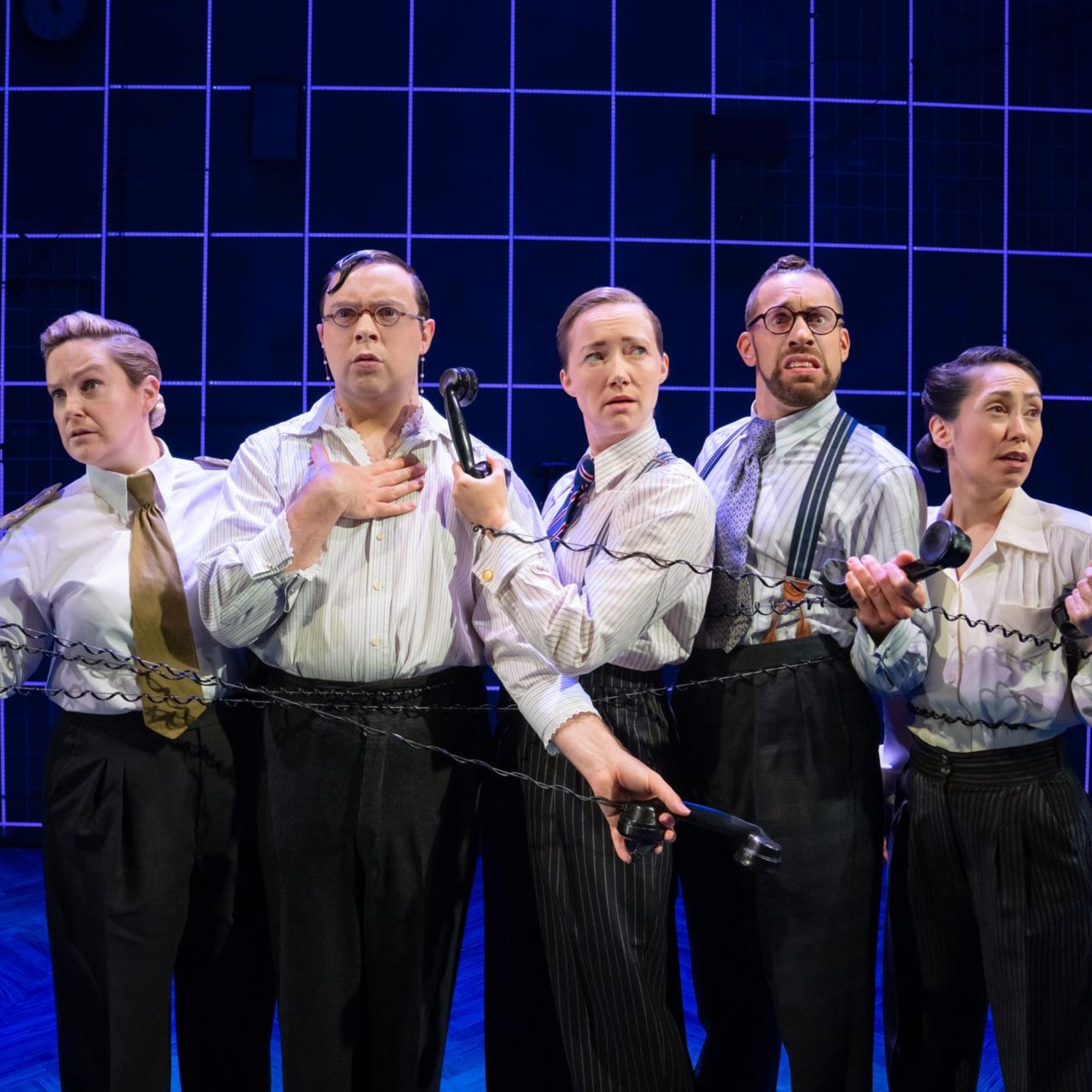
This is all of it on wnyc. I'm Alison Stewart. It's Valentine's Day this Saturday, in case you needed a reminder. Tomorrow on the show, we'll explore the true meaning of romance. Anna Martin of the New York Times podcast Modern Love will be here to take your calls on the most romantic thing you've ever experienced. Plus, with the new film adaptation of Wuthering Heights, we'll discuss the novel that inspired it and whether it can be called a romance novel. And on Friday, we'll continue our exploration of love in literature with the owner of the romance bookstore, the Ripped Bodice. And a call in about the hit series based on a book heated rivalry that's in the future. Let's get this hour started on Broadway. Time is running out to catch the original cast of the Broadway winning historical musical comedy Operation Mincemeat. The show is on Broadway through mid September, but the final performance for the show's original West End players is Sunday, February 22nd. Here's what the show's about. In the midst of World War II, a group of British agents concocted a plan to trick Nazi forces. The Germans thought the Allies were invading Sardinia when they really planned to land in Sicily. I could explain it to you, but the cast does a really great job summing it up in a song. It here's the pitch from Operation Mincemeat.
- [01:36]
Natasha Hodgson
What if a British pilot crashed his plane, then washed ashore in the south.
- [01:43]
David Cumming
Of Spain, his body forgotten, rotting in the sun?
- [01:48]
Natasha Hodgson
So we've lost our man, our hideous hero, The Spanish get away from him.
- [01:52]
David Cumming
Oh, dios mio.
- [01:53]
Natasha Hodgson
And then. Oh, I'm sorry, no.
- [01:55]
David Cumming
Now you go.
- [01:56]
Natasha Hodgson
You can do this, Charlie.
- [01:57]
David Cumming
So they find our man.
- [01:58]
Yes, I get the gist.
- [02:00]
And the briefcase we fix to his.
- [02:02]
Natasha Hodgson
Wrist, jam packed with details of our next attack. Heck, if you see what we're saying.
- [02:06]
David Cumming
But how does this send the Germans to Sardinia?
- [02:09]
Natasha Hodgson
Oh, Johnny, I know that the suspense is killing you. Relax and we'll tell you all that.
- [02:13]
David Cumming
You need to know.
- [02:15]
Alison Stewart
Operation Mincemeat earned four Tony nominations including best musical and Jack Malone took home best featured actor in a musical. Earlier on in the show's run, I spoke with three of its co stars and co writers. Natasha Hodgson, who stars as Ewan Montague, a blowhard desperate for a moment of glory. And he teams up with a timid man named Charles who is really the brains behind the operation. He's played by David Cumming. And then there are many other characters. So many, in fact, that Zoe Roberts plays more than 20 different people. Zoe Roberts, Natasha Hodson and David Cumming are all members of the comedy group Spit Lip. They co wrote and star in Operation Mincemeat. Their last performance will be Sunday, February 22nd. After that, they'll be passing the torch to an all American cast who. Who will carry the show through its seventh extension to September 13th. When I sat down with Zoe Roberts, Natasha Hodgson and David Cumming, I started by asking Natasha how she and Zoe and David first met.
- [03:19]
Natasha Hodgson
We, the three of us met at university. We met at the University of Warwick and we had little tiny babies and we just really bonded and clicked over watching, like, British comedy together, lots of, like, films together. And we. And we loved making weird stories. And we formed a theatre company out of university where we went to Edinburgh Fringe a bunch of times, loads of comedies. And we just kind of kept making shows together that were critically acclaimed and commercial. Absolute failures, no money whatsoever. And then one day we thought to ourselves, God, if we're ever going to make this, we really got to put all our eggs in the basket. And we tried. We decided to try and write a full musical together with another guy, Felix Hagan, who's the fourth member of Spit Lip and. Yeah, and Oper Minsk was the result of that experiment.
- [04:03]
Interviewer/Host (possibly Alison Stewart or another host)
Zoe, how did you know that you had a similar sensibility? Do you remember a moment?
- [04:09]
Zoe Roberts
Oh, no. I wish I was young enough that it was so recent to remember a moment. I think we sort of. We were writing a bunch of stuff together and writing, like, sketches and characters and I think an early show I wrote at university. Writing and going, I know Dave can do this part and will be hilarious. I'm gonna write these stupid things. Cause I know he's gonna say them and make them even more stupid. Oh, Tash actually is gonna do this role. Brill. So beautiful because she's so stupid. But I think it means that we discovered the joy of writing for each other really early on. And knowing that what your friends are going to bring to the table in terms of delivery is going to amp up what you're writing is really special.
- [04:50]
Interviewer/Host (possibly Alison Stewart or another host)
What's changed since you started? You started in 2017, it's 2025. What's changed about Spit Lips?
- [05:00]
David Cumming
I think we're probably slightly better at writing musicals than when we started writing this one. We are definitely faster knowing when things are right and responding to an audience and it. But it has taken legit seven years to get it to be this final product that's currently on Broadway, where I think we'd probably agree it's probably at its strongest form, because we've had enough. Enough tries at it now. It's a hard thing to make a musical, regardless of what kind of musical it is, but particularly musical comedy, because the marrying of the rhythm of the comedy with the rhythm of the. Of the music and the ebb and flow of emotions, it's a really complex puzzle. And once you change one bit, suddenly many bits around it no longer make sense. And so every. Every tweak you make, there's another 10 more tweaks that then have to be done. And so it takes a while. I think we are. We. Our sensibilities as writers have got more honed and more refined, and I think we're braver with emotions. I think we were younger and we were purely just writing comedy initially. And this story has led us to add in much more emotional heft to the story because the story asks for that. And I think we're probably braver, actually.
- [06:05]
Alison Stewart
Now, Zoe, let's talk about Operation Mincemeat. It's received a very, you know, serious treatment in a film with Colin Firth and in a history book. When you first heard about it, what struck you as funny?
- [06:20]
Zoe Roberts
I mean, it's so funny. We get that question because to us, it leapt off the page. In all of our research and in the podcast we listened to about it, it leapt forward as a comedy, it's sort of. It's almost like a gang comedy. It's part heist. You know, it's sort of Ocean's Eleven with spies in the war. It's a group of people going to insane lengths to achieve this kind of amazing thing. And if anything, we've had to kind of pare down the insanity that is within the true story, because A, people just didn't believe us and they thought we were making it up, and B, we just didn't have room for it. The more you write, the more you realize actually what we need space for is for people to connect with these characters and care about what's happening. And. And if you're spending 10 minutes on a. On a zany race car driver who was partially blind, who insisted on driving up to. Up to Scotland and, you know, almost crashing into cinema.
- [07:11]
Interviewer/Host (possibly Alison Stewart or another host)
This is all true.
- [07:12]
Zoe Roberts
That was all true.
- [07:12]
Natasha Hodgson
Well, the war magician who tried to get his. This angel in, Jasper Maskelyne, who believed he could, you know, trick the Germans with inflatable tanks, we had him in. We had to cut him.
- [07:21]
Zoe Roberts
You know, you have to start editing yourself. But, I mean, we found out that the movie was happening. I think the day of our first performance back in 2019, we sort of released.
- [07:33]
David Cumming
There was a lot going on because.
- [07:35]
Natasha Hodgson
It was like a press release. It was like, John Madden has taken the rights to Operation. We're like, oh, my God. It was always like, any day before opening, you're in hell anyway. And being like, okay, co guys, don't worry. Just remember the lines and try to do the songs. And by the way, it's gonna be a movie.
- [07:51]
Zoe Roberts
But I think what's lovely is that all of the treatments of the story are so different, you know, that it. That it feels like a completely different retelling. And it feels like you can enjoy both of them in very different ways.
- [08:02]
Interviewer/Host (possibly Alison Stewart or another host)
What was the research process like, David Scattergun.
- [08:07]
David Cumming
We were just kind of. We found it initially via a podcast, There's Stuff youf Should Know podcast, which Tasha's brother passed on to her, saying, I've got this. I've found something that should be musical. We were very little brothers. What are they good for? Musicals. So we listened to that, and then we read Montague's own book and then watched his own film that he put himself in. He's a great guy. Yeah, what a guy. And then read every book we could possibly find, every bit of research on the Internet. And just anytime something kind of jumped out as we could see it theatrically, we just put a pin in it and go, right, if we were to stage this moment, how would we do that? What would be the. The kind of. How do we boil it down to its essence? What would be the hook in the song? What would be the two lines? That would be the refrain, and then we'd all take it away and go from there. And. Yeah, we actually probably did eventually. Probably far too much research, such a big topic, but I think that then allowed us to know which bits of the story to pull on. And then initially, we were quite. We still are. It's very important to us that we don't misrepresent these people or that we don't lie and don't change what happened. But ultimately, you also have to respect the dramatic arc of a piece of theatre and that you need to massage things so that the audience feel them correctly at the right time, but without lying. And that was quite a difficult process with this story, I think.
- [09:30]
Interviewer/Host (possibly Alison Stewart or another host)
Yeah, Tasha was gonna ask about that. The idea of being committed to detail, but also having to fulfill the goal of a musical.
- [09:39]
Natasha Hodgson
Yeah, it was definitely like. That was the process, I think, from our first show in 2019 to, you know, where it is. Now, that's been the kind of biggest. The biggest challenge for us is making sure that the drastic arc of the show, but also the arc of all the characters. You know, we have five characters at the center of this story, all of whom that we really care about and we want the audience to invest in. How do we make sure that we spend enough time with each of them that they have, you know, that their stories are satisfying whilst making sure that we don't, you know, tip into total fantasy. But I think the great thing about theatre is that it's such a. It's such a, you know, for us, romantic and exciting medium in that you can have girls play boys and boys play girls. And so I think with the story of it all taking a certain liberty here and there, I think the audience come out going, wow, that was an amazing. That was amazing take. And a lot of people kind of go, I really want to know now which bits were completely true and which bits were, you know, but. But I think what's, what's great is all the craziest stuff in the show is the. Is the stuff that's real. Because we would never want to make up anything crazy that happened because we can't do that. We can't do the story. So when we know when, when the American, you know, we have this point where an American pilot, cr crashes into Spain with the same name as the guy with the corpse they want to use. At the same time, the whole team mission goes, what? Who's this guy now? And the audience kind of go, oh, that's fun that they've made that up. But actually, like, no, that's. It's a crucial point.
- [10:53]
David Cumming
You literally have the line, you couldn't write it.
- [10:55]
Natasha Hodgson
You couldn't write it because. Yeah, and it was these points in the research that every new thing we found out, we were just like, this is absolutely mad. It was just such an exciting story to uncover and follow that we just couldn't wait to put it on a stage so the audience could follow it with us.
- [11:09]
Alison Stewart
My guests are David Cumming, Natasha Hodson and Zoe Roberts. They are the stars and the co writers of the new Broadway musical Operation Mincemeat. It's about a covert British intelligence mission carried out during World War II. As you can understand, it was.
- [11:21]
Interviewer/Host (possibly Alison Stewart or another host)
Zany is running now at the Golden Theatre.
- [11:24]
Alison Stewart
You mentioned Tasha about boys playing girls, girls playing boys. David, why was that a decision that you decided to make?
- [11:32]
David Cumming
So since we started making work, we've always cast a show just based on whoever's funniest for the part or whoever we think as writers can do the best voice or has the funniest face, like genuinely just whatever we think would be the funniest. And so we've kind of just inherited that as part of our practice. And also for monetary reasons, we could barely afford to pay ourselves, let alone employ an entire new cast of people. So if we put ourselves in the show, then we only have to pay two extra people. So that part helped. But then once we started doing this specific story in that way, it became very clear to us of the importance of presenting the show. Presenting the story in that manner. In a story which is full of rich, entitled, privileged white men. Having that story told, having a number of those characters played by women who are taking up space, who are acting like men. The show never really the meat and veg of the show on the actual paper, the script. There's nothing queer about the show in that sense. But actually presenting the show in the way that we do raises these more modern questions around gender identity and how people get to be in the world and how they get to move around the world and who we allow to say things, who we don't allow to say things in a way that I think audiences. It kind of washes over them, and they. They take away from it after the show, they start thinking about those topics. I think we've had people come forward saying, oh, my, you know, my older. My elderly parents, a week after the show suddenly turned around. I've been thinking a lot about how in that show, you know, that woman was just allowed to walk around the. Walk around and act like a man, and actually, you know, and you didn't notice it. Didn't notice it. And actually, maybe women should be allowed to do. And just bringing these questions up in an interesting way was never our intention, but quickly became obvious to us that it was an important part of what audiences were taking away.
- [13:16]
Natasha Hodgson
I think also what's nice about it is that it kind of lets people come to it versus trying to feel like they are. We're trying to attack them with issues of, like, you know, difficult or spiky gender issues. I think particularly for, you know, certain members of an older generation can be quite a difficult or strange thing to kind of try and get your head around. Whereas if it's just like your daughter being like, we're gonna go see a play about World War II, the dads are like, yes, please. World War II. That's what we like. And then we get to kind of surreptitiously Feed them a bit of sort of, yeah, gender policy in with the mix.
- [13:45]
Interviewer/Host (possibly Alison Stewart or another host)
Yeah. So we talked about it. Like, the 1940s gender issue comes up in a lot of ways because the women are treated as sort of like, oh, get with the T occasionally. Why did you want to explore that gender dynamic in that period of British history?
- [14:02]
Zoe Roberts
I think that actually sprung from the mostly absence of women. In a lot of the research we did, you know, we were putting together this kind of core group that were involved, and there were these women that would occasionally crop up in the retelling that Hester Leggett and Jean Leslie, who were pretty integral to the mission, but they would disappear from the narrative. You know, we would go, oh, well, what happened to them after the mission? Or, you know, what were they doing at this point? And they just weren't present. And it was a real stark reminder that, you know, these narratives are largely told by men who have that kind of power. And it's sort of a small microcosm of history as told by the victors, which is also a big. A big thing we kind of touch on. But it meant that we. We really wanted to do justice to these women. And actually we. Their narratives are probably the part of the show that we had to work quite hard to craft, and it took a long time for us to figure out those journeys. And we have a kind of a woman in the older generation who is kind of slightly more resigned to the fact that her place in the workplace is quite limited. And you can get stuff done, but you have to do it in a certain way and without pushing these boundaries. And then we have Jean, played, amazingly, by Claire Marie hall, who is of the younger generation, and she's coming in and she's seeing this as an opportunity, as an opportunity to get involved and to make a. And to change stuff. And I think that really spoke to us as something that we wanted to give it space and time on that stage. And those two women kind of learning from each other and figuring out that there are different ways to make a difference has become a real kind of important through line to the show. I think.
- [15:39]
Natasha Hodgson
I think as well, what we didn't want to do is kind of end those stories with, like. And don't worry, young Gene Leslie ended up running Mi5 because, like, you know, it would be an insult to the women who were lost to these histories because, like, the reasons that they didn't get to these parts is not because they weren't capable, it's because at every level, there was somebody above them, a Man saying you should know your place and you know, you spoke to that moment, which is of course, yes, there's a point in the show where Gene Leslie has kind of taken off mission purely because really she annoys the older, you know, man. But that, you know, it's a really crucial moment for us that we wanted to put in because we didn't want to patronize anyone or kind of claim that that wasn't the case, you know. And these women do get to, you know, they get to get so far. But ultimately in these structures as they stand, you cannot get any further than the person that had the gatekeeper allows you to. And it felt important to kind of have that simmering along alongside with the. The fun joy of it, which is the most important thing.
- [16:33]
David Cumming
It was in the particular time period, the 40s really was such. Because all the men did go away to war. It was such a huge drive forward in British feminism. And I imagine it was the same in America. But then the 50s was. The backlash of that is that all the men came back and it was like back to the home. And then the sexual revolution. The 60s was the kind of answer to that. But that moment in time, the 60s would never have happened had the 40s not have happened of the women getting out in the workplace. And so that energy of Jean then being quashed kind of represents that kind of history of what happened to women's rights.
- [17:03]
Natasha Hodgson
We really were inspired by the accounts of the women who, like the Wrens who got to fly aircrafts that they never would have been trained on because they needed women to come and be in the forces. And these women, like look back on their lives. They were like, it was just the most exciting time and so amazing and like, yes, we were in a war, but my God, we were given responsibility and we were. We could. We stretched ourselves and we showed what we could do. And it was just like that thing of both that being so amazing and. But also heart wrenching of being like, you had this moment and then the men came back and took it off you. And like we were really angry. I think part of our story is putting our anger at that into the story that we wanted to tell.
- [17:40]
Interviewer/Host (possibly Alison Stewart or another host)
I want to play a clip from Operation Mincemeat. This is all the ladies and we can talk about it on the other side.
- [17:45]
Alison Stewart
Side.
- [17:54]
David Cumming
When I was a girl, they thought I was crazy cuz I wasn't gagging for a man and a baby. I set my sights on joining the Navy, but this isn't the right kind of life. For a lady. Okay, guess it's a no go Take my double X chromosome I go home and stagnate Cook clean and sweet look great and just wait till somebody wants to procreate but wait a minute, what's that sound? War drums coming, getting so loud and all of that Men folk alive like there's a fight Warm, fun Grab a dark killer horn There's a war to be won get there overseas Creating job vacancies is plain to see the way to get from A to Z for us is filling up the factories and so let's go roll up our sleeves and show our expertise no more running side saddle it's time for our battle to start getting the system Ripping apart all the ladies on your mask and said take this rule for all you can get is conflicts are best opportunity.
- [18:43]
Alison Stewart
That'S from Operation Mincemeat.
- [18:44]
Natasha Hodgson
Okay.
- [18:45]
Alison Stewart
All the ladies. Sounds a little bit like single ladies, a little Hannah Les G there. Throughout the entire musical, we get different genres of music. We won't even talk about the rave drum.
- [18:56]
Natasha Hodgson
Keep the secret, Keep a secret.
- [18:58]
Alison Stewart
What was the inspiration for the way the music evolved? You wanna take it, David?
- [19:03]
David Cumming
Yeah. So it was very important to us early on that if we were going to be making a musical about World War II, that it had to not in any way feel old or like.
- [19:12]
Alison Stewart
It was Andrew Sisters.
- [19:14]
David Cumming
Yeah, exactly. So the look of the show has never been particularly fully rooted in reality of 1943. So the set's very bright, and it was very important to us musically that the. The music wasn't just jazz music from the 40s. And so every song we would. We kind of gave ourselves freedom to be whatever is the right vibe for every moment in the show. That's. That's the style of music we're going to go for. And all the Ladies comes at a point where you meet Jean for the first time. As we've said, she's this young character who is part of the new wave of women who are like, hey, we're in the workplace and I don't. I'm not gonna do what men tell me anymore. And this is really exciting. So it's the first time you get a much more modern sound in the. In the sonic palette. And it's a classic girl pop track. We lean into that heavily. All of us dress up as women and become the backing dancers. It's like. It's a real, like, surprising moment of the show because all you've watched is just a bunch of men in offices up until that point and suddenly go to the sexually pool. And it's this big girl group number and like Claire Marie just hitting all these high notes and riffing. And we do in fact do a tiny bit of the single ladies dance as part of it. Like it's a homage. So, yeah, it's one of the fun moments of the show. And then there's a few other moments where we zoom into, like super modern, modern sounds which we won't talk about, but that's to represent the kind of modern ideology of the time. We were like the other politics that were happening around the time of the 40s, this new ideology coming forward. And that should be represented by the most modern sound we can find, which would be modern pop.
- [20:42]
Alison Stewart
Basically, we're discussing Operation Mincemeat. We'll be back after a quick break. This is all of it. I'm Alison Stewart. We're talking about Operation Mincemeat, the hilarious historical musical comedy about World War II espionage that came to us last year from London's West End. Along with the original British cast, they'll be passing the torch to an all American cast after February 22nd. So this is your last chance to catch the show in its original glory. Last spring, I spoke about the show with its co stars and co writers, Zoe Roberts, Natasha Hodgson and David Cumming. So let's get back into that discussion. I asked Natasha for her top three adjectives to describe her character. Ewan Montague.
- [21:35]
Natasha Hodgson
Oh, my favorite man. I probably use boisterous, impatient, curious. I think that's probably a generous. You know, I play the guy every night, so I have to. But I think, I think what's really great about him as a character is that he's a very much a kick the door down. You will listen to me. My ideas are good. And he's the kind of person who drags anyone in his orbit along with that. I feel like he's a person who gives confidence to those who are in his golden glow. And those people include Charles Cholmondeley and the Gene Leslie who were talking about earlier, the younger female character, when, you know, when he spots Gene Leslie, he genuinely believes this is a person who is brilliant, who should be in this with us. But the problem with those types of people, those golden glow people, is that the second they decide to turn their golden glow off, you're left out in the dark. And that's the kind of, the more darker side of him as a character, I think, of all those kind of types of fascinating people. These kind of, you know, the, the Billy Flynns, the oceans you know, the Danny Oceans, who, they can get you along with a scheme, but they can cut you out of it just as quickly. And they fascinate us and they horrify us. And I love, you know, it's an honor for me to play that darned man every night.
- [22:50]
Alison Stewart
David. Charlie starts out sort of unsure of himself. He grows into himself a little bit.
- [22:56]
Interviewer/Host (possibly Alison Stewart or another host)
How did you want to shape his arc?
- [22:58]
David Cumming
So he starts off as he. Him and Ewan are the two sides of a coin, basically, that they have what each other don't have. So Chumley has all the brains and the hard work and the. The kind of rigor of his ideas, but none of the confidence to get them pushed through. And that is what Ewan has. Ewan doesn't do enough work, but he certainly can.
- [23:18]
Natasha Hodgson
He gets it done. What do you want?
- [23:21]
David Cumming
But from all accounts, actually, this, the real life Charles Cholmondeley, this process of doing this mission and it succeeding kind of made him into the man he then later went on to become. He actually disappears from the story because unlike you in Montague, he was quite serious about being an MI5 agent. And when he kind of disappears from the story, the last thing you hear is he goes off to hunt locusts in the Middle east after the war. That's the last thing you know. And that's sure. Like, sure. As if you're doing that, you're in the Middle east post war. I'm sure you're hunting locus.
- [23:50]
Alison Stewart
Hunting locusts.
- [23:51]
David Cumming
Of course. Of course you are. You're definitely not working with the British government yet. But the arc needed to be that he. He doesn't have the thing inside of him. He. He is different inside than he is outside. So he sings a song called Dead in the Water where he talks about. He wishes he was. He wishes he was a maggot, because at least a maggot then knows it's gonna become a fly, and it becomes a fly and it can do the thing it's meant to do. And he doesn't have it in him to express his inner world outwardly. Yet across the show, he then finds his own two feet, learns from Gene, learns from Monty, learns from the whole process, that the things that matter aren't being praised for your ideas. It's the change that you make, and that's why you do it. And actually he kind of grows into the man that. He sees all these other men at the beginning of the show and wants to be one of them. And actually he grows beyond them to say what you're Looking for isn't correct. What I'm trying to do here is something a bit grander, not granite. It's more meaningful. More meaningful. Thank you.
- [24:50]
Interviewer/Host (possibly Alison Stewart or another host)
So you play many roles, but we'll concentrate on Johnny Bevans, the officer in charge of Charles and Montague. And he has to approve the mission. And he's under a lot of pressure.
- [25:00]
Zoe Roberts
Yes, yes. He's not always, like, you know, having the most fun time in the show, but he's basically sort of trying to wrangle this group of absolutely chaotic idiots who are having the best time of their lives. And I think it's important that he's there. I think in a lot of shows he would be an antagonist. And it was really important to us that he's not the antagonist. He's not this sort of authority figure who is. I mean, yes, he's not ruining everybody's fun. He's just. He's coming through with the weight and the responsibility of actually what's at stake. And that is really, really important. And if he wasn't there kind of trying to push all of this through, nothing would get done. But him and Montague are particularly sort of at odds with each other because there is that sort of.
- [25:42]
Natasha Hodgson
I call it a bromance. You're only hurting your feelings here, but that's fine.
- [25:48]
Zoe Roberts
But I think it is. It's because that sort of. That blasting through on charm and a hope and a wing and a prayer. Sometimes Bevan has to take those risks. But he doesn't like that it is on such a knife edge. He sees the bigger picture. He's a man who is. As soon as he goes off stage from the scene you're watching, he's going into a thousand different meetings and authorizing a thousand different plans, you know, sort of.
- [26:07]
Natasha Hodgson
He was also the only guy who wasn't from the poshest of the posh, wasn't he?
- [26:11]
Zoe Roberts
Yeah. Yeah. And so I think he sort of sees that level of privilege for what it is and wants to kind of check that instinct.
- [26:18]
David Cumming
He doesn't quite. And he doesn't have quite the. It's not callous, the devil may care attitude to the fact that these are people's, real people's lives that you're playing with in a war. And that weighs heavily on him, more so than anyone else.
- [26:30]
Zoe Roberts
Yeah, he's very, very aware of what will happen if this doesn't come off, or I think, worse if they go for this and it fails, it will actually make the situation worse. It will actually expose, you know, the deception that the British were trying to do and actually make things 10 times worse in the war. So he knows that he's kind of gambled on this team of people and doesn't necessarily know whether that was the right thing to do. And that's that kind of tension that he's living with throughout.
- [26:57]
Alison Stewart
I want to play the clip of Dear Bill.
- [27:00]
Interviewer/Host (possibly Alison Stewart or another host)
Dear Bill is a song that is sung by Secretary Hester Leggett. She was a real person, and she's singing about her own experience having a loved one in World War I. And it's a love letter she's singing about, let's listen to it and we can talk about it on the other side.
- [27:18]
Claire Marie Hall
And why did we meet in the middle of a war? What a silly thing for anyone to do. And I'm trying my best to write everything down, to fill in the gaps so that when you're around, it'll feel like you've never been gone, as if you'd been here all along. Cause you can't just miss out on the songs.
- [27:47]
Interviewer/Host (possibly Alison Stewart or another host)
People were crying in the audience during this moment in the show with all these wild and zany moments. And then there's this beautiful, soft moment in the middle of the show. How did you decide where you would put that song?
- [28:03]
Natasha Hodgson
That's such a good question. I think what we knew was that we. We had this character, Hester Leggett, and she was a mystery to us because we had such scant information, this book. But what we knew about her was that she was nicknamed the Spin the Spinster. And she was known as the kind of the furious, scary woman of the office. That was one fact we knew. But we also knew that she was the one who'd written a love letter for bills for this fake corpse's fiance that was filled with this really tender, youthful energy. And it had the line in it that we read together, why did we go and meet in the middle of a war? What a silly thing for anyone to do. And we read that together and we kind of thought, my God, like, how can these two facts, you know, how can they sit together? And that was where the sort of. The song was born of this. We wanted to interrupt this crazy adventure with this real moment of, like, these. These women who. You know, these old women during World War II who have already gone through so much loss and are having to do it a second time. And that was just. It really struck us. And we knew that we wanted a moment in the show of, like, real peace and also a real genuine, heartfelt emotion. And we thought it was right that we kind of gave it to this female character, but we feel like it hits all the more because it comes kind of out of nowhere. It comes out of this really crazy homage sequence called Making a Man, where the gang are gallivanting around the town having a time of their lives. And then we just wanted to kind of pull the rug and kind of go, yes, they're having a lot of fun. But actually beneath all of that, there's so much heartbreak and so much worry and stress for everyone else who's. Who's living through war.
- [29:37]
Zoe Roberts
And she's. And she's not. When she starts singing it, she doesn't know that she's about to open up and sort of be that vulnerable. And I think that's quite important for her as a character. She would never kind of go into a conversation and go, well, let me tell you about all my feelings. She starts off just dictating a letter as it needs to be.
- [29:54]
Natasha Hodgson
It's a job.
- [29:55]
Zoe Roberts
That's her entire life is. Well, there's a job that needs doing. Okay, I'm gonna do it. And then it kind of drifts into more memory and somewhere a lot more vulnerable. And you realize gradually that actually this was real and she's reliving some stuff. And I think that's what makes it all the more kind of potent. It catches the audience by surprise also, because it catches her by surprise.
- [30:16]
Interviewer/Host (possibly Alison Stewart or another host)
Last question. What is the difference between an American audience and a British audience?
- [30:21]
Natasha Hodgson
You've got a minute.
- [30:23]
David Cumming
American audiences are definitely more vocal, just in general, which is really great for comedy. But also, it seems that I think we've talked about this, I think maybe possibly because of the history of vaudeville and like Lauren Hardy, Buster Keating, that Marx Brothers, you've got a national history of comedy, physical comedy. And so American audiences seem to get the game that we're playing much more quickly than they ever did in the uk.
- [30:48]
Natasha Hodgson
We're having a great time.
- [30:49]
David Cumming
We love it.
- [30:50]
Alison Stewart
That was my conversation with Zoe Roberts, Natasha Hodgson and David Cumming about the musical comedy Operation Mincemeat, which they co wrote and which they all costar. They will be passing the torch to an all American cast after February 22nd to continue the show's Broadway run through September 13th.
- [31:10]
WNYC Announcer
Since WNYC's first broadcast in 1924, we've been dedicated to creating the kind of content we know the world needs. In addition to this award winning reporting, your sponsorship also supports inspiring storytelling and extraordinary music that is free and accessible to all. To get in touch and find out more, visit sponsorship.wnyc.org.