← All Of It with Alison Stewart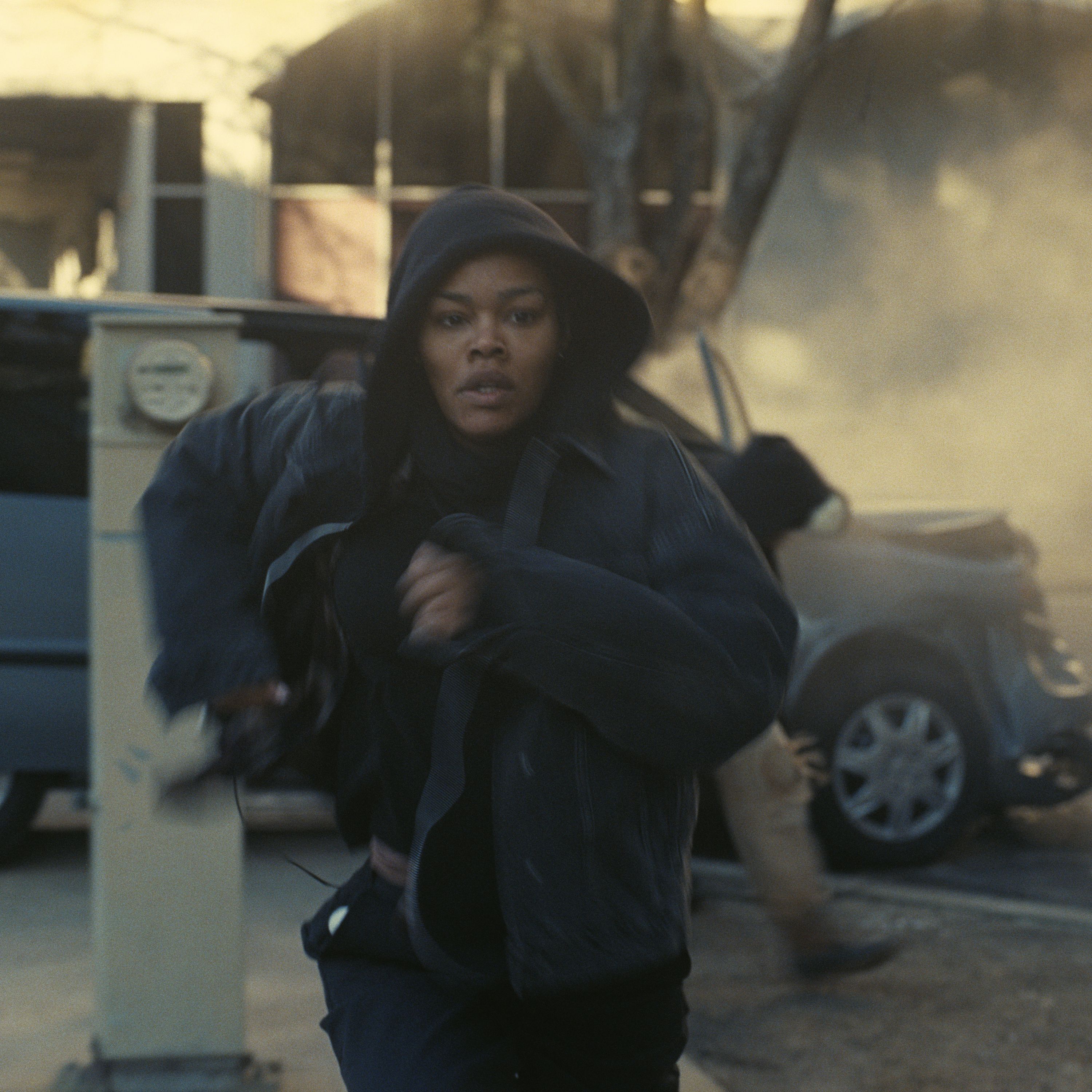
All Of It with Alison Stewart
Oscar-Nom'd Editor Andy Jurgensen On 'One Battle After Another'
00:24:14
Loading summary
Transcript87 lines
- [00:08]
A
This is all of it. I'm Alison Stewart. We have an announcement about our February Get Lit with all of it book club event. This month we are reading the Wilderness by Angela Flournoy. The story follows a group of women and their friendship through good times and bad in New York City and la. It's about chosen family so social justice and navigating the challenging wilderness of young adulthood. Angela Flournoy will be at the New York Public Library for a get lit event on Monday, February 23rd. Tickets are free, but the seats are first come, first serve and they go fast. And we have an exciting update. Our February musical guest hand picked by Angela Flournoy will be jazz musician Emmanuel Wilkins. Wilkins was a nominee for best alternative Jazz album at the Grammys just last weekend. That's a live recording from our studio of Wilkins playing the song Motion from that album. And on February 23rd, you will get to see him live at the Stavros Niarchos Foundation Library. Angela Flournoy says of him on I love Emanuel Wilkins. So head to wnyc.org getlit to get your tickets now and to find out how to borrow your copy from our partners at the New York Public Library. That's in the future. Now let's get this hour started with One Battle after Another. Oscar nominated film editor Andy Jurgensen had a lot to contend with when working on Paul Thomas Anderson's One Battle After Another. There are intense action sequences. There are funny moments coupled with terrifying moments. There's a large ensemble cast and lots of plot lines. There are big stars like Leo DiCaprio and newcomers like Chase Infinity. There are larger than life characters like the revolutionary Perfidia Beverly Hills and the evil yet kind of stupid Colonel Lockjaw. He had to take all of those elements and make a story about a former revolutionary and his search for a kidnapped daughter. One Battle after another earned 13 total nominations. It's up for best picture and Andy Jurgensen has earned his very first Oscar nomination. Yay. Andy joins me now as part of our ongoing series the Big Picture, which highlights Oscar nominees who worked behind the camera to make movie magic. Congratulations, first of all, Andy.
- [02:44]
B
Thank you very much. I appreciate it.
- [02:46]
A
You've worked with PTA Paul Thomas Anderson for a number of years. What have you learned about how he works that helped you on this project?
- [02:56]
B
Well, it's interesting. So, yeah, I've been working with him for like 12 years now. I actually started as an assistant editor on Inherent Vice and have kind of worked on all of the projects since, including some of the Music videos that he's done. I just feel like I've gotten a good sense of, you know, what he likes and what he doesn't like, his sensibilities. You know, you're talking. You were talking about, like, the mix of genres. That's something that he really does so well in his movies. You know, there's always humor. There's always, you know, sometimes like, absurdity. There's not really action. This is kind of his first foray into action. But, you know, there always is usually a family element too. So, like, kind of an emotional core. And that was something that was really important in this movie, was like, kind of making sure that this father daughter bond was like the emotional core of the movie. And then everything else is kind of swirling around it. So I just feel like we. We kind of just get each other, you know, and like we kind of have developed a shorthand of how we work and, you know, how we judge performances and just. It's an instinct, you know, And I feel like we just kind of become in tune.
- [04:18]
A
What's the first thing you do when you get the script?
- [04:23]
B
Well, I actually. So he. When he gave me the script, he actually didn't tell me anything about it.
- [04:28]
A
Oh, interesting.
- [04:29]
B
I. He was like, here's the script.
- [04:31]
A
And.
- [04:33]
B
Which is, I think, good. You know, it's better that way. And I read it. I actually read it twice kind of in one sitting, because I didn't really know. You know, as you're reading it, just like when you're watching the movie, you kind of don't under. Quite. Under quite get that. You're gonna. That there's these, like, black comedy elements, you know, or these kind of satirical elements. So I remember getting to like, the Christmas adventure scenes and being like, okay, I kind of see now the tone of the movie. And so I read it through and then kind of re. Watched it or reread it again kind of in that light. But yeah, I mean, I, you know, going back to, you know, when I had. I had my meeting with them, you know, maybe a couple days later, we were just sitting at like, you know, the kitchen table, and we were of course, you know, talking about the father daughter core being the most important thing. But yeah, I mean, there's elements of. It's kind of like a Tarantino movie in a way, like his take on that and like, Coen brothers elements.
- [05:39]
A
I see the Coen brothers, for sure.
- [05:40]
B
No, and obviously it is based on a pinch on book, like, roughly. So there's kind of those absurd, like, names that you would get in, in a Pynchon novel. But it still has like the Paulisms we call it, you know, the things that are very appallism.
- [05:58]
A
What's a Paulism?
- [05:59]
B
Yeah, you know, it's like kind of the offbeat kind of quirky. Not quirky, because that's not a good word to use these days. But kind of something's a little off, you know, like unconventional. But I don't know, it's a Polishim. It's a. I think, I think your listeners would know what that would be.
- [06:20]
A
They would understand. It's like, I don't know, wearing two of different colored socks maybe. I don't know, something like that.
- [06:27]
B
Yeah, there's something that's. I don't know, it's. All of his movies are not like too polished or overly polished. You know, there's kind of like there's imperfections throughout and I think that that's something that he likes to kind of keep that kind of stuff in because it just makes, it makes the movie feel more human, you know.
- [06:47]
A
Is that hard for you as an editor?
- [06:51]
B
Sometimes. I mean, yeah, sometimes you're like, oh, you know, I really want to fix this camera bump or something like that. And of course we'll fix something that's really bad. But you know, sometimes let's say if an actor maybe stumbles over a line or something trips them up or they get distracted by something that sometimes can add something interesting to the performance, you know, so it's like those kind of little moments or things that they maybe do with their mouth, you know, or walks or like maybe trips or like things that are just feel more real. We always like to kind of see what we can use, you know. You know, even in the. Just the production tracks, the tracks that we record on set. Sometimes there's just weird sounds that a chair will make or things that were on set, like a, you know, weird wood. Someone stepped on something, something weird happened. He's always like, let's keep that in us. Try to keep it in. Just because it feels it adds extra.
- [07:55]
A
Texture to it actually.
- [07:56]
B
Yes, it's a texture thing.
- [07:58]
A
Yeah. My guest is Oscar nominated editor, one of one battle after another, Andy Jurgensen. We're discussing how he helped craft the best picture nominee as part of our annual Oscar series, the Big Picture. Okay, so this film was shot on VistaVision, which appeared in several films recently like the Brutalist last year and I.
- [08:15]
C
Think Begonia this year.
- [08:17]
A
And with it, you know, we just.
- [08:18]
C
Get to see more.
- [08:20]
A
We get to see a lot of Everything. What does that mean for you as an editor?
- [08:27]
B
Well, you know, VistaVision was something that he had kind of been experimenting with. We shot this. It's kind of like a 15 minute like music video thing with Netflix for Tom York called Anima. It was kind of three songs together and we shot one section of that using a VistaVision camera. Because he was kind of. It was something that he was testing out and it didn't quite work because it was a little out of sync. But that I think started in his mind thinking this would be really cool to shoot with. And what's so interesting about it is that so it's visavision is going through the camera horizontally rather than vertically. It's kind of like a still camera, you know, the old 35 millimeter, like still cameras. It's going through that way. And so that's the size of the negative. So you just get a. You get basically double the size of a normal 35 millimeter motion picture negative. And what you get with that is you also you get instead of just the 185 aspect ratio, which is what we normally see in theaters, you get an extra height and extra top and bottom. And what we could do is we discovered that we could use this Vista Vision camera and we could blow it up to imax. We did some tests beforehand, but we could still do our normal, you know, 185 for normal theaters. But because we were going to be accessing the extra top and bottom, we could translate that into the full 143imax theaters and have like kind of a different kind of experience. And so, yeah, we, you know, we were like multiple cameras that we were using, they were kind of breaking down from time to time, but we were just doing the best we could. We actually traveled with a VistaVision projector on location. We would send film down to PhotoChem, which is in Los Angeles, kind of the only place that you can process and print film nowadays. And we would send it back to wherever we were on set. And I would traveled with the production and we would have daily screenings in VistaVision, you know, so Analog review the footage. Oh yeah. Oh yeah. Paul's very into Analog. Yep. So we did that and it kind of gave us an idea of just what it would look like big. And it kind of. That was the beginning of us ultimately doing special VistaVision screenings which we were able to do one in Los Angeles, one in New York and one in London, which kind of mirrored like how we originally saw the movie in dailies. And then we could still do imax and we could just. Still. And then we also converted to 70 millimeter. So, you know, it just. This movie called for a grander scope. You know, like just kind of just bigger images. And, you know, especially all the. The back tank cross with Sensei and. And Bob, like, that sequence and the riots, like, that felt really. It felt great to be big. And then, of course, the end chase, we knew that that was going to look amazing on IMAX and VistaVision. So it. It was a dream. I mean, it's. I'm so happy. You know, he really pushed for it and technically it was. It was difficult at times, but luckily we were able to pull it off.
- [12:01]
C
When you're editing, did you start editing while the film was being filmed or did you wait till it was finished?
- [12:07]
B
Yeah. Yes. So typically an editor's on during production just to start kind of, you know, assessing the footage, just doing assembly. And, you know, I would, since I was on set with these, with. To kind of run these daily screenings, I would be taking notes of things that Paul liked, didn't like, things that we had. The whole crew or whoever wanted to come as part of the crew could come to these screenings. So, you know, we could kind of judge laughs or which things kind of were working with the audience.
- [12:41]
A
Oh, that's interesting.
- [12:42]
B
Little small audience. Yeah. So then, you know, we could be like, that's great. That's the moment. We're going to put that in the movie. So while they're shooting, then I could be kind of assembling the movie digitally on the Avid and just start building stuff. And then we actually had a hiatus. We shot like a. Maybe for like a month and a half. And we had a hiatus because we were waiting for Benicio to be finished with Venetian Scheme. So Paul and I had like two months to kind of cut the stuff we had already shot and kind of fine tune it. And that really helped, you know, figure out kind of the pace of the movie and figure out things that we needed to shoot and kind of gave us a head start. And then we. Then the second half is when we. We shot the Sisters of the Baby Beaver and then the final chase and then the. The Benicio section.
- [13:36]
A
What did you just. What did you discover during that sort of, quote, time off that you and Paul, what did you discover about the film and about its pacing?
- [13:45]
B
Well, we had a lot of footage from the prologue, you know, which is like the first 20, 25 minutes. So what I think we really learned was it kind of set what the pace of the whole movie was going to be like. Because we had to kind of figure out the speed and the pace of the prologue, which was tricky because you're setting up the French 75. You're setting up Perfidia. She's such an important character that is going to kind of lives through the entire movie. Even though we don't really see her, we feel her sort of. The prologue has got to be substantial enough, but it also can't be too long because we have, like, the whole second half of the movie, you know, so it really. It made us think about how we could, you know, overlap audio and kind of prelap audio and kind of show passage of time. So it kind of set the. I don't want to say it set the whole pace of the movie, but it kind of showed how we were going to kind of jump into this momentum, you know, kind of throw. Throw the audience into the story and then figure out, you know, as then we were continuing the production process, like, figuring out where you could kind of build the tension and build things up and up and up and up. But then you need to have a scene where the audience can breathe, you know, like, kind of relax for a second and laugh or whatever it is, and then, like, be able to build it up again. So you. It kind of has to be this up and down, because if it's. If it's at 100% the whole movie, it's not gonna be as effective.
- [15:29]
A
Yeah.
- [15:30]
C
Well, let's talk about editing humor into the theme. It's also a very funny movie, I should say. Let's listen to a little bit. This is Bob and Cenci, played by Leonardo DiCaprio and Benicio del Toro. In this clip, you can hear that Bob is on the phone with one of the revolutionaries. He's trying to figure out where his daughter's gonna be, and he doesn't remember the codes because he's a little fried, frankly. Let's listen.
- [15:57]
B
Rise and shine.
- [16:00]
D
Bat an eyelash.
- [16:01]
B
Good morning.
- [16:03]
D
There are no hands on the clock.
- [16:05]
B
Why?
- [16:07]
D
Because they're not needed.
- [16:09]
B
What time is it? You know, I don't.
- [16:13]
D
I don't. I don't remember that part. All right, let's just not nitpick over the password stuff. Look, this is Bob Ferguson, all right? You just called my house.
- [16:20]
B
Let's look.
- [16:21]
D
Let's cut the. I need the rendezvous point.
- [16:23]
B
What time is it?
- [16:25]
D
Look, Steve Lockjaw just attacked my home. I. I lost my daughter. This is Bob Ferguson.
- [16:31]
B
You understand?
- [16:32]
D
I don't remember any more of this I don't remember any more of this code speak. Right, let's just get on with. What is the rendezvous point?
- [16:38]
C
Was that as funny on paper as it is in the film?
- [16:44]
B
Yeah, it was funny, but, you know, just Leo brought so much to it. And the other actor, too, playing Josh. Yeah. I mean, that scene works so well, I think, because of all of Leo's, like, expressions. Yeah. The frustrations that he's showing and, like, kind of screaming into the phone silently and also sorts of stuff.
- [17:11]
C
I'm sorry, did you have a lot of takes of that?
- [17:14]
B
We had, like, a good amount, but I think we really kind of honed in on, like, a couple, you know, it. Sometimes if you cut to all the different takes, you can tell that it's kind of manipulated too much. Oh, interesting. So we. We kind of had, like, a couple, I think, that were, like, the best ones, and. And Josh, the guy on the phone, was on set, like, in the other room, so they could really banter back and forth and kind of, you know, change things. So it was nice. I don't think, you know, they had rehearsed a little bit, but they just kind of. I think Paul kind of just like, let them loose and they. They came up with lines and various things. But I mean, that. Honestly, that. That. That scene and that sequence, the Beniso sequence kind of came together pretty quickly, I will say, just because everyone was so good and the cameras moving around in the space and we kind of. We had kind of control over that entire building. So, like, the camera could move around. We just had so much energy. And it was. I know, it's. It's. It's a dream when you have just footage with, like, so much energy and momentum and, like, the actors are just giving it their all because you're. It's not like you're hunting for, like, the good moments. There were just so many good gems. And so you're starting at already a high point, and then you're just, like, trying to make it even better.
- [18:38]
C
Some of the scenes in this movie are chaotic, especially when Bob goes with scentsy to this building and it's filled with a bunch of people that Sensei Benicio Del Toro is hiding, and he wants to introduce Bob to each of them. People are coming and going. Bob's totally stressed. Let's listen to a quick moment of that scene and we'll navigate it on the other side.
- [18:58]
D
What's the tracer calls? What's the plan? What's the plan? Bg, what's the plan? I'm thinking Is that my weapon?
- [19:04]
E
Hang on.
- [19:04]
B
What's the plan?
- [19:05]
D
We gotta go, man.
- [19:06]
A
We gotta go.
- [19:06]
D
I'm gonna take him up on the roof across to my car on Laughing's Alley. Here are my keys. You drop them off. You call me Latino Heat.
- [19:12]
A
Come with me.
- [19:13]
C
No, no, no, man.
- [19:13]
D
I'm not going with them. No, I'm not going with them. I'm supposed to go with you. I need you, brother.
- [19:19]
B
Sensei.
- [19:19]
D
Sensei.
- [19:20]
A
Sensei, please.
- [19:20]
D
Courage, Bob.
- [19:22]
C
Courage.
- [19:27]
B
Yeah.
- [19:29]
A
Thank you.
- [19:30]
D
Hey, thank you, Sensei. Thank you, Sensei. Thank you.
- [19:35]
A
How do you edit a scene that has so much going on? Where do you start?
- [19:42]
B
You start by watching all the dailies. You just instinctually, you just feel you mark the things that pop out at you. That's how, you know how I start. At least the things that feel real feel. I don't know, it just like. It just almost like, comes out at the screen at you, and it's like this, you know, me, me, me. So you just start with those things and, you know, it's. It's. It's not going to come together perfect on the first try. So it's. You always just have to. It's an evolution, you know, so you start with a couple things that you really like, and then you are like, okay, well, there's this other thing I want to try to fit in. So how do I fit that in? By, you know, it's a puzzle piece. You know, they're a puzzle. So you have all these pieces, and you're trying to figure out the best version of what the scene could be.
- [20:34]
A
I'm curious about a convent scene with Regina Hall. It seemed like there was more to that character than we got to see. Was there more to that character? Was there more to the convention?
- [20:49]
B
There wasn't. There was, like, a little bit more at the convent, but it wasn't really with Regina's character. There was. There was some scenes. You remember the. Like, the young nun that takes Willa into her, like, the room. There was a scene at a kind of breakfast table where there's kind of a standoff between her and Willa. But it just. The thing is, at that point in the movie, like, we've already gone through so much. It's like we. We kind of had to breeze through that a little bit, and we kind of came to the realization that, you know, once they're at the. At the convent, and once Lockjaw and his team figure out where they are, it's like they're so all powerful, they're gonna fit they're gonna get there. They're gonna get in there, you know? Cause I think even in the script there was. There was. We saw there was like a scene where the nuns were like fighting with the soldiers and the guns and all this whole, like another standoff. But we kind of realized, you know what? We don't need that. It's like he's going to overpower them and he's going to get Willa. He's that powerful. So it's kind of knowing where you can kind of jump time and move along with the story that's important. There was a little bit more of Deandra in the prologue that we had to get rid of. Again, that was trying to figure out the perfect length of that prologue and just navigating what the important parts were. There was a few bits of her that had to go, but we tried to keep her alive as much as possible. And that interrogation scene between Deandra and Danvers, who's like the military guy with Lockjaw, I think gave her a lot. We actually didn't have that in the movie at one point. And then it came back as that DNA test was kind of evolving. We ended up using it as a way to cross cut so that we could kind of reorder stuff that happened in the DNA test scene. But it kind of ended up being a nice contrast between Willa and Lockjaw in the church and then Deandra and Danvers and just kind of a different dynamic. And. Yeah, I mean, it's a sad ending to Deandra's character, unfortunately, even though she, you know, is, you know, kind of becomes kind of a mother figure to Willa at the end. You know, in a sense, this is.
- [23:26]
C
Your first Oscar nomination. How'd you hear?
- [23:29]
B
Thank you. I actually was at Skywalker Ranch because we had done a screening the night before and so we were staying over there. And so I was actually exhausted because we had done two screenings. And so the next morning I woke up. I woke up early, but I had like 50 text messages. So. And then I like, you know, read and found out. So it was very exciting, but it was fun because I was there with, with Chase and with pa, and so we kind of got to celebrate that morning.
- [23:58]
C
My guest has been Oscar nominated editor of One Battle After Another, Andy Jurgensen. He was part of our series the Big Picture. Congratulations again to you and thanks for being with us.
- [24:12]
B
Thank you, Alison. I appreciate it. This was fun. Lifelock, how can I help?
- [24:17]
C
The IRS said I filed my return.
- [24:18]
F
But I haven't 1 in 4 taxpaying Americans has paid the price of identity fraud.
- [24:23]
C
What do I do?
- [24:24]
D
My refund though.
- [24:25]
B
I'm freaking out. Don't worry, I can fix this.
- [24:27]
F
LifeLock fixes identity theft guaranteed and gets your money back with up to $3 million in coverage.
- [24:32]
B
I'm so relieved. No problem. I'll be with you every step of the way.
- [24:36]
F
One in four was a fraud. Paying American not anymore. Save up to 40% your first year. Visit lifelock.com Specialoffer terms apply.
- [24:44]
E
Since WNYC's first broadcast in 1924, we've been dedicated to creating the kind of content we know the world needs. In addition to this award winning reporting, your sponsorship also supports inspiring storytelling and extraordinary music that is free and accessible to all. To get in touch and find out more, visit sponsorship.wnyc.org.