Loading summary
Transcript72 lines
- [00:01]
Wagner Moura
With the Venmo Debit card. A taco in one hand and ordering a ride in the other means you're stacking your rewards. Nice. Get up to 5% cash back with Venmo Stash on your favorite brands when you pay with your Venmo Debit card. From takeout to ride shares, entertainment and more, pick a bundle with your go tos and start earning cash back at those brands. Venmo Stash Bundle terms and exclusions apply. See terms at venmo me stashterms max $100 cash back per month one second you're enjoying your day off, the next your phone buzzes, a window's been broken at home, you're miles away. In one second, everything can change. That's why ADT's professionally installed security systems monitor your home 24 7. They're backed by the most company operated monitoring centers in the industry, so you're always supported during an emergency. When every second Counts, count on ADT. Visit ADT.com to learn more. There's an SUV that turns the unthinkable into the unforgettable. The new Nissan Pathfinder. Built for big adventures and all that family chaos. It's powered by a strong V6 engine with a nine speed automatic transmission. Inside, it's rugged and capable, but still premium and tech forward with room for up to eight passengers. It's also available with seven passenger seating and second row captain's chairs with massive hauling capability. Now you can bring all the gear you and your family need for unforgettable adventures. The new V6 Nissan Pathfinder power your adventure.
- [01:37]
Alison Stewart
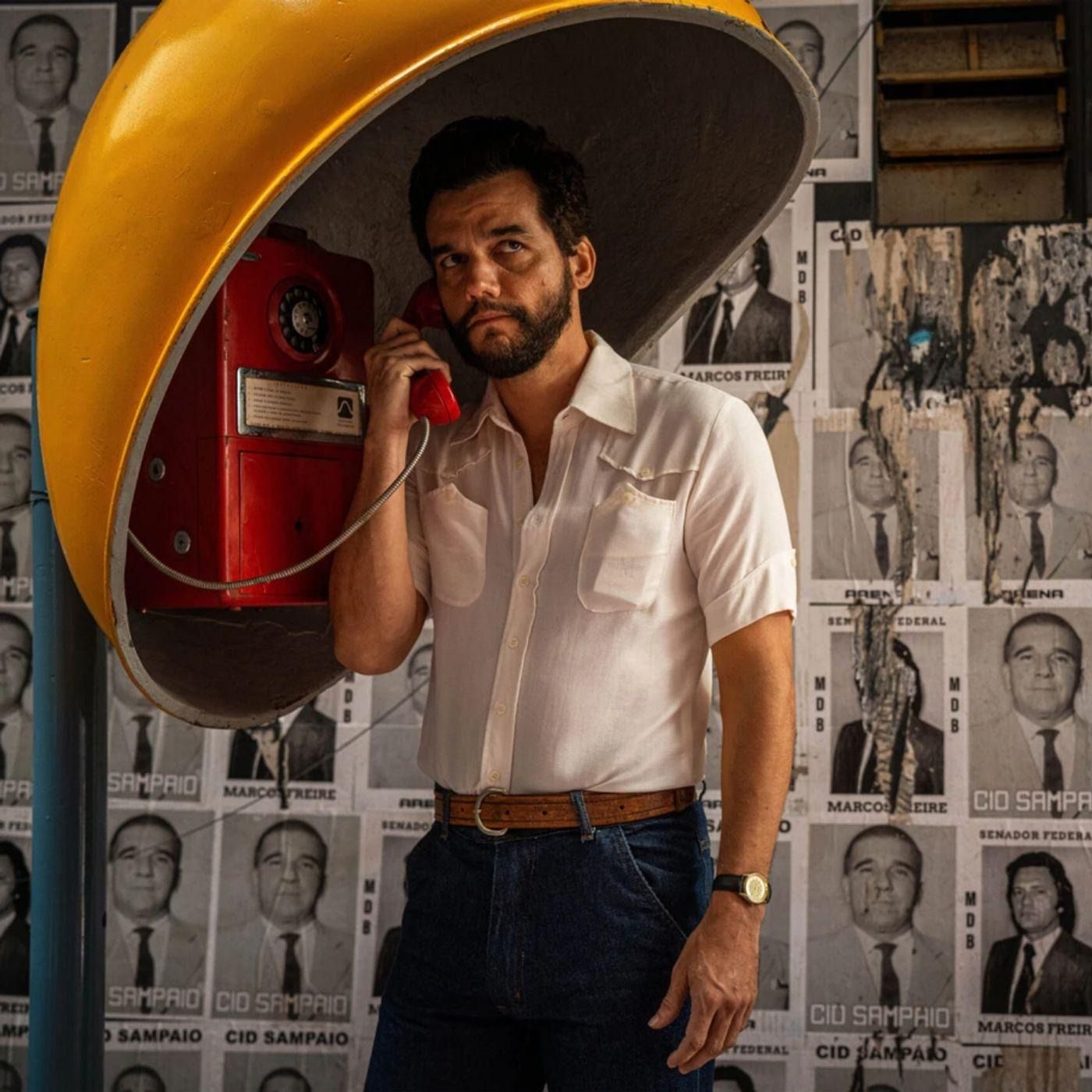
This is all of it on wnyc. I'm Alison Stewart. The Oscars are this Sunday and we've been speaking with some nominees in anticipation of the awards ceremony. In previous weeks, we talked to Blue Moon screenwriter Robert Kaplow, Hamnet production designer Fiona Crombie, Sinner cinematographer Autumn Durrad, Arkhipa, among others. As part of our series the Big Picture Today, the political thriller the Secret Agent, it tells the story of a researcher who was caught up in the crosshairs of a corrupt Brazil in 1977 and now. The film has received four nods, one for international feature Film, Best Picture casting and my guest Wagner Mora is nominated for best Actor in a lead role in the middle of a military dictatorship. Wagner's character is desperate to reunite with his young son, but he's been forced to leave the boy with his grandparents because he knows he is a wanted man. While in hiding, he finds a kind of sanctuary in a small community of dissidents overseen by a tiny but mighty matriarch named Dona Sebastiana. There's a slow escalation of tension and danger that begins almost immediately. But what makes the film stand out is its thread of magical surrealism and. And humor. Wagner and director Kleberman Docefilo are known to make political films with a message. The Hollywood Reporter called it one of the best films of the year, while Variety described it as dazzling. The Secret Agent is showing in theaters now. The Oscars will air this Sunday, March 15, at 7pm on ABC and Hulu, Wagner and Filo join me to talk about the film shortly after its release. I began by asking the director about filming in his hometown.
- [03:22]
Kleber Mendonça Filho
Well, I actually lived there, so all of my films so far have been shot in Recife in the northeast of Brazil, which is far to the northeast in the Atlantic.
- [03:35]
Alison Stewart
What makes that a good place for your storytelling?
- [03:39]
Kleber Mendonça Filho
Well, I think every city has its own personality, its own secrets. And I happen to come from Recife. It's a city. It's a coastal city. It has a lot of personality. And that's where I have been shooting my films and telling the stories. And I'm happy that after five films, Recife has gets quite a lot of recognition because of the films that I have been making there. And it's a fascinating thing.
- [04:09]
Alison Stewart
What kind of films are you making, the way you said it that way? Well, I think people know, but.
- [04:14]
Kleber Mendonça Filho
Well, you know, I made Aquarius, which with sonja Braga in 2016. Neighboring Sounds is my first feature in 2012 and takes place in one particular street. And the Secret Agent, of course, takes place in the 1970s. My previous film was a documentary called Pictures of Ghosts, about the movie theaters of the past. So I think that when you make a film and you put a lot of yourself into the film, it might work in terms of giving people an idea of what the place is, what it feels like and what it looks like.
- [04:57]
Alison Stewart
Wagner, people will recognize you from Netflix's Narcos playing Pablo Escobar. But you were able to film in your native language.
- [05:04]
Kleber Mendonça Filho
Yeah.
- [05:05]
Alison Stewart
So what does that do for you creatively to be able to speak in Portuguese?
- [05:08]
Wagner Moura
It's great. It's very liberating. I hadn't done a film in my own language for 12 years, and that was a lot. That was a long time. There's many reasons for that that I don't want to waste your time with
- [05:22]
Alison Stewart
all the explanations for public radio. You can get going,
- [05:26]
Wagner Moura
but it's just. Yeah, it's enough to say that it was very liberating to do something in Portuguese.
- [05:33]
Alison Stewart
Does it help you emote more?
- [05:36]
Wagner Moura
You know what I like to say that usually when, I mean, I can. I did Narcos in Spanish, and I've been working here in English as well. But when I speak Portuguese, it feels like that the words, they come out of my mouth with memory. You know what I mean?
- [05:54]
Alison Stewart
My sister speaks Portuguese.
- [05:56]
Kleber Mendonça Filho
She does?
- [05:57]
Alison Stewart
Yeah.
- [05:57]
Wagner Moura
Why?
- [05:58]
Alison Stewart
Because she moved to Martha's Vineyard and they have a large Brazilian population there, and she wanted to. And we speak Spanish a little bit in the household, but it's very different.
- [06:10]
Wagner Moura
Yeah, it's different. It sounds different, especially sometimes. The grammar is sort of similar, but it sounds very differently.
- [06:19]
Alison Stewart
Give me an example in the film of something that is a Brazilian moment in the film, that you would have to be from Brazil to know what that moment means.
- [06:31]
Kleber Mendonça Filho
Well, there is a sequence I'm particularly proud of, and it's during the Carnival, and Wagner's character has just received some very bad news. And as he steps out of the cinema where he was, there is a carnival parade or there was a carnival band and people dancing outside. And it takes him a while to adjust, and once he does, he just goes in and parties along with everybody else. I think in Brazil, we have a very strong Carnival culture, and if you have a problem, you'll think about it after Carnival. So that's a very classic, I think, Brazilian thing.
- [07:13]
Alison Stewart
I was thinking of the portraits, all the pushes into portraits. I'm like, I wish I knew who that was. I wish I knew who this person was.
- [07:19]
Wagner Moura
Yeah, that was a dictator. Yeah. Brazil was under a very heavy, heavy dictatorship from 64 to 85. And that guy was one of those.
- [07:33]
Kleber Mendonça Filho
And they love to hang their pictures in public buildings to remind everybody who was in shock who was the boss.
- [07:39]
Alison Stewart
Who was the boss? Wagner. How would you describe Marcelo?
- [07:43]
Wagner Moura
I think he's a man that's sticking with the values that he has when everything around him is saying the opposite of what he believes, which is something that resonates a lot with me. And I think that because this film comes from our shared perplexity, Kleber and I, under the government of Jair Bolsonaro in Brazil from 2018 to 2022. We were both very vocal against that particular government, and we both suffered the consequences of that. So it's hard to keep yourself, like, in your, you know, believing in the things that you believe and saying the things that you believe when you know that you're going to suffer consequences for that. So, yeah, I think this is who Marcelo is. A man who had the courage to. And a regular man, not someone that was trying to overthrow the government or do anything like that. He was just trying to be who he was. And that's something that happens all around the world. Sometimes people are persecuted just by the fact that they are who they are just because of the color of their skin or their religious beliefs or their sexual orientations or things like that.
- [08:57]
Alison Stewart
If you are comfortable telling me you said that you had problems during the period. Could you give me an example of that?
- [09:04]
Wagner Moura
Yes. I directed a film back then called Marigela Marighela. This guy was. He wanted to overthrow the government. He was a real character, a real person in the late 60s in Brazilian history. Yeah, he. He was the leader of the armed resistance against the dictatorship in Brazil. He got shot, he died. And so I directed a film about him because I wanted to bring his. Because his name was erased from Brazilian history, and I wanted to bring him back to our imaginary. And, you know, Bolsonaro praised the dictatorship. He thought that the dictatorship was great. He brought back the values of the dictatorship during his government. He loved torturers and killers and all those guys that did despicable things to civilians in Brazil. So therefore, my film was something that he didn't connect with. So my film premiered in Berlin in 2019, and I could only release the film in Brazil in 2021 after a big fight. You know, he just made it impossible for us to release the film there.
- [10:19]
Alison Stewart
Klaver, how would you describe Marcelo as a character, and what were some of his flaws that you had to build into the character?
- [10:29]
Kleber Mendonça Filho
Well, I always thought that Marcelo should be a classic hero. I even thought. And we discussed there was a Hitchcock film called north by Northwest from 1959. Very different kind of film and very different tone, but Cary Grant in that. In that film, he's always reacting to the most absurd situations which are. Which he finds himself into. And he's very easy to relate to. And this is something that I always saw in Wagner Moden as an actor and as a star. He has the charisma he has. He's easy to relate to what's happening to him just by looking at him behaving and reacting to situations which in the beginning are quite mysterious and which the film will gradually reveal. So I think he's a good man. He's a scientist, he's an academic, works at a university, and everything he does is right. But when things are turned upside down in a regime where the notion of democracy is kind of Lost. He can be in the crosshairs of off balance. In a way, everything is off balance, but you're still behaving and you're still thinking straight the way you think things should be done. And I'm not sure he has. I mean, he's a regular man. And we are talking about a film that takes place 50 years ago. So I really wanted some of the roughness of, of, you know, society and the way that, you know, people behave would come through as a piece of history. And there is a wonderful, there is a wonderful discussion with his father in law at some point, which puts a big question mark about, you know, his behavior with, as a husband. But of course, in Brazil it became a huge discussion because his people say, no, he was great. No, he wasn't. And that is, I think it's an interesting discussion about, you know, behavior.
- [12:46]
Alison Stewart
Do you think that?
- [12:46]
Kleber Mendonça Filho
But I think he's a great, great character. And in my mind he's Wagner's best character and he has done some very iconic characters in his career.
- [12:58]
Alison Stewart
Wagner, do you think Marcelo has flaws?
- [13:00]
Wagner Moura
I think he does, yeah, of course. Otherwise he wouldn't be such an interesting character.
- [13:05]
Kleber Mendonça Filho
Right?
- [13:05]
Wagner Moura
Yeah. But, you know, but one thing that I like about Klebers film is that he doesn't, he never spoon feed the audience with answers, you know, so like this one is like, it's a question, you know, was he faithful to his wife? Maybe. And I myself, I don't want to answer that question as well. I think that there's so many things that's great to allow people to, to have their own takes on it. Right.
- [13:35]
Alison Stewart
Wagner, from the very beginning, the audience senses there's danger around. Even though you're kind of stoic, there's danger around. But he's going to go home and see his son. His son Fernando. What is driving him to see his son?
- [13:51]
Wagner Moura
He's a father. I mean, for me, I mean this. Every time I play a character, I, I tend to think that I'm sort of playing a version of myself, you know, or at least I'm bringing a lot of myself to the characters. And being a father is the most important part of my own life. I could say that being an artist also defines me somehow. But being a father is bigger than anything else. So he is someone who is. His drive is to protect that kid, you know, that he was forced to be away from. So yeah, I think the kid is the most important thing. That's why his behavior throughout the film, he can't call attention to himself. He cannot React to all the injustices that happens to him, that happened to him in an explosive way. He has to, you know, be stoic like you said. Somehow, in order to protect that boy.
- [14:54]
Alison Stewart
He takes refuge at this home for people who need a place to stay. And there was this one moment in the film where they use the term refugee and he says, we don't use that term. Right. What does that term mean at this time to those people?
- [15:12]
Kleber Mendonça Filho
Well, there is this wonderful house which is actually a small building run by a mother hen of a character. Her name is Sebastian. She's a wonderful, wonderful character in the film. She's a star now in Brazil and
- [15:29]
Alison Stewart
she, she's like this 80 year old woman. She's tiny. She smokes like, she sounds like she smokes 14 packs a day.
- [15:35]
Wagner Moura
That's what she does. Yeah, she smokes, she smokes.
- [15:38]
Alison Stewart
I'm sorry, I wanted to give people a visual of her.
- [15:40]
Kleber Mendonça Filho
Well, yeah, and then she takes care of people who find themselves in kind of difficult situations in those times. You could be a student and become persecuted. You could be a wife with a child, which is the case of Claudia, played by Yahmila Gediz in the film. She probably had some domestic violence issues because of disagreements in politics. There are a number of characters and they all find themselves in this place. And so many people react to that part of the film. Because the film is a thriller. Some of it can be quite tense and there is, at one point there is some violence and brutality, but there is also a lot of love in the film. And the love comes from, you know, those people being together and finding solace and finding support in each other. And it was so amazing to work with those characters and with those actors and of course with Sebastiana, who's. She's quite, she's quite a character as a person. A wonderful non professional actress who is a success all over the world where the film screens. And to see her interact with Wagner in her scenes is always such a pleasure. You can see Wagner reacting in the most natural.
- [17:13]
Wagner Moura
Like myself, like, oh my God. I mean, I was in. But the first film, the first scene that I shot in the film was the scene where she shows me the house and you can see me in the film that it's me like in awe with that woman, you know, she's just wonderful.
- [17:31]
Alison Stewart
What did she teach you, Wagner, about acting or about life?
- [17:37]
Wagner Moura
Yeah, she reinforces what it's like the cliche of what it is to be, to be an actor, which is to be present, to be there. And she's just that, you know, like she just brings herself to the character and she's just there as herself. And she also doesn't get stuck in an idea of what a scene should be. You know, she can go anywhere. Every take was different because she was like, oh, this is different now. So she kept everything alive. And this is the thing that I like most when I'm working of what I do actually as an actor is like to be able to, after the. After the director says action, to look at the other actors eyes and go like, oh, let's go. And this can go anywhere.
- [18:27]
Kleber Mendonça Filho
She also, I think she also showed me that the notion of comedy in a film is not something that you should provoke. You shouldn't shoot a scene thinking that it will be funny, but you should be open to someone like her, to bringing the humor out of the situation. And I was always astonished at how funny her scenes are. But she's never trying to be funny. She simply is funny. And there are the funny ha ha scenes and there are the other funny scenes which are. You just have the pleasure of listening to her. And that is something that's quite rare
- [19:10]
Alison Stewart
and it's kind of nice. There's this found family, this group of people who are together.
- [19:15]
Kleber Mendonça Filho
A functional family. Yeah.
- [19:18]
Alison Stewart
I'm speaking with Wagner Mora and Clay Ramon Docefila. We're talking about their new film, the Secret Agent. I want to talk about sort of the surreal humor in the film. I don't want to give too much away about the film, but there's this. You're in, it's tense and then you discover, all right, we're gonna say it's a dismembered leg. Right. And the dismembered leg is going around kicking people in the butt and wherever. Right. It's part of the lure of the leg. This leg that's been in the paper non stop. After being in such a real film, such a tense film, and then having this moment, what were you thinking?
- [20:04]
Wagner Moura
And the leg is hairy.
- [20:05]
Alison Stewart
Hairy leg? Yes.
- [20:07]
Kleber Mendonça Filho
Well, at the time in 1975, the local journalists, they were having a very hard time with censorship. So they couldn't really report on things that the police did or the military police did. And they came up with a code, so they came up with the hairy leg. So instead of saying that the police last night attacked people in the park, people who happened to be in the park very late at night, they would write. And this came out in the newspaper. And I saw during the research, I found the original articles. They said that the hairy Leg attacked people in the park. And this, of course, became a phenomenon. It became an urban legend. That's how urban legends begin. That's how they are born. And they were big on the radio, and they were big on people's imaginations. And myself, as a little kid, my mother read one of the Harry Lang stories from the newspaper over breakfast to myself and to my brother, and she said, but this is so odd. This is not in the literary section. This is in the metro section of the newspaper. And I think it's a fascinating way of dealing with authoritarians and dealing with censorship. Say it. You gotta tell what happened. But then you can use a crazy character that exists only in the imagination to express truth, to wink, wink, nudge, nudge.
- [21:42]
Alison Stewart
You know what this is about?
- [21:43]
Kleber Mendonça Filho
Yes.
- [21:45]
Alison Stewart
The film Jaws is in this movie a lot. It's 1977. Was it just that it was popular at the time? Is it a metaphor for something lurking beneath the water that could drown?
- [21:59]
Kleber Mendonça Filho
That's a good question. I think, you know, cinema, music, books, they are part of our lives. When I think of 1987, I remember Prince's Sign of the Times, which is an album that I love. 1975 was a very strong year because Jaws came out and it became a worldwide phenomenon, and also in Brazil, and also in Recife. And Recife happens to be a coastal city which has its own shock problem. So I think adding the two elements, I came up with, you know, the very loving, I think, mentions of Jaws in the film and the little boy, Wagner's son in the film, he's pretty much myself. I only got to see Jaws when I was 14 years old. And as a kid, I used to draw the artwork for the film, which of course is iconic. And yeah, I think films, movies are part of time. They're like time stamps for our lives. And I think that explains why Jaws is part of the heart of this film.
- [23:17]
Alison Stewart
Again, I don't want to give too much away, but we find out what happens to Marcelo in a very quiet way. Why was that important to you, Wagner?
- [23:29]
Wagner Moura
I think the way we discover what happens to him is in tune with what the entire film is about. You know, like I said before, Klebert does not spoon feed the audience with answers. We don't know the three things that Dona Sebastiana said that she did in Italy. We don't know how Marcelo, how Armando's wife died. We don't know the past of Udo character that well. So it's interesting to see that the way we discover what happens to Marcelo Armando is not obvious as well. And there's another thing. This is a film about memory also, and about the lack of memory and the way we discovered what happened to him. For me, it's a way that Kleber found to talk about infamy as well, you know, because they killed. I don't want to give too much away spoilers here about the film, but is that as if like they did two bad things to him, you know,
- [24:33]
Alison Stewart
at the same time, I wanted to ask before we wrap, this was a film you did with Udo Kier, who recently passed away. What would you want people to know about him?
- [24:44]
Kleber Mendonça Filho
Well, I was lucky, very lucky, because I got to shoot two films with Udo. The first one was Bakorao in 2019. And I loved him so much as a person, as an artist, as an actor, that he was back for the Secret Agent where he has a short but very strong sequence. And he came last year to stay with us. He stayed eight days. We were together at the Aero in Santa Monica in late September where he saw the film for the first time. He was great. We had a great time. Wudu made over 200 films and he had great taste, he had great sense of humor. He was the most loving, crazy German I've ever met in my life. And I was saddened to hear of his passing. But in a way, I remember him with a lot of. With great fondness. And he was someone who loved life very much. And I love him. And thank you very much for bringing his name in our conversation.
- [25:51]
Alison Stewart
We got a nice text here that says thank you for spotlighting Brazilian cinema. Going to see Secret Agent tonight at the Angelica. Can't wait.
- [25:58]
Wagner Moura
We're gonna be there.
- [25:59]
Kleber Mendonça Filho
I'd just like to say something. We just heard that the film got best International Film at the New York Film Critics Circle. And best Actor for Wagner Mora.
- [26:12]
Alison Stewart
We love it.
- [26:13]
Kleber Mendonça Filho
It's a great day. Yeah.
- [26:14]
Alison Stewart
That was my conversation with actor Wagner Mora and director Claiborne and Dosefilo about their Oscar nominated film the Secret Agent. It is showing in theaters now. You won't see the engineer that slams the Nissan Rogue's door 13,920 times. Or the corrosive chamber that simulates 15 years of life in five months. Or the Rogue heat baked for over 300 combined hours. What you will see is a vehicle that can take punch after punch and keep rolling. Nissan, number one in new vehicle quality among mainstream brands by J.D. power. We put it through the worst, so you get its best for J.D. power. 2025 U.S. initial Quality Study Award information, visit jdpower.com awards awards based on 2025 model year. Newer models may be shown.
- [26:54]
Wagner Moura
All right, ladies.
- [26:55]
Alison Stewart
When you've done the work, you want your hydration to do the same. Introducing new Gatorade Lower sugar, now with no artificial flavors, sweeteners or colors and 75% less sugar. And all the electrolytes of regular Gatorade now available nationwide.