← All Of It with Alison Stewart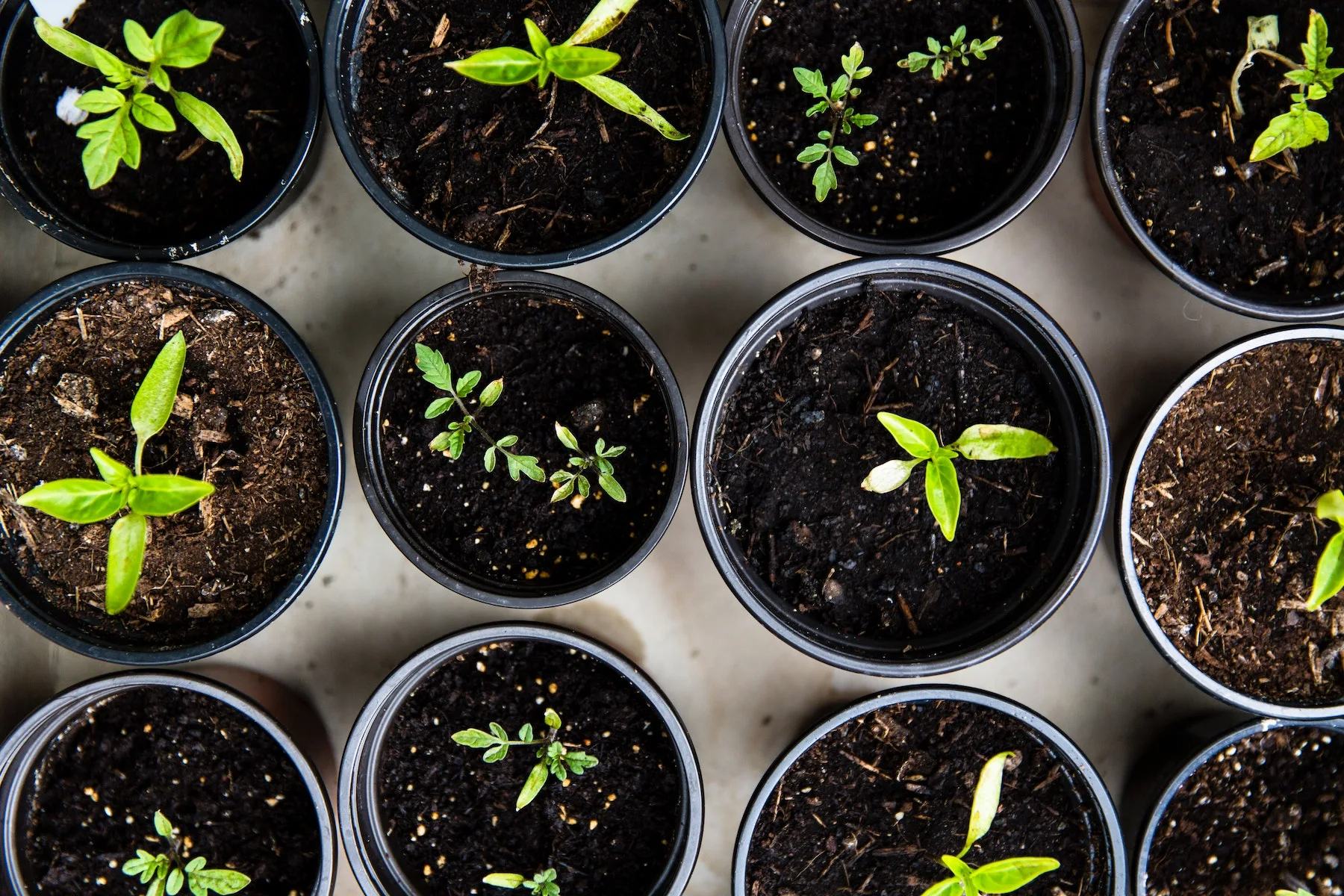
All Of It with Alison Stewart
Plantcare Calls As Spring Approaches
00:20:35
It's time to start thinking about how to help your houseplants and outdoor garden maximize the longer days and warmer weather.
Loading summary
Transcript42 lines
- [00:04]
A
Listener support, WNYC Studios.
- [00:16]
B
You'Re listening to all of it. I'm Matt Katz in for Alison Stewart. I'm grateful you're spending part of your Wednesday with us. And if you're also a listener supporter, yes, we are kicking off our winter fundraiser today. I'm especially grateful to you. Thank you. Just a reminder, tonight is our get lit with all of it book club. We'll be meeting at 6pm at the Stavros Nyarchos Foundation Library. That's the New York Public library branch at 40th street and 5th Avenue. Our guest this month is author Tananarive Dew will be discussing her novel the Reformatory. And the special musical guest is Jake Blunt. Tickets are free and available@wnyc.org get lit. If you can't make it in person, follow along on the live stream again. For more information, head to wnyc.org get lit. That's tonight at 6pm and coming up on the show today, Vulture critic Catherine Van Arendonk is here to preview the spring television season. We'll also hear from Matthew Libatique, the Oscar nominated cinematographer of Maestro. And we'll have a listening party with Grammy nominated Afro Cuban singer composer Daimae Arucena. That's the plan. So let's get this started because the plant doctor is in the house. This is all of it. I'm Matt Katz in for Alison Stewart. It is almost time to begin fretting over the roses in the front yard or the seeds for the fire escape vegetable garden. The days have gotten longer and perhaps you're already seeing some signs of growth as our floral friends have a little extra sunlight to so soak up as the year goes on. Yes folks, spring, it's not quite here, although it is 50 something degrees today. So it sort of feels like spring. And we're getting ready for it. More than ready. So we called up our friend Plant Doctor, Plant doctor Chris Satch, a professor at the New York Botanical Gardens who also has his own plant consultancy business called NYC Plant Help. He does home visits and offers advice and diagnoses about your plants. And he's here in studio to give us all the advice about caring for your plants but managing colder and warmer temperatures, preparing your soil. I got some questions. You have some questions. We're going to take your calls. Hi there Chris.
- [02:40]
A
Hi. How are you doing?
- [02:42]
B
Great. So glad you're here. We have a ton of questions and listeners we want to hear from you. What do you want to know about your spring plants? Maybe you want to know when the best time is to plant a specific plant or how to handle fluctuating temperatures in early spring, you give us a call. 212-433-WNYC. That's 2124-3396-9221-2433-WNYC. Maybe your plant is dying and you're not sure why. Or you want to know what's the best kind of plant you should buy for a certain environment or space, Give us a call. You can also reach us on social media at all of it W nyc. Okay, let's get into Chris. So it's cusping on spring. We're not quite there yet, although, like I said, I don't know if anybody's been outside today, but it does feel warm. I literally did not wear a jacket on the walk over.
- [03:32]
A
Me neither.
- [03:34]
B
What, where are we then at this moment? These late winter, early spring temperature changes. I mean, some days it feels like 25. Other days it feels almost 60. What does this mean for our plants? Are they as thoroughly confused as we are?
- [03:48]
A
They actually know a lot more about what's going on than we do. And it also depends on the plant and it depends on whether you're growing indoors or outdoors. For your indoor plants, you're going to start to see some new growth coming up soon as the days get longer. Believe it or not, we're actually pretty close to the March equinox. So that's when the days are just as long as the nights. And we're about maybe a month away from that, less than a month away from that. So if you aren't seeing some growth now, you should be. Then there's outdoors. Outdoors, the witch hazel. Those trees are all in full bloom. Usually the first ones to come out are witch hazel, skunk, cabbage and crocuses. But then you'll have your other spring ephemerals and bulbs come up as the months go on. But also indoors, you're going to want to start to plant some of your seedlings for transplantation into your gardens later.
- [04:39]
B
How do these plants know that spring is upon us? I mean, it's not like it's been. There's been weeks of warmer weather. What is going on in inside of them to know this? How does that work?
- [04:53]
A
Yeah, so much like we humans have a circadian rhythm, plants also have a circadian rhythm. And even though the trees outside may look like they are not leafy, they may look like they're barren, they may look quite like they're dead, but they're actually quite alive. If you look really closely at most of the trees, you'll notice that the buds are usually like a nice fresh red color, pinkish color, bright brown colors. And what they do is they still photosense light. They can sense the light and they can time the cycles of the day to line up to when they should come out. Now, they don't just take light as a cue, they also take the warming temperatures as a cue as well. So you'll see some very. And some trees do get confused by odd weather patterns. So for example, you know, in the middle of January, in some sort of shaded, maybe north facing courtyards, you might have a cherry blossom tree that randomly is making flowers even through the dead of winter. That's sort of a, that plant got the wrong sort of cues because in certain places it can be more mild than others. And you know, with buildings, you know, they create microclimates in between the buildings and among the buildings and around courtyards and things like that. How close you are to the water also affects how mild the temperature will be. And speaking of water, bodies of water, the Hudson river in the Atlantic Ocean and the Long Island Sound actually modulate our climate such that New York City is in a much warmer planting zone than is upstate. Or even as you start to get north of Westchester county, they're in an entirely different planting zone. We're like a warm 7 to a cold zone 8, whereas the rest of upstate is 7 to 6, all the way up to 5 if you go north enough.
- [06:36]
B
Got it. What about climate change and how plants here might be feeling that or noticing that or adjusting to it?
- [06:43]
A
Oh yeah, they're definitely noticing it. And climate change is happening at quite a fast rate. It's, it's, we're still observing how they're doing things. And I've noticed from my own personal observations, I love watching the cherry blossom trees I've seen In the past five, 10 years, them, you know, popping their buds too early for lack of a better term, coming out. And then we get sort of like a fake out spring here in New York and then it get, we get like some kind of random cold snap at the end of March or at the end of April. And when they get wiped out like that, their entire crop or most of their crop gets wiped out. And that doesn't just have effect on the plants, that also has effect on upstate farms. If we get a late season frost or a surprise frost because the climate is unstable, because it's changing, because the climate doesn't know what to do. Yeah, that does affect Food prices. And that does affect apple yields, apple picking, all the other things that we like to do when we all go upstate.
- [07:41]
B
Let's go to the phone lines. Got a bunch of questions already coming in. Adam and Pelham, I think, wants to ask about daisies. Hi there, Adam.
- [07:49]
A
Hello. Hi. Hello.
- [07:50]
B
You're on the air with the plant. Hello. Yes.
- [07:54]
C
Hey, how you doing?
- [07:54]
B
Doing great. Thanks for calling in.
- [07:56]
A
Hi.
- [07:58]
C
Hi, I'm Adam. I'm from Pelham, New York. And I got a quick question. I have some daisies seeds and some plastic containers. You know, those little ones are about an inch and a half in diameter, and I wanted to fill them with soil and then put the seeds in them and germinate them. So what's the best way for me to do that?
- [08:17]
A
I mean, daisies are pretty easy. You can. You can start them now. Ish. I think this is sort of the beginning, end of when you would start your seeds indoors. Daisies, you can start a little later. You might want to wait a week or two on them, and then you could sow them, I guess. I think what you're describing is a. Is a seed starting tray, like, you know, big, like black plastic tray with the compartments in them. And you just fill the compartments with just regular potting soil. And depending on the type of daisy, you. You'll plant them at different depths. Most of them actually don't get planted very deeply. Maybe it's a quarter inch. Just follow the instructions on the seed packet and make sure you pack the soil tight. I know one. One way that folks who are starting seeds might go wrong is, you know, when you get the bag of soil and you first plant things, it's very loose. You want to compact it, and you want to make sure that you water it right after you plant it with warm water to help with germination. So you want to make sure also that the seed tray is in a warm area, that it's not getting a cold draft. I know a lot of people use what's called heat mats. Plant heat mats. Basically kind of like an iguana heat mat. It's like a black rubber mat with electric lines going through it. And it heats up through the electricity, and it keeps the seeds warm. And you'll set that by your window. So that way they get as much direct light as possible. And some people try to start seeds under lights. That's fine, too. I know that certain plants, like chamomile specifically, I can't think of the other ones off top of my head, but there's a Few plants you got to watch out for that need some kind of light in order to germinate. So seeds like chamomile seeds or very, very thin, like poppy seeds as well, very, very tiny seeds. They generally, you don't plant them at all. You actually just scatter them across the top of the soil and they take the light as a signal to germinate. And then, and that's how they germinate. And it's okay if they splash around a little bit. You know, that's why they have so many of those tiny seeds, because the plant knows that not every seed is going to make it. Right.
- [10:20]
B
Right. Thanks for, thanks for calling, Adam. Chris, in general, is now the right time to start seeding?
- [10:26]
A
I would say so. I would say end of February, first week of March is a great time to start your seeds indoors, especially if you're in a warmer zone like we here in the city are. I would first start with longer term plants or plants that while to get established, like your tomatoes, your bell peppers. If you're trying to grow watermelon, cantaloupes, cucumbers, things like that, I would start maybe the tomatoes and peppers and eggplants first. Then maybe half a week to a week later, then you can start your, your watermelons and cucumbers and things like that. And then you can move on to, you know, your herbs. Your herbs. You kind of want to start more late and of course, you want to be careful because not every plant is transplantable. There are some plants that you may want to start them indoors, but it really is just best to either directly sow them in the ground outside or to just, or just, you know, plant a piece of them in the fall of the previous year. This, these are like root vegetables or bulbs or things like that, like garlic you want to plant last autumn, tulips you want to plant last autumn, you can still plant them in the springtime. They just won't be as robust as if you had planted them in the autumn. But now is a great time.
- [11:36]
B
I think you just answered a question that another caller had, Erin, on the Upper west side. She was wondering if it's too late to plant bulbs and if she can plant bulbs that are two years old right now.
- [11:47]
A
If, if the bulbs are starting to poke some green out. If, if, like, you know how when you buy garlic at the store or you buy an onion at the store, and if you let the onion hang around for too long, you start to see it turning green and wanting to grow. If it's already doing that then just plant it outside. That plant is already ready to be planted outside. And again, it'll, it'll take a hit from, you know, not being able to have been vernalized, but because it's already sprouting, sproute, it's been, you know, vernalized. So it's ready to pop up in the spring.
- [12:16]
B
We got a question via text message. Help. I left my gardenia outside. It's brown but alive.
- [12:24]
A
I don't know what brown but alive means. Brown usually means dead.
- [12:31]
B
Plant, doctor. So yes, you should know there can.
- [12:34]
A
Be some cold damage that can appear brown. I know that for most plants across the board, if it's got some frostbite on it, the leaves will go limp. They'll turn this watercolory purpley, gray brown. As if you mixed purple, gray and brown all together and made it watercolor, that's what the leaves will start to look like and then they'll be limp and you just cut them off. There's no way that the plant can recover that. The only way that the plant can recover is if you make conditions nice enough so that the plant can grow new leaves. And depending on the severity, sometimes you can revive it. If there's some green somewhere around else around the plant, or if there's a bud somewhere else around the plant that's green or has the colors of life in it, then it's possible to bring it back. But gardenias, if it's like the house plant, gardenia type that you get at, you know, grocery stores and hardware stores, that one's not as frost tolerant. So I would keep it indoors. And if it doesn't do anything for a month in a sunny window, then it's dead. Dead.
- [13:33]
B
All right, good. Good to know. I, you know, you said cut it off. Talk to me about pruning for a minute. How can you tell when, when something needs to be pruned in order to revive a plan or just to keep it healthy?
- [13:47]
A
Yeah. I actually had this conversation with a client for NYC Plant Health this morning. We were talking about repotting versus pruning. Because when you have indoor plants and they start to get too big, which is, by the way, a great problem to have if your plants are getting too big. Yeah. You know, you have the option of either repotting the plant so that it can continue to grow larger, or you have the option of pruning it back so that you don't have to repot it. So when you're looking to prune a plant, just make sure that Number one, it's grown larger since you've gotten it. Number two, it's not growing in some kind of weird or awkward way. A lot of times we use pruning to tame plants or to try to make them grow in a way that we want. In fact, the very, very OCD version of that is the art of bonsai, where you really want to control the way that the plant is growing, and you do that by pruning them. But only certain plants can be, you know, have the. Have the stuff to be bonsai. Only certain plants can be bonsai. Yeah.
- [14:49]
B
I was just wondering when. When you do the repotting, how do you make sure you're it's going smoothly and it doesn't traumatize the plants?
- [14:57]
A
Good question. When you repot, I like to let the plant go a little dry before I repot, because if you're working with wet soil, it just gets really, really messy, especially indoors. So I like to let the plant go a little dry. It makes it easier to pull out of the previous pot. Some plants, if they haven't been repotted in over a couple of years, it's probably time to repot those plants. So you definitely want to. The general rule is whenever the media goes bad and you can kind of tell by the color of the medium, you know, when you first plant something, it's like a blackish brown, and then it starts to decompose over time because it's mostly. Most potting soil is made out of peat, and it decomposes over time. And when it starts to become finer and muddier and blacker and it starts to have, like a weird smell, it's definitely time to repot. In fact, that might be over time to repot. But as a general rule, when you first get a plant from the store, the idea is that the store sells it overgrown. So the idea is that within the first two weeks of you getting that plant, you're supposed to repot it, and then after that, it's maybe once a year, once every two years, or if you want to keep it in the same soil, keep it going until the soil starts to get sour.
- [16:13]
B
We're going to go to one more caller before I let you go plant. Dr. D from Yonkers, you're on the air. Hi there, Dan.
- [16:20]
D
Hi, how are you doing?
- [16:21]
B
Great. You're on with the plant. Dr. Chris Setch.
- [16:24]
A
Hi.
- [16:24]
D
Great. Hi. I'm trying to find out about the step after we planted the seeds. So we get the seedlings, and you see all those beautiful seedlings on Those catalogs that look nice and bushy, and then of course, yours start coming up leggy and might not have the best exact environment, plus the transitions to outside. What are the tips that you can give us to have the most robust seedlings that we can so that we can have the best crops that we can get?
- [16:51]
A
So that's a really good question, and this answer is both long and short. So bear with me. First, the seedlings being leggy, legginess, or when a plant is stretching itself too much, is a sign that you're not getting enough light. Where most people go wrong with both seedlings and indoor plants in general is they just do not understand how much light that plants need. Another way that I describe it is that plants are living solar panels. There's no such thing as a low light plant. I know they're often sold like that. It doesn't exist. It just doesn't make sense because a plant is a solar panel. There's no calories in water, there's no calories in soil, there's no calories in air. So the only way that it can get its calories in order to grow leaves and do things is through the sun. So in order to make your seedlings as bushy as possible, you want to blast them with as much direct sun as you possibly can. So that's either a south facing window that's unobstructed, or what I like to do is take a south facing window that's unobstructed and add plant lights to it. Really, really blast those seedlings with plant lights. And if you're unfortunate enough to not have a wonderful south facing window where you can blast them with light, then you can get any of the grow lights that they have, usually for a bulb. And I'm not going to get too deeply into this, but you want either some kind of really good photography bulb that mimics natural sunlight. Those are really, really good. There's also some of the grow plates from some of the cannabis growers that are on the market right now that are fantastic. And they have grow tents as well that double for cannabis as well as starting vegetables. So you might want to check into that. Now, the second part of your question is, what do I do with the seedlings once they start? Keep them watered. Just note that in their tiny little seed starter cells, they will be cramped after a while. They'll eventually start to need more water, more frequently, and they'll start to get taller. There comes a point where maybe they're about four or five inches tall, especially if they're in those little one inch, one and a half inch cubes or two inch cubes, they'll start to. You'll almost need to water them every single day. That's about the time when you should be transplanting them. And if it's still too cold outside, you'll just have to transplant them into larger pots and wait until the weather becomes more favorable after our last frost date. For the ones that are not cold hardy. But if the plants you're growing, like maybe it's kale, maybe it's spinach or something. Spinach is better as directly sown seeds outside anyway. But if you do decide to transplant it, you could, you can get away with about a week or two before the frost date. As long as it's not a hard frost like in the 20s, it can tolerate a light frost.
- [19:31]
B
Thanks D and thank you very much, Chris. I have one question before I let you go. Maybe it's a yes or no question. It's from my wife. She says our plants do much better when they're bunched together. That they, that they communicate with each other and thrive as social creatures. Is there truth or science to that?
- [19:47]
A
Well, plants definitely are social creatures whether we care to admit it or not. I know as humans we like to think that, oh, because I can make noises and I can communicate complex abstract ideas that I'm some kind of better creature. When in fact trees have been communicating through mycelial fungal hyphae networks between tree to tree. There's actually some really good scientific papers that recently came out. You can read about that. Talk about exactly that. If one tree gets cut down in a forest, it actually sends messages to the other trees to heighten their defenses. For better or worse. So plants do communicate. I do think that they do better when they're next to each other. It also helps the microclimate, like the humidity around there be better. That's an anti drying factor. Terrestrial plants really don't care about humidity, but it is nice to have that they do a little bit better there.
- [20:39]
B
Plant Dr. Chris Satch. Thank you so much for joining us on all of it Chris. Really appreciate it.
- [20:43]
A
Thanks. Thanks for having me.
- [20:44]
E
For 140 years MultiCare has been in Washington prioritizing long term solutions, partnering with local communities and expanding access to care. Together we're building a healthier future. Learn more@ multicare.org NYC now delivers breaking news, top headlines and in depth coverage from WNYC and Gothamist every morning, midday and evening. By sponsoring our programming, you'll reach a community of passionate listeners in an uncluttered audio experience. Visit sponsorship.wnyc.org to learn more.