← All Of It with Alison Stewart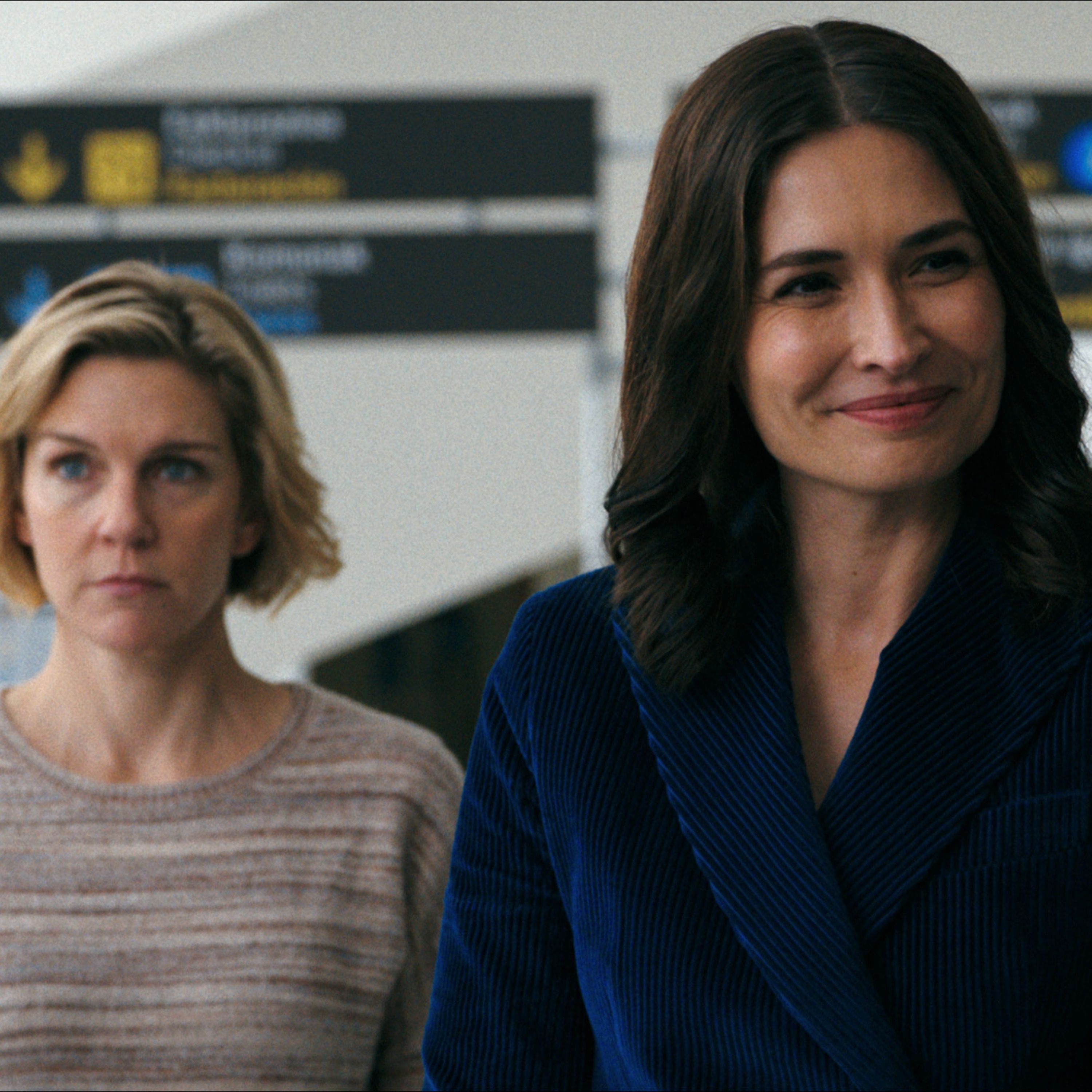
All Of It with Alison Stewart
"Pluribus" Shows A Future Where Everyone’s Happy, and That’s the Problem
00:19:47
Loading summary
Transcript40 lines
- [00:00]
A
All of it is supported by Progressive Insurance. Do you ever think about switching insurance companies to see if you could save some cash? Progressive makes it easy to see if you could save when you bundle your home and auto policies. Try it@progressive.com Progressive Casualty Insurance Company and affiliates. Potential savings will vary. Not available in all states.
- [00:30]
B
This is all of it on wnyc. I'm Alison Stewart. It's time for an all of it watch party. This is when we get together to watch a series and then make time to talk about it. Kind of like the company water cooler but on the airwaves. Today we are Talking about Apple TV's Pluribus with one of its lead actors, Carolina Weedra, who plays the hive mind liaison Zoja. Here's a scoop. An alien virus has infected the world's populace creating a giant consciousness that evil each person shares. They know everything about everyone and how to get everything done. They are polite and friendly and just a little bit creepy. Suddenly there are no problems, no issues between people. Everyone gets along, shares everything. Except for 13 people who are not joined into the group. They retain their individuality and all that that entails. One of the old school types is Carol, a gruff writer of hapless romance books played by Rhea Seehorn who won a golden go last night. Carol's W wife was killed when the joining happened. In fact, a lot of people were killed and that has Carol worried. Among many other things, it seemed that the new folks, the others, they are trying to figure out a way to have Carol join them and they sent Zosia there to help her out. Pluribus is a giant hit. Apple TV announced it's its highest watch show ever. And many of you who are familiar with the show will welcome our guest Carolina we who plays Zosia. Welcome Carolina.
- [01:59]
A
Aw, thank you so much for having me.
- [02:01]
B
So what was going on in your life when you got the call to audition for Pluribus?
- [02:07]
A
Oh my goodness. Well, I took a break for quite a while because I wanted to be a stay at home mom and it was very important to me. And so at that time I didn't have an agent or a manager. So when I was ready to get back into acting, I wasn't sure how it was gonna happen. And out of the blue I got an email from a commercial agent that I wasn't working with, that there was a request for an audition from casting directors and I didn't know what it was, what it was about. And then eventually I found out and when I heard the name Vince Gilligan it was always a dream of mine to work with him ever since, you know, Breaking Bad. And I was, I was a huge fan of his. So, yeah, so that's where. Basically that's where I was without an agent or a manager. And this came as a true gift from the universe. And yeah, and I put myself on tape and the rest is history, which is still. I cannot believe that here I am, you know, working with Ray, working events and the show has been so incredibly well received and loved and I'm really grateful for that. So. Yeah.
- [03:22]
B
How was the character of Zoja described in the script when you read it?
- [03:27]
A
Well, when I auditioned for it, I actually had no idea what the show was about because it was very, very secretive. And when I tested for the show, it was like the final audition process where you go in front of the studio and the network and you audition. I got to have the first two scripts and you know, when I read it, I was completely blown away by the idea and, and what Vince created, the kind of world he created and the character of who Zosya is, where it was never done on television before. And to play someone that it's everyone, the whole world, billions of people, one person was very intimidating and very exciting and I had a ton of questions. So, yeah, it was really exciting.
- [04:16]
B
What was your audition process like?
- [04:20]
A
So I put myself on tape when I got the audition through the commercial agent, I put myself on tape and then with a friend of mine and two days later I got a call, I got an email back saying that they would love to see more materials of things that I have done, see my reel. And then it was around Christmas time and so I decided to take it into my own hands and email the casting Sharon Bialy and Sherry Thomas and Russell Scott and talk to them directly because I've auditioned for them before and I was up for some of their projects before, so they remembered me from years prior. And so it was around Christmas time and they said to me that in the new year I will hear if it goes further or not. And so January 3rd, it's so wild when you have these moments in your life that are just so mind blowing and surreal. You remember all the details, the dates. I remember where I was and the time that it was. I really can put myself back in that moment. When I received the call was January 3rd. I was in Mexico and Russell Scott said he wanted to. He emailed me and he said he would love to speak to me. And I got on the phone with him and he said we would love to test you for the show. And I was just. I couldn't believe it. And because I didn't have manager and agent, I didn't know how I was. Was going. It's the. It's. The process is you have a test deal which is you sign a contract for basically seven years.
- [06:00]
B
Wow.
- [06:01]
A
Yeah. So it's a. It's. It's. It's a very overwhelming and exciting process and you need to have someone that knows how to make a deal and negotiate on all the things. And. And I happened to be with my best friend, Katrina Balfe, who. Who's an incredible actress who's on Outlander. And so we happened to be together on vacation in Mexico. And I turned to her and I was screaming and I said, they wanna test me for this show and they don't have representation and I don't know what to do. And she said, okay, you gotta calm down. And she said, let me talk to my manager, Brian. And she said, let me see if he can help you. So Brian, I got on the phone with Brian and Brian said, I know casting very well, and I know Sherry and Sharon and Russell. And he said, let me speak to them. And. And then he said, you need to get a lawyer. So he helped me. Of course you need a lawyer. And I said, yes, yes, of course. And he introduced me to David Matloff, who's my lawyer, who's a wonderful man. And he made a deal and he called me and he said, okay, so this is. This is the offer. And you number two on the call sheet. And I said, excuse me, I am. I'm. I am a number. Number two on the call sheet because Ray is number one, I'm number two, and then goes down from there. And so I just couldn't believe how significant the character would be on the series. And, you know, I really didn't know anything about it until that moment. And. And then you said, vince would love to talk to you. And.
- [07:36]
B
That'S amazing.
- [07:38]
A
It was truly. I still can't believe that the whole thing that happened, the fact that he said to me, vince Gilligan would love to get on the phone with you and talk to you. You have to understand, Alison, it was a dream of mine. For years, I would ask my team, I would say to them, I will be a chair. I will play a chair. I would do anything to be in the Vince Gilligan universe. Whatever it takes, I want to be there. Because I was such a big fan of his work. And he's truly a master of his craft. He's an incredible director and writer and storyteller, and he's just brilliant. And so to hear somebody say, Vince Gilligan would love to talk to you, to consider you for his show was truly mind blowing. And I still pinch myself of not believing that this has all happened. So. Yeah. So after we talked, he took me through the process of what the test day would look like. And that's when I got to meet. On the test day, I got to meet Rhea Seehorn, who was truly magnificent. And she was such a gift and so generous and so kind and made me feel so safe and so comfortable. And. Yeah, so we, we did the scenes. It's actually the grenade scene. That was the test scene. So we did the grenade scene a couple of times. We talked about it, we did it again. And. And that was it. And actually when I walked out of that room, I went, okay, well, that was fun. Probably I will never see them again. That's it. So that was a.
- [09:10]
B
I can't believe that we're talking to Carolina Wydra. She plays Zoja from Pluribus on Apple tv. If you have a question for Carolina, our Phone lines are open. 2124-3396-9221-2433. WNYC. You're not just a character in the show. You're every character, every person on the face of the earth in this newly joined hive mind. How do you approach that as an actor? What script analysis do you do to get ready to play Zoja?
- [09:45]
A
I did my regular script analysis, diving deep into that. And then I love to do a lot of dream work. I believe into it stems from Carl Jung and tapping into the subconscious of the character. It's a very. For me, it's a very personal, very beautiful work that you get to go really dive deep into that subconscious world of who the character is. So I did that. And. And then I did body work, a lot of body work that I work with. Golly Sammy on. On the dream work. She's. She's a coach that I work with for that. And then John Markland. I work with physical stuff and diving deep into the hive mind and what, what the hive mind is and what it means. And, you know, the physical part for me was these people have. Well, to start off, they have the highest intelligence and emotional intelligence of anyone in the world. And everyone has that. So how do you. How do you move in the world when you have that? How you. How do you view the world from that perspective? And they, they don't feel pain and negative feelings like a normal person would. They have a memory of it. So they live in this blissful, happy, joyous, unflappable world today. And so how do you tap into that? So the physical part was we. So normally, you would give whatever's happening to you to the character on the day, but Zosia is not nervous, she's not intimidated. She is serene and at peace. So that has to also live in my body. So I did a lot of relaxation, a lot of meditation to get into that state of being where you do feel connected to the world and from a very spiritual perspective. So that was a very fun thing to do. And I love meditation as it is, but I had to do more of it, and there was just many different things that I had to add. And watched Spiritual leaders and did research on what is an emotional intelligence. How does someone approach the world from that point of view? And they're nonjudgmental. They're very open. They're great listeners. They hold space for other people. They don't need to talk. They can just be there, very present. And so working on all that stuff was very fun and actually made me a lot more present in my personal life and for my kids, which was very fun. So, yeah, there was just a lot of different elements. And then for. And for things like flying the. I had to actually. I got to truly taxi the C130, which was.
- [12:32]
B
I listened to the podcast after the show. We're actually taxing a C130 plane.
- [12:39]
A
Yes.
- [12:39]
B
That's amazing.
- [12:40]
A
It's incredible. It was truly incredible. And I still can't believe I got to do that. And because it's such an incredible, stunning piece of machinery, and that plane in particular has been around for a very long time. And the pilots at first weren't sure if they could let me do it. And after day of rehearsal, and they saw how serious I was about my. Oh, what am I trying to. The word. I'm trying to find my. Not devotion, but how much I cared about the role and what I'm doing. And so they saw how well I listened and the direction that I took that they felt confident the next day for me to taxi the plane, which, yeah. Which was pretty incredible. And so I had to do a lot of rehearsals for things that required me to be an expert at whatever I was doing, because they have muscle memory of being the best of the best at whatever task they perform.
- [13:42]
B
So, yeah, got a text that says, I love the show. Please thank her for her work. Love, Zosia.
- [13:49]
A
Thank you.
- [13:50]
B
We Have a call here. Julie is calling in from New York. Julie, you're on the air.
- [13:56]
A
Oh. Oh, my God. Hi, Carolina. I'm such a big fan. Hi. I have a question. Hi. If you were immune, what would be like, maybe like the top three things that you would do, like if you first found out you were one of the on hive people. Oh, great question. You know, I would. I would. Well, one of them I truly want to be. Well, if I was in the hive mind, I would love to be in Vince Gilligan's brain. That'd be what I would want from the hive mind. But if I wasn't, I would love a trip to Antarctica, have go on an incredible expedition. I would love to have the best sushi meal. I love sushi. So the best of the best sushi meal by made by the best sushi chef. And the third one. Oh, my goodness. I would love to. Well, if Rothko was alive, I would love to have a lesson from him. I would love to. I'm a huge. I'm a huge Rothko fan, so I would love to sit and watch him paint or I would love to. To get a lesson, a painting lesson from a greatest artist.
- [15:07]
B
Oh, that was so funny when she put Georgia o' Keeffe out of the museum and put it in her house.
- [15:11]
A
Oh, yeah.
- [15:11]
B
Made me laugh.
- [15:12]
A
Georgia o'. Keeffe. Yes. I would love to. If she was alive, I would love to sit down with her and. And have a chat. I was a huge fan. Yes, absolutely. She's incredible.
- [15:20]
B
This text says, for Carolina, are there special challenges in playing a character who can't lie?
- [15:28]
A
Ah, yes, absolutely. The. The challenges were, for me, the challenge. I'm a very empathetic person and I feel so de that when I was watching Rhea Seehorn, who plays Carol Sturka, go and struggle emotionally not being able to go on that journey with her, but watch her have her feelings and hold space for her and not mirror her emotions. That was challenging at times and pull back and trust that what I was doing was enough and trust Vince. He would guide me through those moments and just remind me that once Carol experiences the goodness of this virus, that she will know that it's worth fighting for. So he would remind me of those moments of not go on that journey, emotional journey with her. So that was the part that was challenging.
- [16:28]
B
It's so interesting because you have to be very calm and have an inner peace in the face of a very angry and a sarcastic Carol. Sometimes it reminds me of an adult with a child who's Screaming, watching.
- [16:44]
A
Yes, yes. And I have two little kids.
- [16:48]
B
So, you know, how would you describe your chemistry with Rhea Seehorn? Because you have to deal with her anger, her lust, her curiosity, her sexuality about your character.
- [17:05]
A
Well, first of all, Ray is. She is a dream partner to work with. She's truly so giving and so open and so there, so there for you. And so the challenges came. We would have a lot of conversations about these moments and you know, when there's a moment where she pushes me and then I short circuit and start shaking and she screams in my face. In the second episode, that moment, we would talk about it and I would actually tell her, go for it, push me. I want to feel the experience. So then the moments that follow after we have real experiences of it and, you know, took a lot of trust on both parts to hold space for each other to go to these places. And so it's just the conversations that we would have of what that finding that sweet spot of what those moments were and not being affected by her anger and just holding that space for her with unconditional love was really fun to do. And also Vince was very involved in all those conversations. And so having Ray as a partner was truly a dream.
- [18:17]
B
It takes time to make a show like this. It's a high budget show. What is it like to work on a show that rewards patience?
- [18:27]
A
I mean, it was incredible. It was truly incredible. The production value and everything was just. It was something that I haven't experienced, was my first time. And it was really special to be part of this production and to just to add to all that. Our crew is magnificent. Everyone that's working on that show is top notch. And every shows up, everyone shows up with their A game and then some day in and day out, no matter what time of day it is and to be part of that is so special. And I'm like, we're all so grateful, genuinely grateful that we have this magnificent crew that shows up on that level.
- [19:13]
B
This is a great text that we got. I love the contrast between Carolina speaking in her natural voice as opposed to the sound of Zosia's voice.
- [19:24]
A
Well, thank you so much. I feel Carolina lives in the deeper register and Zosia lives in the higher register. And I think there is something when happens to my voice. I've noticed when I am calm and collected and which I am calm now. But there's something happens when I step into Zosia's shoes where I feel a lot lighter. My voice goes up and softens a lot.
- [19:52]
B
I have been speaking to Carolina Widra. She plays Zosia from Pluribus. It's on Apple tv. If you haven't watched it, go watch it right now. Carolina, thanks for making the time today.
- [20:02]
A
We really appreciate it. Thank you. Thank you. It's so good to be here. Thank you so much.
- [20:07]
B
This is Ira Flaydo, host of Science Friday. For over 30 years, the science Friday team has been reporting high quality science and technology news, making science fun for curious people by covering everything from the outer reaches of space to the rapidly changing world of AI to the tiniest microbes in our bodies. Audiences trust our show because they know we're driven by a mission to inform and serve listeners first and foremost with important news they won't get anywhere else. And our sponsors benefit from that halo effect. For more information on becoming a sponsor, visit sponsorship.wnyc.org.