← All Of It with Alison Stewart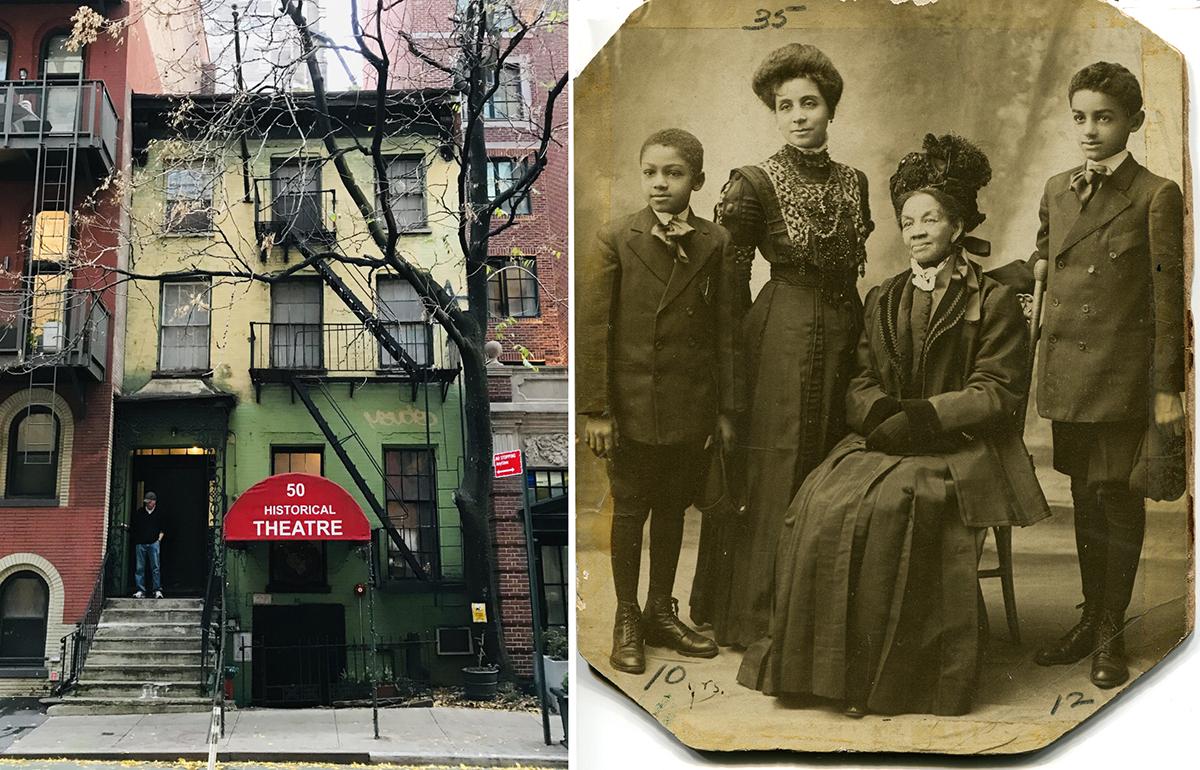
All Of It with Alison Stewart
Preserving the Village
00:32:05
A building on West 13th street was the site of an important part of African American history. Now, the Village Preservation group is trying to stop it from being demolished.
Loading summary
Transcript77 lines
- [00:00]
Wix Advertiser
No one knows your business better than you, so who better to create your website than. Well, you. Wix's website builder puts it all in your hands. Create a beautiful website just by talking with AI or choosing from thousands of templates. Customize every detail with simple drag and drop tools and get everything you need to start running business your way. Build more, think bigger and do it all yourself on wix.
- [00:28]
Andrew Berman
Building a portfolio with Fidelity Basket Portfolios is kind of like making a sandwich. It's as simple as picking your stocks and ETFs, sort of like your meats and other topics and managing it as one big juicy investment. Mmm. Now that's pretty good. Learn more@fidelity.com baskets Investing involves risks, including risk of loss Fidelity Brokerage Services LLC Member NYSE SIPC Member.
- [01:00]
Progressive Insurance Advertiser
This episode is brought to you by Progressive Commercial Insurance Business owners Meet Progressive Insurance. They make it easy to get discounts on commercial auto insurance and find coverages to grow with your business. Quote in as little as 7 minutes@progressivecommercial.com Progressive Casualty Insurance Company coverage provided and serviced by affiliated and third party insurers. Discounts and coverage selections not available in all states or situations.
- [01:28]
Host - Possibly Brian Lehrer
Oh my gosh. Have you been to Marshall's lately? They have all the brand name and designer pieces you love, but without the jaw dropping price tags. Alright, so here's the you should never have to compromise between quality and price. And at Marshalls, you don't have to. Marshalls believes everyone deserves access to the good stuff and that's why their buyers hustle around the clock to make it happen for you. Visit a Marshalls store near you or shop online@marshalls.com.
- [02:00]
Andrew Berman
Listener support WNYC Studios.
- [02:12]
Host - Alison Stewart
This is all of it. I'm Alison Stewart live from the WNYC Studios in soho. Thank you for spending part of your day with us. I'm grateful you're here. On today's show, I'll speak with author Katia Leaf about her new novel Invisible woman. Actor Daryl McCormick joins me to discuss his role in the new Showtime series the Woman in the Wall. It's very creepy. Along with showrunner Joe Murtaugh. And the amazing blues singer Betty Lovette joins us for a listening party for her Grammy nominated blues album. That is the plan. So let's get this started with some New York City.
- [02:54]
Caller - Angela
When you walk around.
- [02:55]
Host - Alison Stewart
New York City, it's easy to find history on every corner. Maybe you walk past Emma Lazarus home on West 10th street and can imagine her thinking about her poem the Colossus. The New Colossus or strolling along Macon street in Bed Stuy. And imagine the families in the 19th century Wood frame houses. Preservation groups across the city work to protect meaningful structures and places, sometimes earning the ire of developers or even individual owners. My next guest has spent the past 20 years working to save historic parts of Greenwich Village. He wrote a meaningful piece about the stores stories 14th street holds wedged between Foot Locker and Dunkin Donuts. Andrew Berman wrote, change in our city is inevitable. But too often the price for such change is the erasure of the histories of New Yorkers with the least power and privilege. The city's Landmark Preservation Commission has the ability and the obligation to change that. These sites on and just off 14th street, along with others elsewhere across the five boroughs, present a critical opportunity for them to do so. Now is the time for the city to act before it's too late. One of the latest buildings his group is fighting for is one block south on 13th Street. And it has a rich history, but many stakeholders. Joining us now to talk about the work he does and why is Andrew Berman executive director of Village Preservation. Welcome to the studio.
- [04:08]
Andrew Berman
Thanks so much for having me.
- [04:09]
Host - Alison Stewart
And we want to preface this conversation by noting that Village Preservation is an advocacy group and this isn't a conversation about right or wrong. We're really interested in what the group does, how it does it, and, and why. Listeners, we're going to open this up to all neighborhoods. What's a New York City landmark you love and why? What would you like to see preserved in your neighborhood? Is there a building you think deserves landmark status? Or maybe you want to share why you think it is or isn't good? Move to landmark buildings. Our number is 2124-3396-9221-2433. WNYC. You can call in, join us on air. You can also text that number. Our social media is available as well of it. Wnyc, we're talking about history and landmarks in New York City right now. What is the goal of village preservation? Andrew?
- [04:56]
Andrew Berman
Well, our mission is to document, celebrate and preserve the special architectural and cultural heritage of Greenwich Village, the East Village in noho. And that means everything from the historic buildings to the small businesses, the local cultural institutions. And it's an incredibly rich history that covers everything from innovators to immigrants, civil rights to artists. And it's really the story in many ways of not only New York, but the country.
- [05:23]
Host - Alison Stewart
Why was there a need for a village preservation group when it started?
- [05:27]
Andrew Berman
Sure. Well, we began in 1980 and you know, as I Think most people know these neighborhoods are some of the oldest in our city. Very, very rich in history. They're also incredibly valuable real estate. And a lot of people have ideas for things that should be done with them that are not necessarily consistent with preserving all of those important elements of that history. So our group, among others, works to try to make sure that the most important parts of those neighborhoods are preserved, that they live on to tell those stories for another day. And that means they get adaptively reused. Something that used to be a home becomes a theater. Something that used to be a school becomes offices for a design firm. A factory becomes a house of worship. That's part of what we think of as the sort of cycle of virtue in preserving historic neighborhoods.
- [06:21]
Host - Alison Stewart
How has the group's mission and mo changed over the last 20 years?
- [06:26]
Andrew Berman
Well, our geographic scope has expanded somewhat. Originally, we were really focused on actually just a part of Greenwich Village. What was called the Greenwich Village Historic District still is. Now we include all of Greenwich Village as well as those two other neighborhoods. And the scope of our work has definitely expanded beyond preserving historic buildings to, as I mentioned, other elements that kind of really make up the of these neighborhoods. The small businesses, the types of housing that we have, the types of local cultural institutions, religious institutions, things of that nature that really are what make a community what it is.
- [07:02]
Host - Alison Stewart
I'm curious about Black Swan events. I mean, we've had three in the past 20 years. 9 11, superstorm, standee, and Covid. I'm interested how each changed your work. Let's start with 9 11. How did it change what Village preservation did and thought about doing?
- [07:17]
Andrew Berman
Sure. Well, you know, obviously an event like 911 makes everybody kind of think about what's important and kind of why you exist. Neighborhoods like ours, which we're close to, not directly affected by 9 11, but certainly impacted by it, we lost a lot of friends and neighbors. Obviously, it was an incredibly traumatic event for those communities. One of the things that we've done in the interim is we've tried very hard to kind of document and remember how people reacted to that, the various ways, the good, the bad, the ugly, the hurt, the sad, the mournful. We have several collections in our historic image archive that people took at the time of what was happening on the ground. And it's important that we remember that. Those are sometimes painful memories, but it's important that they not be erased.
- [08:06]
Host - Alison Stewart
How about for Superstorm Sandy?
- [08:09]
Andrew Berman
Well, that certainly made us think a lot more about resiliency. And parts of our neighborhood were deeply affected. There were Places like West Beth or West Village Houses, which were along the Hudson river waterfront. Parts of them were uninhabitable for over a year. So one of the things that we focused more on is the issue of resiliency and making sure that these buildings not only survive, you know, kind of development schemes, but just the impact of nature and climate change.
- [08:35]
Host - Alison Stewart
And it may be too recent, but Covid.
- [08:38]
Andrew Berman
Covid certainly affected us a lot as well. And, you know, I think one of the things that it's done is made us realize how precious and precarious of our local businesses are. So many of them had such a tough time surviving Covid. So we've given special attention to trying to help and support longstanding, existing local, small, independent businesses, as well as giving a boost to new ones so that hopefully they can stay in the neighborhood.
- [09:05]
Host - Alison Stewart
My guest is Andrew Berman, executive director of Village Preservation. We're talking about landmarks and parts of neighborhoods that you really love, part of the history of your neighborhood that you really love. Let's take a few calls. Let's talk to Mark calling in from Manhatt. Good afternoon. Mark, you're on the air.
- [09:22]
Caller - Mark / Eric Washington / Sarah / Craig
Hi.
- [09:22]
Caller - Mark / Eric Washington
Thank you. I appreciate your work, Andrew. I'm aware of it. I have been a tour guide and a historian in New York for 35 years, and landmarking is a very controversial subject. But more important is not just the buildings, but the tenor of the areas around the buildings. You can see in other cities, like, say, in Europe and Madrid, you can go for miles before you see a modern building sticking up. Sight lines are just as important as the buildings themselves. As you saw in the New York Times a month ago, the building going up on Fifth Avenue just south of the Empire State Building destroyed a view that's been cherished for 70 years of the Empire State Building and of New York in general, losing a lot of our. The integrity of our skyline and of our neighborhoods through unzoned planning that seems to be happening all around. What are your thoughts about the protection beyond just a simple building, but of a neighborhood as we do sometimes, and also of sight lines and areas that are considered to be, in their own way, landmarks, just because they're not the building, they're the sky?
- [10:35]
Andrew Berman
Sure. Well, certainly these are all important issues, and all of this is about balancing the need for change, growth, development, and trying to both hold onto what's the most important parts of what we have and managing the growth in ways that feel as though it builds on the best of what we have, as opposed to just destroying and tearing it down. So you know, landmarking is one small part of that. You know, something like 4% of the city is landmarked. It's a, it's a tiny fraction of our city for which that's really an appropriate response. Good zoning is enormously important. It shapes what can be built, how big it is, what's in it. And we also obviously need to do a lot of work to make sure that the city remains affordable and accessible, whether it's in terms of who can live here, types of businesses that can locate here. And these are all things that I think need to be front of mind in our planning and too often are not.
- [11:29]
Host - Possibly Brian Lehrer
Yeah, obviously you've seen there was a New York Times op ed, someone from the op Ed board saying, I don't want to live in a museum. New York City can't be a museum. And over aggressive landmarking and protection keeps us from building affordable housing and it keeps us from having the future of New York City. What was your response when you read that piece?
- [11:48]
Andrew Berman
Well, a couple of things. One is, you know, even landmarking, which again applies to about 4% of the city, certainly does not preserve the city in amber by any means. You know, our areas that are landmarked are some of our most dynamic neighborhoods. They do undergo incredible amounts of change where buildings that were originally used for one purpose are transformed to a new one. There's also an enormous amount of new construction which actually does take place in landmark districts. People think, well, if an area is landmarked, nothing can ever get built there. There actually is, you know, in our neighborhood alone, we've seen, you know, some of the largest buildings built in the history of the neighborhood under regime of landmark designation. I think that. And in terms of the issue of affordability, interestingly, one of the biggest threats to affordable housing is it being demolished and destroyed. And landmark districts actually tend to have very large reservoirs of things like rent regulated housing, which while landmarking is by no means the way of preserving affordable housing, it's one more bulwark that helps to ensure that buildings that contain, whether it's affordable housing or affordable commercial spaces for stores have a fighting chance to live on.
- [13:03]
Host - Alison Stewart
Let's talk to Angela from the West Village. Hi, Angela, you are on the air.
- [13:08]
Caller - Mark / Eric Washington
Hi.
- [13:08]
Caller - Angela
Hi. Thank you so much for taking my call. Hi, Andrew, I'm calling about Christopher street between Waverly Place and Greenwich Ave. The houses that are in the middle of the block that run back to Gay street where one of them was taken down and now the other two on Gay Street. Do you know, like, are they taking them down completely, because I know this block is some of the oldest buildings in the village, like from the 1820s. I think that's pretty old.
- [13:44]
Host - Alison Stewart
Let's see.
- [13:46]
Caller - Angela
What do you know about where the puppy stores were? You know where the puppy stores were. Are those completely coming down? Are they going to preserve any of them? And why were they allowed to do that?
- [13:56]
Andrew Berman
Sure. Well, so those buildings on Christopher street, we're keeping a very close eye on them. They are supposed to be being repaired. They are among the oldest buildings in the neighborhood and New York City. And they are part of a larger group of buildings on both Christopher and Gay street, which were in a terrible state of disrepair, landmarked, and one of them was brought down because of some illegal work that was done there. It's our intention to push the city to ensure that the building that was demolished is rebuilt in its prior form and that the buildings that are still there are repaired and restored and do not suffer the same fate.
- [14:36]
Host - Possibly Brian Lehrer
We have a text, someone asking what.
- [14:38]
Host - Alison Stewart
Citizens can do if they suspect that.
- [14:40]
Host - Possibly Brian Lehrer
Their community is the target of predatory development.
- [14:44]
Andrew Berman
Well, among other things, you should certainly engage your local city council member. They are key in terms of development issues for local communities, certainly your community board as well. Local block associations and civic groups play a really important role in this. We live in a democracy where every voice should count, but it doesn't always quite work out that way. And when you're part of a larger group, that voice can get amplified and can certainly have more of an impact.
- [15:13]
Host - Alison Stewart
Got a question, and if you can't answer it, that's totally fine. It's an interesting question, though. Let's talk to Craig from Riverdale, who's calling in online. Six. Hi, Craig.
- [15:21]
Caller - Mark / Eric Washington
Hey, how you doing? I'm just curious. There are a couple of iconic establishments. I don't even know if they're still in business. One I know is not. One is Delmonicos, one of the oldest restaurants in New York, which has a very unique facade on a rounded corner street. And the other is Harry's at Hanover, a famous Wall street bar. I don't know if they're both still in business, but what actually happens? Do the owners have to leave the facade if it turns into something else? Does it? They can't make them dormant, empty the whole time. I mean, what actually happens to not change it? And on also, silly side note, I'm sick of all these big glass buildings going up. We're starting to look like Houston.
- [16:03]
Host - Alison Stewart
Great. Thanks for calling in.
- [16:06]
Andrew Berman
Sure. Well, so the way it works in New York is We have a mechanism for preserving a building which is called landmarking. We don't currently have a mechanism for preserving what are sometimes referred to as legacy businesses. So the business survives basically as long as the business is able to. And the landlord, if it's not the, if the business doesn't own its building, is willing to let them stay there once the business is gone, there's nothing that preserves the facade of the business or anything like that, unless it happens to be part of a landmark building. We and others certainly are working on looking at ways to do more to help those long term businesses survive and make sure that they have a chance of remaining for future generations to be able to appreciate. It's a more complicated thing to do than a building. You can say this building must stand, but if a business is, you know, the family has sold it, they're, you know, it's not making money anymore. It's much, much harder to, to require that a business stay around in perpetuity.
- [17:09]
Host - Alison Stewart
Andrew, what are the biggest obstacles to.
- [17:11]
Host - Possibly Brian Lehrer
The work you do?
- [17:13]
Andrew Berman
Well, you know, one of the biggest obstacles, of course, is just real estate pressure. You know, there's often this kind of desire for the quickest buck. You know, it's certainly been shown that historic buildings in cities can be incredibly financially lucrative, but oftentimes it's a more, it's a longer term investment. It requires more work, more attention. I would say there's also been an increasing lack of support from city government for things like preserving history. I think that there's been an, an artificial and inaccurate kind of framing of preservation as somehow being counter to the need to keep our city affordable. I actually think the two can very much go hand in hand and are in fact quite compatible more often than not. So those are some of the kinds of things that we're up against. Also sometimes, as you mentioned with property owners, some property owners, not all can be very resistant, partly because sometimes it's kind of fear of the unknown, sometimes it's misinformation about what landmarking or preserving involves. Sometimes it's just, I don't want somebody telling me what I can do. But there are so many wonderful success stories about preserved historic buildings and how they've flourished in so many ways while being preserved or landmarked. And we try to get the word of that out to people.
- [18:40]
Host - Possibly Brian Lehrer
My guest is Andrew Berman, executive director of Village Preservation Listeners, we're opening up this conversation. What's a New York City landmark you love in your neighbo neighborhood and why? What do you think deserves to be preserved in your neighborhood. Or maybe you have a question about preservation. The numbers 2124-3396-9221-2433. WNYC. You can call in and join us on air or text to us at that number. After the break, we'll talk about what's going on at 50 West 13th Street. Invite a super caller in who's been working on some preservation and has been working a little bit hand in hand with Andrew. We'll get to more of your questions and we'll have more after a quick break. This is ALL of it.
- [19:30]
Host - Alison Stewart
This is all of IT on wnyc. I'm Alison Stewart. My guest this hour is Andrew Berman, executive director of Village Preservation. We're talking about the work his group does and we're taking your calls as well. I want to ask you about 51 West 13th Street. This is a really interesting story and it's complicated in many ways. It used to house a well known off off Broadway stage, 13th Street Rep. The person who ran the company died at 103. And according to reporting in the Times, there have been struggles within the entities of the people who own shares of it. Plus, the building's in bad condition, but then plus, it also has historic significance for the history of black New Yorkers. Like I said, there's a lot of layers to the this one building. Tell me who lived at 50 W. 13th St. And why it is a building that your organization is taking an interest in?
- [20:16]
Andrew Berman
Sure. Well, as you said, it's the former home of the 13th Street Repertory Theater, and it was built in the late 1840s. But from the late 1850s through the 1880s, it was the home of Jacob Day, which is a name that doesn't necessarily ring bells with too many people. But if you lived in 19th century New York, particularly if you were a black New Yorker, it probably is a name you would have known. He was one of the city's most successful black businessmen in the catering industry, which interestingly at the time was one of the few industries that was relatively open to black New Yorkers and Americans. But he was also a civil rights advocate, very an activist, very involved in the Abyssinian Baptist Church, which was at the time located in Greenwich Village. And for listeners who don't know, at that time, Greenwich Village was actually the center of black life in New York. It had the largest African American community in New York. And Day was very actively involved with abolition efforts and then also after abolition with trying to remove discriminatory laws in New York that kept most black men from actually being able to vote. There were different property requirements for black men than for white men and in fact, disenfranchised most black men. So he lived and had his business at this residence for about 30 years.
- [21:41]
Host - Possibly Brian Lehrer
What is the status of the preservation campaign?
- [21:44]
Andrew Berman
Well, for about three years now, we've actually been fighting to get the building landmarked. Its condition is deteriorating every day. The city's Landmarks Preservation Commission has not moved on it, and they have not said that they will. In addition to Jacob Day, a somewhat more familiar name of somebody who we recently discovered through Eric Washington lived there was Sarah Smith Garnett, who is this iconic figure who was the first black principal in the New York City school system. She founded the Equal Suffrage League, which was the first organization founded for black women for fighting for suffrage and so much more. And she lived there while it was owned by Jacob Day, who frequently would rent out rooms. It's unclear if he actually charged anything for it, mostly to widowers and teachers, all, as far as we know, African American, probably people who are connected to the work that he did as a way of supporting them. So she was in this, lived in this house for what seems to be maybe close to a decade.
- [22:58]
Host - Possibly Brian Lehrer
Two things. One, I reached out to the Landmarks Commission via phone and email, and I didn't hear back by the time we got to on air. If they respond to me, we'll put it on our social media. And I also want to bring in historian Eric Washington. He spearheaded the preservation of one of the last standing schools for black children in New York City at 128 W. 17th St. It was the location of Colored School Number 4. It was an important building block for the making of Harlem as a center for black culture. And we spoke to Eric when he first started this mission about two years ago. So we asked him to call in to give us an update. Eric, thank you for calling in.
- [23:33]
Caller - Mark / Eric Washington / Sarah / Craig
Hi, good morning. Good afternoon.
- [23:35]
Host - Alison Stewart
Yes, good afternoon. Before we get to what's going on with colored school number four, how did you come across this information about Sarah Garnett and how did you get in contact with Village Preservation?
- [23:48]
Caller - Mark / Eric Washington / Sarah / Craig
Oh, it was, you know, I was working on a project that's related to Color school number four. I'm trying to isolate some of the figures by figuring out their residential itinerary. So starting with Sarah Garnett, I was trying to, you know, pinpoint where she was, you know, between what period and what period. And I'm going back to census records and back to records from the Board of Education and what have you. And so I actually had the census record for 1870 in my files, but I hadn't really zoned in on it. And this time I did. And I saw the name Jacob Day, and I thought, I know that name. So I knew that there was. There had been a struggle to get 50 West 13th street landmark. And I shot Andrew a message, you know, attaching a copy of the census record and saying, you know, you might look at this. Will it have any bearing on the status of that building being landmarked? So it was kind of by accident. I had it in my files, as I say, for a while, but I only just noticed it recently. So she was there before she was Garnet. She was Sarah Tompkins when she was living there with one of her sisters, Emma Smith, and with her daughter Serena Tompkins. In the census, they have her daughter's name wrong as Selena, but it was Serena. And from what I could tell so far as Andrew said, For about 10 years, I'm seeing at least about eight years that she was there from about 1865 to 1873, which is a substantial period of time.
- [25:37]
Host - Alison Stewart
Yeah, Eric, I want to get people caught up. Colored school number four, which was at.
- [25:42]
Host - Possibly Brian Lehrer
128, was West 17th Street. We talked about it on the air about two years ago.
- [25:48]
Host - Alison Stewart
Remind folks how you stumbled across it.
- [25:50]
Host - Possibly Brian Lehrer
Because if somebody's walking down 17th street, maybe they're going to housing works.
- [25:53]
Host - Alison Stewart
I don't know, maybe they're going to cafeteria for lunch. You wouldn't necessarily see it or pay attention to it. How did you come to discover it?
- [26:01]
Caller - Mark / Eric Washington / Sarah / Craig
I came to discovered while doing research for my biography of a figure, James H. Williams, for a book that I wrote four years ago called A Boss of the the Life of James H. Williams in the Red Caps of Grand Central Terminal. And while trying to document every place where he lived or worked or went to school, that's how I learned that he had gone to School on 17th Street. And with the help of public records, like the tax photos at the municipal archives, I. I could see that the building, what it looked like in 1940. And then I went down there. I guess it was 2018. I said, it's the same building. And so by cross referencing a lot of public documents, I was convinced that this is the same building. It's still standing. And at that time I thought it was. It went back to about 1870. And so I kind of went with that. And that's because they changed the address at some point about 1868. So the address used to be 98 West 17th street and then they changed it to 128, so it actually gained another 20 years. So it was even older than I thought, which was already fairly impressive, thinking that it was built circa 1870. It was built, built, as we've learned, 1849-50. This was the same case, as I understand, with the Jacob Day house. It used to be listed as 64 West 13th street and then about the same time, about 1868 or so, the address was reconfigured 250 West 13th Street. So there was a lot of those changes of address going on about that. But that's how I came upon the building.
- [27:56]
Host - Possibly Brian Lehrer
And you have been really. It really caught the imagination of a lot of New Yorkers. You got a lot of press about this building, I think, because people could go see it. They could see that it wasn't in the best state. People understood how important the history of black Americans are for New York City. So once you got traction on this, there was a big day, May 23, 2023. What happened on that day, that was incredible.
- [28:18]
Caller - Mark / Eric Washington / Sarah / Craig
So thanks to a number of local groups, including Andrew Berman's Village Preservation, people who wrote letters, particularly council member Eric Bottur's office, absolute Neighbors, people who live on the street next door, signing petitions and talking about it, a bunch of us were there on that morning of May 23rd in front of the building because we understood it's going to be landmarked. And we listened sort of to the countdown, if you will, and that's when the Landmarks Preservation Commission designated it officially a landmark. But plus we were there with Mayor Adams, who pledged that same morning in front of the school $6 million toward the building's rehabilitation. So it was a huge day. And that news didn't come until like, you know, 24 hours before. So it was, you know, an absolute surprise.
- [29:17]
Host - Alison Stewart
Eric, thank you so much for sharing your story from beginning to end. It's such an interesting way to think about how person sees something, Andrew, and then does something about it. When you think about in your career your biggest win, or one that you know, you'll be glad they write about you one day. Andrew Berman helped this happen. What is it?
- [29:38]
Andrew Berman
Probably our efforts to get what we refer to as the South Village landmark, which is the part of Greenwich Village basically south of Washington Square. A lot of people, Bleecker Street, McDougal Street. A lot of people consider it the heart of the neighborhood, but didn't realize that until relatively recently it wasn't landmarked. And it's got a particularly rich history in so many different Ways, as I mentioned before, this was the part of Greenwich Village that was the heart of the African American community in the 19th century. It was also the part of New York where there was the first ever kind of concentrated area of LGBTQ establishment. So it was the center of kind of LGBTQ life in New York in the late 19th century and in the 20th century. It really was the center of. Of the counterculture, innovation, folk music, Dylan, Hendrix, everybody, all here. So that area had been kind of left out of the landmarking of the 1960s. And in three successive waves, we were able to get that neighborhood landmarked in the 2000s. And because of all that incredibly rich and previously overlooked history, immigrant history as well, I should say, it was. They. They didn't focus on it in the 1960s because it was kind of the more working class part of the neighborhood. And we just thought that all of that history is actually not why it should be overlooked, but why it should, in fact, be celebrated and preserved. So those designations, I think, are probably the ones I'm most proud of.
- [31:06]
Host - Possibly Brian Lehrer
What's a loss? What was a loss? That hurt.
- [31:10]
Andrew Berman
It's funny, I always say this. There was a building called the Tunnel Garage, which, believe it or not, was a parking garage. But it was built in the early 1920s. It was one of the city's very purpose built parking garages. And it was this gorgeous Art Deco structure that had a multicolored image of a Model T Ford emerging from the Holland Tunnel on the top of it. You could not imagine a more beautiful parking garage. And sadly, we lost the battle to save that from a developer. It's now condominiums.
- [31:43]
Host - Possibly Brian Lehrer
We are going to go to Sarah on line six because a lot of people have questions about ny. Okay, Sarah, go for it. You're on the air.
- [31:51]
Caller - Mark / Eric Washington / Sarah / Craig
Thank you.
- [31:52]
Caller - Angela
Hi. So thank you for all the work that you do. I'm actually calling about the Provincetown Playhouse and the Eugene o'. Neill. I'm just wondering what exactly happened. I mean, I know that you worked very hard to try and save it, and they said they would save part of the. I think they said they would save the theater, but it looks like only the facade in the front is used now. And I just really understand because I know it also belonged to the Education Department at nyu. So I can take my answer off air. I just was curious about that.
- [32:22]
Andrew Berman
The long and short is, unfortunately, it's another in a long line of broken promises by nyu, the Provincetown Playhouse, which was really the birthplace of off Broadway theater in America. NYU was planning to demolish the entire building to build another law school building. We fought it. They offered as a compromise that the piece of the building that housed the sort of black box of the theater would be preserved and they'd build around it. We didn't love the compromise, but it was what it was. And then behind construction fences, once work began, we discovered that they had actually demolished most of even the tiny portion of the building that they had said that they were going to preserve. So really what's still intact is just that small corner of the facade of the building, basically the entryway, and virtually all of the rest of it is.
- [33:16]
Host - Alison Stewart
We did get a text of someone saying that your archives are unheralded, that people should know more about the Village Preservation archives. As we wrap, you want to share a little bit about them?
- [33:26]
Andrew Berman
Sure. We have this incredible archives, photographs, about 4,500 historic photographs, records of various organizations connected to the neighborhood, particularly preservation battles, oral histories with everyone from Jane Jacobs to Jonas Makus to a whole range of artists, business leaders, etceter. So just go to our website, villagepreservation.org, it is literally a treasure trove of information that you could, you know, spend a day, a week, a year just exploring. And that's what it's there for.
- [33:58]
Host - Alison Stewart
That's a good cold weather activity.
- [33:59]
Andrew Berman
Absolutely perfect today.
- [34:01]
Host - Alison Stewart
Andrew Berman is the Executive Director of Village Preservation. Thanks to everyone who called in and shared your thoughts and texted your thoughts. And thank you Andrew for coming to the studio.
- [34:09]
Andrew Berman
Thanks for having me.
- [34:10]
Wix Advertiser
Your business is one of a kind, so your website should be taken too. With wix, it's easyamost too easy to create a website that's perfectly yours. Just tell AI what kind of site you want to build or choose from thousands of templates, change whatever you want whenever you want and get everything you need to start running your business your way. No matter what you sell or what you aspire to be. You can do it all yourself on Wix. Go to wix.com this episode is brought.
- [34:40]
Progressive Insurance Advertiser
To you by Progressive Commercial Insurance Business owners Meet Progressive Insurance. They make it easy to get discounts on commercial auto insurance and find coverages to grow with your business. Quote in as little as 7 minutes@progressivecommercial.com Progressive Casualty Insurance Company coverage provided and serviced by affiliated and third party insurers. Discounts and coverage selections not available in all states or situations.