Loading summary
Transcript76 lines
- [00:00]
Tiffany Hansen
Foreign.
- [00:10]
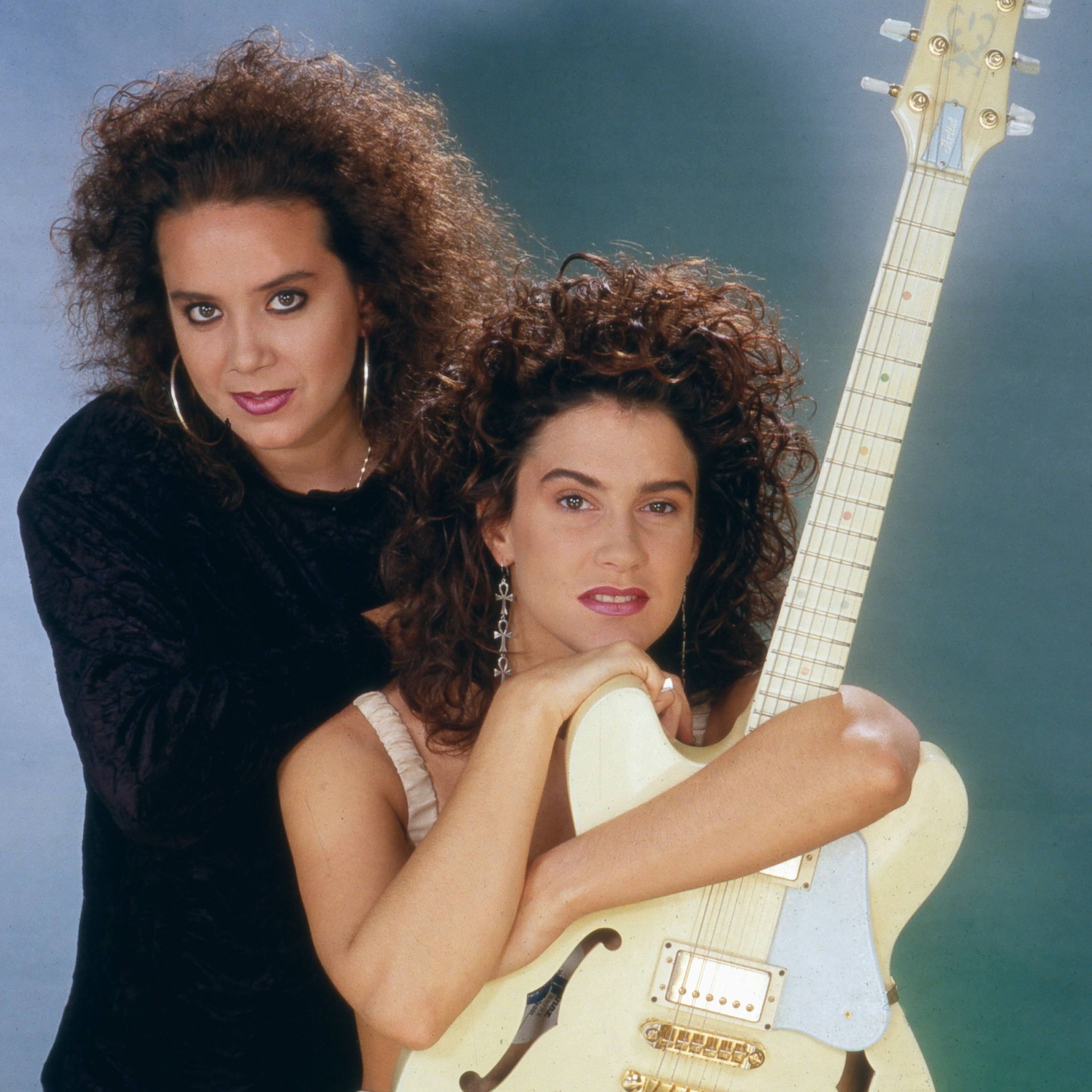
This is all of it on wnyc. I'm Tiffany Hansen in for Alison Stewart. We've been talking about Prince and the Revolution, and you can't talk about the revolution without talking about Wendy and Lisa. The duo got their start in the 80s as part of Prince's band before breaking out on their own, releasing a series of albums and earning Grammy and Emmy awards. While they were in the revolution, they also made history as the first women nominated for the Grammy for Producer of the Year and for their contributions to Purple Rain. Wendy and Lisa joined us on all of it last March for Women's History Month as part of a series, Equalizers, celebrating women who work in the technical fields of the music industry, fields where they're severely underrepresented in that conversation. They also had a surprise reunion with Susan Rogers, Prince's longtime sound engineer. He here's Alison Stewart's conversation with Wendy and Lisa and Susan Rogers.
- [01:26]
Alison Stewart
So the Revolution is officially credited as.
- [01:29]
Tiffany Hansen
Producers on Purple Rain.
- [01:30]
Alison Stewart
Wendy, back in those early days, did.
- [01:32]
Tiffany Hansen
You think of yourself as producers or was that just part of the music making process?
- [01:37]
Wendy
Well, that's a really good question because I think growing up, my ear kind of gravitated toward a producer's mind. I always heard things certain way and wanted to learn how to tweak certain things and was very interested in the actual recording process and all the gear and the technical side. It was always very interesting to me. So I always kind of, I'm an autodidact kind of gearhead, so it wasn't, it wasn't sort of out of character for me to want to go in that direction. I kind of always do that. And as Wendy and Lisa, we're kind of always producing each other as well, which is an interesting anomaly between the two of us as music partners. We are always producing each other. So it's an interesting question, but it's not far fetched from who I actually am.
- [02:29]
Tiffany Hansen
How about for you, Lisa?
- [02:32]
Lisa
Yeah, I'm more the sort of it's all part of the same thing kind of person, I think, in terms of the whole arrangement usually. So it's, you know, just as the song happens, I think it's natural to serve the song and make it as good as it can be. And if that's what producing is, then that's what we do. But yeah, it's all part of the same thing for me. I never really thought of myself as a producer. I just thought I was a music maker.
- [03:06]
Tiffany Hansen
Wendy, what did you learn about production while working with Prince and The revolution.
- [03:16]
Wendy
The thoughtfulness about what's happening in an actual recording studio. And a great engineer can teach you that. And we worked with some fine engineers, and I think I learned a lot about how I can get the sounds that I want and arrangements that I want and musicians that could work for this or couldn't work for that or in. Prince was just. I mean, obviously he's a guy that could do it all himself. But there were some incredible lessons to be learned from his discipline and his thoughtfulness behind a board and how he ran a studio. So I learned a lot from that, for sure. And, you know, we had an engineer that we worked with for many years, Susan Rogers, that really taught me a lot about sound and about technique, and I've carried that with me.
- [04:15]
Tiffany Hansen
Hold the thought on Susan Rogers. We're gonna talk about her in just a minute. Lisa, what is something from that time in your life that you still use today in your production, in your music making?
- [04:31]
Lisa
Oh, wow. Well, I was thinking. Well, Wendy was talking, you know, also about what. What I've learned. And part of the working in the studio is just not to be intimidated by the gear and what. And it was great because we were younger and Prince was fearless and he played the studio like an instrument. He was just all over it. And so to witness that and to have that be the way that I learned was just great because, you know, I'm not afraid of pushing buttons and, like, let's try this. Or, you know, just experimenting with the studio and not always, you know, being too intimidated by technology and, you know, like, I don't know how to work it. It really doesn't matter. Just turn it on and start fiddling. If it's. If it sounds cool, you're on the right track. That's where I'm at.
- [05:30]
Tiffany Hansen
You're listening to another installment of our March series, Equalizers. I'm speaking to Wendy and Lisa, the first woman to be nominated for the Grammy for Producer of the Year as part of Prince and the Revolution. Let's listen to a song from Purple Rain, and we'll talk about it on the other side with a special gu. Here's let's Go crazy.
- [05:55]
Prince (song lyrics)
We are gathered here today to get through this thing called life. Electric word life. It means forever and that's a mighty long time. But I'm here to tell you there's something else. The after world, a world of never ending happiness. You can always see the sun, day or night.
- [06:22]
Narrator/Announcer
So when you call up that shrink.
- [06:23]
Prince (song lyrics)
In Beverly Hills, you know, the one I Want, doctor, Everything will be all right. Instead of asking him how much real time is left, Ask him how much of your mind, baby. Cause in this life, things are much harder than in the afterworld. In this life, you're on your own. And if the elevator tries to break you down, go crazy.
- [06:53]
Alison Stewart
I want to bring in another guest here. We're celebrating women in production and engineering all month. And if we're doing that, we're going to talk to engineer Susan Rogers. She has just been named by Wendy. Susan was Prince's staff engineer throughout the 80s and has engineered many other musicians, including David Byrne, Barenaked Ladies, and Wendy and Lisa. She's currently a professor in music production and engineer at Berklee School. Susan, welcome to.
- [07:20]
Susan Rogers
Hi, Allison. Hi, Wendy and Lisa. Nice to join you all.
- [07:23]
Wendy
Hi, darling.
- [07:25]
Susan Rogers
Hi.
- [07:28]
Alison Stewart
Susan, what do you remember about the sessions around Purple Rain?
- [07:34]
Susan Rogers
Oh, golly. It was such an intense time. And when I think back to it, that was over 40 years ago, and we were young and we had that combination of seriousness that young people have and great doubt and then overconfidence, and you pile all that together and then when you add the raw talent of Wendy and Lisa and Prince and the revolution, you combine all that. It's pretty potent mixture. We didn't realize it at the time, but we can look back on it now and realize, damn, we had it going on.
- [08:11]
Alison Stewart
Didn't Wendy, what do you remember about that time?
- [08:17]
Wendy
Well, she's. She's spot on. I would just. I would just add to the. The energy kind of like the. The system, the dynamics between everybody and what they were giving. Everybody gave their A game, so.
- [08:34]
Prince (song lyrics)
You.
- [08:34]
Wendy
Knew what you were doing was something kind of otherworldly because you could just feel that.
- [08:39]
Tiffany Hansen
It.
- [08:40]
Wendy
It felt different than most stuff. And I'm sure every artist at some point in their career taps onto something that feels bigger than them. And that whole time felt bigger than all of us, but bigger than the sum, bigger than the one. It was, the sum total of all of it. So I remember a million different things, but the energy was. Was huge.
- [09:02]
Alison Stewart
Lisa, how about you?
- [09:04]
Lisa
Yeah, yeah, right on. Everybody also, it was just. We worked from morning to night. It was, you know, it was all day, every day. It was. It was our life. That's how we spent our life. We woke up in the morning and went to the warehouse and it was either recording, rehearsing, doing acting lessons, you know, doing dance lessons for the film, you know, all this stuff. It was a daily thing and it was all day. So I just remember that being Just a whole new kind of life.
- [09:44]
Alison Stewart
Susan, you've also worked on Wendy and Lisa's albums.
- [09:47]
Tiffany Hansen
We're gonna talk about them like they're not here.
- [09:49]
Alison Stewart
What do you think their skill set is?
- [09:51]
Tiffany Hansen
What do they do better than anyone else?
- [09:55]
Susan Rogers
Oh. Oh. They are so deeply, innately musical. When Lisa's on a keyboard, especially on piano, Wendy said it once, she pets the keys, you can just feel her heart going right to her hands. And the way she coaxes music out of an instrument is astonishing. It's really breathtaking. And Wendy. Wendy's skill set on guitar and her ear and her taste. And you can imagine her thinking as she plays, she's filtering all the things she might be playing and then deciding on, here's what would be perfect in this moment. You're watching maestros. Is that. Is that the feminine pronunciation of maestro?
- [10:49]
Alison Stewart
Let's do it.
- [10:49]
Susan Rogers
Watching masters at work, when you work with them, it's really amazing.
- [10:55]
Tiffany Hansen
Okay, we're going to talk about you like you aren't here. Susan. Wendy, why was Susan the right person to work with on your albums after the Revolution?
- [11:07]
Wendy
Because she's superlative. I mean, if you get a. Get a list in high school of who's the funniest, who's the best, who's this? Susan's at the top of that list. And it was a no brainer for me and Lisa to use her because she has an incredible ability to learn the technical side of what she does, which, I mean, just listening to her talk and as a teacher, now anyone's blessed to have her as their teacher because the way she can explain something in terms for the. For the common man is spectacular. And in the studio, it's very same. And her enthusiasm and the love that she cares and approaches everything from like a piece of gear to the sound coming through the speakers. I remember one time Susan was explaining to me how women and men differently hear low end and that women hear low end more of a. More warmth. And I've never forgotten that. And when I listen back to the albums that me and Lisa did with Susan, there's a kind of puffiness to the sound of those records, for lack of a better way to describe it, a puffiness that has a lot of warmth as well. But there's a punch to it that only. Only at the time I could imagine, only Susan could have done. I've tried to recreate that kind of stuff, and I've never been able to recreate the kind of ear she has. She has a singular ear.
- [12:40]
Alison Stewart
Lisa, how about you?
- [12:41]
Lisa
Oh, wow. I mean, I. I just can't say enough. And, yeah, she's a unique creature. The. The.
- [12:52]
Ira Flato
The.
- [12:52]
Lisa
The amazing technical knowledge that she has. It. It's just incredible. She can build something out of nothing. You know, I asked her. I had a problem with one of my keyboards back in the. In the 1900s, and things were very difficult back then. And she, like, just put a tuning knob on the front of my keyboard. She just drilled a hole and somehow figured out how to do that. And, you know, and. And so that's just amazing in itself. And then her heart, the heart that she puts into everything. Wendy said she cares about everything that she does. She cares about the music and the way that you're doing the music. And then, like, if you're hungry or something, like, she's the full package.
- [13:43]
Wendy
She's just incredible person.
- [13:47]
Alison Stewart
Susan, we have a song here that you worked on for Mother of Pearls called from your 1990 album, Erotica, if I'm saying correctly. What did you want to highlight this track?
- [13:58]
Wendy
Eroica.
- [13:59]
Alison Stewart
Eroica.
- [13:59]
Tiffany Hansen
Thank you.
- [14:01]
Susan Rogers
Yeah, we spent a lot of months on that album, and it was delightful because it's wonderful working with Wendy and Lisa, and you learn so much from them. Any. Any technical professional who's worked with them will admit how much they've learned about music and the art of sound from working with Wendy and Lisa. Every track on that record is. Is marvelous. I just picked this one because it's the most recent one I've listened to. They're all really fabulous, but this really does feature the best of what Wendy and Lisa do, and you'll hear that quality in it of sculpting music with a gentle and firm hand. You hear their musical minds at work, and that's always a treat.
- [14:49]
Tiffany Hansen
Let's listen to Mother of Pearl.
- [15:30]
Wendy
Cold stare makes light of this size me I make sure that it fits.
- [15:42]
Prince (song lyrics)
And I'll be so nonchalant.
- [15:47]
Alison Stewart
Susan, before we let you go, something I wanted to ask you about. What is. Because you're a professor at Berkeley, what is something that we could do better to make more space for women in production?
- [16:01]
Susan Rogers
Oh, gosh, Allison, that's a really hard question to answer. I know. I've been asked, and I'm sure Wendy and Lisa have, too, for over four decades. It's a complicated equation. There are reasons why women choose not to enter these fields, and then, of course, there are reasons why women want to and are blocked, but. Wow. It's a bigger question than I can answer.
- [16:30]
Alison Stewart
Susan Rogers is a professor in music production. And engineering at Berkeley and a veteran of recording engineering. Susan, thank you so much for being with us.
- [16:39]
Susan Rogers
Thank you for having me. And bye, buddies. I missed you guys.
- [16:44]
Lisa
I love you, bud. Love you.
- [16:47]
Alison Stewart
Wendy, did you want to answer that question, how we can make more room for women in production?
- [16:56]
Wendy
Susan's really correct. It's just we could spend an entire hour just talking about the difficulty and try and come up with some kind of master plan. We've been literally trying to figure this out for ages. And I think I've spent a lot of time in other studios now working with a lot of different people and trying to get my hands on producing other people. And there are a lot more engineers that are female that are coming up, and there are a handful of women coming up in the producer world that are getting their hands on more pop music. I'd like to be able to see more producers in different genres of music, not just in the pop world. There's a lot of female DJs that are turning into producers, but they're doing a lot of dance music. I'd like to see a lot more women getting into a room that can, like, actually work with either a band or artists and do the best for the artist and get the best out of their songs. You know, to get in the room with a woman who could produce a record as well as someone like Mitchell Froome could, or, you know, there's. The list goes on and on and on. I think that we just need to allow women the room and the space and the encouragement to do it. And I think a lot of it. And I don't want. This is not like man, woman, blah, blah, blah. But a lot of the guys gotta. Gotta make a little bit more room. There's. It's a. There's a little bit of a. I don't know. There just seems to be not as much room as I'd like to see some of the men give these women. There's. It's like. It's still. It's very similar to the. The cooking world and a lot of men chefs and women chefs. It seems to be. There's a. That's a very common thread between female producers and male producers. You could draw a correlation between male chefs and female chefs if you look at it closely.
- [19:06]
Tiffany Hansen
That's interesting. What do you think, Lisa?
- [19:09]
Lisa
Wow. Well, I think. Not to disparage men or anything, but get out of the way. I think it's a matter of education, and I think it's just going to take some time. And I think that for lots of people, women included, when you say who do you want to produce your record? In your mind you automatically think a man producer. You say who produced the record. You think it's a man. So I, I think it's going to take a long time before a lot of records are produced by women and people let go of the, just the automatic default goes to man.
- [19:58]
Wendy
That's true. And I, I would add too that, that because so many people are doing their records in their, in their houses now, I mean there's really everything is streaming and everybod doing everything in their room. Women are doing a lot more themselves. So it's just the 1%. They're actually getting really, really famous and being able to stream or actually get signed. I mean the women are out there, but the, the, you know, the 1% is, is almost non existent.
- [20:27]
Tiffany Hansen
Wendy. Lisa, we booked you months ago, not months ago, weeks ago to be a part of our series, but you happened to show up on a day that the daily. The New York Times did a podcast about Prince and the documentary that we will not see. We will not see for Netflix. You're in the documentary. It includes details about Prince, the women in his orbit, some complicated relationships.
- [20:50]
Alison Stewart
Wendy.
- [20:51]
Wendy
Indeed.
- [20:52]
Tiffany Hansen
Have you had any thoughts about the documentary? Never. It might never be seen.
- [20:59]
Wendy
Yeah, I've had many thoughts about it. I think it's a, I think it's a shame that it, that it ended up being as complicated and fraught as it ended up being. I wish it hadn't ended up being that way. So many complications. I can't really get into the details of it because it could get me in trouble. But I will say that there are some magical moments in that documentary and I hope at some point the world can see them.
- [21:27]
Tiffany Hansen
Lisa, how did you decide to be part of the documentary?
- [21:32]
Lisa
Wow. It took a long time. It took a lot of conviction, to be honest. I think Wendy and I were like the last interviews to be done and there were a lot of reasons. I wasn't sure that it was time to do that big documentary and we had just come off like touring and grieving and doing a lot of that processing and I kind of was. Needed a break from it.
- [22:07]
Wendy
We were pretty raw.
- [22:09]
Lisa
Yeah, we were pretty raw emotionally about the whole thing. But I decided to be part of it because I felt like I had a real honest opinion and experience of Prince and I wanted to share my point of view.
- [22:26]
Tiffany Hansen
That was Alison Stewart's conversation with Wendy and Lisa from all of its equalizers and series last March. Coming up tomorrow on all of it is Booker Prize winning author George Saunders, who will be in his new novel Vigil follows a powerful oil executive on the last night of his life, guided into the afterlife by a compassionate spirit. He'll join Allison in studio to discuss. That's on the way tomorrow. Thanks so much for joining us. I'm Tiffany Hansen. I've been in for Alison today. She will be back tomorrow. All of it is produced by Andrea Duncan Mao, Kate Hines, Jordan Loft, Simon Close, Zach Godover Cohen El Malik Anderson and Luke Green. Meg Ryan is the head of Live Radio. Our engineer today was Shana Sangstock and we had production help from Jason Isaac. Thanks so much. Alison is back tomorrow.
- [23:17]
Join her.
- [23:22]
Narrator/Announcer
The new year brings new health goals and wealth goals. Protecting your identity is an important step. Your info is in endless places that could expose you to identity theft leading to lost funds. LifeLock monitors millions of data points per second. If your identity is stolen, our restoration specialists will fix it, guaranteed or your money back. Resolve to make identity, health and wealth part of your New year's goals. With LifeLock, save up to 40% your first year. Visit LifeLock.com SpecialOffer terms apply.
- [23:52]
Ira Flato
I'm Ira Flato, host of Science Friday. For over 30 years, our team has been reporting high quality news about science, technology and medicine. News you won't get anywhere else. And now that political news is 24 7, our audience is turning to us to know about the really important stuff in their lives. Cancer, climate change, genetic engineering, childhood diseases. Our sponsors know the value of science and health news. For more sponsorship information, visit sponsorship.wnyc.org.