← All Of It with Alison Stewart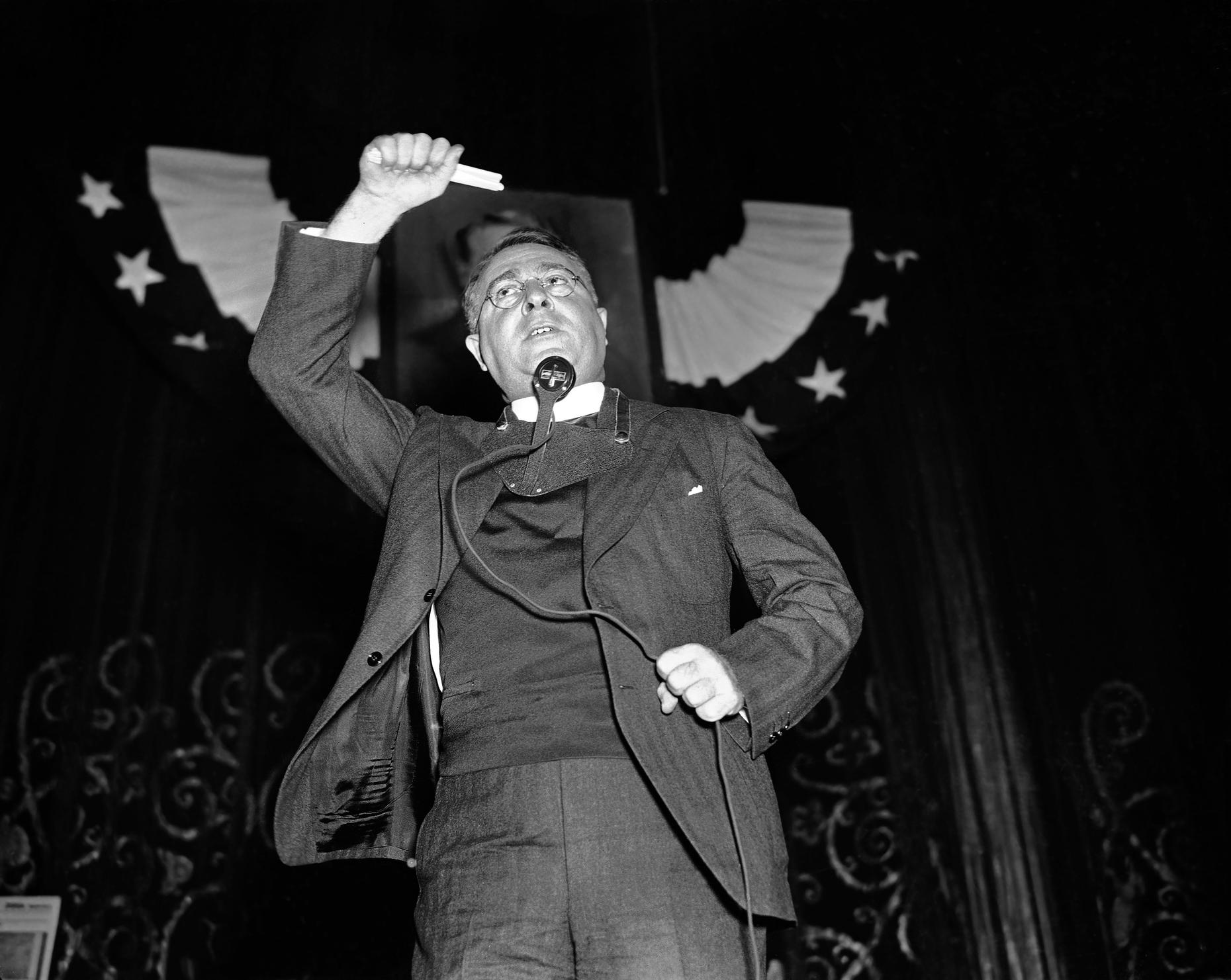
All Of It with Alison Stewart
Rachel Maddow's Podcast Examines A Far-Right Movement in the U.S
00:18:21
A new podcast by Rachel Maddow examines a far-right movement in the U.S around the time of World War II.
Loading summary
Transcript24 lines
- [00:00]
A
Are you ready to change your mind about your body? We are flipping the script on fitness making movement that feels good and fits your life. I'm Megan Roope, celebrity trainer and founder of the Sculpt Society. I created this online fitness platform to be uplifting and flexible with sculpt, strength and dance cardio classes. From a 10 minute quickie to a 50 minute sweat, you will find programs for every stage of a woman's life including prenatal, postpartum, bridal and more. Start your two week free trial at thesculptsociety.com podcast.
- [00:34]
B
Listener support WNYC Studios this.
- [00:48]
C
Is all of it from wnyc. I'm Alison Stewart. Thank you for spending part of your day with us. I'm really grateful you're here on the show today. The theme is Aspiration in the form of the egot that stands for Emmy, Grammy, Oscar and Tony Award Winners. We'll hear from one of each Grammy winner Stuart Copeland, Oscar winner Ariana DeBose, Tony winners Leslie Odom Jr. And Kenny Leon. But first, let's get this started with Emmy winner Rachel Maddow. Rachel Maddow is a face and source of information for millions of viewers. Hirshon has earned her several Emmy Awards and her latest podcast, Rachel Maddow Presents Ultra, won her the prestigious Hillman Prize for Broadcast Journalism, the first time the prize has gone to a podcast. The series begins with a mystery. In 1940, a plane crashes in a Virginia field with a senator on board. 25 lives were lost in the deadliest civilian crash in US history up until that point. Here's how Life magazine described it. On Aug. 31, the weather was stormy. The doomed plane reported all well at 2:31pm Then headed into a squall. At 2:41pm it crashed at top speed into a field of alfalfa and ricocheted 50 yards into a cornfield. There it disintegrated completely. Its wings flew off. Its cabin split like a dried pod. From what little was left of the plane, it was hard to tell what had happened. The the pilot had his engines wide open. The plane was in a 45 degree dive. Here's how Life magazine described it. On August 31st, the weather was stormy. The doomed plane reported all well at 2:31pm Then headed into a squall. At 2:41 it crashed at top speed into a field of alfalfa and ricocheted 50 yards into a cornfield. There it disintegrated completely. Its wings flew off, its cabin split like a dried pod from what little was left of the plane, it was hard to tell what had happened. The pilot had his engines wide open. The plane was in a 45 degree dive. The Senate threatened an investigation for on that plane was Senator Ernest Lundin of Minnesota. Well, it seems there was already an investigation underway. Also in that plane were federal agents and that senator, Mr. Lundin was a Nazi sympathizing propaganda super spreader who used the mechanics of Congress to advance Hitler's agenda in the States. Lundin wasn't alone in this mission. Over in the House of Representatives, a New Yorker was in on the action. Representative Hamilton Fish. Here's a clip from the podcast Ultra first is Congressman Fish promoting isolationism and downplaying the threat from Germany. And then we hear from host and producer Rachel Maddow.
- [03:38]
B
I accuse the administration of instigating war propaganda and hysteria to cover up the failure and collapse of the New Deal policies. I accuse the administration of leading the American people to a rendezvous with war, death and bankruptcy. The combination of Hamilton Fish's high profile and his vehemence on this subject made him effectively the standard bearer, kind of the team captain for the America first movement in the House. The American people have no intention of sending any of their youth to be slaughtered overseas to cover up the failures of the New Deal. I hope the American people heard those remarks of Hitler. Let us hope that this will put an end to the historical propaganda emanating from spokesman of the White House.
- [04:29]
C
We learn in the podcast series that Fish and Lundin were in cahoots with a top Nazi agent who was just chillin in the US Writing their speeches and using their positions to sow dissent in the States. Their work intersected with groups like America first and the Christian Front, whose main cheerleader was the dreaded and successful Father Coughlin, who encouraged his followers to take control of their country. They listened. And a group planned to attack the US government in January 1940. It might have worked if the FBI hadn't moved in on them. You would think that would never happen again. But we all know it happened that same month, 81 years later. Rachel Maddow and executive producer Michael Jarvich joined me earlier this year to discuss the podcast. Here's part of our conversation. So the story goes, Rachel, you were researching the roots of antisemitism, as Rachel Maddow would do on Brand, and you came upon some information that proved to be the seed of this podcast. What did you see that made you stop and think? Let me follow this.
- [05:36]
B
Mike and I were working together on a really specific thing in the history of antisemitism. We were working on this kind of era where the first kernels of American Holocaust denial started to make themselves known. And it turns out we got really interested in what we thought we were going to do a podcast about was the sort of very personal, very specific, very strange story behind where American Holocaust deniers started out very, very soon after World War II, which is a weird time to even be trying to sell people on the idea that something so many of them had seen with their own eyes hadn't happened. And Mike and I, sort of together, in reading around that time and reading about some of those characters, came upon this backstory, really, the sedition trial. And then, Mike, it was you. You found the plane crash first, right? You were the one who ended up in Ernest Lundin's office.
- [06:33]
D
Yeah. I think maybe that was the moment where both of us kind of thought, wait a minute, maybe this is where we ought to be looking. And it was this, you know, mysterious plane crash that, Allison, you alluded to there, that took place in. In 1940. And the more that Rachel and I started kind of digging around that it became this fascinating window into America right before World War II and the circumstances around that plane crash with Ernest Lundin and his involvement with a paid agent of the Nazi government. I think pretty quickly, Rachel and I pivoted to say, wait a minute. This is kind of the. The see, of this larger story that we were initially looking into. And that plane crash is what really kind of set us on this mission that became.
- [07:25]
B
There was also this moment, though, where it was like, did you know about this? I didn't know about this. No. Did you know about this? I didn't. And then you have this feeling like, wait a second. Does everybody know this? And we just cut class that day in history, because this seems like something people should know. But I think part of it was realizing that we were onto a story that was fascinating. That was the backstory to what we originally intended to say, but it really was totally new to both of us.
- [07:48]
C
So, Rachel, what was going on in Ernest Lundin's life right before he got on that plane?
- [07:53]
B
He was a mess. I mean, a lot of what we know. And this becomes very important later in the story. We know because his secretary, a woman named Harriet Johnson, went to the FBI in the immediate aftermath of the crash, and she told the FBI, and therefore, it became known in public and in court proceedings that her boss, the senator, was distraught, that he was just an emotional basket case, not just in the days and the couple of weeks leading up to the crash, but specifically on the day of the crash, on the morning of it, and through her testimony and what came out in court and what Mike and I were able to find out, we realized that what was probably the cause of his upset is that two weeks before the crash, a liberal tabloid newspaper in New York City had run an expose about a Nazi agent working in Congress. And that article didn't include Lundin's name, but it was all about him and he knew he was about to be exposed and he seemed to be freaking the F out about that.
- [08:59]
C
You are listening to my conversation with Emmy winning broadcaster Rachel Maddow about her podcast, Rachel Maddow presents Ultra. We'll have more with Rachel right after the break. This is all of it. You are listening to all of it. I'm Alison Stewart. Before the break, we'd been talking about a podcast called Ultra, which looks at a particular moment in history when foreign agents had infiltrated our Congress and a swath of US Citizens started to lean into fascism. And a group even armed itself and planned to take on the government before the FBI stopped them. As Hitler continued to push for more power past Germany's borders, there was a faction of American politicians who were arguing for isolationism. More problematically, some Americans were also pushing propaganda and misinformation to foment fascism here. One such American was Senator Ernest Lundin of Minnesota, who worked with a bona fide agent of Germany's Nazi government who actually wrote some of the speeches the senators gave. Lundin died in a mysterious plane crash along with four crew members and 20 other passengers, including government investigators assigned to track Lundin's activities. So let's get back into it with hosts and executive producer Rachel Maddow and Michael Jarvitz, who co executive produced the podcast Ultra. And we'll jump back into the story after the plane crash when some of this information starts to come out about Senator Lendin's alleged espionage and what his wife had to say about it. Norma Lundeen, Senator Lundin's wife, pulls sort of the ultimate stand by your man. Even if he's not alive, she would deny that her husband was involved. Let's hear a little bit from Ultra, the podcast. First we hear from Rachel.
- [10:58]
B
And after about eight months of reading these reports about her deceased husband in the papers, hearing about them on the radio news, Norma Lunde decided that she'd had enough. The dead cannot be hurt by vilification. It is those who love the dead and who all the years of their lives will bear his name with pride. They are the ones who feel the force of the dagger driven into the back of the dead. Norma Lundin made her case defending her husband passionately and directly to the public. She also went right after the journalists who shot, she said, were responsible for the smears against him. A pair of Washington columnists had written that two Department of Justice agents were on the plane with my husband when it crashed, that they had been assigned to watch him. All accusations of this nature are emphatically denied in the letters of the Attorney General Jackson and J. Edgar Hoover.
- [11:54]
C
One I could listen to her talk all day long. All day long. She really. Well, I'll ask you, Rachel from Do you believe, did she believe that her husband was innocent? What do you think? I know, speculation.
- [12:10]
B
That's a good question. I mean normal Lundin, as best as we can tell. And Mike, you can correct me on this if I'm wrong, but my impression by the time we get to the end of our research on this is that whether or not we can ever apprise exactly what she thought of her husband, she definitely shared the views that were the worst of what her husband was suspected of. I mean after World War II even. She ends up going on a speaking tour with this guy, Gerald L K Smith, who is the, who doesn't play a role in the podcast but is the sort of in the next phase of American politics. On the ultra right, he is the proponent of something called Christian nationalism which is coming back in favor now on the very far right and is also a virulently anti Semitic rabble rouser. And Norma Lundin, long after Ernest has died and after World War II, she goes on an anti Semitic nationwide speaking tour with Gerald L K Smith. When she gets remarried, she remarries a Klansman. She ends up, you know, her, her put a fine point on it. Her Nazi sympathies and sort of fascist ideology of her own makes it sort of hard to believe that she's outraged by any intimation that her husband had far right views. You know what I mean? Like, so it's, it's not exactly an answer, but I can tell you why it would be weird if she really, it would seem strange to me if she was telling the truth in that clip.
- [13:39]
C
Your answer to that brings me to a question about process. So that was incredibly interesting and it would have been great if you could have like wedged that in all of these. You probably have a lot of information that you weren't able to get to. And either of you can answer this. What Was your touchstone that you came back to, you returned to again and again to keep you on track to tell this story?
- [14:03]
B
That's a hard question. So I defer to Mike.
- [14:07]
C
That's your job, Mike, as a producer guy.
- [14:11]
D
May I defer back to you? No. I mean, I think it's a good question. I think that the touchstone to me maybe was just to try to. You know, I think we kind of keyed in on this thing early on in the process, which is like the history that we remember around World War II. It's kind of a fuzzy history at this point. I think as an. As a country, we remember it as a triumphant moment for the country where everybody was united in the cause of defeating the Nazis, and we were all behind the efforts. And I think that that is not a full history. And what is the reality of it is that in the years before World War II, there was a movement in this country that that very much was sympathetic to the fascist cause and that was arming itself, and that had allies in Congress, and there were, you know, some of the most influential figures in the media. You had mentioned Father Coughlin earlier, were. Were cheerleading for fascism. And I think the touchstone to me was trying to get this history right in terms of telling the full picture of it, which, you know, it ends up being resonant in all of these different ways in terms of what's going on in our politics today. But I think this period of the 1940s, the late 1930s, early 1940s, has been not remembered very well. And so I think, to me, the touchstone was always to try to help better understand that history. And in doing so, you know, seeing how it can instruct the moment that we are living in today.
- [16:09]
B
Yeah, yeah, I think that's right. And I think for me, it was like, there's. You need to touch two wires together in order to make the spark here. And one of them is the crazy radicalism and the pro Nazi, pro German stuff that was going on. And you can go down any of those paths and tell a whole story about Father Coughlin or about the Silver Shirts, which is one of these radical seditionist groups, or the German American Bund or any like you or. Or some of the crazy American businessmen who were secretly doing business with the Nazis during the war and all this. Like, there's the radicalism. That's one. But then the other wire that touches to it that makes this incredible spark is power, is the connection to people with real power. And radicalism is always with us. And people with power are always with us. And when they get close, that is when some crazy and very dangerous things can happen. And I do think that's the resonance that Mike is talking about. But when we found that connection between this forgotten history about the Americans who were pro, who wanted us to be on the other side In World War II, the connection between them and elected officials, a lot of elected officials, ones with really, really, really high level connections in American power. That was the point that we were aiming at. And I think that's where all the sparks flew.
- [17:22]
C
My guests are Rachel Maddow and Michael Jarvitz. We're talking about their podcast, Rachel Maddow Presents Ultra. Who was fighting against these forces? Who are the good guys?
- [17:35]
B
The good guys are myriad, which is the good. Which is the. I mean, a lot of people have come up to me since the podcast dropped and said, I really enjoyed listening to Ultra. Enjoyed is not the right word, right? It's dark in a way. You know, this is Nazi stuff. It's not great. But the good guys are everywhere. And it's, you know, literally, you know, Catholic activists in Boston who didn't like the fascist Catholics that were organizing there, and it's journalists, including like crusading controversial columnists who are willing to expose this stuff. And it's prosecutors who got fired for pursuing these folks all the way up to the point where they had their connections with people in power. And it's, you know, it's Jewish activist groups who were willing to effectively create spy, private spy rings to infiltrate these organizations. In some cases with the help of German American World War I veterans who would fit in better as potential as Erzatz. Members of these groups, or whatever it was, the heroes are, are forgotten by name. But, but they're everywhere in the story. I felt, I mean, by the end of it, I was, I was half in love with all of them.
- [18:49]
C
That was part of my conversation with Rachel Maddow on her award winning podcast, Rachel Maddow Presents Ultra. Next we continue our EGOT show with musician and police drummer Stuart Copeland.
- [19:00]
A
Are you ready to change your mind about your body? We are flipping the script on fitness making movement that feels good and fits your life. I'm Megan Roop, celebrity trainer and founder of the Sculpt Society. I created this online fitness platform to be uplifting and flexible with sculpt strength and dance cardio classes. From a 10 minute quickie to a 50 minute sweat, you will find programs for every stage of a woman's life, including prenatal, postpartum bridal and more. Start your two week free trial at.
- [19:27]
B
Thesculptsociety.Com podcast suffering from dry, tired, irritated eyes? Don't let dry eyes win. Use Sustain Pro. It hydrates, restores and protects dry eyes for up to 12 hours. Triple action Dry Eye Relief.