← All Of It with Alison Stewart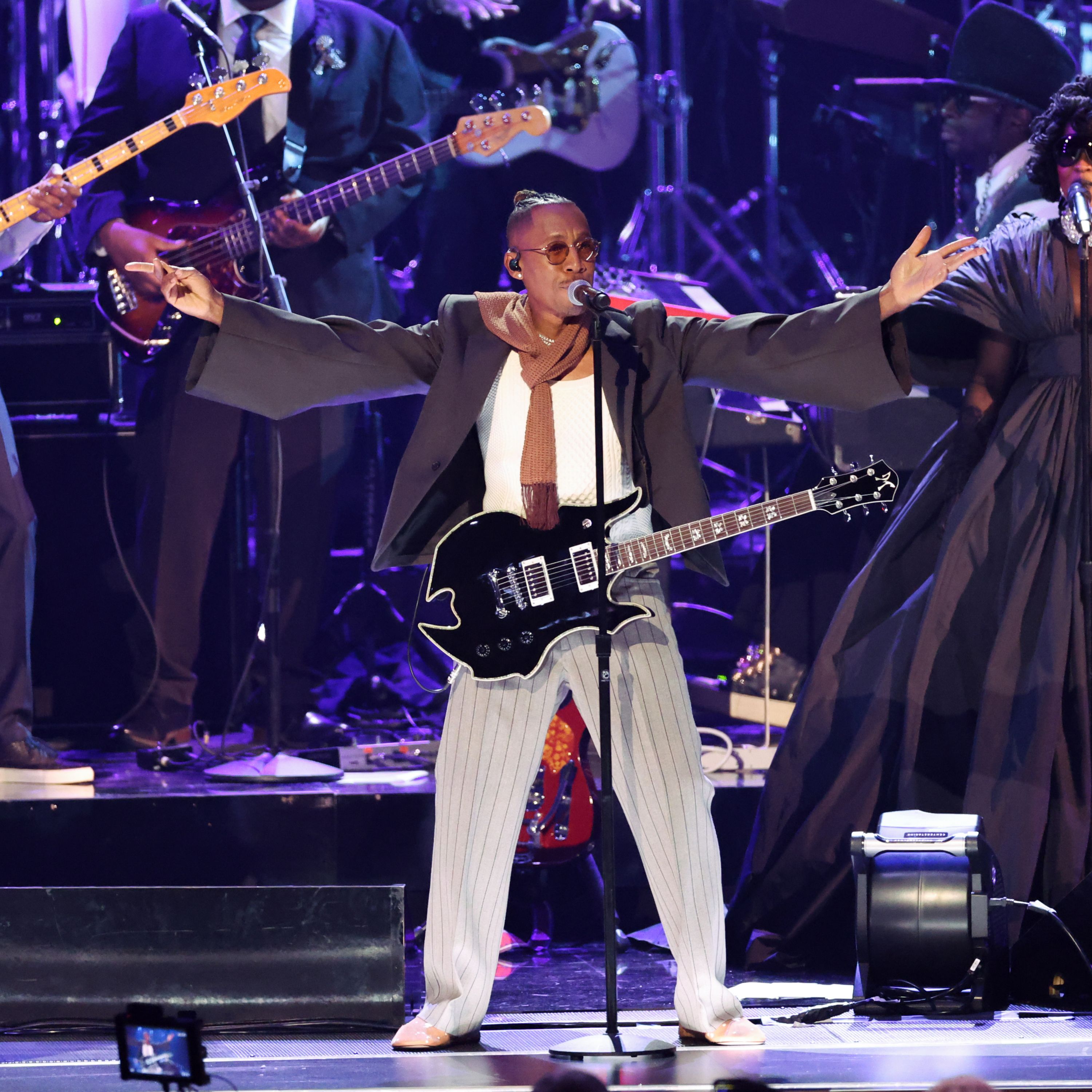
Loading summary
Transcript45 lines
- [00:00]
A
WNYC Studios is supported by Odoo. When you buy business software from lots of vendors, the costs add up and it gets complicated and confusing. Odoo solves this. It's a single company that sells a suite of enterprise apps that handles everything from accounting to inventory to sales. Odoo is all connected on a single platform in a simple and affordable way. You can save money without missing out on the features you need. Check out Odoo at O D o o dot com. That's O d o o dot com.
- [00:39]
B
This is all of it. I'm Alison Stewart live from the WNYC studios in soho. Thank you for spending part of your day with us. I'm really grateful that you are here. On today's show. Ethan Slater will be here to talk about his new play Marcel on the Train. I along with his co writer and director Marshall Pelet. Excuse me. We'll also learn about the life of a musical great who is the subject of a new documentary. The director and producer of Billy Preston, that's the Way God Planned it joins us in studio. That's an amazing film by the way. And we'll hear a live performance from Brooklyn based singer songwriter August Pontier. That's the plan. So let's get this started with Oscar nominee Rafael Siddiq. If you've seen the 16 time Oscar nominated film Sinners, you've heard this song.
- [02:00]
C
Somebody take me in your arms tonight Somebody take me, Somebody take me.
- [02:25]
B
It's called I lied to you and it comes at a pivotal moment in the film and it is an Oscar nominee for best original song. In the film, the character Sammy, sometimes called Preacher Boy, serenades those in attendance at his cousin's newly opened juke joint. And something happens that can only be described as Smith Supernatural. The song was written and produced by Swedish Ludwig Goransson and my next guest, Grammy winning musician and record producer Rafael Siddiq. After being part of the successful group Tony, Tony, Tony Sadiq, launched a successful solo career, released five solo albums, worked with some of the biggest names in the music industry and composed songs for several films. He joins me now as part of our ongoing series the Big Picture celebrating Oscar nominees who work behind the scenes. Raphael, welcome back to all of it.
- [03:17]
D
Hello. Thank you.
- [03:19]
B
So good to talk to you. How did you meet Ludvig and director Ryan Hugler?
- [03:26]
D
I met Lig just because I met him through a friend of ours and, and I visited him one time and we just had a conversation about music and producing and then I met Ryan also through, through, through film Too from him. When he did Fruitville. I met him. We never met in person. We met over phone. And I worked his brother, his brother is also an artist and I worked with him and we, and we're both from Oakland, California, so we, we have mutual friends. My brother and his, my late brother Dwayne and, and Ryan Coogler's dad. Good friends. Was really good friends.
- [04:02]
B
Okay, so from what I've read, they just kind of rolled up on you and said, hey, do you want to help us with sinners one day?
- [04:08]
D
Yeah, that's exactly how it happened. They called me over to the studio, sort of put like an outline of the script in front of me and Luke Wake kind of went through the script and Ryan went through the script and they said it's gonna be a very. It's a different movie. It's a small independent film and we need a song for it and we need it today if you can write it right now before you leave. And that's how that went.
- [04:30]
B
So could you do that literally? Like right now?
- [04:33]
D
Right now I'm thinking I got a chance to go back to my studio, which is in North Hollywood, maybe 20 minutes from Ludwig's beautiful studio. And they said, we leave in three days to start shooting in New Orleans and we would like it if you could do it now. So that happened. And right there me and Ludwig just grabbed some rubber mounted blues guitars, acoustic guitars, and started riffing, started going for like guitar licks. And from there, next thing you know, I'm on the microphone writing and singing lyrics.
- [05:07]
B
That's wild. So that, so what kind of guitars, what kind of guitars did you use?
- [05:12]
D
It's just, it's this place in, in Los Angeles in Silver Lake. It's a little small house that sell these rubber mounted acoustic guitars. Like they're just no names. He takes these guitars and restores them. And I had one and Lukewith, he had some too. And that's how we. It's of the month. The Muppicans. The band, the British band. I don't know why I'm messing up their name, but I worked with them, the lead singer once and he came to me, came to my, my studio and he had this beautiful guitar. I'm like, where'd you get that from? In London? He said, no, I got in the Silver Lake and Muffin and Sons.
- [05:56]
B
Gotcha.
- [05:57]
D
Yeah.
- [05:57]
E
And.
- [05:57]
D
And I went right there and I bought this guitar and who would know I got a chance to use it on In Centers. And Ludwig had one too. And that's How I got it. It's a no name guitar, but it sounds damn good.
- [06:10]
B
Director Ryan Coogler, he's known for having a very specific vision of his films and he executes them with meticulous attention to detail. What is something that you learned about the process of creating art after working with him?
- [06:30]
D
I think I learned that, you know, you know, having great people and great dps and everybody around him is very crafty, you know, very crafty and, and he has a vision, you know, you want to get it done. You. So you have to have great creative people around you to pay attention to detail, to film people, to study film and study music. You have to love all the facets in film. You just not just your script. You gotta love everything about film. You gotta respect other films that came before you and other creative people that are around you at the same time that are creators. That's what I learned.
- [07:11]
B
How common or what was different, I should say, between working on Sinners versus some of the other movies that you've worked on.
- [07:20]
D
Sinners was a little different because it happened so fast. But I work with John Singleton a lot too, the late John Singleton. And he also would just tell me, give me a scene without giving me the script. So I had some practice and. But this was different because it was, you know, I was writing a song for someone to sing versus just putting music to film. This one really lived in the film. It was almost like propyne to a Prince movie. It really, if it really tells the story of, of the Sammy character. And I didn't know that going in, I just started singing someone take me in in your arms tonight. I didn't really think about the character had this problem with his dad being a, you know, a Pentecostal pastor who didn't believe anybody should sing the blues. But with Ryan, Ryan uncle, who he dedicated the movie to, he was the very. He was a blues lover. When Ryan was telling me about it, he was saying how. And in the south when you sing blues, it was almost like the devil's music and church was God's music. And growing up in Oakland, California, I grew up with a lot of preachers, kids. And that was the story when a lot of us, you know, your parents would tell you you shouldn't play secular music. So we. I was up against that a lot. So it was easy for me to visualize this character and sing in that voice and you know, and sort of push that narrative at the same time. Thinking about, you know, Muddy Waters and Holland Wolf. I'm a huge you know, Delta blues guy too, because my dad used to sing blues and play a lot of Howlin Wolf around me. So I, I wanted to put in the spirit of that and, and to my knowledge now, knowing they picked so much authentic music for that movie, that was a, you know, that was the struggle they would be up against. And they sort of really the best people out of Clark's, you know, and out of Mississippi. And I think that was the difference for me.
- [09:28]
B
We're talking to musician, songwriter and producer Rafael Siddiq about his career and his Oscar nominated song from Sinners as part of our ongoing Oscar series, the Big Picture. Let's start with I lied to you. Which came first, the music or the lyrics?
- [09:44]
D
The lyric came first. I lied to you. Yeah, that. That came. I don't know. That just popped out of my head and I lied to you. And I was telling. Look like I have this idea since while we were talking just saying, you know, I had a. In my mind say they say the truth hurts, so I lied to you. You know, when you talk to somebody, you want to tell them like, you know, you know, you don't want to lie. And I always knew that bluestones are very hooky and they always have these different type of hooks that you have to catch somebody after the guitar solo. So I was like, they say the truth hu. So I lied to you. I love the blues, you know, so I don't know. Then I said, so out the blue, I think the ancestors just came down and grabbed me because I don't know why, I just start screaming, somebody take me in your arms tonight. And once I saw the movie because I actually didn't. I wrote the song. We, me and Lucas wrote the song and I didn't see the movie until I screened the movie with. With Ryan and some of the. Some of the. Some of the staff. And when I saw somebody take new arms tonight how the character Miles Canton would have his arm up. His arms up in like singing to the heavens. Some somebody take me arms tonight really gave it a different meaning. When I watched the movie against listen to the song against Pitcher was really different. So it took me a minute to go like, wow, how did that happen? So I said, you know, it couldn't have been me. It's just got to be a vessel things that just coming through me. Maybe Ryan and put together with their movie coming from his uncle to him, coming from probably my father to me and Lukewar dad is all the way in Sweden and he's a huge Muddy Waters fan and and so I think the love of the music and just being very authentic just. Just kind of poured through the whole film and. And the music.
- [11:39]
B
Let's listen to a little bit of I lied to you.
- [11:47]
C
Something I've been wanting to tell you for a long time. It might hurt you. Hope you don't lose your mind. Well, I was just a boy about 8 years old? You threw me a bible on that Mississippi road. See, I love your pop. You did all you can do. They say the truth hurts. So I lied to you? Yes, I lied to you. I love the blues. Somebody take me in your arms tonight all right. Somebody take me in your arms tonight? Somebody take me.
- [13:01]
B
So Miles Caton sings the single. He was a guest on our show a couple of weeks ago. What do you find unique about his voice and the way he sings that song?
- [13:12]
D
Mouse Canton has a. A huge unique voice, you know, and, you know, he's like 20 or 21. I don't know if he's 21 yet. He just has a very unique, strong, sort of like second tenor, I would say, voice. But it fits the world that he wants to be in as far as records he want to make going into the future. But for this movie, it. He. He could have been. He could have been in those times singing a song. His voice uniquely fits the. Everything about the film. Every. Every shot of it. When he's walking, he's talking, his talking, his acting voice blends right into the. To. To a singing voice for this film. So it goes so good with the song. And, you know, certain instruments sound good with voices, and his voices sounds good with a blues, with a BL acoustic guitar. Before these. Before it became electric. He's, you know, so this worked out. It worked out perfect.
- [14:13]
B
I Lied to you is about Sammy forsaking his father's religious teachings to play secular music. You know, we're going to talk about Billy Preston next, this documentary. Who started it in the church? There's a whole lot that goes on when you start in the church and you move on to other kinds of music. How did your background. Your background with the church help you understand Sammy better?
- [14:39]
D
Well, I got. I grew up with a lot of preachers. Kids, right? And it was more. It's called Kojic Church of God in Christ. And. And also Fellowship was Sly and Family Stone with Sly's dad, Sly Sylvester Senior. And they would visit our church a lot, and we would visit their church. And, you know, Sly was pretty much our example because he was so, you know, big, and he was the world everybody Wanted to be sly. But the pastor, his dad would see. See me at the church and he would look at me because he saw me playing. He, he knew it's possible that I could be in the world and playing secular music. He would look at me and say, hey, you be careful if you go out there in that world. So I've. I known this story so many times, but my father was also a blues guitarist and he had, you know, three jobs. My dad had a janitorial service. He was a working guy. He's a sheet metal guy. He told me, he said, look, son, I don't want you to be scared to go play in the world because the same key in. Of the key of E flat is the same kid E flat in church as it is in the blues. And that really helped me out. And so my family was. Wasn't as strict. You know, I had to. I went to the type of church where my mother would go to church and come home and drink a ham's beer. You know, it wasn't like, you know, go fishing and put on B.B. king. Most of my friends went home. They couldn't listen to any blues. They couldn't play any games. They had to shake the dice or the girls had. Couldn't wear any pants, any fingernail polish. And, you know, it was very strict in my house. It was strict as far as, you know, what I had to do for school and be in the house at a certain time. Be respectful, don't. Don't bring any girls to your house. If you want to visit a girl, you got to visit the girl where her parents is at. I had that kind of house. But as far as music, yeah, it was. I had everything. Ohio players, Parliament Funkadelic, you know, playing loud, you know, and I grew up listening to a lot of, you know, Mamas and the Papas, the Carpenters. It was a lot of music. The Doobie Brothers were right in Oakland. Carlos Santa Tana was there, you know, Sheila E. I had just a epic, you know, collage of music and posters, so I didn't have that problem. But I did see it a lot. So I did relate to the Sammy's character 100%.
- [17:11]
B
I want to mention Sheila E. Raphael. When you were like 20 years old, you played a few concerts for Prince alongside Sheila. Either you like, 20 years old at the time. How did that even happen?
- [17:25]
D
I was actually 19, 19 going into it. We did the Parade tour with Prince and Sheila. It was the end of the revolution. They had the Purple Rain. They both had the same Band. Sheila lost her band after, I guess, the Purple Rain tour. And she hired myself, Timothy Riley, which was a member of the Tonys, and also Carl Wheeler, two of my friends. And both of them was Preacher's kids. So those are the kids I'm talking about. And we toured with Prince and Sheila in Japan on the Parade tour. It was amazing. It was amazing to see Prince at the top of his game right after Purple Rain. And I got a chance to, you know, meet Wendy and Lisa a lot. Mark Brown, which they were all in Purple Rain, Jerome, like, the whole band, the whole cast, the some of the light crew, some of the biggest productions I had ever seen in my life. So it was the best training I could ever get. And I got a lot of time, you know, hang out with Prince, you know, by myself, go out to lunch with him. And he really loved Oakland musicians, so he was really helpful to me. Things he would tell me, and he would say, hey, man, you want to come jam tonight? Because, you know, Winnie, Lisa, that was like the end of the band. So after gigs, I would play with him. You know, we will go to a club, and it would be like a concert, because he, you know, basically had to brought the concert to another venue after every show. And so I got the opportunity to, you know, sit and play with him, talk to him about some of the music that he loved. And it was amazing to see, you know, the Prince I saw in the movies and on record, and then talk to him and then see him, you know, tell girls, you know, you should. You should put on some clothes.
- [19:14]
B
Yeah, he didn't. You know what? He didn't like swearing, right?
- [19:18]
D
Oh, no, no, he. No, he did like swearing, but he started working with Larry Graham, which is a hero to everybody in Oakland and a hero to him, too. And, you know, Larry asked him one night, did you ever. Have you ever thought about not swearing on your show? And he said, no, he never thought about it. And then two days later, he came back and he never sweared again.
- [19:41]
B
Wow. Wow.
- [19:42]
D
Yeah.
- [19:43]
B
And you met Jerome.
- [19:45]
D
I met. I met Jerome. Jerome. Jerome told me I couldn't hang out with him. The first night in Japan, we went out, everybody was going out. He was like, yeah, you guys can't. You can't hang out with us. And so we go to the club, and Prince walks up to me, and it's all these Ford bottles there. Of course, I didn't know what Ford models were at this age, but I just knew it was a lot of beautiful ladies there. And Prince walks up to Me and go is. He said, hey, man, is there enough girls here for you tonight? And I'm looking around like, yeah, yeah. But they weren't interested in me. And so Prince walked up to me. And when Prince walked up to me and talked to me for, like, maybe like 10 minutes, he took me to a speaker and said, I want you to hear this record. And he said, let's go by the speaker. He told the DJ to start playing it, but he said, we got to stick our head inside the speaker. And that's probably why I'm hard to hear my left ear today. And they put on a record called Housequake. And it was before the record came out. I remember when Prince walked away, I made maybe like, 10 girls started talking to me for the rest of the night. And then Jerome Benton said, okay, now you can hang with us.
- [20:49]
B
Prince was your wingman?
- [20:52]
D
Yeah, yeah. So it was amazing. Sometimes I look at his album coverage and I can't. How lucky, how beautiful that was for me, you know, just to, you know. Then after that, when I was seeing him anywhere, I would see him. He would, you know, he will have somebody come get me. But I've always given him the respect and felt like he was the Prince. He was Prince. He. He deserved his space. So I would never, like, try to, you know, if I seen him somewhere walk up like, I want to say, what's up? I would never do that. But he would always find me and tell somebody, go get me. He go, go get him. And then he would sit and talk, and we would just talk about, you know, music independence, you know, the things he like to talk about. And he loved talking about Earth, Wind and Fire. He told me, Earth. When he saw Verding White at this club, and he looked at me, he said, see that? He's verting white. He said, you can't put a price on that. So we love some of the same things. We both love Larry Graham, we both love Sly. We both love Earth from the Fire. We both love, you know, Joni Minchu and. And it's kind of good to see as a youngster how. How music is so international if your ear is open and exposed to, like, Neil Young, you know, in the Beatles, and, you know, you just enjoy it all. And I. I enjoy it all and encompasses so many things. And that's why when it was time to write, I Lied to you for Sinners, I just. I'm just grateful that I was so well rounded that I knew exactly what I was supposed to do at what time. And when I was supposed to do it. So I contribute that to a lot of the greats that I've listened to.
- [22:28]
B
Well, you're one of the greats for folks. You've been a musician and a producer for a minute now. What draws you to other artists that you're interested in collaborating with?
- [22:40]
D
The one thing that draws me to other musicians is that they have a vision beyond calling somebody, calling someone. I work better with musicians who know exactly what they want to do and then I can sort of live in that world. If they can create the narrative and talk to me about it, then I could be a part of that, a part of that type of band. Because I'm, I'm from a band. I love band culture. And when I'm producing, I don't, I don't really like to call myself a producer. If I'm working with you, I try to make it feel like we're just a band, you know, if you play like you're just a band, it takes all the pressure away from it. And that's what I love. That's why I love collaborating. I tell people all the time I think I'm the best collaborator in the world. I said this, I just did a one man show called no Bandwidth last year and I have supported the show and I say I'm the best collaborator there is and the best collaborator in the world. And I said, you want to know why? Because I've never won a Grammy or anything from my own music, only when I collaborate with people. So I think that says a lot why I love to collaborate because I loved. I'm from a band culture. I've looked at a ton of album covers and I'm attracted to groups of people making music and creating narratives that's going to go forward.
- [24:09]
B
I have been speaking with musician and sometimes record producer Rafael Sadiq. He's up for an Oscar for the song I lied to you from the film Sinners. Rafael, it was really nice speaking with you.
- [24:21]
D
Thank you. Have a nice day.
- [24:24]
F
It's tax season and at Lifelock, we know you're tired of numbers, but here's a big one you need to hear. Billions. That's the amount of money in refunds the IRS has flagged for possible identity fraud. Now here's another big number. 100 million. That's how many data points LifeLock monitors every second. If your identity is stolen, we'll fix it. Guaranteed. One last big number. Save up to 40% your first year. Visit lifelock.com specialoffer for the threats you can't control terms apply.
- [24:54]
E
I'm Ira Plato, host of Science Friday. For over 30 years, our team has been reporting high quality news about science, technology and medicine. News you won't get anywhere else. And now that political news is 24 7, our audience is turning to us to know about the really important stuff in their lives. Cancer, climate change. Genetic engineering, Childhood diseases. Our sponsors know the value of science and health news. For more sponsorship information, visit sponsorship.wnyc.org.