Loading summary
Transcript44 lines
- [00:00]
Progressive Insurance Announcer
All of it is supported by Progressive Insurance. Do you ever find yourself playing the budgeting game? Well, with the Name youe Price Tool from Progressive, you can find options that fit your budget and potentially lower your bills. Try it@progressive.com Progressive Casualty Insurance Company and affiliates Price and coverage match limited by state law not available in all states.
- [00:29]
Alison Stewart
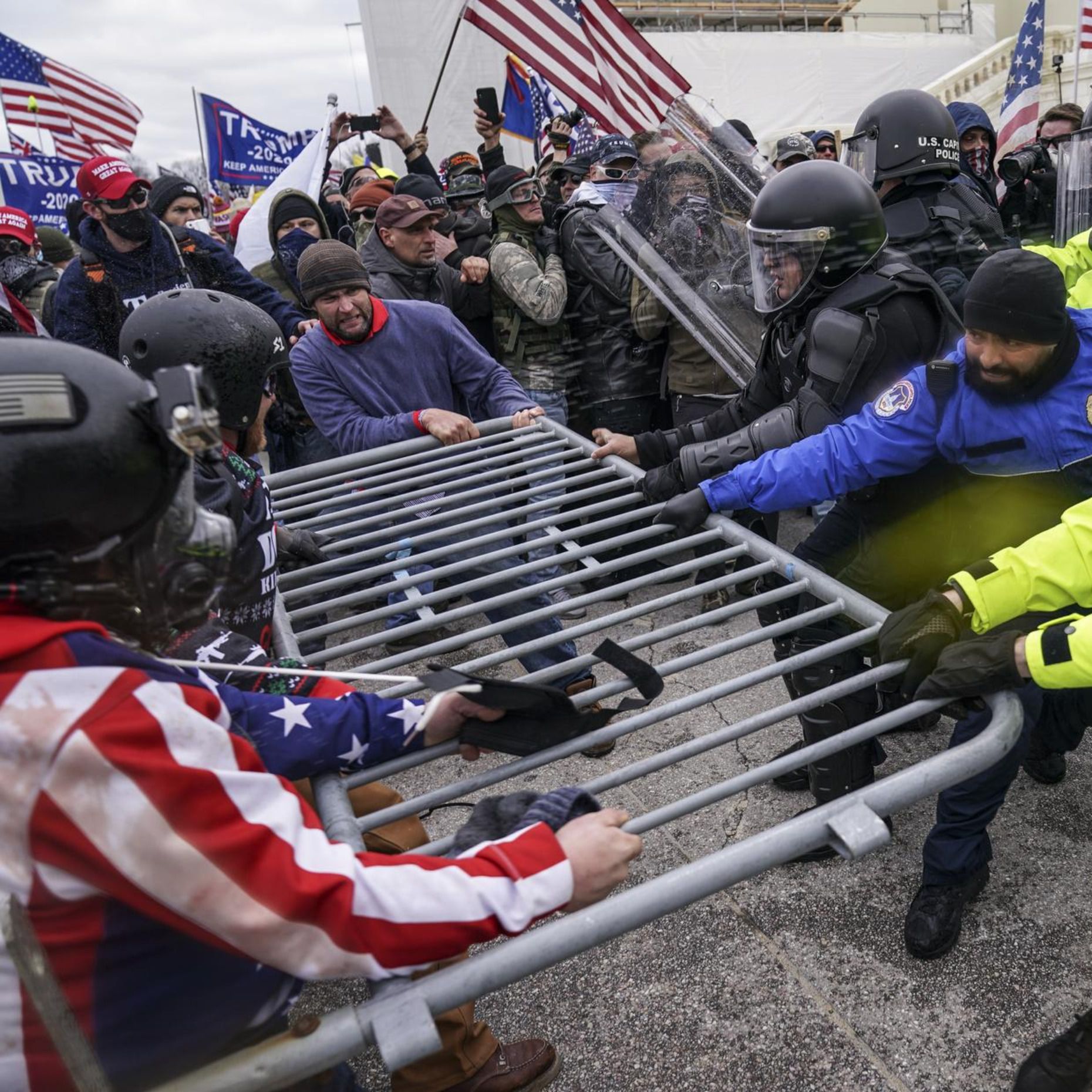
This is all of it. I'm Alison Stewart live at the WNYC studios in soho. Thank you for spending part of your day with us. I'm really grateful that you're here on today's show. New York is filled with great places to eat and many of them have lines. We'll talk about which ones are worth the wait with Grub street and New York magazine writer Tammy Teklamariam. The under the Radar Festival kicks off tomorrow and its creative directors join us to talk about some of the highlights. And it's time to start reading our January Get Lit with all of it book club pick. We'll preview you this month's pick with author Ocean Vuong. That's the plan. So let's get this started. On this day five years ago, a mob broke into the US Capitol building in an attempt to overturn the results of the 2020 presidential election. American citizens brutally attacked metropolitan and Capitol police officers as the rioters searched for lawmakers, the people, everyone from a construction worker from Ohio to a former exterminator from Ohio from Iowa, wanted to, quote, stand up for Donald Trump. They called for violence against Vice President Mike Pence and against House Speaker Nancy Pelosi, second in line to the presidency. Congressmen and women, senators, journalists, staffers and more hidden rooms throughout the Capitol as it became clear it was a vicious attack. It was hours before the mob was cleared from the building and the election of Joe Biden could be certified on his first day as a second term in office. In 2025, President Trump issued clemency for everyone convicted of a crime on January 6. One person who experienced this insurrection firsthand is Associated Press reporter Mary Claire Jelanik. She was there that day covering Congress, and in the five years since, she's been dedicated to interviewing everyone she could about what happened. The result is in her new book, storm at the an oral history of January 6th. Kirkus calls the book, quote, a document of central concern to all those concerned with the future of American democracy. It is out today. Mary Claire jelanik, welcome to all of it.
- [03:06]
Mary Claire Jalonick
Thanks for having me.
- [03:08]
Alison Stewart
Listeners, we'd like to hear from you what you remember the most about January 6th. Were you there that day? How do you hope January 6th is remembered in the future. Reflecting we're reflecting on the fifth anniversary of the January 6th attack. You can give us a call now at 212-433-969-2212,3333. WNY YC you were at the Capitol on January 6th. What do you. What do you. Is an aspect of the January 6th attack that's hard to explain to someone who wasn't there?
- [03:43]
Mary Claire Jalonick
Well, I think the basic facts are pretty easy to explain. But. But I think something that a lot of people don't realize, even people who are plugged in, is just how violent it was, especially, you know, outside the building when rioters were pushing past police to get into the Capitol and stop the certification of Joe Biden's victory. It was very, very violent. And as you just mentioned, there were more than 140 police officers who were injured, some who never went back to work after that. And as one officer told me in an interview for the book, there are probably a lot more than that who were injured, but a lot of them just went back to work the next day without complaint. Some didn't have that luxury, you know, were had permanent injuries. So, you know, I think that even talking to people who, you know, do know what happened, it's I think that a lot of people don't understand just how bad it got for a lot of these officers outside. And, you know, there were a lot of homemade weapons. People were beating them with flag poles, Tasers, all sorts of things. People had weapons. You know, it was it was very violent.
- [04:59]
Alison Stewart
When did you decide to do an oral history of January 6th?
- [05:03]
Mary Claire Jalonick
Well, I had all these interviews. I'd been covering it. I cover it. I'm a congressional reporter at the ap, at the Associated Press. And so I'd been covering it for a while, and I had been there. So I just sort of made it a practice to talk to people when I was interviewing them about something else even, and get their stories about January 6th. And I had a lot of that, especially from lawmakers. And it just seemed like it was a really good format for a subject that does, you know, have a lot of divisions over how people see it. And so my thought is just, you know, if you're hearing from the actual people who are there and, you know, out of those people's mouths, you know, as opposed to somebody's not my narrative. It's not anybody's narrative. It's not a partisan narrative that that might be a good way to sort of just try to, you know, lay out the facts of what happened that day.
- [05:56]
Alison Stewart
You include stories in the books from rioters. How did you find people who wanted to talk to you?
- [06:03]
Mary Claire Jalonick
Well, all of them didn't talk to me. Some of them are from about half the book is my own interviews, and then the other half is public documents. So, you know, there's been so much that has come out in trials. There are dozens and dozens of trials, and more than that. And, you know, there was testimony in every trial. A lot of the rioters testified on their own behalf. Then in every trial, there are police officers who testified, and there was Secret Service who testified. There were all sorts of interesting things that were sort of buried in these court documents. And so I was really able to use some of that as well for people who might not have wanted to talk to me. But I did talk to some rioters as well. I talked to a lot of police officers, and I tried to talk to as many people as I could possibly find.
- [06:49]
Alison Stewart
When you talked to the rioters and you read the rioters statements, what categories would you put them in? Because that sort of really came out to me when I read your book, that there are definite categories that people fell into.
- [07:04]
Mary Claire Jalonick
Yeah, I totally agree. I think it is interesting, and that's something that I sort of feel like I learned from doing this, is there really were such a diverse set of motivations of people who were there. There were certainly people who were there set on violence, who were set on stopping the certification, people who, you know, were. Had guns, you know, in a hotel room nearby in case things got escalated. But there were also people who were there who were just sort of along for the ride. They may have believed the election was stolen, they may not have. But some people just got caught up in the moment. Some people just walked in and walked around. One rider I talked to said he saw it as a party. His name was Jason Riddle, and he actually tried to reject the pardon that he got from President Trump at the beginning of his second term. But anyway, he really said that when he was inside the building, he saw it as, like, euphoria almost. He had, you know, he drank a bottle of wine that he had stolen, and when he went out, he talked to someone who said that they'd seen someone carried out of the building who had been shot, which I assume was Ashley Babbitt, who was a rioter, who was tragically killed when she was trying to get into the house. And he said, you know, she. He heard about that, and he said, no, it's a party in there. And the Person said, no, I saw this. And he said, you know, he was never the same again. And he tried, you know, he just ran and he left. He realized what he was doing was wrong. Certainly a lot of people never. Never did have that kind of a moment and certainly still think that it was justified and that the election was stolen. So there really were a lot of different types of people there, but it kind of, you know, became one big violent mob, as can sort of happen in those situations.
- [08:51]
Alison Stewart
But the Oath Keepers who are in the book, they had a definite plan.
- [08:56]
Mary Claire Jalonick
The Oath Keepers and the Proud Boys were two groups that were there. And I think, you know, the New York Times did a good investigation, you know, sort of early on, showing how they really kind of almost seem to have planned their entry and sort of some of the ways that they. They got through. And that, that was something that was really interesting to me. Putting it together was seeing how they approached the building and sort of found holes and, you know, found a way to get past police lines sort of with a group mentality. And, you know, some of it certainly does seem planned. And, you know, while some of it. So it really is. It's a large group of people, and I felt like that was really important to get some of their voices in as well, because, you know, you can't really have the complete story without having their thoughts in the moment as well.
- [09:52]
Alison Stewart
It's the fifth anniversary of the January 6th attack on the Capitol. My guest is Associated Press congressional reporter Mary Claire Jelanik, whose new book is called Storm at the an oral history of January 6th. Let's take a few of your calls. Michael is calling in from the East Village. Hi, Michael. Thanks for making the time to call, all of it.
- [10:12]
Michael (Caller)
Yes, thank you very much. I'm curious, your guest, if your guest would have any insight as to why the Fraternal Order of Police endorsed Trump in 2024 after so many police officers were attacked and injured. I'm just wondering if she would have any insight as to. As to why he received their endorsement. And I'll take the response off the air.
- [10:35]
Alison Stewart
Sure. Do you have any clue, Mary Claire?
- [10:38]
Mary Claire Jalonick
I actually don't. I don't have any, like, specific insight into that, but I. I do think that there are a lot of police officers, even some who are there who, you know, wouldn't speak out about what happened that day or maybe just don't, you know, have more complicated feelings about it. Talking to the police officers I have interviewed, they said that some of their colleagues are very supportive of Trump still, and you know, don't really see it in the same way that they do, even if they did experience some of the brutality. So I think that there's probably a complicated answer to that, but that isn't something that I've particularly covered, and I wouldn't probably give you the correct answer on that. But there is an interesting dynamic there.
- [11:21]
Alison Stewart
This text says, I spent that January 6th on the phone arguing with my MAGA father about what was happening. He was watching Fox News and was adamant that the riot was caused by FBI plants in the crowd. I watched on scene, CNN and believed a different story. In your book, you talk to people who are conspiracy theorists.
- [11:47]
Mary Claire Jalonick
Well, a lot of, you know, people who testified in court, certainly. I mean, there were. There's a lot of different, you know, as we see with kind of everything these days, people have, you know, all these sort of theories blossom about, you know, everything pretty much. And certainly this one has. Has not been immune to that. And there's a lot of different things that people say. I mean, I, you know, I'm like, every day I'm hearing new things that I hadn't even heard before. So, you know, my thought is just to try to get it out as much as I can just from eyewitnesses, you know, people who were there and can really give, like, a solid, you know, kind of definitive, nonpartisan look at what happened. Because there's Republicans in the book, obviously, as we've discussed, there's rioters in the book. And while people might have different viewpoints on the significance of the day, this set of facts is pretty consistent in terms of what happened that day.
- [12:46]
Alison Stewart
A lot of people with hindsight talked about how the morning before it all happened, it felt very different in Washington, D.C. i can remember going on Twitter, and I think it was a reporter from the New York Times saying, hey, there's something weird in the air. I'm paraphrasing there. Did you have that sense?
- [13:07]
Mary Claire Jalonick
Yeah, I mean, yes and no. I mean, I think I was definitely shocked when it happened, but I drove in that day, and what did shock. Not shock me, but surprise me was I saw a lot of people on the streets. Like, a lot of people on the streets. And it was during COVID so the streets were pretty empty. It wasn't like your average commute. And so. But then there were tons of people, and I was. I was, you know, it definitely gave me a clue of what the day might have in store, although not fully. But there were a lot of people walking toward the mall, and most of them Just looked like regular protesters. It wasn't really like a flag, like these people look violent. But I did just notice how massive the crowd was. And a lot of people I interviewed said similar things about driving in that it was, you know, several people said it was sort of eerie. And I think it was just everyone had so much anticipation. And people probably don't really remember the timeline, but we knew that Trump was pressuring Vice President Mike Pence to somehow delay or obstruct the count, but nobody knew what Pence was gonna do. Pence himself had already decided that he was not going to do that, but he hadn't told anyone that. And Trump was on the phone with him on that morning, still trying to get him to change his mind. He sent out a letter that everyone received at the same, at about 1 o', clock, which was right when the certification began. So really, until then, everyone was on pins and needles to, you know, really didn't know what was going to happen that day. So I think everyone just had sort of a sense of anticipation. But, you know, very few people I talked to thought that it would be that violent. I interviewed Nancy Pelosi for the book, and she said, we expected mischief in terms of process. We never expected violence. So, you know, maybe everyone should have expected violence. But I think that there's protests all the time around the Capitol. There's always something going on, and certainly nothing like that has ever happened that, you know, that in recent history that, that we've experienced.
- [15:15]
Alison Stewart
My guest is Associated Press congressional reporter Mary Claire Jelanik. Her new book is called Storm at the an oral history of January 6th. It is out today, the 5th anniversary of January 6th. Listeners, we want to hear from you. What are your memories of January 6th? Were you at the Capitol that day? How do you hope January 6th is remembered by history? You can give us a call. 2124-3396-9221-2433. WNYC. Let's talk to Dennis from Manhattan, who has a question. Hi, Dennis, thanks for calling in with your question.
- [15:48]
Michael (Caller)
Hi. Thank you. Something I've been curious about from the very day why didn't the Metropolitan Police and the Capitol Police resist more vehemently when it became obvious that this mob was going to breach the Capitol? I mean, if, and it's often been said, if the rioters are black or brown, they probably would have been a lot more violence to prevent them from getting into the building, much less do the havoc they did inside. So did you talk to law enforcement people about was the Decision made, not to push. It seems to me they just fell away. They just fell away, and they let these people reach the barriers and get into the building.
- [16:32]
Mary Claire Jalonick
So, no, I mean, I think what happened from my interviews and from talking to people is not that they wanted anything to happen or that they were in any way conspiring. They were so outnumbered, and it was like a surprise attack almost, or at least that's how it seemed to them. The Capitol Police who were there, the Metropolitan Police were there about 10 minutes into the fighting, but the Capitol Police that was originally there, so few of them, and there were so many rioters. And so, you know, talking to some of these law enforcement, they said they, you know, they. They thought that these people probably had weapons. They, you know, were trying to just sort of figure out a way to manage the situation so it didn't become a bloodbath. I mean, I think that's what. And it's really kind of amazing that none of them did pull a weapon when they were, you know, being attacked. But I think most of them talking to people, they really thought that just sort of going toe to toe would be an easier way to try to. To push them back. And a lot of them just knew that they wouldn't be able to. The crowd was so large and there were so few of them that they wouldn't be able to. So in some cases, they did have to, like, you know, they. They were overwhelmed, and people got past them. But, you know, as. And I chronicled this in the book, but this. There was sort of a big final fight in a tunnel that was really on the very front of the West Front. It's where Biden was. Did walk through two weeks later to be inaugurated and on the inauguration stage. And I think, you know, those police officers who were in that tunnel, they received some of the worst of the injuries, and they were going toe to toe with these rioters, and they certainly didn't fall back and let anybody go anywhere. And they actually held the line. And that crowd that was behind those rioters in that tunnel was thousands of people. So while a lot of people did get into the Capitol, if they had fallen back in that tunnel, it would have been much worse. And who knows what could have happened inside if that. That final large group had gotten in.
- [18:28]
Alison Stewart
I have a question for you. From your book. What instructions were the Capitol Police given? And what instructions were the Metropolitan police given? The D.C. police.
- [18:39]
Mary Claire Jalonick
You mean, from their superiors?
- [18:40]
Alison Stewart
Yes. Early on in the book, which I found kind of interesting.
- [18:43]
Mary Claire Jalonick
Yeah. I mean, they weren't given many. It was there. Yeah. And I was going to answer that from the question as well. There really wasn't. There was not an order. There was not a plan. And especially, I mean, Metropolitan Police really kind of came in and saved the day because Capitol Police were so overwhelmed. Not that those officers weren't doing everything that they could, but they just, you know, they didn't have a lot of orders over the radio. They didn't really know what to do. Pretty much everyone I've talked to has talked about how it was just total chaos on the radio and they could hear their, their colleagues being attacked and they really didn't know what to do. So a lot of it was just individual officers trying to figure out a place to go and where they were most needed. So there weren't that. The Metropolitan Police did have people and you saw, you know, in the end, they did hold the line there at the end, but they, they did have people sort of trying to, to manage everything. But again, it was just such a huge crowd. It was almost an impossible situation. But they, Capitol Police has spent like the last five years trying to beef up their security. And I talked to the former police chief who came right sixth last week for an article, an AP article on the wire about police officers five years later, and he says, you know, if they tried this again, they would not get into the building. So there, there has been a lot of, you know, effort to try to just beef up not only intelligence but training and equipment. There was bad equipment there for a lot of the officers had shields that were breaking in half. You know, it was a, it was a security failure. And I think that's, that's what we saw with people getting inside.
- [20:20]
Alison Stewart
We're talking to Mary Claire Jelanik of whose new book is called Storm at the an oral history of January 6th. We'll have more after a quick break. This is all of it. You're listening to all of it on WNYC. I'm Alison Stewart. It's the fifth anniversary of the January 6th attack on the Capitol. My guest is Associated Press congressional reporter Mary Claire Jelanik, whose new book is called Storm at the an oral history of January 6th. It is out today. It's really interesting the way your book is, and it's a really important read and everybody should go by it. I'm just gonna say that, hold on to it because it's a TikTok of what has happened, but it also gives a little bit of perspective. And the one thing that I thought was very interesting was that inside the chamber, they weren't sure what was going on because they're. Because of the. No cell phone man. Right. But they thought things were kind of. There was. They knew something was going on, but they didn't understand the magnitude of what was happening outside or about to happen inside the building. When did it become clear to lawmakers that this was a real problem?
- [21:42]
Mary Claire Jalonick
Yeah, well, there was the moment that people broke in the House and the Senate had actually split up. The certification is one joint session, but because there had been. Republicans had challenged Arizona's electoral votes. The two chambers had split up, and then they had up to two hours to each debate and vote on whether to reject Arizona's electoral vote. So they were doing that when people broke in. So the Senate was in the Senate and the House was in the House Senate. They broke in on the Senate side. The first rioters who broke in broken on the Senate side. So the senators were still just like huddling in the chamber and they could hear people. I mean, the people came right up against on the other side of the doors. And the. Almost the entire Senate was there, which is actually really extraordinary because that doesn't happen very often, only in sort of special cases. Is like the entire Senate in the Senate. And so it was like, you know, they were all just sort of security officials were trying to figure out what to do. Mike Pence was pulled from the chair because he's the president of the Senate. And they eventually did evacuate. But when they evacuated, people were already like, just right on the other side of the doors. And they did eventually get into the empty Senate chamber in the House. That's where I was that day. It was pretty wild because they just kept going. They didn't actually recess even passed when people had. When the Senate was evacuating. So they just kept. They were. Sort of. Kept going. People were looking at their phones, trying to figure out what was going on, but it really was like sort of an island and weren't. And a lot of people described those moments in the book, just sort of like not really knowing what was going on, but looking at their phones and sort of, you know, we couldn't see what was going on outside. It was just. We didn't know. So eventually they did, but, you know, they didn't evacuate the House until people were at the doors, beating on the doors, trying to get in, breaking glass in the doors. And, you know, there were guns, you know, police officers with guns at the doors. And I was in the gallery with other reporters and also some members who were up there spacing because of COVID And so, you know, most of the house got out, but then those of us who were in the gallery, it took a little bit longer for us to get out.
- [23:56]
Alison Stewart
I thought it was also interesting. It wasn't until Nancy Pelosi had to be removed that people really realized there's something going on. Like she didn't want to go. And they were like, her, her security detail. Detail was like, you have to go. It's serious this time.
- [24:13]
Mary Claire Jalonick
Yeah. The way she describes it is she was just sort of like, no, I can handle this. And they were like, no, you're going. You know, they pulled her off and brought someone else in to be there. But I did not see that personally. I was up in the gallery above her and we don't have like, I mean, we can lean over and look, but I didn't even notice until after she was gone. And then suddenly we were like, oh, she's gone. And I think a lot of other, a lot of lawmaker felt the same way. They just sort of looked up and there was someone new there. So, yeah, it was very fast and certainly dramatic because everyone knows if the speaker has suddenly been pulled from the chair, that things are not okay. And then they started pulling all the other leadership, Republican and Democrat leadership, out too, and they were all sort of whisked off to a secure location.
- [25:01]
Alison Stewart
Let's talk to Jesse from Mount Kisco, New York. Hi, Jesse, thank you so much for calling, all of it. You have a question? Thank you.
- [25:09]
Jesse (Caller)
Hi there. Yes, thank you so much. I have a question about Mike Pence. First of all, just want to say thank you so much for writing this book and I want everyone to know that we will not forget 1-6-ever. And thank you so much. My question is about Mike Pence and I'm wondering if the AP reporter, Ms. Janet, can walk us through that. One of the things that emerged from this violence was that I learned through reading about it that, that Mike Pence decided not to get into the car. That who. I don't know who the self service or somebody was offering him to drive away from the Capitol. And I just wonder if you could kind of walk us through that a little more. Who were the people who were driving him, who made those decisions to take.
- [25:58]
Lorraine (Caller)
Him from the Capitol?
- [25:59]
Jesse (Caller)
Like, what does that whole thing look like? Basically?
- [26:02]
Mary Claire Jalonick
Yeah. And that was first detailed in the January 6th Committee. That Democrats that led January 6th Committee a couple years ago interviewed a lot of his staff and found that, that they told that story. And I used some of those interviews in the book. And basically they got. And then he wrote his own book where he also talked about this, but he was sort of hiding in a. He was like, in his office behind the Senate, as people were. I mean, Mike Pence was within feet of rioters, basically. They got him evacuated eventually, but when he. When he left the Senate area, he. He was right there with people kind of coming around the corner. And, you know, they got him to a garage, which is where they were trying to evacuate. And the Secret Service, you know, doesn't mess around. And they were like, we need to. We need to get out of here right now. And they had a car. And I think the way he described in his book was it was like slowly moving when he approached it. And he said, I am not getting in that car. He said, we cannot see the world, cannot see the vice president fleeing the Capitol in a car. And, you know, because people got into the building. So he felt really, really strongly about that. And one of his aides, I think, said that maybe they got into the car, and he said, I'm not getting it. You know, I think they promised him, like, oh, if you just get in the car, we won't move. And he said, no, I'm not getting in the car, because I don't think he trusted that. So he felt really strongly that he needed to stay in the Capitol. And he was in that garage all day and, you know, communicating with the Capitol Police, calling the Pentagon, telling them to clear the building, you know, get National Guard there. So he really felt strongly that, you know, while congressional leaders were whisked away, he. He stayed in the. In the complex the entire time.
- [27:44]
Alison Stewart
Let's talk to Lorraine in Ocean Grove, New Jersey. Hi, Lorraine. Thanks for calling, all of it.
- [27:50]
Lorraine (Caller)
Thank you. And again, as the previous commenter guest said, thank you for such a wonderful reminder to all of us, not only the event, but the education it gave all of us as individuals and citizens. My immediate reaction that day working was my children. I'm an older parent, actually was in my late 60s, and I still had children 10 and 11 years old. And my immediate reaction was fear for their safety because I only heard pieces of what was going on. But once I arrived home and realized he scented what was happening, I think this reminder has to be more than just a memorial, although the memorial is important for all of the victims that continue to suffer and gave their lives. But I think we had quite an education. I'm born and raised in New York City. I grew up on the Lower east side. I never knew what fear was ever that day. I understood fear on a very primal level and a very individual level because I think the only service, except for all these recollections and wonderful commentaries that have been written and reviewed, is that we have to understand we may not be able to write a book, we may not be on scene reporters, but we're individual citizens and we have to make sure that we individually do everything we can because our rights, our votes were violated that day. And the reason Pence didn't want to get in the car, aside from fearing for his safety, was because he knew that if the vote was challenged and if Nancy Pelosi was endangered, our government would have fallen that day.
- [29:40]
Alison Stewart
Yeah. Lorraine, thank you so much for the call. We're going to wrap up. There's so much we could talk about. But I wanted to ask you, Mayor Claire, what surprised you, what has surprised you about the way that January 6th is remembered or forgotten five years later?
- [30:01]
Mary Claire Jalonick
Yeah, I think that, you know, we have seen a lot of people try to downplay the violence and to just really not talk about it at all. I think that's a lot of what we see in the Capitol. But, you know, I, I do think that there are a lot of people who still want to remember it. And that's not just Democrats in the Capitol. I think there's a lot of Republicans, too. And I was pleased that, you know, while a lot of people wouldn't talk to me, a lot of people did talk to me about what happened that day and their own experiences. So, you know, I, I think that there it's not going away. It is definitely, you know, it, there's a lot of different ways that people are sort of seeing the significance of it. But I think that, you know, people are still remembering it and I don't think it's going to go away anytime soon.
- [30:48]
Alison Stewart
The name of the book is Storm at the an oral history of January 6th. It's by Mary Claire Jelanik. Thank you for your time today.
- [30:57]
Mary Claire Jalonick
Thank you so much.
- [30:59]
Progressive Insurance Announcer
NYC now delivers breaking news, top headlines and in depth coverage from WNYC and Gothamist every morning, midday and evening. By sponsoring our programming, you'll reach a community of passionate listeners in an uncluttered audio experience. Visit sponsorship.wnyc.org to learn more.