← All Of It with Alison Stewart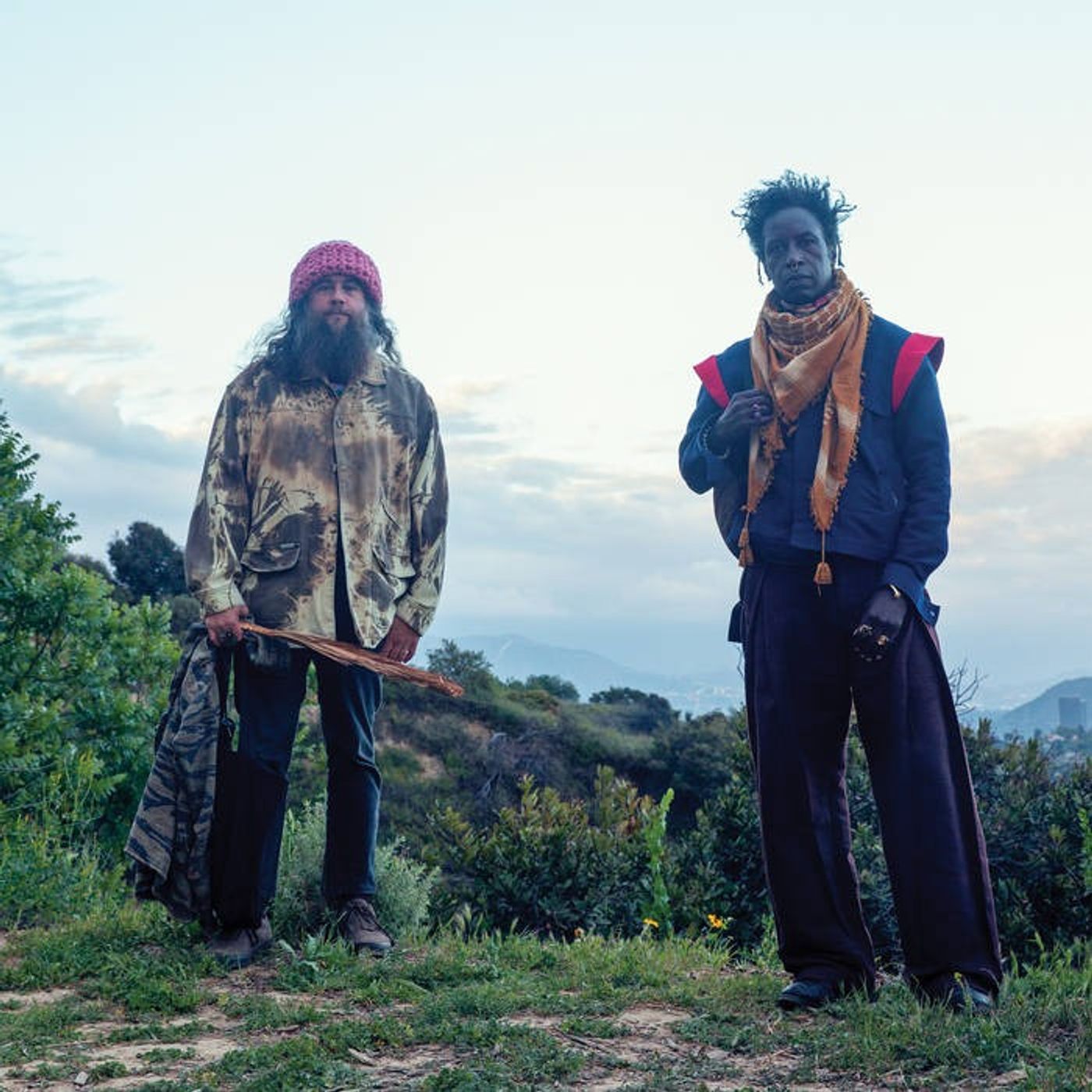
All Of It with Alison Stewart
Saul Williams on 'Sinners' and His Latest Grammy-nominated Album
00:16:44
Saul Williams joins to discuss starring in "Sinners" and his Grammy nominated album, Saul Williams meets Carlos Niño & Friends at Treepeople.
Loading summary
Transcript34 lines
- [00:10]
Alison Stewart
This is all of it on wnyc. I'm Alison Stewart. In the first scene of Sinners, Sammy's father, the preacher Jedidiah tells his son, you keep dancing with the devil, one day he's gonna follow you home. It's a prophetic line. It's delivered by someone who has built a reputation on revelatory prose and poetry. My next guest, Saul Williams. Williams play Jedediah. And although his acting and filmmaking credits run deep, he's also a poet and a spoken word artist. His Grammy nominated album is titled Saul Williams meets Carlos Nino and Friends at Tree People, which tells you all you need to know about the who, what and where. But that title belies a track list of experimental improvisational music beneath verses, breaking down complex systems and historical injustice. The album has earned Williams his first Grammy nomination in the category of best spoken word poetry album. And Saul Williams joins us now. It's nice to meet you.
- [01:10]
Saul Williams
It's a pleasure to meet you. Thank you for having me.
- [01:12]
Alison Stewart
We wanna talk about Sinners for just a moment. When Ryan Coogler approached you about this role, what were your first impressions?
- [01:20]
Saul Williams
I mean, obviously I was excited. You know, I have a great reverence for his work and for his spirit that he puts into his work. And when first read the script, I was blown away. I was completely blown away. Of course, when he first called me, I hadn't read the script and I did a slight reading audition on camera with him. And my father was a preacher, although he was from Brooklyn, so he wasn't a Southern preacher. But I understood what was going on and I was very excited to participate and I'm really thankful for being included, you know, in this beautiful ensemble. It's such a beautiful ensemble.
- [02:08]
Alison Stewart
You have this gorgeous speaking voice. How did you work on the Mississippi accent?
- [02:14]
Saul Williams
Thank you. We all had vocal coaching. We all had vocal coaching. Of course, that was something that I was, you know, excited to do and prepared for. You know, our background, my background's in theater and drama. In terms of training and working with a vocal coach is crucial in getting away from, you know, the normal ways that we might approach language. If you come from New York like I do, or wherever you come from, and so that time period and what have you had to listen to? A lot of music and also preachers, whatever recordings were available from that time period. And. Yeah.
- [02:55]
Alison Stewart
Oh, that's interesting. What did you learn about preachers from that time period? About the way they spoke?
- [03:02]
Saul Williams
Well, I mean, yeah, that's when I point to the dichotomy between, like, the generation of preachers like my father, who, you know, many of them, New Yorkers, East Coasters, many of them for that generation, were very inspired by ministers like Dr. C.L. franklin, you know, and so there's a style. There's a style that was contemporary then that belonged to that, and that also belonged to someone like Dr. King or what have you. There is a style of that period. So this predates that period. We're also talking about a preacher that's. That's also a sharecropper living on a plantation. So there's. There's just a difference in relationship to the language. There's. There's. Yeah, there's so much to pick out, but. But it was. It's like studying the blues, actually, because there's a lot of synchronicity between just the use of language, you know, from that time period in the south versus how a New Yorker speaks.
- [04:05]
Interviewer from WNYC
I'm speaking to Saul Williams. He's nominated for a Grammy for his album Saul Williams meets Carlos Nino at Tree People. Of course, he appears in the film Sinners. Let's talk about the album. How long have you known Carlos Nino?
- [04:20]
Saul Williams
I've known Carlos for probably about 25 years. The first time I ever came to Los Angeles to perform, when I released my first single, I. I was brought out by Carlos, who was a young promoter in la, and he flew me out to perform. It's at that show that I met my first producer, Rick Rubin, and a lot of collaborators that I ended up working with over time. Yeah, I met him that long ago. We've been friends all this time. So I knew him as a promoter first, later as a musician and producer and. And ironically, because we've known each other so long, we were excited about the fact that we were going to work together in a creative capacity for the first time. And we put together this show that the album is. It's a concert that was recorded on December 18, 2024. And we put together that show to announce that we were headed into the studio to record an album. And it was just our excitement about working together for the first time after being friends and associates for so long. And the show was completely improvised, and it wasn't intended to be an album. We recorded it because we thought maybe there was stuff that we might be able to pull from it for our studio recording. And a few months later, the label, International Anthem, said, hey, we're listening to this recording of the show, and how would you feel about releasing it as an album?
- [05:46]
Interviewer from WNYC
How did you feel about that conversation?
- [05:50]
Saul Williams
I Mean, I was like, sure, sure. I mean, okay, yeah, I mean, I was super open to it. I had, you know, like you said, it's been, it's. I've, I've been working and performing as a poet and as a musician for, for quite some time. And so the level, level of comfort on stage is, is something that, you know, you build your chops up over time. And so I was confident that, that if they found it interesting, it would be interesting. I mean, ironically, I stepped away from that show because I was jet lagged. I had just gotten back from a, a month long artist residency in Zanzibar the night before and so when I got off stage, I called my wife and said, I don't remember if I said anything. I feel like I didn't say anything. Like I was just listening to the music. I don't feel like I said, oh.
- [06:44]
Interviewer from WNYC
You said some things. Why is Carlos a good collaborator? You said you knew him a long time, you worked well with him or at least you were friendly with him. What made him a good collaborator?
- [06:57]
Saul Williams
Because he's an extraordinary listener. And so I mentioned that I met the first producer I worked with, Rick Rubin, when I was performing at a show that Carlos promoted back in the day. I've worked with a number of producers, I've worked with a lot of musicians. And Carlos has an ear that is just a blend of. I mean, first of all, he's someone who always, we used to tease him because he'd be like, oh, I want you to meet someone. And you know, we're in our 20s or whatever. And he'd bring someone who was like 78. He was like, this is the drummer that played on so and so and so and so. And like his friends were always like extraordinary senior citizens and you know, but music, music people, really important figures that he would not let you know, be disappeared in any way. And simultaneously he was a DJ for the radio in LA and was spinning a lot of contemporary electronic music. He's worked with extraordinary people like, like Mad Lib or, you know, or, or lots of data lists. A lot, so many. Of course we all know his work after working with Andre 3000 and producing that album. But he has just a wide expanse of appreciation between electronic music, acoustic music and, and just a beautiful world of sound that he appreciates. And he's extremely as a listener and so he's a wonderful curator as well. So also, you know, like there was no rehearsal for the musicians on stage in this album. He just knew who he could call and who would Be ready for an occasion such as that. And that's what I love about him. He's always correct in that sense.
- [08:46]
Alison Stewart
We're gonna play a track from Saul Williams meets Carlos Nino at Tree People, and I believe it features AJ Monet. Yes, it's called the Water Is Rising. What do you want to tell us about this before we hear it?
- [08:58]
Saul Williams
Yeah. So Aja is an old friend of mine, a poet also from New York. And so I had called her earlier that day and said, hey, you know, we're doing a show at Tree People, which is a beautiful amphitheater in a, you know, kind of ecological center here in a park here. And I said, you know, you should bring something to read because maybe I'm gonna call you on stage, which is how poets communicate with each other. Like, be ready in case I call you. So she was like, sure. And so at one moment I just. I saw her sitting in the audience and I just pointed to her and called her on stage. And what you hear is what she did.
- [09:31]
Alison Stewart
Let's hear the water is rising.
- [09:35]
Aja Monet
The water is rising. In other words, the water is rising in the relic of rain. Insects gossip about us. The dull huffing puffing of islands. The hush money howl of advertisements Electoral politics of greed. Godless truths on the mouths of mountains. An inauguration for the growling earth. Words caught in a wayward wing. The rage of rivers dressed as comrades. I walk with the runaways I walk with the runaways.
- [10:31]
Interviewer from WNYC
We're talking to Saul Williams. The album is Saul Williams meets Carlos Nino at Tree People. It is a Grammy nominated album. You bring things to New York City at one point on this album. The sort of the history of Wall Street. When did you learn this history?
- [10:50]
Saul Williams
I learned it. Gosh, how did I learn it? I was doing research for a film, actually, that I've been writing kind of about my upbringing and also a lot of fictionalized stuff. And so I came across the history of Wall street and Wall street as kind of the first apartheid Wall street that was built in the Americas and it was built by the Dutch East India Trade Company. It was a wall that was built to keep the Lenni Lenape out, essentially. And so, yeah, and I end up telling the story during the course of the concert just because I thought it was relevant in terms of the times, in terms of. I mean, like I said, It's December 18, 2024. So Trump had just been elected. We had all been witnessing what had gone on for the past two years in Pales. We were also talking about the apartheid wall outside of The Americas as well. And looking at the role of capitalism, whether we're talking about weapons industry or just, I mean, as we see in our current politic, the role that finance, the bottom line plays in erasing the lives and livelihood of black and indigenous people worldwide. There's a large history to it, and Wall street is the beginning of that history in the Americas. And so I thought it was an important story to share.
- [12:20]
Interviewer from WNYC
Let's play a little bit of this. This is called. We are calling out this moment. Let's play about a minute or so.
- [12:27]
Saul Williams
So the Dutch became very angry at the fact that after they had supposedly paid for this land that the Lenape did not leave, and decided to build a 12 foot wall around the lower half of Manhattan, a fortress, if you.
- [12:47]
Interviewer from WNYC
Will.
- [12:50]
Saul Williams
On the island of Mannahatta. It was a wall that was built to keep the Lenape out. When other Europeans came, they would charge them to enter the wall and say, well, they made a market right inside of the wall. The market exists to this day right inside of that wall, right on the island of Manahatta. And at this market, you could rent slaves because most people could not afford to buy them. But you could rent them for the weekend. You're building a house or doing work.
- [13:31]
Alison Stewart
You know.
- [13:34]
Saul Williams
You could rent them. You could buy furs, pelts, food. It was an exchange, a market. They called it that. They eventually called it the New York Exchange.
- [13:58]
Interviewer from WNYC
That's from Saul Williams meets Kirk Carlos Nino at Tree People. He is my guest. Saul Williams is, at the end of the album, you say, do the most that you can do in your lane. And some people might not be sure what their lane is when they think about it. How did you discover what your lane was?
- [14:17]
Saul Williams
Well, for me, I was drawn to theater and to music at a very young age. But my mother played a huge role in shifting my gaze on what it meant to be an entertainer. I say that because I came home in third grade after participating in a school play where I played Mark Antony and Julius Caesar. And I said, you know, I announced at the family dinner, like, I'm gonna be an actor when I grow up. And my father gave a sort of typical response like, I'll support you as an actor if you get a law degree.
- [14:54]
Alison Stewart
We had the same parents, I think. No, right.
- [14:57]
Saul Williams
And my mother, my mother said, oh, so you should do your next school report on Paul Robeson. He was an actor and a lawyer. And you know what I did in third grade? I did my first school report on Paul Robeson. And from that point forward, where I was forced to look up, well, what does it mean to be blacklisted? What is communism? What is art as propaganda? What is all of this stuff? It opened my mind to the power, to the power of the choice that I was making, you know, and it's in its relationship to culture, not. Not entertainment as escape. Right. But. But entertainment and art used as a propelling force, as an alternative fuel of the progress of society itself, you know, in its ability to uplift and empower, you know, members of society and to help shift the dialogue so that really solidified things for me.
- [16:05]
Alison Stewart
The name of the album is Saul Williams meets Carlos Nino at Tree People. It is nominated for a Grammy. Saul, thank you so much for being with us.
- [16:15]
Saul Williams
It's a pleasure to be here. Thank you so much for talking to me. And yeah, I heard part of the conversation with Delroy and Miles and yeah, sinners is such a beautiful film. Certainly encourage everyone to see it. And yeah, and I encourage everyone to listen to the album as well.
- [16:34]
Alison Stewart
Nice to meet you. And that's all of it. I'll meet you back here tomorrow.
- [16:44]
Interviewer from WNYC
NYC now delivers breaking news, top headlines and in depth coverage from WNYC and Gothamist every morning, midday and evening. By sponsoring our programming, you'll reach a community of passionate listeners in an uncluttered audio experience. Visit sponsorship wnyc.org to learn more.