Loading summary
Transcript114 lines
- [00:00]
Lee Silverman
Amazon presents Laura vs Fruit Flies. Swarming your fruit and terrorizing your kitchen,
- [00:09]
Alison Stewart
these little freaks multiply at a rate that would make a rabbit say yo, chill.
- [00:16]
David Kail
But Laura shopped on Amazon and saved
- [00:18]
Lee Silverman
on cleaning spray, countertop wipes and fly traps.
- [00:22]
David Kail
Hey fruit flies.
- [00:24]
Lee Silverman
Your baby boom ends here.
- [00:27]
David Kail
Save the everyday with Amazon.
- [00:33]
Lee Silverman
So much baseball. Direct TV has the most MLB games in one place. DirecTV baseball stats and baseball scores and streaming baseball on your couch and at the park and wherever you want on DirecTV. Visit directtv.com today. It's DirecTV like you've never seen it. Claim based on total games on national and regional sports networks. RSNS included with choice or higher. Availability varies by zip code and package all by lap us only up to three concurrent streams and will be true trademarks used with permission.
- [01:03]
Alison Stewart
Hey girl, what's happen? Is that your antiperspirant? Uh, yeah.
- [01:09]
Lee Silverman
Let me see that can. Aluminum butane. I cannot pronounce that.
- [01:16]
Alison Stewart
You have to switch to native deodorant.
- [01:19]
Lee Silverman
Native's simple formula has only clean ingredients.
- [01:21]
Alison Stewart
It gives you effective 72 hour odor protection with no hydrocarbon propellant. Wow.
- [01:27]
Lee Silverman
This smells heavenly clean.
- [01:28]
Alison Stewart
Effective 72 hour odor protection isn't a myth.
- [01:31]
Sean Hayes
It's native.
- [01:41]
Alison Stewart
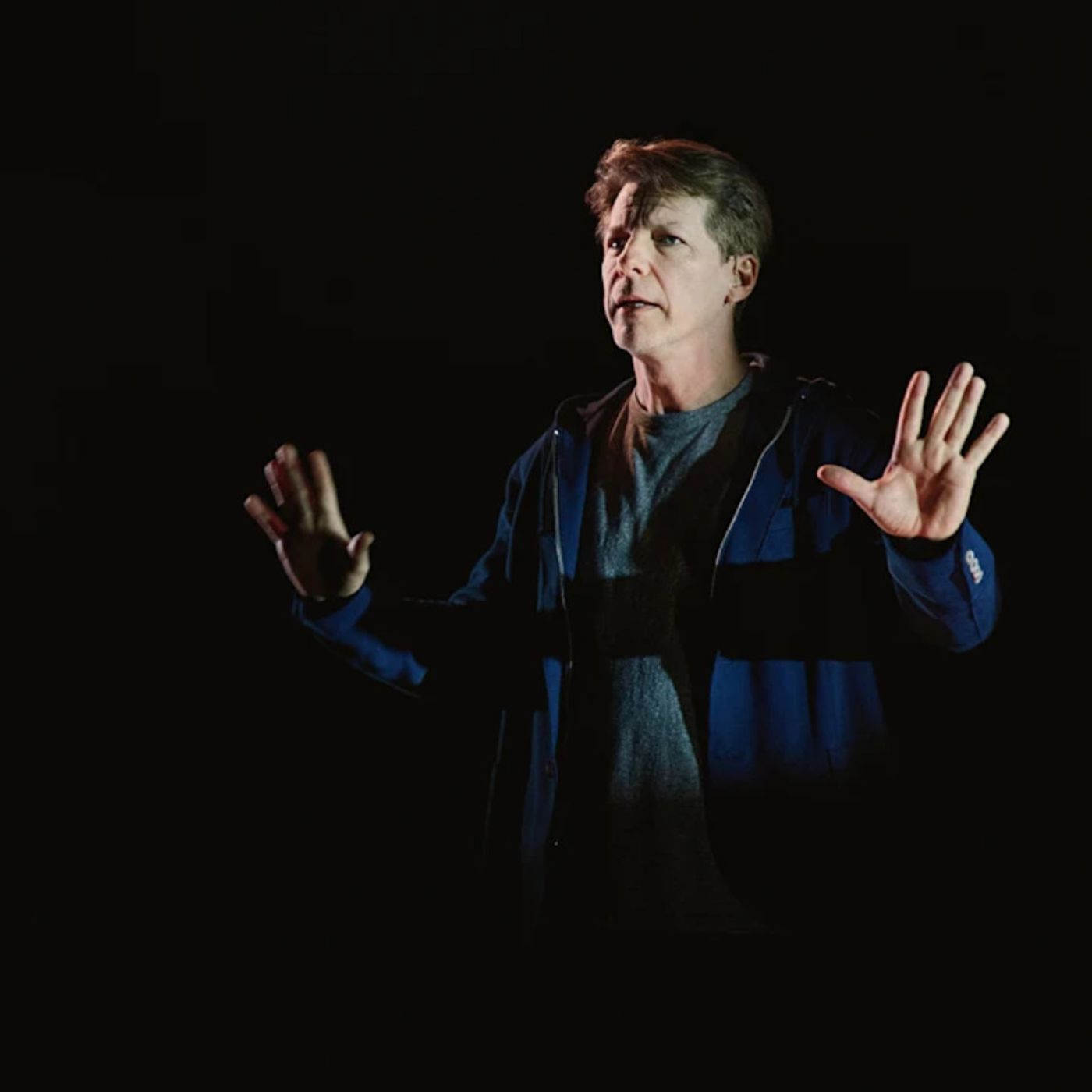
This is all of it. I'm Alison Stewart live from the WNYC studios in soho. Thank you for sharing part of your day with us. I'm grateful you're here. All that stuff that Brian said was going to be on the show today, that'll be on the show tomorrow. What's going to happen today is we're going to learn about the sets created for the HBO series the Sopranos. We'll hear about the history of the legendary music venue the Bottom Line. And if you spent the week binging the latest season of Bridgerton, you will be excited to hear that Luke Thompson, who plays Benedict Bridgeton, will be here with us in studio. That's the plan. So let's get this started with the Unknown. In the play. The Unknown actor Sean Hayes plays 11 different characters in a unique one man thriller. The main character is Eliot, a successful playwright and lyricist who is struggling with writer's block. But when a stalker turns up in his life, Eliot's fear quickly turns into curiosity. Maybe now have something to write about, but at what cost? The Unknown is written by David Kael, who has been creating acclaimed solo shows for decades. It was directed by Leigh Silverman and star Sean Hayes. All three of them are joining me now. The Unknown known as Running at Studio seaview on West 43rd and 8th through April 12th. Thank you so much for being with us.
- [03:13]
Lee Silverman
Thank you.
- [03:14]
David Kail
Thank you.
- [03:15]
Alison Stewart
And, Sean, I want to say I saw the show yesterday, and you were so sweet at the end because you put your hands like this. I'm making a little prayer sign. And you said, I'm going to sleep now because you are sick. First of all, how are you feeling?
- [03:29]
Sean Hayes
First of all.
- [03:30]
Alison Stewart
Oh, gosh,
- [03:33]
Sean Hayes
yeah. But I'm happy to be here. You're making me feel better already.
- [03:37]
Alison Stewart
All right, I'll do my best. What do you know now about doing a solo show that you didn't know before doing it?
- [03:44]
Sean Hayes
I'll let you answer that, because you know what I'm gonna say?
- [03:47]
Lee Silverman
What,
- [03:50]
Sean Hayes
that I'll never do it again? No, that. What do I know now about doing a solo play? Well, what it takes to do it.
- [03:58]
Lee Silverman
Yeah.
- [03:58]
Sean Hayes
My God. You know, the story goes, you know, when Lee and I have been friends for a long time, and we've been looking for something to do together. And she says, I think I found something. And I said, if it's a solo play, I don't want to do it. And she said, well, it's a solo play. She sent me the first 11 pages of the script that David wrote, and I just thought it was incredible. And I was like, oh, I need to see. I want to read more. And so it's almost one of those things where, like, well, I can't not do it. It's incredibly well written, obviously incredibly well directed, and the whole team that Lee put together is top notch. And I just. I thought I'd be a fool to pass this up.
- [04:36]
Alison Stewart
So you're persuasively.
- [04:39]
Lee Silverman
Professionally. Professionally persuasive, yes.
- [04:42]
Alison Stewart
You've directed solo shows before, and when you have one actor on stage, what are the biggest challenges working with one actor, especially one who plays 11 different characters?
- [04:53]
Lee Silverman
I think the thing about one person is that they have to hypnotize. Entrance, charm, surprise, delight. They have to earn the trust of the audience right away. They have to take them on a ride. And I think as I considered what was tricky about the unknown, I thought we really need someone who can hold multiple truths, who we can trust, who will make us laugh, and ultimately will take us just kind of on the ride of our life.
- [05:27]
Sean Hayes
And then when they couldn't find that person. Lee. That's right.
- [05:30]
Lee Silverman
Then I called Sean. I was like, please, please, please. You know, I think one of the amazing things about David's writing is that he really puts the audience in a kind of spell, like people leave their bodies. That's the experience that the audience is having. Certainly that was my experience with Harry Clarke that David and I first did together. And with. And when I've watched David perform his material himself, it's just this incredible experience. And what I love about the solo form in general is the way that it requires audience participation. It requires the audience to collaborate with the performer to go on that ride.
- [06:08]
Alison Stewart
David, you've been on our show, I think, since the earliest days of our show.
- [06:12]
David Kail
Yes.
- [06:14]
Alison Stewart
What keeps you writing and performing solo work?
- [06:20]
David Kail
I don't know. I really don't know. I mean, I've thought about it recently because I have, I think, 13 solo shows. So I keep coming back to it. I don't know. And I'm not. Yes. So I'm really not sure. I mean, I do other things, but I keep coming back to the solo. I mean, they're very, they're very expressive for me and, and they're. All of them have aspects that are very personal. I. So I, I used to think of myself as like a singer songwriter that inst. Who instead of making albums, I made shows. And they were often an assemblage of 10 or 12 monologues, almost like an album.
- [07:09]
Sean Hayes
And.
- [07:10]
David Kail
But now they've kind of shifted their form because they're driven by one character and then the actor plays everybody else around the lead character. So. But I'm not sure why I keep coming back to it, but I do.
- [07:27]
Sean Hayes
That's interesting, David, that you say they're like albums, because when people say, Sean, how did you. How do you go about memorizing an entire, you know, hour and 70, 75 minute show, whatever it is. And I always say, David, I always say it's like everybody has a favorite album. Yeah, memorize. They memorize every word to every song on that album.
- [07:47]
David Kail
Yeah.
- [07:48]
Sean Hayes
Kind of the same thing.
- [07:49]
David Kail
And then also because I'm so influenced by movies that they're, they're, they're pretty cinematic, all of them. I can see them. And I often will walk the script around town to make sure the locations are accurate. If they're in New York City or with my show Blue Cowbo that took place in Idaho, in Ketchum, Idaho, I'll basically walk it. Same with Harry Clark, that every location has got to be accurate. So if the audience hopefully is also visualizing it as the narrator is telling it, that it's accurate. Like if people know that restaurant that we're talking about or they know Julius's, that takes. Where two of the scenes take place in the unknown. It's not gonna throw them off by thinking, I've been to Julius's, and that's not what Julius is like. So I go round, I check. So I don't want anything to throw it off.
- [08:59]
Alison Stewart
Lee, There's a really sort of exciting sound in this play. It's also adds to the thrillerness of this play. How did you experiment with how the sound and how the audience would experience the sound, especially in the beginning?
- [09:14]
Lee Silverman
Yeah, I had the great fortune of working with Isabel Waller Bridge, who did the compositions for the show, and Carolyn Eng, who was our incredible sound designer. And I would say to Caroline, I just want to move the air in the room. I just want to move and not let people really know that it's happening. To sort of create a sense of, like, just on the edge of what you can hear, that sense of unease in the room, that sense of tension, and then let something come into consciousness and then drop away. And she just really leaned into that thriller feeling. And I think there's just an ongoing soundscape throughout the show that I find just so incredible. Cause I think some of it you hear, some of it you don't. Some of it you just feel. There are speakers everywhere in that theater. So you really get a sense of sort of surround sound. And then, really, I had been using Isabel's. Some of her compositions that I had just heard before I even knew her, as a kind of, like, mood board for myself. And then out of just a kind of spontaneous impulse, I was like, maybe she'd want to work on this show. And then we reached out to her. She got totally excited about it and then ended up writing music for us, which was just such an incredible opportunity, new collaboration for me. And I just think her music captures the spirit. I mean, it just, like, goes right to your sternum. And so it just has been that amazing collaboration with her. And Caroline, I think, really solidifies kind of the foundation of this thriller vibe that we have going on there.
- [10:51]
Alison Stewart
And is she related to Phoebe Waller Bridge, Sister? There you go, Sean. It's kind of an intimate theater. Do you get a sense of when the audience is feeling a little scared or.
- [11:04]
Sean Hayes
Yeah, well, I think, yeah, for sure. You know, the. Again, it's so brilliantly written that David put the first scare on page one, which is there's someone singing outside of your house that happens on page one. And you're like, wait, what? Something? And that's when the audience, they kind of chuckle because. Just a little chuckles here and there because they're like, oh, wait, am I going on this ride already, you know, and so it, it's, it sucks you in immediately. It's just so smart.
- [11:36]
Alison Stewart
My guests are actor Sean Hayes, playwright David Kail, and director Lee Silverman. We're talking about their new show, the Unknown, which is a one man thriller about a playwright and his relationship with a stalker. It's running at Studio CV now through April 12th. We first meet Elliot, Sean. He's got serious writer's block.
- [11:54]
Sean Hayes
Yeah.
- [11:55]
Alison Stewart
Why is he struggling?
- [11:57]
Sean Hayes
The actor or the character?
- [11:59]
Alison Stewart
The character.
- [12:01]
Sean Hayes
The. Elliot is struggling. Why is he struggling with writer's block? Well, he's a pretty well known writer, as his best friend Larry says. But he has hit this stump because. I don't know, David, why is he.
- [12:15]
David Kail
Why is he all dried up and he's become dependent upon his writing is how he makes a living.
- [12:23]
Sean Hayes
Living.
- [12:24]
David Kail
Right. And he's also. He doesn't really know how to do anything else or doesn't have qualifications. And he's not, he's not 19 that he can sort of work into another profession. It's like, you got to make this work, but the ideas have stopped.
- [12:40]
Sean Hayes
Right. Yeah, I was just going to say the same thing. Yeah. So it's just, it's one of those things that happens to any writer who makes their living from writing is they eventually reach a point where they actually do have a real thing called writer's block. And you're meeting Elliot in the moment that he has that.
- [12:57]
Alison Stewart
Have you ever had that happen to you, David?
- [13:00]
David Kail
Not yet.
- [13:01]
Alison Stewart
Okay.
- [13:01]
David Kail
I'm hoping this show.
- [13:02]
Alison Stewart
Not good. Not good.
- [13:04]
David Kail
This isn't gonna foreshadow my life, but
- [13:07]
Lee Silverman
I think also the problem of the play is that Eliot has writer's block. That is sort of where we meet Eliot, and that is the problem of the play. And I think actually part of what happens in the play is that we start to uncover and it becomes sort of the catalyzing force for why Elliot engages in this cat and mouse game with this. This other character. But I think that what the play is really about is what and why he's blocked. And that's also one of the twists, I think, that comes up over the course of the play.
- [13:41]
Alison Stewart
Well, it shows the challenges of being in a creative field and wanting to be on top in a creative field and what you have to go through to be on top in a career.
- [13:47]
Lee Silverman
Yes.
- [13:48]
David Kail
Yeah.
- [13:48]
Alison Stewart
Right.
- [13:49]
David Kail
And it's also because I think, I think if to maintain any kind of career in the arts, in whatever form, you have to be kind of obsessive about it and. And then you get defined by it. But then when you can't, like he. Eliot, can't write anymore. It's your whole, who am I? Rears its head if you take away my work and my obsessive relationship to my career. Who am I?
- [14:18]
Sean Hayes
Yeah. What's your identity? Yeah.
- [14:20]
David Kail
Yeah.
- [14:21]
Alison Stewart
David, did this partially happen to you that you had a certain person interested in your life that you didn't want to have interested in your life?
- [14:29]
David Kail
I did have somebody who was buzzing my door from the street at night, sometimes all night, who I caught in the end. And that definitely was. That's definitely stayed with me to the point of. It's kind of prompted some of the ideas in the play.
- [14:51]
Alison Stewart
Sean, when Elliot realizes that this person is kind of stalking him and it seems kind of obsessed with him, at one point, his fear kind of turns to intrigue. What is behind his intrigue in this person who might be bad for him?
- [15:10]
Lee Silverman
But.
- [15:10]
Sean Hayes
Well, yeah, no. Well, he's the key to unlocking the writer's block. Right. He's the key to Elliot's drive to know more and to feel more and to experience more is to hopefully write better and write something. It's the whole. Like Lee was saying, it's the whole crux of the play is I've latched onto something that's going to cure my writer's block, and I'll be damned if I let it go. And so that's enough to drive someone to do things they wouldn't normally do. And so when he becomes, you know, I wouldn't say obsessed, but maybe obsessed with his subject. He doesn't know how to stop it.
- [15:54]
Alison Stewart
Leshawn plays 11 different characters. What advice or feedback did you give him to best approach the 11 different characters on a fairly small stage?
- [16:06]
Lee Silverman
Yeah, I mean, Sean is so versatile. He's so mercurial. He's so creative. He's so energetic. And really, what we talked about was restraint, and what we talked about was how little could he do to differentiate between the characters and how still could he be. I think people know him as, like, a very exuberant performer and have seen him be very energetic on stage and on television. And I was really interested in showing this different side of him, both as a performer, but also to really, I think, encourage the audience to participate in the imagination piece of the show. And I think that that's less about, you know, the kind of, like, I'm gonna do this funny voice and then this funny voice and this crazy guy as opposed to that. You can almost see Sean switching between characters just in the eyes, just in the very subtle way that he changes his body weight, the gentle change in his vocal quality. And this is. This show has so many different challenges. One of them is that he plays these different characters and then sometimes they're impersonating each other. And that is just like such a crazy mind twisty thing to work on, to perform, to direct. And just the appetite for that kind of nuance was something that Sean really brought into the process. And I think it's part of the delight for the audience is that you're able to see it even though he's actually doing very little. So it's a. It's a real. To me, that's where the. That's where the virtuosity comes from. Not in how much, but in how little and in how specific he could be.
- [18:05]
Sean Hayes
Yeah.
- [18:06]
Alison Stewart
Was that difficult for you, Sean?
- [18:09]
Sean Hayes
It wasn't. It's all difficult, but it's. It was actually fun. You know, it was actually fun. The rehearsal prod process was really fun and. And Lee got to witness and still does every day, me being frustrated.
- [18:23]
Alison Stewart
What does that look like?
- [18:24]
Sean Hayes
You're looking at it. But yeah, no. So it was exhilarating and exciting and thrilling, but also frustrating when, you know, one of the best thing. Two things that are kind of interesting. One is Lee said at the beginning, she's like, imagine everything in a close up. Which made me understand that instantly. And then the other thing was, which I think is really great is I started, you know, you have pants with pockets in them. And so in the rehearsal process, I would putting my hand in my pockets because I didn't know what to do with them. And I would use them to play over the characters. So she had them sewn shut for the play, which was brilliant. Which is brilliant. So I can't even when I'm standing backstage ready for the curtain to open every night I go to put my hands in my pocket and I can't because they're sewn shut.
- [19:16]
Lee Silverman
There's real directing for you. Real directing.
- [19:20]
David Kail
Sew those pockets up. Yes, Ms. Silverman.
- [19:25]
Sean Hayes
But it really, really was smart. It was really. I've never experienced that before. It was like. Yeah, I mean, it's one of the, obviously the funnier things that Lee's done. And I could bore you with the acting. Directing process by, you know, talking your ear off. But that was just one of the kind of quirky things that I thought was really super smart of her to do because we all want to do that. It's just a natural thing And I thought, never having done a solo show, oh, I'll put my hands in my pockets for one person and take them out for another. It's like, no. You know,
- [19:58]
Alison Stewart
David, what impresses you most about Sean in this performance when he's going through those 11 characters?
- [20:04]
David Kail
Oh, God, he's so dazzling. I mean, I've just, I stand at the back of the house. I've seen most of the performances.
- [20:10]
Alison Stewart
Oh, really?
- [20:11]
David Kail
And I just, I, you know, I think, oh, I'm not gonna go in tonight. I'm gonna take a night off. And then I'm like, no, I'm gonna go in and watch. I mean, it's just so. It's such a tour de force of a performance and it's every, Every night. And that the audience is. There's so I. Cause I step. Because it's full so much of the time. Well, all the times, actually. But the. That I'm standing at the back and people are so wrapped that I said to Sean the other day, it looks like from my perspective, like I'm looking at a photograph because people are so still and then people are gasping at times. And it's just, it's. It's just exhilarating to watch.
- [20:53]
Sean Hayes
Well, that's the thrill that I get too. I get excited. People are like, you still excited to do the show? I said, I am, because I get so excited to share the story with people who are hearing it for the first time. Just like when I read it for the first time. And that's what gets me really excited. Like, can you believe this story? I mean, it's crazy. I mean, it's really so clever and thrilling and shocking and all of those things. And so I get excited for the audience to hear it.
- [21:22]
Alison Stewart
My guests are actor Sean Hayes, playwright David Kail and director Lee Silverman were talking about their new show, the Unknown, which is a one man thriller about a playwright and his relationship with a stalker. It's running at Studio SEAVIEW now through April 12th. 12th it is. There's a meta element in the show. We won't give it away, but how much were you thinking about that, Lee, as you had to direct this show?
- [21:48]
Lee Silverman
Oh, all the time. Yeah. I mean, it's. It's one of the really unusual aspects. I'm trying to think about how to talk about it because I don't want to give it away.
- [22:00]
Alison Stewart
Don't give it away.
- [22:01]
David Kail
Don't give it away.
- [22:02]
Lee Silverman
But there's, I think, what I was the most interested in sort of scenically and from a design point of view was that you start off and you know exactly where you are, and then I kind of take you on a journey that has these little surprises here and there, and then there's a moment where you're like, wait, what? What is that on the stage? And then we land you at the end of the play, kind of back in a more familiar space again. And yet you have a totally different understanding of it. And so kind of coming in with that understanding of how I wanted to move through the production from a design point of view, I think was very. Was very helpful. And in some ways, what Sean is doing is separate from what the set is doing, so to speak, and what the lights are doing. And I just really have to shout out our incredible lighting designer, Chausi, who.
- [22:56]
Alison Stewart
The lighting is amazing, isn't it? It's really good.
- [22:58]
David Kail
It's incredible.
- [22:58]
Sean Hayes
I mean, amazing.
- [23:00]
Lee Silverman
She's a genius. And what she is doing to change our relationship to Shawn all the time and to tell. Some of those cues are very long, Some of them are very short. She is painting with light in a way that is so extraordinary. And it is. And yet Sean moves very little during the course of the show and, in fact, is almost completely still for, like, the first 18 minutes. And so there's this way in which you feel, I think, transported through light and through sound in a way that. And listening. And that's where that, like, amazing collaboration that I'm talking about comes in. And the conversation comes from the gasping and the relationship that people have to what they're hearing and what they're seeing. And yet, if I were to ask you, like, when you saw the show, who were you picturing for? That person or that person? It's probably wildly different than the people sitting on either side of you, but yet it's very, very clear. And that's, like, the specific of the writing and the incredible specificity of the performing.
- [24:02]
David Kail
Yeah.
- [24:02]
Sean Hayes
One of the things that Lee did that was so funny, you know, you rehearse in chunks. You rehearse the first five pages of the first ten pages, then you. Then you move on. And so all I wanted to do was move. When we first started, I wanted to move around the stage. Right when the curtain opens, I just want to start walking. I wanted pace. I wanted to talk to the audience. And she goes, nope, you got to stand there. Right there. You stand right there. You don't move. And I was like, I don't know how to do that. She goes, you gotta stand the right. And then one day, like, after, like, I Don't know, several days or maybe even a week. She goes, I have a special gift for you today. I go, what? She goes, you get to move for the very first time today. I was like, wow. I get to actually walk across the stage after 20 minutes.
- [24:41]
Alison Stewart
You whipped him into shape. That's impressive. David, as we finish up, I'm curious, what does it take to write a thriller? A thriller in 75 minutes?
- [24:53]
David Kail
You know, I don't. I love movie thrillers, so they're definitely a big influence on me. And I always wanted to see if I could. If one person on stage could create the tension of a thriller. So I just instinctively started this story and. And a large part of it was written very quickly because Sean had read like 11 pages or so, and then you want to know what happened next. So it was. But it was written with such intuition that. But it's really from. I've had such a diet of movie thrillers that I'm sure that fed completely into it.
- [25:36]
Alison Stewart
Sean, how do you create the tension of a thriller on stage?
- [25:41]
Sean Hayes
By not playing it as a thriller.
- [25:44]
David Kail
Yeah, yeah.
- [25:45]
Alison Stewart
It's what's happening.
- [25:46]
Sean Hayes
Yeah. Every moment as real as possible. That's it, you know, and. And. And truly try to feel it. And that's the. That's the challenge of doing, you know, seven shows a week, 70 performances, is. Is keeping it fresh for yourself. But again, it's the excitement of. Of what we all built together as a team, and the presentation of it, of. Of the lighting, the directing, the sound, the. All of it. And so that's how I approach it.
- [26:18]
Alison Stewart
You go take a nap. First of all, thank you so much for being with us. And thank you, Lee Silverman and David Kail. The Unknown is playing at Studio SEAVIEW now through April 12th. Thank you so much for being with us.
- [26:29]
David Kail
Oh, my God. Thank you. What a pleasure.
- [26:33]
Lee Silverman
Hiring isn't just filling a role. It's about finding people who can drive results. Indeed Sponsored Jobs helps you match with the right candidates faster. Target candidates by skills, certifications, or location. Join the 3.3 million employers worldwide that use Indeed to connect with quality talent that fits their needs. And listeners of this show will get a $75 sponsored job credit to help get your job the premium status it deserves@ Indeed.com podcast, terms and conditions apply. Hiring. Do it the right way. With Indeed, finding ways to be financially savvy is a smart move. And knowing you could be saving money for the things you really want, like that dream home or new ride is a great feeling. That's why the State Farm Personal Price Plan can help you save when you choose to bundle home in auto bundling. Just another way to save with the Personal Price Plan. Prices are based on rating plans that vary by state. Coverage options are selected by the customer. Availability, amount of discounts and savings and eligibility vary by state.