← All Of It with Alison Stewart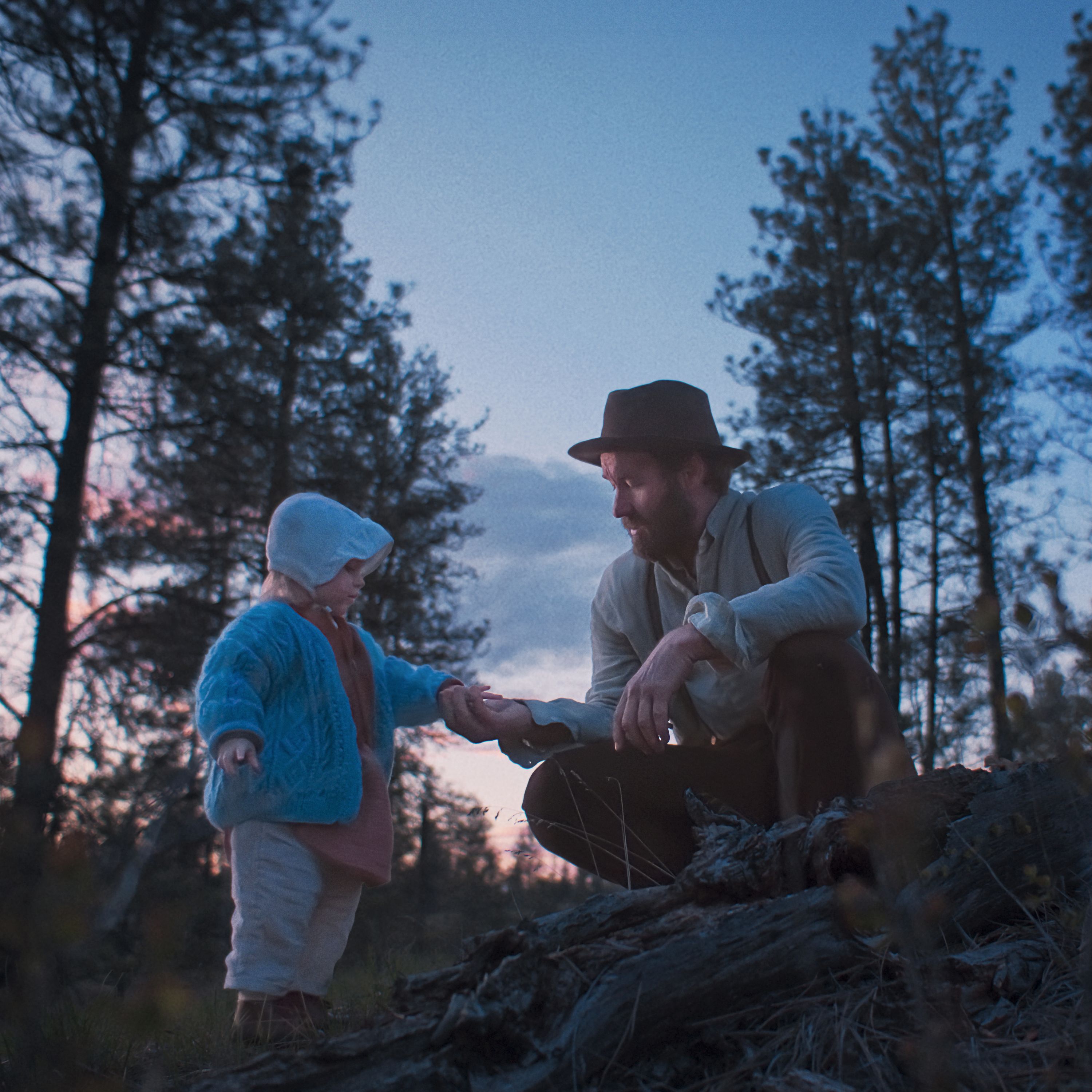
Loading summary
Transcript48 lines
- [00:00]
WNYC Studios Announcer
WNYC Studios is supported by Odoo. When you buy business software from lots of vendors, the costs add up and it gets complicated and confusing. Odoo solves this. It's a single company that sells a suite of enterprise apps that handles everything from accounting to inventory to sales. Odoo is all connected on a single platform in a simple and affordable way. You can save money without missing out on the features you need. Check out Odoo at O d O o dot com. That's O d o o dot com.
- [00:40]
Alison Stewart
This is all of it on wnyc. I'm Alison Stewart. One of the most visually stunning films of the year is Train Dreams, the beautiful and melancholic story of a logger named Robert and his family as they navigate life in the Pacific Northwest. And that beauty is thanks in a large part due to the work of my next guest. Cinematograph Adolfo Veloso used natural light to shoot breathtaking scenes of nature, forests, sunset, family life and logging in early camps of the 1900s. His work earned him an Oscar nomination for Best Cinematographer. His first ever Train Dreams, directed by Clint Bentley, is now still nominated for four total Academy Awards, including Best Picture. And I'm joined now by cinematographer Aldolfo Veloso, who joins me as part of our ongoing series the Big Picture, celebrating Oscar nominees who work behind the camera. It's nice to meet you.
- [01:32]
Adolfo Veloso
My pleasure, Alison. Super excited to talk to you both Clint the director and Alex Schaller, the production designer, a big fan of yours. And they're all saying hi.
- [01:42]
Alison Stewart
Well, hi to them back. You've worked with Clint before on Jockey, a great movie, by the way. How did you first get connected with Clint?
- [01:49]
Adolfo Veloso
He actually wrote an email when he was about to shoot Jockey. He wanted to. I think maybe he was desperate and not finding anyone, not sure, but he wanted to. He saw a documentary I shot and he wanted to find someone that was able to kind of like shoot the documentary style scenes but also shoot fiction. He wanted to do a lot of that in Jockey and kind of blend those two worlds in a way that made sense. So he just wrote me an email and we did Jockey together. And I'm glad we did that because that led to Train Dreams.
- [02:26]
Alison Stewart
When you talked to Clint about what the visual language for trained dreams would be, what did you talk about?
- [02:34]
Adolfo Veloso
Well, we did talk a lot about memory. That was really present on the script. He wrote the script with Greg Kwidder and I could sense on the script that it was all about memories. It didn't feel like A journalistic version of a biopic felt like someone telling someone else's life memories, kind of in a random way, somehow, sometimes out of order, and more like in a way that felt like not necessarily those memories are what actually happened. You know, just an impression of someone's life. And I was just like trying to figure out how to translate that into images. And where we landed was we found this metaphor, which is basically like you went down a basement and you found a box full of pictures of someone's life, and you're trying to go through those pictures and trying to figure out who that person was and that those pictures, like those memories are out of order. Some of those pictures are really posed. Some of those pictures are more organic and kind of like, I know, just an impression of a moment. So that was kind of like the whole idea behind it. And that led us to all other decisions visually.
- [03:50]
Interviewer
You shot in Washington State. Did you do any research about life in the 1900s during that time?
- [03:56]
Adolfo Veloso
We did. We. We looked at a lot of pictures from the time period, which also kind of helped. A few images in the. In the movie actually are really based on those images. Like there's an iconic one with a guy living inside, like he built a house inside a tree, another one with like a guy laying inside the tree and two other guys hanging on the sides of the tree. Those are all based on pictures we saw from the time period. Those trees were so big and so large that they could actually like, kind of inhabit those trees in a way.
- [04:29]
Interviewer
So what were the challenges of shooting so much outside?
- [04:35]
Adolfo Veloso
It is challenging, but to be honest, I feel like there's nothing more inspiring than shooting real world, real nature, and to be around real elements. I was just talking about that, like, there, there's nothing like you plan a lot to do something in a certain way and then suddenly things change, you know, starts to ring and then that is not exactly what you imagined, but that brings another magic to it. And when you embrace that in a way that Clint would always incorporate just to embrace it, things can be much more magical than necessarily what you imagine. So it is very challenging because you. You need everybody to really be on board of that. And I mean, you are in the middle of the woods, it's trickier to carry the gear, but it is also at the same time really inspiring and magical.
- [05:23]
Interviewer
My guest is cinematographer Aldolfo Veloso. We're talking about his Oscar nominated work on the movie Train Dreams, which is also nominated for best picture. This conversation is part of our annual series, the Big picture celebrating nominees who work behind the camera. Okay, I'm going to get a little. A little nerdy here. We're going to talk about aspect ratio. All right, let's try. So your aspect ratio is your width, your height, and you shot in in three, two. Yes, yes. Okay. So this sort of creates like a box, like frame for people to see. To see what you. What you want us to see. Let's put it that way. Yeah. Creatively. What did this do for you?
- [06:01]
Adolfo Veloso
Well, the main reason we, we chose that aspect ratio is because we wanted to evoke that memory lane, as I was saying before. So that aspect ratio is basically the aspect ratio we used to see in our old family photos because that. The aspect ratio for still photography in a way. So we're just trying to evoke that feeling in whoever is watching the movie. Feel like whenever you're choosing something like that aspect ratio, for example, it can be really random, right? You can just choose it for the sake of it because it feels better. But we always prefer to have a reason behind, so that helps the audience feel connected to something in a way. And even though it's very subtle and people might not realize that somehow that gets embedded in, in your brain and you relate that to, like, old memories. And that also helped us a lot because it is a taller aspect ratio. And we wanted to portray nature a lot and to film trees a lot. And that really helps too.
- [07:01]
Alison Stewart
What kind of lenses did you use?
- [07:03]
Adolfo Veloso
We had two different set of lenses, both old lenses. We wanted the texture. We wanted those images old but not faded in a way. So like, almost like using the tools from the past, but making sure they were vivid with full colors. So we had two different sets, one for the daylight stuff. It's a Japanese olens called Koa. And the main reason we had those is because they render nature really well. The sun flares are beautiful. Everything felt super magical with them. But they're really slow lenses, which means that we wouldn't necessarily be able to capture everything we wanted at night with only fire. We only use natural light and real fire, real candles, real oil lamps, real campfires. So we needed a different set of lenses for the night stuff to be able to only use fire and not enhance anything with LEDs or artificial lighting.
- [08:01]
Alison Stewart
Why do you like working with natural light?
- [08:05]
Adolfo Veloso
Well, I feel like there's nothing like it. I feel like it's really hard to beat it when you are in the right time of the day.
- [08:12]
Interviewer
And the magic hours, they say, right?
- [08:14]
Adolfo Veloso
Yes, exactly. There's a reason it's called that way. And I think there is a reason why the masters, you know, like Dutch masters from the past, painters often would paint at that time of the day. You know, like, I feel like there's something beautiful about it and I feel like it's. It gives you also so much freedom on set. The fact that you don't have C stands around, you don't have a lot of lights around, allow the actors to actually inhabit those spaces, to move around, not be worried about marks and the camera can actually follow them. There is a freedom for spontaneity to happen in a way that I feel like it's really magical too.
- [08:58]
Interviewer
You shot this film digitally, right?
- [09:01]
Adolfo Veloso
Yes. Correct. Yeah.
- [09:02]
Interviewer
That's surprising. When I read that, I expected them to tell me, oh, they shot this on film.
- [09:07]
Alison Stewart
Why did you decide digital.
- [09:09]
Interviewer
Digital was the right way to go?
- [09:11]
Adolfo Veloso
Well, there's still a bit of nostalgia about films and I feel like there's always good reasons to shoot on film, but I feel like we got with digital in a place that it is a very good tool, not only for the reasons we wanted in the movie, but for a lot of reasons also. But I feel like the main thing for us was we wanted to be able to shoot with natural light, to use only real fire. Some scenes in the movie are literally lit by a single candle and we wanted the freedom to improvise. A lot of the scenes in the Movie came from 40 minutes non stop improvising. Just me running around with the camera, following the actors and the chickens and whatever, you know, and those would all be very difficult things to achieve with film. Not only because you don't necessarily have the sensitivity to shoot with a single candle, but also you need to. You need to reload the camera every five minutes or 10 minutes, depending on how big your magazine. So there's a lot of things that would get in the way of the way. We wanted to shoot this specific film and to give all that freedom to the actors and to make it as naturalistic as possible.
- [10:27]
Interviewer
Sounds so interesting. It's like you're using the new and the old.
- [10:31]
Adolfo Veloso
Yes. To create this film well, which is. I think it's a good way to perceive memories in a way. Memories are things that happen in the past, but through a different lens. We always think about memories, but having in mind who we are today in a way. So I feel like it's a good metaphor for that.
- [10:53]
Interviewer
My guest is cinematographer Adolfo Veloso. We're talking about his Oscar nominated work on the movie Train Dreams, which is Also nominated for Best Picture. The Conversation is part of our series, the Big Picture, celebrating nominees who work behind the camera. This film has narration over huge chunks of it. How much were you keeping that in mind as you were shooting?
- [11:17]
Adolfo Veloso
I try not to keep that in mind at all. I feel like my job was to try to deliver a movie that wouldn't need narration. I don't think it's the case, but I feel like I was just trying to. Whenever I do my job as a cinematographer, I think I need to try to conceive things with the images if dialogue was not present, if narration was not present. How do you. How do you deliver everything just with the images if all those elements were not there? Obviously they are there and you can rely on them. But I'm always just trying to think, okay, how can I frame here in a way and how can I light this place in a way that everything that needs to be told in a bigger way is told, even though those characters are not talking anything or there's no narration over it.
- [12:08]
Interviewer
Do you take photographs?
- [12:11]
Adolfo Veloso
Yes, but again, I always say that like, for me it's hard to take a photograph if there is not like a reason behind it. Like, I don't come from a photography back background. I just loved movies and I wanted to. To work with that. And within that I realized that the camera department and the lighting department were the things that I like the most. But it's really hard. If you tell me, like, take a picture of this room, I'll have no idea where to do what. What to do, where to put the camera, what lens to. But if you tell me, or no, but take a picture of this room thinking that a couple was murdered here last night, whatever, and then suddenly I'm gonna know where to place the camera and how to light it and.
- [12:55]
Interviewer
Oh, that's interesting.
- [12:57]
Alison Stewart
I gotta think about that one.
- [13:00]
Interviewer
You shot the cabin scenes inside a cabin that was constructed for the film. What was it like shooting in this set, which was a set but was also built like a real home?
- [13:13]
Adolfo Veloso
Yeah, I think it's everything. I mentioned Alex earlier, the production designer, she did such an amazing job building all the sets on location, which is not always the case, but that gives you so much freedom not only for the camera, but for the actors. Everything in the cabin or in the fire tower or any of the sets we shot was practical, so the actors could actually like cook if they felt like it, you know, like everything would work or open any drawers. So there is so much freedom within that because it allows you not Only to adapt to things that not necessarily are happening. You know, we shot with a kid a lot or in animals. And not often a 2 year old is going to read the script and react to what the director wants. So you need to be open to. Okay, the kid doesn't want to be inside, but the kid is happy to be outside now. So let's just go outside. If a soundstage, you cannot do that. But if you are in a real location with a set build on location, you can do that and vice versa. And that gives everybody so much more inspiration to.
- [14:19]
Alison Stewart
Without giving too much away. There's. There's a massive wildfire in this film. What, when is the process of shooting that?
- [14:29]
Adolfo Veloso
Well, that's the trickiest thing I feel like was the scene that is probably the reason that I have so much gray hair now. Really stressed about it because as I was saying before, everything else in the movie is so naturalistic. We shot only with real light, practical effects, everything is real. It's a really handcrafted movie in a way. But for this scene, we obviously couldn't burn the forest down and we wouldn't even if we could. And we, we had to find a way to make it feel as real as everything else in the movie. Relying on. On VFX and rely on artificial lighting. So we just had to test a lot. We ended up using a lighting rig that we needed, something so large because it's basically a wall of fire that he cannot pass through. We needed something so large and tall that we ended up using a rig that is used on music concerts. And we tested in so many different ways to try to find the right temperature in the fixtures, the right flickering. So it all felt like all other fires in the movie that were real. And also while we could shoot to deliver an image that was easier for the post production department to work with. And so we found the forest that had been burned before, for example, so all the trees were actually already burned and that's all real. So all those elements that kind of helped us in a way to achieve realistic look in the end. And I'm really happy with what everybody achieved.
- [16:03]
Alison Stewart
One thing I noticed in the film, there are lots of shots angled from either way below or up incredibly high. What discussions did you have with Clint.
- [16:15]
Interviewer
About camera angles and when to use them?
- [16:19]
Adolfo Veloso
Well, I think again, it's all about the emotions and what those scenes are trying to tell the audience in a way. And I feel like the camera is important to, to. To help with that. So there is also one specific thing in this movie is that we didn't want nature to just feel like a backdrop. So we didn't want to shoot nature like you're shooting a postcard. We wanted to shoot nature like you're shooting any other character, almost like you're shooting a person in a way. So a lot of those camera angles came from that. You know, there is a scene in the movie where the camera is attached to the tree in the beginning of the movie, and then the tree falls down, the camera goes with it. That was a way for us to say, okay, nature is another character in the movie. We are with nature. It's another character in the movie without putting a statement out. But it's another character in the movie as important as any of of the other characters here. And I feel like seeing things from all those perspectives, like you want to see things through a character's perspective, makes you be more empathic to that character.
- [17:26]
Interviewer
What was it like to put a camera on a tree and then send it over?
- [17:31]
Adolfo Veloso
Scary. We made sure. I mean, we used a different camera from the camera we used on everything else because we had to put a camera there that we could spare if anything would go wrong. Everything went fine and the camera survived, but it was definitely scary. Everybody obviously was at a safe distance when that happened. So we just rigged the camera there and left the camera alone. But everything went fine and the camera survived.
- [18:01]
Interviewer
What are you most proud of when it comes to your work on this film?
- [18:05]
Adolfo Veloso
Oh, that's a really hard question, because I feel like we are our worst critics in a way. And I feel like whenever I watch the movie, I'm just, like, concentrating on everything that I could have done better and what I did wrong. But I'm really proud of what everybody else did in the movie and that I didn't mess it up. You know, Like, I feel like everybody did such a great job in the movie, so I was just trying not to mess it up and not get on anyone else's way. And I feel like I'm really proud of being part of a story and a movie that is doing a lot for a lot of people. We've been getting a lot of messages of people that really connected with the story, people saying that the movie helped them in a way. And I love that because that's the reason I even started to do what I do. You know, I love films, and so many movies helped me so much in my life. So I'm happy to be a small part of a movie that is doing that to other people. Now.
- [19:05]
Interviewer
We're talking about. Aldolfo Filoso's Oscar nominated work in the movie Train Dreams is also nominated for Best Picture. Congratulations to you.
- [19:16]
Adolfo Veloso
Thank you very much. That's very kind.
- [19:18]
WNYC Studios Announcer
WNYC Studios is supported by Odoo. When you buy business software from lots of vendors, the costs add up and it gets complicated and confusing. Odoo solves this. It's a single company that sells a suite of enterprise apps that handles everything from accounting to inventory to sales. Odoo is all connected on a single platform in a simple and affordable way you can save money without missing out on the features you need. Check out Odoo at o d o o.com that's o d o o.com it's.
- [19:49]
LifeLock Announcer
Tax season, and at LifeLock, we know you're tired of numbers, but here's a big one you need to billions. That's the amount of money in refunds the IRS has flagged for possible identity fraud. Now here's another big 100 million. That's how many data points LifeLock monitors every second. If your identity is stolen, we'll fix it. Guaranteed. One last big number. Save up to 40% your first year. Visit lifelock.com specialoffer for the threats you can't control. Terms apply.