← All Of It with Alison Stewart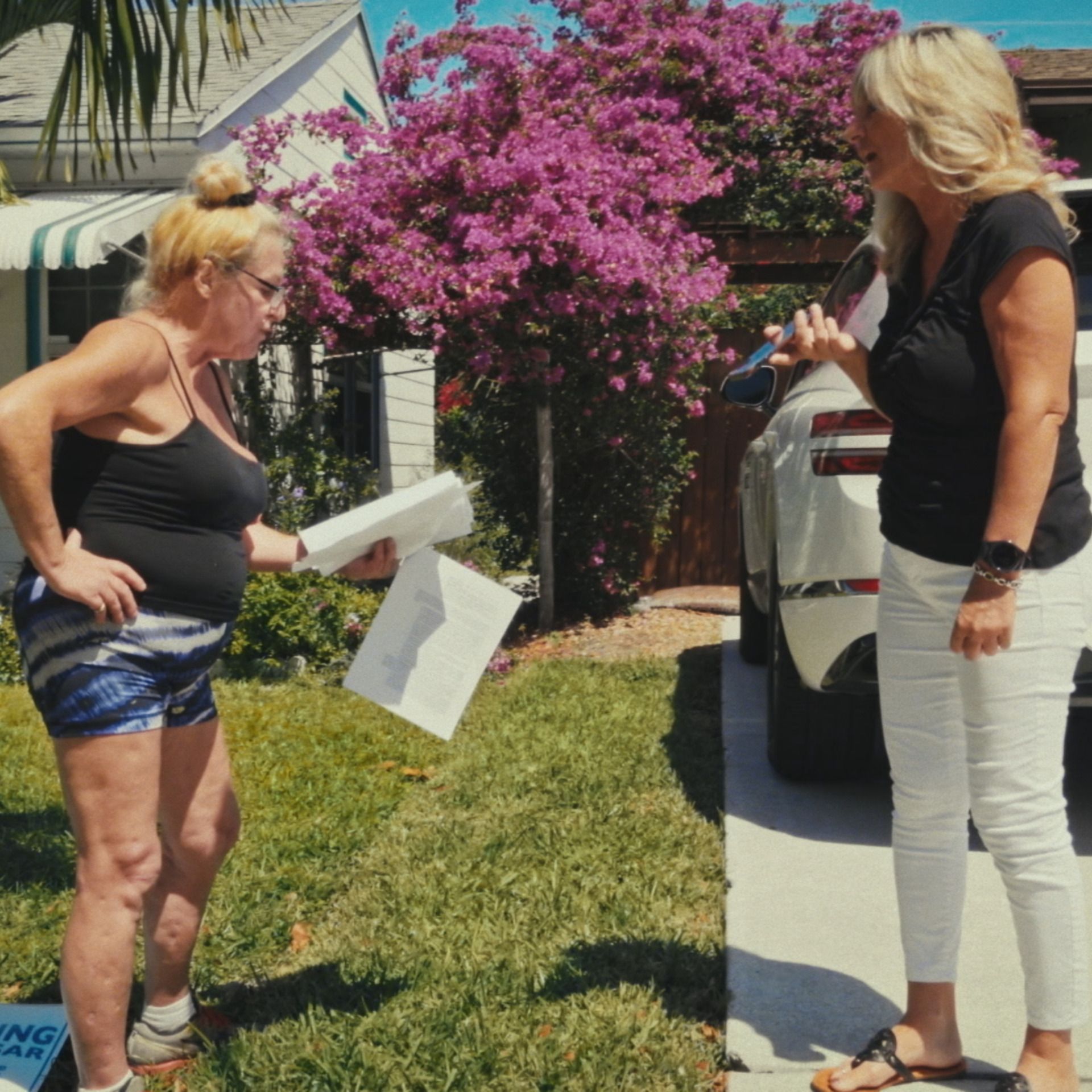
All Of It with Alison Stewart
Solving Conflicts With Neighbors With the Creators of HBO's 'Neighbors'
00:51:12
Loading summary
Transcript172 lines
- [00:00]
A
All of it is supported by Progressive Insurance. Do you ever find yourself playing the budgeting game? Well, with the Name youe Price tool from Progressive, you can find options that fit your budget and potentially lower your bills. Try it@progressive.com Progressive Casualty Insurance Company and affiliates Price and coverage match Limited by state law not available in all states. WNYC Studios is supported by Odoo. When you buy business software from lots of vendors, the costs add up and it gets complicated and confusing. Odoo solves this. It's a single company that sells a suite of enterprise apps that handles everything from accounting to inventory to sales. Odoo is all connected on a single platform in a simple and affordable way. You can save money without missing out on the features you need. Check out Odoo at o d o o.com that's o d o o.com there's a difference between liking a house and actually getting it. Redfin is built to close that gap. Redfin agents close twice as many deals as other agen. When you find a home you love, you're not a step behind when it's time to make an offer that means less watching great homes disappear and more zeroing in on the one you'll actually end up calling home. Redfin helps turn saved listings into real addresses. Get started@redfin.com own the dream. This is all of it. I'm Alison Stewart live from the WNYC Studio in soho. Thank you for spending part of your day with us. I'm really grateful that you're here. On today's show we'll hear from two of the stars of Sinners, Delroy Lindo and Miles Caton. We'll mark the 25th anniversary of the Daft Punk album Discovery and I want to let you know that our next Broadway on the Radio event is happening exactly one week from today. We are welcoming a star studded new Broadway revival about a Cold War love triangle to Chess the Musical. The show's three stars, Aaron Tveit, Nicholas Christopher and Lea Michele will be here at the WNYC Green space performing live. We also have the show's director, Michael Mayer and book writer Danny Strong here as well. Go to wnyc.org chess to get more info and how to buy your tickets. Again, that's wnyc.org chess now let's get this show started with Neighbors. If you're listening to this right now, chances are you've had a problem with a neighbor at some point. This is New York City after all, but you have never seen neighborhood conflict Quite like you do in the new HBO docu series titled, you guessed it, Neighbors. The series follows neighborhood conflicts that often start as small and then they veer into something much closer to preposterous. Disputes over feeding stray cats, building a tall wall, exercising outside in a speedo, and elaborate Halloween decorations all cause peoples to, well, to lose their darn minds. And there are cameras there to capture it all. The show's creators, Dylan Redford and Harrison Fishman, capture these conflicts with curiosity, compassion, and a sense of humor. They travel around the country from Florida to California to Florida to Texas to Florida. Hey, they even found a story right in their own backyard in Bloomfield, New Jersey. They interview true characters like a woman who believes that she's an alien, a man Deep in QAnon conspiracy, a woman who strips as Sarah Palin. I could just keep going. The show is funny. It's. It also shows some darkness. There are threats of violence and gun owners who probably should not have weapons. And there are people who seem to be struggling. The series presents a portrait of Americans who are having a hard time getting along with others and with themselves. Neighbors airs new episodes on HBO and HBO Max on Friday nights. And we've decided to do something kind of fun. We're going to dedicate the first hour of this show today, talking about neighbor disputes from the petty to the extreme with the creators and directors of Neighbors and with you, our listeners. So put on your thinking caps. What is the wildest conflict that you've ever had with a neighbor? We want to hear your wackiest neighbor stories. Our phone lines are open. 2124-3396-9221-2433. WNYC. In studio with me now is Dylan Redford and Harrison Fishman. Welcome to all of it.
- [04:52]
B
My God.
- [04:52]
C
Thank you so much. Thank you so much for having us, Allison.
- [04:54]
A
All right, let's start with the origin of the show. How did you come up with the idea for the show?
- [05:00]
B
Well, my brother Sam had became obsessed with these neighbor dispute fight videos that we see online a lot. And he had shown Dylan and I these videos, and we all just got really excited about them. And I think we've always been, you know, interested in conflict videos online between people, like, you know, public freakout videos. But these ones were exciting to us because there was a relationship built into them that was behind them. And so we got very excited about them, and we started making fake neighbor dispute videos with, you know, we got people from Craigslist who are non actors to pretend to be neighbors. And we gave Them cell phones and pretended to film each other, and we put them online to try to convince people that they were real. And I think obviously no one believed us that they were real. So we were like, you know, it'd be amazing to be in the middle of one of these in real time.
- [06:01]
A
Dylan, how did you go about casting for a show like this? Because these are real people. I want to say that again. Yes, there are real people involved in this show. How did you go about casting?
- [06:11]
C
I mean, casting is the core of the show, you know, and I think there were a couple key factors when casting the show. We wanted it to. The stories needed to be ongoing, so they had to still be happening. And we had to get both sides because that was essential to the show's concept. And then we wanted them to be all across the country. So we had a team of, you know, casting producers and subject producers, led by Harley Shaw, my sister Lena Redford, and they all work together to basically cull through tremendous amounts of media, ranging from local News articles to TikTok videos to court records. I mean, you name it. If there's a place where there could be a record of some sort of conflict, our casting team looked there. So it was a really. We just took a really wide net and just threw it into the sort of American media landscape and just tried to capture what felt like really unique American neighbor stories.
- [07:19]
A
Harrison, why do you think people agreed to be part of the show?
- [07:23]
B
I think we talked about this constantly, and I think it goes back. I think what we've sort of realized is, like, sometimes we say that neighbor disputes are sort of like dreams in a way. Like, no one really wants to hear your dream. You know what I mean? No one wants to hear your dream. But when you have. And it's the same thing with the neighbors, when you have a neighbor dispute, all you want to talk about is your crazy neighbor dispute, because it's so all consuming in your life. And I think for these people that we filmed with, we were totally excited and ready to listen to them 24 hours a day about their neighbor dispute, while other people in their lives are like, please stop telling me about this.
- [08:09]
A
You know, please stop talking about this. We're talking about conflicts with neighbors, with the creators and the directors of the HBO docu series Neighbors, Dylan Redford and Harrison Fishman. New episodes air Friday nights on HBO and hbo. Max listeners, what is the craziest conflict you've ever had with a neighbor? We want to hear your wild and wacky neighborhood stories. Give us a call at 2124-3396-9221-2433. WNYC Everyone in this series is convinced that they are right. They are so sure they are right. How did you approach trying to present both sides of the dispute?
- [08:50]
C
I mean, that was like. I think that's what got us most excited about. I mean, Harrison sort of talked about it. But the concept of a neighbor dispute is interesting because, you know, they're all different types of conflict, and the one with your neighbor is one that's really challenging because you have to live next to them. And I think, as most Americans, I think right now the idea of selling your house or moving because of a neighbor dispute just doesn't feel possible. Housing's really expensive and real estate is hard to find. And so I think we felt like these neighbor disputes sort of represented a kind of moment and in which how do Americans deal with conflict that they can't just sort of move away from? And so I think getting both sides of the conflict, I think it was challenging. But I think once we were able to be in the same room with them, which was really important, being able to sit down with the subjects and talk to them, it was clear that I think that they wanted to have their story heard. And oftentimes what had happened is that maybe one neighbor had posted a video, posted an article, and they wanted to get their side of the story out. And so I think, you know, that was like. I think that was a very genuine desire to want to share their story and get it out in the world. And I think that that was, you know, really exciting for a lot of
- [10:17]
A
our subjects and for our listeners who are calling in, if you're driving, don't call us. Pull over to the side and then call us. Please don't call us if you're driving. We do want to hear your stories, though. Our number is 2124-3396-9221-2433. WNYC. Our phone lines are filling up, and I can't wait to get to some of these calls. I wanted to suddenly, I want to suggest that you have a small suggestion in sort of the intro, because it comes from outer space and it goes through and there's a planet, and then you see the planet Earth, and then it sort of veers down on the street, right? So the idea is like, whatever you're fighting about, it's actually kind of small. When you're thinking about the world, why don't people realize what they're fighting about is sometimes really small? What do you think, Harrison?
- [11:08]
B
Well, I think to these. You know, to everybody that we filmed with these, you know, the things that they're fighting about aren't small to them. You know, to us, these things are really small. But to them, it's. It's like what Dylan was saying. Like, people's homes are, you know, all of their. Their money, their. Their entire lives, investments. And so I think when somebody is encroaching on that, it's huge. And I think also the emotions people feel surrounding these things just get so intense and so big. Especially when, like, the relationship prior to. When it goes bad was really good if they were, like, great friends, you know, like, it is just really complicated, and it's easy to look at them and go, oh, like, how could you fight over this? But when, you know, as. The more time that we spent with every single person we filmed with, the more we were like, I can totally see how I could be you, you know?
- [12:08]
A
Yeah. Take a call. This is Jenna, who's calling in from Fishkill. Hey, Jenna, thanks for taking the time to call, all of it.
- [12:16]
D
Hi. Yeah, I mean, I was excited to be like, no, I've got one for this. Back when I lived in Jersey, I lived upstairs from my landlord, and she would come in and out of my apartment. She would open windows, she close windows, move things around. My boyfriend would sleep over, and she would come and scream at us, try and raise the rent because. Because he. He took a shower once. But the craziest part was she installed a camera to, like, track our comings and goings. And then she left a dead rat in my bedroom.
- [12:57]
C
Oh, wow.
- [12:57]
D
That was when I moved out.
- [12:59]
C
Oh, wow, that's crazy.
- [13:01]
B
Where was the camera placed?
- [13:05]
D
The camera was placed in. So it was the kind of thing where you walk through a front door, and then, like, her door is to the left, and then you go up the stairs to, like, my door. She placed it in the entryway, aimed directly at, like, my door.
- [13:20]
A
That is rough. That plays it. Thank you so much for calling in, Jenna. In the series, we see how much people are filming each other. They're also uploading it to YouTube and TikTok. Why do you think the filming escalates?
- [13:34]
C
So I think, you know, we. We've talked a lot about that, and I think part of it. So, you know, when you get a neighbor dispute, one of the levers that you have access to to try to resolve it is calling the police. And, you know, there's a lot of issues with that, and it oftentimes doesn't help. And in fact, it can escalate things. And part of the reason why it escalates things is one of, you know, when a police officer shows up, they'll say, okay, well, where's your documentation? Can you show us that the thing that you're talking about is actually happening? And then they'll also say, you know, this is ultimately a civil matter, so you have to present all this documentation in a civil court and take your neighbor to court if you want a restraining order, if you want to, you know, charge them for trespassing. And that means that you basically, the police oftentimes kind of deputize the neighbors to becoming their own documentary filmmakers of their own dispute. And so they accumulate a lot of footage. And then one of the best places to put it is just put it online. And then the desire is to have validation that what is happening to them is real and that they're in the right. So I think it's a cycle that I think it's all very understandable why it happens, but it does seem to escalate things.
- [14:53]
A
Let's listen to a little bit from Neighbors. This is from the first episode. This is a beachfront property manager and a local woman talking about filming each other as they fight over who owns a stretch of beach in Florida. This is from Neighbors. My first altercation with Brent was when he took pictures of my daughter.
- [15:15]
D
You need to stop recording my daughter
- [15:17]
A
right now, or I'm going to make this your worst day ever. Do you hear me?
- [15:25]
C
My name is Brent Fuller.
- [15:26]
B
I'm a property manager.
- [15:27]
A
I'm there to keep the public aware that this is private property.
- [15:31]
C
It's got that Sarah Daylight come out
- [15:33]
D
here, harasses the crap out of me
- [15:35]
B
in the urs all the time.
- [15:36]
C
She drives past 10 public beaches to come down here and harass me.
- [15:40]
B
At this point, I think she's, like,
- [15:41]
C
in love with me.
- [15:42]
A
You're a tear boy. You're a tear boy.
- [15:46]
D
That's all you'll ever be.
- [15:47]
C
Yes, they are trespassing, and yes, I video them and take pictures of them.
- [15:51]
D
You're on private property. You're still on private property. You're on private property.
- [15:53]
A
Quit videotaping me.
- [15:55]
C
Quit touching me.
- [15:57]
A
It's so interesting because they keep saying you're on private property. So many of these fights are about ownership. Harrison, who owns what beach? Who owns the road? Who owns this tiny strip of grass? Why do you think people go to such extremes to defend ownership?
- [16:15]
B
Well, I think it goes back to what we were saying, like, before about like, what it means to, like, own your home and own property. And I think, you know, in our country and, you know, everyone, most people work their whole lives just to own a home and own their space, you know. And so, you know, in the first episode we have Seth and Josh were, you know, basically moved out to the middle of nowhere in order to, you know, be alone and start. Have their homes that they've always dreamed of. And, you know, the ironic and sort of sad thing is they get into a neighbor dispute in the middle of nowhere, you know, and so I think just in our country, like, people's space is just so important, you know?
- [17:04]
A
Yeah, yeah. What did this series reveal to you about human nature, Dylan?
- [17:10]
C
You know, I. It's a very good question. I think, you know, you would imagine making a show all about conflict, you'd come away maybe with a more cynical point of view. But I do, I did leave the show feeling pretty optimistic ultimately, because I think that, you know, when you get exposed to a lot of conflict, you start to see the commonalities as much as you see the differences. And I did find that, you know, a lot of the things that people were having a difficult time with, you know, there's a lot of context. You know, there's people struggling financially with affordability issues, they have issues with their healthcare. You know, there's a bunch of common things that people are struggling with that puts them in a place of precarity that then results in conflict. So I ended up feeling like, you know, there is a. There is a world in which we can speak to those things and that people could find common ground and have those desires met. And I think it would help resolve some of this desire for conflict and validation.
- [18:16]
A
Let's take another call. This is Sandy calling in. Hi, Sandy, thank you so much for calling all of it. What's going on in your life?
- [18:25]
D
Well, a couple of this was a while ago. We noticed a couple of empty ice cream containers at the bottom of our yard. So we cleaned it up, didn't think of anything. And then every day it got worse. More and more garbage was dumped on our yard and we didn't know where it came from, so we couldn't do anything about it. And one day our next door neighbor said that he had seen our neighbor across the street dumping the garbage. So my husband went over there and told him that we have a camera and that he better stop. And then it stopped. But that was really disgusting and it took a long time to clean it up.
- [19:06]
A
Sandy, thank you so much for joining Us listeners, what's your craziest conflict story that has ever happened between you and a neighbor? We want to know. Our Phone numbers are 212-433-9692. My guests are Dylan Redford and Harrison Fishman. Their new show Neighbors is appearing on HBO and hbo Max. We'll have more calls and we'll have more with Dylan and Harrison after a break. This is all of It. You're listening to all of it on wnyc. I'm Alison Stewart. We're spending this hour talking about neighborhood conflicts, neighbor conflicts with the creators of the HBO documentary series Neighbors, Dylan Redford and Harrison Fishman. New episodes air every Friday night. Let's talk to Elizabeth and Tappan. Hey Elizabeth, thank you for calling all of it. What's been going on? Sure. Yeah.
- [20:05]
D
So my neighbor was having his driveway repaved and there are lots of trucks around and I'm right across the street and he accused me of calling the police on him. When he called the police, they said it was to find out who it was. He said it was a woman who called. There's five single women all surrounding him in houses. Anyway, this persisted for years with him shunning me. Wouldn't bring the kids over to trick or treat, won't say hello, all this. And then one day I'm home and I hear all this furious, hysterical pounding on my front door. It's my other neighbor next to him screaming at me, screaming, you called the town on us because we don't have a permit. They were doing a roof and we're given a summons for not having a permit. And of course I didn't call on them either. But you know, it infected their, their neighbors. So I'm the, I'm the bad person. But I didn't do it. I didn't do anything.
- [21:04]
A
You didn't do it?
- [21:05]
C
I didn't do it.
- [21:06]
A
This one cracks me up. This is just a tread. This is just a text that says treadmill in Brooklyn apartment breaks it right down.
- [21:16]
C
Down.
- [21:17]
A
Let's talk to Vivian in Cos Cobb, Connecticut. Hi Vivian, thanks for taking the time to call. All of it. What happened to you? Is she there? No, she's there. She's not there. Let's talk to David from Manhattan. Hi David, thanks for calling, all of it.
- [21:36]
D
Thanks for doing the show. It's obviously lots of people have a lot to say.
- [21:39]
A
Sure. I want to hear what you have to say.
- [21:42]
D
I'll keep it brief. My wife and I were lucky enough even in Manhattan to live rent a bottom floor of A brownstone. It had some yard space in the back. And my father in law said, I'm buying you 10 rose bushes and we're going to fix up that space back there. You're young New Yorkers, you deserve a little outdoor space. And then we noticed that every rose bush that we planted was gone, just chewed down to a little nub. And we saw rabbits and we thought, well, those rabbits are not native to Manhattan, I don't think. And sure enough, they had been digging a hole under the neighbors fence and coming in from their yard. And the neighbors apparently had two rabbits that they did not keep in a cage. So we caught the rabbits and lifted them up gently by the scruff of their neck and dropped them over the fence, a small fence, and the rabbits were fine. And we said, please keep the rabbits in a cage or you know, fix the holes in the fence because they're eating everything in sight. The neighbors did nothing several times. And eventually we trapped the rabbits. I managed to catch the rabbits, not easy. And we carefully put them in the car and drove them up to a lovely clearing upstate away from the highway. I'm sure they're old and happy right now, those rabbits. The neighbors threatened us with legal action and we were able to honestly say we have no idea where those rabbits are now. But they threatened us and said, those are prize winning rabbits and you're going to have to pay $1,000 to replace them. And we said, well, we spent about $1,200 on the rose bushes and the landscaping, so should we call it even? And we never heard back from them.
- [23:13]
A
Wow. Prize winning rabbits. Haven't heard that one before.
- [23:17]
B
I wish we had that on our, on our, on our show. That's a really good one.
- [23:20]
C
It's a great story.
- [23:22]
A
How often do. Are animals involved in disputes?
- [23:26]
C
A lot. A lot. You know, I think it's like, you know, they, they, the, the frustrations with the animals. I also think, you know, it's, it's easier to be frustrated as an animal than it is the, the owner because you can kind of feel like, okay, maybe if I could just control the bunny or like, get the thing out of here, like then everything would be okay. Where it's harder to kind of control maybe the owner's actions and the owner's responsibility. So I think a lot of times the conflicts get kind of grafted onto pets and the animals in the surrounding area, whether or not they actually have anything to do with the owner themselves or the neighbor themselves.
- [24:04]
A
Can you tell us a little bit about the Gentleman and the cats, Harrison.
- [24:09]
B
Yes. Well, so we have a story in our show and there's a dispute between these people, Jean and Maryse. And Jean has been living in Philadelphia for about 40 years and she's a self proclaimed neighborhood cat lady. She'll say that herself. And so basically she feeds all the stray cats in the neighborhood and there's about 40 of them or something that she feeds. And her neighbor Maurice moved in and basically all the cats were defecating on his yard. And this is the first house that he's ever owned. And so he got really upset and had basically smashed these cat houses that she had built to house these cats.
- [25:03]
A
And
- [25:05]
B
yeah, they, they, they actually this story ended up going on to Judge Judy. So that was kind of one of the part of the resolve on that one, which was really fun.
- [25:17]
A
It was sort of interesting because it's not just the stories between the two neighbors. It goes to another level and then another level, which is what I think really makes the show interesting. The woman with the cats, we discover that she's. She's a believer in Jesus Christ our Lord.
- [25:36]
B
That's right.
- [25:36]
A
Is that fair? And she likes to watch holograms with 3D glasses. Let's listen to a little bit of her explaining. This is from neighbors. This is the shroud of Jesus Christ. It's a hologram. Jesus left us proof. You have to use 3D glasses. The image of the man comes out of the shroud. Can you see it? Need to be in bed. People have a near death or an out of body experience. It brings people closer to their spirituality.
- [26:13]
C
That's what happened to me.
- [26:14]
A
I became closer to Christ. I had pneumonia and I was in the hospital for, I don't know, a week or so. I was sure that I was dead and insipid. Pop my eyes open in the room. There was this angelic figure and it pulled me up out of my body. I would visit ancient civilization and they threw me back and I hit my body again.
- [26:33]
D
And I got up and he said, we're not finished. It changed me.
- [26:37]
A
Once you figure out that the spiritual world is real, you want to shout it from the rooftops. You want to tell everybody? That's what this is about. I really want to tell everybody. There's another person who thinks they're an alien in a human suit. There's a man who gets dangerous deep into qanon. Dylan, what surprised you the most about what people believe and why they believe it?
- [26:58]
C
You know, what it became towards the end is how sort of unsurprised I was about the sort of idiosyncratic beliefs that our subjects have. I mean, I think that a lot of it does have to do with the Internet. I think people and their algorithm on social media or their news algorithm starts feeding maybe what was a niche interest or one video that they watched, they thought was interesting starts kind of feeding them more ideas and more media related to that. So I think we did find that people really had a very idiosyncratic collection of beliefs. And I think that is something that does feel very American right now. And oftentimes those beliefs, maybe you would imagine are contradictory, but, you know, the way that they think about it, there's no contradiction whatsoever.
- [27:51]
A
This text says, my window air conditioner was dripping on their windowsill below. Arguments, co op board, property manager, et cetera. Everyone got involved. Months of conflict. Our super remounted my air conditioner three times in response. Ugh. This is Bob from Rockaway, Queens. Hi, Bob, thanks for taking the time to call, all of it.
- [28:17]
D
Hey, how are you? Good afternoon.
- [28:18]
A
Good afternoon.
- [28:21]
D
So I've got a neighbor of mine that he comes out of his, of his house, onto his deck numerous times, like during the day and, and blows a conch and then like goes back in the house. Oh, it's, it's, you know, it's you, you know that, that he's out there because you hear, you know, you'll be doing whatever you're doing around the house out on your deck, and, and now you hear this. So, so, you know, he, he does defer to daytime hours. He's not doing in the middle of night, he's not up with the roosters, you know, but he's like, he's like the, the glockenspiel, you know, they, he just comes out, blows the concept, goes back in the house.
- [29:12]
A
So. Hey, Bob, did you ever ask him why?
- [29:17]
D
Oh, oh, there's, there's like a myriad of reasons. You know, it's like, first of all, he's a Coney island polar bear. So they do that, you know, when they go for a swim in the winter, on Sunday. And then he'll, he'll give you all of these. It's a blessing. And, and when you hear this, you know, there's, there's like, the Hindus have a belief that there's numerous, numerous effects of hearing the conch. It heals. Heals disease, announces the triumph of good over evil. Like, he just goes on and on and it's, it's quite interesting and I read up on it, but the bottom line is it's I'm not going to say non stop, but it's daily and it's frequent.
- [30:11]
A
All right, Bob, you know what I'm gonna say? I'm gonna tell you. You know what, Get Bob's number and we'll hand it over to these guys.
- [30:17]
B
We'll be reaching out, Bob.
- [30:19]
C
We will be in touch.
- [30:21]
A
Let's talk to Catherine in Pines. Catherine in the Pines. Hi, Catherine. How you call? How you doing?
- [30:28]
D
I'm good. How are you?
- [30:29]
A
I'm doing okay. What's going on in your world?
- [30:32]
D
Well, I just am relating a story that has to do with a common area. And I have a feeling this is not unusual because I've heard other stories such as this one. We lived in a co op for several decades and we lived on a floor with four apartments. The apartment across the hall. There lived a woman who would walk around on our foyer area in her nightgown and would come into our apartments because we didn't lock our doors. And she would just come in and sit down and it was kind of unusual. So eventually, I think we did start locking our doors. But she put her apartment on the market several times, nearly sold it, but then backed out. And I saw her recently at a women's club and she was just the same. I mean, her outside Persona and her inside Persona were completely different.
- [31:42]
A
Oh, interesting.
- [31:45]
D
That is what I found.
- [31:49]
A
Thank you so much for calling. And I want to talk to LJ in Huntington, Long island, because he's seen the show. He or she.
- [31:54]
B
Oh, wow.
- [31:55]
A
Hey, lj.
- [31:57]
D
Hey.
- [31:59]
A
Hey. Do you hear me?
- [32:01]
D
Oh, yeah. Can you hear me?
- [32:02]
A
Yeah, There you are.
- [32:04]
D
Sorry. Can you hear me? Hello?
- [32:05]
A
Yeah, you're on the air.
- [32:06]
B
We can hear you.
- [32:07]
D
Oh, sorry. Yeah. So I absolutely love the show. Binged like, I think the first two episodes that are on HBO right now, I was addicted. Both my wife and I absolutely loving it.
- [32:20]
C
Oh, thank you.
- [32:21]
D
It made us. It made it. Yeah. No, and it made us appreciate the neighbors that we had. We just recently moved a few months ago and so sad to see our neighbors go. But then whole new appreciation for them after the wonderful experiences we had at the CNS show.
- [32:38]
A
Thanks for calling in. I am talking with Dylan Redford and Harrison Fishman, the co creators and directors of the HBO docu series Nick. Now, the show isn't necessarily political. If you watch closely, you can see a point of view here or there, but there, you know, like the one guy who says the wall around the woman's house is like Bin Laden's wall. Okay, you get it. But There is an episode in Florida where almost everybody in the episode is armed, you know, because Florida has a stand your ground law. How were you thinking about the politics of gun control when you were making this series?
- [33:16]
B
Well, I think it's funny because, you know, we had made that episode that was the first one that we actually filmed, and it was the pilot episode that we had used to sell the show. And so it was our first venture into this world of neighbors and neighbor disputes. And I think, you know, like, you're saying in Florida, it's really easy to have a gun, and the restrictions are very relaxed. But I think when we were actually making the entire season, we, in the beginning, we were like, oh, wow. Like, you know, we were asking, do you have a gun? And we were, you know, very interested in that. But as the season went on, we realized that everybody in America has a gun. And it just became something that we were, you know, sort of like, we stopped featuring as much because we were like, this is sort of becoming just in the background of all these things.
- [34:04]
A
Interesting. Oh, that truly, in Florida especially, or are we talking about universally?
- [34:10]
C
I think almost every subject we filmed with had a gun.
- [34:14]
A
Wow.
- [34:15]
C
Yeah, I think almost. Yeah. And I think the danger that we felt with the guns were just that sometimes, you know, I think in some ways, the gun is really a symbol for a lot of these people and an object that makes them feel safe, but they don't often really know how to use it, and they haven't. And because it's been so easy to get, then when they have it, then they don't really maybe know how to use it super well, or they haven't used it in a really long time. And so the only time we ever felt nervous around the guns was that it could potentially just go off or that they would drop it or not know that the safety isn't on. So I think that was something that we, you know, it was less that we were concerned that anyone would actually shoot each other. It was more that it would, you know, kind of go off accidentally because they just didn't really know how to use it or they hadn't used it in a long time.
- [35:05]
A
This text says, in my last apartment where no pets were allowed, my next door neighbor had a squirrel.
- [35:11]
B
Wow. Dream pet.
- [35:13]
A
Let's talk to Solomon and Bushwick. Hi, Solomon. Thanks for calling, all of it.
- [35:18]
D
Hi. Thank you so much for taking my call.
- [35:20]
A
Sure.
- [35:23]
D
Oh, yeah. So as a kid growing up, I had indoor outdoor cats in Florida. You know, they kind of just walk around the neighborhood like, occasionally hunting and stalking, like, pigeons and stuff like that and squirrels. But, you know, they would end up in one of our neighbor's yards, this guy John. And he, anytime the cat would set foot in the yard, would, like, run out screaming, like, you know, crazy, man. And I was like 10 years old, and I remember he went up to me and my sister and he got down low and, like, looked us right in the eye, and he was like, if that cat. He's like, if I ever get my hands on that cat, I'm gonna put it in a potato sack, tie a brick to it, and throw it in the lake behind my house. And we were just bursted into tears, crying and ran home. And then our mom went to go, like, give him a piece of her mind. And we could hear them, like, yelling at each other from across the street.
- [36:16]
A
Wow. Wow. Which. Which actually brings me to the question of some of these people seem like some of them may have some sort of mental illness in. In this series. That's my opinion. I don't know if I'm right or not, but I do get a sense that some people have trouble with reality. Did you find that when you were shooting? Did you take that into account?
- [36:40]
C
Yeah, I mean, I think it's. I think for us, you know, we. We didn't. We're not, you know, mental health professionals, and we don't really have the tools to diagnose or determine if someone's mentally ill or not. And so we didn't want to. You know, we kind of had our own criteria mostly around agency. If someone felt like that they were taking agency over their actions and decisions, because we wanted to feature people that maybe were just, like, had a very different view of the world, were very idiosyncratic, and, you know, maybe we're acting in ways that maybe someone would think is mentally ill, but actually it's not. And we didn't want to close off, you know, our show to people that just, like, think about the world differently. But, you know, it's. So I think for us, we kind of had our own internal way of vetting. You know, is this. Is this someone just, like, maybe very mentally ill and isn't in control of their actions or not? And that was also something that, you know, Harley and the team really thought very deeply about. And we talked. We would always talk about, you know, is this person in control of their actions? How, you know, how much agency do they have?
- [37:51]
A
Do you want to add anything to that?
- [37:53]
B
No. I mean, it's funny because I think we see A lot of comments that are similar to what you're saying that's like, oh, these people are mentally ill. But I think that, like, there's no one on the show that I feel and I think that we feel are mentally ill.
- [38:08]
A
Okay.
- [38:08]
B
Yeah, I think if they, they think
- [38:11]
A
differently about the world.
- [38:12]
B
Exactly. Yeah, they think differently about the world. And I think, yeah, I think an amazing part of the show too is like as much as we find the neighbor disputes interesting and what they kind of bring to a relationship, I think just the show is an amazing excuse to learn about everybody in our country and all the different beliefs. And so I don't know.
- [38:35]
A
Yeah, I'll think about that. I'll think about that. During the break, my guests are Dylan Redford and Harrison Fishman. We're talking about the new HBO series Neighbors. We'll have more after a quick break. This is all of it. You're listening to all of it on wnyc. I'm Alison Stewart. We're spending this hour talking about neighbor conflicts with the creators of the HBO documentary series Neighbors, Dylan Redford and Harrison Fishman. New episodes air on Friday night. Listeners, we're hearing your wild neighbor stories. 212-433-969-2212, wnyc. Harrison, you're, you're in people's homes, which can be a very vulnerable experience. And the homes are often very revealing. What did you learn about these subjects from spending time in their homes without even the cameras running, just being in the homes?
- [39:34]
B
Wow, that's a really interesting question. I mean, it really is. You know, I think it never got old to see into every, you know, all these people's lives and to see the way that I think the coolest thing is seeing the inside of someone's home that, you know, for these people that have lived there for like 40 plus years because you really, it says so much about someone. I think like in Kokomo, Indiana, we have Darryl and Bruce who, they have a Jacuzzi inside of their, their home and I think and they have like a green wall and, and that kind of stuff is really inspiring to see, you know, just that type of self expression, you know.
- [40:14]
A
And yeah, Daryl is so interesting because there is this sort of makeshift farm which is happening across the street and he is enraged, completely enraged. He is determined to stop the farm and he may stretch the truth a little bit. Let's listen to a little bit from Neighbors.
- [40:36]
B
Our neighbor, the grandson, decided he wanted
- [40:39]
D
a farm right next door to us.
- [40:43]
B
There is five eggs, six eggs five goats, five sheep six feed chickens.
- [40:48]
D
15 chickens.
- [40:49]
A
10 to 15 chickens, 20 chickens.
- [40:51]
D
Three turkeys.
- [40:52]
B
At least five turkeys, ducks, bunnies, rabbits.
- [40:56]
D
Along with the chickens, the turkeys and
- [40:58]
B
the runny rabbits, the ducks and the Dylan's.
- [41:01]
A
You've got your, your head in your hands. What makes him such a compelling subject?
- [41:06]
C
Darrell, I think, I mean filming with him was such a pleasure partly because he was so open and so just excited to talk about what's been going on. But he also does feel like a character out of a Christopher Guest film or he feels larger than life. And I think it almost felt like there was something cosmic like his whole life and our whole life was leading up to this moment where we could film with him. Because it just was so, it was so easy. And you know, a lot of the, I think, you know, you touched on the vulnerability of letting the crew into your home. It's a big ask, you know, and not everyone is totally willing to do that. And I think Darrell and Bruce were so generous with their time and also just, you know, their experience being a gay couple living in Kokomo, Indiana. And you know, they were just, they were just such a pleasure. And I think that Darrell just has a very animated way of speaking and is a storyteller and that for us was such a, such a pleasure.
- [42:12]
A
Let's take a few more calls. Justin is calling in from Ossining. Hi Justin, thanks for taking the time to call, all of it.
- [42:19]
D
Hello, thank you for having me. Longtime listener, first time caller. Have I got a barn burner? Hours worth of story I'll fit into 15 seconds for you guys. Neighbor moved in, got a letter in the mail that he wanted to switch addresses with us, which was quite odd. We did some research, found out he's been convicted of tax fraud and we thought it was a bad idea so we turned it down. Lots of emails about the house is haunted and that he's not going to, that he wants to move out. And then after berating us for political signs told us that he's not going to move out in spite. Also in response to political, political signs that we don't put out anymore. He said he's a proud gun owner owner and would put up a 20 foot billboard supporting the NRA over our property. Now he has religious quote quoted billboards going up his, his driveway and says they are neutral, politically neutral. List goes on. But been quite a journey.
- [43:16]
A
That has been a journey. Justin, good luck to you. Let's talk to Christine in Hell's Kitchen. Hey Christine, what's going on. Hi.
- [43:27]
D
Last year in our co op, one of our residents decided he didn't like the neighbor's tree. So a very tall tree, like 30ft tall. And so he hired a company, chopped it down, and then decided the neighbors should pay for the tree removal. So he took the stump to the management company's office and wrote his phone number on it and said, you owe me $7,000. And then he sued the neighbor.
- [43:51]
A
Wait, he took the stump of the tree?
- [43:54]
D
Yeah.
- [43:55]
B
He took it out of the ground?
- [43:58]
D
Yeah. He took the cut stump and he took it to the management company's office of the neighboring building. And he left his phone number on it and said, you call me, you owe me $7,000.
- [44:12]
C
Wow.
- [44:13]
A
That's one way to go about something. This text says, when I was living in San francisco In the 90s, my neighbor was convinced that I was drilling holes in the wall to spill spy on her. This went on for months. Eventually she upped the ante and contacted the police claiming she heard me murder someone in the apartment. The police, the incredulous, though incredulous, were forced to call me in to interview me about the, quote, supposed incident.
- [44:40]
D
Wow.
- [44:41]
A
How often are the police involved in these neighbor conflicts?
- [44:47]
B
All the time. Yeah, they're really involved all the time, but they're involved really on a surface level. And almost it's just the police get involved. You know, obviously if you call the police, you know, usually, sometimes they'll come, but every time they come for a neighbor dispute, they always say that it's a civil matter and they really can't do anything about it. So we've, I mean, we've talked to so many police while doing this, and they're always like our, you know, our hands are tied, we can't get involved in this. And so I think, like what Dylan was saying before, that's why these things I think also, you know, spin out of control because people just have very little recourse in dealing with these.
- [45:30]
A
Sometimes mediators get involved. When does a mediator get involved?
- [45:35]
C
Mediators get involved when someone decides to take their neighbor to court. You know, oftentimes small claims or civil court, oftentimes the judge, to avoid wasting the court's time and the plaintiff's and the defendant's time, they will suggest or demand mediation happen first. It's oftentimes like a court appointed mediator gets in the mix before they go into trial or to avoid going into trial. And I will say that mediators that we've talked to have said the number one way to escalate a neighbor dispute beyond repair is taking them to court. If you can avoid that, if you can do mediation first and that can be successful, there is hope that you could find, you know, a positive pathway forward. But the second you start litigating your neighbor, it's going to be very difficult to ever repair that relationship.
- [46:30]
A
I have to ask. In one twist in a story, a mediator shows up to help with a dispute between two women. And earlier in the episode, we discover he's sold a gun, he's got two jobs. Was this something you knew about?
- [46:47]
B
Sort of. I think that we had with that one. You know, we had. Basically, we sometimes are not allowed to film a real mediation, one that's appointed by a court. And so oftentimes we will ask, you know, the people in these disputes if they're open to basically doing a real mediation, but it's not one that's appointed by a court. And usually they're okay with that because we pay for the mediator and all that stuff. And so we had brought on Stanley to do this mediation, and then we figured out that he also works at Nexus Shooting, which is a gun store. And so basically, yes, Stanley is a mediator who does this all the time, but he also works at a gun store in Florida.
- [47:41]
A
It's all back to Florida, man. Let's talk about Beth in West Orange. Hey, Beth, thanks for calling, all of it.
- [47:47]
D
Hi, thanks for taking my call. Well, we live in very blue West Orange, but our neighbor next door is Maga all the way. And I. We've, you know, so we've always known, we've been on political, different sides of the spectrum. But over the summer, I had come home from a long drive in 100 degree heat from Virginia. I just wanted to leave water for the wildlife and go back in the house. And she came over to my backyard and she wanted to tell me that she started. She just got a patent for an underwear line that she designed. And she wanted me to see the samples. And I said, and I said, well, what are you talking about? She said, well, they're boy shorts. I said, I've never worn boy shorts in my life.
- [48:27]
A
And.
- [48:27]
D
And she wouldn't let it go. So I said, you know, I said, I don't know how to get rid of her. So she said to me, I said, terry, I'm sorry, I shouldn't have said her name. I said, I'm not interested, but there's no way she's listening to wnyc.
- [48:43]
B
You never know. Never know.
- [48:45]
D
You never know. So I said, I'm really not interested. And she said, well, you know, but I designed these specifically for women who carry their weight in their hips and thighs. Oh, all right. I'm like. So I said, how do I get rid of her? I can't get rid of her. And she just wouldn't let it go. So I find she wanted to give me the samples to try on. And I'm saying, you know, this is crazy. And so I said. So I finally said, I got it, you know, just cut this off. So I said, listen, I'm never going to buy your underwear because I do not support businesses who support our cousin, our current president. So she started screaming at me that I was crazy, that I was awful. And she said to me, how does it feel to be on the wrong side of history? And I said, gee, I wouldn't know. How does it feel? And that was the best comeback I've ever had in my entire life.
- [49:37]
A
Beth, thank you for that call. That was wild. Like your show goes a place you don't expect.
- [49:43]
B
That's right.
- [49:44]
A
Before we go, I did want to talk about Bloomfield, New Jersey. It was a disagreement over Halloween decorations to houses. That's what it sounds like at the heart of it. What do you think the disagreement was about? What do you think?
- [50:01]
B
Well, with that one, I truly think that the disagreement is about. I think. I mean, it's about credit, and I think it's about. Nelson has been doing this Halloween house and decorating his house for so long, and I think he had taught Otis a lot. And I think, you know, it's. I mean, we see it all the time in our business, you know, in entertainment, we see it, you know, just in life in general. But, you know, credit is really important to people, you know, And I think. Yeah, what else do you think?
- [50:37]
C
No, I think that's right. I think that it was a friendship that was really meaningful. And then there was some sort of rupture in the competition. And I think you're exactly right, Harrison. I think it was. He wanted to feel appreciated for the thing that he had done, and he felt disrespected. And I think that, you know, that goes really, really deep, especially when it's a friend that you really trusted.
- [51:03]
A
And one final call, Janet in Maplewood. Janet, you got about a minute? Okay.
- [51:09]
D
Well, my four year old would turn the house upside down to find his Christmas gift. So I made up a big box, took them to my elderly neighbor who has a big house and asked if I could store them. He said, fine, we put them in the third floor bedroom. So on Christmas Eve I go over to retrieve the gifts and he's like, what are you doing here? No, you never gave me any gifts. So that box was history until he found it in the spring.
- [51:38]
A
Oh, that's so much to deal with. Thank you so much for calling in. We have about a minute left. Is there anything you want to say about the show that I haven't asked you that you think is important for people to know?
- [51:53]
C
No. I mean, I've been so grateful for how many people have watched our show and hope that people keep watching and we have a really exciting next two episodes. And you know, I hope people hang in there with us and finish out the season.
- [52:05]
B
Yeah, the finale. Hang in for the finale. And we're excited.
- [52:10]
A
The name of the show is Neighbors. New episodes air Friday nights on HBO and HBO Max. My guests for the hour have been Dylan Redford and Harrison Fishman. Thank you to both of you for staying and taking our listeners calls. We really appreciate it.
- [52:26]
B
Thank you, Allison.
- [52:26]
C
Thank you, Alison for having us.
- [52:27]
A
And thanks to all of our listeners for calling in. Thank you. There's more, all of it on the way after the news. WNYC Studios is supported by Odoo. When you buy business software from lots of vendors, the costs add up and it gets complicated and confusing. Odoo solves this. It's a single company that sells a suite of enterprise apps that handles everything from accounting to inventory to sales. Odoo is all connected on a single platform in a simple and affordable way. You can save money without missing out on the features you need. Check out odoo@odoo.com that's O D O O.com WNYC Studios is supported by the New York Community Trust. Every neighborhood needs heroes. By giving through the New York Community Trust, you can be that hero. Help those in need, create opportunity, improve health, nurture the arts, educate young people and protect the environment. Direct your funding or let the trust's team of experts connect you with nonprofits making a lasting difference. Turn stocks, retirement funds, even a house into a force for good. Be a local hero with the New York Community Trust. Visit GiveTo NYC. That's GiveTo NYC.