Loading summary
Transcript72 lines
- [00:00]
Odoo Sponsor
WNYC Studios is supported by Odoo. When you buy business software from lots of vendors, the costs add up and it gets complicated and confusing. Odoo solves this. It's a single company that sells a suite of enterprise apps that handles everything from accounting to inventory to sales. Odoo is all connected on a single platform in a simple and affordable way. You can save money without missing out on the features you need. Check out Odoo at o d o o.com that's o d o o.com Spring
- [00:31]
Home Depot Sponsor
starts at the Home Depot and we are bringing the heat to your backyard this season. Fire up the flavor with our wide variety of grills for under $300. Like the next grill 4 burner gas grill that's perfect for hosting your spring cookout. Then set the scene and turn your outdoor space into the go to spot with patio sets for every budget. Bring it this season with grills that deliver flavor and patios that set the vibe from the Home Depot. Start your spring with low prices guaranteed at the Home Depot. Exclusions apply. See homedepot.com pricemat for details.
- [01:10]
David Fuerst
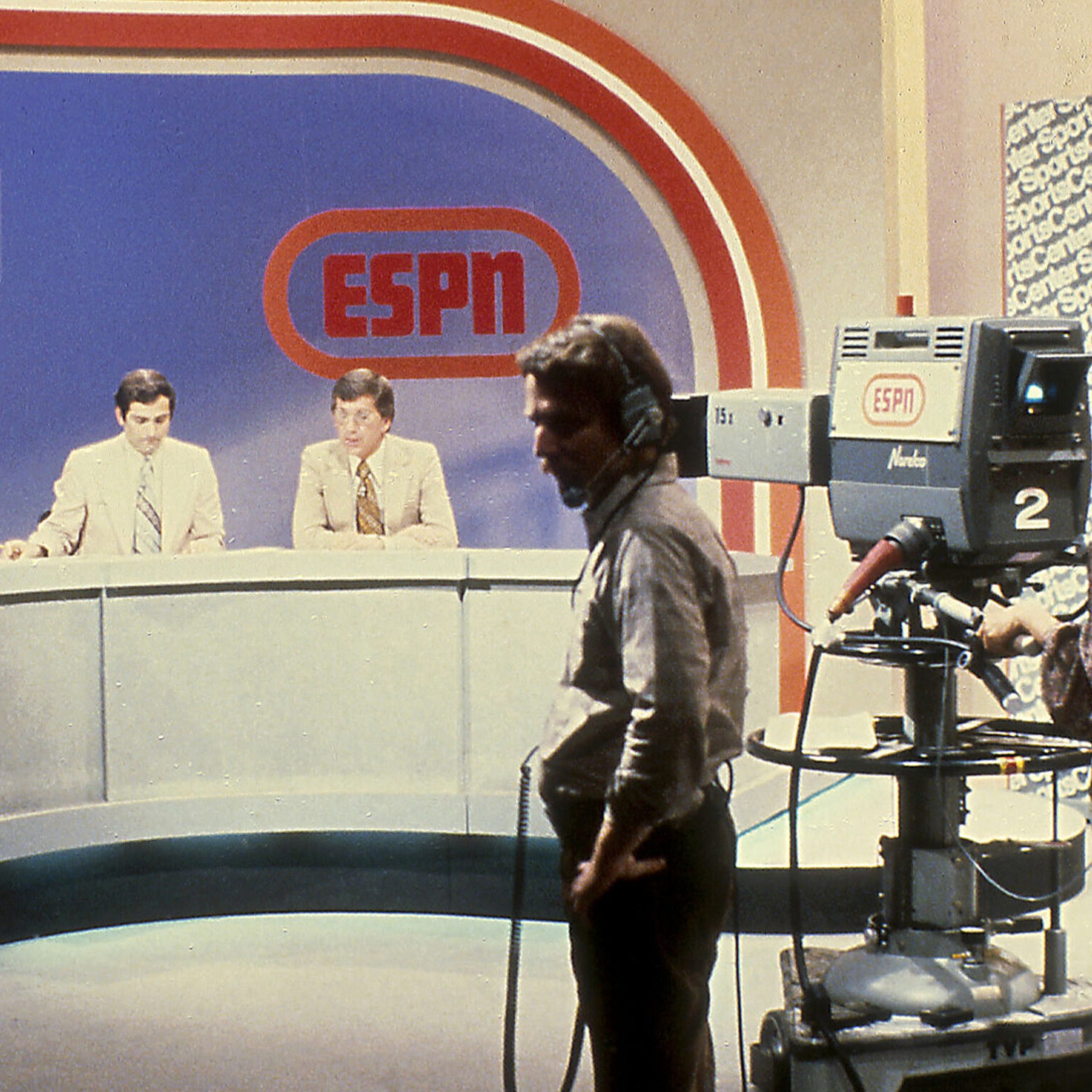
This is all of it on wnyc. I'm David Fuerst in for Alison Stewart. Today, most people know ESPN and rely on it to watch games and get updates on sports news. But in the 1970s, the idea of a dedicated sports channel seemed almost absurd. Back then, national sports on television meant the occasional game on one of the big three networks or maybe a two minute update on the local news. That is, until entrepreneur Bill Rasmussen had the idea for a cable channel for sports and only sports 24 hours a day.
- [01:49]
Bill Rasmussen (Documentary Clip)
If you're a fan. If you're a fan, what you'll see in the next minutes, hours and days to follow may convince you you've gone to sports sports heaven. Beyond that blue horizon is a limitless world of sports. And right now you're standing on the edge of tomorrow sports 24 hours a day, seven days a week with ESPN, the total sports cable network.
- [02:15]
David Fuerst
Wow. ESPN went on the air on September 7, 1979, and a new documentary and audiobook looks beautiful back to that moment and tells the founding story. Both projects are called Sports the birth of ESPN. The documentary airs on ESPN April 6th at 8:30. The audiobook is out on April 7th. And we have with us Mike Soltis, ESPN's historian, who also served as its vice president of communications for many years. He's a producer and author of the documentary and audiobook. And also with us is Greg De Hart, the documentary's Director. Both of you, welcome to wnyc.
- [02:55]
Caller John
See.
- [02:56]
Mike Soltis
Thank you, David. Excited to be here.
- [02:59]
David Fuerst
So, Greg, ESPN doing a documentary about espn. What freedom were you given to tell the whole story here? How did you approach this project?
- [03:11]
Greg DeHart
I'm happy to say I had complete freedom. So I approached it with a lot of vigor as a sports fan my entire life. I was actually, I was younger, but when ESPN launched, I do remember it, and the very first anchor, George Grand, I remembered very well when I went to interview him. But, yes, I approached it as a documentary filmmaker, but also as a sports fan, but a storyteller. And this was quite an amazing story to be able to tell an entrepreneur story going up against the big boys.
- [03:49]
David Fuerst
Well, before we get to espn, paint the full picture for us. Mike, what, what was sports like on TV before ESPN went on the air in 1979?
- [04:00]
Mike Soltis
You captured it pretty well in the lead, and it was pretty, pretty thin gruel, as Bob Lee says in the documentary. You did get your weekend afternoon sports on the There was no Fox at that time. Your three broadcast networks and your local news gave you two minutes if, you know, weather didn't run long. And that was what the sports and Monday Night Football. But then that was all that sports fans really could get. So you weren't able to see your teams. You weren't able to say, on a Tuesday night, I'm going to watch sports. It just didn't exist.
- [04:33]
David Fuerst
Well, Bill Rasmussen is credited with founding espn. Greg. He's known as the company's George Washington. Right. I mean, and working closely with his son Scott. They dream up this whole idea, and they, they actually make it happen. How did he first get the idea for this network?
- [04:51]
Greg DeHart
Well, let's see. Bill was an announcer for the Hartford Whalers, but he had been just a lover of sports growing up. You know, one of his goals in life was to find himself in a profession where he's going to be around sports. And he slowly, kind of methodically, made his way up until he was the announcer for the Hartwood Whalers, the Hartford Whalers. And his son actually was the arena announcer, Scott. So it was the first time that they had a chance to work together. But they come up with this kooky idea that they can tie all of the cable networks in Connecticut together. That's where they were working and grew up. And they thought, let's get it all into one feed and we can go ahead and put pro, you know, Connecticut and New England sports on this one feed, and all of Connecticut could receive it. So it started out as a regional idea to bring sports to Connecticut. And it developed, you know, they had some very serendipity, a very serendipitous moment when they found out about the satellite, and that changed everything.
- [06:04]
David Fuerst
Oh, satellites, wait. This can be national.
- [06:09]
Greg DeHart
Indeed, indeed. And, you know, be careful what you wish for.
- [06:12]
Unknown Interviewee
Right.
- [06:13]
Greg DeHart
Because that brings up a whole nother set of challenges, you know, the least of which is you now have to program 247 for the entire country.
- [06:25]
David Fuerst
How, Mike, how much did Bill and his team know about sports broadcasting before they started the company?
- [06:33]
Mike Soltis
They knew a decent amount about how to broadcast a game from the background that particularly Bill had, but not really how to get it into cable systems around the country, not how to do a deal with the NCAA or with Anheuser Busch or with cable systems. That was a crash course education for them. And looking back and in telling this story, it's unbelievable that a guy fired by the Hartford Whalers can juggle all of these things and make it work.
- [07:03]
David Fuerst
Right, because he was fired.
- [07:04]
Mike Soltis
Right.
- [07:05]
David Fuerst
Right before this whole idea starts.
- [07:08]
Mike Soltis
Yes. That's what set him down the path was he's fired. What do I do next? And as Greg outlined the Connecticut idea, this is pre Big East Yukon. And so there wasn't really a television package for it. And so that was kind of the starting point. And then the satellite thing came up, and then it just kept steamrolling. And Bill brought his trademark positivity, everything that anybody else would have run away from. He's like, ah, we'll overcome that. We're on to the next challenge.
- [07:39]
David Fuerst
Yeah. Why did he think he could make this work? Craig, what was it about Bill's style and personality that made him think he could make this 247 satellite sports network get off the ground?
- [07:54]
Greg DeHart
Well, I mean, I think that, you know, just to piggyback on what Mike said, when he's fired from the Hartford Whalers, he said it was the best day of his life, greatest thing that ever happened to him. So it's this optimism that Bill carried where he was just, he would get no's.
- [08:12]
David Fuerst
He would.
- [08:12]
Greg DeHart
He got a lot more no's and he got yeses, but they absolutely never deterred him. And he just kept going and going and going with Scott at his side until it happened. And, you know, putting all these pieces together, they had. They did it all in 14 months, from the beginning of the idea until ESPN launched was 14 months. And, you know, it was just that in that, that optimism, that optimism, what Bill calls intentional optimism, that just drove them all the way to the finish line.
- [08:44]
David Fuerst
Forget about the glass being half full. It's overflowing.
- [08:48]
Mike Soltis
Yes. Yeah. And my wife listened to the audiobook with me and she said who would possibly spend every last penny they had, borrow all this money, borrow their parents money, borrow their brother's money and not really be making any progress through all that and yet still go ahead and do it. And that's what he did. He just kept, he believed in the idea. He believed that everybody wanted sports the way he did. He could see that future and just kept moving forward and successfully juggled all these major otherwise slow moving organizations to get deals done.
- [09:24]
David Fuerst
Well, I want to quickly mention listeners, if you remember the early days of espn, what impact did the network have on television and sports? Call us or Text us now at 212433, the 9692. That's 212433, WNYC. We're talking about the new documentary Sports Heaven, the birth of espn. And before we go any further, let's hear a quick clip from the documentary. It does a great job of conveying the mayhem of trying to get this thing on the air. As you mentioned, Bill, Bill Rasmussen made this happen in very short order. He set an on air date of September 7, 1979. And that was it. It was written in stone. It had to happen. So let's hear a clip from the documentary describing that first day.
- [10:23]
Documentary Participant
Were we ready? I'm not sure. The cameras were from like the 1972 Olympics and it was all archaic lighting.
- [10:31]
Mike Soltis
The technical people are trying to get all the equipment in place and wired and running.
- [10:38]
Unknown Interviewee
There was a moment where things weren't working and there was a scramble to make sure, oh my God, this is, you know, not going to happen.
- [10:46]
Documentary Participant
Building's not done. In fact, to say it wasn't finished is a gross understatement.
- [10:51]
The chief engineer, he came up to me, he goes, I think we got a problem. The transmitter's acting up. No one knew what to do. We were sort of like the island of misfit toys poised.
- [11:03]
David Fuerst
Okay, so Greg, how frantic was it in the lead up to that day to get the network ready for live broadcast?
- [11:11]
Greg DeHart
The paint was still drying in the studio. Literally. They, they had problems with the transponder and they had to bring in a cable from a local television station to connect to the satellite. People are running around going crazy. You know, this is launch night and you know, Bill and Scott, this is their B. But you know, fortunately they, they did bring in some real pros who had been you know, on, in, you know, in the fire who were able to handle it. But you know, a lot of the people that were working that came to ESPN at that point were, you know, smaller market people from the, the kind of the local area, all professionals. But it was, you know, they all said it was chaos leading up to this. They didn't know if they were going to make it. You know, it literally came down to the last minutes, the last hour, the last minutes and they pulled it off.
- [12:06]
David Fuerst
And Mike, how did that first day on air go?
- [12:12]
Mike Soltis
It went very well. The first show on ESPN was SportsCenter. And that was a creation in Bill Rasmussen's mind that he had actually done in Hartford, Connecticut on an over the air religious channel. He did a time buy three years earlier called Sports Only and he had been a local news guy and was frustrated with the lack of time he got and said let's do a half hour show. And they called it sports only three years early. And that's what set up SportsCenter. So the first show ESPN does and here we are all these years later and SportsCenter is still the flagship of the network. So that went well. Lee Leonard and George grand were the anchors, very professional. And then the story that everybody tells, the first live event is the slow pitch softball World Series featuring the Kentucky Bourbon versus the Milwaukee Schlitz's. And the big advertiser ESPN has is Budweiser and that's who's sponsoring the Milwaukee Schlitz's. So that, that wasn't, that wasn't very smooth. But otherwise the whole night happened. And then as Chet Simmons says in the film, the President who came in after Bill, he just reminded everybody at the end of the first night we got to do this all over again tomorrow. And the next day it just, it's, and it's never ended since.
- [13:27]
David Fuerst
And yes, I remember that game well. We are discuss the founding and early history of espn. You can see much more in the documentary Sports Heaven the Birth of espn. We continue this conversation in just a moment. You're listening to all of it here on wnyc. This is all of it on wnyc. We're talking about the new documentary Sports The Birth of ESPN. It's going to air on ESPN on Monday, April 6th at 8:30. There's also a companion audiobook coming out on April 7th. Our guests are Mike Soltis, ESPN's in house historian and former VP of corporate communications and Greg DeHart, the documentary's director. And we'd love to have you join this Conversation as well. Do you remember growing up with espn? Do you remember watching Sports center after school or after work? Do you remember those very early days? Call us or text us 212-433-9692. That's 212-433-WNYC. And Greg, we have a text right here and you should jump right into this answer. How did they finance this new venture?
- [14:50]
Greg DeHart
Well, you know, that leads into something that's really important I think is that Bill's son Scott, who was with him the entire time, first of all, he's 22 years old and one of his tasks, main tasks was to work with who ultimately became the funder of espn, which is get. And they had exhaust, you know, they'd been working with financiers and who had gone out and tried to sell this idea. And they, you know, across the board people like the idea but it was just too big for them. And Getty Oil, once the venture capitalists suggested let's go to Getty Oil for the, the basic reason is that they're used to taking risks with, you know, trying to find oil wells and strike oil. And Scott's job was at 22 years old to work with these very high pressured executives at Getty Oil and to help to start negotiating this. And that's ultimately where the money comes from. And you know, 22 year old entrepreneur up against the corporate in the corporate boardroom.
- [15:57]
David Fuerst
Let's hear a little bit of that relationship from the documentary Getty Oil crucial early investor in espn. And this is a clip from the documentary describing sort of the final meetings with Getty.
- [16:11]
Documentary Participant
So there was this big meeting at Getty Oil where they had to decide if they were going to commit. Sid Peterson, the CEO, said will the cable industry grow? Will it accept satellite programming? Will people watch? If those assumptions are right, we're going
- [16:27]
Mike Soltis
to make a lot of money.
- [16:29]
David Fuerst
And then here's how the meeting resolves.
- [16:32]
Documentary Participant
When we closed the deal with Getty, Stuart was very definitive. First he said, we'll give you all the money you need for 80% of the company. And I said, Stuart and I started. He said, no, it's now 85. Any further questions?
- [16:48]
David Fuerst
Yeah, talk about that moment. Greg, any further questions?
- [16:53]
Greg DeHart
You know, Stu, Evie, who you know was the Getty Oil exec they were working with, was a pretty tough guy and had a lot of pride in himself, his company and the money that they had to give out. And they drove a very, very hard bargain. And Bill and Scott accepted it.
- [17:15]
David Fuerst
Let's talk about that and what that led to. Because, you know, for all the credit that Bill and Scott get for launching espn, their time there did not last long. Pushed out in 1980. Right. So, Mike, can you explain that? Why was the tenure with ESPN so short? What happened?
- [17:35]
Mike Soltis
Well, they would have folded if they didn't get Getty's money. They were really at the end of the line. And so they had to go with the terms that Stu Evey dictated. And Stu had got Scott out the door shortly after launch. And Bill could read the writing on the wall, and he was around for about another year. But it really came from the fact that there was a lot of publicity about espn. Sportswriters were excited about espn and it was getting stories in places like Sports Illustrated. And they loved Bill and Scott's story. They weren't so interested in the money guy from Getty, but the money guy from Getty wanted his name in Sports Illustrated. And so he had a problem with Scott and with Bill, and he brings in Chad Simmons from NBC Sports, moves up from New York to Bristol, and Bill and Scott had bought themselves white Cadillacs with ESPN vanity plates. And Chet Simmons had a big problem with that. And so there was right away a battle of egos, and Bill and Scott did not have the leverage to save themselves.
- [18:44]
David Fuerst
We are talking about the new documentary sports, the birth of ESPN and the early days of espn. And we're taking your calls as well. Let's hear from John calling from Brooklyn. Welcome to all of it.
- [18:57]
Caller John
Thank you. I'm glad to be here. I'd like to applaud ESPN for bringing the sport of hockey some prominence after it had been disrespected for so many years by network television.
- [19:13]
David Fuerst
And was that powerful to you that you could access hockey regularly on espn? Oh, maybe we lost John.
- [19:23]
Mike Soltis
But yeah, right away it was funny the way the hockey ends up on ESPN. In 1979, I think John was referring to more modern times. But 1979, we did deals with individual teams. It wasn't represented by the league across the board. So we're able to do a deal with the Hartford Whalers, ironically, with the Washington Caps, with the Islanders and have a bunch of hockey on. And the first game we ever did was the Hartford Whalers, the team that had fired Bill playing the Washington Capitals.
- [19:55]
David Fuerst
Amazing. We were talking about how their relationship ended with espn right at the very end of this documentary, we learn in the credits that the founders, father and son, Bill and Scott Rasmussen, are estranged and have been for years. And coming at the end of this story of them battling against the odds and winning. Winning and then losing the network at the same time. Greg, it almost feels like a shock.
- [20:26]
Greg DeHart
Yeah, and it was a shock to us, you know, and it was a choice, you know, it was. There are a lot of people who thought we probably shouldn't have included that because it's a shock and a bit of a downer at the end. But it's, in my opinion, it's the truth. You know, working with both Scott and Bill, who are just both great people throughout this journey, you know, I always hoped and, you know, I would kind of lay it out there. You know, I would love to see you guys together at some point because we don't see them together during the film. And, you know, it's kind of a practical choice to include it because people who were seeing the rough cut were saying, why didn't we ever see them together? So I chose to put it in there and, you know, fought the fight. And there it is. It's true. It's something that's private that they just don't want to talk about, unfortunately.
- [21:21]
David Fuerst
And Mike, what did they do after
- [21:22]
Mike Soltis
espn, they went on to, again, this was a bit ahead of its time. Launched 24 hour sports radio. This was before WFAN and all the others that followed. And it didn't. And they didn't have a Getty Oil. And that collapsed under financial weight pretty early on. Bill continued to do entrepreneur work. He worked with the Big east. Sorry, the Big Ten Conference, ESPN's Big Monday. He was part of the creation of that when it was Big east and Big Ten. He did a stadium golf project where you built stadiums around the 18th hole in Florida. He started up a smart homes company before anybody was doing smart homes. That was a little bit ahead of its time. He's currently 93, lives north of Tampa, has been dealing with Parkinson's for several years. So he wasn't able to travel and do some things with this, but he was an active participant in the documentary. Scott then went into public polling. Rasmussen Reports became a big success. I think the story was that he kind of recognized the rise of MAGA before others did on a polling end. And Rasmussen Reports became prominent. He then sold that. And he currently has another startup that he's doing with Google out of New York doing AI related public polling. But Scott also did not have any dealings with espn. When his boys got old enough to know that dad had a role in founding this, he asked to visit on a summer vacation with the boys and he did. But that was his only connection Until Greg reached out with this movie and he really had to come to terms with it. He still all these years later had a problem with how Getty Oil treated him. He had a problem with the whole experience. But he has through the documentary and he's written a 3,500 word story that we posted on our corporate blog today about the experience and he's come to terms with it this many years later.
- [23:24]
David Fuerst
And Greg, just to wrap up, ESPN has grown tremendously since those early days in 1979. But it faces its own struggles in competing for sports fans attention. And it has developed closer relationships with sports gambling companies, something it has certainly been criticized for. Greg, how do you see the future of ESPN in the sports media ecosystem?
- [23:50]
Greg DeHart
I see them as being the leader indefinitely in the sports world. How they're expanding into social media, into streaming, into. I mean now sign of the times, embracing gambling. They're out there. You know, they're still the leader as far as I'm concerned and I don't see that going away anytime soon. The leadership there is great. I mean, you know, President Jimmy Pitaro has just had a very, he's had an incredibly successful run there. So as long as there are people like that and people like Mike here still there, it's gonna, it's gonna be a success.
- [24:28]
David Fuerst
We have been discussing the founding and early history of espn. You can see much more in the documentary Sports Heaven, the birth of espn. Lots incredible moments in there. The film airs on ESPN on Monday, April 6th at 8:30pm there's also a companion audiobook that comes out April 7th. Our guests have been Mike Soltis, ESPN's in house historian, former VP of corporate communications and Greg DeHart, the company's director. Thank you very much. The documentary's director. Sorry I gave you a raise there.
- [25:02]
Mike Soltis
I'll take it.
- [25:06]
Greg DeHart
Lifelock, how can I help?
- [25:08]
Odoo Sponsor
The IRS said I filed my return but I haven't.
- [25:11]
LifeLock Sponsor
One in four tax paying Americans has paid the price of identity fraud.
- [25:14]
David Fuerst
What do I do?
- [25:15]
Greg DeHart
My refund though. I'm freaking out. Don't worry, I can fix this.
- [25:18]
LifeLock Sponsor
LifeLock fixes identity theft guaranteed and gets your money back with up to $3 million in coverage.
- [25:23]
Odoo Sponsor
I'm so relieved.
- [25:24]
Greg DeHart
No problem. I'll be with you every step of the way.
- [25:27]
LifeLock Sponsor
One in four was a fraud paying American. Not anymore. Are save up to 40% your first year. Visit LifeLock. Com specialoffer terms apply every day.
- [25:36]
Odoo Sponsor
WNYC Studios is working to get closer to New York and to New Yorkers. The underwriting we get from businesses helps power our independence. Learn how your organization can join in at sponsorship wnyc. Org.